




If you’ve been seeing “deep plane facelift” everywhere in 2026, you’re not imagining it. Patients are searching for natural-looking rejuvenation—not a tight, pulled, “worked-on” look. The confusion is that “facelift” isn’t one procedure. It’s a family of techniques, and the technique matters.

 4.7
4.7
Would you like to receive information about the operations from Vanity Doctors?
As Vanity, we can give you information about the operation you are considering.
Ask the DoctorIn this guide, we’ll break down Deep Plane vs SMAS vs Mini Facelift in plain language: what each one actually lifts, who it’s for, what results typically look like, and how to choose a safe option—especially if you’re considering treatment in Istanbul.
What makes a facelift look “natural” in 2026?
A natural result isn’t about looking younger overnight—it’s about looking like you, just refreshed.
The most natural outcomes usually come from:
- Lifting deeper support structures, not just tightening skin
- Restoring facial harmony (cheeks, jawline, neck) rather than “pulling” one area
- Good scar placement and meticulous closure
- A plan tailored to your anatomy (skin quality, facial volume, ligament laxity, neck bands)

Deep Plane Facelift: the “structure-first” lift
What it is (simple explanation)
A deep plane facelift lifts tissues in a deeper anatomical layer, addressing the areas that truly droop with age—especially the midface/cheeks and jawline—without relying on skin tension.
Why it’s known for natural results
Because the lift happens where the sag starts, the skin can be re-draped smoothly. That’s why deep plane often looks:
- Less “pulled”
- More three-dimensional
- More consistent across cheek + jawline (not just the jaw)
Best for
- Noticeable sagging in the lower face
- Heavy jowls
- Midface descent (flattened cheeks)
- Patients who want a big improvement but still “quiet luxury” natural
A realistic expectation
Deep plane can deliver a stronger, longer-lasting correction for many candidates—but it’s not a “one size fits all.” The best technique is the one that fits your facial anatomy and safety profile.
SMAS Facelift: the classic “support-layer” approach
What it is
SMAS stands for a supportive layer under the skin. A SMAS facelift lifts and secures this layer (to varying degrees depending on the surgeon’s approach).
How it can look natural
A well-executed SMAS facelift can look extremely natural—especially when combined with:
- Neck tightening when needed
- Conservative skin redraping
- Volume restoration (if appropriate)
Best for
- Patients who want a meaningful lift but may not need deep plane dissection
- Mild to moderate aging changes
- Patients who benefit from a more classic technique tailored to their anatomy
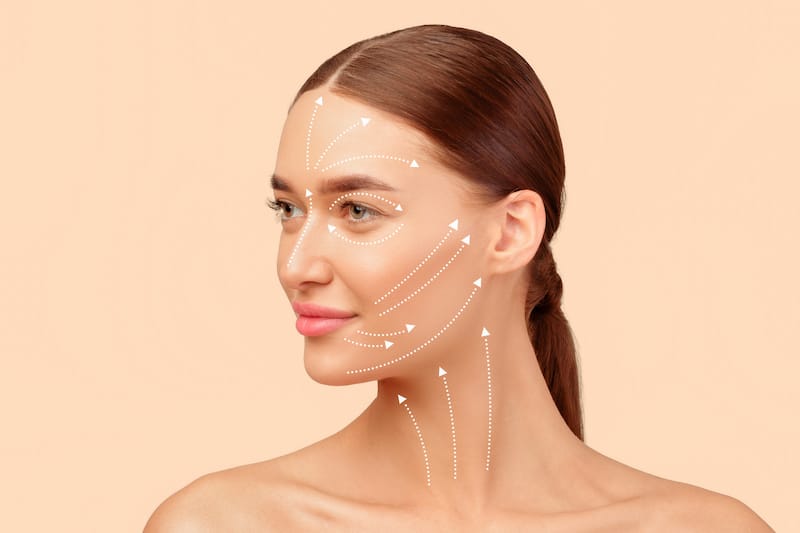
Mini Facelift: smaller scope, subtle change
What it is
A mini facelift typically targets the lower face with a shorter incision and less extensive lifting.
The key benefit (and limitation)
- Benefit: Less invasive, typically quicker early recovery
- Limitation: Usually less midface improvement and may not correct heavier jowls/neck laxity as strongly
Best for
- Early jowling
- Mild laxity
- Patients seeking a subtle refresh rather than a major transformation
Deep Plane vs SMAS vs Mini: which looks most natural?
“Natural” depends on matching the technique to your needs. In general:
If your cheeks + jawline have descended (and you want the most seamless rejuvenation)
Deep plane often produces the most naturally “restored” look because it repositions deeper tissues.
If you have moderate sagging and want a time-tested approach
A customized SMAS facelift can look beautifully natural in the right hands.
If your aging is early and you want a subtle refresh
A mini facelift can look natural—because it’s not overcorrecting. It’s simply limited in what it can change.
The biggest cause of an unnatural facelift isn’t the name of the technique—it’s poor planning or over-tightening the skin.
Recovery (realistic, patient-friendly overview)
Every patient heals differently, but generally:
- Week 1: swelling/bruising peaks; rest, gentle walking, head elevation
- Weeks 2–3: you look more “presentable,” swelling reduces significantly
- Weeks 4–8: refinements continue; scars soften
- 3–6 months: results settle further; scar maturation continues
Your surgeon should give you a personalized plan based on:
- your skin quality
- whether you combine procedures (neck lift, eyelids, fat transfer, etc.)
- your travel timeline if you’re coming from abroad

Safety checklist: how to choose a facelift the smart way
Facelift results depend on artistry—but safety depends on systems.
Look for:
- A hospital-grade facility (not just a small clinic setup)
- A surgical team experienced in facelift + facial anatomy
- Anesthesia standards and emergency protocols
- Transparent pre-op evaluation and aftercare
- International-patient support if you’re traveling
At Vanity Cosmetic Surgery Center in Istanbul, patients are treated in a hospital-grade setting with coordinated care and 24/7 patient assistance, which is especially important for international recovery planning.
(Note: always confirm credentials and suitability during consultation; every case is individual.)
What to expect (results and “before & after” reality)
Most patients want:
- smoother jawline
- reduced jowls
- improved neck contour (if addressed)
- refreshed cheeks without looking “different”
In a quality facelift, friends notice you look rested, not “operated on.” Before-and-after photos should show:
- consistent improvement in profile/jawline
- no stretched earlobes
- natural hairline and ear contours
- balanced neck + lower face harmony
FAQ: Deep Plane vs SMAS vs Mini Facelift
Longevity depends on technique, anatomy, and lifestyle. Deeper structural lifts often provide more durable correction for heavier sagging, but the “best” option is the one matched to your needs.
It can—especially for midface + jawline descent—but an expertly planned SMAS facelift can also look extremely natural.
If your laxity is mild, yes. If you have heavier jowls or neck laxity, a mini facelift may not give you the change you want.
There isn’t one perfect age. It’s about anatomy and goals—not the number.
Often, yes—combination planning is common. Your surgeon will decide what’s safe and appropriate based on your evaluation.
If you’re deciding between Deep Plane vs SMAS vs Mini Facelift, the safest next step is a personalized assessment—because the most natural result comes from the right technique for your face.
You can contact Vanity Cosmetic Surgery Center (Istanbul) for a free consultation and an individualized surgical plan, including recovery and travel guidance for international patients.
The page content is for informational purposes only. The content of this page does not include items containing information on therapeutic health care. For diagnosis and treatment, you must consult your physician or consult the physicians in our clinic. The content has been written regarding the following sources by Vanity Estetik doctors.