
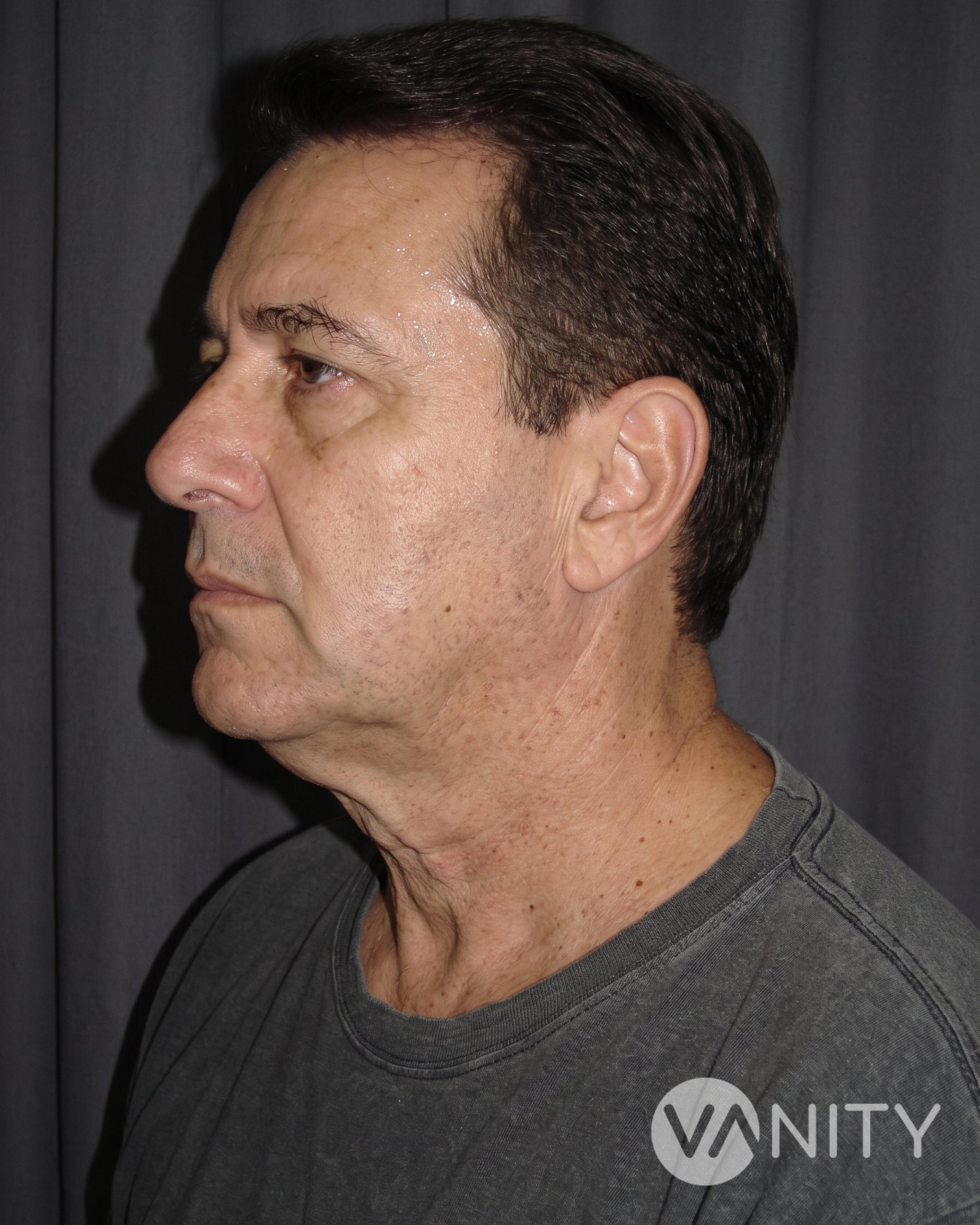
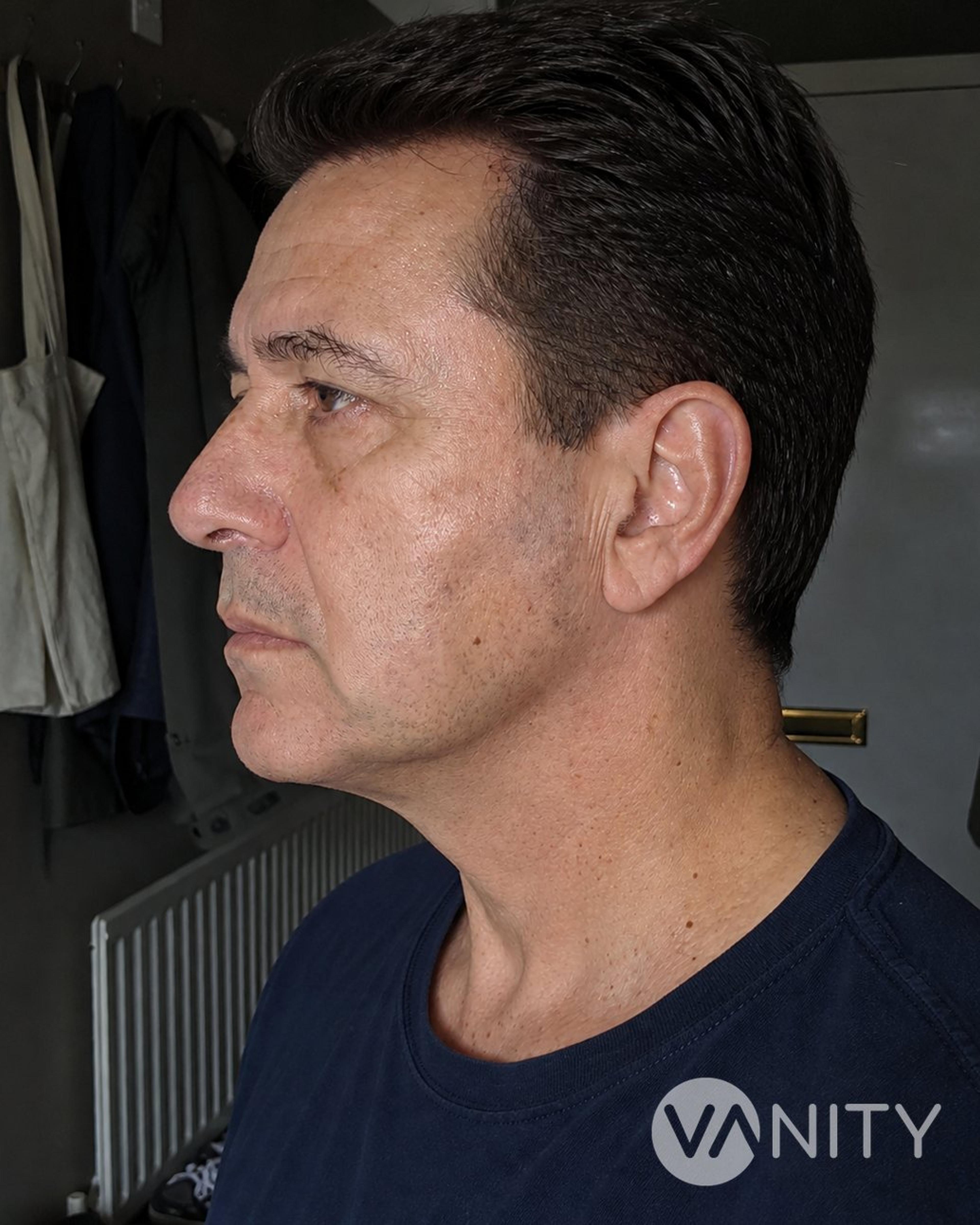




What it is
A neck lift is surgery that addresses loose skin, vertical bands, and excess fat between the jaw and the collarbone. Depending on what you need, it tightens the platysma — the sheet of muscle beneath the skin — removes fat, and redrapes the remaining skin to restore a defined line from chin to neck.
It is chosen by patients from their thirties onward — most often in their late 40s through 60s — whose neck has aged ahead of their face, or by anyone whose jawline has softened through genetics or weight change.
See how it works
From the clinic's channel — the procedure explained in plain terms.
Techniques we use
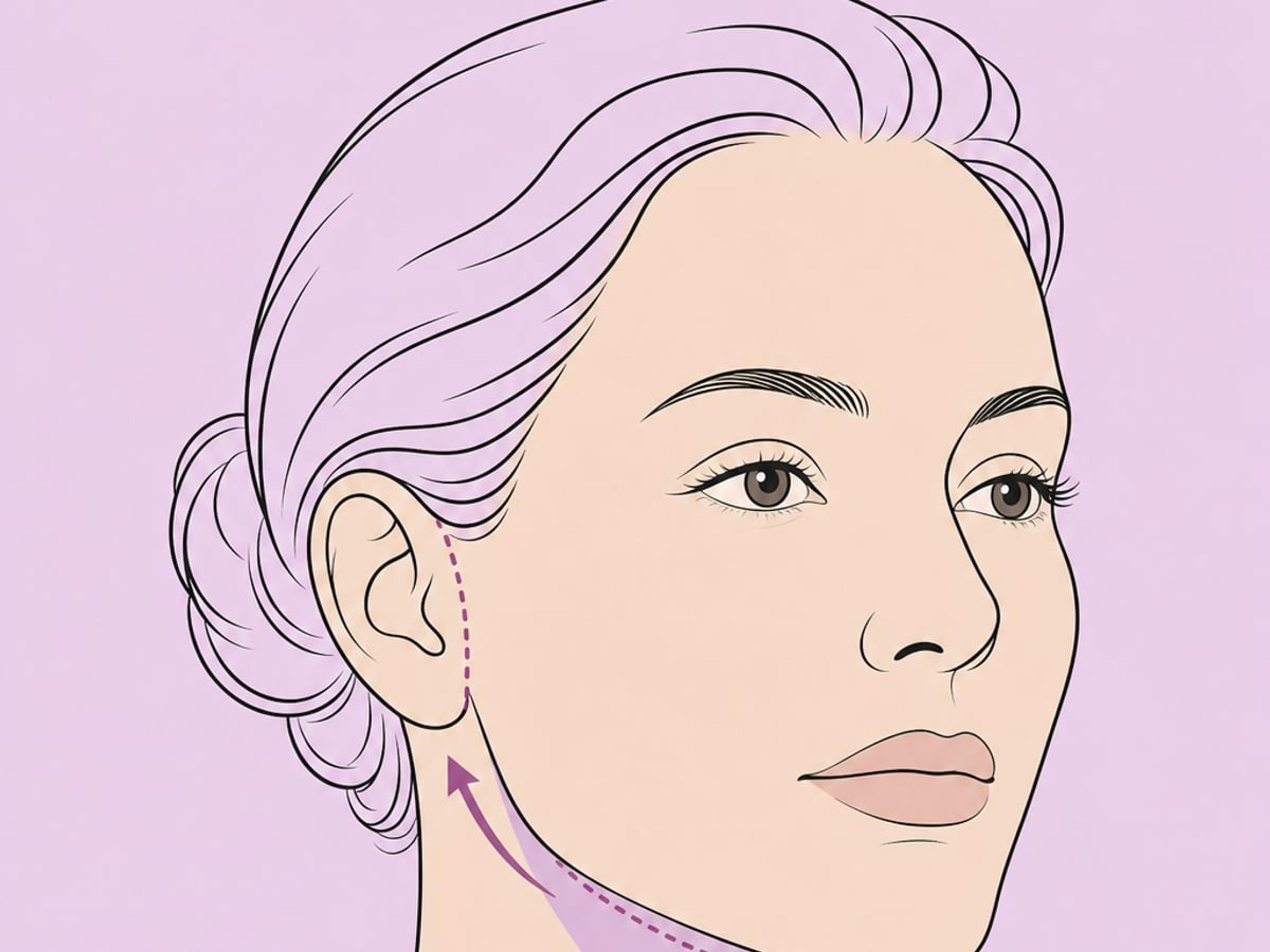
Works on the skin itself. Excess skin is removed and what remains is redraped through incisions placed behind the ear and under the chin. It suits people whose main concern is looseness rather than muscle bands or bulk.
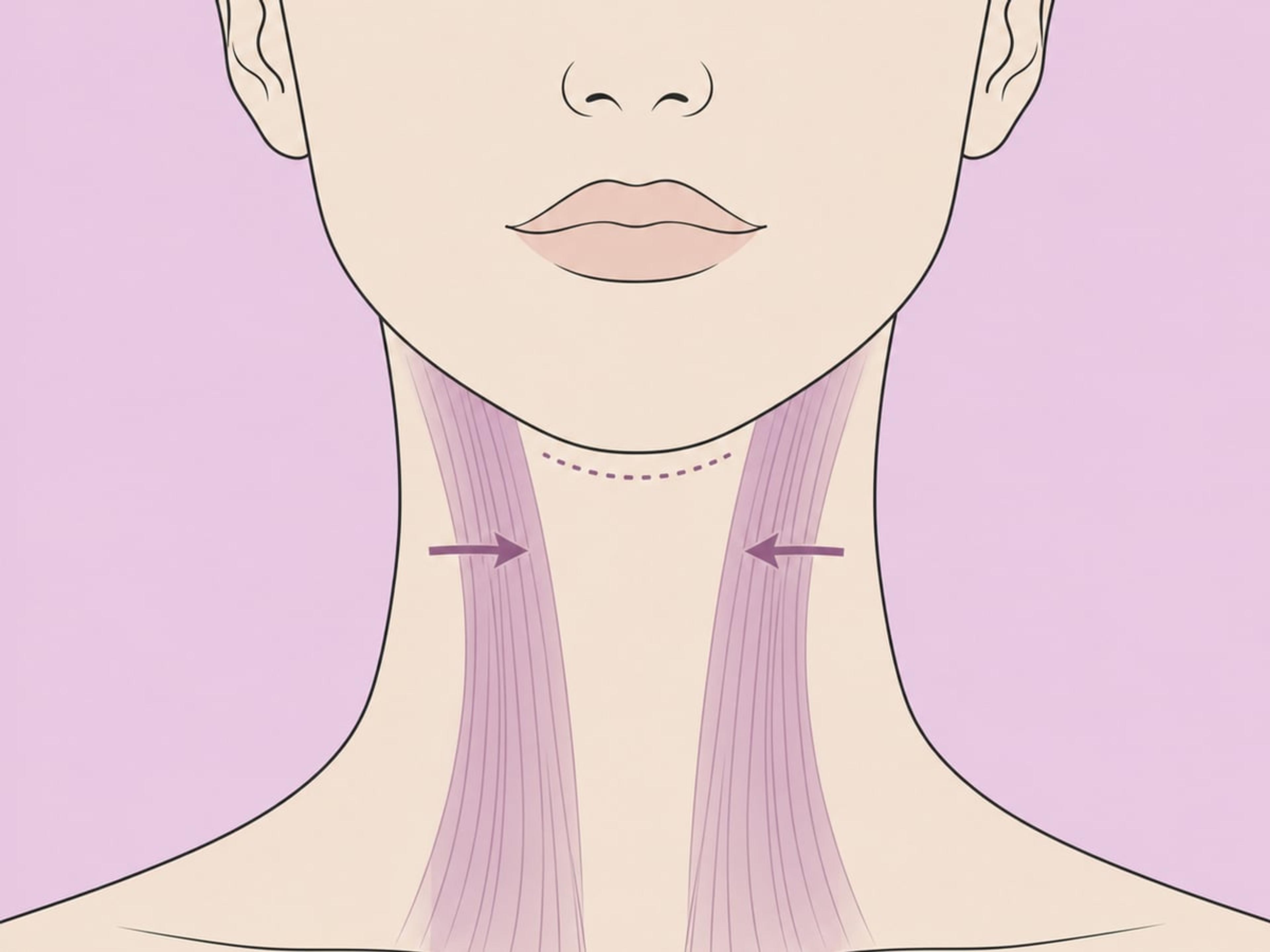
Tightens the platysma muscle, which is responsible for the vertical bands that show with age. Through a small incision under the chin, we stitch the muscle edges back together for a smoother contour.
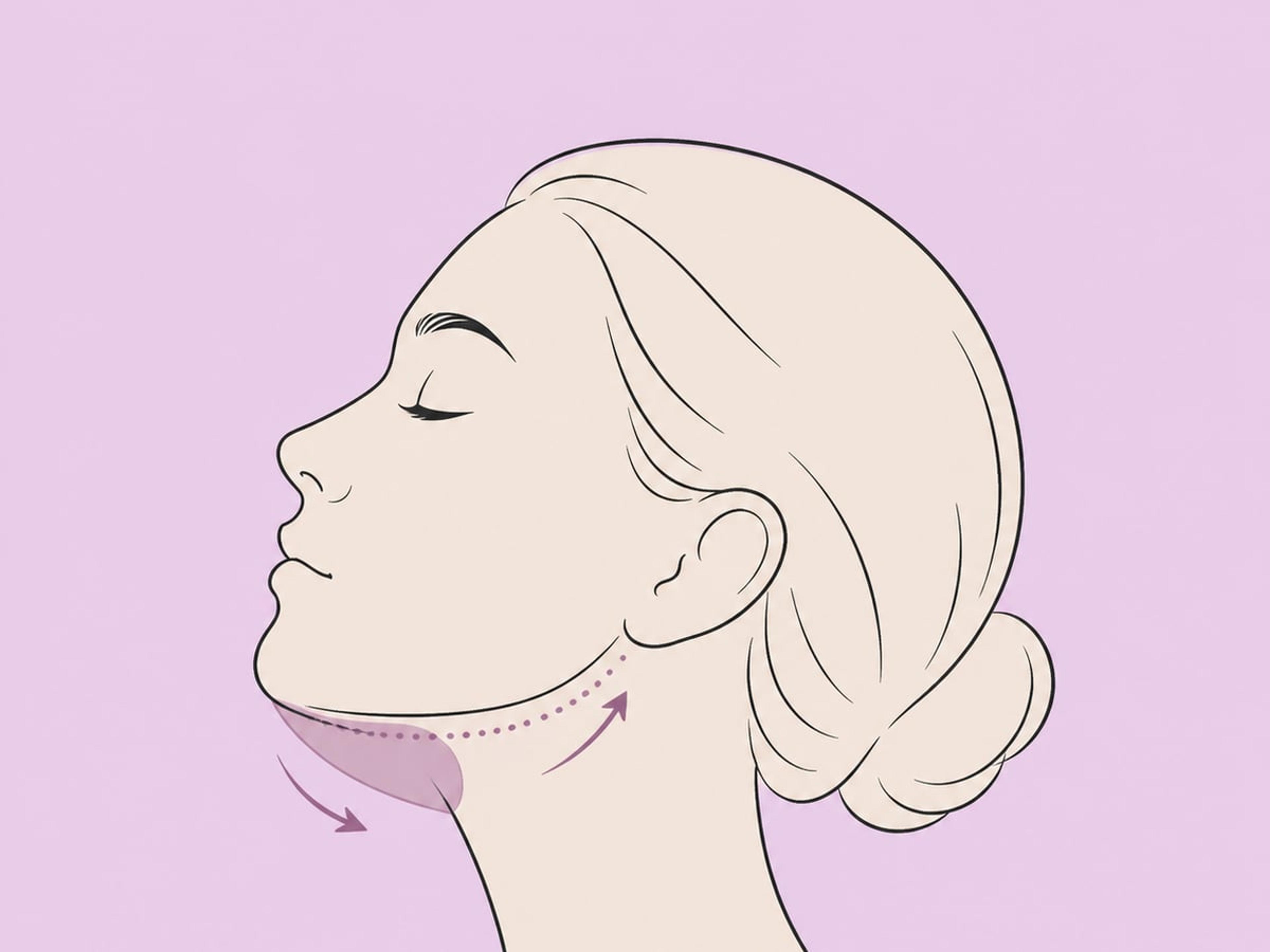
Removes pockets of fat beneath the chin through a small incision. It is often combined with the techniques above, and used alone only in younger patients with good skin elasticity and fullness rather than laxity.
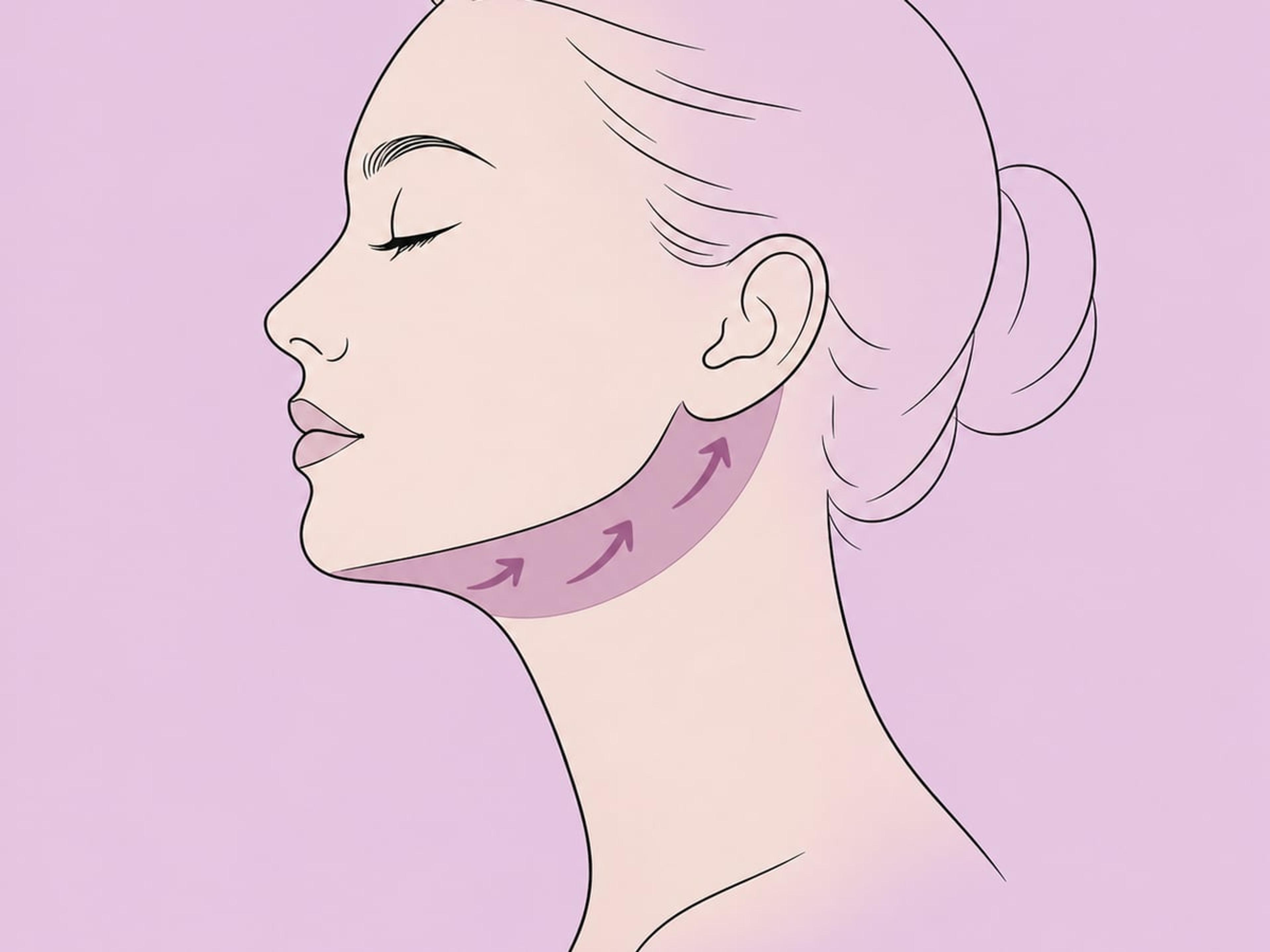
A more involved approach that releases and repositions the deeper neck structures rather than only tightening surface tissue. We consider it for advanced laxity, or when it is paired with a deep plane facelift for a unified result.
How the surgery unfolds
Assessment and planning
The surgeon examines skin quality, platysma banding, and fat distribution — these three findings decide whether you need liposuction alone, a mini lift, or a full neck lift.
Pre-op tests and anesthesia
Bloodwork and medical history are reviewed, and the anesthesia plan is set — general for a full lift, sometimes local with sedation for limited liposuction.
Incisions
Incisions are placed behind the ears and, when needed, in the crease under the chin — natural folds chosen so the scars heal discreetly.
Platysma tightening
If vertical bands are present, the platysma muscle is tightened. This is the step that restores the chin-to-neck angle — skin removal alone cannot do it.
Fat contouring
Where under-chin fullness contributes to the problem, fat is removed or sculpted to refine the transition from jawline to neck.
Skin redraping and closure
Excess skin is redraped and trimmed rather than pulled tight, then the incisions are closed and dressings applied with your aftercare plan in hand.
Recovery, week by week
- Day 1
Compression garment on, head elevated. Expect tightness, mild bruising, and a pulling sensation when you swallow or turn your head.
- Week 1
Bruising peaks and then begins to fade. Most people can work from home but prefer to avoid video calls.
- Week 2
Swelling settles enough to return to office work and light social activity. Makeup covers most residual bruising.
- Week 6
Cleared for full exercise and most activity. Numbness near the incisions and a tight feeling under the chin are normal and still resolving.
- Month 3
Swelling is largely gone and the new jawline and neck angle read clearly in photographs, though the contour keeps refining for months yet. Scars are softening and fading from their early pink, and silicone scar care is usually underway once your surgeon has cleared it.
- Month 6
The final contour settles as deep swelling resolves and scars mature. The jawline and neck angle you see now is what you keep.
How to prepare
- Stop blood thinners, aspirin, ibuprofen, and certain supplements — vitamin E, fish oil, ginkgo — 14 days before surgery.
- Stop nicotine in any form for at least 4 weeks before and after surgery. It significantly impairs skin healing.
- Complete your pre-op bloodwork and any clearance the surgeon requests at least a week ahead.
- Arrange for someone to stay with you for the first 24–48 hours, and set up a space with extra pillows for sleeping elevated.
- Pack loose, button-front shirts — nothing you need to pull over your head.
Risks
Every operation carries risk. We name them so you can ask the right questions.
- Hematoma — a collection of blood under the skin that may need draining
- Temporary numbness or altered sensation along the jaw and earlobe
- Visible scarring at the incision sites, usually well concealed
- Asymmetry between the two sides of the neck
- Delayed healing or skin irregularity, more common in smokers
- Seroma — a temporary fluid collection under the skin
- Anesthesia-related risks, screened for during pre-op assessment

What to expect in Turkey
Coming to Istanbul for a neck lift is calmer than it sounds when it is planned properly. You speak to the surgeon before you book anything, arrive to an accredited surgical facility, and stay long enough for the checks that matter before you fly.
Before you fly
We review your photographs and history and talk through what a neck lift can and cannot do for you — before you commit to travel. The preparation steps above apply unchanged, and a real advisor replies the same day if you have questions between now and your flight.
At the clinic
Your surgery is performed inside our own accredited operating theatres rather than at a separate site — this matters, because accreditation applies to the facility rather than to individual surgeons.
Recovery in Istanbul
Plan a 7-day window in Istanbul with 6 nights in a hotel. That covers bandage removal and two in-clinic wound checks, so nothing is rushed and nothing is missed before you travel home.
Heading home
Short-haul flights carry low risk soon after surgery, but travel over roughly 4 hours raises the risk of a clot. We ask you to wait until around day 7, once swelling has settled and the surgeon has cleared you to fly. Care then continues for twelve months, wherever you are.
- United Kingdom (London)
- from £4,000
- United States (Miami)
- $5,000 – $20,000+
- United States (ASPS national average)
- $7,885 surgeon fee only
- Switzerland
- from CHF 14,000
Published typical ranges for orientation — confirm with a local quote.
Frequently asked
Am I a good candidate for a neck lift?
The usual picture is loose skin under the chin, a “turkey neck” that hangs or creases, vertical bands that stand out when you speak or smile, or a jawline softened by sagging and a double chin — often after major weight loss. Most people who travel to us for it are 30 or older, from the UK, Europe, the USA and Canada. What decides the plan is not your age but your skin elasticity and whether the platysma has loosened: strong skin with fullness alone may only need liposuction, while loose skin or clear banding needs a lift.
Is a neck lift painful?
Less sharp than most people expect. What you feel is tightness and pressure rather than pain, with a pulling sensation when you swallow or turn your head. It is at its worst over the first two or three days while swelling peaks, and it is managed with the pain relief your surgeon prescribes, your head kept elevated, and the compression garment on. By the end of week one most people are down to occasional discomfort. The tight feeling under the chin and numbness near the incisions outlast it by weeks, but those are altered sensation, not pain.
How long do I really need off work?
Plan on 10–14 days before you look presentable for in-person work or video calls. Bruising and swelling are most obvious in the first week. A turtleneck or scarf carries you through the awkward middle stretch.
Will I have visible scars?
Incisions sit behind the ear and in the natural crease under the chin, where they fade over 6–12 months. Most people find them difficult to spot once healed, even with hair pulled back.
How long do the results last?
A neck lift typically holds for 10–15 years, though it does not stop aging. Skin quality, sun exposure, and weight stability all influence how long the result looks fresh.
Can I just get liposuction instead?
Only if your concern is fullness and your skin still snaps back well — usually people under 40. If there is loose skin or muscle banding, liposuction alone can make the laxity look worse.
Can a neck lift help after major weight loss?
Yes, and it is one of the commoner reasons people come. Skin that has been stretched for years stops retracting, and the platysma underneath is usually slack too, so the operation that works is one that tightens the muscle and removes skin — liposuction has little left to take. We ask for a stable weight first, usually six months of it, because further loss stretches the result you have just paid for.
Is it done under general anesthesia?
Most full neck lifts are performed under general anesthesia and deep sedation inside an accredited surgical facility. Limited cases, such as isolated submental liposuction, can be done under local with light sedation.
What does traveling to Istanbul for a neck lift involve?
You talk to the surgeon before you travel, then plan a 7-day window in Istanbul — 6 nights in a hotel — for suture removal and two wound checks. We ask you to wait until around day 7 before flying home, once swelling has settled and the surgeon clears you.
When can I exercise again?
Light walking starts within a few days. Cardio resumes around week 3–4, and full strength training — anything that raises blood pressure significantly — waits until week 6 with surgeon clearance.
Can I tighten my neck without surgery?
Non-surgical options such as radiofrequency or ultrasound-based tightening can subtly improve mild laxity or early texture change. They cannot correct significant loose skin, visible platysma bands, or a heavy under-chin contour — for those, surgery remains the definitive option.
How should I care for my scars after a neck lift?
Follow the wound-care instructions exactly, stay off nicotine, and protect the incisions from sun exposure while they mature. Silicone-based scar gels or sheets can help fading, but start them only once your surgeon approves.
What makes the final price vary?
Necklift surgery ranges from €2750–5100. Within that, your quote depends on whether you need a mini or full neck lift or liposuction alone, whether the platysma muscle is tightened, any combination with lower-face procedures, and the anaesthesia plan and operative time.
Why is a neck lift more affordable in Turkey?
Lower operating costs relative to some Western markets, coordinated pathways with the essentials bundled into one price, and the experience that comes of doing these operations often. None of it should be the deciding factor. The comparison worth making is standards, aftercare, transparency and safety planning — a UK or US quote usually covers the surgery alone, so look at what sits inside each price before you compare the numbers.
Can I combine a neck lift with a facelift or other procedures?
Yes — a combined lower face and neck plan is common when jowls also affect the jawline. Combining too much in one session raises risk, though, so the surgeon may recommend staging procedures across separate operations when that is the safer plan.
Sources
- [1]Neck Lift · American Society of Plastic Surgeons
- [2]Neck Lift (Platysmaplasty): Surgery, Recovery & What to Expect · Cleveland Clinic
- [3]Platysmaplasty Facelift · StatPearls - NCBI Bookshelf
- [4]Secondary Neck Lift and the Importance of Midline Platysmaplasty: Review of 101 Cases · PubMed