


Cheekbone implant: what it is
A cheekbone implant is a solid piece — carved silicone, or porous polyethylene or PEEK — seated directly on the bone of the zygoma, under the periosteum. We lift a pocket that fits the implant exactly, sit it on bone, and fix it with a small titanium screw or a suture so it cannot drift. Where the implant sits decides what changes: a malar implant sits over the cheekbone itself and adds width and angle, a submalar implant sits lower and fills the hollow beneath it, and one operation can do both.
This is skeletal work — we are changing the shape of the frame, not the drape of the skin over it. It suits a cheekbone that was flat from the start, a midface that has emptied with age, asymmetry, contour loss after a fracture, and facial feminisation or masculinisation. If the real complaint is skin that has descended or jowling, a midface lift or facelift is the honest answer instead. If you want something reversible, filler or fat grafting is the honest answer instead — an implant is a permanent device, and you should be certain of that before you book. We ask that you are in good general health and off nicotine entirely.
Cheekbone implant: techniques we use
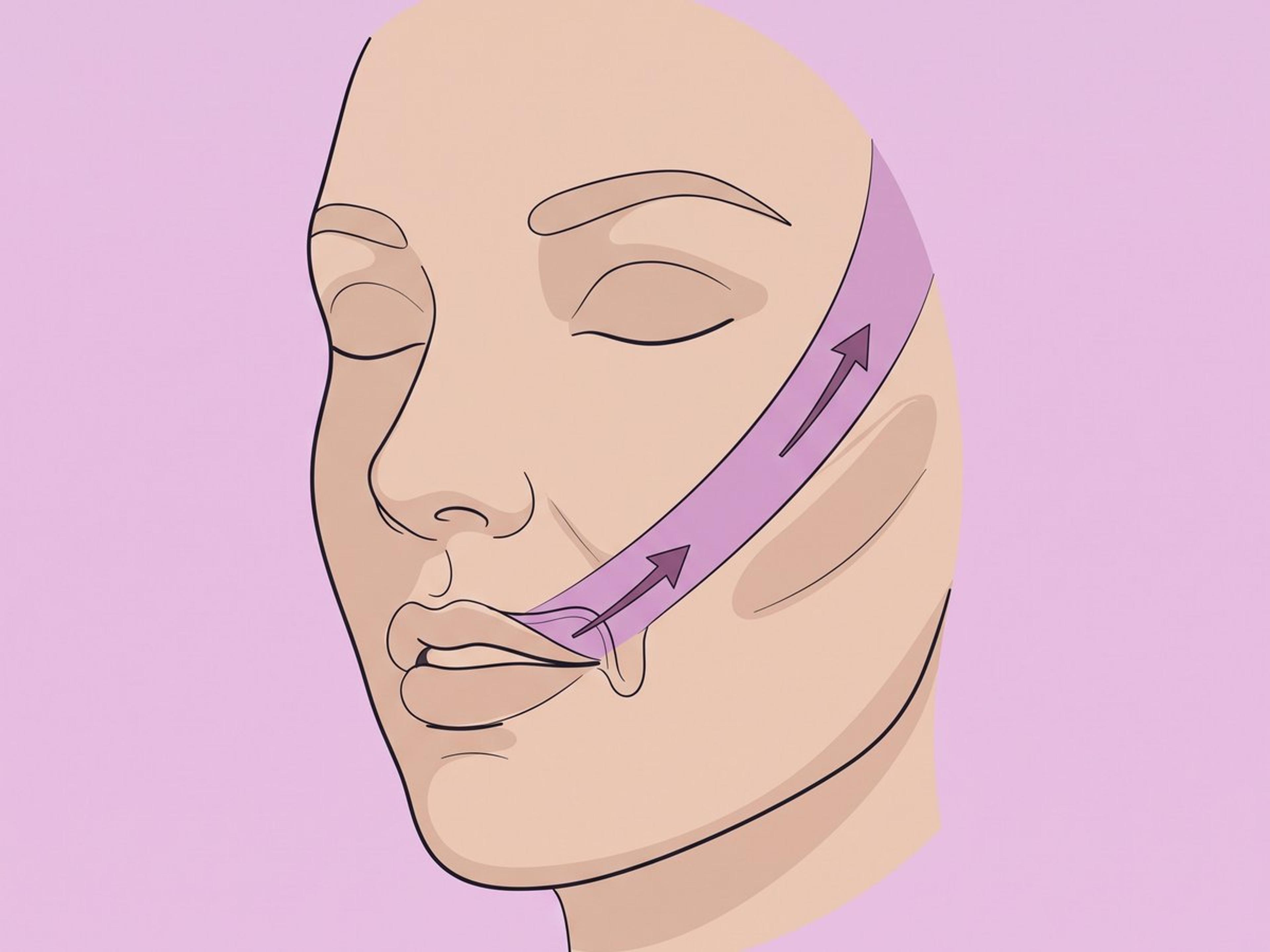
We make the incision inside the upper lip, in the fold above the gum, and lift the pocket up onto the face of the cheekbone from there. It is the route we use most often — no scar on the skin, and a direct line to the malar eminence. Because the pocket opens into the mouth, you will be on an antiseptic mouth rinse and a soft or liquid diet through the first week, and any active dental infection has to be treated before we operate.
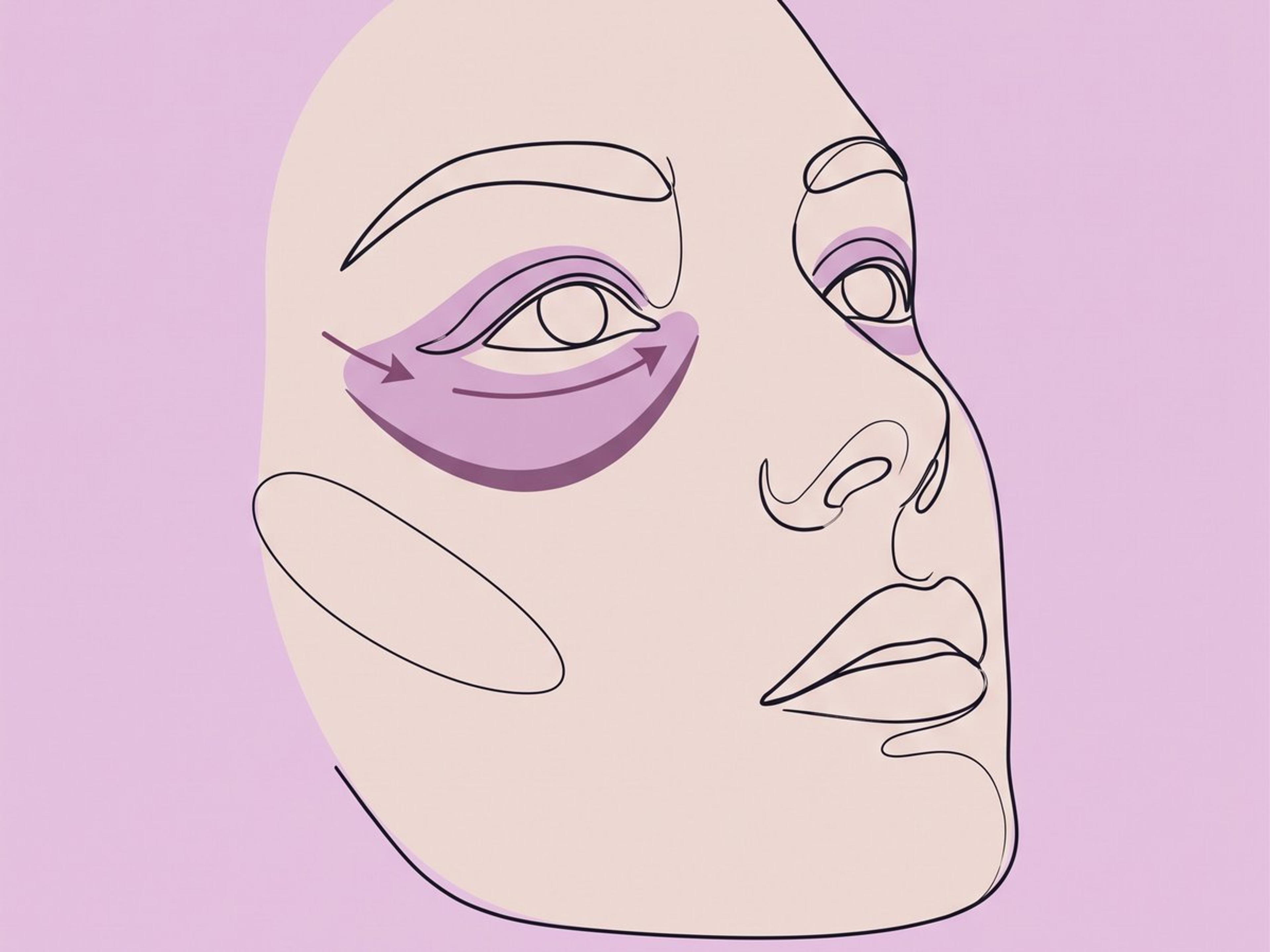
The implant goes in through a fine incision just under the lower lash line, or from inside the lid. This gives us clear sight of the infraorbital rim and the upper cheekbone, and it avoids the bacteria of the mouth entirely — so we tend to choose it when we are working on the lower lid or orbital rim in the same operation. It carries its own risk: the lower lid can be pulled down or turned out, and that is a real complication, not a rare footnote.
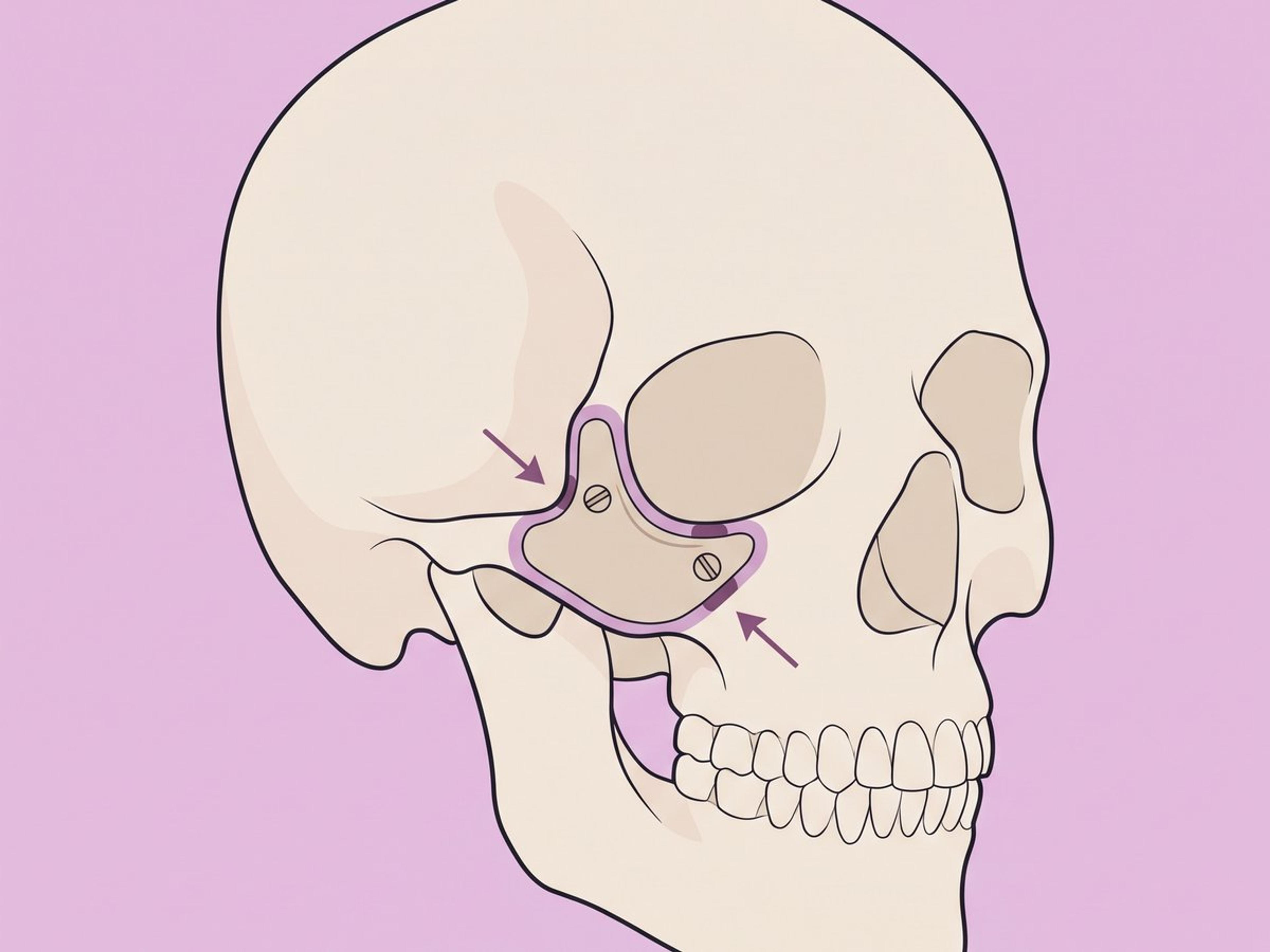
We do not rely on a tight pocket to hold an implant still. Most implants are fixed to bone with a monocortical titanium screw or suspended with sutures. .
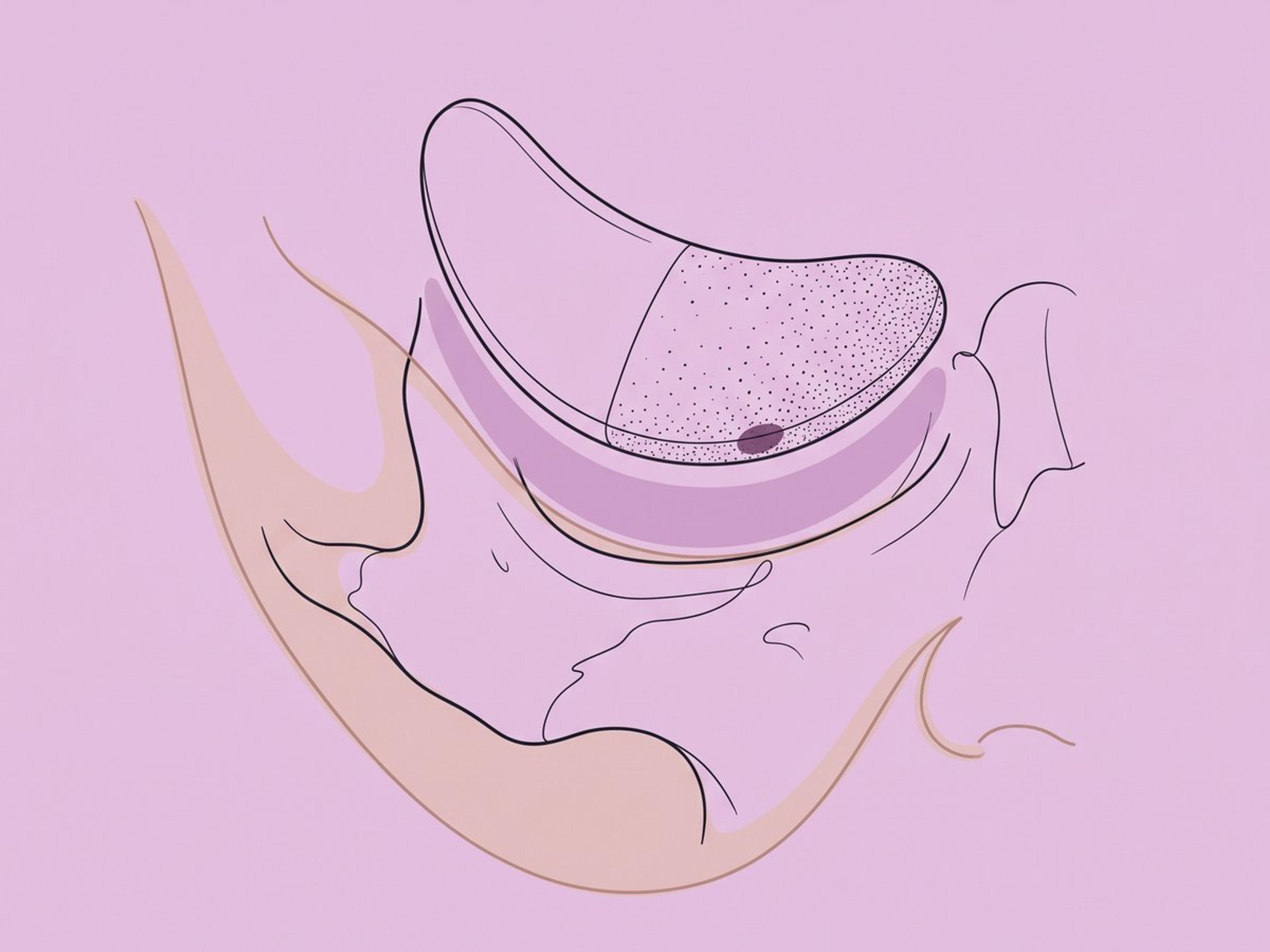
Solid silicone is smooth, does not integrate with tissue, and is comparatively straightforward to reposition or take out — it sits inside a fibrous capsule the body builds around it. Porous polyethylene and PEEK let tissue grow into the surface, which holds the implant steady but makes later removal harder.
The operation, step by step
Sizing on your own bone
The implant — malar, submalar or both, and in which material — is chosen at consultation from photographs and imaging of your own zygoma, then confirmed in theatre with trial sizers. Settling that beforehand is what keeps the operation from becoming an improvisation over an open pocket.
Anaesthesia and access
You are asleep under general anaesthesia, or sedated with local. The incision usually goes inside the upper lip, in the fold above the gum, so there is no scar on the skin; we use the lower-lash-line route instead when the lower lid or orbital rim is being worked on in the same operation.
Lifting the pocket on bone
The periosteum is lifted off the face of the cheekbone and the pocket is cut to the implant's footprint and no further — a pocket larger than the implant is what lets it drift afterwards. The infraorbital nerve is identified and protected, because it is the nerve behind the cheek, upper-lip and gum numbness that can follow this operation.
Seating and fixation
The implant is seated directly on bone and checked against the other side for symmetry before anything is secured. It is then fixed with a monocortical titanium screw or a suture: fixated silicone facial implants report substantially lower complication and bone-resorption rates than implants left to sit unsecured in the pocket.
Closure and the same day
The incision is closed in layers and, where the route was intraoral, the antiseptic mouth rinse starts immediately. You are monitored for a few hours in recovery and discharged the same day, with your first wound and swelling check inside 48 hours.
Cheekbone implant: recovery week by week
- Day 1
Surgery takes about an hour and you go home the same day, after a few hours with us in recovery. Swelling in the cheeks and lip starts straight away and the midface feels tight and numb. If the incision was intraoral, the mouth rinses and the liquid or soft diet start now.
- Week 1
Swelling and bruising peak at 48–72 hours and then start to go down. Most people are back at desk work inside this week. Sleep with your head raised and off your face — nothing should press on the implant pocket.
- Weeks 2–4
Visible swelling and redness largely settle across this window and the shape of the result becomes readable. Intraoral sutures dissolve and you return to a normal diet. Strenuous exercise, heavy lifting and contact sport stay off the table for several more weeks.
- Weeks 6–8
The gym, running and heavy lifting come back at around six weeks, once the capsule around the implant is mature enough that exertion and pressure will not shift it. Contact sport, martial arts and anything that risks a blow to the midface wait longer — an implant that takes a direct hit before the pocket has healed can be displaced. Sleeping on your side is comfortable again by now.
- Month 3
Deep swelling has gone and the implant has settled inside a mature capsule, or, with a porous implant, integrated with the tissue around it. This is when we judge the contour final. Numbness across the cheek, upper lip or gums from handling the infraorbital nerve has usually recovered by now — but it can take longer.
Cheekbone implant: how to prepare
- Stop smoking, vaping and all nicotine well before the date we agree — nicotine impairs healing and raises the risk of infection and implant exposure.
- Stop aspirin, NSAIDs, anticoagulants and bleeding-related herbal supplements on the timeline we give you.
- Complete the preoperative bloods and any imaging we request, and tell us every medication, allergy, and prior facial surgery or facial injury.
- See a dentist and clear any active oral infection before an intraoral approach, and have the antiseptic mouth rinse and soft or liquid diet ready at home.
- Arrange someone to take you home and stay with you for the first 24 hours — this is done under general anaesthesia or sedation.
Cheekbone implant: risks
Every operation carries risk. We name them so you can ask the right questions.
- The implant can shift or migrate, producing visible asymmetry, and repositioning or removing it means further surgery.
- Infection around the implant — the leading reported adverse event in this operation, and a particular concern with the intraoral route. It may mean the implant has to come out.
- Bone resorption under the implant, reported in 18.25% of non-fixated silicone facial implants against 1% of fixated ones, which can leave a depression in the bone if the implant is later removed.
- Numbness or altered sensation across the cheek, upper lip and gums from infraorbital nerve injury — sometimes prolonged, sometimes permanent.
- Haematoma, bleeding and prolonged swelling in the early postoperative period.
- Lower-lid malposition or ectropion where a subciliary approach is used.
- Capsular contracture — thick scar tissue tightening around the implant — and a result that is asymmetric or simply not what you wanted.

Cheekbone implant in Turkey: what to expect
Coming to Turkey for this operation is mostly a question of time and of what happens after you leave. The surgery itself is short and same-day. The part that needs planning is the week that follows it — and the months after that, when this particular implant is known to declare its problems.
Before you fly
Talk to the surgeon who will operate, not to a coordinator, and agree the plan on photographs of your own face — malar, submalar, or both. Then settle the harder question in writing: who manages a late infection, a shifted implant or a removal after you have gone home, who pays for it, and whether revision is included. This matters more here than in most operations.
At the clinic
Cheekbone implant surgery is a day case — you are admitted in the morning, operated on for about an hour, and discharged the same day after a few hours in recovery.
Recovery in Istanbul
Plan 7 days in the city and 6 hotel nights. We will see you twice: an early wound and swelling check in the first 24 hours, and a pre-flight review at day 5-7 to . Because the incision is usually inside the mouth, the first week is soft food and antiseptic rinses with a mouth that does not move easily — book a room with room service or a kitchenette rather than planning around restaurants. Nothing should press on your face for several weeks, so no sleeping face-down, no gym, no hammam, and a light itinerary rather than a walking tour of the city. And do not book the trip around seeing a finished result — redness and swelling take weeks to settle, and the contour is not judgeable when you leave.
Heading home
We would rather you flew at day 7. On the flight, walk the cabin and drink water; if it is longer than 4 hours, ask us about compression stockings before you go. Our care does not end at the airport — we are reachable for twelve months, and we would rather hear from you early about something that turns out to be nothing.
Checking a clinic in Turkey
Turkey rewrote its medical-tourism rules on 26 April 2025, replacing the 2017 regulation. Any facility treating international patients must now hold an international health tourism authorisation certificate, register on the Ministry of Health's HealthTürkiye portal, and carry complication insurance for the procedures it performs; hospitals and medical centres also had to complete TÜSKA accreditation by the end of that year. Facilities are required to publish that certification — so you can check ours, and you should check anyone else's before you pay a deposit.
On the face the surgeon matters more than the building, because the margin for error is millimetres and the result is the first thing anyone sees. Ask how many of this specific operation they perform a year, ask to see their own patients at one year rather than at two weeks, and ask what they would decline to do in your case — a surgeon who never says no is telling you something. Ask for their Turkish Medical Association registration. If an agency rather than the clinic is arranging the trip, get it in writing who holds clinical responsibility once you have flown home.
Most nationalities enter Turkey visa-free or on an e-Visa for a stay of this length, with a passport valid at least six months. Confirm the rule for your own passport, and build the return flight around the last clinic visit rather than fixing it in advance.
- United Kingdom
- £4,000 – £7,000
- United States
- $5,000 – $10,000
Published typical ranges for orientation — confirm with a local quote.
Cheekbone implant: frequently asked questions
Are cheekbone implants permanent?
Yes. A solid cheek implant is permanent, unlike fat transfer, which lasts several years, or filler, which resorbs. It can be removed or exchanged surgically, but removal after many years can leave a contour depression where the implant has eroded bone and the soft tissue has contracted around it.
Cheekbone implants or fat transfer — which is better?
They do different things. An implant gives fixed, permanent projection to the skeleton; fat grafting gives softer soft-tissue volume that partly resorbs. A 2023 study of 152 transfeminine patients undergoing malar augmentation reported 97.7% satisfaction with implants against 87% with fat transfer, and concluded implants are the more permanent option where major malar enhancement is needed, with fat still useful for minor augmentation.
Will there be a visible scar?
Usually not. The most common approach puts the incision inside the upper lip, so there is no external scar at all. A lower-eyelid approach leaves a fine line beneath the lash line, generally inconspicuous, but it carries a risk of lid malposition.
How long until I can go back to work?
Most people return to non-physical work within the first week, once the worst of the swelling has passed. Visible swelling and redness take 2 to 4 weeks to resolve, and strenuous exercise or heavy lifting stays restricted for several weeks after that.
Can a cheek implant move out of position?
Displacement is a recognised complication and a leading reason for revision surgery. Fixing the implant to bone with a screw or suture is intended to prevent it — a review of silicone facial implants found displacement in 2.5% of fixated and 1.98% of non-fixated cases, while overall complication rates were substantially lower with fixation.
How much does a cheekbone implant cost in Istanbul?
At Vanity an all-in cheekbone implant package sits between €2,500 and €4,500, depending on whether one or both implant positions are addressed and what else is done in the same operation. For comparison, the American Society of Plastic Surgeons reports an average US surgeon fee of $3,876 for cheek implants — a fee that excludes anaesthesia, facility, implants, tests and prescriptions, so a realistic US total is well above it.
What is the difference between malar and submalar implants?
A malar implant sits over the cheekbone itself and builds the angle and width of the bony prominence. A submalar implant sits lower, filling the hollow beneath the cheekbone in a gaunt or volume-depleted midface. Both can be combined in one operation where you need definition and volume together.
When can I fly home after cheekbone implant surgery?
We ask for 10 days in Istanbul where possible, and 7 at the earliest — the guidance the American Society of Plastic Surgeons gives, as reproduced in the CDC Yellow Book, is 7 to 10 days after facial surgery before flying. The reason is not wound drainage but swelling, being reachable if an early infection or malposition declares itself, and clotting risk: the CDC notes that surgery and air travel each raise the risk of DVT and pulmonary embolism, and that flying soon after surgery compounds it.
Who should not have a cheekbone implant?
We ask that you are in good general health, at a stable weight, and off nicotine entirely — smoking and vaping impair healing and raise the risk of infection and implant exposure around a permanent device. We will postpone or decline surgery for an active infection anywhere, and especially an untreated dental or sinus infection near the implant pocket; for uncontrolled diabetes; for a bleeding or clotting disorder, or anticoagulant medication that cannot be safely paused; and for a condition or treatment that suppresses your immune system. The facial skeleton also needs to be fully grown. And if the real complaint is descended skin rather than a flat cheekbone, we will say so — an implant is the wrong operation for that.
What should make me contact the clinic after surgery?
Call us for a fever over 38°C, redness or warmth spreading across the cheek, discharge or a foul taste from the incision inside the mouth, pain that gets worse after the third day instead of better, sudden one-sided swelling, or a change you can see — the cheek shifting shape or an implant edge becoming visible or mobile. Do not wait for a scheduled review, and do not assume you are in the clear once you are home: in FDA adverse-event data the median time for a malar implant problem to declare itself is 55 days after surgery, and infection is the single most common complaint. We are reachable for twelve months — we would far rather hear about something that turns out to be nothing.
Will a cheek implant lift sagging skin?
No. An implant changes the skeleton — it adds projection and width to the bone — but it does not reposition soft tissue that has descended. If jowling or loose midface skin is the actual complaint, an implant under lax skin can even make the drop more visible, and a midface lift or facelift is the honest answer. Where volume loss and mild descent occur together, a submalar implant can restore the hollow beneath the cheekbone, and we will tell you plainly in planning which problem your face actually has.
If the implant gets infected, does it have to come out?
Often, yes. Bacteria on the surface of an implant sit in a biofilm that antibiotics alone rarely clear, so while an early, superficial cellulitis of the cheek may settle on antibiotics, an established infection around the implant is usually treated by removing it, letting the tissue quieten for a few months, and placing a new one later — not by trying to sterilise the device in place. Infection is the most frequently reported adverse event in this operation and it tends to declare itself weeks after surgery rather than days, which is why you fly home with the operative note and the implant's make, model, size and lot number, and why we stay reachable for twelve months.
How much does cheekbone implant cost in Turkey?
€2,500 to €4,500 with us, confirmed after a consultation rather than quoted blind. For comparison it is typically £4,000 – £7,000 in the United Kingdom and $5,000 – $10,000 in the United States. Implant size and shape set the figure, along with whether fat transfer is combined to blend the edges into the surrounding face.
Sources
- [1]Outcomes and complications associated with malar onlays: literature review and case series of 119 implants · British Journal of Oral and Maxillofacial Surgery (PubMed) · 2020
- [2]Cheek Augmentation Risks and Safety · American Society of Plastic Surgeons (plasticsurgery.org) · 2025
- [3]Comparative Outcomes of Malar Implants Versus Fat Transfer to Cheeks Among Transfeminine Individuals Undergoing Malar Augmentation · Annals of Plastic Surgery (PubMed) · 2023
- [4]Strategies for Malar Implant Placement: A Review of Access, Positioning, and Outcomes · Plastic and Reconstructive Surgery – Global Open · 2026