
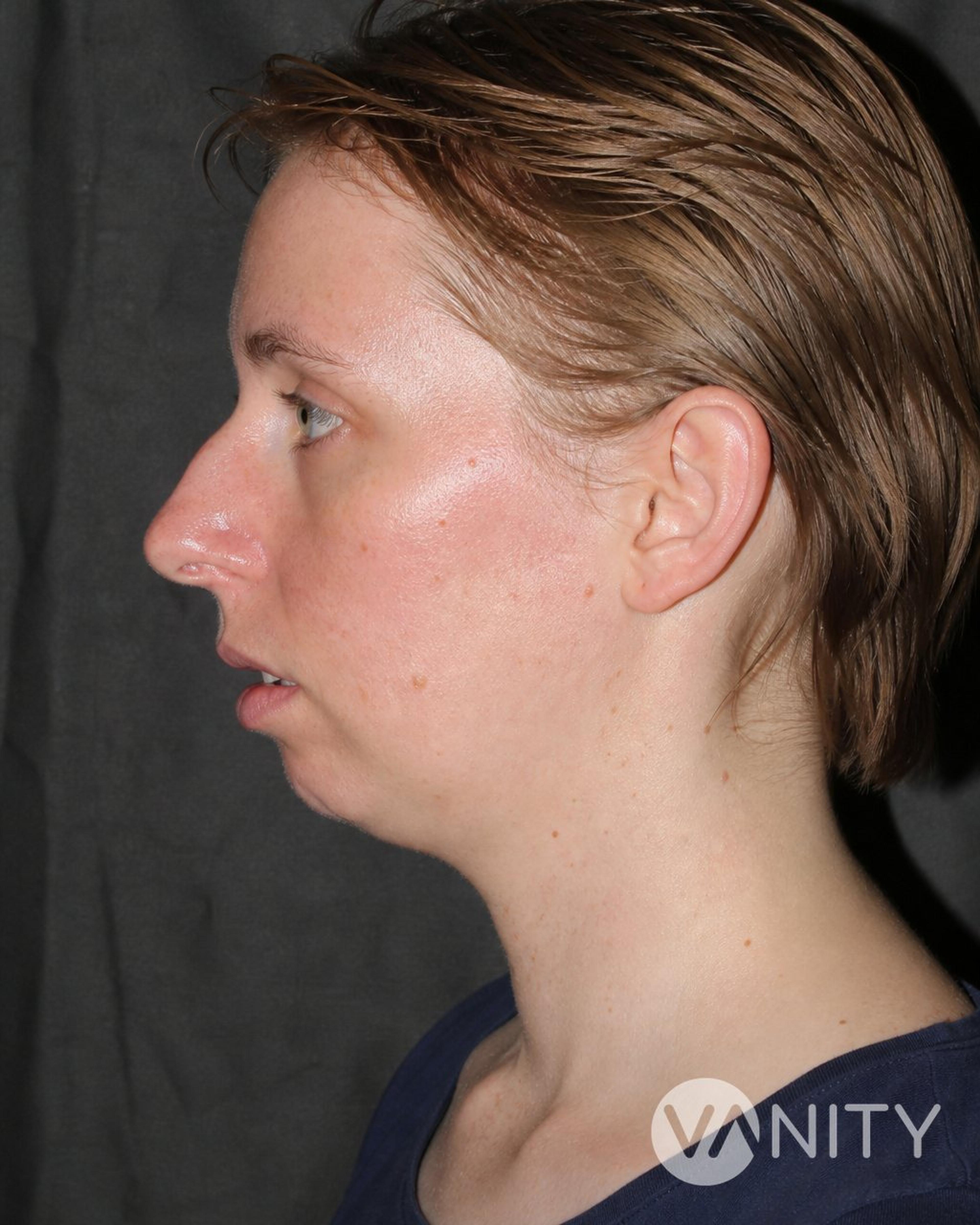
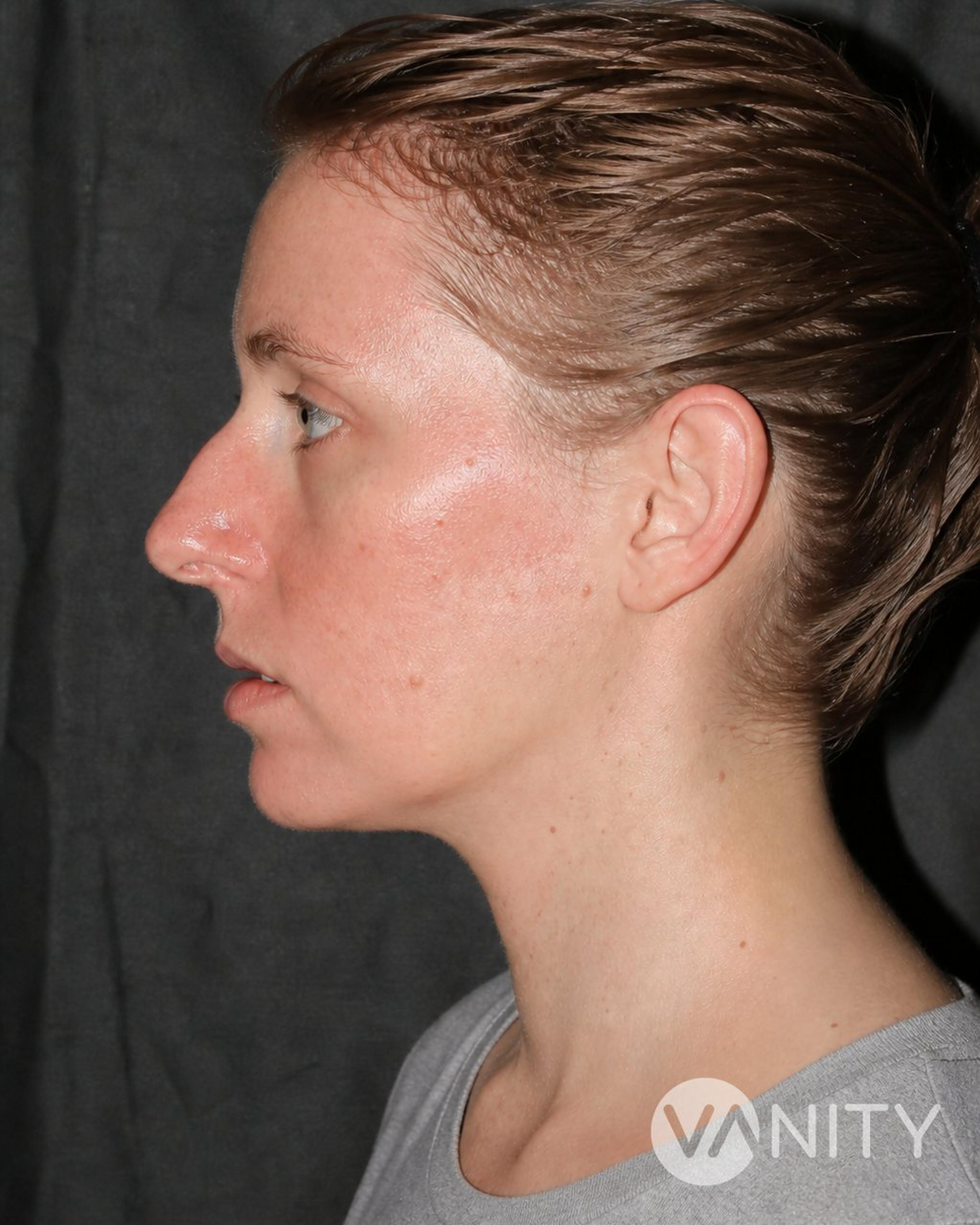




Chin augmentation: what it is
A chin implant adds projection to a chin that sits behind the line of the face in profile. Through a small incision we raise a pocket under the periosteum on the front of the mandible and seat a solid preformed implant directly against the bone, then close with dissolvable sutures. The skeleton itself is not cut or moved, which is the difference from a sliding genioplasty: the implant builds the soft-tissue contour over the bone rather than changing the bone. An implant translates roughly 66% of its own dimension into visible projection, against about 85% when the bone is moved.
It suits skeletally mature patients with mild to moderate chin deficiency, a normal bite and jaw alignment, no significant shortfall in chin height, and expectations that match what an implant can do. Non-smokers in good general health heal best. Where the chin is severely underdeveloped, markedly asymmetric, short in vertical height, or where the bite needs functional correction, osseous genioplasty or orthognathic surgery is the honest answer and we will say so rather than fit an implant around the problem. Chin projection and nasal projection read together in profile, so this is often planned alongside rhinoplasty, submental liposuction or a neck lift.
Chin augmentation: techniques we use
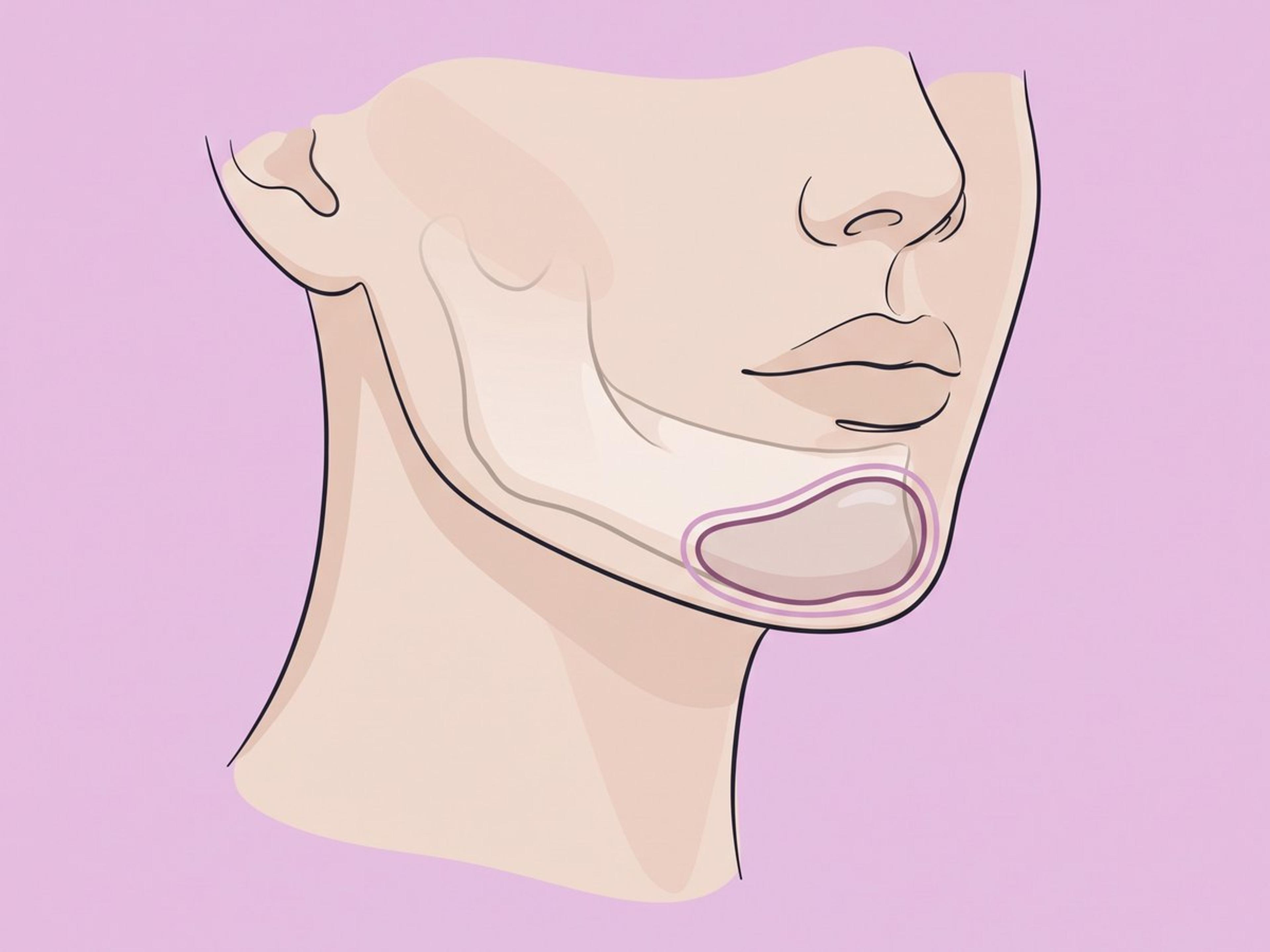
We use smooth, flexible solid silicone implants. The implant sits in a subperiosteal pocket against the chin bone, where the body forms a fibrous capsule around it. Silicone does not integrate with the surrounding tissue, so it can be removed or exchanged if clinically necessary. Pressure-related resorption of the mandibular cortex beneath an implant is a recognised long-term risk.
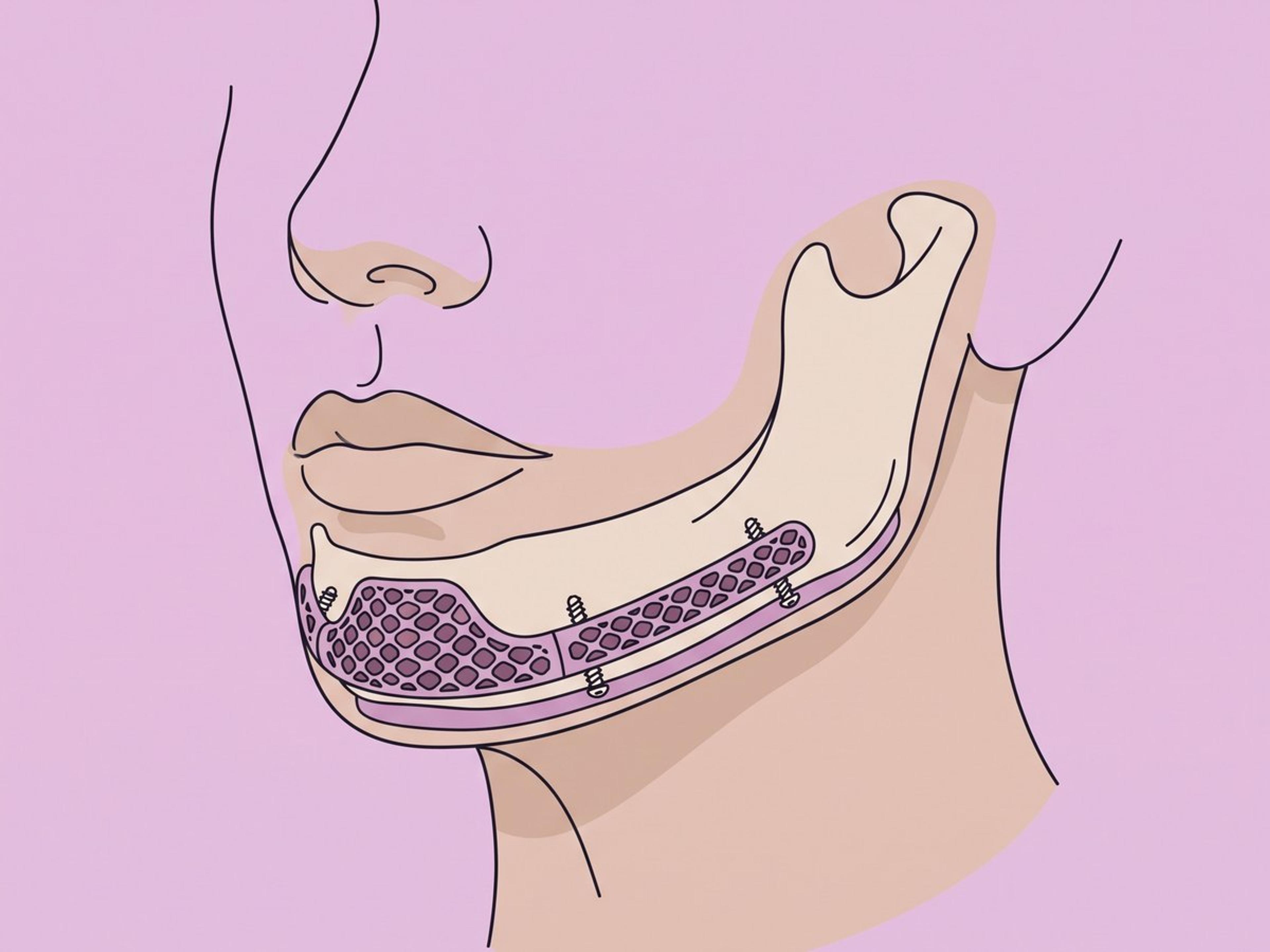
The submental route uses a short incision in the natural crease under the chin. It gives the surgeon direct access to the implant pocket and lower border of the mandible. It leaves a small external scar, which usually settles discreetly in the crease.
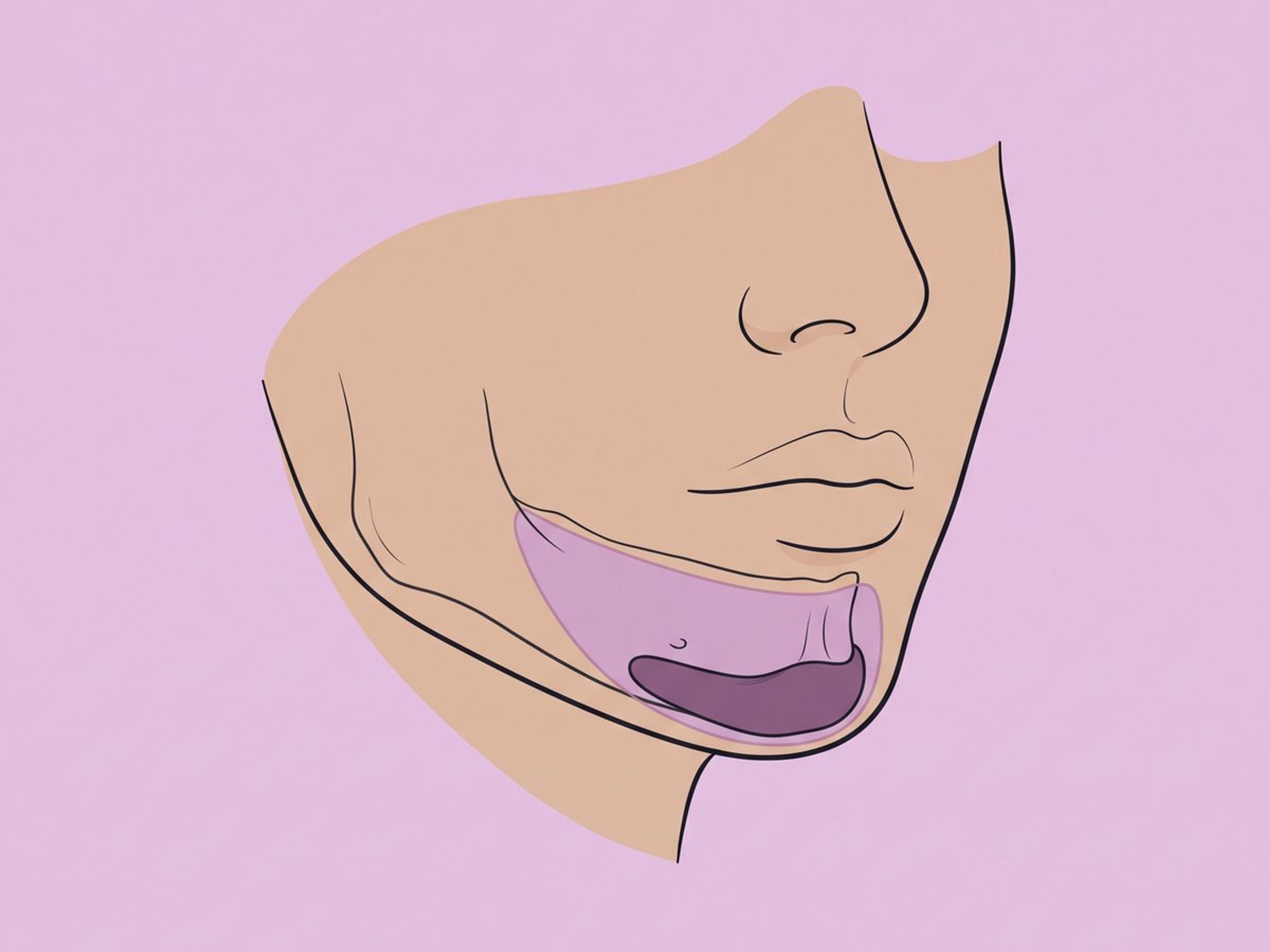
The intraoral route places the incision inside the lower lip, so there is no external scar. Because the incision is inside the mouth, careful oral hygiene and the prescribed mouth rinse are important during recovery. Both incision routes require careful dissection around the mental nerve.
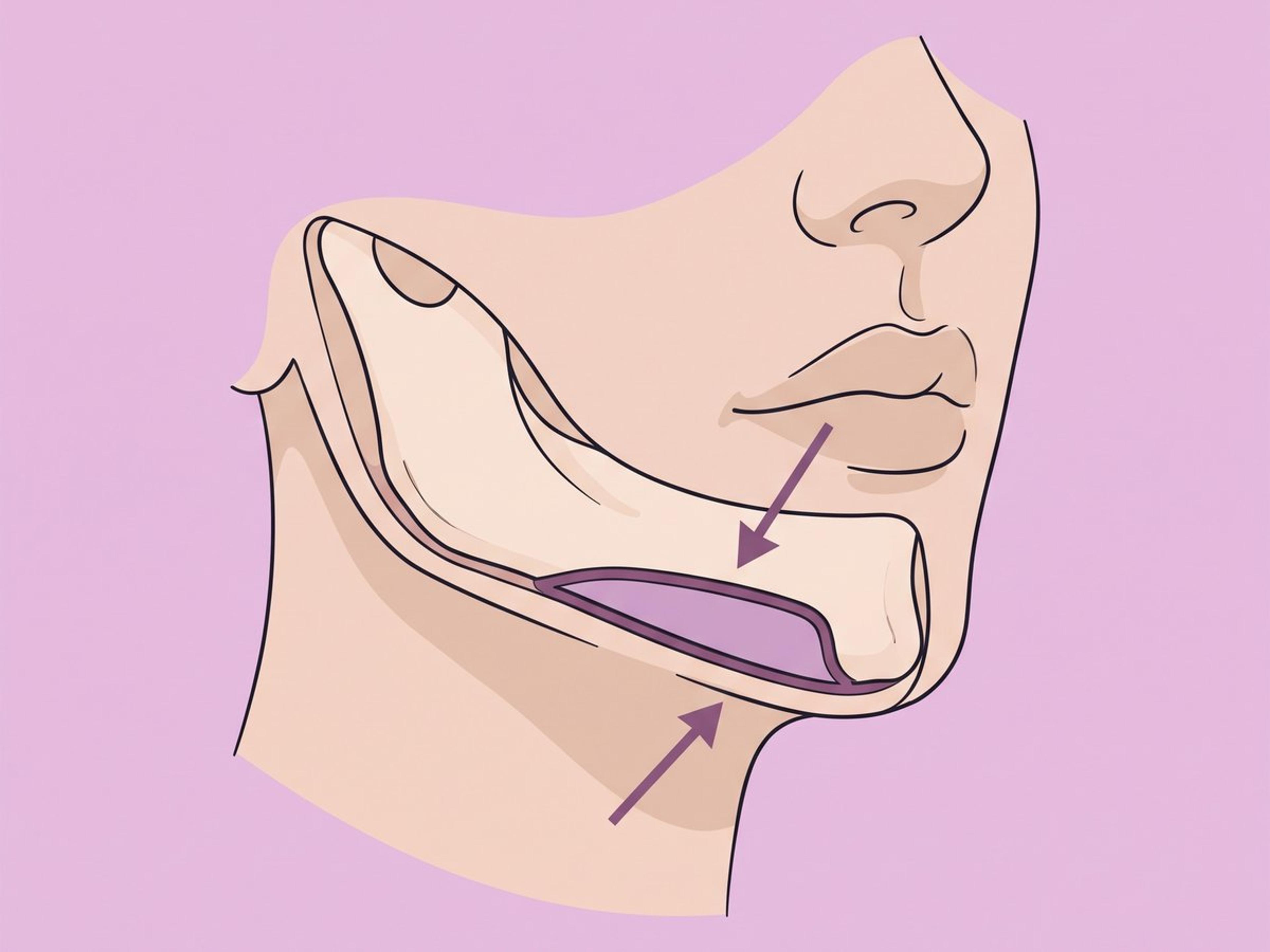
A chin implant can be combined with double-chin liposuction where submental fat is contributing to a soft jawline or double chin. The implant improves chin projection, while liposuction removes localised fat beneath the chin. The combination can give a clearer transition from chin to neck, but it does not correct significant loose skin.
The operation, step by step
Sizing before anything is cut
The implant is selected from standardised profile and frontal photographs together with imaging of chin height, tooth-root position and the course of the mental nerve. Sizing is settled in advance because an implant only translates part of its own thickness into visible projection, and correcting a size chosen by eye on the day means going back in.
Anaesthesia
An isolated chin implant is usually done under local anaesthetic with sedation, which is why it stays a day case. General anaesthesia is used when we combine it with rhinoplasty, submental liposuction or a neck lift, and that is also what makes an overnight stay likely — so the decision is made at consultation, not on the morning.
The approach is chosen, not defaulted
A 2 to 3 cm incision in the crease under the chin keeps the pocket away from oral flora and gives direct sight of the lower border of the mandible, at the cost of a short external scar. The incision inside the lower lip leaves nothing visible but crosses the mouth, and reported infection rates are markedly higher for that route. We tell you which one we intend to use, and why, before you travel.
Raising the subperiosteal pocket
The dissection stays under the periosteum, directly on bone, so the implant sits against the mandible rather than floating in soft tissue. The pocket is cut to the implant and no wider — a generous pocket is what lets an implant rotate or drift off the midline — and lateral dissection is kept clear of the mental foramen to protect lower-lip sensation.
Seating and fixing the implant
The implant is centred on the midline and seated flush on the bone, with titanium screw fixation where the material or an extended two-piece design calls for it. Fixation matters most in the first weeks, before the capsule around the implant has formed and while there is still nothing but the pocket holding it in place.
Closure and the compression wrap
The wound is closed in layers with dissolvable sutures and an elastic compression wrap goes on before you leave. The wrap is not cosmetic: it limits the haematoma that would otherwise lift the implant off the bone, and holds the chin still while the pocket settles around it.
Chin augmentation: recovery week by week
- Day 1
You go home the same day, and the operation itself commonly takes under an hour. A supportive dressing or elastic compression wrap goes on to limit swelling and hold the implant steady while the pocket settles. Swelling and bruising of the chin and lower lip begin, sensation in the lower lip is often blunted, and if the incision is inside the mouth you start antiseptic or salt-water rinses before and after eating.
- Week 1
Swelling peaks in the first 48 hours, then begins to settle. No heavy lifting, bending or strenuous activity for at least a week, and soft food throughout. Desk work is realistic within 1 to 2 days; physically demanding work waits 7 to 10 days.
- Weeks 2-3
Visible bruising clears and most of the surface swelling subsides, though the chin still feels firm and slightly numb — that is expected at this stage. Sutures are dissolvable or removed at your follow-up. Soft food can usually be relaxed once the incision is comfortable, and most people are back in normal social settings.
- Weeks 4-6
Strenuous exercise and contact sports come back at 4 to 6 weeks, not before: the fibrous capsule that anchors the implant against the bone is still maturing, and a direct blow to the chin in that window can displace it. Deep swelling is still resolving, so the profile reads fuller than the result you will keep.
- Months 3-6
Residual deep swelling resolves and the implant contour settles into its final shape. We judge the definitive result between 3 and 6 months, not before. Altered lower-lip and chin sensation usually recovers over this period. A correctly sized and correctly placed implant is long-lasting and rarely needs replacing.
Chin augmentation: how to prepare
- Stop smoking several weeks before surgery. Nicotine impairs wound healing and raises infection and extrusion risk specifically in implant procedures.
- Stop aspirin, NSAIDs, blood thinners and herbal supplements on the schedule your surgeon gives you, to reduce bleeding and haematoma risk.
- Complete laboratory tests and a physical examination
- Have your bite and jaw alignment formally assessed. An underlying malocclusion or jawbone deformity generally indicates osseous genioplasty rather than an implant.
- Have standardised pre-operative profile and frontal photographs taken, which is how the implant is sized and planned.
- Fill the prescribed antiseptic mouth rinse, any prophylactic antibiotics and pain relief before the day of surgery, so nothing needs collecting afterwards.
Chin augmentation: risks
Every operation carries risk. We name them so you can ask the right questions.
- Infection of the implant pocket. Persistent infection frequently means the implant has to be removed.
- Displacement or malposition of the implant, reported at approximately 5% for silicone, producing asymmetry or an off-centre contour.
- Mental nerve injury causing numbness, burning or tingling of the lower lip and chin — temporary

Chin augmentation in Turkey: what to expect
Coming to Turkey for this is a logistics problem as much as a medical one, and the logistics are what tend to go wrong. Here is what the 7 days actually look like, and the questions worth settling before you book anything.
Before you fly
Speak to the surgeon who will operate, not only to a coordinator — video is fine, but it should be the operator. Ask about the silicone implant, the planned incision route and whether double-chin liposuction is appropriate in your case. Verify the facility and the surgeon separately. The Turkish Ministry of Health also maintains a register of providers authorised to treat international patients.
At the clinic
Day 0 is your in-person consultation and pre-operative bloods. Surgery is usually the following day and commonly takes under an hour. Chin implant surgery is always performed under general anaesthesia. It is usually a day case, with overnight observation if clinically indicated or when it is combined with another procedure such as double-chin liposuction. You leave in an elastic compression wrap, which is typically worn more or less continuously for the first week.
Recovery in Istanbul
Plan 6-7 days on the ground and 6 hotel nights, a wound and swelling check around day 2 to 3, and a clearance visit around day 7. If your incision is inside the mouth, you will need soft food for several weeks, so check the hotel can supply it and has a fridge. No alcohol, no sun, no swimming or long days of sightseeing during the early recovery period.
Heading home
The earliest we would clear you to fly is 7 days after surgery. There are no drains and the sutures dissolve, but the compression wrap is usually still on in transit and the lower lip is often numb, so hot drinks and food need care in the air. Surgery and air travel each raise venous thromboembolism risk independently and the two compound on a long-haul return, so an aisle seat, hourly movement and water matter; graduated compression stockings are sensible if you carry other clot risk factors. One thing matters more than any of that: chin implant infection can present late, months after you are home, and persistent infection usually means the implant comes out. Settle before you travel who manages a complication that surfaces after you land, what is covered and what is not, and whether a surgeon at home will accept your follow-up care. The CDC and the NHS both name discontinuity of care as the central risk of treatment abroad.
- United Kingdom
- £3,000 – £6,000
- United States
- $4,000 – $8,000
- Western Europe
- €3,000 – €6,000
Published typical ranges for orientation — confirm with a local quote.
Chin augmentation: frequently asked questions
How much does a chin implant cost?
In Istanbul the range is €2150 to €3650 for an all-in package covering surgeon and anaesthetist, theatre and day-case facility, the implant itself, pre-operative bloods and imaging, take-home medication, the compression wrap and both follow-up reviews. The American Society of Plastic Surgeons puts the US average surgeon's fee at $5,641, but that figure excludes anaesthesia, operating-room and facility charges, tests, prescriptions and the implant, so it is not a like-for-like comparison. Neither number includes flights, hotel, or any revision.
How long does a chin implant last?
It is intended to be permanent. The body does not absorb it, unlike the hyaluronic acid filler used for temporary chin augmentation, and an appropriately sized and positioned implant rarely needs replacing. It can still require removal or exchange if infection, displacement, extrusion or significant bone resorption occurs.
Chin implant or sliding genioplasty — which is better?
Neither is better in the abstract; they answer different problems. An implant suits mild to moderate deficiency and a patient who wants a shorter, less invasive operation with faster recovery, while osseous genioplasty is favoured for severe hypoplasia, vertical height correction, complex three-dimensional asymmetry, airway considerations and salvage after implant failure
Will I lose feeling in my lower lip or chin?
Some altered sensation early on is common, because the mental nerve runs close to the surgical pocket. Temporary numbness, tingling or burning has been reported in roughly 19 to 47% of implant patients, and most of it resolves over weeks to months.
When can I go back to work and exercise?
Desk-based work is often resumed within 1 to 2 days, and physically demanding work after 7 to 10 days. Heavy lifting, bending and strenuous activity are avoided for at least the first week, and strenuous exercise and contact sports for 4 to 6 weeks. The exact timeline depends on the approach used and on how you heal.
Does a chin implant erode the jawbone?
Pressure-related resorption of the mandibular cortex beneath a silicone implant is a documented complication. It is one of the long-term risks we discuss before surgery. Long-term outcome data on resorption remain limited, so follow-up and an implant plan that suits your anatomy matter.
How long do I need to stay in Istanbul?
Plan 7 days on the ground with 7 hotel nights: consultation and pre-operative bloods on arrival, surgery the next day as a day case, a wound and swelling review around day 2 to 3, and a clearance visit around day 7.
Who should not have a chin implant?
Anyone whose jaw is still growing, since an implant placed before skeletal maturity will not keep pace with the face. Severe chin underdevelopment, marked asymmetry, a chin that is short in vertical height, or a bite that needs functional correction are answered by osseous genioplasty or orthognathic surgery — an implant built around those problems disguises them at best. Active dental or gum infection, uncontrolled diabetes, immunosuppression and current smoking all raise the risk of implant infection and extrusion specifically, and are reasons to postpone rather than proceed.
Which symptoms after surgery need urgent attention?
Contact us straight away for fever, spreading redness or warmth over the chin, swelling that increases rather than settles after the third day, discharge or a foul taste from the incision, severe or worsening pain, or an implant that feels loose or looks off-centre. These point to infection or a haematoma around the implant, and an infected implant caught early is far more likely to be salvaged than one left until the next scheduled review. Chin implant infection can also declare itself late, months after you are home, so the same list applies once you have flown back — which is why we settle who manages a complication before you travel.
Will a chin implant fix a double chin or a soft jawline?
A chin implant adds projection at the point of the chin, but it does not remove fat or tighten loose skin. If double-chin fullness is caused by localised fat, we can combine the implant with double-chin liposuction for a clearer chin-to-neck line. Significant loose neck skin may need a different treatment.
How much does chin augmentation cost in Turkey?
€2,150 to €3,650 with us, confirmed after a consultation rather than quoted blind. For comparison it is typically £3,000 – £6,000 in the United Kingdom, $4,000 – $8,000 in the United States and €3,000 – €6,000 in Western Europe. The number depends on whether the projection is built with an implant or with a sliding genioplasty of your own bone. The second is a bigger operation and is priced as one.
Sources
- [1]Chin Surgery Risks and Safety · American Society of Plastic Surgeons (plasticsurgery.org) · 2025
- [2]Implant-Based Chin Augmentation Vs Osseous Genioplasty: A Systematic Review of Indications and Outcomes · Aesthetic Surgery Journal Open Forum (PubMed Central / NLM) · 2025
- [3]A Systematic Review of Alloplastic Materials Used in Chin Augmentation · Plastic and Reconstructive Surgery – Global Open (PubMed Central / NLM) · 2022
- [4]A systematic review of implant materials for facial reconstructive and aesthetic surgery · Frontiers in Surgery · 2025