



Jawline implant: what it is
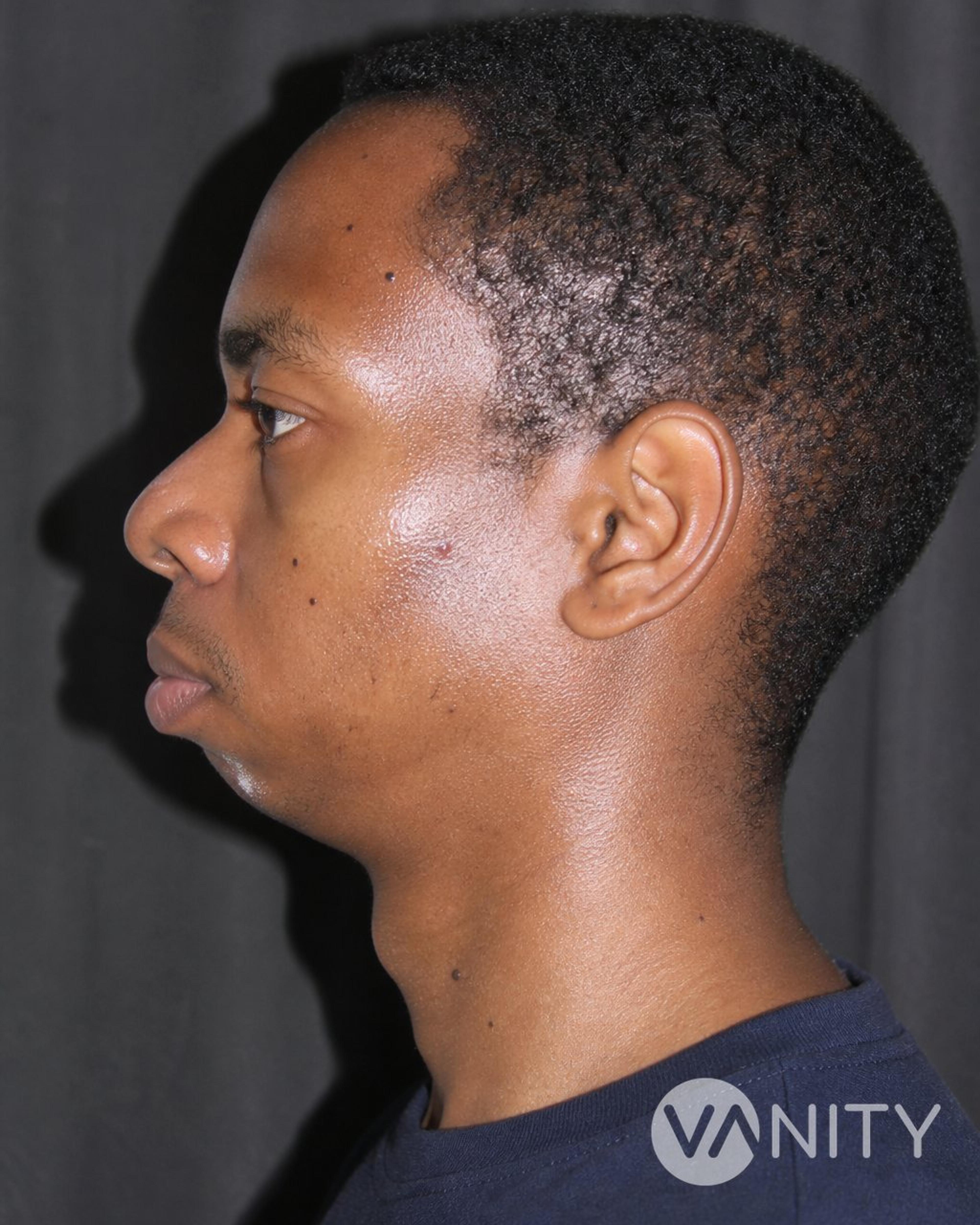
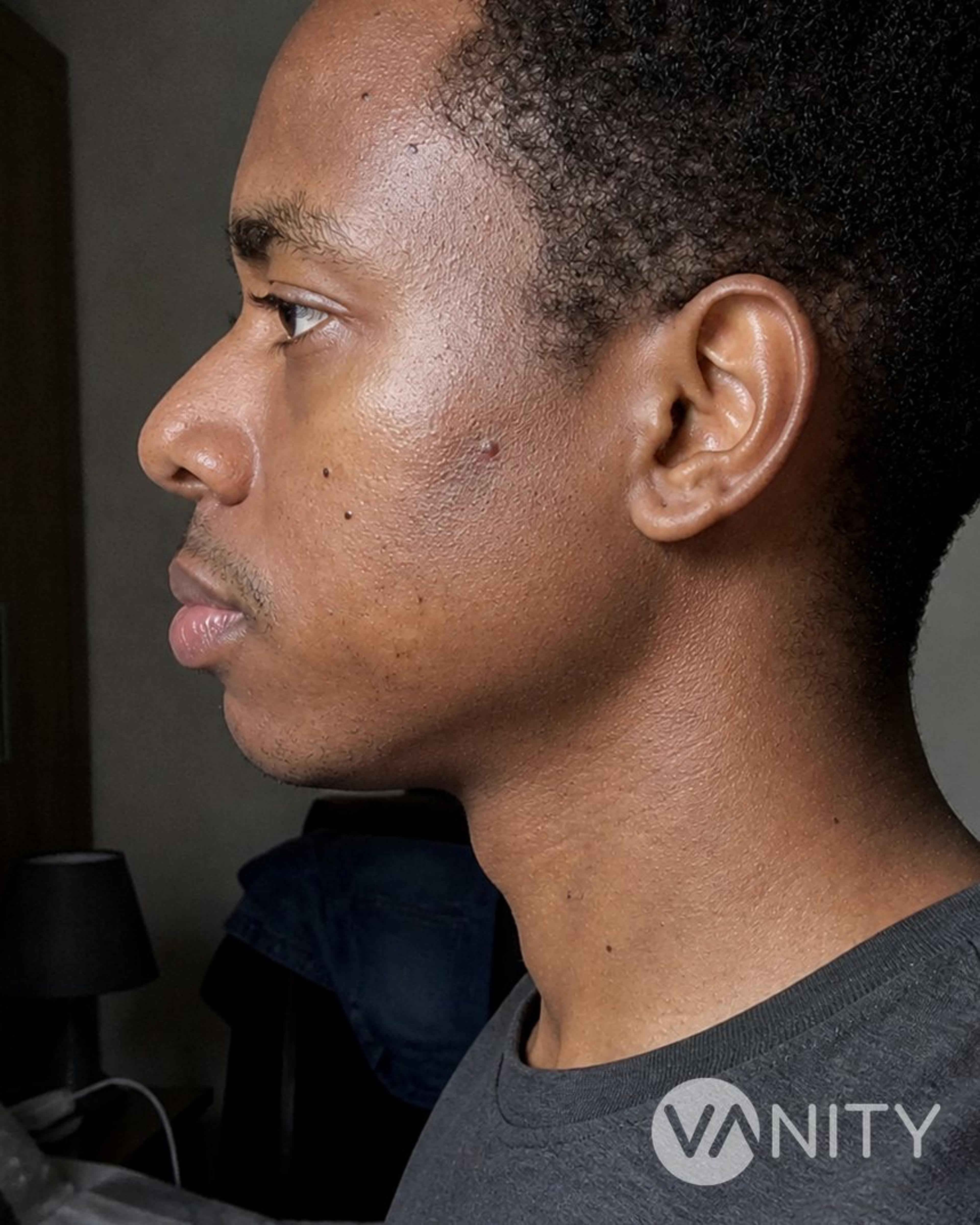
A jawline implant is a solid, medical-grade implant placed directly on the mandible to add projection, width or definition where the bone is short. The surgeon lifts the periosteum to create a close-fitting pocket, positions the implant against bone, then secures it with titanium screws or non-resorbable sutures. It may be placed at the chin, the mandibular angles to widen the lower face, or across the full jawline as a wraparound implant. The change is skeletal rather than soft tissue, so it lasts while the implant remains in place. It can be removed or exchanged in a later operation.
It may suit adults with completed skeletal growth, a normal bite, and a recessed or narrow chin, flat mandibular angles, or a weak jaw-to-neck transition. Chin augmentation is often combined with rhinoplasty for facial balance — in up to a quarter of cosmetic rhinoplasty cases. Angle augmentation may also be used after trauma, for facial growth abnormalities and in masculinising gender-affirming facial surgery. If retrusion is caused by a jaw discrepancy with malocclusion, an implant is not the right operation. Orthognathic surgery or a sliding genioplasty may be. We discuss this at consultation, before you travel.
Jawline implant: techniques we use
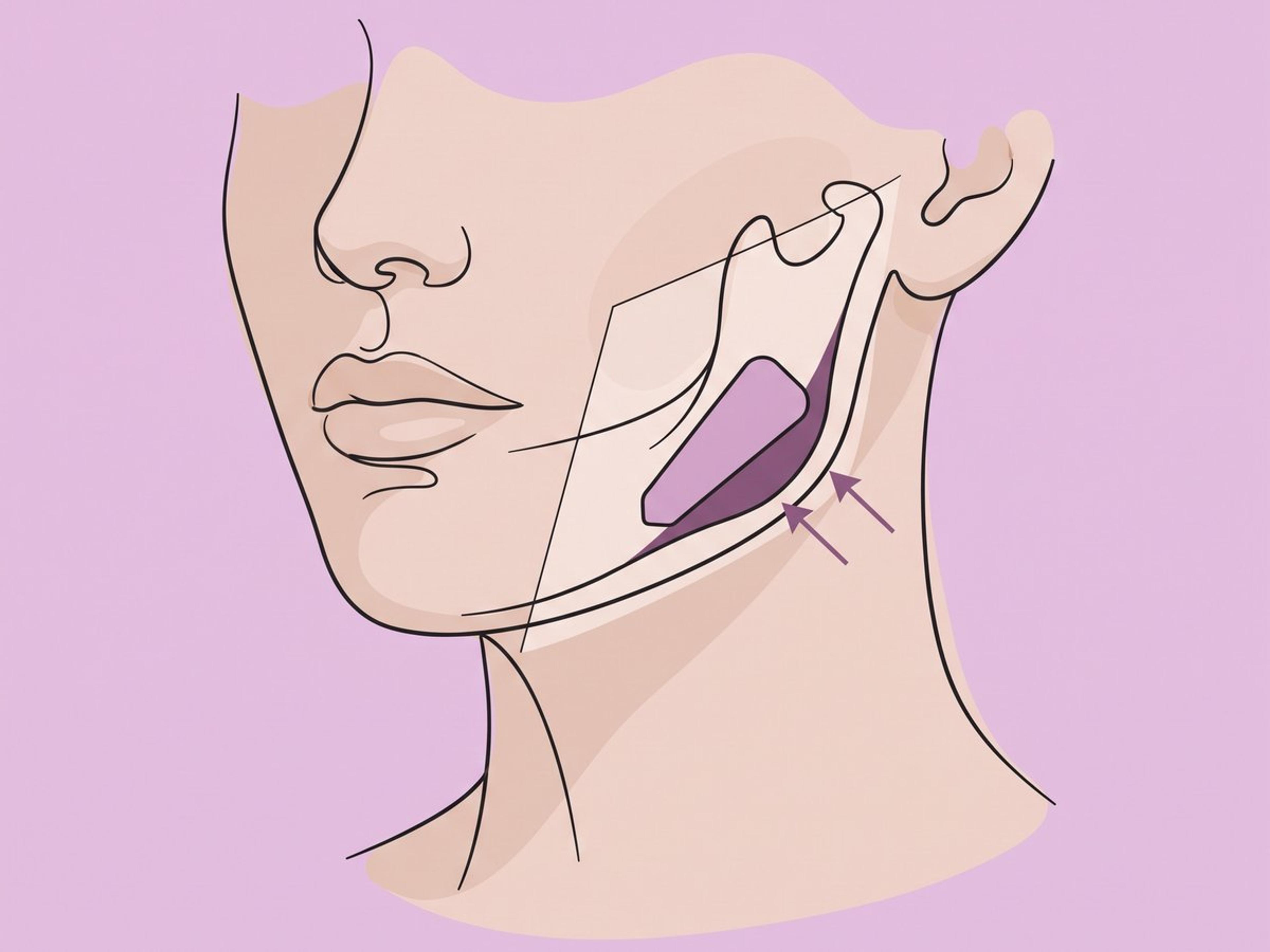
Solid silicone is widely used for chin and mandibular-angle implants. It is non-porous, can be carved during surgery and forms a fibrous capsule rather than bonding to bone — making later removal or exchange more straightforward. Because it does not adhere to bone, it can displace unless fixed. One prospective series of 116 angle implants reported a 13.8% displacement rate.
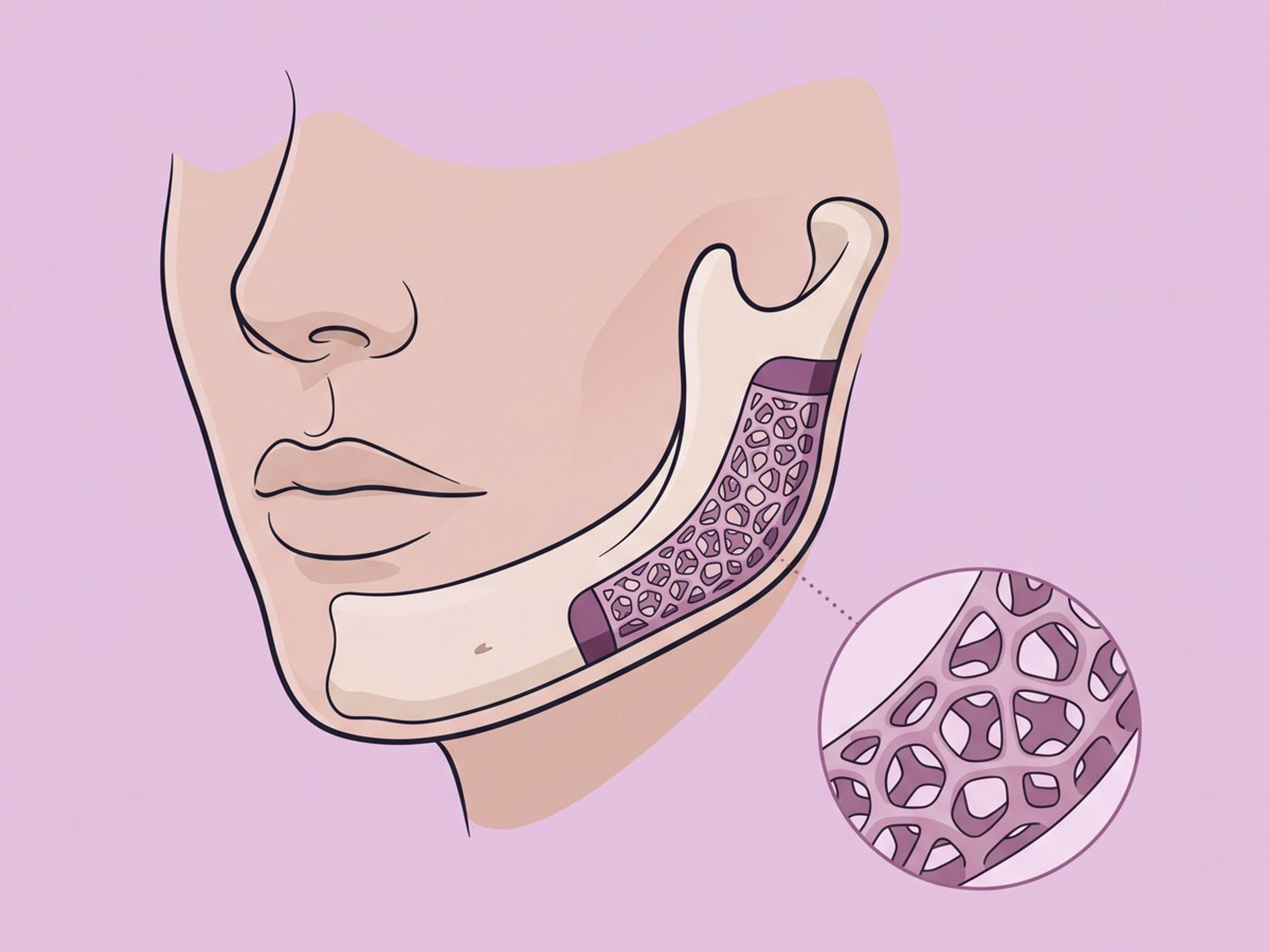
This approach combines double-chin liposuction with a facial implant in the same operation. The procedure addresses the area beneath the chin alongside chin or jawline structure.
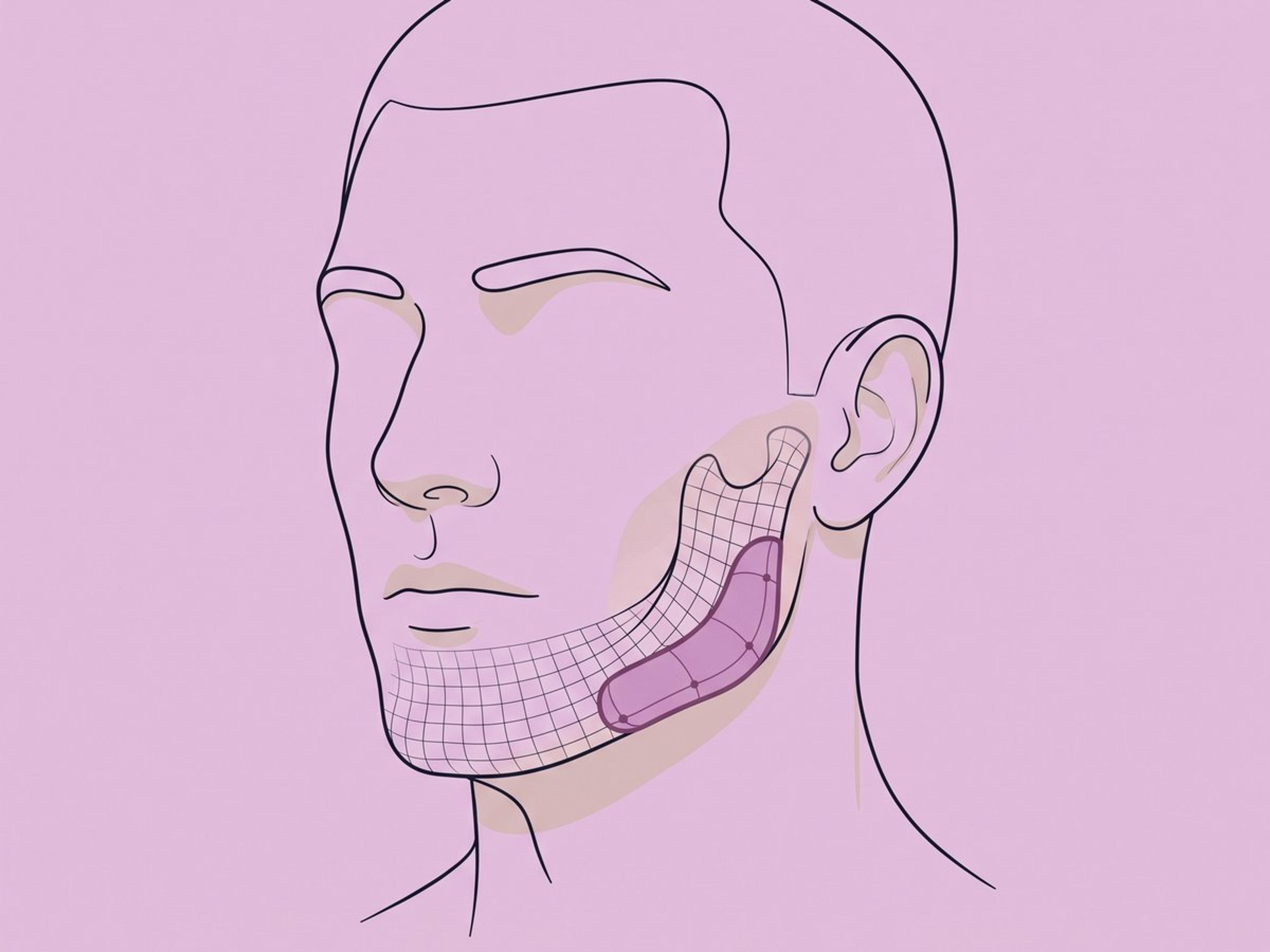
This combined procedure uses implants at the chin and jawline in the same operation. It is planned around the existing proportions of the lower face.
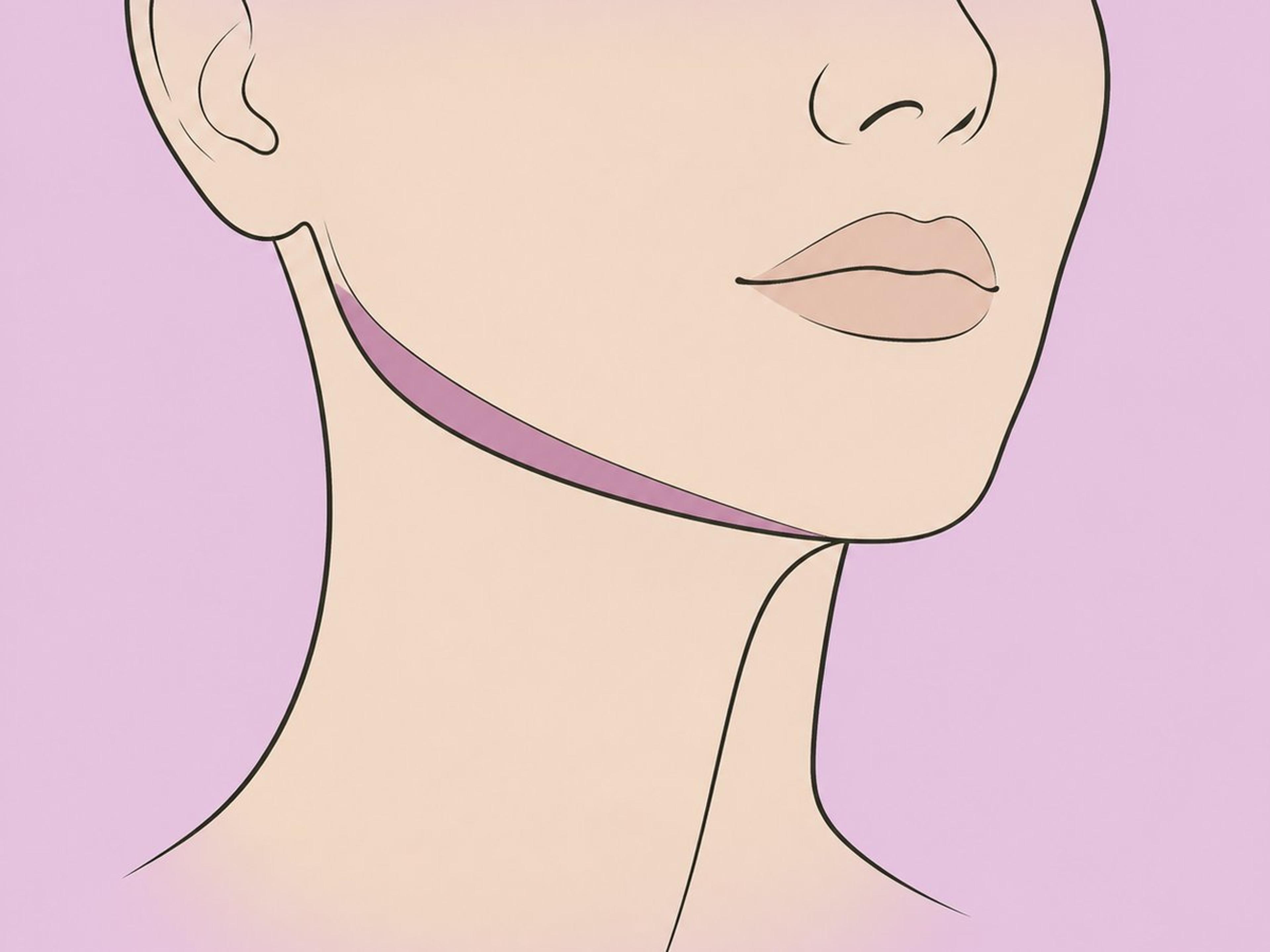
This procedure combines fat injection with a jawline implant. The implant provides structure at the jawline, while fat is placed in selected areas of the face.
The operation, step by step
General anaesthesia and oral antisepsis
You are asleep for this — an isolated chin implant can be done under sedation with local anaesthesia, but angle work needs a still field and full airway control. Before the first cut the mouth is prepared with antiseptic rinse and antibiotic cover is given, because an intraoral incision runs through colonised tissue and infection is the one complication that usually costs you the implant.
Incision — inside the mouth or under the chin
Chin implants can go through a vestibular incision inside the lower lip, which leaves no external scar, or a small submental incision hidden under the chin, which gives wider exposure, a lower contamination risk and access to the neck if that is being treated at the same time. Mandibular angle implants are placed intraorally, lateral to the external oblique ridge, because that is the only route that reaches the angle without cutting through the face.
Subperiosteal pocket, cut to the implant
The periosteum is lifted off the mandible so the implant will sit on bare bone rather than on soft tissue, which is what makes the change skeletal and stable. The pocket is dissected to the exact footprint of the implant — too generous and the implant can travel inside it, too tight and it sits distorted or under tension. The mental nerve is identified and protected as it exits the mental foramen, since retraction here is what causes the numb lower lip that most patients notice afterwards.
Implant seated and fixed to bone
The implant — preformed silicone, porous polyethylene, or a patient-specific piece milled from your own CT data — is seated flush against bone and checked for symmetry against the midline before anything is fixed. It is then held with titanium screws or non-resorbable sutures. Fixation is not optional in our hands: unfixed non-porous silicone has nothing to bond to, and a prospective series of 116 angle implants reported displacement in 13.8%.
Layered closure and compressive dressing
The mentalis muscle is resuspended before the mucosa is closed, because leaving it detached is what produces chin ptosis and a lip that no longer sits properly. An elastic compressive wrap or chin strap goes on before you leave the theatre — it limits swelling and, more importantly, holds the implant in the pocket during the days before the capsule forms around it. You stay 1 night, mainly so a haematoma in the pocket would be caught while it is still easy to treat.
Jawline implant: recovery week by week
- Day 1
Swelling and bruising start across the chin, jaw and upper neck, and the lower lip usually feels numb or tight. An elastic compressive dressing, tape or chin strap is worn to limit swelling and hold the implant where it was placed. With an intraoral incision you begin liquids or soft food and antiseptic mouth rinses the same day.
- Week 1
Swelling and bruising peak in the first few days, then settle over roughly 7 to 10 days. Dressings and any non-dissolvable sutures come out at the first follow-up. Most people are back at desk work and light daily activity within 1 to 2 weeks.
- Week 3
Most visible bruising has resolved and the jaw contour is recognisable, though firmness and residual swelling remain. Chewing normalises as the soft-food restriction lifts, typically after several weeks with an intraoral incision. Strenuous exercise, heavy lifting and anything that risks a blow to the jaw are still avoided, on the surgeon's schedule.
- Week 6
Full exercise — running, lifting, resistance work — is normally cleared around this point, once the implant is encapsulated and no longer at risk of being shifted by strain or a knock. Contact sports, martial arts and anything with a real chance of a blow to the jaw wait longer, on the surgeon's say-so. The jaw still feels firm and the contour is not yet final: swelling continues to come down for several more weeks.
- Month 3
Residual oedema has largely resolved and the final contour is what you see — ASPS notes that results are generally not judged before roughly 2 to 3 months. Altered sensation in the lower lip and chin has usually recovered by this point, although a minority of nerve deficits take longer or remain permanent. The implant is fully encapsulated and stable in its pocket.
Jawline implant: how to prepare
- Have your dental occlusion assessed — retrognathia with dental malocclusion is a contraindication to implant-only augmentation and points instead to orthognathic surgery or a sliding genioplasty
- Complete any dental and periodontal treatment and clear active oral infection before an intraoral approach, and use the prescribed antiseptic mouth rinses perioperatively
- Stop smoking and all nicotine products, and stop blood thinners, NSAIDs and supplements that increase bleeding on the surgeon's schedule
- Arrange a ride from the clinic, soft or liquid food for the first weeks, and 1 to 2 weeks away from work
Jawline implant: risks
Every operation carries risk. We name them so you can ask the right questions.
- Implant displacement or malposition — the most common mechanical failure.
- Infection
- Asymmetry, a visible contour irregularity, or an implant edge you can feel through the skin — sometimes requiring revision or exchange
- Extrusion through the incision, capsular contracture, haematoma, unfavourable scarring, and mentalis muscle dysfunction — chin ptosis — after chin dissection

Jawline implant in Turkey: what to expect
Most of what decides how this goes happens outside the operating theatre — who you speak to before you book, and who is still looking at your jaw a week later. This is how we plan the stay in Turkey.
Before you fly
Talk to the surgeon, before you travel — not a coordinator. Ask how many jawline implants they place a year, what they do when one displaces, and what their revision rate is. Arrange your insurance deliberately: the NHS points out that standard travel insurance does not normally cover things going wrong in surgery and that repatriation is expensive, so check what cover the treating clinic itself carries and whether it extends to you. Book a return flight you can move.
At the clinic
Surgery is under general anaesthesia and you stay 1 night. Mandibular angle implants are usually placed through an intraoral incision, so from the first evening the work is antiseptic rinses, diligent oral hygiene, no straws and no wide mouth-opening — intraoral access is one reason infection rates for angle implants run higher than for chin implants. An elastic compressive wrap goes on before you leave the theatre and holds the implant where it was seated.
Recovery in Istanbul
Plan 7 days in Istanbul in total . First review in the days after surgery for a wound check and dressing change, and a second before departure to clear you to fly. Sleep with your head elevated, keep away from strenuous activity and heat, and walk regularly, which is the practical countermeasure to the clot risk the CDC flags for surgery plus flying. Swelling peaks at 48 to 72 hours, so the middle of the stay feels worse than the end. The compressive wrap stays on more or less continuously for around 7 days, then at night. These days are functional, not padding.
Heading home
7 days in Istanbul is sufficient. Before you leave, we see you for a final review, confirm you are comfortable to fly and explain the next stage of your recovery. Care continues for twelve months after surgery.
Checking a clinic in Turkey
Turkey rewrote its medical-tourism rules on 26 April 2025, replacing the 2017 regulation. Any facility treating international patients must now hold an international health tourism authorisation certificate, register on the Ministry of Health's HealthTürkiye portal, and carry complication insurance for the procedures it performs; hospitals and medical centres also had to complete TÜSKA accreditation by the end of that year. Facilities are required to publish that certification — so you can check ours, and you should check anyone else's before you pay a deposit.
On the face the surgeon matters more than the building, because the margin for error is millimetres and the result is the first thing anyone sees. Ask how many of this specific operation they perform a year, ask to see their own patients at one year rather than at two weeks, and ask what they would decline to do in your case — a surgeon who never says no is telling you something. Ask for their Turkish Medical Association registration. If an agency rather than the clinic is arranging the trip, get it in writing who holds clinical responsibility once you have flown home.
Most nationalities enter Turkey visa-free or on an e-Visa for a stay of this length, with a passport valid at least six months. Confirm the rule for your own passport, and build the return flight around the last clinic visit rather than fixing it in advance.
- United Kingdom
- £4,000 – £7,000
- United States
- $5,000 – $9,000
- Western Europe
- €4,000 – €8,000
Published typical ranges for orientation — confirm with a local quote.
Jawline implant: frequently asked questions
What is the difference between a jawline implant and jawline filler?
An implant is a solid device placed surgically onto the bone, and it changes the skeletal contour until it is removed. Filler is an injectable gel placed in the soft tissue that resorbs over months and is reversible. Implants deliver larger, sharper and durable changes in projection and width, while filler is a lower-commitment option for modest softening of the jaw outline.
Is a jawline implant permanent, and can it be taken out?
Silicone are not replaced on a schedule — they stay in place indefinitely unless a problem arises. Removal or exchange is a second operation, and it is generally simpler with non-porous silicone, which forms a capsule, than with a porous implant that has integrated with bone and soft tissue. Removal is most often prompted by infection, displacement, or dissatisfaction with the size.
Should I have a chin implant or a sliding genioplasty?
A chin implant adds projection with a synthetic device and is generally the shorter, less invasive operation. A sliding genioplasty cuts the chin bone with a saw from inside the mouth and advances your own bone segment, fixed with a plate and screws. Genioplasty is preferred for large advancements, vertical height changes, significant asymmetry, and cases with jaw discrepancy, while an implant is generally chosen for isolated horizontal deficiency with normal chin height and normal occlusion.
Who is not a candidate for a jawline implant?
Skeletal growth has to be complete, so we do not operate before the jaw has finished growing in the late teens. If your recessed chin comes with a true bite discrepancy, an implant is the wrong operation — that is orthognathic surgery or sliding genioplasty territory, and we will say so at consultation. The remaining disqualifiers are the ones that raise infection and healing risk around any implant: active dental or gum infection, which must be treated before an intraoral incision; uncontrolled diabetes; a bleeding or clotting disorder, or blood thinners you cannot safely pause; a compromised immune system; and smoking or nicotine use you are not willing to stop around surgery.
Will my lower lip and chin be numb after surgery?
Temporary numbness of the lower lip and chin is common in the early weeks, because the mental nerve runs immediately through the surgical field, exiting the mental foramen about 1.5 cm above the lower border of the mandible. Most sensation recovers as the nerve resolves from retraction and swelling. Permanent mental nerve injury is reported in roughly 2.4% of cases.
How much does a jawline implant cost in Istanbul?
An all-in package with us runs €4250 to €7150 as of 2026, covering the surgeon's fee, anaesthesia, theatre and 1 inpatient night, standard pre-operative bloods and imaging, the implants themselves, medication on discharge, transfers, and scheduled follow-up during your stay. It excludes flights, hotel nights and any revision surgery. A patient-specific CAD/CAM implant, or chin and angle augmentation together, sits at or above the upper end of that range.
How does that compare with the cost in the United States?
ASPS does not report mandibular angle implants separately. ASPS states explicitly that the figure does not include anaesthesia, operating room facilities or other related expenses, so a real US all-in cost is materially higher. It is not a like-for-like comparison with an Istanbul package price, and we will not present it as one.
Will the scars be visible?
The intraoral approach places the incision inside the mouth in the gum vestibule and leaves no external scar, but it carries a higher risk of bacterial contamination. The submental approach uses a small incision hidden under the chin, gives better exposure and lower contamination risk, and allows simultaneous neck work. Mandibular angle implants are placed through an intraoral incision lateral to the external oblique ridge, or externally for larger implants.
When can I return to work and exercise?
Most people return to desk work and normal daily activity within 1 to 2 weeks, once the bulk of the swelling and bruising has settled. Heavy lifting, strenuous exercise and any activity risking a blow to the jaw are restricted for longer on the surgeon's instruction, because trauma before the implant is fully encapsulated can displace it. Final contour is judged at roughly 2 to 3 months.
What signs after surgery mean I should contact the clinic?
Contact us the same day — or a local doctor once you are home — for spreading redness or warmth over the chin or jaw, discharge or a persistent bad taste from an intraoral incision, fever, pain that worsens after the first few days instead of easing, or sudden one-sided swelling, which can mean a haematoma collecting in the implant pocket. A knock to the jaw followed by a change in the contour also needs review, because a displaced implant is easiest to reposition early, before the capsule matures. Do not try to wait an infection out: an established infection around a facial implant rarely settles with antibiotics alone and usually means removal, so early treatment is what saves the implant.
Will an implant give me the chiselled jawline I see online?
It will change the skeletal foundation — projection at the chin, width at the angles — and that change is permanent. What it cannot do is create definition the soft tissue on top is hiding: thicker skin, fullness under the chin and neck laxity all blunt the contour, and many of the dramatic jawlines online are bone work plus neck liposuction, or simply thin-skinned young patients. If your jaw outline is soft because of submental fat rather than a short mandible, an implant alone will disappoint — and it is not a substitute for weight loss. Part of the consultation is telling you honestly which of the two you are looking at.
How much does jawline implant cost in Turkey?
€4,250 to €7,150 with us, confirmed after a consultation rather than quoted blind. For comparison it is typically £4,000 – £7,000 in the United Kingdom, $5,000 – $9,000 in the United States and €4,000 – €8,000 in Western Europe. Implant size sets the figure, and whether it is a stock implant or a custom one designed from your own CT scan — the custom route costs accordingly.
Sources
- [1]Facial Implants Cost — Average Surgeon Fees · American Society of Plastic Surgeons (plasticsurgery.org) · 2024
- [2]Jawline improvement using patient-specific angle implants with virtual planning in orthognathic surgery · Journal of Cranio-Maxillofacial Surgery (via PubMed) · 2025
- [3]Facial Implants — StatPearls · NCBI Bookshelf, National Library of Medicine · 2024
- [4]Silicone Facial Implants, to Fixate or Not to Fixate: A Narrative Review · Plastic and Reconstructive Surgery – Global Open (PMC) · 2023