


What it is
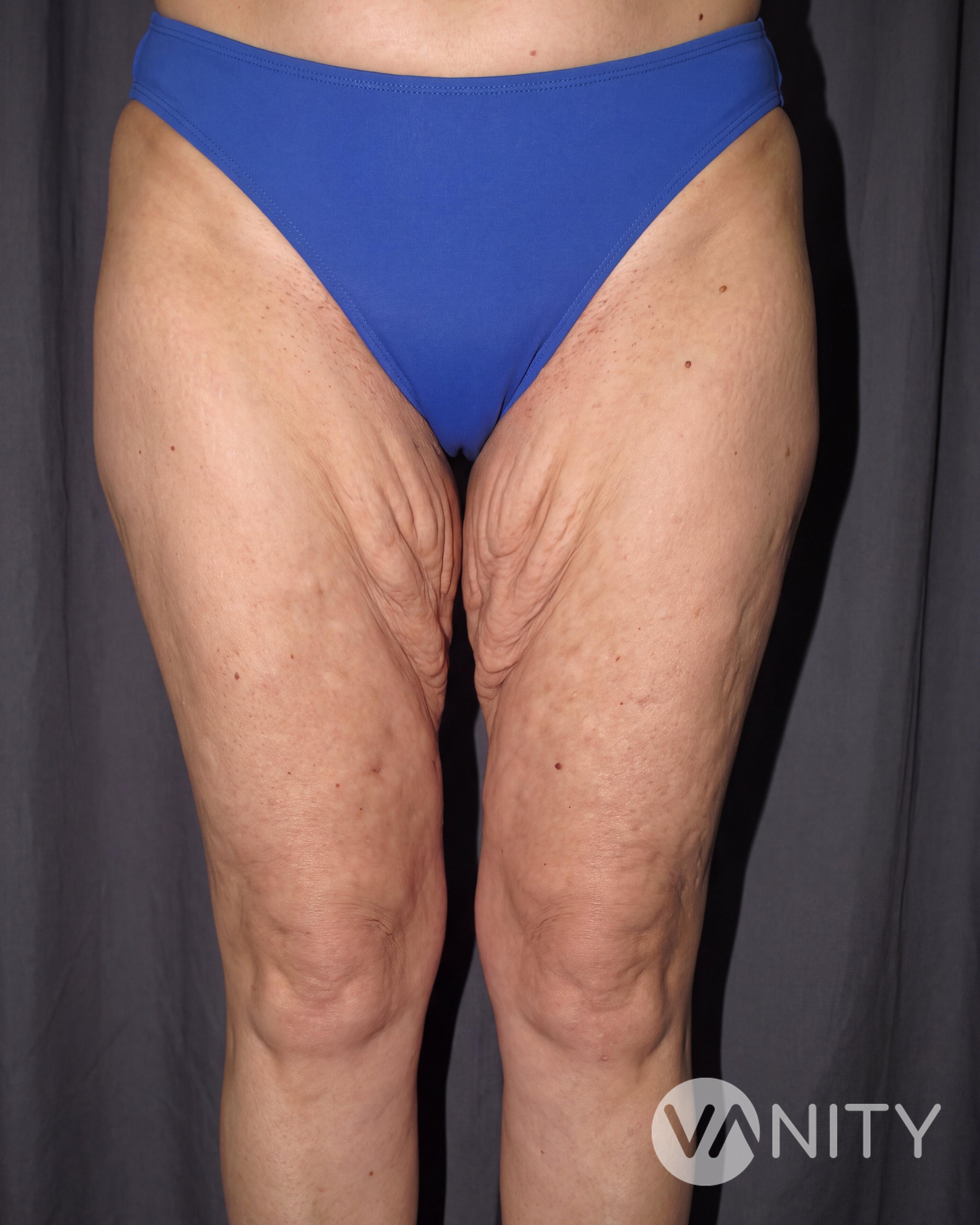
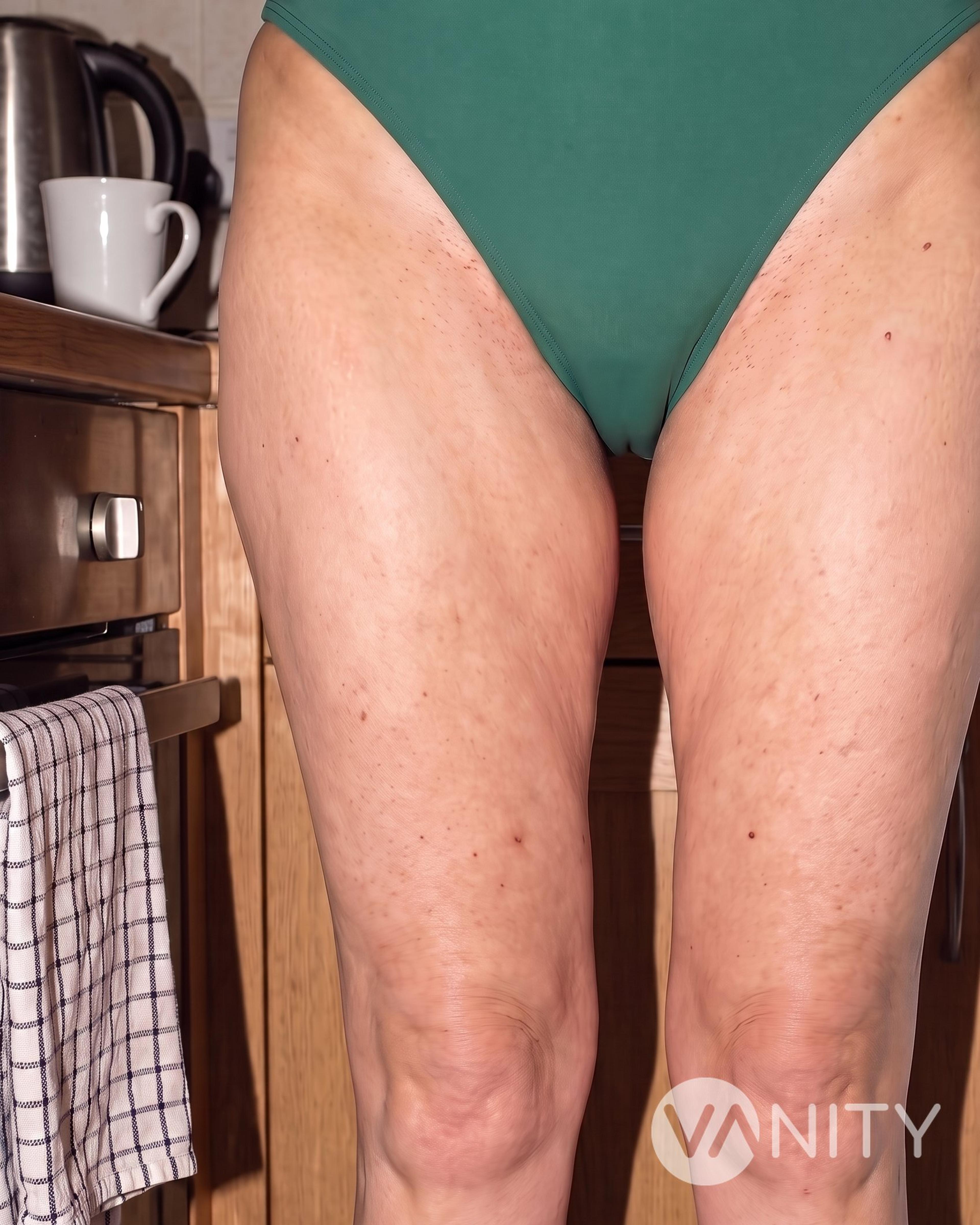
A thigh lift removes loose, sagging skin from the inner or outer thigh and tightens the tissue underneath, so the leg holds a smoother, firmer line. The surgeon places the incision in the groin crease, along the inner thigh, or down the outer hip, depending on where the looseness sits.
It is usually chosen after massive weight loss, after liposuction, or where age has loosened the skin in a way that training cannot tighten. Inner thighs that rub together with every step — causing chafing, pain, and skin irritation — are another common, functional reason to have it. Thighplasty techniques are also used reconstructively to repair the skin of the thigh after trauma.
It is usually chosen after significant weight loss, after liposuction, or where age has loosened the skin in a way that training cannot tighten.
Techniques we use
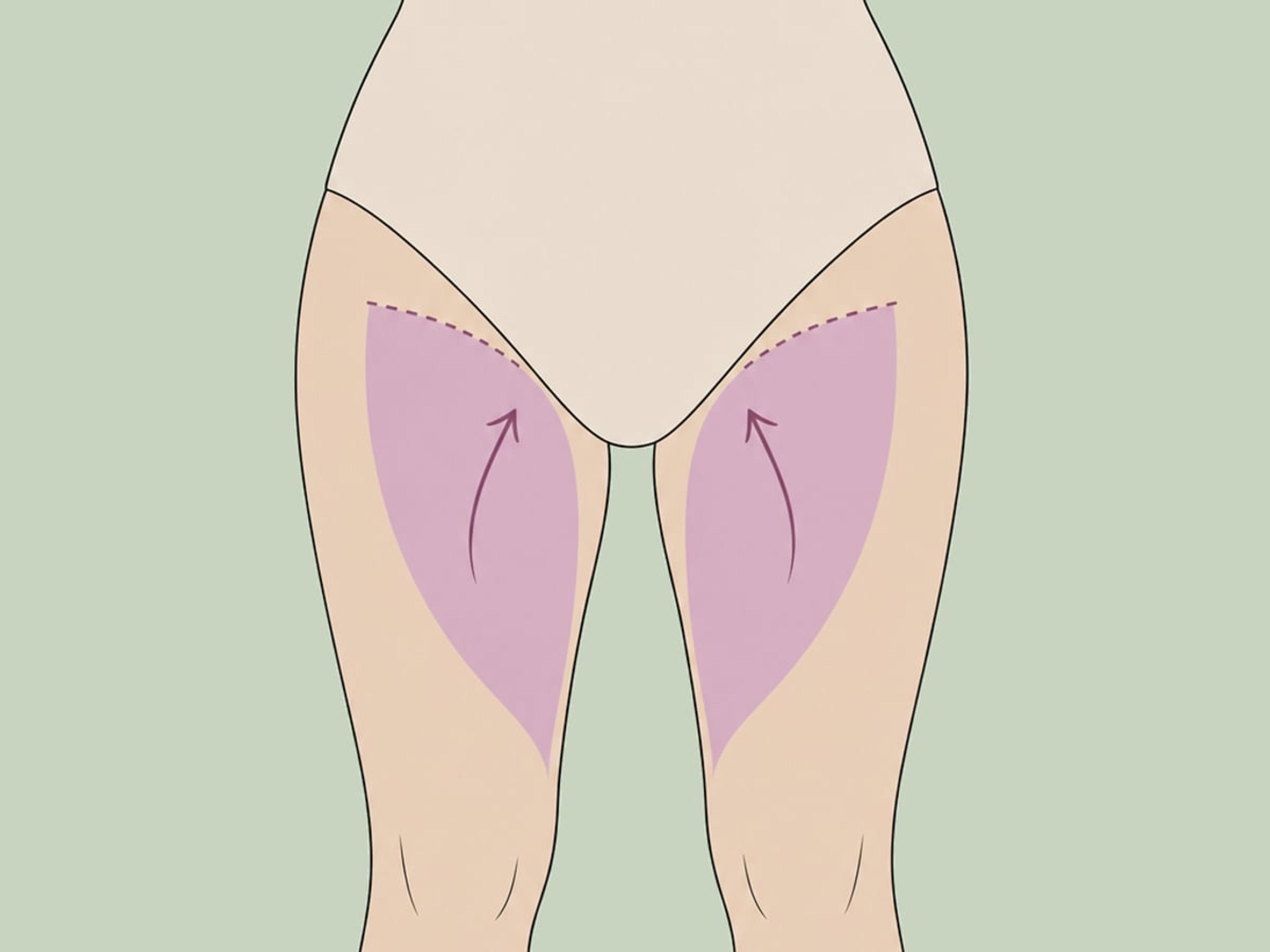
The most common approach, with the incision hidden in the groin crease. It suits mild to moderate looseness confined to the upper inner thigh, where the scar stays largely covered by underwear.
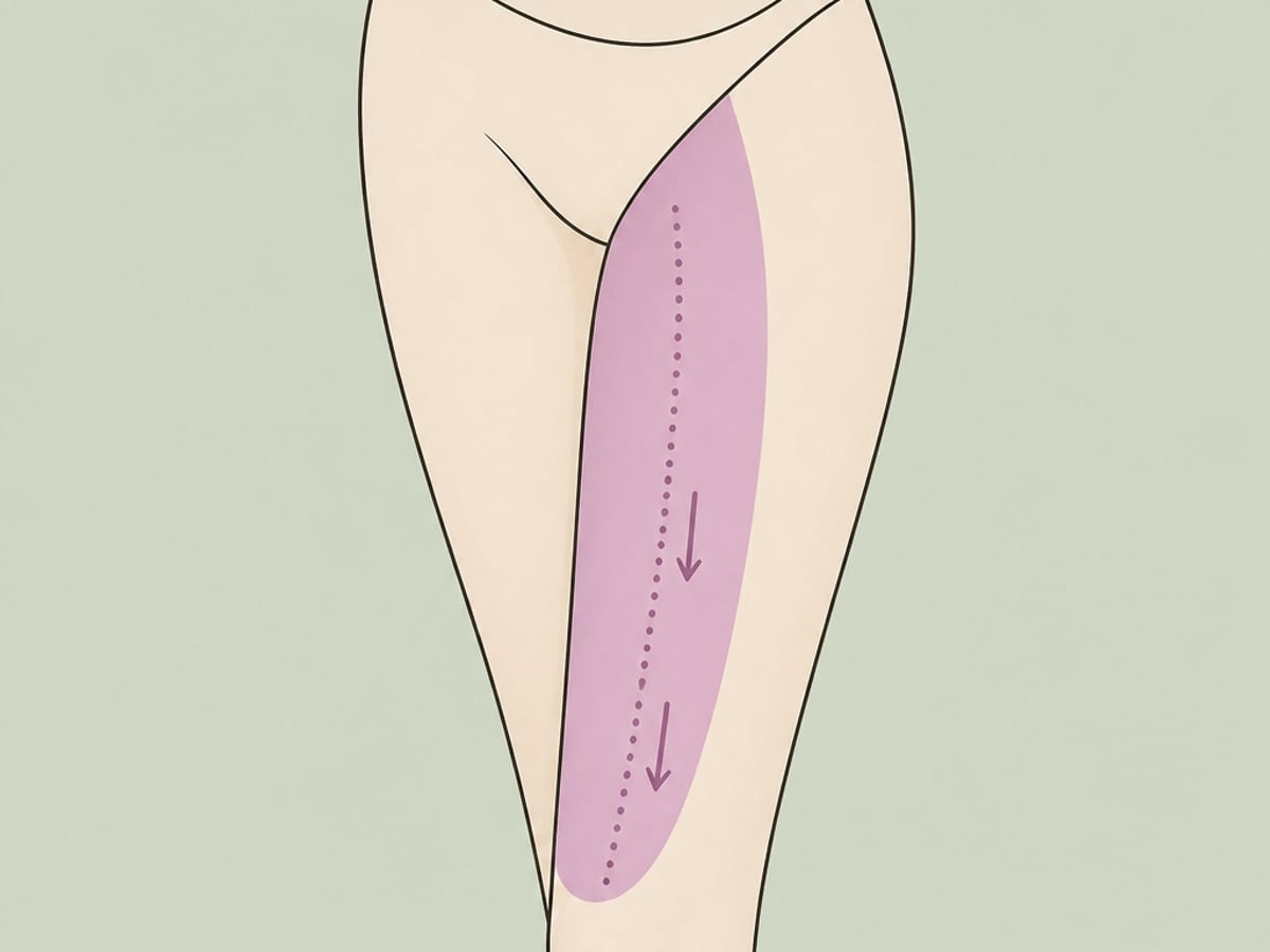
Adds a longer incision running down the inner thigh toward the knee. We reserve it for significant skin excess after massive weight loss — it removes far more tissue but leaves a visible vertical scar.
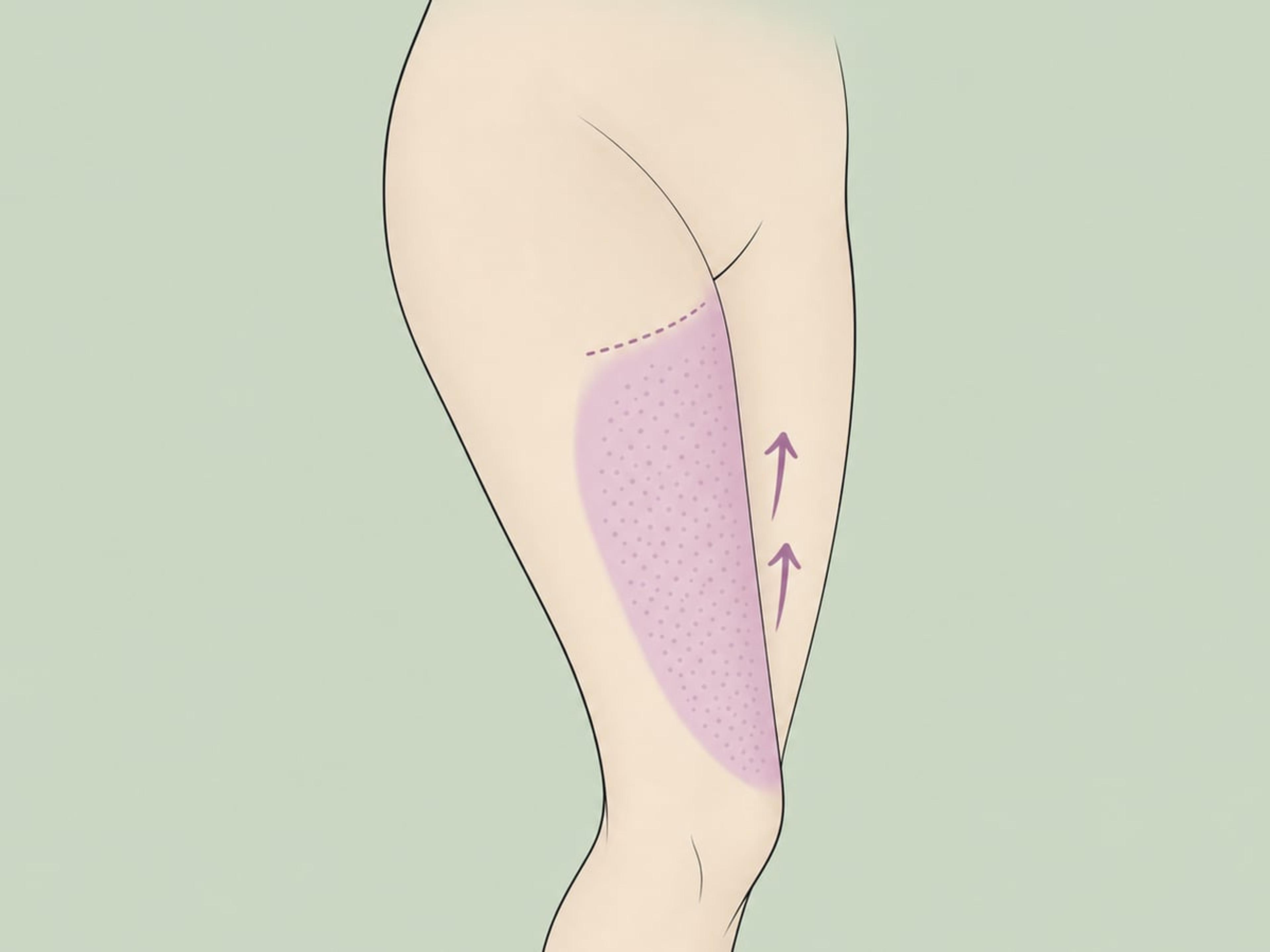
Combines liposuction with skin removal to debulk the thigh before lifting. It helps when there is a mix of stubborn fat and loose skin rather than looseness alone. The fat is usually broken up with VASER ultrasound and removed before any skin is cut, which leaves the blood vessels, nerves, and lymphatic channels running through the thigh intact — less swelling and fewer fluid collections than excision alone.
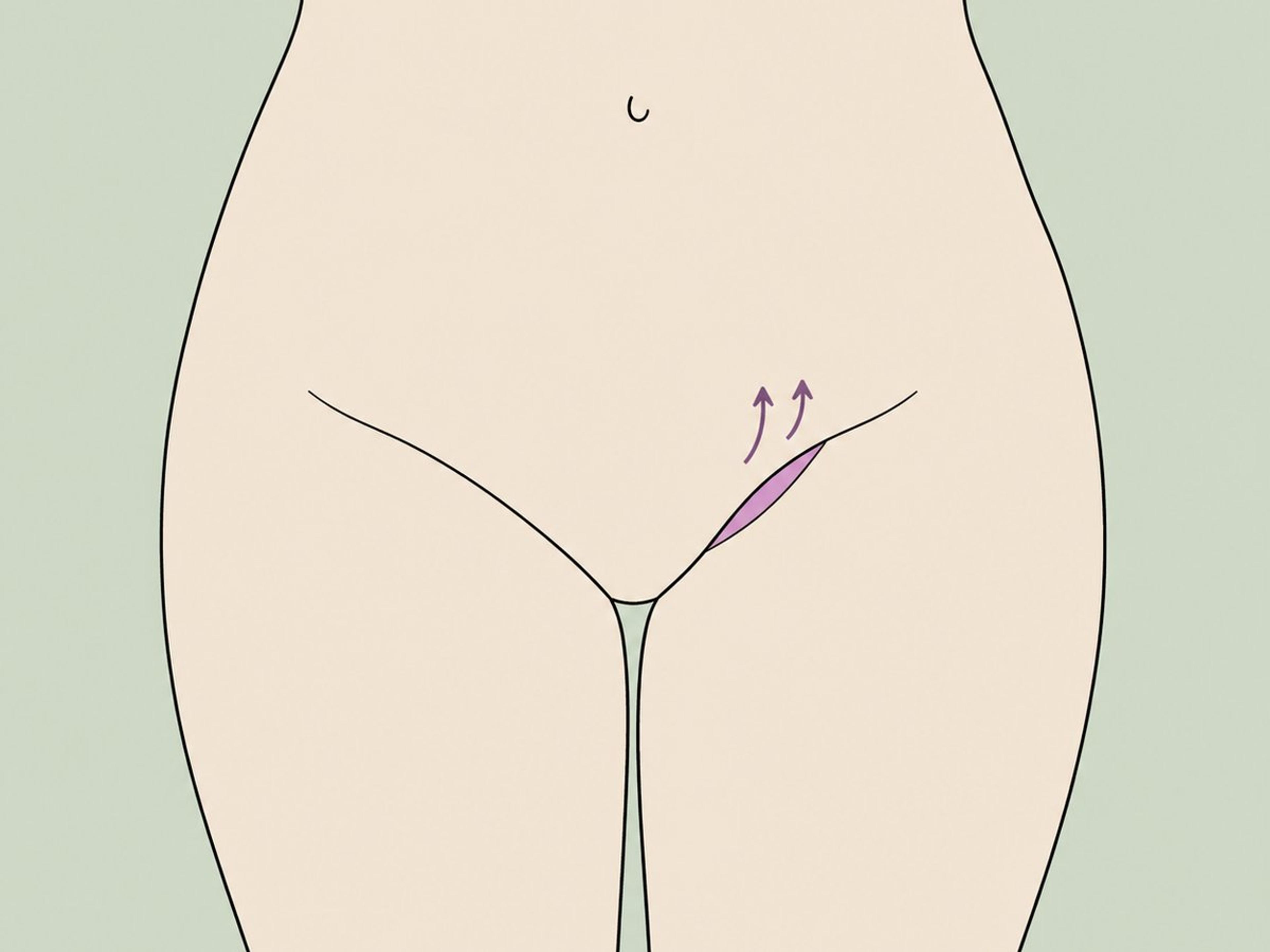
A short crescent-shaped incision inside the groin fold removes a small wedge of skin and lifts the tissue below it. It suits people whose skin is still elastic through the mid and lower leg but who carry a mild pocket of looseness at the very top of the inner thigh. It is chosen for the short, well-hidden scar and the faster recovery, and it will not hold if the laxity runs further down the leg.
How the surgery unfolds
Marking, standing up
The excision pattern and the final scar line are drawn while you stand, before anaesthesia. Thigh skin hangs differently once you lie down, and the groin incision has to end up where underwear and a swimsuit cover it.
General anaesthesia
You are asleep for the whole operation, typically two to four hours. The legs are positioned and prepped so both sides can be compared directly on the table.
Liposuction first, if planned
Where fat contributes to the bulk, the thigh is debulked by liposuction before any skin is cut. Removing the fat first is what lets the surgeon judge how much skin is genuinely excess rather than guessing.
Skin removal along the agreed pattern
Loose skin is removed to the plan set at consultation — inside the groin crease alone for a medial lift, continuing down the inner thigh for a vertical one, or along the bikini line and around the hip for an outer lift.
Anchoring the deep layer
The tissue is fixed to the strong fascia at the groin rather than left hanging on the skin. This anchoring is what stops the scar from sliding down onto the visible inner thigh and prevents downward pull on the genital area — the two problems that define a poor thigh lift.
Drains, layered closure, garment
Drains are placed because the groin is a mobile, moist area where fluid collections are the most common complication, and the wound is closed in layers so tension sits on the deep stitches. You wake in a compression garment and stay one night as an inpatient.
Recovery, week by week
- Day 1
You are in compression garments, sore, and moving slowly with help. Expect tightness in the groin and inner thigh, drains in place, and short, frequent walks to keep circulation moving.
- Week 1
Swelling and bruising peak. Keep your legs elevated as much as possible when resting this week — it noticeably limits the swelling. Most people are off strong pain medication by the end of the week and walking unaided around the house, though sitting for long stretches is uncomfortable. Walk with short steps: wide leg movements, deep bending, and squatting pull directly on the groin incision and stay off the table for the first two to three weeks.
- Week 3
Drains are usually out, swelling is dropping, and desk work is realistic again — most people are back at a desk 10 to 14 days after surgery. Compression garments stay on, and the incisions are still pink and tender. Keep lifting under 5 kg and leave driving until you are off strong pain medication, and take the garment off only to shower.
- Week 6
Light cardio and lower-body movement resume with surgeon clearance, and the compression garment usually comes off around now, after roughly six weeks of wear. The contour is starting to look like the goal, though the inner thighs still feel tight and numb in places.
- Month 3
Running, gym lower-body work, and swimming are usually back on with clearance, and most of the swelling has gone, so the thigh reads close to its final shape in clothes. The scars are at their reddest and firmest around now — that is expected, and it is the point they start to fade from.
- Month 12
The final shape is set, scars have faded toward their long-term colour, and sensation has mostly returned. Any residual tightness or asymmetry is what you will live with.
How to prepare
- Stop blood thinners, some anti-inflammatories, and supplements like fish oil and vitamin E 14 days before surgery.
- Stop smoking and all nicotine at least 4 weeks before — nicotine raises the risk of wound-healing problems in this area.
- Hold your weight steady for 3 to 6 months before booking, since further loss or gain will distort the result.
- Arrange a driver and one to two weeks of help at home, since sitting, stairs, and bathing are hard early on.
- Set up a recovery space with loose clothing, a raised toilet seat, and food and water within reach of a bed or sofa.
Risks
Every operation carries risk. We name them so you can ask the right questions.
- Visible scarring along the groin or inner thigh that fades but does not disappear
- Wound-healing problems, especially where the incision sits in the groin crease
- Fluid collection (seroma) that may need drainage
- Temporary or, rarely, lasting numbness in the treated skin
- Asymmetry or contour irregularities that may need a small revision
- Standard surgical risks including infection, bleeding, and reaction to anaesthesia

What to expect in Turkey
A thigh lift in Istanbul is planned as a single, well-defined trip. Most people spend 7 to 9 days here — one night as an inpatient and the rest recovering nearby — before flying home.
Before you fly
We start with a conversation, not a booking. You talk to the surgeon before you travel, share photos and history, and agree on what the surgery can and cannot do. The preparation steps above apply unchanged — the nicotine and blood-thinner timings matter most for healing in this area.
At the clinic
The procedure is done under general anaesthetic, with 1 night as an inpatient so we can watch for bleeding and manage your drains. We provide airport pickup and an English-speaking coordinator, which matters because drain care and dressing changes need clear communication. Confirm exactly which facility will perform and recover your surgery — international accreditation applies to a specific facility, not to a provider by association.
Recovery in Istanbul
Plan to stay 7 to 9 days, with the nights after you leave the ward spent in a hotel nearby and 2 in-clinic checks during that time. We keep you here until the drains are out and at least one wound check and a pre-flight review are done, since aftercare abroad is a documented weak point of cosmetic tourism.
Heading home
Flying too soon raises the risk of a blood clot (DVT), so we hold travel until the drains are out and the surgeon clears you — usually toward the end of a 7 to 9 day stay. Compression garments and moving around during the flight are advised, and we stay with you for twelve months of follow-up once you are home.
- United Kingdom
- £6,000 – £9,500
- United States
- $9,000 – $15,500
- Switzerland
- CHF 11,000 – CHF 18,000
Published typical ranges for orientation — confirm with a local quote.
Frequently asked
How long do I really need off work?
Plan on 10 to 14 days for desk-based work and 4 to 6 weeks if your job involves standing, lifting, or physical labour. Sitting is uncomfortable for the first couple of weeks because of where the incisions sit.
Will the scars be obvious?
A medial thigh lift hides the scar in the groin crease, where it is largely covered by underwear and most swimwear. A vertical or outer thigh lift leaves a longer scar that fades over 6 to 12 months but will not fully disappear.
Can I get a thigh lift instead of losing more weight?
No. A thigh lift treats loose skin and contour, not excess fat, and we want you within a stable, healthy weight range before operating. Doing it before your weight settles tends to undo the result.
Is liposuction enough on its own?
Only if your skin still has good elasticity. Once the skin is loose — typically after major weight loss or with age — liposuction alone leaves the thighs looking deflated rather than lifted.
Will a thigh lift get rid of cellulite?
No. Cellulite comes from fibrous bands tethering the skin down while fat pushes up between them, and a thigh lift does not release those bands. Tightening the skin envelope can make the dimpling look less pronounced, but the cause sits deeper than the surgery reaches.
Does a thigh lift remove stretch marks?
Only the ones sitting on skin that is being removed, which is usually the upper inner or outer thigh. Marks outside the excision area stay, though they often look tighter and less obvious once the surrounding skin is no longer slack.
When can I exercise again?
Walking starts on day one. Light cardio usually resumes around week 6 with surgeon clearance, and lower-body strength training, running, and yoga are typically held off until around 3 months.
Is it safe to travel to Istanbul for a thigh lift?
Yes, with planning. Plan to stay in Istanbul for 7 to 9 days so the drains come out and the surgeon can clear you before you fly, since flying too soon raises the risk of a blood clot. We arrange your follow-up before you leave and stay in contact for twelve months after.
Who should not have a thigh lift?
You need a stable weight, good general health, and no medical conditions that impair healing or raise surgical risk — poorly controlled diabetes, clotting disorders, and ongoing nicotine use are common reasons to postpone. Surgeons also want a commitment to keeping weight and fitness steady afterwards, since large changes undo the result.
Am I a candidate for a thigh lift after massive weight loss?
This is the most common reason people have one. After massive weight loss the skin of the upper leg has been stretched past the point where it can shrink back, and the folds left behind chafe, trap moisture, and make walking uncomfortable — so here the surgery is as much functional as cosmetic. We ask that you are at or near a stable target weight and in good general health first; most candidates are between 18 and 55. Where the looseness runs the full length of the inner thigh, the extended vertical technique is usually the one that fits.
How painful is a thigh lift?
Compared with other body procedures, it sits relatively low on the pain scale. Short- and long-acting local anaesthetics are placed in the area during surgery, so the first hours are well covered, and most patients are off strong pain medication by the end of the first week. Soreness peaks around days three to five and eases steadily from there.
Is there a non-surgical alternative to a thigh lift?
Injectable leg fillers — usually hyaluronic acid — can adjust the contour of the leg temporarily, but they dissolve over time and cannot remove loose skin. When skin excess is the problem, which is the usual reason for a thigh lift, surgery is the only lasting correction.
Can a thigh lift be combined with other surgery?
Yes, for patients healthy enough for a longer anaesthetic. It is commonly paired with a tummy tuck or folded into a mommy makeover, and after major weight loss it forms part of a lower body lift, where the outer thigh incision follows the same line. Fat taken from the thighs can also be purified and used for a fat transfer to another area in the same session.
Why do thigh lift quotes vary?
The price moves with the surgeon's experience, the technique and how much tissue is removed, the facility, and what pre- and post-operative care the package includes. Combining the lift with another procedure, such as liposuction or a tummy tuck, also changes the total. In Istanbul the all-in range starts from €2,750 and typically runs to €5000.
Sources
- [1]Thigh Lift · American Society of Plastic Surgeons
- [2]Thighplasty · StatPearls · 2025
- [3]Complications Associated With Medial Thigh Lift: A Comprehensive Literature Review · PubMed Central
- [4]Preoperative Risk Factors and Complication Rates of Thighplasty: Analysis of 1,493 Patients · PubMed