


Calf implants: what it is
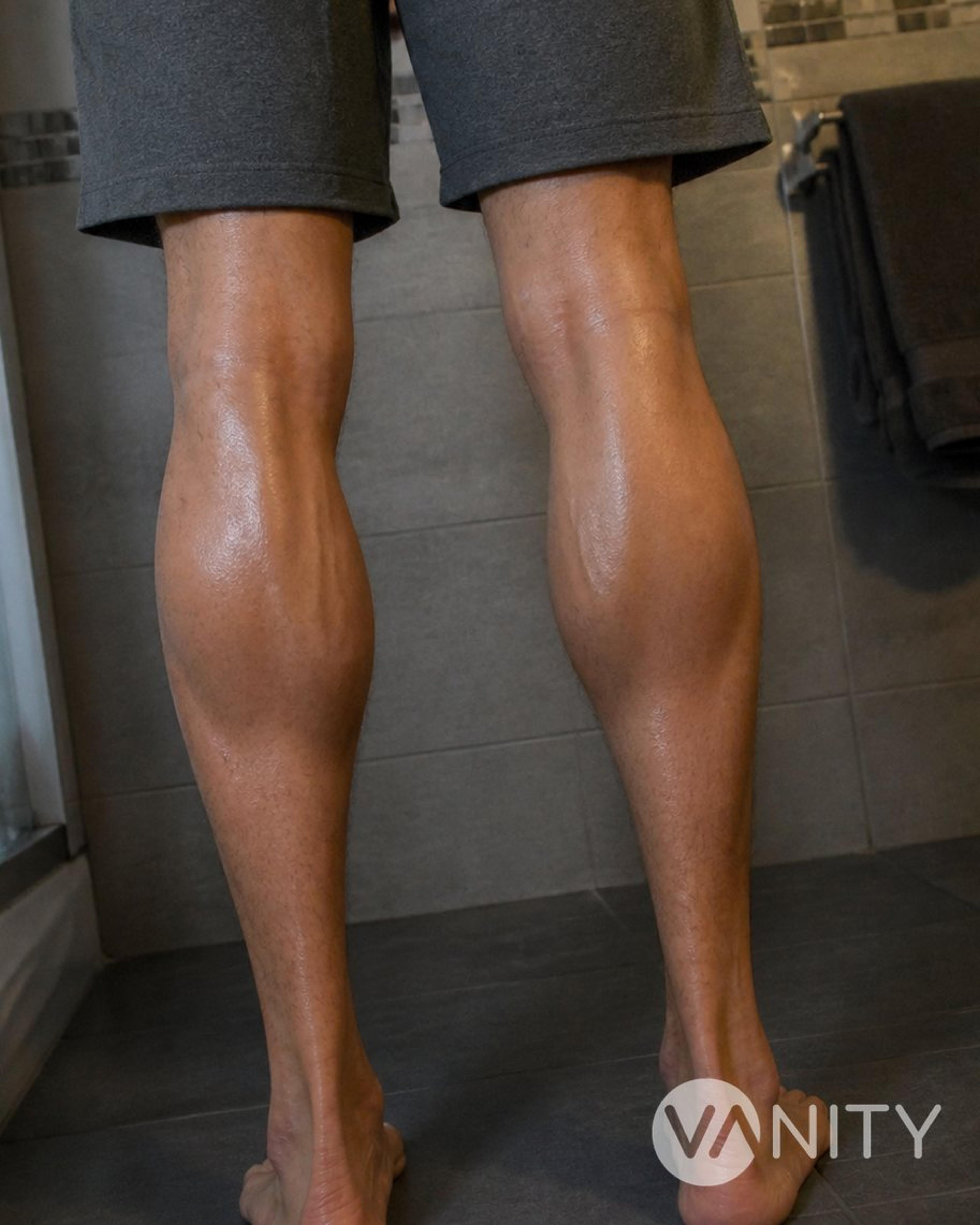
Calf implants add a fixed amount of volume to the lower leg. A shaped solid silicone implant is placed through a small incision hidden in the crease behind the knee, into a pocket beneath the fascia that covers the gastrocnemius — under the fascial sheet, above the muscle itself. Held in that plane the implant stays where it is put and its edges are harder to feel. Medial and lateral implants can be used alone or together, depending on which part of the silhouette is thin. The shape is there the day of surgery, but swelling takes several months to leave.
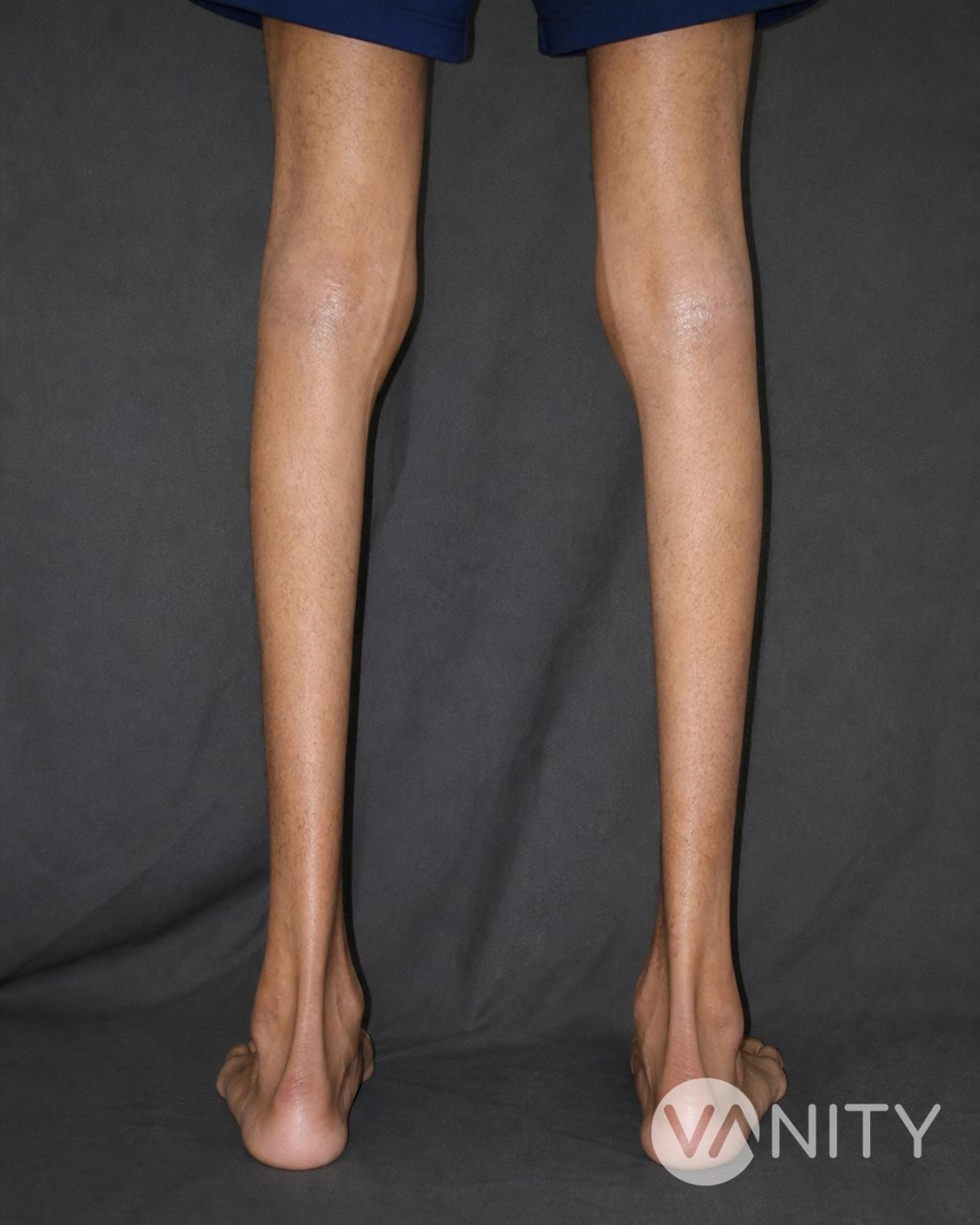
Two groups come to us for this. The first are people whose calves stay thin or out of proportion however consistently they train — including bodybuilders whose lower legs have not answered to work, and patients who want better proportion or symmetry between the two legs. The second is reconstructive: volume loss and asymmetry after clubfoot, poliomyelitis, spina bifida, trauma, or other congenital and acquired muscle deficits. In both, we look for completed skeletal growth, no smoking or nicotine, and a realistic view of how much the calf compartment can safely hold.
Calf augmentation can also include fat injection, using fat taken by liposuction from another area of your body. For selected patients, liposuction of the thighs can be paired with fat transfer to the calves to refine the overall leg proportion, while fat transfer to the thighs can be considered alongside calf implants where both areas need volume. Fat is injected in small amounts into the layer beneath the skin; it is best for modest contour work, and some of the transferred fat will resorb. When an implant is also planned, we usually stage the fat grafting rather than add volume to the calf compartment at the same operation.
Calf implants: techniques we use
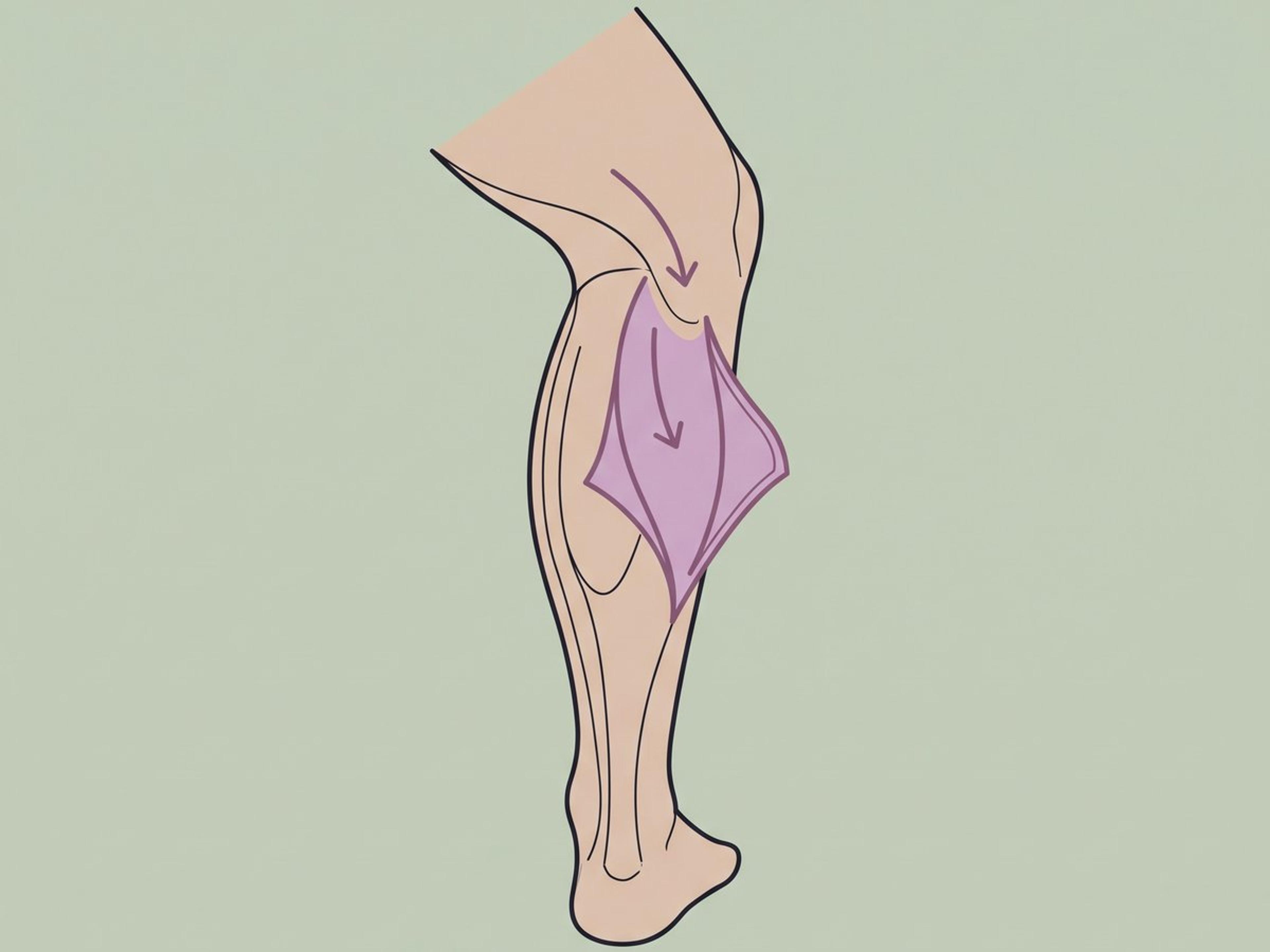
The implant is placed in a pocket between the calf muscle and its natural covering, through a small incision in the crease behind the knee. This is the approach we use most often because it gives stable placement while keeping the implant less noticeable. Implant size is chosen for your leg and your proportions.
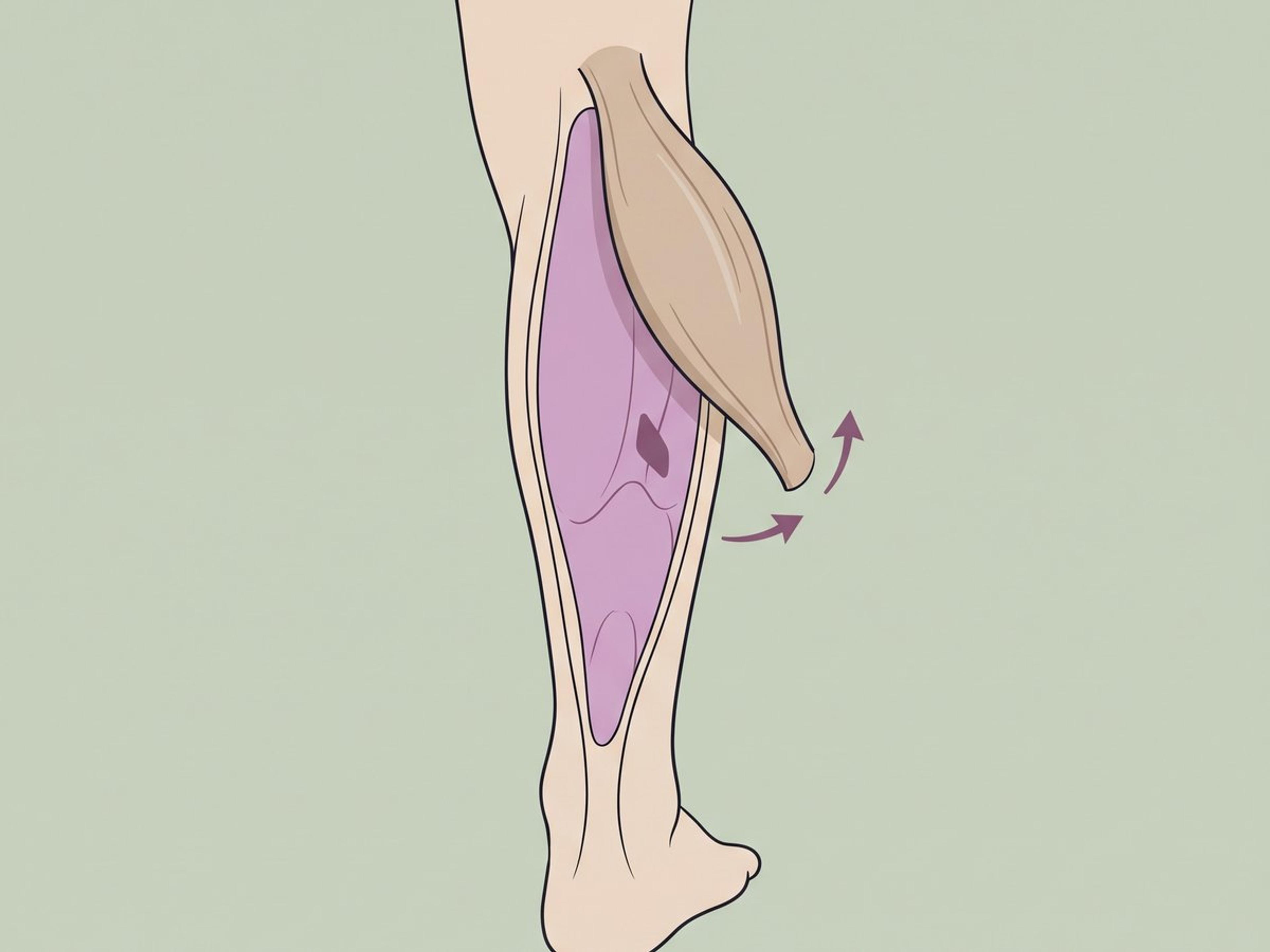
The implant is placed deeper, beneath the main calf muscle. This can give a softer-looking contour for people with very little natural tissue over the calf, but it involves more surgery and a longer, less comfortable recovery. It is used less often.
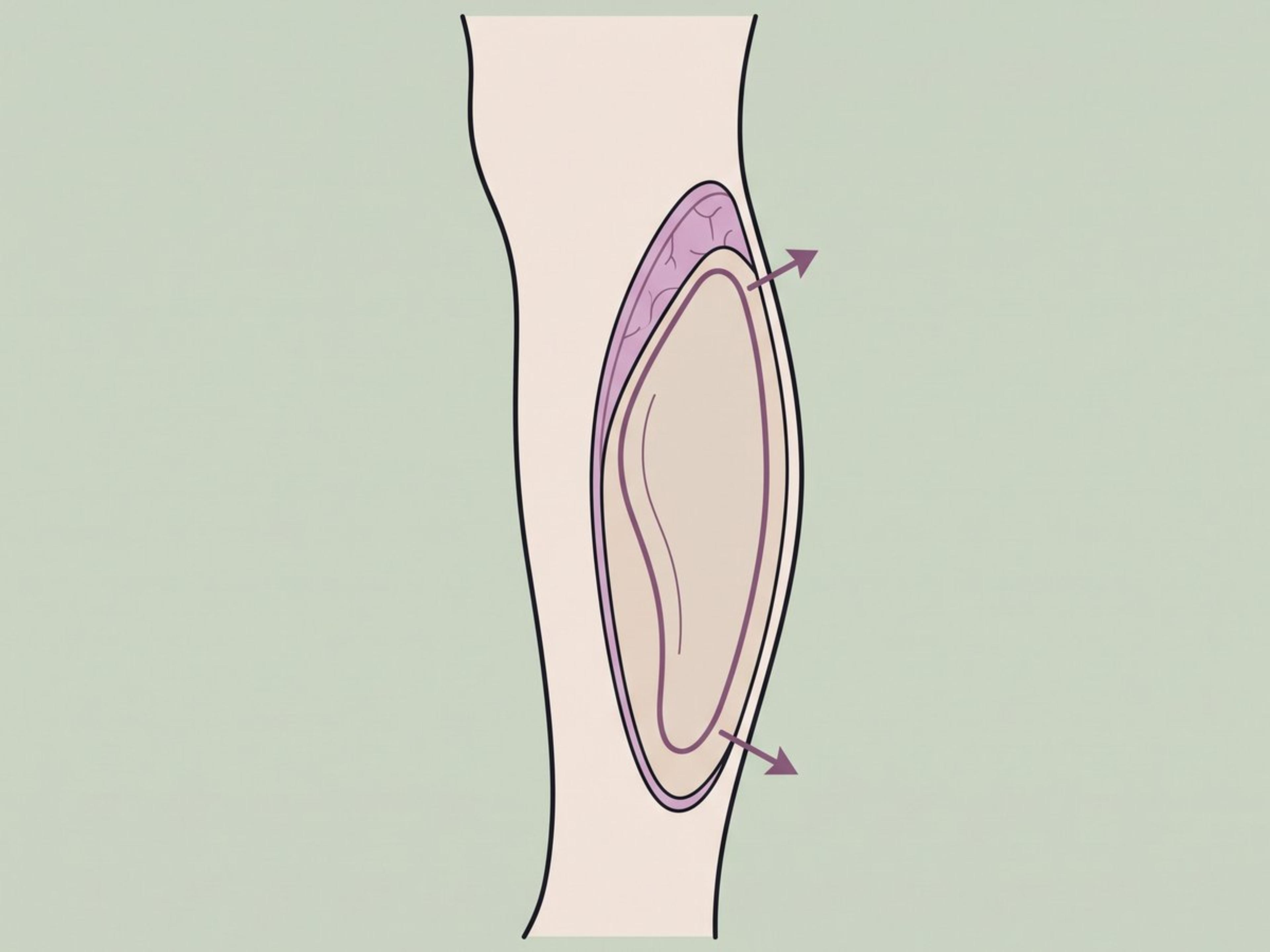
An implant can be followed by a separate fat-transfer procedure later, using fat from another area of your body to soften the transition around the implant and refine the shape. We keep these procedures separate so the calf is not asked to take on too much volume at once.
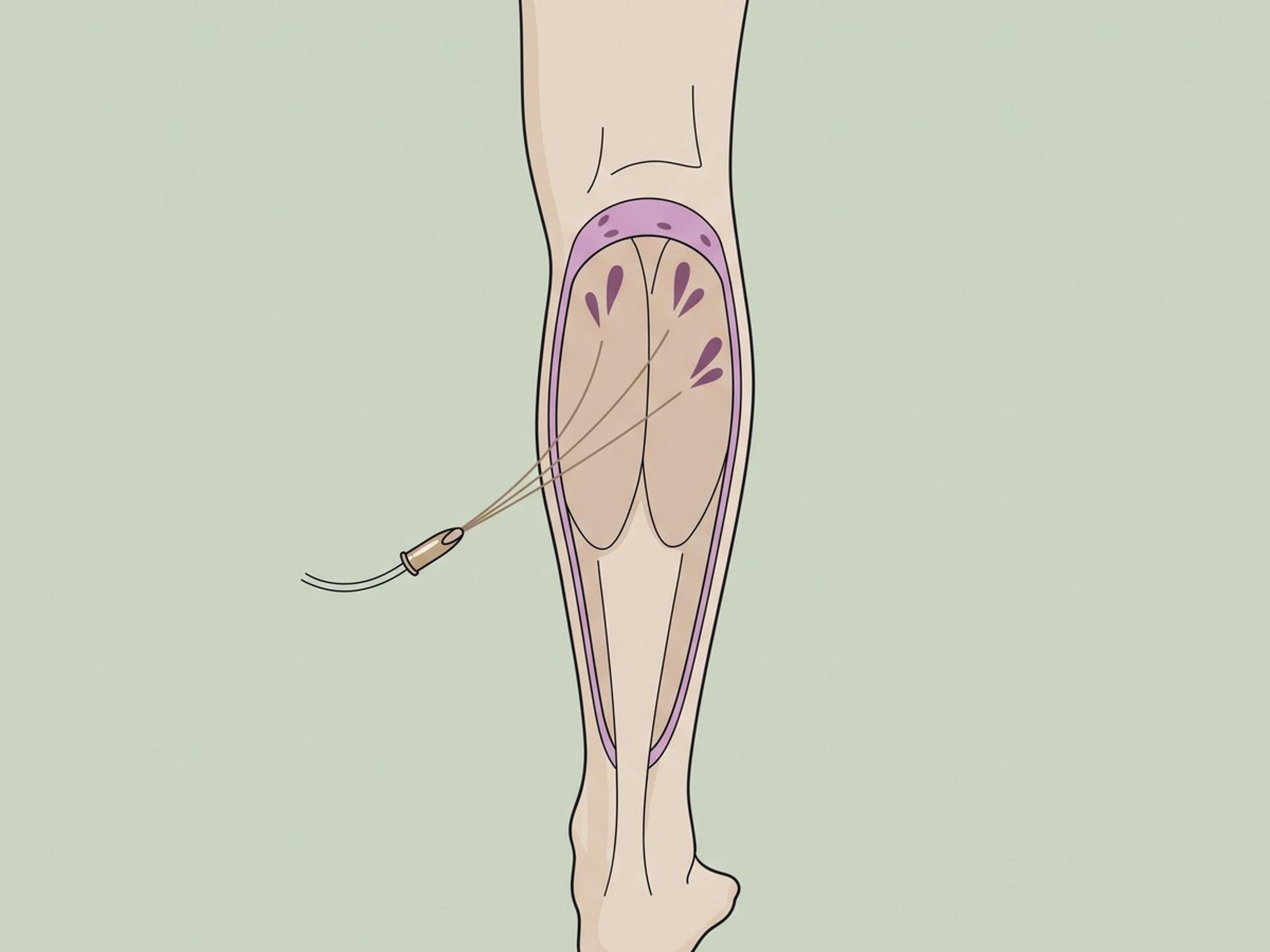
Fat taken by liposuction is placed beneath the skin of the calf, without an implant. It can suit a small, subtle increase in volume and avoids implant-related concerns, but some of the fat is naturally absorbed and the result is softer and more limited. For a larger increase in calf size, implants are usually the more reliable option.
The operation, step by step
Standing measurement and marking
The calf is measured and marked while you are standing, because the muscle bellies drop and flatten once you lie down and the silhouette you are trying to correct disappears with them. The marks set where the pocket ends, and the implant is chosen from those measurements rather than from a default size.
Anaesthesia and positioning
The operation is done under general anaesthesia, face down, so both calves are exposed at once. Working on both legs in the same field is what lets symmetry be judged directly rather than reconstructed from memory between sides.
Incision in the crease behind the knee
A 3–5 cm incision is made in the natural popliteal crease, where the fold conceals the scar. Entering above the muscle bellies also means no dissection crosses the thickest, most pressure-sensitive part of the calf.
Raising the subfascial pocket
The pocket is opened between the gastrocnemius fascia and the muscle beneath it, and it is made no larger than the implant it has to hold. A pocket cut generously is the reason implants travel — displacement was reported at about 4% in long-term series — so the limits marked at the start are respected exactly.
Implant placement and symmetry check
Medial and lateral implants are placed alone or together, depending on which part of the silhouette is deficient, and both legs are compared before anything is closed. Sizing stays conservative here: the calf compartment tolerates only a limited rise in pressure, and that ceiling — not the size you asked for — decides the volume.
Closure, compression and the first assisted walk
The fascia and skin are closed in layers and compression goes on before you leave theatre. You stay one night, legs elevated, and your first walk is assisted — early movement is what keeps clot risk down, while the elevation and the limited distance keep pressure off the fresh pocket.
Calf implants: recovery week by week
- Days 1–2
Pain, swelling and marked calf stiffness are expected. Legs stay elevated, walking is limited and usually needs help, and compression bandaging is worn continuously. Ice and prescribed pain relief are used, and antibiotics may be given. Calf pain that escalates rather than eases, tightness out of proportion, a hard tense calf or new numbness is not routine — tell us immediately.
- Week 1
Short distances only, on a stiff, guarded gait. Compression stays on and the legs go up whenever you sit. Bruising and swelling are at their most visible this week.
- Week 2
Sutures and any drains come out and compression bandaging is generally stopped. Most people return to sedentary work around this point, and gait normalises over roughly 2 to 3 weeks.
- Weeks 3–4
Walking distance builds and most people are off regular pain relief. Upper-body and core training can restart with your surgeon's clearance, but nothing that loads the calf — running, jumping, cycling, calf raises — because the capsule around the implant is still forming and the pocket has not finished settling. The calf still looks fuller and higher than it will end up; that is swelling, not the result.
- Week 6
Most everyday activity resumes. Running, cycling, jumping and calf-loaded strength training wait until after this point and are reintroduced gradually rather than all at once.
- Months 3–6
Residual swelling resolves and the implant settles into its final position — this is the contour you keep. The scar in the popliteal crease continues to fade.
Calf implants: how to prepare
- Complete a preoperative examination and blood work, with standardised photographs and measurement-based sizing — the implant is selected for your leg, not from a default size.
- Stop smoking and all nicotine products well before surgery; nicotine raises the risk of wound-healing failure and infection at the popliteal incision.
- Stop blood thinners, aspirin, NSAIDs and bleeding-related supplements on your surgeon's schedule, and fill prescriptions for pain relief and any prescribed antibiotics before the day.
- Fast as instructed for general anaesthesia, and arrange someone to take you home and stay with you for the first 2 days, when walking is restricted and the legs must stay elevated.
- Confirm skeletal maturity and a stable weight, and have the conversation about volume limits before the day — the calf compartment tolerates only so much added bulk safely.
Calf implants: risks
Every operation carries risk. We name them so you can ask the right questions.
- Seroma — the most frequent early complication, sometimes needing aspiration or drainage in clinic.
- Infection and wound breakdown at the incision behind the knee — reported at roughly 0.8% and 7%.
- Capsular contracture — scar tissue tightening around the implant, reported at about 3%, causing firmness, distortion or pain and sometimes requiring revision.
- Implant displacement or rupture — displacement reported at about 4% and rupture at about 1.6%, either of which may need repositioning or exchange.
- Sural nerve irritation — numbness or pins and needles in the calf or ankle, reported at about 2.4%. Usually temporary, occasionally persistent.
- Venous thromboembolism — the operated limb is the limb whose immobility drives clot risk, which is why early mobilisation, compression and the flight timing below are handled deliberately rather than left to preference.

Calf implants in Turkey: what to expect
This is a short operation with a demanding first week, and the thing that shapes your trip is not pain — it is walking. Plan the itinerary around a limited gait and around staying close enough to us that a problem can be seen the same hour.
Before you fly
Confirm the operating surgeon by name and specialty registration, and confirm that this surgeon — not a coordinator — will conduct your post-operative reviews. Arrange named follow-up at home before you travel: the NHS is under no obligation to provide routine aftercare for surgery bought privately abroad, and the CDC advises coordinating local follow-up and financing continuity of care before departure. Ordinary travel insurance does not cover planned surgery abroad or its complications, so get in writing what our complication cover includes, whether revision is covered, and who pays if discharge is delayed.
At the clinic
Surgery is under general anaesthesia and takes 1 to 2 hours, with 1 night as an inpatient. Compression is applied before you leave theatre and your first walk is assisted. Ask us about surgeon volume, anaesthesia cover, and what happens if something goes wrong after discharge.
Recovery in Istanbul
Plan 7 days in the city — 1 night with us and 6 hotel nights .. Stay lift-accessible and close to the clinic: compartment syndrome declares itself within hours, not days, so this is not the week to relocate to a distant hotel or a resort district. Stairs, cobbled streets and long transfers are the real constraints, and sightseeing is not realistic. Keep the departure date flexible by a few days.
Heading home
We prefer 7 days before you fly. 6 days is the earliest defensible departure for a short-haul flight in an uncomplicated case; long-haul patients should plan for 10. NHS advice is to wait 5 to 7 days after body procedures such as breast surgery and liposuction and 7 to 10 after a tummy tuck, on the basis that air travel and major surgery each raise the risk of a blood clot, and calf augmentation sits at the conservative end of that guidance because the operated limb is the limb whose immobility drives that risk. Sutures and any drains should be out and the incisions dry before a long flight. Graduated compression stockings, an aisle seat and getting up every hour are standard. Care continues for twelve months after you land.
Checking a clinic in Turkey
Turkey rewrote its medical-tourism rules on 26 April 2025, replacing the 2017 regulation. Any facility treating international patients must now hold an international health tourism authorisation certificate, register on the Ministry of Health's HealthTürkiye portal, and carry complication insurance for the procedures it performs; hospitals and medical centres also had to complete TÜSKA accreditation by the end of that year. Facilities are required to publish that certification — so you can check ours, and you should check anyone else's before you pay a deposit.
With body work the questions that matter are volume and what happens overnight, because this is where going home too early causes the trouble. Ask how much is being removed or moved, whether you are admitted and for how many nights, who monitors you while you are, and whether the follow-ups are with the surgeon or with a coordinator. Ask for the named surgeon's Turkish Medical Association registration. A clinic that discharges you to a hotel the same day and clears you to fly within three is competing on price, not on care.
Most nationalities enter Turkey visa-free or on an e-Visa for a stay of this length, with a passport valid at least six months. Confirm the rule for your own passport, and build the return flight around the last clinic visit rather than fixing it in advance.
- United Kingdom
- £7,000 – £9,000
- United States
- $8,000 – $12,000
- Western Europe
- €8,000 – €10,000
Published typical ranges for orientation — confirm with a local quote.
Calf implants: frequently asked questions
How long do calf implants last?
Solid silicone calf implants have no expiry date and are not replaced on a schedule. They are removable devices, though, and revision may be needed if capsular contracture, displacement or rupture occurs — displacement and rupture were reported at roughly 4% and 1.6% in a large long-term series.
Where is the scar and how visible is it?
The incision goes in the natural skin crease just below the back of the knee, where the fold conceals it. It is typically a few centimetres long and fades over months, though scar quality varies with individual healing and we cannot promise how yours will settle.
When can I walk normally and go back to the gym?
Walking is deliberately limited for the first 2 days with the legs elevated, and a normal gait usually returns within 2 to 3 weeks. Most everyday activity resumes around 6 weeks, with running, cycling and calf-loaded weight training reintroduced after that.
Calf implants or fat transfer — which is better?
Implants give larger, predictable, non-resorbing volume and a firmness closer to muscle, which is why they are the usual choice when substantial size is the goal. Fat grafting avoids implant-specific complications and works well for modest refinement or as a staged step to smooth implant transitions, but graft take is variable and total gain is limited.
What is the most serious risk of calf augmentation?
Acute compartment syndrome, though it is rare. The calf muscles are sensitive to increases in intracompartmental pressure, which is why conservative implant sizing, correct plane selection and staging matter more here than in most body procedures — pressure-monitored series using a staged approach reported no cases.
How much do calf implants cost in Istanbul?
The all-in range in Istanbul in 2026 is roughly €3,000 to €5,500, covering surgeon and anaesthetist fees, theatre, the implants, 1 night as an inpatient, compression garments, medication and the follow-up reviews before you fly. Revision surgery, an extended stay and the treatment of complications sit outside that price.
How much do calf implants cost in the United States?
Average surgeon fee at USA is $6000-10000. That figure is surgeon fee only — the report's own footnote excludes anaesthesia, operating room facilities and other expenses, and it does not include the implants — so a comparable all-in US price is materially higher.
Can calf implants correct asymmetry from polio, clubfoot or injury?
Yes — reconstructive correction of congenital and acquired calf deficits is a well-documented indication, and reconstructive cases made up roughly a third of one 50-patient long-term series. The implant is chosen to match the other leg, and the result is judged on symmetry rather than bulk.
Who should not have calf implants?
Anyone still smoking or using nicotine, anyone with an active infection or a skin problem on the leg, and anyone with a bleeding disorder or a history of deep vein thrombosis or clotting disease until that has been assessed — the operated limb is the one whose immobility drives clot risk. Uncontrolled diabetes, immunosuppression and significant peripheral vascular disease all impair healing at a wound that sits in a flexing crease. We also decline where skeletal growth is incomplete, where weight is still moving substantially, and where the volume being asked for is more than the calf compartment can safely hold.
Which symptoms after surgery need urgent attention?
Calf pain that escalates instead of easing, a calf that feels hard and tense, tightness out of proportion to what you were told to expect, new numbness or pins and needles, or pain when the foot is stretched upwards. Those are the signs of rising compartment pressure and they are time-critical — hours, not days — so contact us immediately rather than waiting for the next review, and go to an emergency department if you cannot reach us. Fever, spreading redness, or discharge from the incision points to infection; one-sided swelling after you fly home, or chest pain and breathlessness, needs emergency assessment for a clot.
Will implants make my calves look and behave like trained muscle?
They add a fixed volume that sits under the fascia and moves with the leg, so at rest the silhouette reads as a fuller calf. They do not contract, they do not grow with training and they add no strength — flexing changes the muscle around the implant, not the implant. The other half of the expectation is size: the ceiling is set by what the compartment tolerates, not by the look you bring in, which is why the honest answer is often a smaller implant than people arrive expecting.
How much does calf implants cost in Turkey?
€3,000 to €5,500 with us, confirmed after a consultation rather than quoted blind. For comparison it is typically £7,000 – £9,000 in the United Kingdom, $8,000 – $12,000 in the United States and €8,000 – €10,000 in Western Europe. The figure is set by whether one head of the calf muscle is augmented or both, and by implant size. Bilateral work doubles the dissection, which is where the time goes.
Sources
- [1]Procedure: Calf Implants · International Society of Aesthetic Plastic Surgery (ISAPS) · 2024
- [2]Safety and Efficacy of Subfascial Calf Augmentation · Plastic and Reconstructive Surgery (PubMed) · 2017
- [3]Confident contours come with calf augmentation · American Society of Plastic Surgeons (ASPS) · 2025
- [4]Calf Augmentation and Restoration: Long-Term Results and the Review of the Reported Complications · Aesthetic Plastic Surgery (PubMed) · 2017