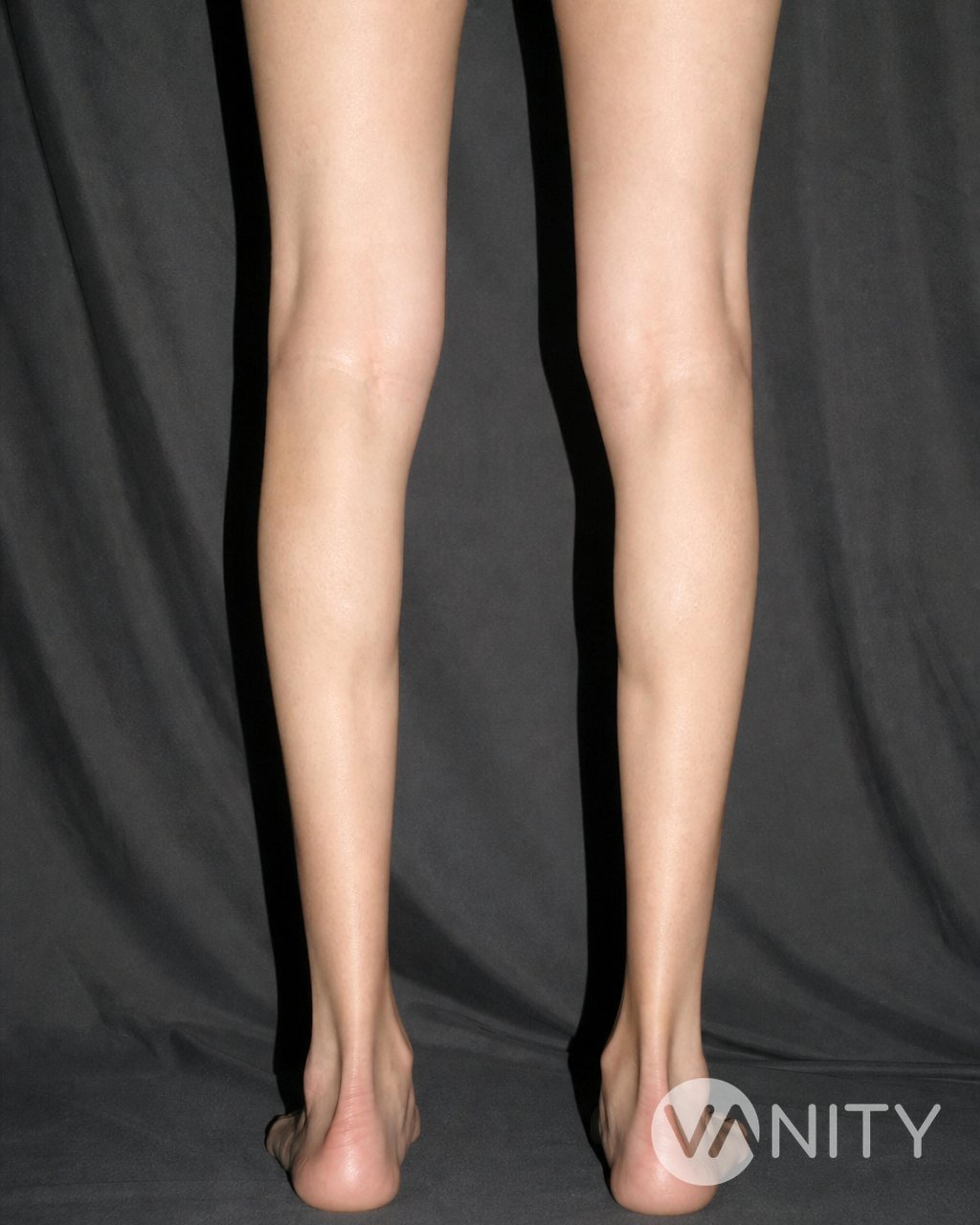
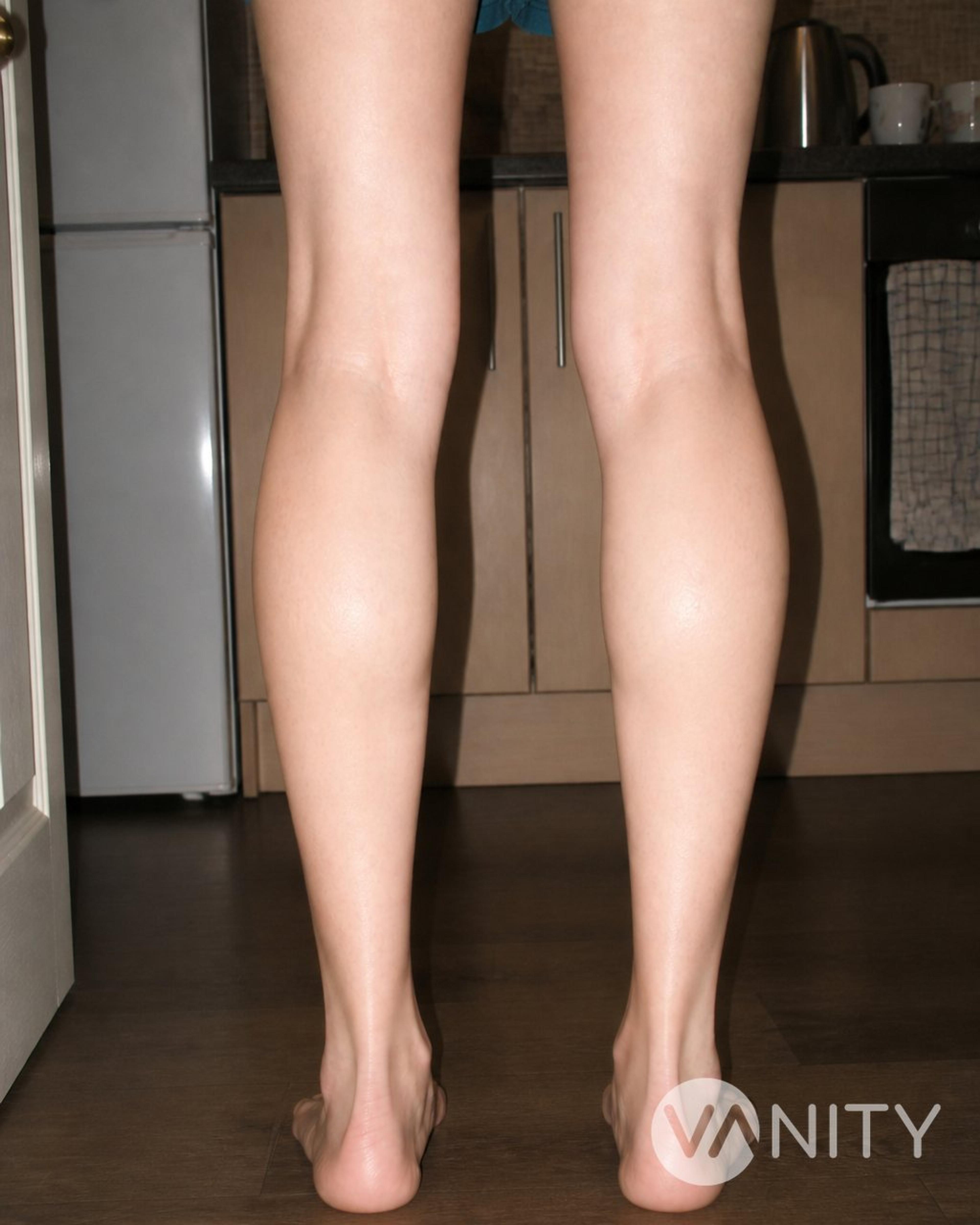



Fat transfer to legs: what it is
Fat transfer to the legs takes fat from somewhere you already have it — usually the abdomen, flanks or thighs — and moves it to the lower leg. It is harvested by liposuction through thin blunt cannulas, then cleaned by decanting, washing or centrifugation to separate living fat cells from oil, blood and debris, and injected as fine ribbons across several tissue planes so that no parcel sits far from a blood supply. In the calf the graft goes both under the skin and into the muscle bellies. Part of that volume will not survive — that is the arithmetic of the operation, not a complication of it.
It is for people with thin or disproportionate calves that resistance training has not changed, for a bowed or pseudo-varus lower-leg outline, and for asymmetry from hemiatrophy, poliomyelitis sequelae or post-traumatic muscle loss. You need enough donor fat to harvest, a stable weight, no active infection at either the donor or the recipient site, and a clear understanding that a share of the graft will resorb. It is the alternative to a silicone calf implant for people who would rather use their own tissue than carry a device.
Fat transfer to legs: techniques we use
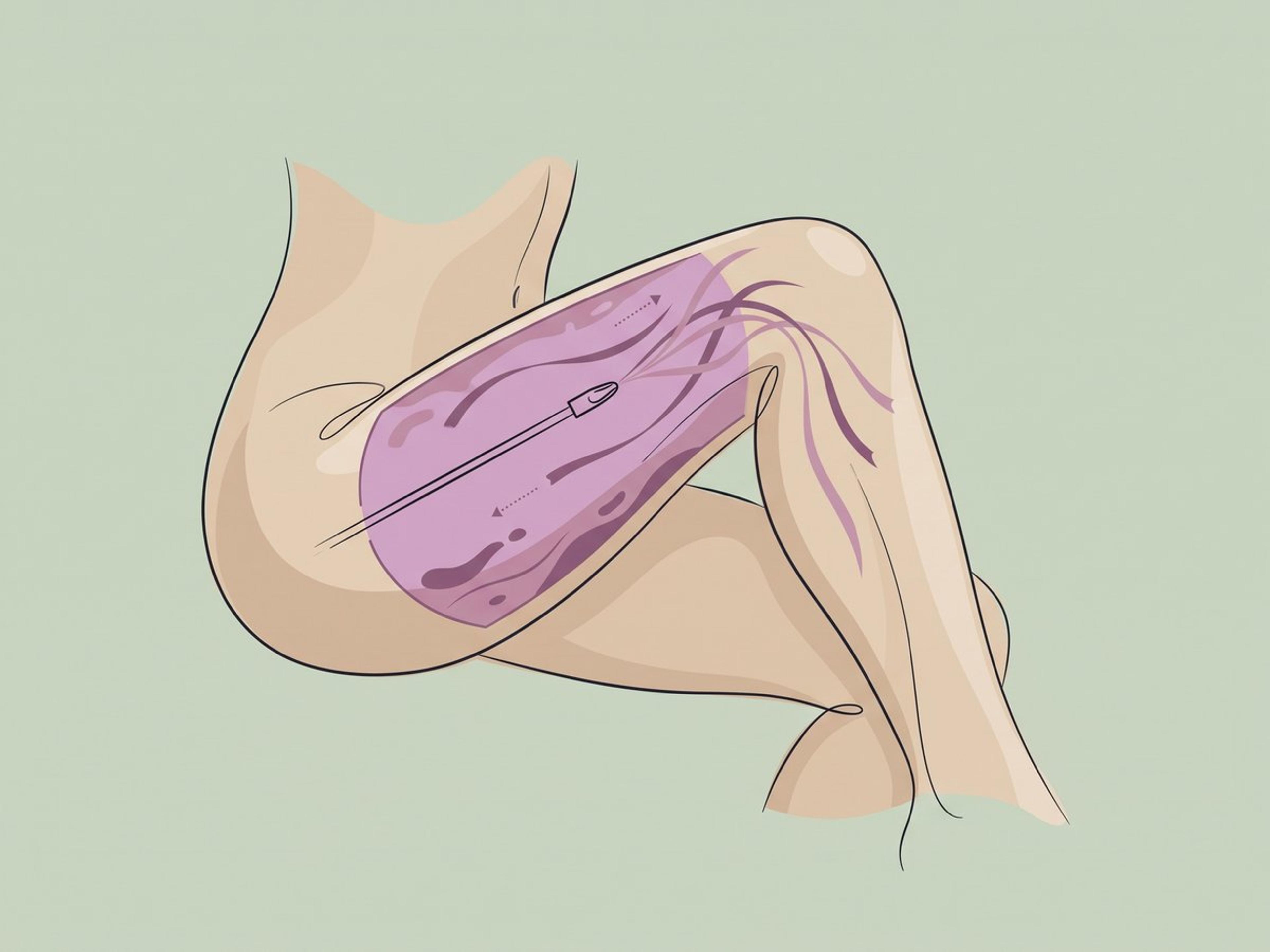
We harvest by hand with small-bore blunt cannulas at low negative pressure, then purify the fat by centrifugation, decanting or saline washing before any of it goes near the leg. It is delivered in fine ribbons through multiple access points and multiple passes rather than as a single bolus, so no parcel of fat sits further than a short diffusion distance from vascularised tissue. Laser and ultrasonic liposuction are not used at harvest — they damage the fat cells the whole result depends on.
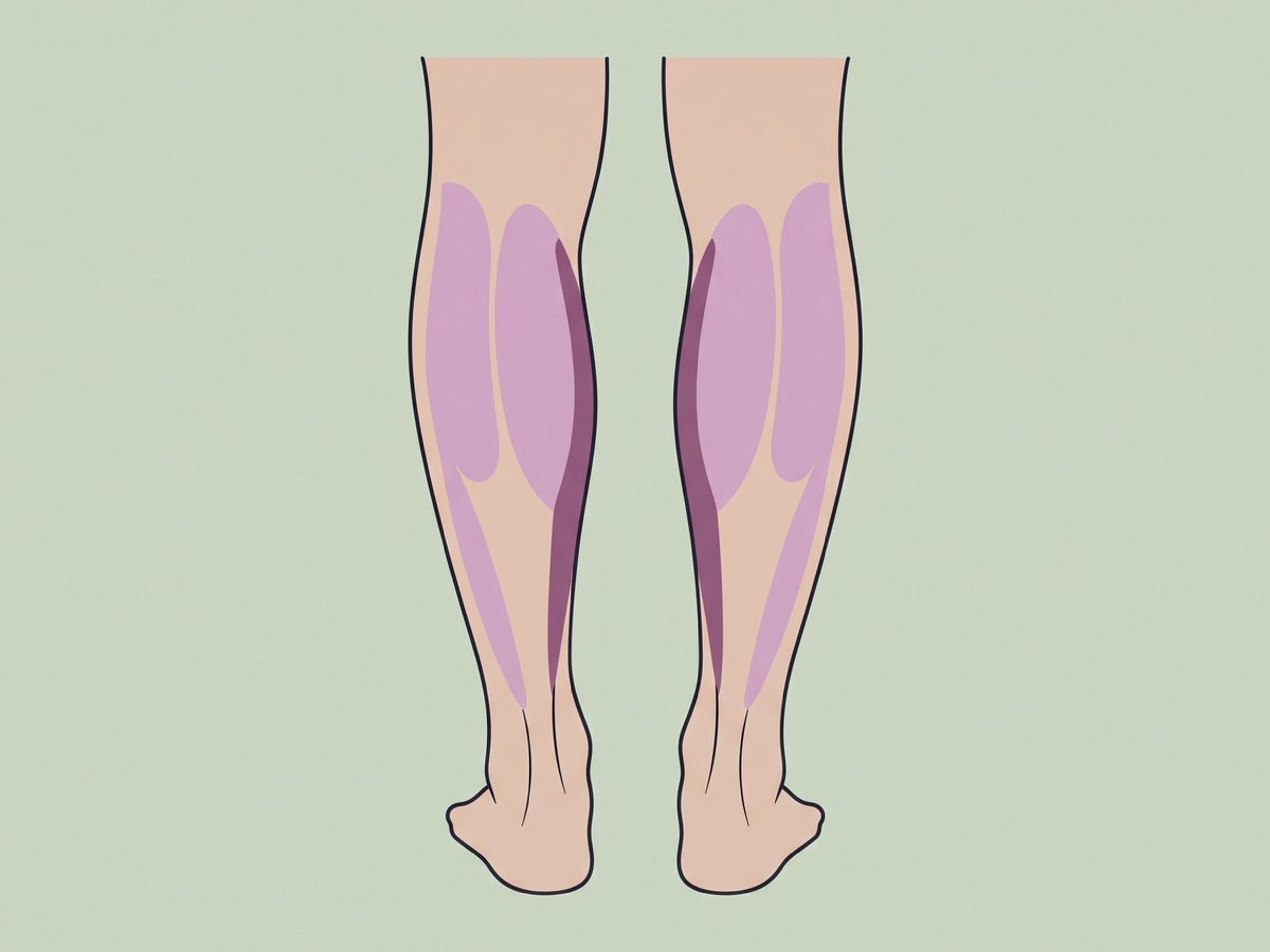
Prepared fat is injected into both the subcutaneous plane and the gastrocnemius muscle bellies, weighted toward the medial side, which is what gives the calf its readable outline. The published series split it approximately 60 percent medial and 40 percent lateral, averaging 157 cc per leg, with contour improvement still documented at a mean of 19.6 months. Deep intramuscular placement is the plane associated with fat embolism in gluteal grafting, so injection depth and cannula control are the safety variables that matter — more than the volume.
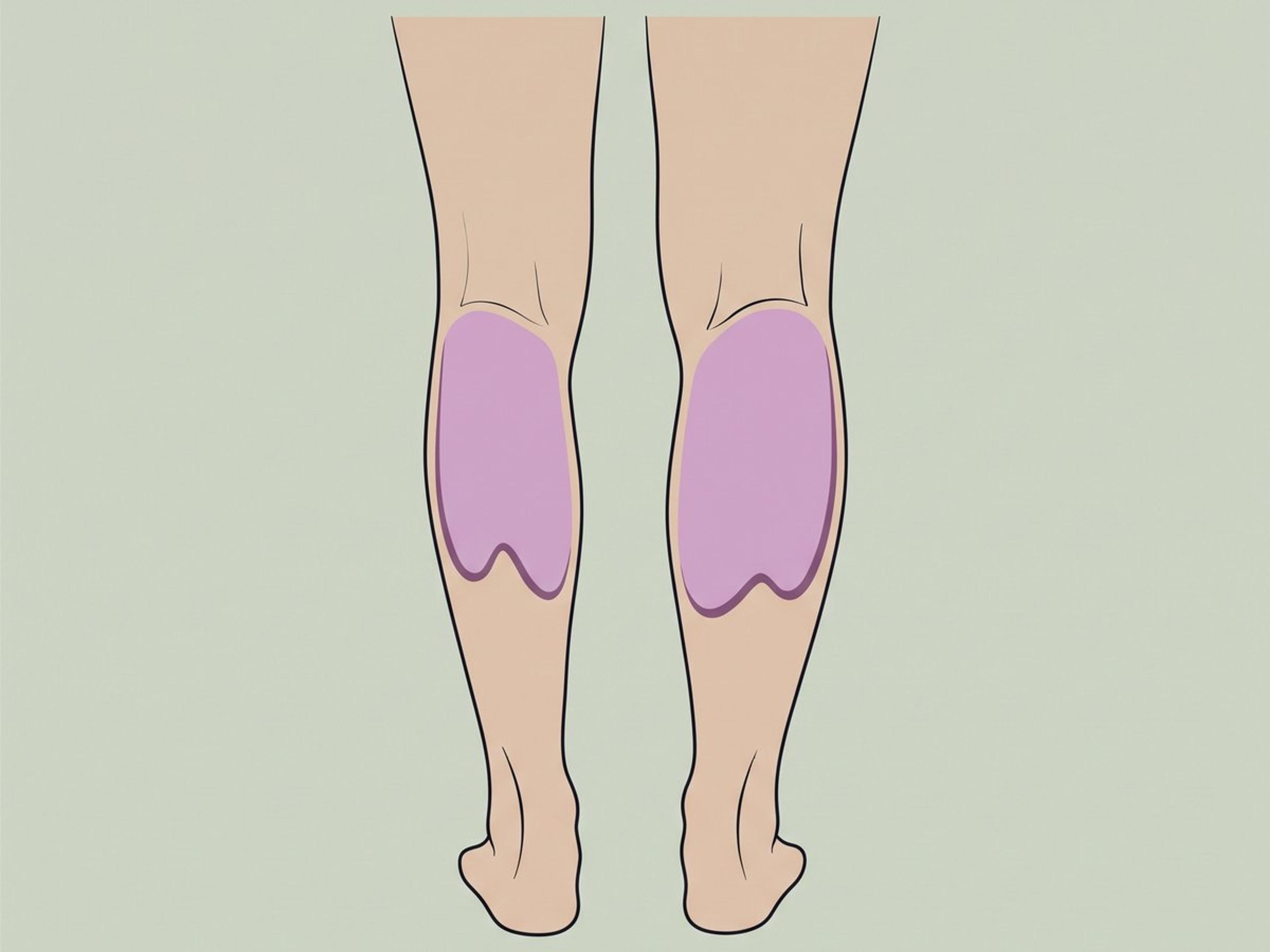
The lower leg is a low-compliance recipient site with little soft-tissue laxity, so there is a ceiling on what can be placed safely in one sitting. Larger corrections are split across 2 or more sessions, months apart: 31 percent of patients in the calf augmentation series returned for a second round of injection, and 2 of 4 patients in the lower-extremity asymmetry cases needed a second session. We plan the next session only once the previous graft has stabilised, usually at 3 to 6 months.
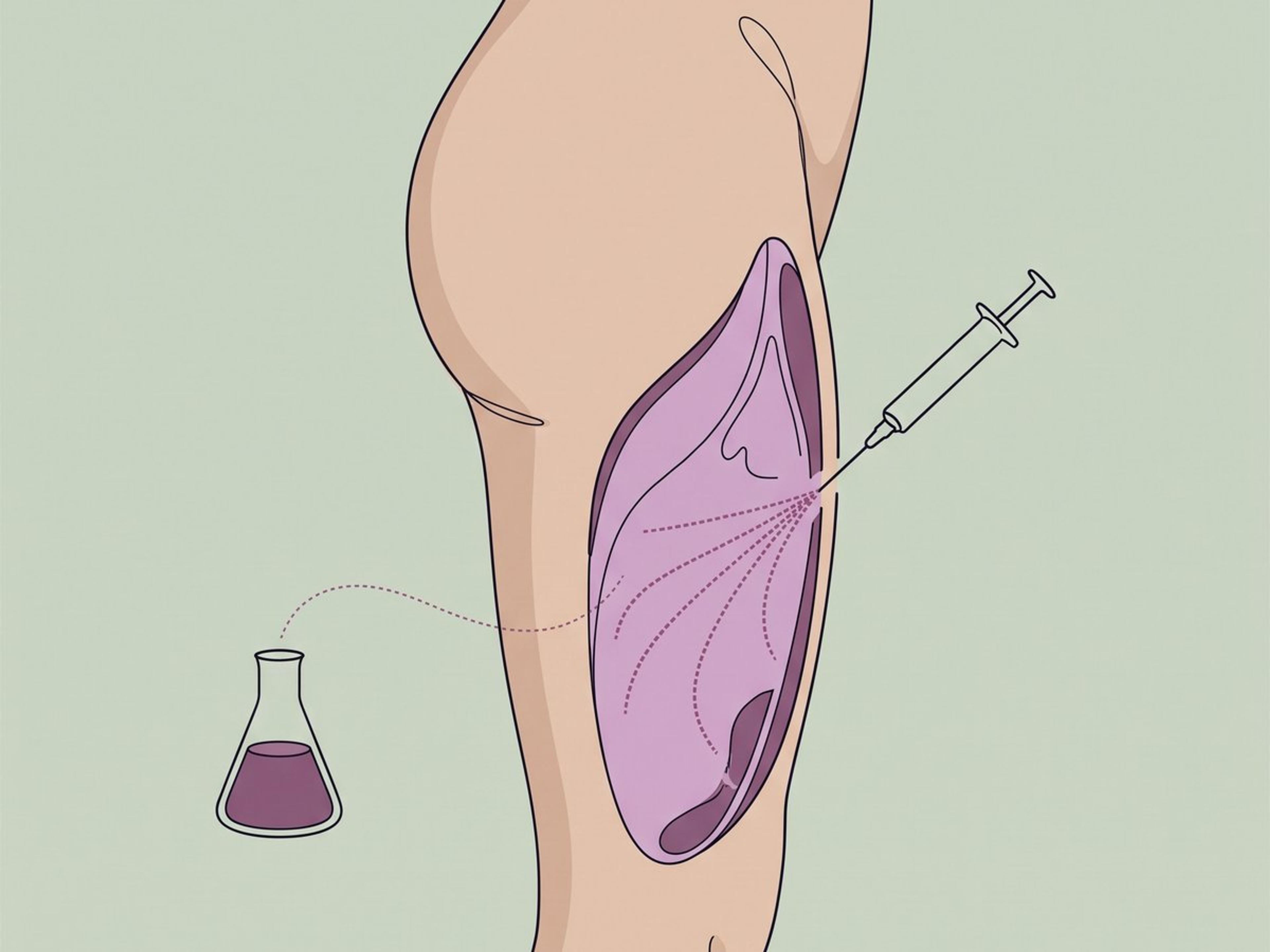
A calf implant supplies the fixed central volume that fat alone may not achieve in a very lean patient or a tight lower leg. We use a measured layer of fat around it to soften visible edges, refine medial and lateral contour and address smaller asymmetries. This is still implant surgery: capsular contracture, malposition, infection, rupture or leak and later replacement remain part of the decision. The right combination depends on the muscle, skin envelope, donor-fat supply and the amount of correction needed.
The operation, step by step
Marking and donor-site planning
The calves are marked with you standing, because the outline you want corrected only shows under load — lying down, the shape you came in about disappears. At the same time we pinch-test the abdomen, flanks and thighs to confirm there is enough harvestable fat, and we agree the volume ceiling for this sitting before anaesthesia rather than improvising it in theatre.
Harvest by liposuction
Under general anaesthetic the donor area is infiltrated and the fat is taken by hand through small-bore blunt cannulas at low negative pressure. The harvest is deliberately gentle and slow because every step from here on depends on adipocytes that are still alive; laser and ultrasonic devices are not used at this stage for the same reason.
Purification of the graft
The aspirate is separated by decanting, saline washing or centrifugation to remove oil, blood and tumescent fluid, and only the intact fat layer is loaded into injection syringes. Injecting the debris fraction is what feeds fat necrosis, oil cysts and palpable nodules later, so this step buys retention and avoids complications in equal measure.
Layered injection into the calf
The fat is delivered in fine ribbons through several small access points, across both the subcutaneous plane and the gastrocnemius muscle bellies, weighted roughly 60 percent medial and 40 percent lateral — the medial calf is where the eye reads the contour. Many small passes rather than one bolus keeps every parcel of fat within diffusion distance of a blood supply, and controlled injection depth is the variable that matters for safety, since deep intramuscular placement is the plane linked to fat embolism in the grafting literature.
Compression, closure and discharge
The millimetre access points are closed with a single suture or left open to drain, and compression garments go on over the donor site and legs before you leave theatre. Most people go home the same day, with a night kept in reserve for larger harvests; legs are elevated from the first evening, because the lower limb is the hardest region in the body to drain and gravity adds swelling faster than anything else you do.
Fat transfer to legs: recovery week by week
- Day 1
Usually an outpatient operation — most people go home the same day, though we keep you a night when a larger liposuction harvest is combined. Both the donor site and the legs are swollen, bruised and tender, and compression garments are on. Walking is possible but uncomfortable, and most people need help getting around for the first few days.
- Week 1
Bruising and swelling peak, then begin to settle. Legs stay elevated at rest and long periods of standing are out, to limit the swelling gravity adds. Many people are back at desk work by the end of this week; some need a second.
- Weeks 2–3
A normal walking gait returns and compression is usually stepped down on the schedule we give you. Donor-site soreness fades. The legs still look larger than the final result — that is oedema sitting on top of the graft, not the graft itself.
- Week 6
Most everyday activity resumes, including light exercise. Running, jumping and heavy calf loading come back later and more gradually. The contour is readable now, but it is not the final one.
- Months 2–3
Compression comes off for good around the 8-week mark — the published lower-limb series kept pressure garments on that long — and running, jumping and heavy calf loading are cleared in this window, built back gradually rather than resumed at your old volume. Swelling is essentially gone, so what you see is close to honest for the first time, though the graft is still settling.
- Month 6
Graft volume has stabilised. The fat that survived and revascularised behaves as permanent tissue; the fraction that resorbed is gone and will not return. This is the point at which we assess whether a top-up session is worth doing.
Fat transfer to legs: how to prepare
- Complete pre-operative bloods and an anaesthetic assessment, and have the operation booked as an inpatient case under general anaesthetic — professional-society guidance for fat grafting expects an accredited surgical facility, not a treatment room
- Stop smoking and all nicotine several weeks beforehand — nicotine constricts the microvasculature the graft needs in order to survive
- Stop aspirin, NSAIDs and blood-thinning supplements on the schedule we give you, and tell us every medication you take, along with any prior leg surgery or vascular disease
- Reach a stable weight and confirm with us that there is enough donor fat to harvest — later weight change will alter the transferred fat exactly as it alters the rest of you
- Have compression garments fitted before you travel, set up somewhere to elevate your legs at home, and arrange help for the first several days, with no driving and no prolonged standing
Fat transfer to legs: risks
Every operation carries risk. We name them so you can ask the right questions.
- Partial graft resorption — a substantial fraction of the transferred fat does not survive.
- Infection or cellulitis at the donor or recipient site, and seroma at the liposuction site
- Donor-site contour irregularity, dimpling, prolonged bruising and asymmetry
- Prolonged lower-limb oedema, and calf compartment tightness if too much volume is placed in a leg with little soft-tissue give

Fat transfer to legs in Turkey: what to expect
The recovery here is governed by the donor site, not the legs. Discomfort, bruising and swelling concentrate where the fat was taken from, and compression garments are worn continuously afterwards — ASPS patient guidance cites 4 to 6 weeks, and the lower-limb case series used pressure garments for 8 weeks. That shapes the week you spend with us.
At the clinic
General anaesthetic, and in most centres you go home the same day; we keep you 1 night where the operation is combined with a large-volume liposuction harvest.
Before you fly
Talk to the surgeon before you travel — not to an advisor speaking on their behalf. Verify the named facility and surgeon independently through the relevant national registers and specialty boards. Settle in writing who manages a complication once you are home, and ask for your operative note and records to bring with you. Careful planning matters when surgery and follow-up take place in different countries.
Recovery in Istanbul
Plan 7 days in Istanbul— a wound and garment check in the first 48 hours, and a final review before you fly. In the published lower-extremity series patients returned to normal daily activities on the sixth postoperative day, so a week is the working minimum rather than a comfortable margin, and sport stays out for around 2 months.
Heading home
The earliest we will clear a flight is 7 days. Wear your compression garments for the flight, take an aisle seat, get up every hour, do calf exercises and drink water. There are no drains, and unlike gluteal grafting there is no restriction on sitting — the risk on the flight is venous, not to the graft. Care continues for 12 months after surgery, wherever you are.
Checking a clinic in Turkey
Turkey rewrote its medical-tourism rules on 26 April 2025, replacing the 2017 regulation. Any facility treating international patients must now hold an international health tourism authorisation certificate, register on the Ministry of Health's HealthTürkiye portal, and carry complication insurance for the procedures it performs; hospitals and medical centres also had to complete TÜSKA accreditation by the end of that year. Facilities are required to publish that certification — so you can check ours, and you should check anyone else's before you pay a deposit.
With body work the questions that matter are volume and what happens overnight, because this is where going home too early causes the trouble. Ask how much is being removed or moved, whether you are admitted and for how many nights, who monitors you while you are, and whether the follow-ups are with the surgeon or with a coordinator. Ask for the named surgeon's Turkish Medical Association registration. A clinic that discharges you to a hotel the same day and clears you to fly within three is competing on price, not on care.
Most nationalities enter Turkey visa-free or on an e-Visa for a stay of this length, with a passport valid at least six months. Confirm the rule for your own passport, and build the return flight around the last clinic visit rather than fixing it in advance.
- United Kingdom
- £4,000 – £8,000
- United States
- $5,000 – $10,000
- Western Europe
- €4,000 – €8,000
Published typical ranges for orientation — confirm with a local quote.
Fat transfer to legs: frequently asked questions
How much of the transferred fat actually stays?
Only part of it. Reported retention across fat grafting sites varies widely, and reviews of limb contouring cite the need for further procedures in about 30 to 50 percent of cases because of resorption. Fat that is still there at around 6 months has revascularised and generally behaves as permanent tissue.
How many sessions will I need?
Often more than one, and we would rather you planned for that than be disappointed by it. Larger corrections, and thin tight legs with little soft-tissue give, are the cases most likely to be staged.
Fat transfer or calf implants — which is better?
They solve the same problem differently. Fat grafting uses your own tissue, avoids a permanent device and slims the donor area at the same time, but the volume gain is partly unpredictable and may need repeating. Calf implants give a fixed, predictable volume in one operation but carry implant-specific risks — capsular contracture, malposition, and rupture or leak requiring replacement.
Can it correct one leg that is smaller than the other?
Yes — this is one of its established uses. Case series report autologous fat grafting for congenital calf discrepancy and for severe lower-extremity asymmetry from atrophy, with volume improvements of roughly 12 to 53 percent at 12 to 16 months of follow-up. Correcting a large deficit usually means staged sessions.
When can I walk normally and go back to the gym?
Walking is possible immediately but uncomfortable for the first few days, and a normal gait typically returns by weeks 2 to 3. Most people are back at desk work within 1 to 2 weeks. Running, jumping and heavy calf loading are the last things to return, generally from 6 to 8 weeks and only once your surgeon has cleared it.
Will the result disappear if I lose weight?
The grafted cells are living fat cells and respond to body-wide weight change like any other fat. Significant weight loss will shrink them and reduce leg volume; significant weight gain will enlarge them. That is why we ask for a stable weight before operating.
Is it safe? What about fat embolism?
Fat embolism is a recognised complication of fat grafting and is listed among the risks by hospital patient-education sources. The strongest evidence linking it to technique comes from gluteal fat grafting, where deep intramuscular placement is associated with fatal and non-fatal pulmonary fat emboli and the subcutaneous plane is not. An accredited facility and a surgeon with controlled, plane-aware injection technique are the principal mitigation — we will not tell you the risk is zero.
Who is this procedure not suitable for?
Very lean patients are the first group — the graft has to come from somewhere, and without enough donor fat at the abdomen, flanks or thighs there is nothing safe to harvest. Beyond that, we defer or decline for pregnancy or breastfeeding, active infection at either the donor or recipient site, a bleeding or clotting disorder or anticoagulation that cannot safely be paused, uncontrolled diabetes, and significant peripheral vascular disease or a history of deep vein thrombosis in the legs. Nicotine in any form has to stop several weeks before surgery — it constricts the microvasculature the graft needs in order to survive — and chronic leg swelling such as lymphoedema needs assessment first, because the lower leg is already the hardest place in the body to drain.
What warning signs mean I should contact the clinic?
Contact us the same day for spreading redness or warmth at the calves or the donor site, discharge from any incision, fever above 38°C, or pain that is worsening after the first days rather than settling. Two leg-specific signs matter more than the rest: new swelling or tenderness concentrated in one calf — particularly in the weeks around your flight home — needs same-day review to rule out a blood clot, and a calf that feels drum-tight, with pain out of proportion to what you see or numbness in the foot, is an emergency. Sudden breathlessness or chest pain is a call to emergency services, not a message to us. Ordinary swelling and bruising in both legs are expected for weeks — it is the one-sided, worsening or feverish picture that should make you pick up the phone.
Will my calves look muscular afterwards?
No, and it is better to know that before you commit. Grafted fat adds volume and smooths the outline — weighted toward the medial calf, where the contour is actually read — but it is soft tissue and behaves like soft tissue. It will not recreate the etched definition of a trained gastrocnemius, it does not contract, and no amount of exercise will firm it the way muscle firms. What fat transfer offers is proportion: a calf that no longer looks thin against the thigh. If sharply athletic definition is the goal, no grafting or implant technique delivers it.
What scars does this leave?
Small ones, and in unremarkable places. The donor site needs a handful of 3 to 5 mm liposuction access incisions, usually hidden in the groin crease, the natural folds or under the waistband; the calf itself is entered through points of only a millimetre or two, typically behind the knee crease and at the ankle. They are permanent but generally inconspicuous once mature, which takes several months. Darker skin tones commonly go through a phase of hyperpigmentation at these points before they fade, and sun exposure while they are still pink will make that worse and slower.
How much does fat transfer to legs cost in Turkey?
€2,350 to €4,100 with us, confirmed after a consultation rather than quoted blind. For comparison it is typically £4,000 – £8,000 in the United Kingdom, $5,000 – $10,000 in the United States and €4,000 – €8,000 in Western Europe. It depends on how many donor areas have to be liposuctioned to harvest enough fat, and whether one leg or both are treated — the harvest is usually the longer half of the operation.
Sources
- [1]Fat grafting history and applications · American Society of Plastic Surgeons · 2015
- [2]A Systematic Review of the Literature and Meta-Analysis of Autologous Fat Transfer: Fat Transfer Confers a 4.2% Incidence of Complications · Cureus (Bechar J, Kidd T, Chu H, Hardwicke J) · 2025
- [3]Calf Augmentation and Reshaping with Autologous Fat Grafting · Aesthetic Surgery Journal (PubMed) · 2016
- [4]Lower Leg Augmentation with Fat Grafting, MRI and Histological Examination · Aesthetic Plastic Surgery (PubMed) · 2017