






Nipple and areola surgery: what it is
This surgery reshapes the nipple, the pigmented areola, or both, while leaving breast volume and the gland beneath essentially unchanged. Inverted nipple correction releases the fibrous bands and shortened milk ducts pulling the nipple inward, then supports its outward position with dermal flaps, buried purse-string sutures, or an external distractor. Nipple reduction reduces height, diameter, or both through wedge, circumferential, or flap-based excision. Areola reduction removes a ring of pigmented and surrounding skin, then closes it with a periareolar purse-string suture that sets the final areolar diameter.
It may suit people with congenital or acquired nipple inversion — reported in roughly 2–10% of women — who have hygiene concerns, recurrent irritation, difficulty breastfeeding, or concerns about appearance. It may also suit people with elongated or hypertrophic nipples, often after pregnancy and lactation, or areolae that are disproportionately wide or asymmetric after breast reduction, mastopexy, weight change, or gynecomastia surgery. One point is clear: a newly inverted or retracted nipple on one side is not a cosmetic finding. Cancer can cause ductal infiltration, so we arrange breast assessment first and do not treat anything until this is clear.
Nipple and areola surgery: techniques we use
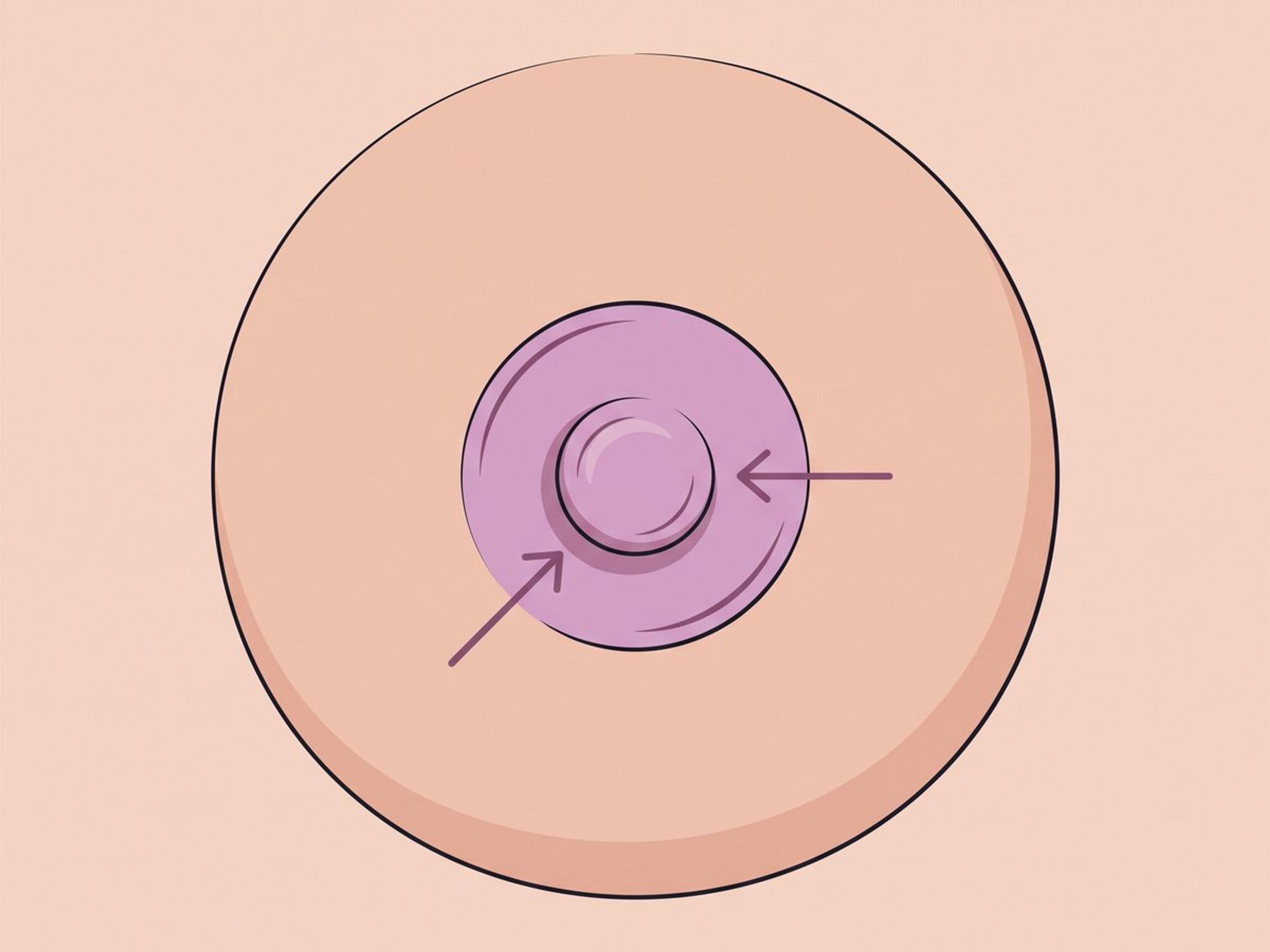
Nipple height can be reduced by removing and closing the tip, or by removing a small wedge of tissue. Diameter can be reduced by removing a ring of skin at the nipple base. Some flap techniques address both while preserving the central tissue. Reviews of published studies report few complications, including occasional bleeding, delayed healing and infection. There is no single best method. The right approach protects blood supply, sensation and, where possible, the milk ducts.
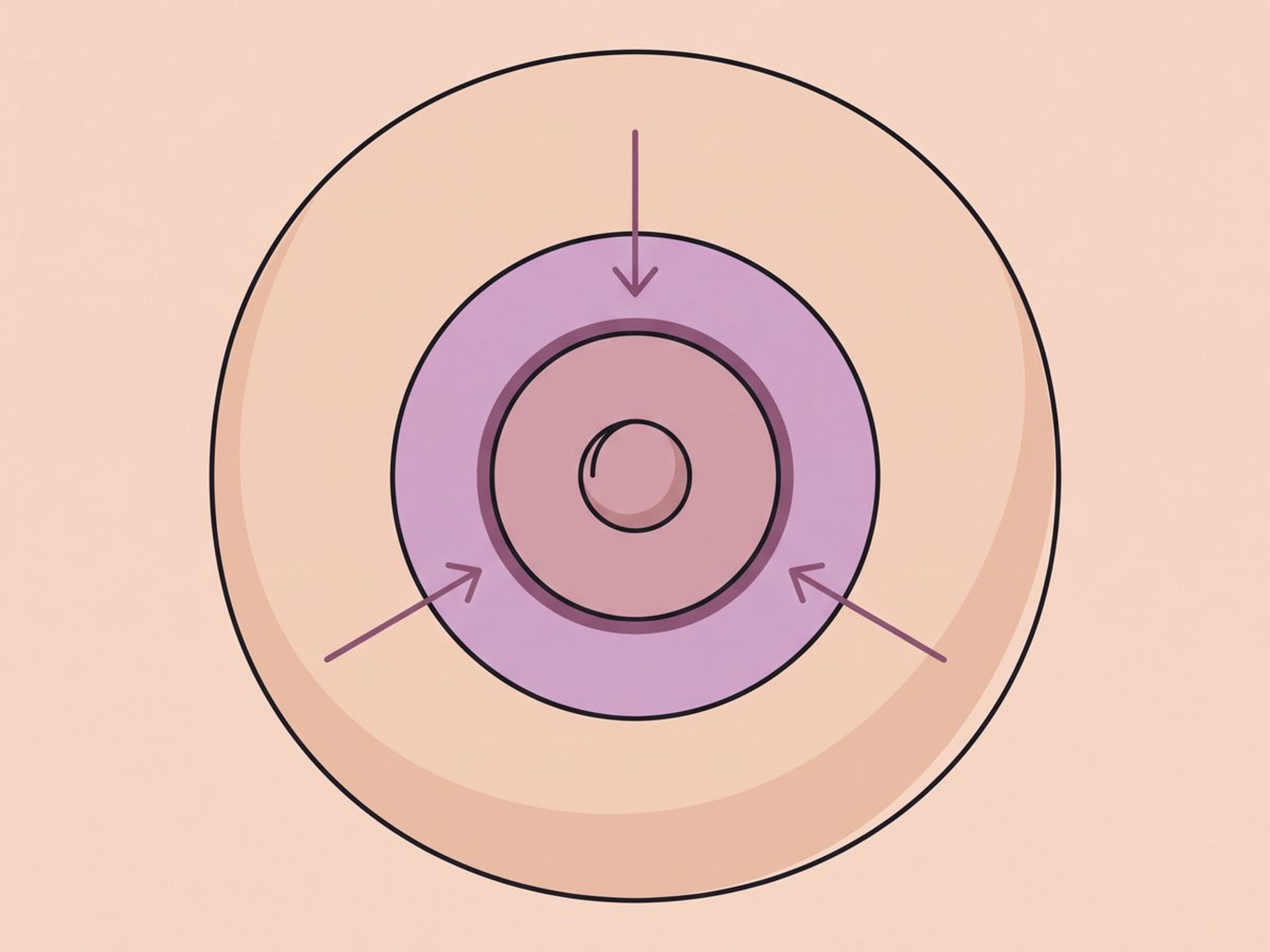
A ring of skin around the areola is removed, then the area is closed with a circular internal stitch to set the final diameter and reduce tension. Known concerns include areola widening, a flatter breast shape and visible scarring. A large published series reported these issues in a small proportion of cases, depending on the reason for surgery. This incision is also commonly used when repositioning the nipple and areola during breast reduction, breast lift and gynecomastia surgery.
The operation, step by step
Marking and grading, sitting upright
The inversion is graded (Han-Hong I–III) and the target areolar diameter is drawn while you sit up, because lying down flattens the breast and moves every landmark. Grade decides whether the ducts can be preserved, so this is the step that sets the whole plan.
Local anaesthesia, day case
A ring block at the base of the nipple-areola complex is normally enough on its own, which is why you go home the same afternoon with no drain and no compression garment. Sedation or general anaesthesia is used only when this is combined with a larger breast operation.
Release or excision
For inversion, the fibrous bands tethering the nipple are divided while the lactiferous ducts are dissected free and kept intact. For reduction, height or diameter is taken by wedge, circumferential, or flap excision that spares the central neurovascular column; for a wide areola, a concentric ring of pigmented and surrounding skin is removed. What is preserved here, not what is removed, decides sensation and lactation.
Holding the new shape
Eversion is supported with local dermal flaps or buried purse-string sutures — flap methods recur in about 1.5% of cases against roughly 6% for suture-only. A wide areola is closed with a circumareolar purse-string, often permanent or interlocking, because the closure sits under constant outward tension and a plain suture line stretches.
Dressing, then discharge the same afternoon
A doughnut or shield dressing is built so nothing rests on the nipple — pressure on a freshly released nipple is what flattens the correction and threatens the skin's marginal blood supply. You are reviewed at about 48 hours for a dressing check and again at day 5 to 7 for the wound and sutures.
Nipple and areola surgery: recovery week by week
- Day 1
Day case, home the same afternoon. A dressing or protective shield sits over the nipple so nothing presses on it, and swelling, bruising, and tenderness at the nipple base are expected. Sedentary work is often possible within a day or two.
- Week 1
Bruising and swelling begin to settle, and dressings are changed or removed at review. Vigorous activity, heavy lifting, and anything that presses on the nipple are out. If an external distractor or nipple retractor has been prescribed for inversion, wear it exactly to the schedule you were given.
- Weeks 2–3
Sutures are out from the day 5–7 review and the wound is sealed, so showering is unrestricted — hammam, pool, and sea are not, until the scar is fully closed. Walking and light cardio are fine; chest and upper-body work, running, and any bra with a seam over the nipple wait, because friction on a healing nipple is what turns a settled result back into a wound. Swelling still exaggerates projection at this point.
- Week 6
Unrestricted exercise, including chest and upper-body work, is usually back on the table. Periareolar scars are still firm and pink, and nipple sensation may be heightened or reduced. The early shape is visible but it is not the final one.
- Month 6
This is the window in which recurrent inversion, if it happens, most often shows itself. Areolar diameter after a purse-string closure also tends to stretch somewhat over this period.
- Month 12
Periareolar scars have largely matured and faded, projection and areolar diameter are stable, and any sensory change still present now is usually permanent. Published series report mean follow-up of about 24 months, so a year is a reasonable point to judge the result and to decide on revision.
Nipple and areola surgery: how to prepare
- If the inversion or retraction is new, on one side only, or comes with nipple discharge or a lump, have breast assessment first — malignant ductal infiltration is a recognised cause of acquired inversion and has to be excluded before anything cosmetic is planned.
- Decide and write down your breastfeeding intentions with the surgeon. This determines whether a duct-preserving or duct-dividing technique is used, and it is the single most consequential choice on the plan.
- Disclose every medication and supplement, and follow the instructions on stopping blood-thinning agents. Stop smoking and all nicotine well ahead — nipple skin and flap perfusion is the limiting factor for necrosis risk.
- Have the inversion graded (Han-Hong grade I–III) and the target areolar diameter marked while you are sitting upright. Grade drives technique, and in mild cases a suction device may be trialled before surgery is considered.
- Arrange the practical basics — day-surgery transport, loose non-compressive clothing, and time away from the gym: light activity from about 2 weeks, unrestricted exercise at about 6.
Nipple and areola surgery: risks
Every operation carries risk. We name them so you can ask the right questions.
- Recurrent nipple inversion — 3.89% overall across pooled series, ranging from about 1.5% with dermal-flap and distractor methods to 6% with suture-only methods, most often within the first 6–12 months
- Altered, reduced, or lost nipple sensation
- Impaired or absent breastfeeding on the treated side — expected and irreversible after duct-dividing inversion correction, and possible after any technique that disturbs the lactiferous ducts
- Areolar widening, spreading, or ruffled periareolar scarring after purse-string closure — roughly 2.4–5% of periareolar procedures, with poor scar quality in up to about 6%
- Surgical-site infection, haematoma, delayed wound healing, asymmetry of nipple projection or areolar diameter, and the need for revision surgery

Nipple and areola surgery in Turkey: what to expect
This is small surgery with a large planning burden, and almost all of it is about what happens after you leave the room. Two things decide your trip — the wound, and the fact that the one complication that matters most declares itself months later, at home.
Before you fly
Talk to the surgeon before you book anything. Ask which facility the operation actually takes place in
At the clinic
Local anaesthesia, day case, discharge the same afternoon. Local infiltration of the nipple-areola complex is normally adequate, and there are no drains and no compression garment — a simple gauze or doughnut dressing with topical antibiotic.
Recovery in Istanbul
Plan 7 days and 6 hotel nights, with 2 follow-up visits — a dressing check at about 48 hours and a wound and suture review at day 5 to 7. Stay within a short transfer of the clinic. No hammam, no pool, no sea while the sutures are in place. Most people are back at a desk within a day or two, but nothing should press on the nipple, so keep the clothing loose and skip the gym.
Heading home
We prefer you fly on day 7, after the wound check, and day 5 is the earliest we would agree to.
Checking a clinic in Turkey
Turkey rewrote its medical-tourism rules on 26 April 2025, replacing the 2017 regulation. Any facility treating international patients must now hold an international health tourism authorisation certificate, register on the Ministry of Health's HealthTürkiye portal, and carry complication insurance for the procedures it performs; hospitals and medical centres also had to complete TÜSKA accreditation by the end of that year. Facilities are required to publish that certification — so you can check ours, and you should check anyone else's before you pay a deposit.
Breast work is the area where a decision made in an afternoon is lived with for a decade, so press on the parts a brochure skips. Ask whether you are operated on in a hospital or a day unit and whether there is a bed for the night; ask for the named surgeon and their Turkish Medical Association registration; and ask what is written down if you need a revision after you have flown home. Where implants are involved, leave with their batch details in writing — they are what any surgeon anywhere will need later.
Most nationalities enter Turkey visa-free or on an e-Visa for a stay of this length, with a passport valid at least six months. Confirm the rule for your own passport, and build the return flight around the last clinic visit rather than fixing it in advance.
- United Kingdom
- £2,000 – £4,000
- United States
- $2,500 – $6,000
- Western Europe
- €2,000 – €4,500
Published typical ranges for orientation — confirm with a local quote.
Nipple and areola surgery: frequently asked questions
Will I still be able to breastfeed after nipple surgery?
It depends entirely on whether the lactiferous ducts are preserved. Duct-preserving techniques — dermal flaps, purse-string sutures, external distractors — are compatible with breastfeeding, and 13 studies in a pooled review reported generally positive lactation outcomes, though in small samples. Duct-dividing correction, used mainly for severe grade III inversion, permanently ends the ability to breastfeed on that side.
Do inverted nipples come back after surgery?
Sometimes. A review of 3,369 cases found overall recurrence of 3.89%, with satisfactory correction in 88.6% at a mean follow-up of about 24 months. Recurrence was lowest with dermal-flap and distractor techniques at about 1.5% and highest with suture-only methods at about 6%, and it usually appears within the first 6–12 months.
Is nipple or areola surgery done under general anaesthesia?
Isolated nipple correction, nipple reduction, and areola reduction are usually done under local anaesthesia as a day case with minimal downtime. General anaesthesia or intravenous sedation is used when the work is combined with a larger operation such as breast reduction, mastopexy, or gynecomastia surgery.
Will I lose nipple sensation?
Most published series report preserved sensation — in a pooled review of inverted nipple correction, 20 studies reported normal postoperative sensitivity and only 3 documented temporary or permanent alteration. Sensory change is more likely with techniques that divide ducts or extensively undermine the nipple base, and it is certain with free nipple grafting, where the nipple is detached from its nerve supply entirely.
How visible is the scar?
Scars sit at the nipple base or along the border between the areola and surrounding skin, where the change in pigment helps camouflage them. Periareolar scars are firm and pink for several weeks and generally mature over about a year. Poor scar quality after periareolar closure was reported in roughly 1–6% of cases in a large series, and purse-string closures can look ruffled early on.
Can non-surgical methods correct an inverted nipple?
Suction-based nipple retractor devices worn daily for a sustained period — commonly 3–6 months — can work in mild grade I inversion and partly in grade II. Severe grade III inversion, where dense fibrosis prevents the nipple from being drawn out manually, generally does not respond and needs surgical release.
How much does nipple and areola surgery cost in Istanbul?
Our range is €1,100 to €2000, all in — surgeon and anaesthetist, facility and day-case theatre, pre-operative assessment, dressings, both post-operative reviews, transfers, and interpreting. The lower end is a unilateral or straightforward inverted-nipple correction under local anaesthesia; the upper end is bilateral areola reduction with nipple reduction, or a grade 3 inversion needing a flap technique. Flights, hotel, and any revision sit outside it.
How long do I need to stay in Istanbul?
Plan on 7 days and 6 hotel nights. Two clinic visits set that length, not the surgery — a dressing check at about 48 hours and a wound and suture review at day 5 to 7. Flying is possible from day 5, and we prefer day 7.
Who should not have nipple or areola surgery?
Anyone whose inversion or retraction is new, on one side only, or comes with discharge, skin change, or a lump — that is a breast assessment first, because ductal infiltration by cancer is a recognised cause of acquired inversion and nothing cosmetic is planned until it is excluded. Surgery also waits for anyone still using nicotine, since nipple and areolar skin heal on a marginal blood supply and necrosis is the complication that punishes smoking; for anyone pregnant or breastfeeding, until several months after lactation has stopped and the tissue has settled; and for anyone with an active skin infection or unhealed eczema of the nipple. Wanting a duct-dividing release and wanting to breastfeed later are mutually exclusive, and that choice cannot be reversed.
Which symptoms after surgery need urgent attention?
Contact the clinic the same day if the nipple turns dusky, blue, or black, or if a firm dark crust forms over it — that is the pattern of impaired blood supply and partial necrosis, the most frequently reported complication in this surgery, and it is far more manageable caught early. The same applies to redness or heat spreading beyond the areola, fever, cloudy or foul-smelling discharge, a firm lump swelling rapidly under the areola, a suture line that opens, or pain that climbs after the first few days instead of fading. Call us wherever you are, including after you have flown home — do not wait for the next scheduled review.
Will my areola stay the exact size it is set to in surgery?
No, and expecting that is the commonest disappointment. A purse-string closure sets a target diameter, but it sits under constant outward tension from the breast, so the areola relaxes and widens somewhat over the first 6 to 12 months — visible widening was reported in about 2.4 to 5% of periareolar procedures in a series of 1,400, and a smaller degree of settling is normal in many more. Surgeons plan for it by closing slightly tighter than the target and using a permanent or interlocking suture. Judge the diameter at a year, not at six weeks.
How much does nipple and areola surgery cost in Turkey?
€1,100 to €2,000 with us, confirmed after a consultation rather than quoted blind. For comparison it is typically £2,000 – £4,000 in the United Kingdom, $2,500 – $6,000 in the United States and €2,000 – €4,500 in Western Europe. It depends on whether the work is areola reduction, nipple reduction or inverted-nipple correction, and on one side or both. Most are done under local anaesthetic, which keeps the figure down.
Sources
- [1]Cosmetic procedures for the nipples and areolas · American Society of Plastic Surgeons (plasticsurgery.org) · 2018
- [2]Sensitivity of the nipple-areola complex and areolar pain following aesthetic breast augmentation in a retrospective series of 1200 patients: periareolar versus submammary incision · Plastic and Reconstructive Surgery, 128(4):984-989 (Araco A et al.) · 2011
- [3]The Periareolar Approach: All Seasons Technique for Multiple Breast Conditions · Plastic and Reconstructive Surgery – Global Open (PMC) · 2021
- [4]Surgical Correction of Inverted Nipples · Plastic and Reconstructive Surgery – Global Open (PMC) · 2020