


What it is
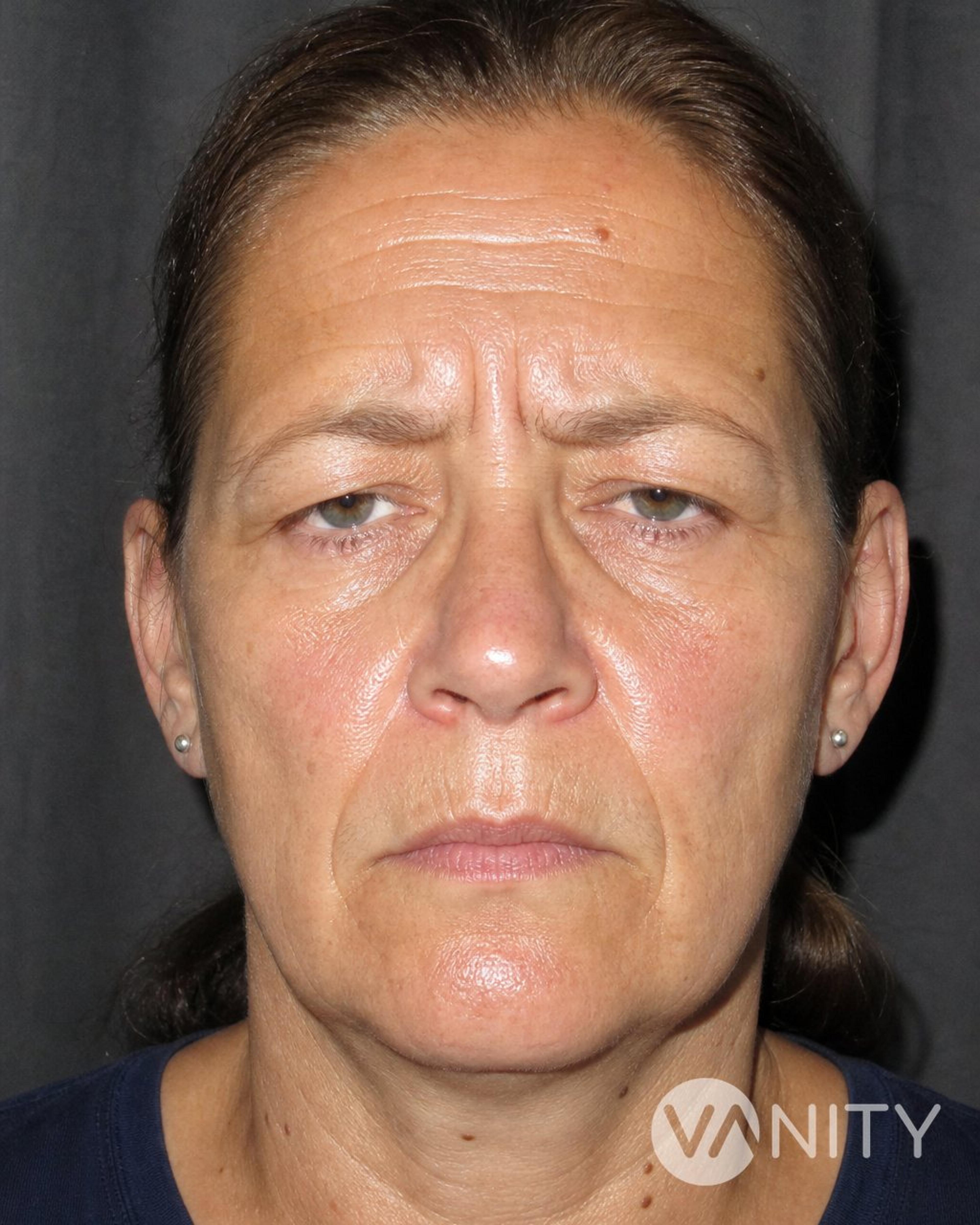
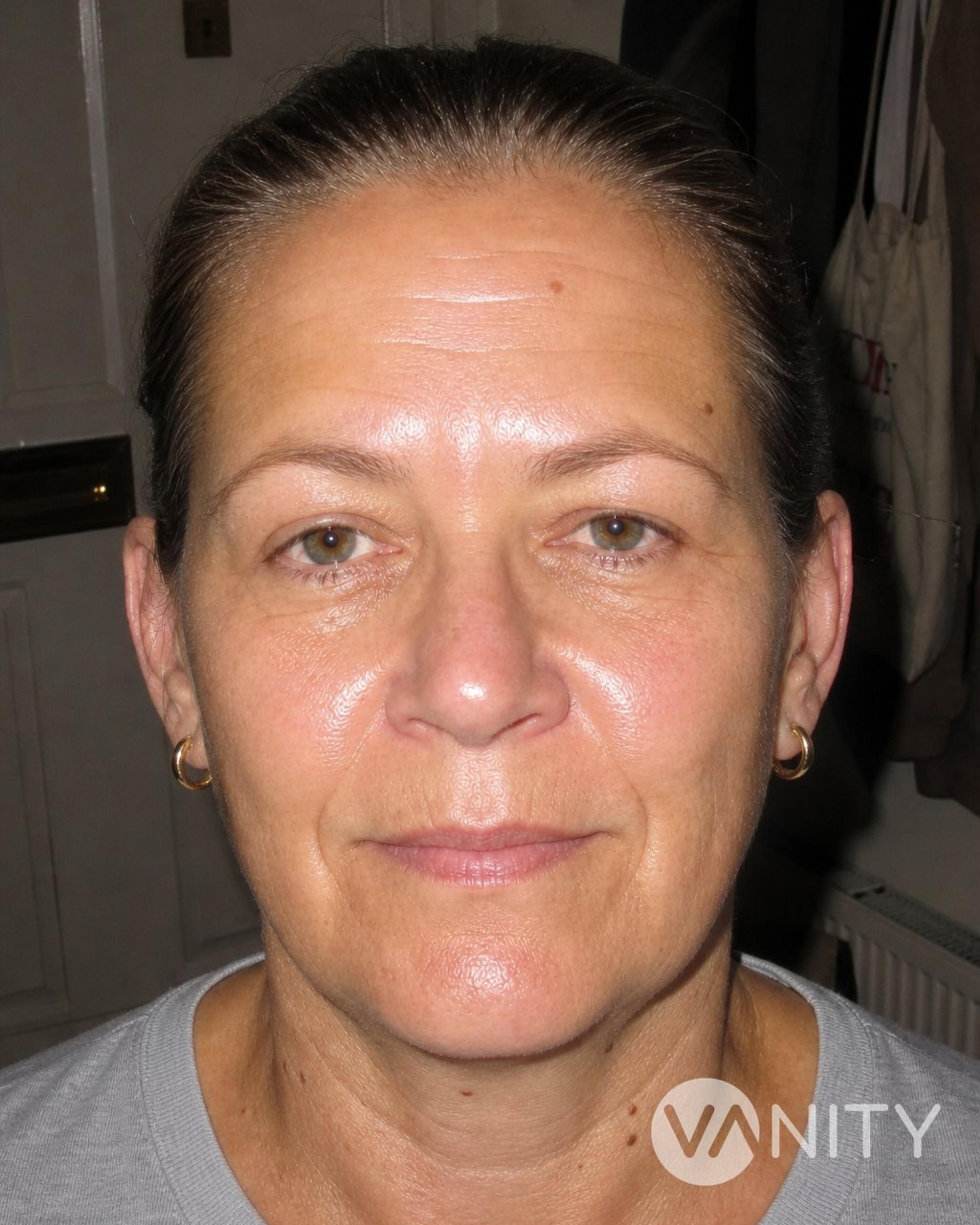
A forehead lift works on the forehead itself: the horizontal bands of forehead wrinkles that no longer disappear when your face is at rest, and the vertical frown lines pressed in between the brows — the glabellar lines, the ones most people call their "11"s. It reaches the muscles that fold the skin, which is what separates it from resurfacing, filler or anything applied to the surface — those treat the crease, this treats what makes it.
It tends to suit people from their fifties onward, once lines have been held long enough to set, and often those whose hairline has crept back so the forehead reads longer than it used to — though upper-face changes after significant weight loss bring people here earlier. The brow rises as part of the operation, and for many people that is the point: a heavy, low-set brow can make the eyes look smaller or tired even when you feel perfectly fine. Where brow position is the whole of the problem and the forehead above it is quiet, our brow lift page describes the narrower operation; where it comes bundled with set-in forehead lines, this one addresses both at once.
A forehead lift is surgery that raises a heavy or descended brow and eases the horizontal lines and frown creases of the forehead. The aim is a rested, more open upper face — not a surprised or pulled look.
It tends to suit people in their 40s to 60s whose brow position makes them look tired or stern even when they are not, and it is often combined with upper eyelid surgery, since the two areas age together.
Techniques we use
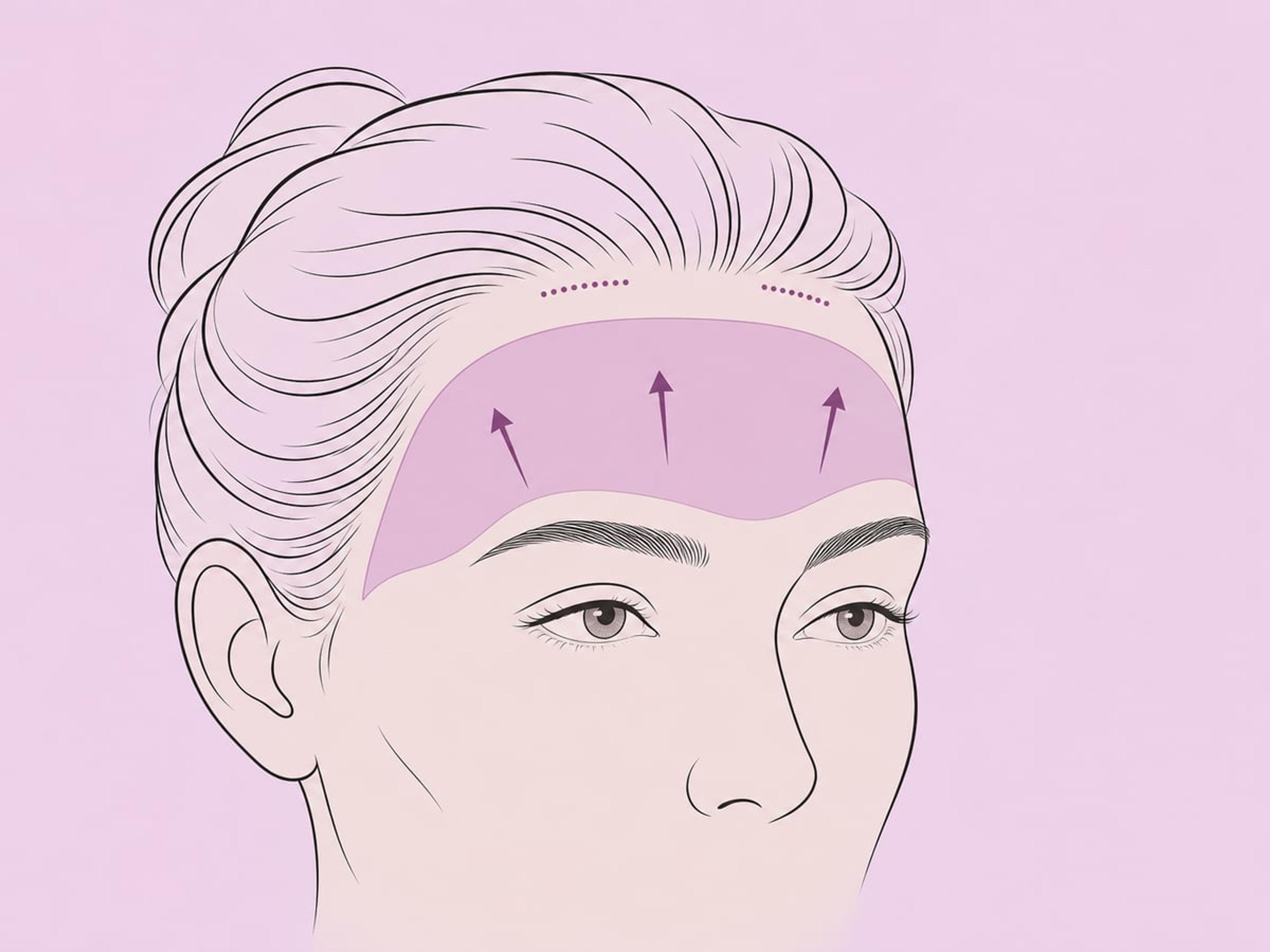
Several short incisions sit within the hairline, and a small camera guides the lift from underneath. It is the most common modern approach, leaves little visible scarring, and suits mild-to-moderate descent.
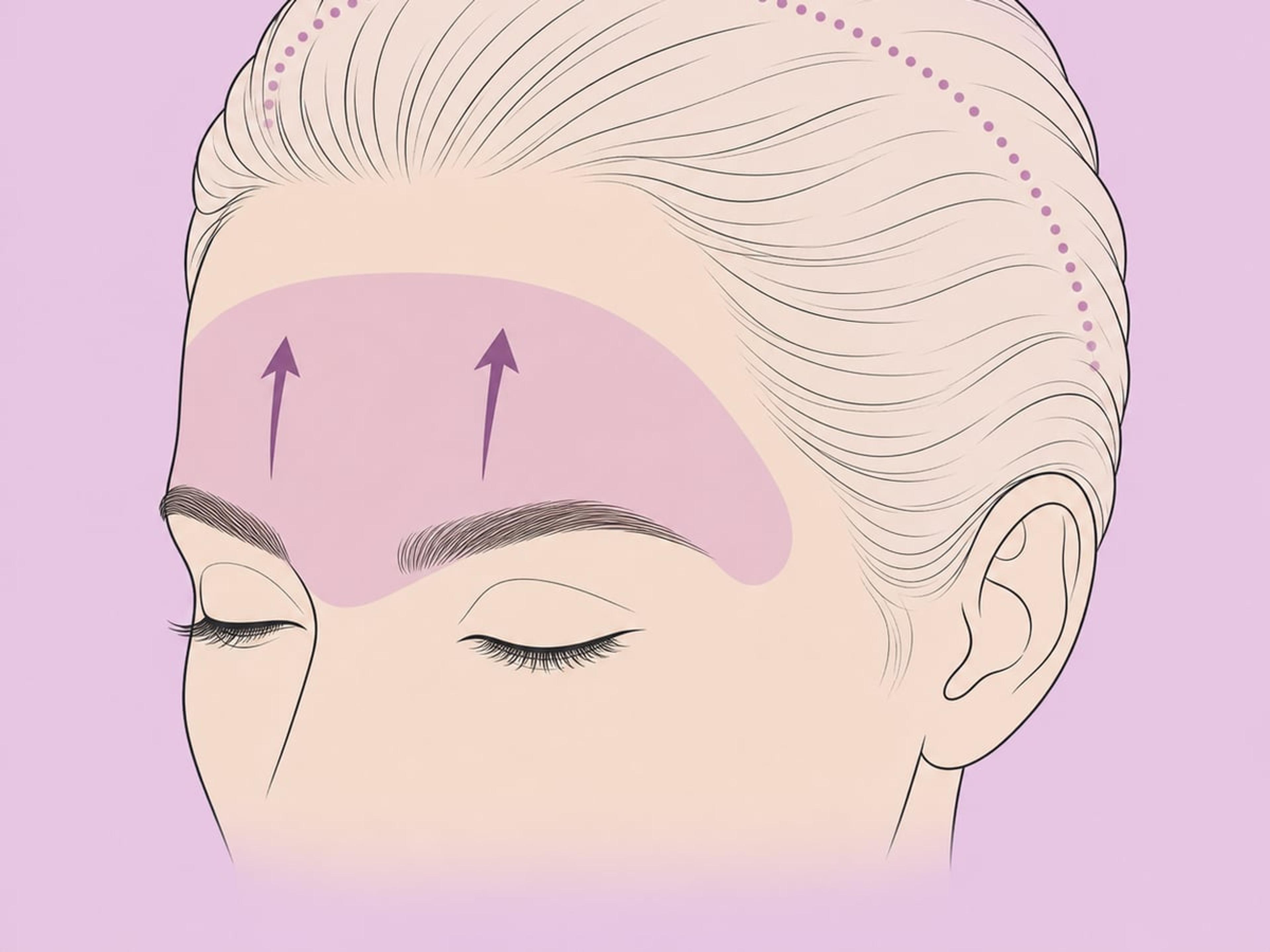
A long incision across the top of the scalp, laying the forehead open. It offers the fullest access to the muscles and the most reliable smoothing of set-in lines, which is why it is still chosen where the creases are deepest. Placed behind the hairline it carries the hairline back slightly, so it suits foreheads that are not already long — where they are, the hairline incision below is the better answer.
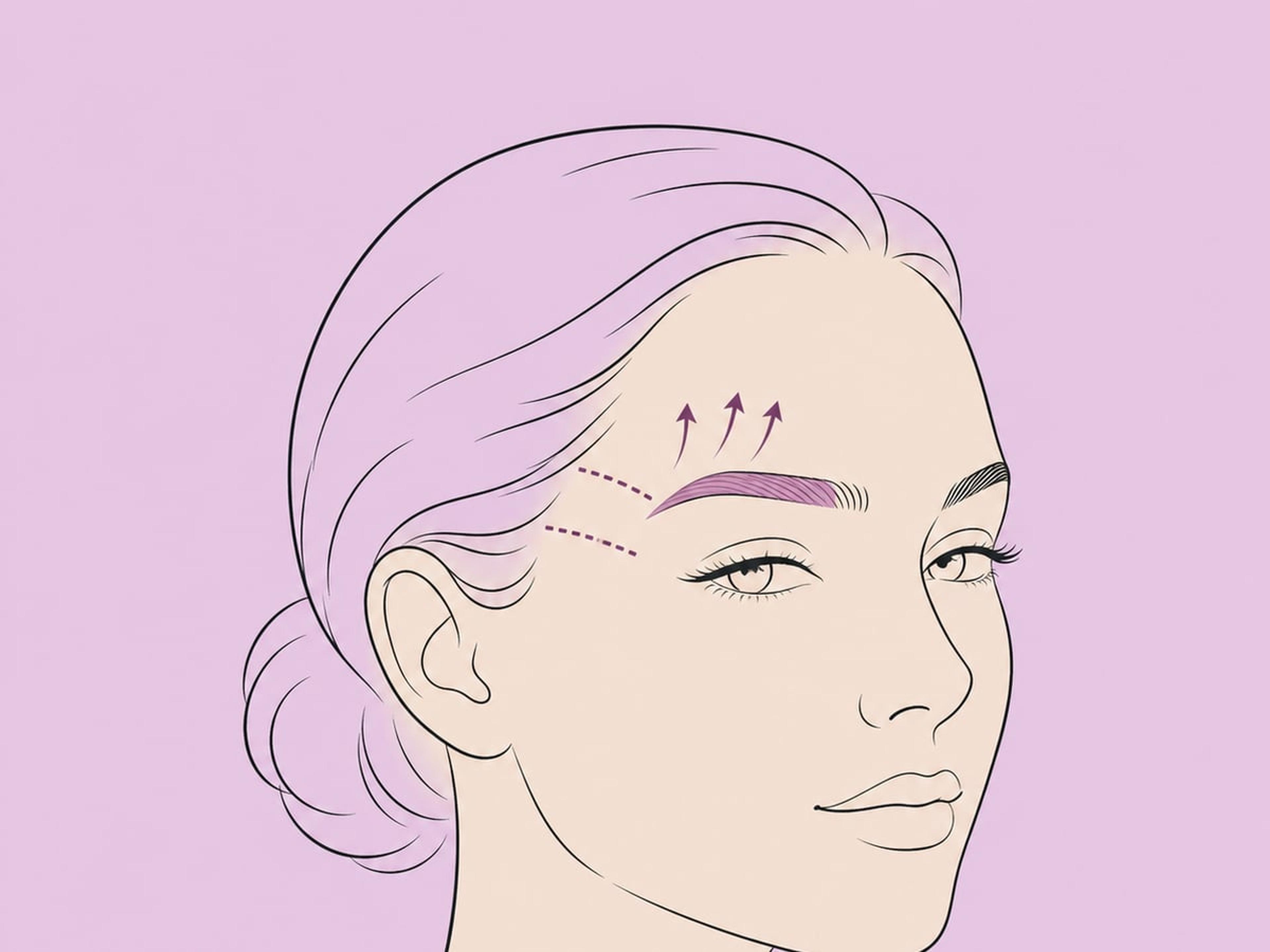
Small incisions at the temples lift the outer third of the brow only. It is a targeted option when the main concern is a heavy tail of the brow rather than the central forehead.
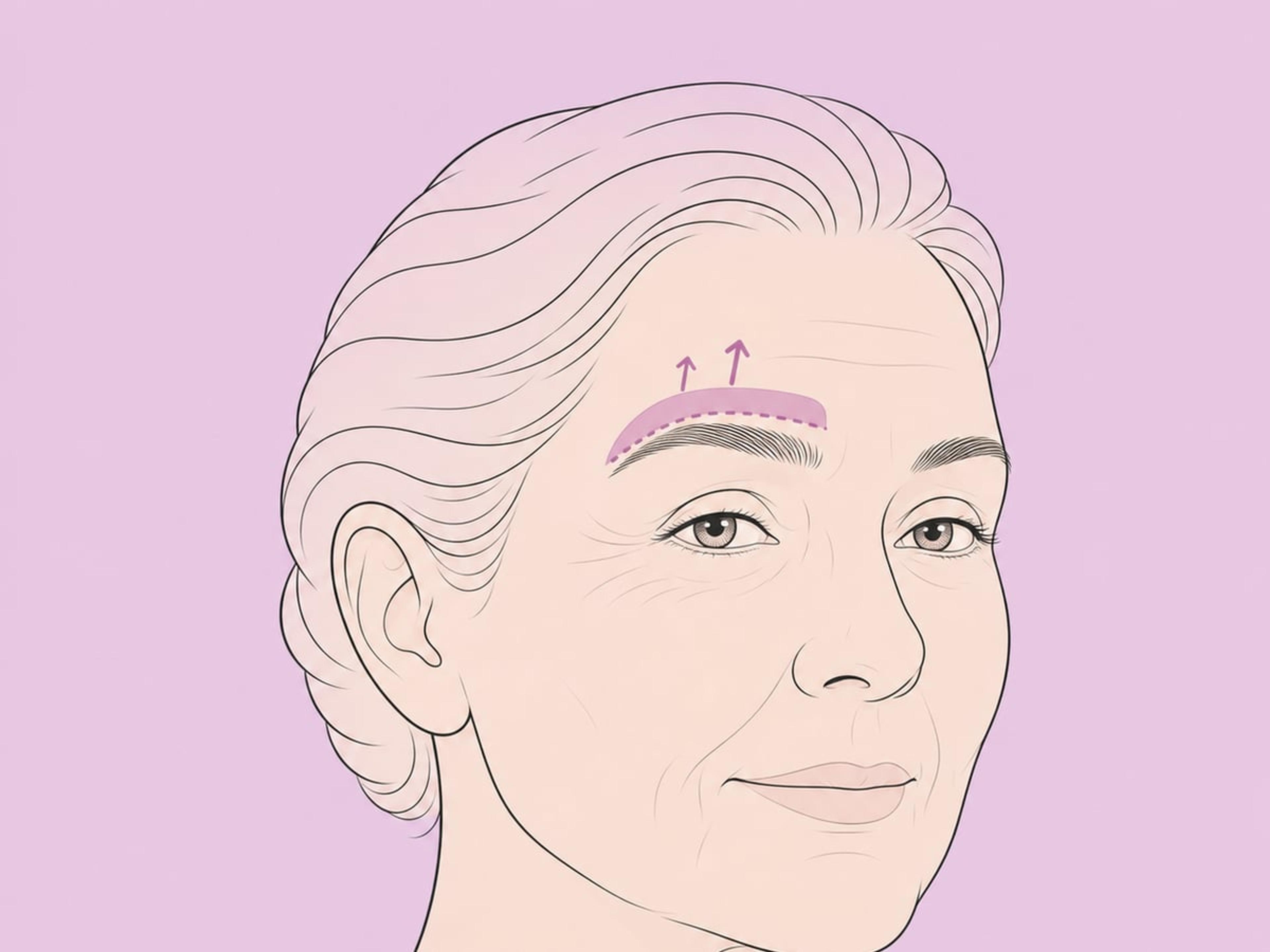
An incision just above the brow hairs removes a strip of skin and lifts directly. It is usually reserved for older patients with significant descent or asymmetry, where a precise result matters more than a hidden scar.
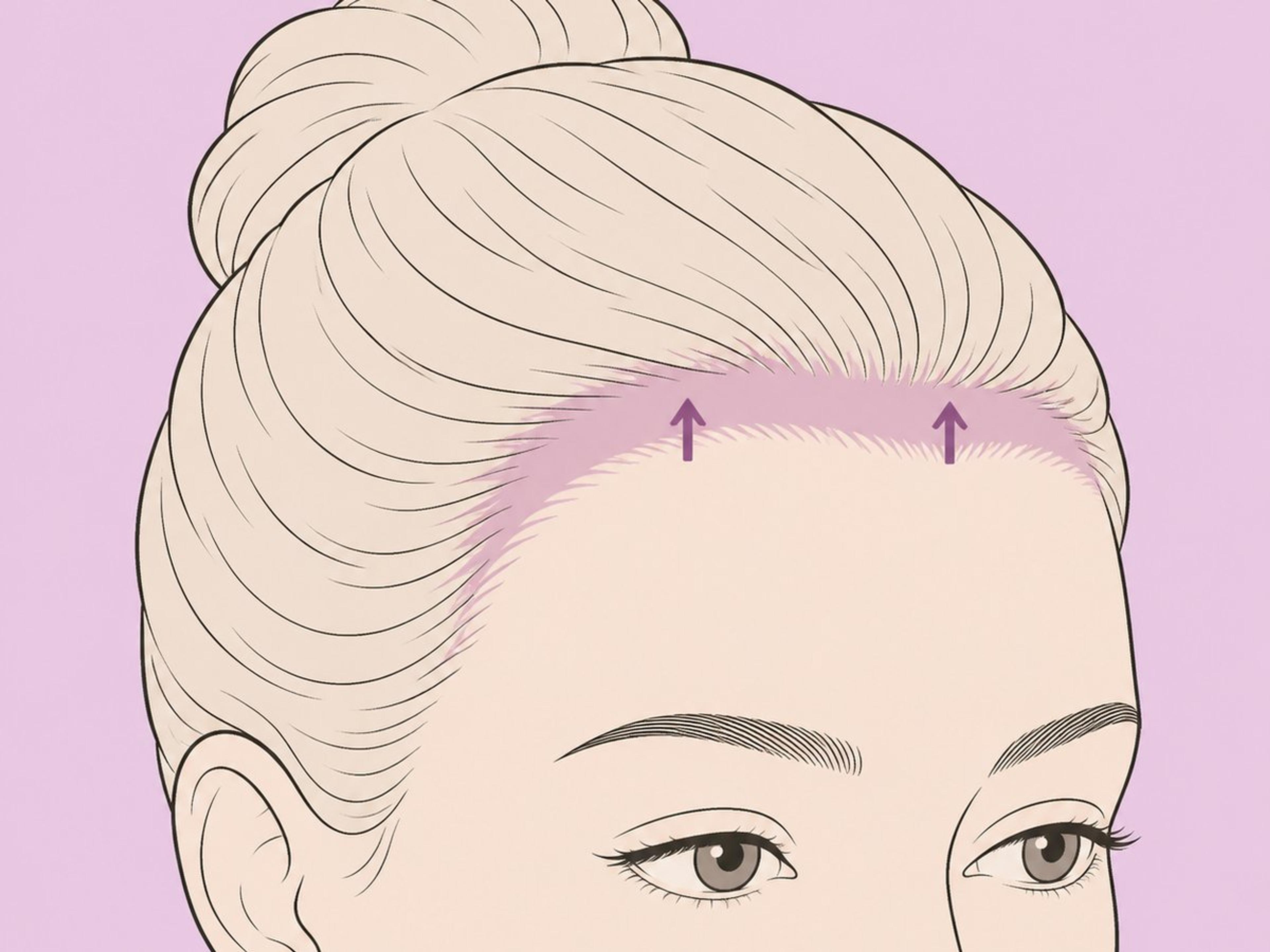
The incision sits at the front edge of the hairline rather than behind it, bevelled so hair grows up through the scar and blurs it over the first year. It is the choice when the forehead is already long, because it lifts without carrying the hairline further back and can shorten it a few millimetres. The cost is a line at a visible border instead of one buried in the hair.
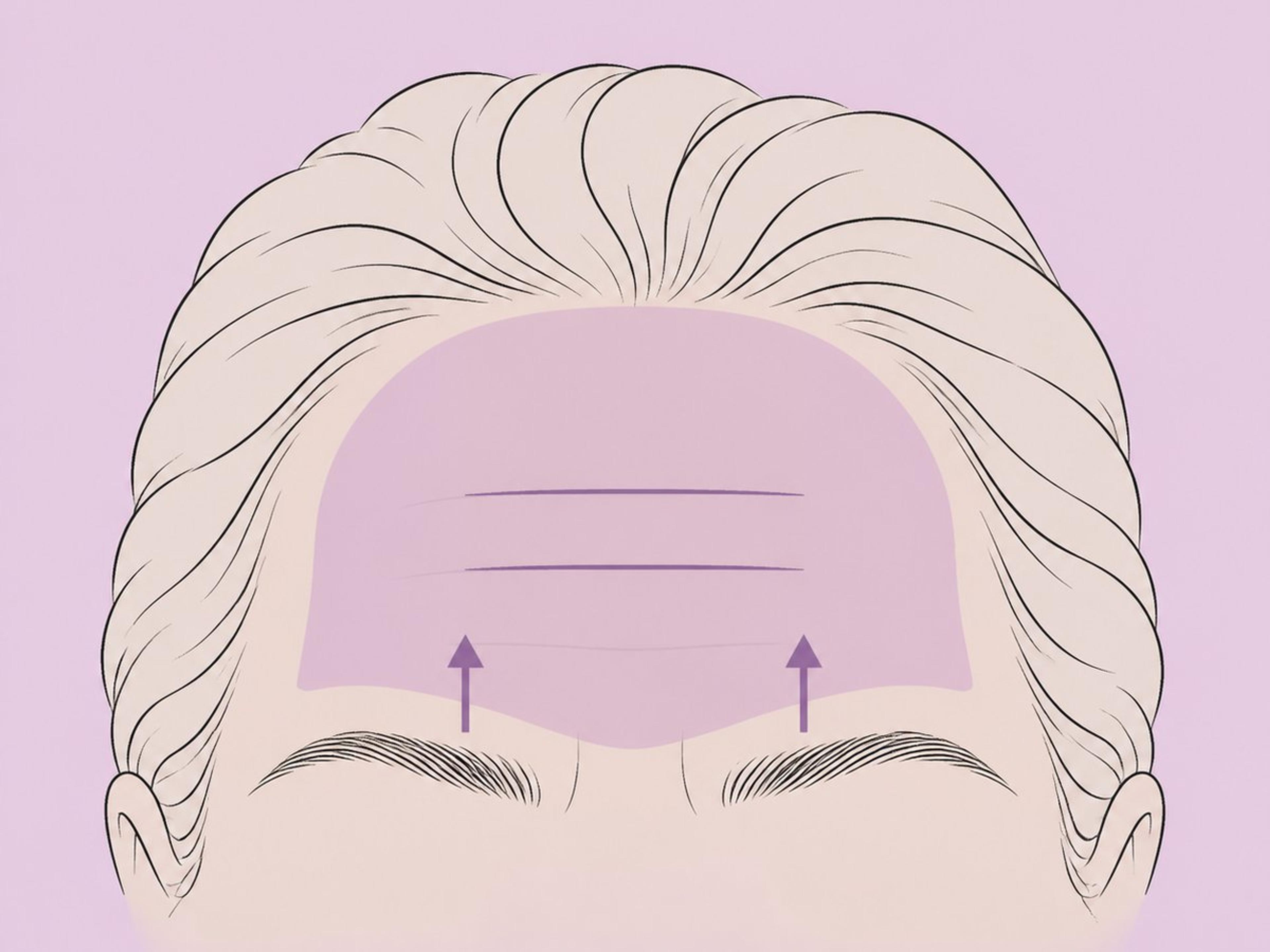
Incisions are hidden inside two existing horizontal creases partway up the forehead, giving the scar a line to disappear into. It suits deep, sharply defined creases in older or thicker skin, particularly where a receded hairline puts a scalp incision too far from the brow to be useful. Whether it is a good idea at all is decided by the creases: without one deep enough to hide in, it is not.
The operation, step by step
Marked sitting up, brows moving
The forehead is drawn while you sit and raise and drop your brows, because the difference between the two shows which creases are muscle and which are already pressed into the skin. Your hairline is measured in the same session — its height is what decides where the incision can go.
General anaesthesia, one to two hours
Bloods, ECG and an anaesthetic review are done the day before, and the operation itself runs under general anaesthesia. The open approaches take longer and are the ones more likely to earn an overnight stay at the clinic.
The incision follows the technique chosen
Short ports inside the hair for an endoscopic lift, a long scalp incision for a coronal, a bevelled line at the hairline where the forehead must not get longer, or forehead creases for a mid-forehead lift. Nothing about this is standard — it is the decision made at consultation, executed.
The forehead is lifted off the bone
The dissection runs down to the brows and the orbital rims, freeing the forehead from its attachments. Until that release is complete nothing will move, and an under-released forehead is the usual reason a lift falls short.
The muscles that fold the forehead are weakened
The frown muscles between the brows are divided or weakened, and the broad sheet that lifts the whole forehead is treated selectively rather than wholesale. Judgement here is what separates a forehead that rests quietly from one that cannot express anything at all.
Redraped and closed without tension
The forehead is set at its new height, any excess scalp trimmed, and the closure built in layers so the pull sits on the deep stitches rather than the skin edge. Tension at the edge is what widens the scar and thins the hair growing along it.
Dressed, then followed before you fly
A light dressing goes on and comes off within one to three days, and clips or sutures are removed at seven to ten. Two in-clinic checks are scheduled inside your stay so the wound is seen by the surgeon before you travel home, with written aftercare and a contact for afterwards.
Recovery, week by week
- Day 1
A firm dressing, a heavy tight forehead, and a headache that answers to plain painkillers. Sleep propped up. The forehead feels like it belongs to somebody else — that is the nerve supply interrupted by the surgery itself, and it passes.
- Week 1
Swelling slides downward into the eyelids and cheeks over the first few days, then drains away. Clips or sutures come out around day 7. The forehead looks smooth this week largely because it is swollen, so take no readings from it yet.
- Week 2
Bruising has faded enough for makeup and a screen. The scalp behind the incision is numb and itchy at the same time, which is odd but expected, and the two trade places for a while.
- Week 4
Exercise comes back in stages — walking first, then light cardio — with heavy lifting and anything that puts your head below your heart held back until the surgeon clears it. Swelling is still draining out of the forehead, so take no final reading from it yet.
- Week 6
Normal exercise, normal washing, normal styling. Residual swelling has gone and the real texture of the forehead shows through: the lines much softer, the deepest of them still faintly there.
- Month 6
Sensation is back, or nearly. The frown lines stay quiet because the muscle behind them was addressed rather than filled. The scar is a fine line in the hair and goes on fading through the rest of the first year.
How to prepare
- Stop blood thinners, aspirin, and certain supplements — fish oil and vitamin E — about 14 days before surgery, with your surgeon's guidance.
- Avoid smoking and nicotine for at least 4 weeks before and after surgery, to protect healing.
- Tell the surgeon when you last had Botox or filler in the forehead — the muscles are planned untreated, so we usually want about three months clear.
- Wash your hair the morning of surgery and skip styling products, makeup, and jewellery. Bring a loose scarf or a soft hat for afterwards.
- Arrange help at home for the first 24 to 48 hours, and set up a recovery space with extra pillows for head elevation and soft, easy foods.
Risks
Every operation carries risk. We name them so you can ask the right questions.
- Numbness across the scalp behind the incision, sometimes lasting months
- Persistent itching as sensation comes back
- A visible scar in or at the hairline, more so with the open approach
- Hair thinning along the incision line
- A forehead that feels tight, or unusually still, while the muscles settle
- Asymmetry, or one brow ending up lifted more than the other
- Weakness of the muscle that raises the brow if its nerve is bruised — usually temporary
- Lines that soften rather than disappear, particularly the deepest ones
- Standard surgical risks — bleeding, infection, a reaction to anaesthesia

What to expect in Turkey
A forehead lift in Istanbul is a short trip built around careful planning and follow-up. It runs as a day case or a single night, with light bandaging removed within 1 to 3 days, and about 7 days in the city before you fly home.
Before you fly
It starts with a video consultation — the surgeon reviews your goals, your health, and whether a forehead lift, eyelid surgery, or both make sense. The preparation steps above apply unchanged. Most nationalities enter Turkey visa-free or on an e-Visa for a stay that comfortably covers a week of recovery, but verify your passport's allowance before booking.
At the clinic
Forehead lift surgery is done under general anaesthesia and takes 1 to 2 hours, as a day case or with one night's stay.
Recovery in Istanbul
Plan for about 7 days in Istanbul. Sutures or clips come out within 1 to 2 weeks, so the stay is built around wound checks and at least one follow-up. Bruising and swelling peak early, then settle enough for quiet days out.
Heading home
Short-haul flights are best avoided for at least 7 days. We advise hydration, moving around, and compression for eligible patients. Carry our contact details and your post-op report for the journey, and we stay with you for twelve months after.
- United Kingdom
- £6,000 – £8,000
- United States
- $5,000 – $8,000
- Switzerland
- From CHF 4,600
Published typical ranges for orientation — confirm with a local quote.
Frequently asked
Will my forehead lines go completely?
The dynamic ones — the bands that appear when you raise your brows — soften a great deal, because the muscle making them has been weakened. Lines etched deep enough to be visible at rest usually improve rather than vanish; the crease is in the skin by then as well as the muscle. Skin resurfacing afterwards is what closes that last gap, if you want it closed.
My brow sits low and heavy — is this the right operation?
Often, yes, and this is the combination it is built for: a low or heavy brow that leaves the eyes looking smaller or tired even when you feel fine, noticeable brow asymmetry, deep forehead wrinkles and glabellar "11" lines that arrived alongside brow descent (brow ptosis), or upper-face changes after significant weight loss. Releasing the forehead is what allows the brow to sit higher, so treating the two together is not two operations stacked on each other. If brow position is genuinely the only issue and the forehead above it is calm, our brow lift page describes the narrower version of this. And the open, "snatched" look people ask for comes from moving the brow, not from removing eyelid skin — where the excess sits on the lid itself, the hooding answer below is the one to read.
Will the frown between my brows come back?
Not the way it does after injections. The frown muscles are weakened surgically rather than temporarily relaxed, so the effect does not wear off on a three-month cycle. Muscle can recover partially over years, and some people return to a small maintenance dose eventually, but most do not.
Will my forehead end up looking longer?
It can, with the classic coronal approach, which moves the hairline back a little as it lifts. If your forehead is already high we plan the incision at the hairline instead of behind it, which keeps the height where it is and can even shorten it slightly. Say early if this worries you — it changes which technique we choose.
How numb will my scalp be, and for how long?
Numbness behind the incision is normal and near-universal at first, because the nerves to the scalp cross the surgical field. Most of it resolves over three to six months as they recover. A small patch of reduced sensation can persist, which people notice when brushing their hair more than at any other time.
Forehead lift or Botox — which do I actually need?
It depends on whether the line is still being made or already made. Botox relaxes the muscle, so it answers creases that appear when you move and vanish when you stop, and it has to be repeated every three to four months. Surgery is the answer once the lines sit there at rest, or once the forehead itself has descended, because by then the problem is position and set-in skin rather than movement. A photograph of your forehead completely still usually settles which of the two you are.
Will I still need Botox afterwards?
Less of it, and often none in the frown. Some people keep a light dose in the horizontal lines to hold the result, and that is maintenance rather than a sign the surgery underdelivered. We would rather set that expectation now than at your six-week check.
Where does the scar go, and will it show?
Endoscopic and temporal incisions sit well inside the hair and are genuinely hard to find once healed. The coronal incision is longer and runs across the top of the scalp, hidden by hair but real. A hairline incision trades a slightly more visible line for a forehead that stays the length it is — a fair trade for some people, not for others.
How do I look after the scar?
Keep the wound dry and follow the dressing instructions exactly for the first fortnight — most poor scars are made in those weeks rather than in theatre. No nicotine while it heals, since it narrows the vessels feeding the wound edge. Once the surgeon clears it, silicone gel and keeping the line out of direct sun help it fade through the year it takes to settle.
Is a forehead lift painful?
Not sharply, for most people. The operation is done under general anaesthesia, so the real question is the days after — and what patients describe is pressure rather than pain: a tight, heavy forehead and a headache that plain painkillers answer. It is at its worst over the first two to three days, alongside the swelling and the bruising, then eases week by week; sleeping propped up helps more than people expect. What lasts longer is not pain but strangeness — the scalp behind the incision goes numb and itchy at the same time while the nerves recover, which is odd rather than sore.
How long do I really need off work?
Seven to fourteen days for most people, depending on how visible your job is and how fast your bruising clears. Desk work from home is often possible sooner if you do not mind the swelling.
Can I have a forehead lift in Istanbul and fly home safely?
Yes, with planning. We build the stay around clip or suture removal and at least one in-clinic follow-up, so keep about 7 days in Istanbul. Talk to the surgeon before you travel, not after you have booked.
Can a forehead lift be combined with a facelift or eyelid surgery?
Yes, and it is common. A facelift works on the lower face and neck, so pairing it with a forehead lift treats the whole face under one anaesthetic and one recovery. If sagging brows have pushed skin down onto your upper lids, eyelid surgery is often the right companion — the forehead lift restores the brow's position, and the blepharoplasty removes whatever excess remains on the lid itself. Whether combining makes sense depends on your health and the total operative time, which is a consultation decision.
When is a forehead lift not the right operation?
When the brow already sits where it should and the lines are mild enough for injections to hold them. When smoking, or a condition that is not yet under control, puts the healing risk above what the surgery would gain. And when the weight is coming from the eyelid rather than the forehead — which is common enough to be worth its own answer below.
I have hooded upper eyelids — will a forehead lift fix them?
It depends on where the hooding comes from. When sagging brows are pressing skin down over the lids, lifting the forehead repositions the brow and much of the hooding goes with it. When the excess is in the eyelid skin itself, eyelid surgery is what removes it — sometimes instead of a forehead lift, sometimes alongside one. The surgeon assesses both layers at consultation, because treating the wrong one leaves the problem in place.
How long do forehead lift results last?
Results are long-lasting but not permanent. The surgery resets the forehead; normal aging then carries on from that new starting point. Most people enjoy the result for many years — the weakened muscles can partially recover over time, and skin keeps loosening with age. A repeat lift is possible years later if it does, though many patients never need one.
What is a mini forehead lift?
A mini forehead lift — often sold as a mini brow lift — is the limited version of this surgery: small incisions at the temples instead of a full endoscopic or coronal approach. It reaches only the outer forehead and the tail of the brow, so it suits people whose creasing sits at the outer corners while the central bands and frown lines are still mild. On this page it is the temporal lift described in the techniques above — a shorter operation with a quicker recovery, at the price of leaving the centre of the forehead untouched.
What decides where my quote falls in the range?
Four things, mostly. The technique — endoscopic at one end, hairline, coronal or mid-forehead at the other. Whether you combine it with upper eyelid surgery, which is common enough to be worth asking about before you settle on a budget. The anaesthesia plan and how long the operation runs. And your own anatomy and how much release the forehead needs, which is the honest catch-all. The package covers the surgeon's fee, anaesthesia, the inpatient stay, pre-op tests, transfers, a translator and a few hotel nights, and the figure is confirmed before you travel rather than after.
Sources
- [1]Brow Lift · American Society of Plastic Surgeons
- [2]Brow and Forehead Lift · American Academy of Facial Plastic and Reconstructive Surgery
- [3]Techniques of Eyebrow Lifting: A Narrative Review · PubMed
- [4]Complications of forehead lift · PubMed · 2013