
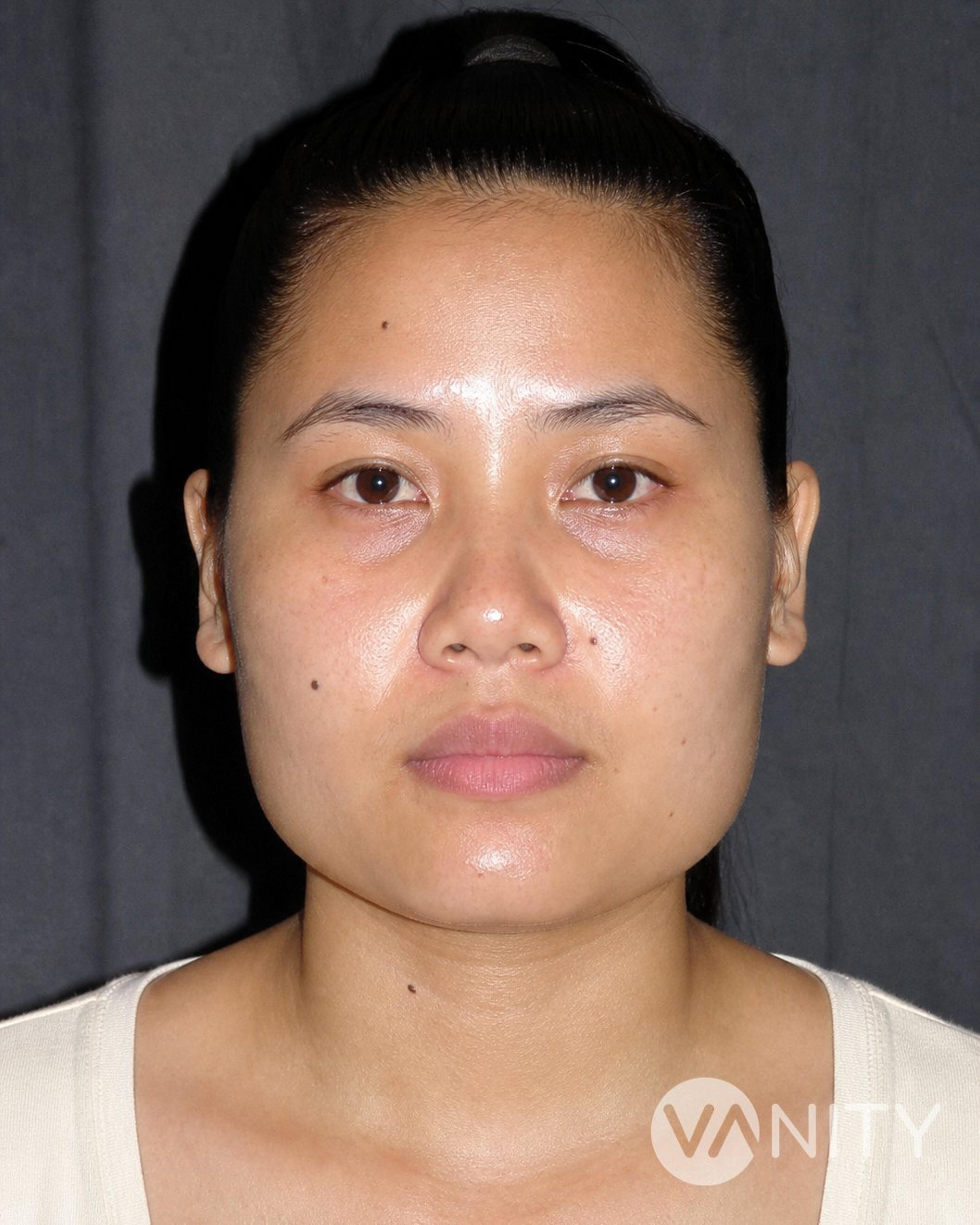
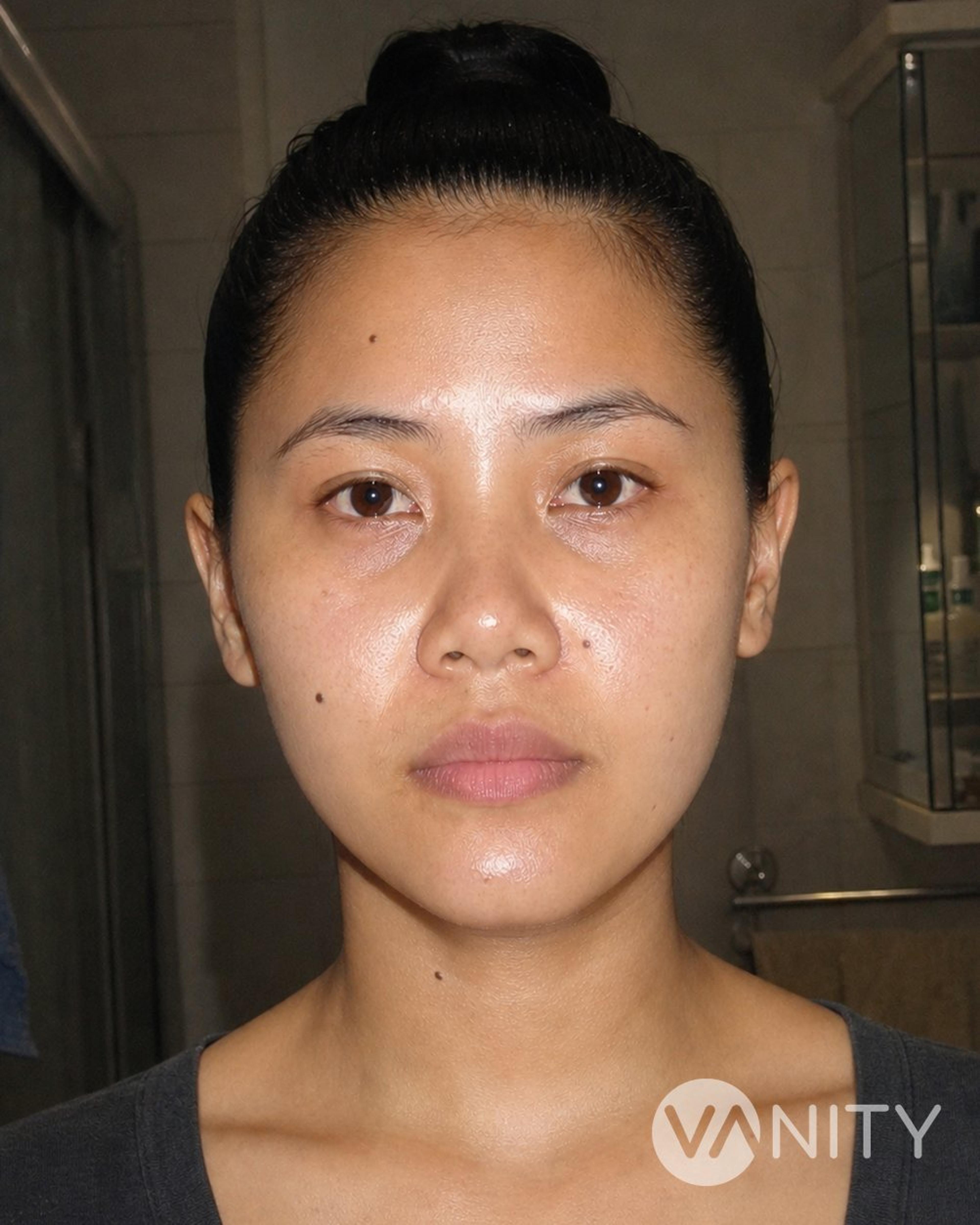




What it is
Jaw reduction is bone-contouring surgery on the lower jaw. We work through an incision inside the mouth, expose the mandibular angle and body, and remove a planned segment of bone with an oscillating saw. Where the face reads wide from the front rather than in profile, we also split or burr away the outer cortex of the mandible. The chin can be narrowed in the same operation. Fixation is often unnecessary when only the angle and outer cortex are resected — plates and screws are used when the chin is repositioned.
It suits adults whose lower face is square because the mandibular angles flare outward, an anatomical pattern documented as common in East Asian populations. You need mature facial bone growth, healthy teeth and gums, and a stable bite. Where the width comes mainly from masseter muscle bulk rather than bone, botulinum toxin or muscle reduction is the honest answer instead of, or alongside, ostectomy. If your bite itself needs correcting, orthognathic surgery is the right operation and contouring is not.
Techniques we use

We reshape a prominent mandibular angle by carefully shaving the outer edge of the jawbone through an incision inside the mouth. The aim is to soften a square lower face while preserving a natural jaw angle and the support it gives to the soft tissue.

Where width extends forward from the angle, the surgeon selectively shaves and smooths the outer jawline for a more even contour. The plan is based on your facial proportions and imaging, with care taken to stay clear of the mandibular nerve.
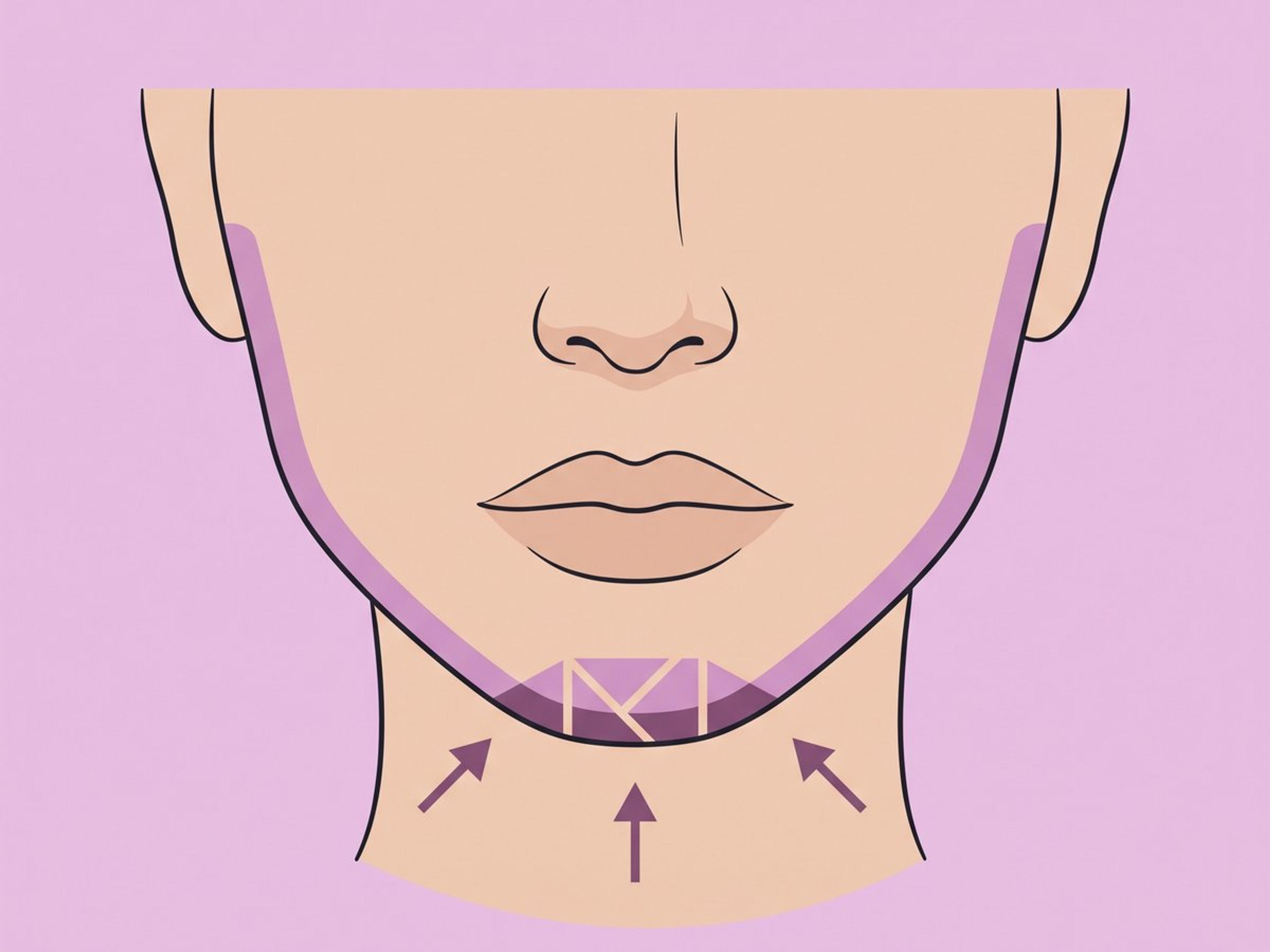
Jawbone shaving can be combined with a chin or jawline implant when more projection or definition is needed, or with double-chin liposuction when fullness below the jaw is obscuring the contour. These are separate decisions: we recommend them only when they address the structure actually affecting the jawline.
The operation, step by step
Planning from your own CT
The mandibular canal and the inferior alveolar nerve are traced on 3D CT and the osteotomy line is drawn around them, because the safe margin differs measurably between individuals. The same imaging settles whether the width is skeletal at all — if it is masseter bulk, we say so and do not operate.
General anaesthesia, incision inside the mouth
The angle and body of the mandible are reached through an incision along the gum line, so nothing is cut on the face. The trade-off is a field lined with oral bacteria and limited direct vision, which is why the mouth is prepared, antibiotics are given and the exposure is taken wider than the cut itself.
Angle and body ostectomy
A planned segment of bone is removed from the angle and the laterally protuberant part of the body with an oscillating saw, in one smooth continuous curve. A visible step where two separate cuts meet — a secondary angle — is among the commonest reasons a jaw reduction has to be revised, so the line is designed to end where the jaw border is naturally rising.
Outer cortex reduction, where the width is frontal
If the face reads wide from the front rather than in profile, the lateral cortical plate is split off or burred down. This narrows the face without shortening the jaw's vertical height, and because only the outer cortex is taken it keeps a safe distance from the nerve inside the canal.
Chin narrowing, only if it is planned
A midline chin osteotomy narrows and often vertically shortens the chin so the whole border tapers as one line, fixed with plates and screws. We add it when reducing the angles alone would leave a wide chin looking mismatched — not as a default upgrade.
Closure, drain and compression band
The intraoral incision is closed in layers and a drain is sometimes left overnight, since blood collecting under the masseter is both painful and a route to infection. The elastic band you leave in holds the soft tissue against the reduced skeleton while it re-drapes, which is what limits sagging later.
Recovery, week by week
- Day 1
The anaesthetic has worn off. The lower face is swollen and tight, and the lower lip and chin are numb from nerve retraction. A compression band and sometimes a drain are in place, and intake is liquid only. You stay with us overnight.
- Week 1
Swelling peaks around days 3 to 5, then starts to settle. Mouth opening is restricted and the intraoral sutures are still in, so chlorhexidine rinses replace brushing near the incision. Short walks are usually fine toward the end of this week.
- Weeks 3-4
Most visible swelling has gone and many people return to work or school. Soft chewing comes back gradually as mouth opening improves. Numbness in the lip and chin is common at this stage and generally still recovering.
- Week 6
Mouth opening and ordinary chewing are usually back. Walking and light cardio have been fine for weeks; we clear resistance training and contact sport at around this point, once the osteotomy lines have knitted — a blow to the jaw before then can displace them.
- Month 3
The bone cuts have consolidated and the new jaw outline is visible, though some deep swelling remains. Sensation has largely returned in most people by now. Normal diet and exercise are usually unrestricted.
- Months 6-12
The soft tissue has settled over the reduced skeleton and we judge the final contour. Masseter volume commonly decreases over this period even when the muscle was never resected. Any revision for asymmetry or a residual step is considered only after this point.
How to prepare
- Finish any dental and periodontal treatment before surgery; active caries or gum infection raises the infection risk through an incision inside the mouth
- Stop smoking, and stop aspirin, NSAIDs, anticoagulants and blood-thinning supplements on the schedule your surgeon gives you
- Tell us about bruxism, temporomandibular joint symptoms and any previous botulinum toxin in the masseter — each changes both the plan and the expected result
- Arrange 3 to 4 weeks away from work, transport home, and a supply of liquid and soft food, antiseptic mouthwash and pain relief
Risks
Every operation carries risk. We name them so you can ask the right questions.
- Bleeding during or after surgery, or a collection of blood under the tissue that may need treatment
- Injury to the inferior alveolar or mental nerve, causing numbness or altered sensation in the lower lip and chin
- Sagging of the cheek or lower-face tissue if it has less bone beneath it for support — reported in about 2.8% of cases and more often after a longer curved bone cut
- Unevenness between the two sides, too little or too much reduction, or a visible step in the jawline — the most common reasons for revision surgery
- Infection, difficulty opening the mouth , or slow healing inside the mouth
What to expect in Turkey
Your 7 days in Istanbul are arranged around a calm recovery, clear check-ins and time to travel home comfortably. We plan the stay around your care, not around rushing to see a result.
Before you fly
Talk to the surgeon before you travel. We review your medical history, jaw concerns and treatment plan so you know what is included, what to bring and how to prepare. A real advisor replies the same day and helps arrange your transfers, hotel stay and appointments.
Your surgery day
You will be welcomed at the clinic, meet your surgeon and complete your final checks before surgery. The procedure takes around 2 to 3 hours under general anaesthesia. You stay with us overnight, with your comfort, medication and early recovery carefully monitored.
Your recovery in Istanbul
You stay in Istanbul for 7 days, with follow-up appointments arranged before you leave. The first days are for rest, liquids and soft food, with swelling and tightness expected. We provide clear aftercare guidance, help with your compression band and stay available while you recover. The new shape will not be visible yet — swelling takes time to settle.
Heading home
Before you travel, we see you for your final check and make sure you have everything needed for the journey home. Wear your compression band as advised, drink water and move regularly during the flight. You leave with your treatment information, a direct contact for questions and care that continues for twelve months.
Frequently asked
What is the difference between jaw reduction surgery and Botox in the masseter?
Botulinum toxin type A weakens the masseter and reduces its volume — around 31% after three consecutive injection cycles — but it does not touch bone and wears off in roughly 3 to 4 months. Jaw reduction permanently removes bone from the mandibular angle and body. Toxin is right when the width comes from muscle; surgery is for width that comes from the skeleton.
Will I have visible scars?
The standard approach places the incision inside the mouth along the gum line, so there is no scar on the face. Extraoral and retroauricular approaches exist and are used selectively. The intraoral route has its own trade-offs — less visibility for the surgeon, and a higher infection risk from oral bacteria.
How long does the swelling last?
Swelling rises quickly over the first few days, then subsides substantially across about a month, with subtle residual swelling for several months more. Most people return to work or school at 3 to 4 weeks. The final contour is judged at 6 to 12 months.
Does jaw reduction change my bite or how I chew?
Contouring the angle and outer cortex does not move teeth or alter occlusion, so the bite should be unchanged. Restricted mouth opening and weak chewing are expected for a while as swelling and muscle irritation resolve. If the bite is the actual problem, orthognathic surgery — which repositions the jaw and is planned with orthodontics — is the operation you need instead.
Is the result permanent, or does the bone grow back?
Resected adult mandibular bone does not regenerate, so the skeletal reduction is permanent. What keeps changing is soft tissue: masseter volume often decreases over the following months even without muscle resection, and skin laxity increases with age. Weight change and ageing will still affect how the jawline looks.
Am I a candidate if my face is wide at the cheekbones rather than the jaw?
Jaw reduction addresses the mandible only. Width at the level of the cheekbones is treated by zygoma reduction, a separate osteotomy, and the two are sometimes planned together. We measure bigonial width, gonial angle and masseter thickness on imaging to work out which structure is actually driving the appearance.
How common is this procedure?
Facial bone contouring is tracked as its own category in the International Society of Aesthetic Plastic Surgery's annual global survey, and mandibular angle reduction is among the most frequently performed facial bone operations in East Asia. Single-centre series of several thousand cases over a decade have been published. Volumes remain far lower in North America and Europe.
Who should not have jaw reduction?
Anyone whose facial skeleton is still growing, and anyone whose lower-face width comes from masseter bulk or fat rather than bone — surgery cannot fix what it does not touch. We also defer it for active dental or gum infection, since the incision runs through the mouth; for bleeding disorders or anticoagulation that cannot safely be paused; and where a bite problem is the real diagnosis, in which case orthognathic surgery is the operation. Heavy smoking and expectations that no ostectomy could meet are reasons to say no rather than to proceed carefully.
Which symptoms after surgery need urgent attention?
Call us straight away for bleeding that will not settle, swelling that increases rapidly on one side, or any difficulty breathing or swallowing — a haematoma in the floor of the mouth is an emergency. The same applies to fever with spreading redness or foul discharge, to pain that escalates after day 3 to 5 instead of easing, and to a jaw that suddenly cannot open or a bite that feels shifted, which can signal a fracture or a problem with fixation. Numbness of the lower lip and chin is expected and is not an emergency, but tell us about it: numbness still present beyond six months changes how we follow you.
Is removing more bone a better result?
No, and this is the commonest misconception we correct. How much can come out is limited by the mandibular canal and by the soft tissue above it: over-resection produces gonial deficiency — a jaw with no defined angle, which reads older and weaker rather than slimmer — and leaves skin and masseter without bony support, the cause of the sagging cheek reported in about 2.8% of cases. Comparative data favour designs that preserve a physiological gonial angle over maximal removal, so the plan is aimed at a shape, not at a quantity of bone.
Why do jaw reduction quotes vary?
Within our €4,000 to €8,500 range the drivers are how much is actually done: angle ostectomy alone sits at the bottom, and adding outer-cortex reduction, masseter reduction or a narrowing genioplasty moves it up, as does the fixation hardware a chin osteotomy needs. The 3D CT planning, the theatre, the anaesthetist and the inpatient night are in every version of the quote. Ask any clinic which of those a headline price excludes.
Sources
- [1]Analysis of incidences and types of complications in mandibular angle ostectomy in Koreans · Annals of Plastic Surgery (PubMed) · 2006
- [2]The Importance of Remodeling the Physiological Mandibular Angle: Mandibular V-Line versus Long Curved Ostectomy · Plastic and Reconstructive Surgery (PubMed) · 2024
- [3]Reducing Prominent Mandibular Angle Osteotomy Complications: 10-Year Retrospective Review · Annals of Plastic Surgery (PubMed) · 2018
- [4]Hard and Soft Tissue Facial Landmarks for Mandibular Angle Reduction: A Clinical Study · Clinics and Practice (PubMed Central) · 2024