
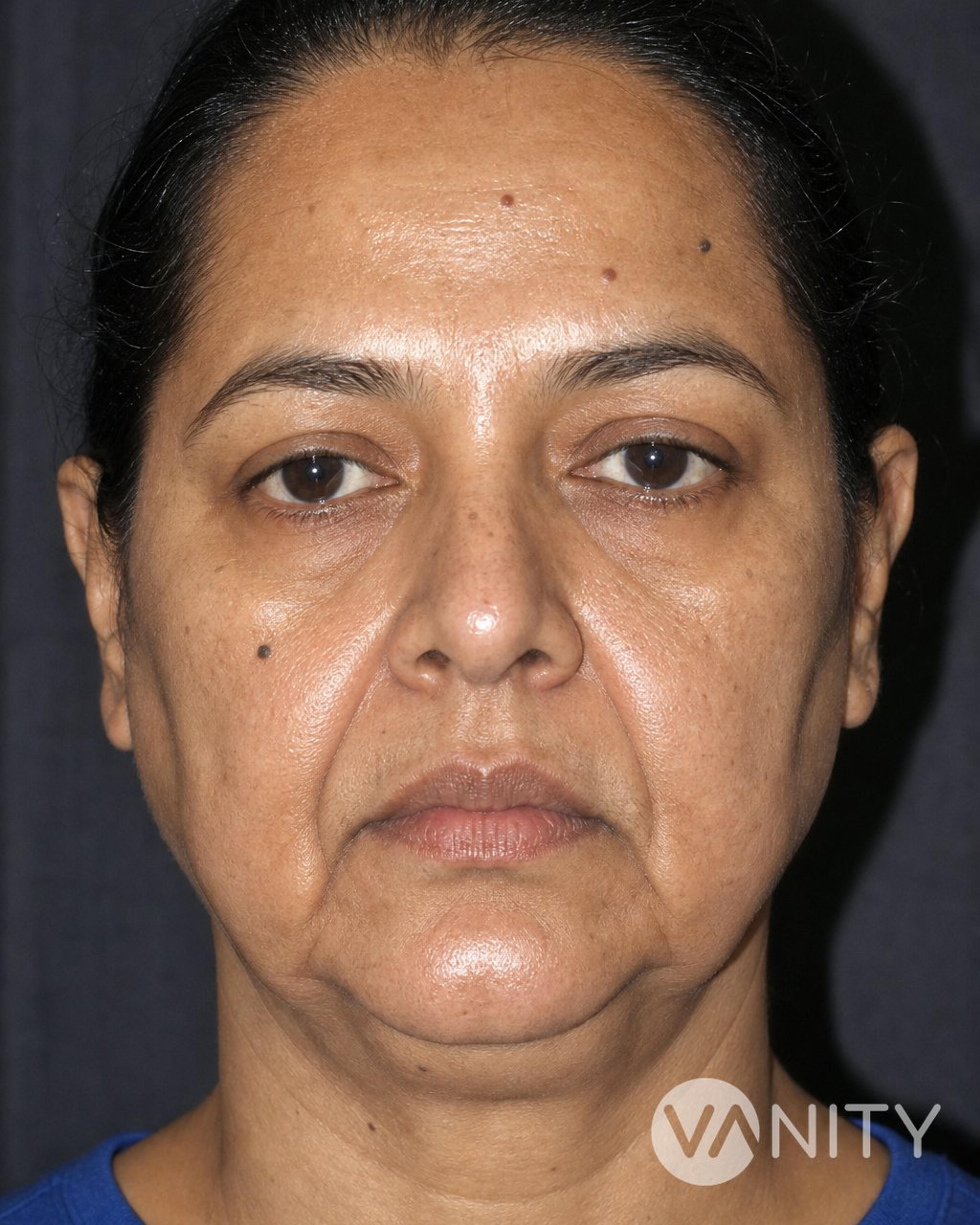
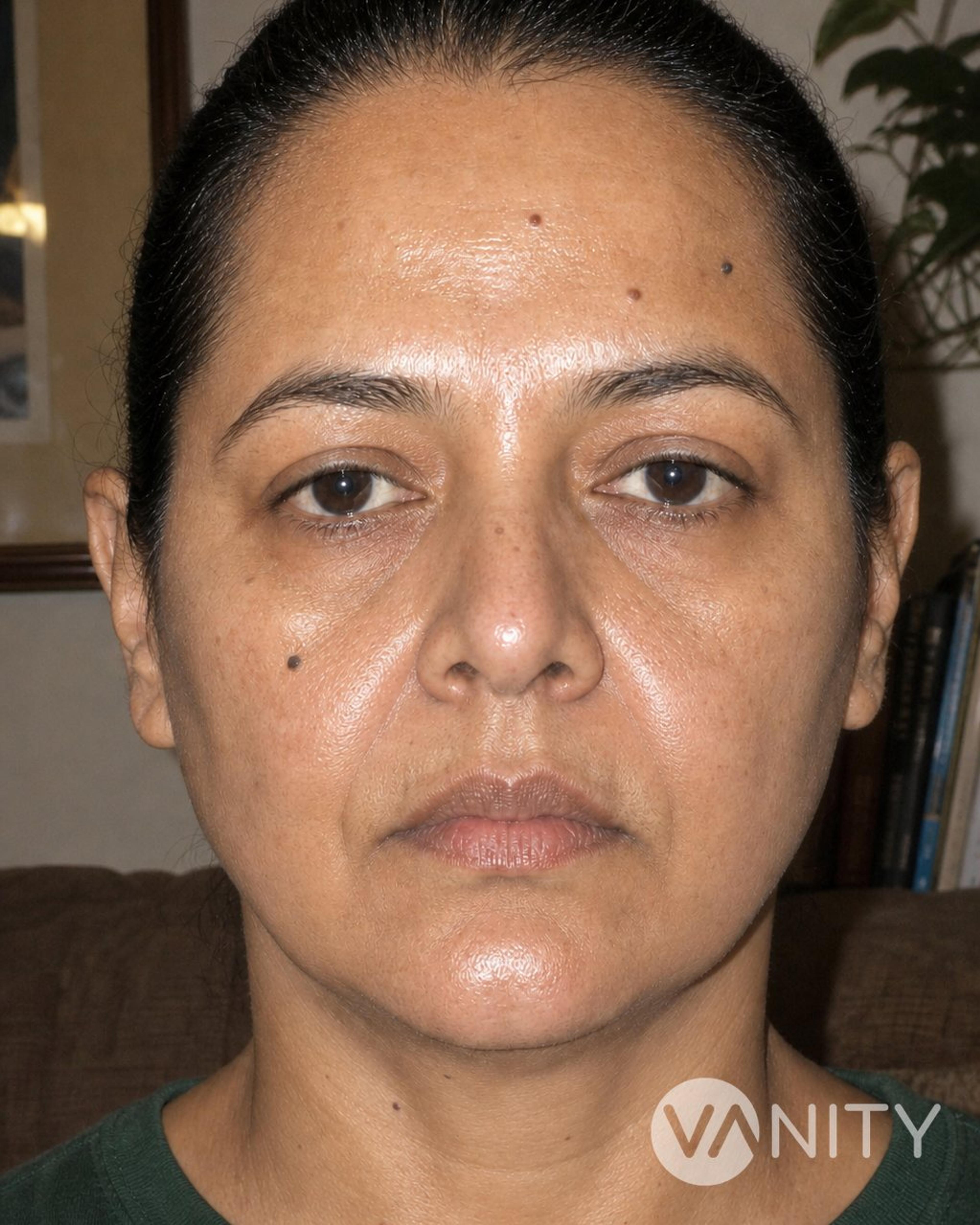




Face thread lift: what it is
A thread lift suspends tissue rather than removing any. Absorbable sutures carrying barbs or cones are passed through small puncture points under local anaesthetic, set in the fat layer above the SMAS, and drawn along a planned vector so the barbs grip tissue on either side of a central point and hold it higher. The lift is mechanical and visible the same day. As the thread hydrolyses over months a thin band of fibrosis forms along its tract, adding a smaller secondary tightening — and then the mechanical part is gone. Published follow-up rarely extends past 2 years, and long-term efficacy data do not exist.
It suits people roughly in their late thirties to early fifties with early or moderate descent of the midface, jawline or brow, skin that still has tone, and expectations set at subtle. It is also considered for people whose health makes general anaesthesia a poor idea. It is not a smaller facelift: real skin excess, heavy jowling and lost volume respond badly, and one multicentre series found complication risk rises in patients over 50. The regulatory scope says the same thing — absorbable suspension sutures are cleared to temporarily fixate the cheek subdermis in an elevated position, not to lift a face permanently.
Face thread lift: techniques we use
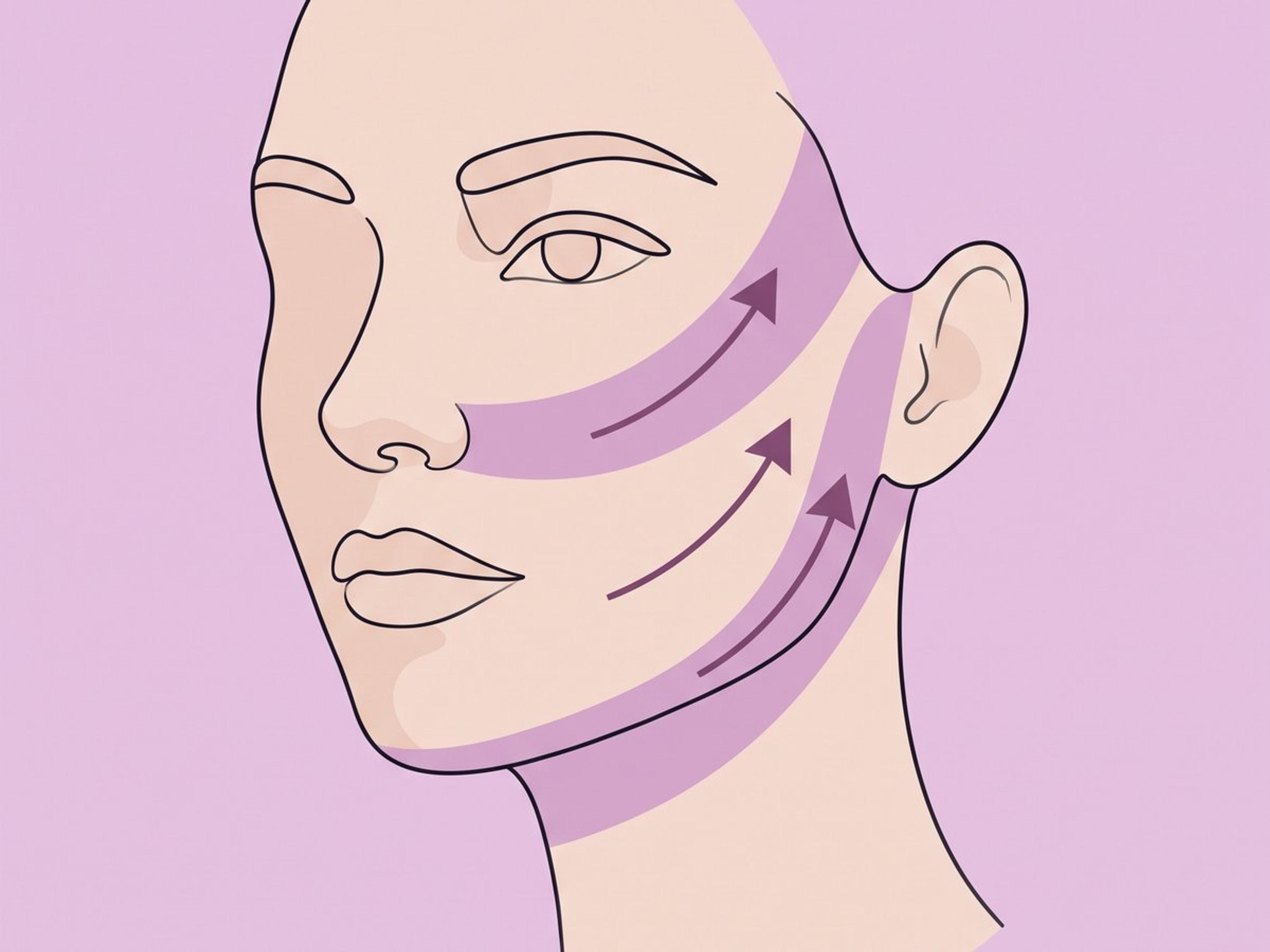
Bidirectional barbed polydioxanone threads go in through a 21-23 G needle or cannula into the subcutaneous plane, along vectors marked on the midface or jawline. Drawn back, the opposing barb sets grip tissue either side of a central point. This is the most studied configuration — nasolabial fold, midface and jawline repositioning — and PDO hydrolyses over roughly 6 months, so the mechanical component is finite by design.
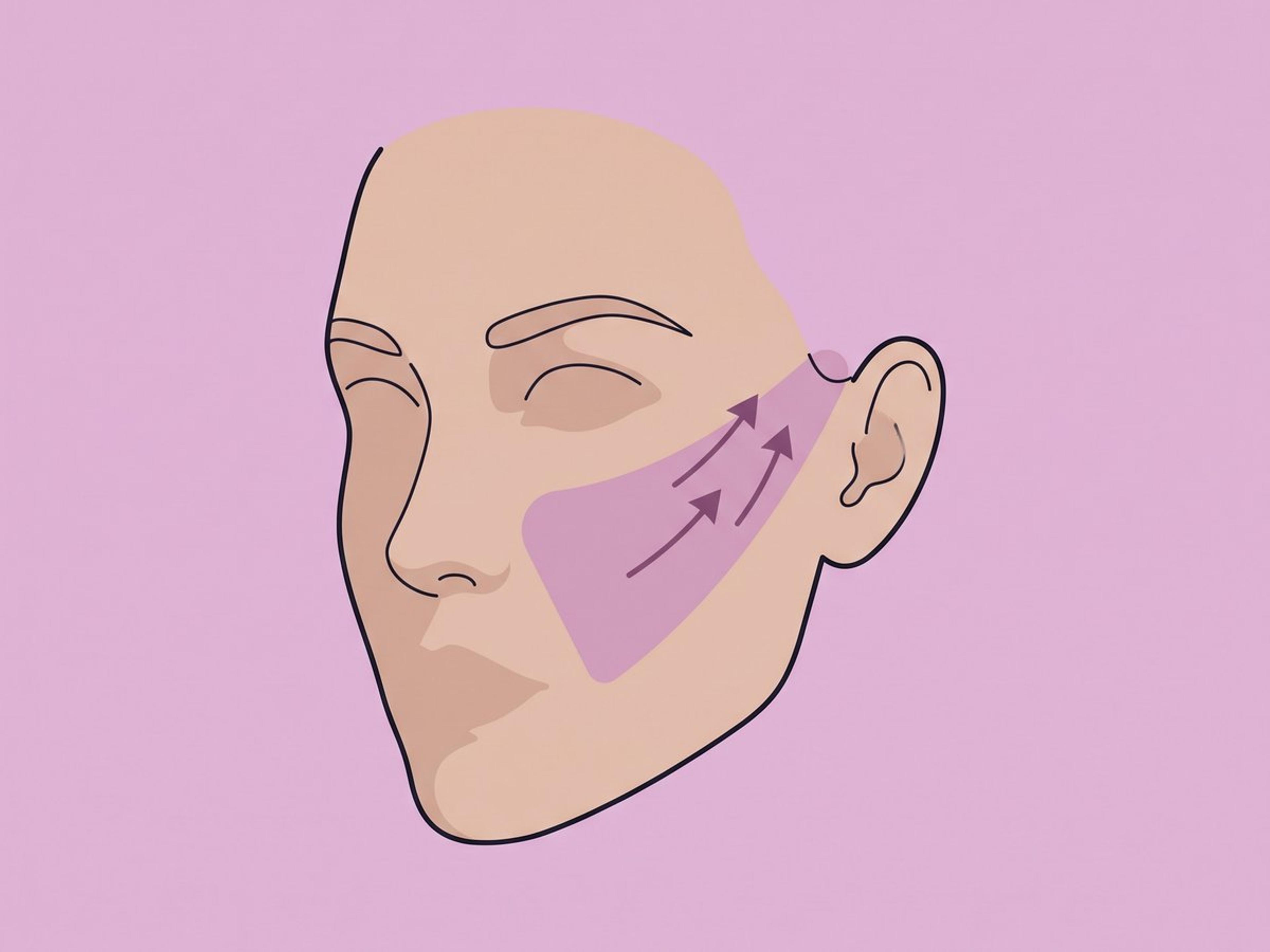
An absorbable poly(L-lactide-co-glycolide) monofilament carrying two bidirectional sets of cones is placed by needle from a temporal entry point into the midface. This is the device class the FDA cleared under 21 CFR 878.4493 for soft-tissue midface suspension surgery — temporary fixation of the cheek subdermis in an elevated position. Cones spread traction across a wider tissue footprint than fine barbs.
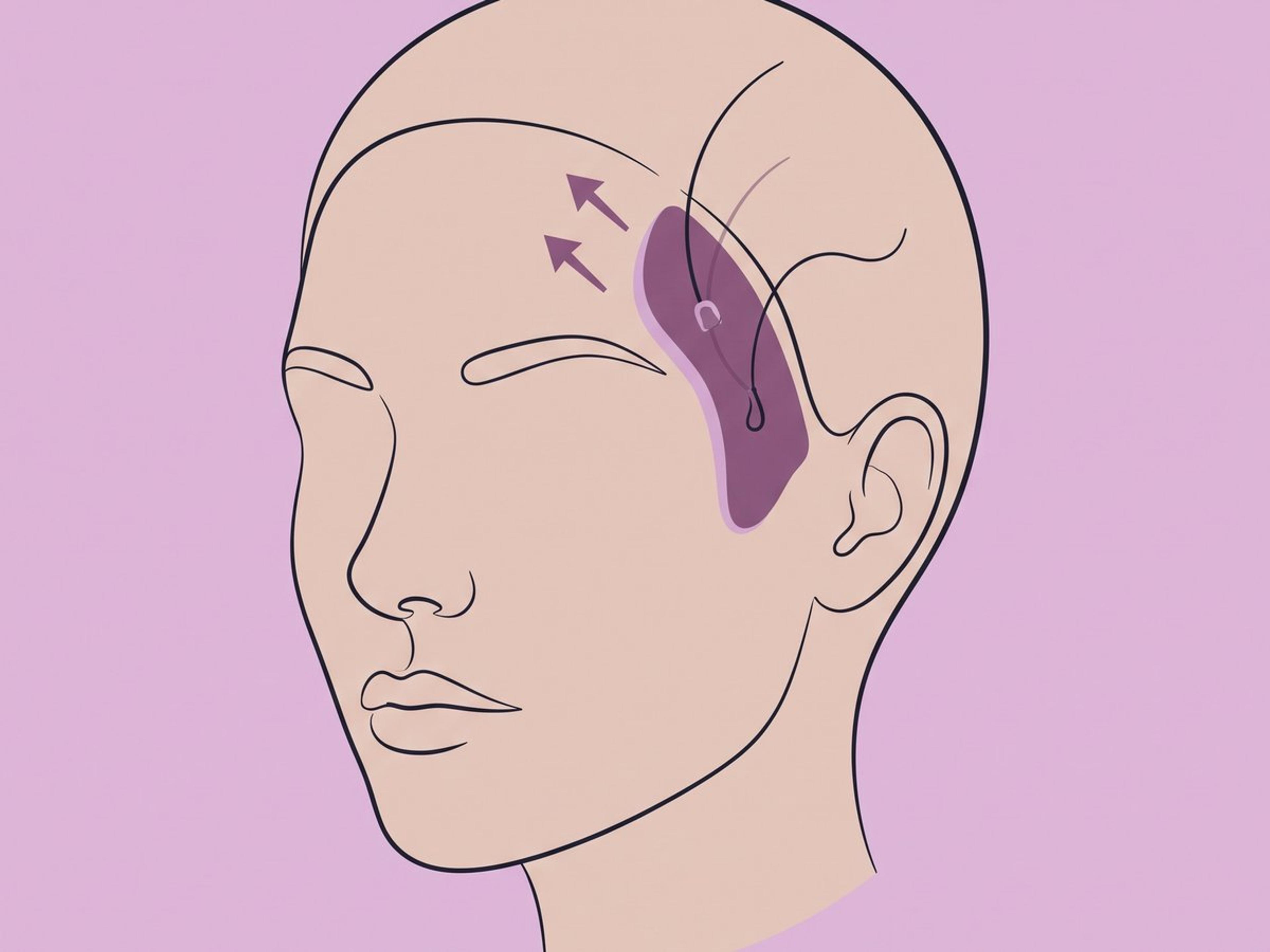
Anchored threads are fixed proximally in the temporal region or deep temporal fascia. They lift harder — reported tissue-elevation success of roughly 85-90 percent — and they bleed, dimple and traumatise exit points more often. Free-floating threads are shorter, fixed to nothing stable, and carry complication rates reported under 5 percent with less lift to show for it. We choose between the two in front of you, and we name which trade you are making.
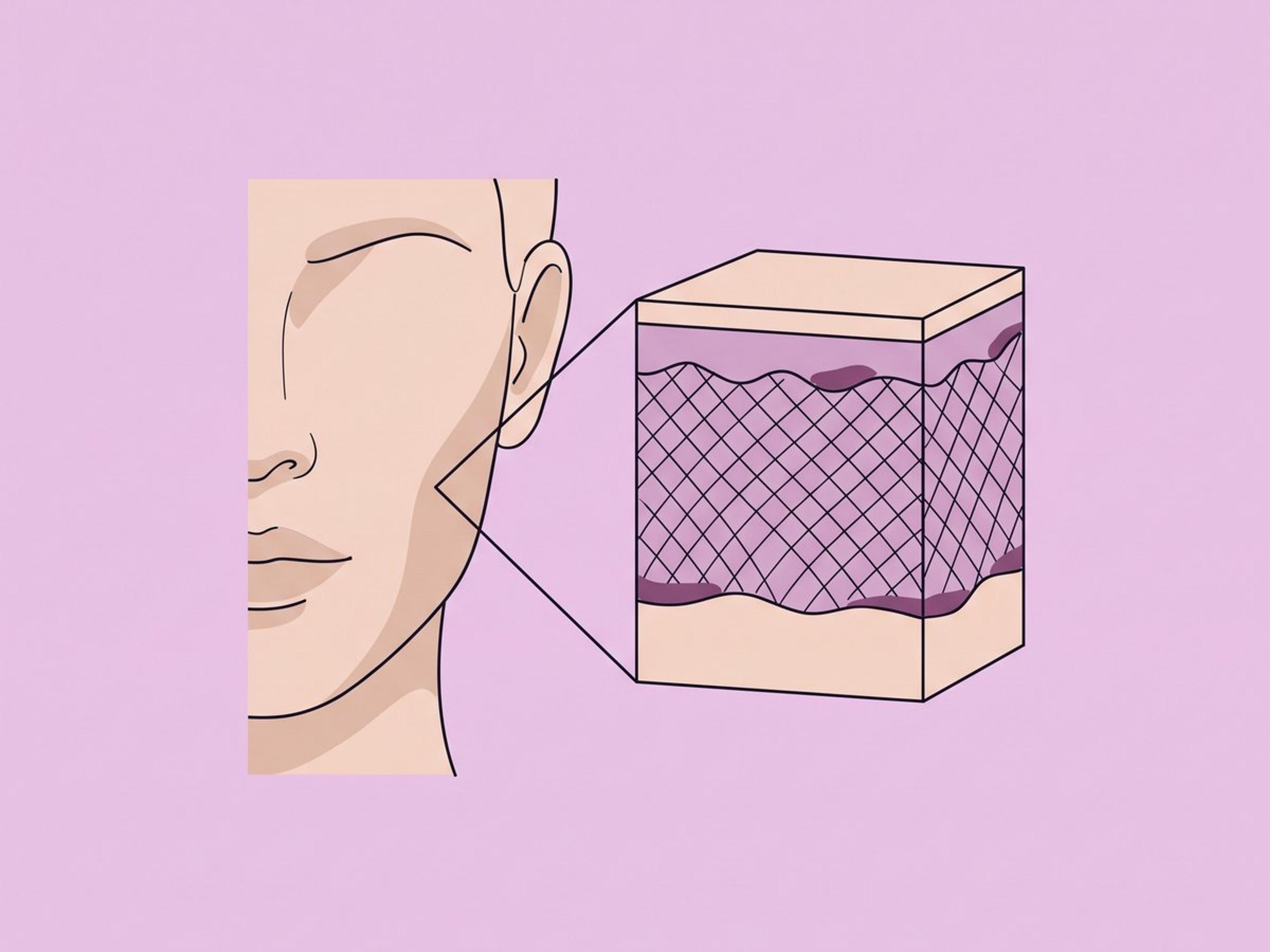
Unbarbed monofilaments are laid in a cross-hatched mesh within the dermis or immediately below it. They exert no traction and they do not lift — the intent is a localised foreign-body and collagen response for fine wrinkling and skin texture. They are usually placed alongside barbed threads in the same session rather than offered as a lifting method on their own.
The session, step by step
Assessment and vector marking
Descent is graded and the vectors are drawn while you are sitting upright, because tissue falls differently once you lie down and a line marked on a supine face lifts in the wrong direction. Thread count, material and zones are agreed here — that, not the headline price, is what you are buying.
Local anaesthetic and entry points
The skin is cleaned and local anaesthetic is infiltrated along each planned tract, so you are awake and comfortable throughout. Entry points are single punctures made with a needle tip — there is nothing to suture and nothing to dress afterwards.
Threads passed above the SMAS
Each thread is carried on a needle or blunt cannula into the subcutaneous fat above the SMAS. Depth is the whole game: too superficial and the barbs tether the dermis into dimples, too deep and they find nothing to hold.
Traction, drape and symmetry check
The thread is drawn back along its vector until the barbs or cones engage and the tissue sits where it was marked, then the skin is smoothed over the tract to release any gathering. We sit you up and compare sides before finishing, since asymmetry is far easier to correct now than in a follow-up visit.
Trim, discharge and the first 24 hours
Thread ends are cut below the skin surface, the punctures are cleaned and you go home the same day — no drains, no dressings, no bed rest. Leave the face unwashed for 24 hours, sleep on your back with your head above your heart, and expect a tight pull when you smile.
Follow-up before you fly
One review in Istanbul before departure checks symmetry, entry points and any early dimpling, which is the window in which manual moulding works best. After that the same care continues remotely for twelve months — photographs by message, and a corrective visit arranged if a thread needs releasing or removing.
Face thread lift: recovery week by week
- Day 1
The lift is visible immediately — this is mechanical, not gradual. Expect tightness on smiling and chewing, tenderness at the entry points and the start of bruising. No washing the face for 24 hours, sleep on your back with your head raised, and most people are back at a desk the same or next day.
- Days 2–5
Swelling and bruising peak and then fade; both can still be visible at day 5, which is why we suggest flying home on day 2 rather than day 1. Avoid saunas, alcohol, hard or chewy food and wide mouth opening — anything that stretches the tract before the threads have settled.
- Week 2
Vigorous exercise, dental work and facial massage are back on the table from about two weeks. The pulling sensation has usually gone, and with the swelling down this is the first honest look at the result. Dimpling, if it appears at all, typically shows in this fortnight and often resolves on its own or with manual moulding.
- Weeks 4–6
The tissue has re-draped and any residual irregularity has settled. A thin band of fibrosis is forming along each thread tract, adding a smaller secondary tightening on top of the mechanical lift. Persistent dimpling or a palpable thread is treated now — manual release, needle subcision, or withdrawing the thread — rather than left to see.
- 6 months and beyond
PDO is largely hydrolysed by around six months and PCL and poly-L-lactic acid take longer, so this is where the mechanical component starts to go. A prospective series of 160 barbed-PDO patients found the improvement had declined noticeably by 6 months and was absent by 1 year; other reports run longer. We review at this point and say plainly whether a repeat session or a different operation is the honest answer.
Face thread lift: how to prepare
- Attend an in-person assessment with standardised photography, where ptosis, skin laxity and volume loss are graded and candidacy is confirmed — significant laxity or heavy jowling is better served by a facelift, and risk is higher over 50.
- List every medication and supplement. With clinician approval, pause antiplatelet and anticoagulant agents, NSAIDs and blood-thinning supplements, since patients on these bleed and bruise more.
- Avoid alcohol beforehand, and if you bruise readily, schedule away from menstruation.
- Arrive with clean skin and no makeup. We defer treatment if there is active infection, inflammatory acne or dermatitis in the insertion zone, and antibiotic prophylaxis is sometimes prescribed.
- Clear 2 weeks of vigorous exercise, wide mouth opening and hard or chewy food from your calendar before you book the date.
Face thread lift: risks
Every operation carries risk. We name them so you can ask the right questions.
- Skin dimpling and contour irregularity — the most frequently reported complication, 11.7 percent in a 111,948-case multicentre series — caused by placement that is too superficial, excessive tension, or dermal tethering at the exit points.
- Palpable thread, migration and extrusion through the skin, sometimes requiring the thread to be withdrawn in the reverse direction of insertion.
- Bruising, ecchymosis, oedema, tenderness and transient erythema. Pooled data put ecchymosis at roughly 1 in 5 patients.
- Infection along the thread tract and granuloma formation, reported at around 2-6 percent depending on the series.
- Facial asymmetry, undercorrection and early loss of lift — in some prospective series the improvement is absent by 12 months.
- Uncommon but serious injury to structures along the thread path: branches of the facial nerve, the greater auricular nerve, the superficial temporal artery with haematoma, and the parotid gland or Stensen duct.

Face thread lift in Turkey: what to expect
This is a day case, placed once, under local anaesthetic. The trip around it is short — and the part worth planning for is not the procedure itself but the small chance you need a corrective visit after you have flown home.
Before you fly
Ask for the treatment plan in writing before you book anything: thread brand, material, and the number of threads per side and per zone. Pricing here is per thread and per zone, not per face. In Türkiye thread placement is physician-only work, governed by the Ministry of Health's certified Aesthetic and Cosmetic Applications programme, whose standard was approved 3 September 2025; the certificate is registered with the provincial health directorate and the treating doctor's specialty registration can be shown to you. Facilities treating international patients hold a separate International Health Tourism Authorisation Certificate under the regulation of 26 April 2025, and the Ministry publishes the list of authorised facilities — so you can verify us independently of anything we say about ourselves.
At the clinic
Vectors are marked while you sit upright, local anaesthetic goes in, and placement takes about an hour. You are awake throughout. There are no incisions to dress, no drains and no bed rest, and you go home the same day. Before any of that, we will say what the evidence says: a systematic review in Plastic and Reconstructive Surgery covering 12 studies and 818 patients found the improvement in facial ptosis was no longer apparent at 1 year, with a 34 percent complication rate, and recommended limiting the procedure to people who are not candidates for more invasive surgery. If that changes your mind on the day, the day is the right time to change it.
Recovery in Istanbul
Plan 3 days in Istanbul, 2 hotel nights and 1 follow-up review before you leave. Most people are back at a desk immediately — the days are for the swelling, not for rest. Bruising and swelling can be visible for up to 5 days, and dimpling or contour irregularity, if it appears, tends to show in the first fortnight and usually settles with time or manual moulding.
Heading home
Fly 2 days after, ideally — 1 day is medically fine. There is no surgical reason to restrict flying: no incisions, no general anaesthetic, no immobility, and the travel-clot question is not raised by an office procedure. The 2 days buy you the follow-up review and let the first-day swelling settle before a long flight. The one thing that can follow you home is dimpling or a palpable thread, which may need manual release, needle subcision or thread removal over more than one visit. Message us and we will arrange it — care continues for twelve months, not twelve hours.
- United Kingdom
- £1,500 – £3,000
- United States
- $1,500 – $4,500
- Western Europe
- €1,500 – €3,500
Published typical ranges for orientation — confirm with a local quote.
Face thread lift: frequently asked questions
How long does a thread lift last?
Patient-facing hospital guidance commonly describes 1 to 3 years as the threads dissolve. The published evidence is less generous — a systematic review of 12 studies found the longest follow-up assessments were at 2 years and concluded long-term efficacy data are lacking, and a prospective series of 160 patients treated with barbed PDO found the improvement declined noticeably by 6 months and was absent by 1 year. Durability depends on thread material, anchoring technique and how lax the tissue was to begin with.
Is a thread lift the same as a facelift?
No. A facelift surgically redrapes skin, repositions the SMAS and excises excess tissue; a thread lift suspends tissue on absorbable sutures and removes nothing. FDA clearance for absorbable suspension sutures is explicitly for temporarily fixating the cheek subdermis in an elevated position, which is the honest scope — early or moderate descent, not significant skin excess.
Does a thread lift hurt, and what anaesthesia is used?
It is done under local anaesthesia, so you are awake and not in pain, and it takes about 1 hour. A pulling or tight sensation on smiling and chewing is normal for the first 1 to 2 weeks. Entry-point tenderness is common and usually settles within days.
What are the threads made of and do they dissolve?
The commonest materials are polydioxanone (PDO), polycaprolactone (PCL), poly-L-lactic acid and poly(L-lactide-co-glycolide). In a 111,948-case multicentre review, PDO plus PCL combinations accounted for 39.2 percent of cases, PDO alone 36.7 percent and PCL alone 21.1 percent. All are absorbed by hydrolysis over months; non-absorbable threads made up under 3 percent of that series and carry higher complication risk.
How much downtime is there and when can I go back to work?
Most people return to work the same day or the next. Swelling and bruising can persist for up to 5 days, the face is not washed for 24 hours, and vigorous exercise waits 2 weeks. Sleep on your back with your head above your heart, and avoid saunas, alcohol and wide mouth opening for about a week.
Who is a good candidate?
Typically late thirties to early fifties, early signs of descent, reasonable skin quality, and an expectation of subtle change rather than a different face. It is also considered for people whose medical conditions make a facelift under general anaesthesia inadvisable. Large-series data indicate complication risk rises in patients over 50, so careful selection matters more than the number itself.
What happens if I get dimpling or a visible thread?
Dimpling is the commonest problem and often resolves on its own or with manual moulding within the first weeks. Persistent cases are managed by releasing the cog tension by hand, subcision with a needle to free the tethered dermis, or removing the thread by withdrawing it in the reverse direction of placement. A palpable or extruding thread should be assessed promptly rather than waited out — if you have already flown home, message us with a photograph and we will arrange the review.
How much does a thread lift cost in Istanbul?
Between €900 and €2,500 as of 2026, all-in for the consultation and facial assessment, the threads, local anaesthetic, the day-case procedure and one follow-up before you fly. The spread is almost entirely thread count, thread material and the number of zones treated, which is why two honest quotes for the same words can differ threefold. Ask any quote — ours included — to state thread brand, material and the exact number of threads per side.
Who should not have a thread lift?
We defer or decline when there is active infection, inflammatory acne or dermatitis in the insertion zone, a bleeding disorder or anticoagulation that cannot safely be paused, pregnancy, a known allergy to the thread material, or a strong tendency to keloid or hypertrophic scarring. Very thin skin with little subcutaneous fat is a practical contraindication too — threads placed under it are more likely to show, dimple or be felt. And significant skin excess or heavy jowling is not a contraindication so much as the wrong operation: that face needs a facelift, and we will say so.
Which symptoms after a thread lift are not normal?
Bruising, tightness on smiling and entry-point tenderness are expected. What is not: redness or warmth spreading along the line of a thread, discharge or a pustule at an entry point, fever, pain that worsens after the first days instead of easing, or sudden one-sided swelling. New weakness or asymmetry when you move your face also needs review, since threads pass near branches of the facial nerve. Infection along a thread tract sometimes means the thread must come out, so message us with a photograph the day you notice any of these — including after you have flown home — rather than waiting for the next scheduled review.
The threads dissolve — doesn't the collagen they leave behind hold the lift permanently?
No, and this is the claim to be most sceptical of. Hydrolysis of the thread does provoke a foreign-body response and a thin band of fibrosis along the tract, which adds a modest secondary tightening — but it is a fraction of the mechanical lift, and it does not replace it. The systematic reviews are consistent on the outcome rather than the mechanism: improvement in facial ptosis was no longer apparent at 1 year in a 12-study, 818-patient review, and no study has followed patients past 2 years. Plan for a treatment that fades, not one that converts itself into a permanent result.
Can it be repeated, and does having threads make a facelift harder later?
Repeating is normal and is how the treatment is designed to be used — a further session once the previous threads have absorbed, typically after a year or more, placed along fresh vectors rather than the old tracts. On later surgery the honest answer is that the evidence is thin: absorbable threads leave no permanent material behind, but surgeons do report fibrosis in the subcutaneous plane that has to be dissected through. It is not a barrier to a facelift, and any surgeon operating on you should be told what was placed, when, and of what material.
How much does face thread lift cost in Turkey?
€900 to €2,500 with us, confirmed after a consultation rather than quoted blind. For comparison it is typically £1,500 – £3,000 in the United Kingdom, $1,500 – $4,500 in the United States and €1,500 – €3,500 in Western Europe. Priced by the number and type of threads, which is set by how much laxity there is. A clinic quoting before it has seen your face is quoting a number, not a plan.
Sources
- [1]510(k) Premarket Notification K163676 — Silhouette InstaLift absorbable suspension suture (indications for use; 21 CFR 878.4493, product code GAM) · U.S. Food and Drug Administration · 2017
- [2]Update on Absorbable Facial Thread Lifts (systematic review, 12 studies, n=818) · Dermatologic Surgery / PubMed · 2025
- [3]Facial Thread Lifting Complications: causes, prevention and management · Journal of Cosmetic Dermatology / PubMed Central · 2025
- [4]Thread-Lift Sutures: Still in the Lift? A Systematic Review of the Literature · Plastic and Reconstructive Surgery · 2018