
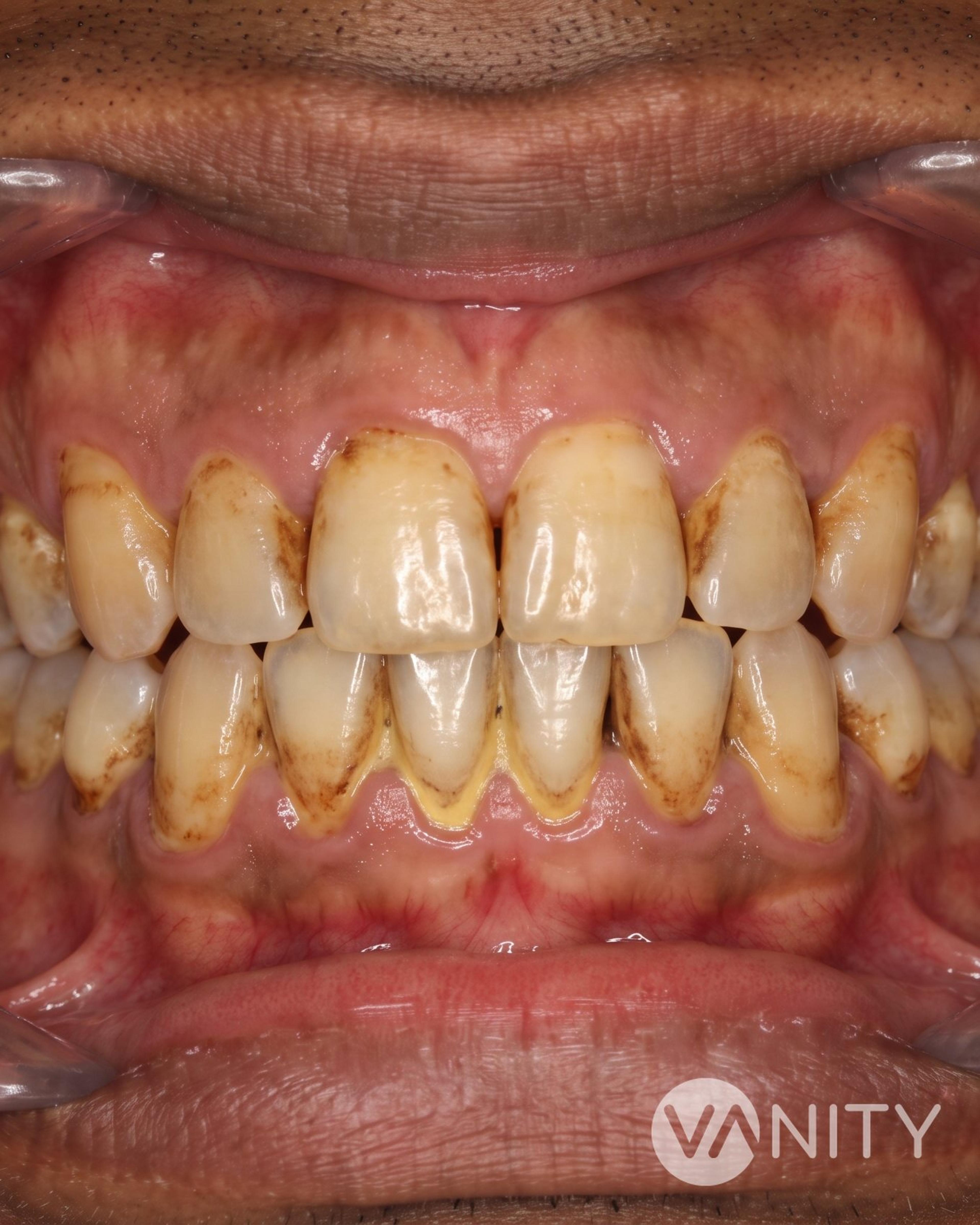
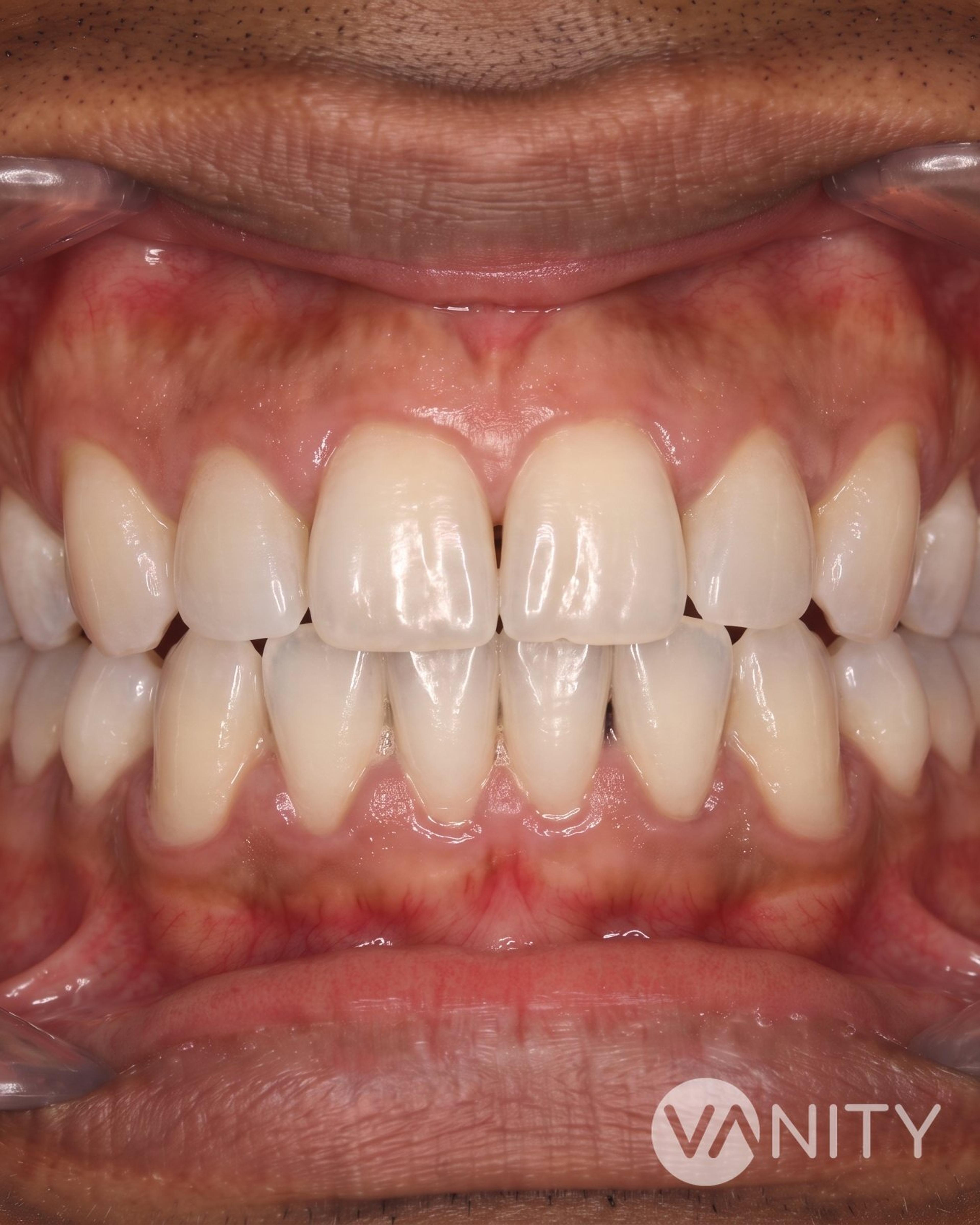

Teeth whitening: what it is
Whitening is chemistry, not surgery. A peroxide gel is held against natural enamel and dentine — carbamide peroxide releases about a third of its content as hydrogen peroxide, which oxidises the large pigmented molecules trapped inside the tooth and breaks them into smaller fragments that reflect more light. Dentist-dispensed take-home gels run 10% to 38% carbamide peroxide; chairside gels use concentrated hydrogen peroxide behind a protective gum barrier. There is no cutting, no anaesthetic and no wound, and the tooth surface is otherwise left intact.
It suits adults with healthy teeth and gums whose discolouration is age-related or comes from food, drink and tobacco. Yellow-toned teeth respond well, brown-toned teeth respond less predictably, and grey-toned teeth — including tetracycline staining — respond poorly or very slowly and relapse more. It is not appropriate until active decay and gum disease have been treated, it is not recommended in pregnancy or while breastfeeding, and it is of little use to someone whose visible smile is mostly crowns, veneers or composite: those materials do not change colour, and an unmatched result is the predictable outcome.
Teeth whitening: techniques we use
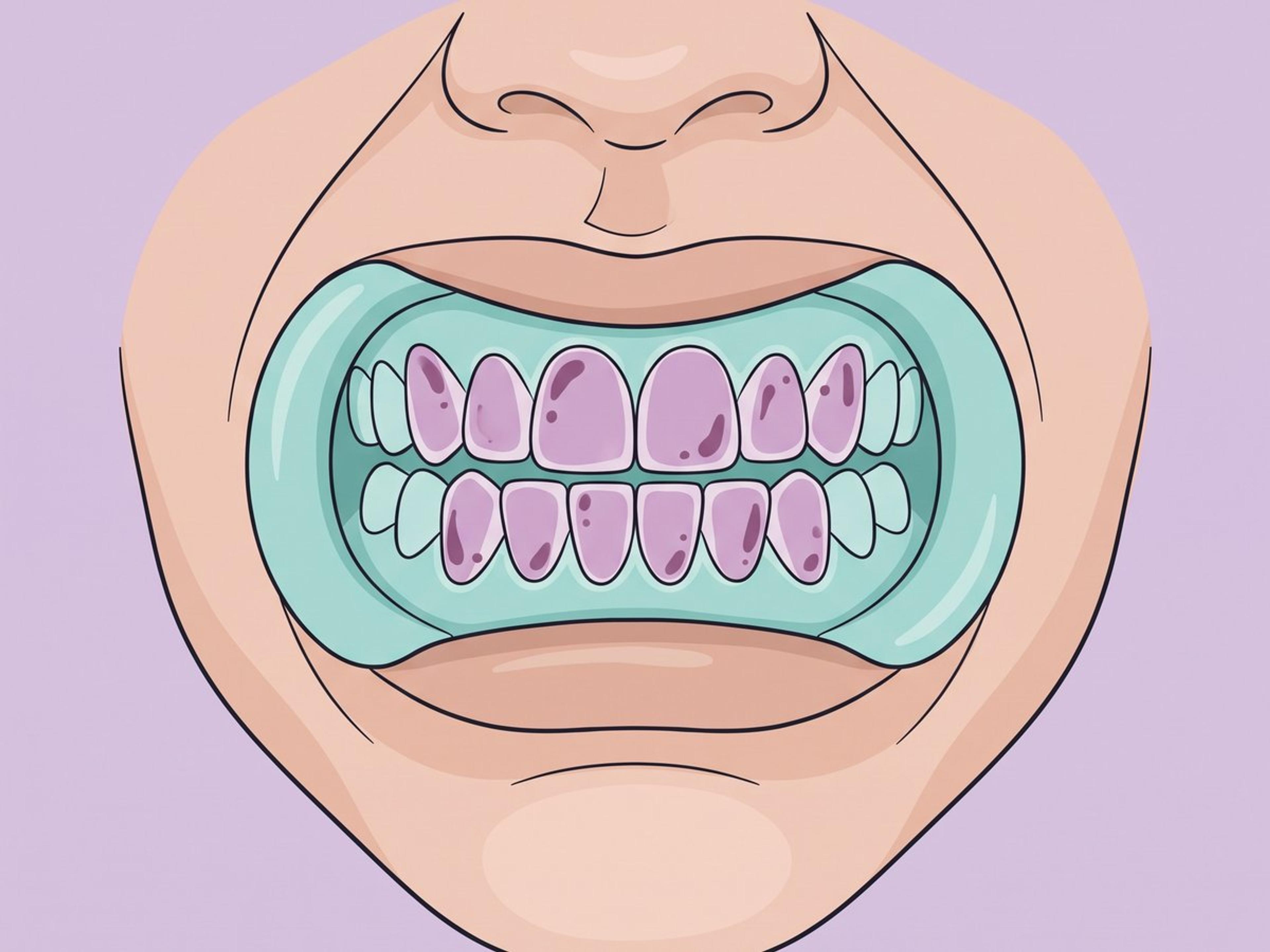
A rubber dam or painted gel barrier isolates the gum margin, and a concentrated hydrogen peroxide gel is applied to the front surfaces of the teeth in 2 to 4 cycles across a single appointment of about an hour. Some systems add a light or laser intended to accelerate the reaction; the evidence does not show light activation improves colour change or reduces sensitivity. A single visit gives the fastest visible change, but an umbrella review of systematic reviews found no significant difference in final colour between chairside and at-home bleaching.
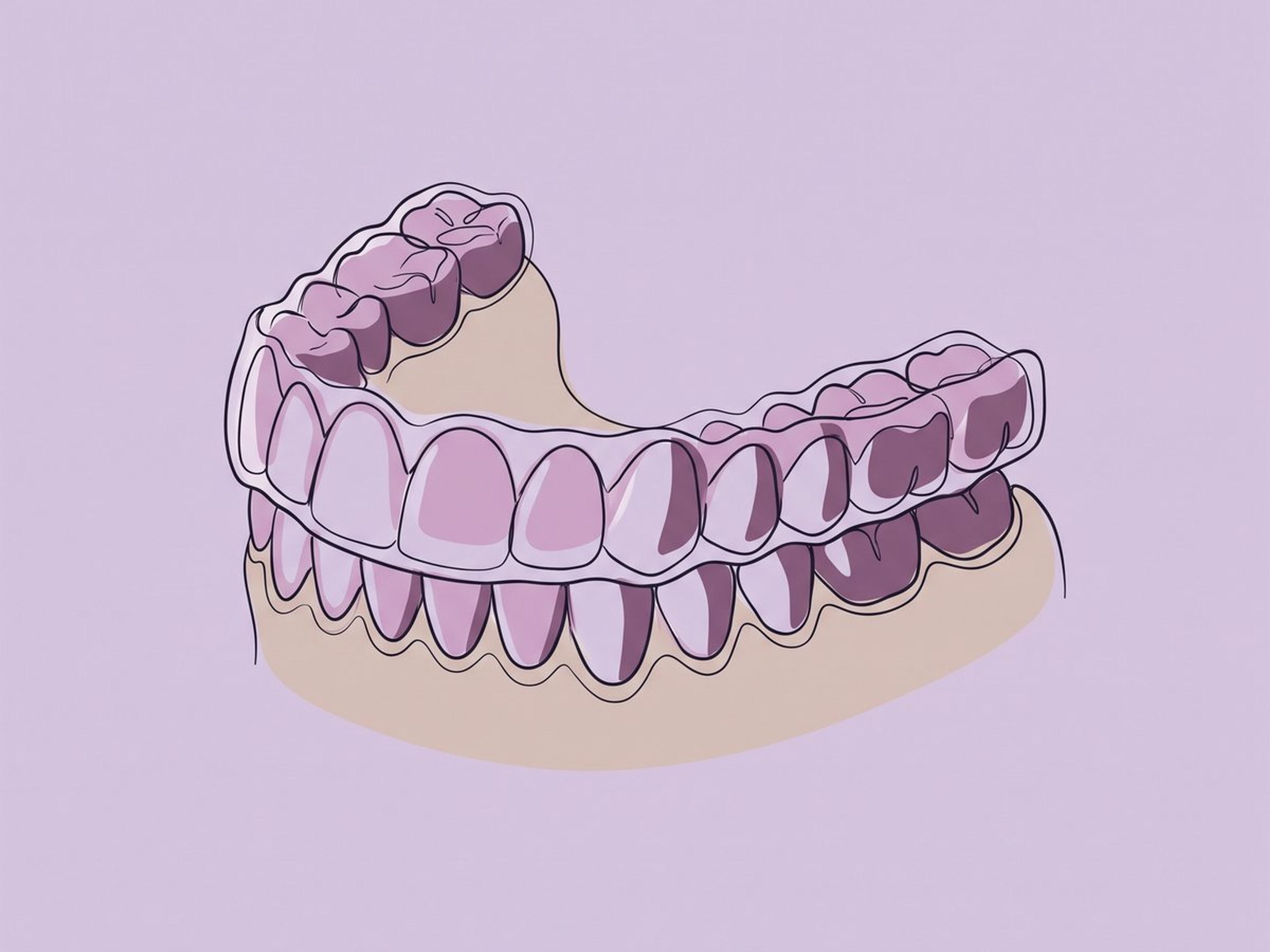
Scans or impressions are used to make thin trays that sit closely around the teeth and keep gel off the gums. Carbamide peroxide gel, typically 10% to 38%, is worn for a prescribed period each day over 2 to 6 weeks depending on the starting shade — the lower concentration is compensated for by contact time. The 2018 Cochrane review of 71 trials found tray-delivered carbamide peroxide whitened teeth compared with placebo, on low to very low certainty evidence.
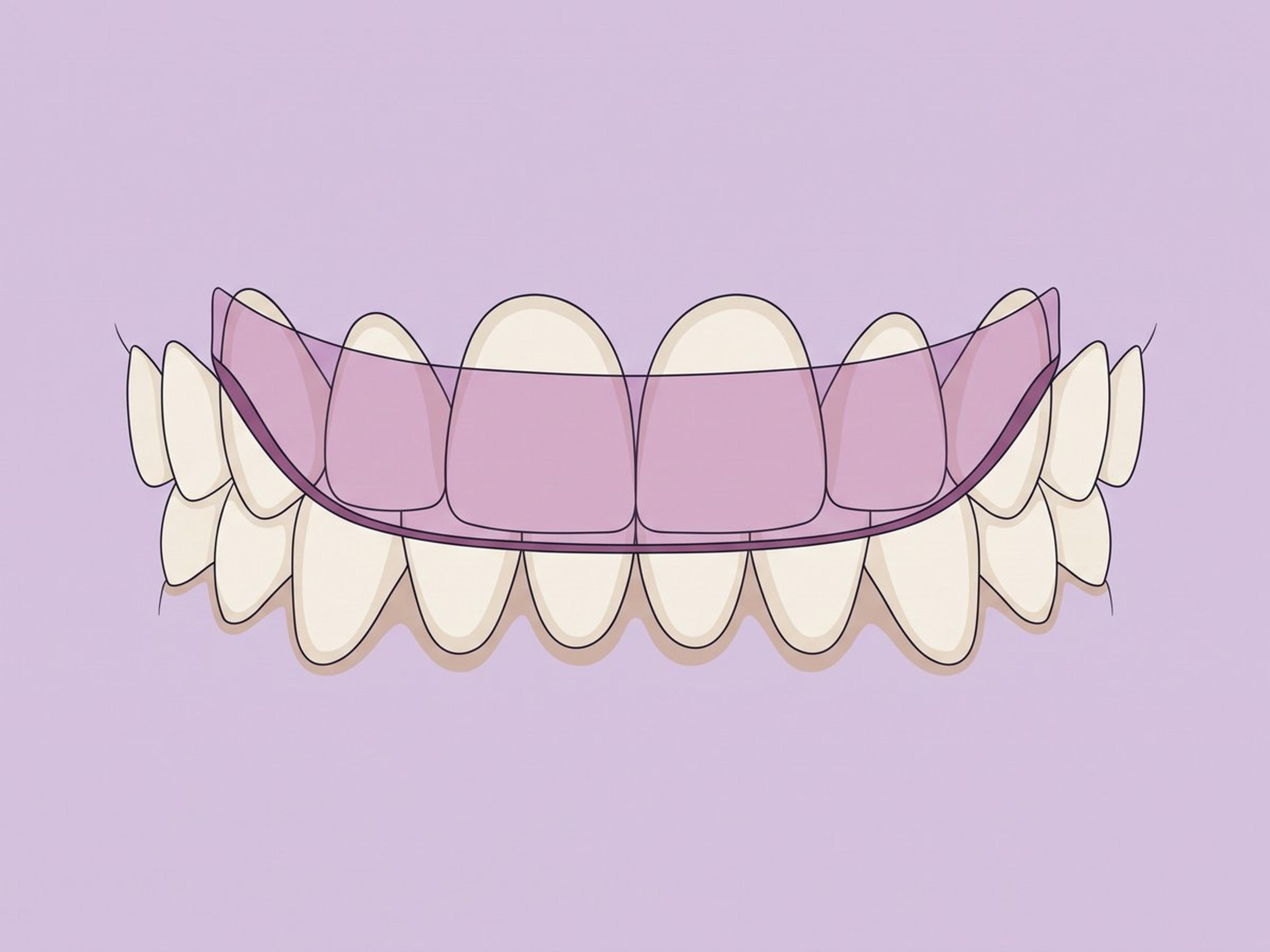
Strips and paint-on gels sold directly to consumers carry lower peroxide concentrations than dentist-supplied or chairside systems and are not fitted to your own arch. In the United States, only over-the-counter products are eligible for the ADA Seal of Acceptance — dentist-dispensed products are not assessed under that programme, which is a difference in scope rather than a verdict on either. Whitening toothpaste is a separate category again: mild abrasives lift surface stain, and they do not change the intrinsic colour of the tooth.
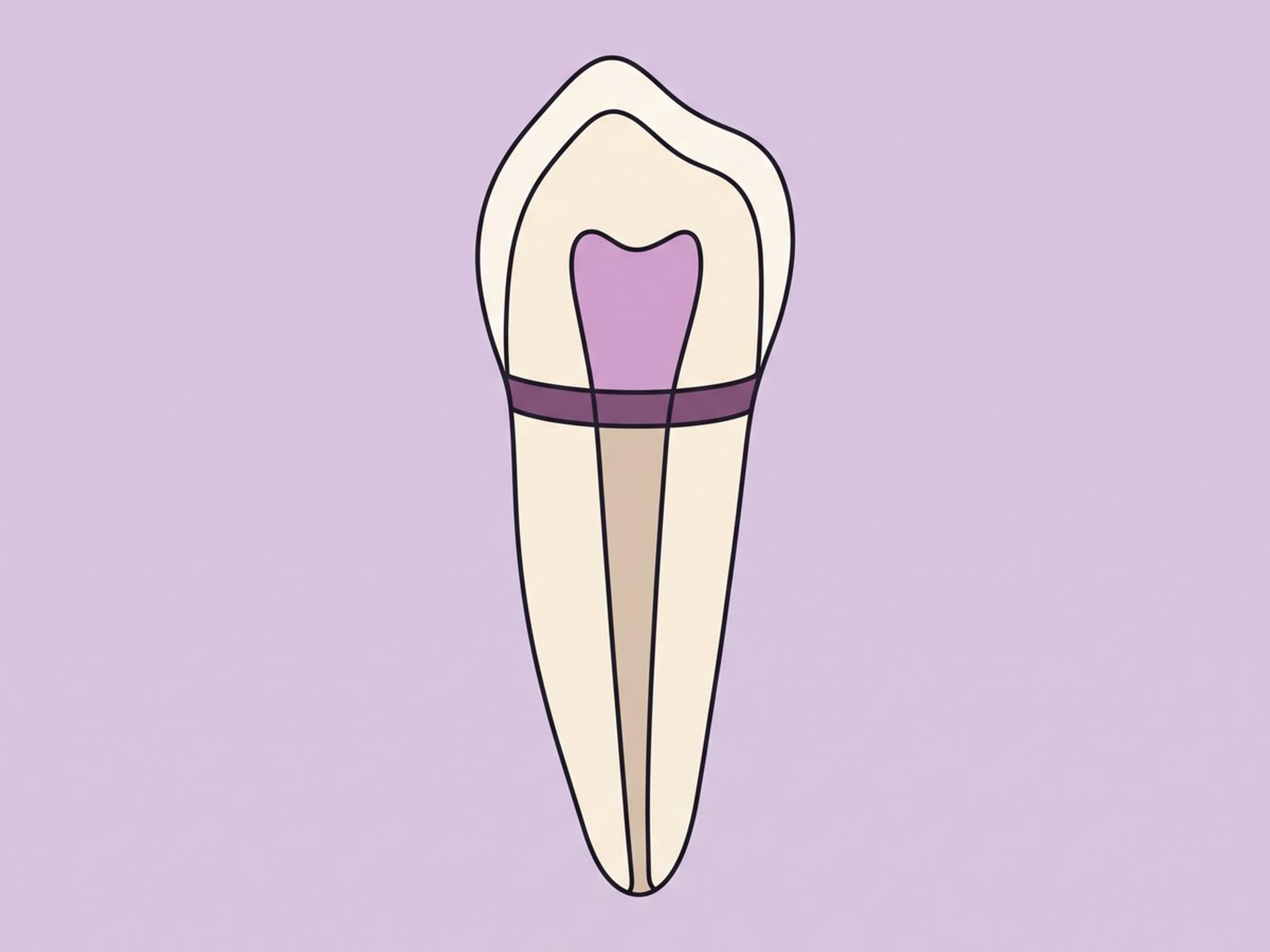
A tooth that has darkened after root canal treatment will not lighten usefully from the outside, so the agent is sealed inside the pulp chamber and changed at intervals — the walking bleach technique. A cervical barrier, usually glass ionomer, is placed over the root filling to stop the agent tracking into the tissues around the root. External cervical root resorption is the specific complication of this technique, reported in 6.9% of 58 non-vital teeth in one series, with risk rising where heat-activated protocols are used, the cervical seal is inadequate or the agent is highly concentrated.
The treatment, step by step
Examination and baseline shade
A full examination with radiographs comes first, because peroxide reaching an untreated cavity, an exposed root surface or inflamed gum turns expected mild sensitivity into real pain. The starting shade is recorded on a shade guide or spectrophotometer and photographed, so the change is measurable rather than a matter of opinion later.
Scale, polish and a restoration audit
Calculus and surface stain are removed so the gel meets tooth rather than deposit, and so the shade we record is your enamel and not a film sitting on it. Every crown, veneer and composite in the smile zone is mapped at the same visit: those will not lighten, and you need the replacement quote before the gel goes on rather than after.
Isolating the gums
A rubber dam or a painted resin barrier seals the gum margin before any chairside gel is placed. In-office protocols run 25% to 40% hydrogen peroxide, and at those strengths the barrier is the only thing between a whitened tooth and a chemical burn on the gum.
The bleaching cycles
Gel is applied to the front surfaces of the teeth and refreshed 2 to 4 times across an appointment of about an hour, repeated over 1 to 3 sessions depending on your starting shade. Some systems add a light or laser, but activation has not been shown to improve final colour or reduce sensitivity — the variable actually worth adjusting is contact time, which we shorten at the first sign of sensitivity rather than push through.
Trays, take-home gel and the shade check
Your arches are scanned on the first day and dentist-made trays come back from the lab within about 24 hours, with 10% to 38% carbamide peroxide gel and a written wear schedule. A final shade check is compared against the baseline photographs before you fly, so the result is agreed in the chair rather than argued about by email.
Teeth whitening: recovery week by week
- Straight after the session
Teeth look at their brightest as you leave because isolation and gel have dehydrated the enamel, and the shade rebounds slightly over the next day or two as they rehydrate — that is normal, not a failed result. There is no wound, no anaesthetic and no activity restriction: eat, work and exercise as usual from the moment you stand up.
- First 48 hours
Enamel is briefly more porous, so coffee, tea, red wine, dark sauces and tobacco stain more readily than usual; two days off them protects the colour you have just paid for. Short, sharp reactions to cold are commonest in the first 24 hours and are the expected effect rather than a complication.
- Day 4
Sensitivity usually settles by around the fourth day after the last gel application. Potassium nitrate and fluoride toothpaste, shorter wear times and a lower-concentration gel are the standard fixes — but pain that is spontaneous, throbbing, confined to a single tooth or still building after a week is not bleaching sensitivity and needs examining.
- Weeks 2–6
The take-home tray course runs 2 to 6 weeks depending on your starting shade, with the gain arriving gradually rather than overnight. The shade is stable roughly two weeks after the last application, which is also the earliest new veneers, crowns or composites should be bonded: bleaching temporarily weakens adhesion, and until then the colour you would be matching has not settled.
- 1–2.5 years
Published follow-up puts clinically stable colour at roughly one to 2.5 years, whichever agent or delivery method was used. Relapse comes faster in grey-toned and tetracycline-stained teeth and in smokers — the trays and gel you took home are what make a top-up a quiet evening at your own bathroom mirror rather than another flight.
Teeth whitening: how to prepare
- A full dental examination with radiographs before any peroxide is applied. Decay, failing fillings, cracks, exposed root dentine and active gum disease are treated first — bleaching an unhealthy mouth raises sensitivity and can mask a problem.
- A scale and polish to remove calculus and surface stain, so the shade we record is your tooth colour rather than a deposit sitting on top of it.
- A baseline shade taken with a shade guide or spectrophotometer, alongside standardised photographs. Without them the change is unmeasurable and any later disagreement about the result is unresolvable.
- Every restoration in the smile zone mapped, with a written agreement on which ones will need replacing once the shade settles, what that costs, and who pays for it.
- If you have a history of sensitive teeth, a potassium nitrate and fluoride desensitising toothpaste started 1 to 2 weeks before the course begins.
Teeth whitening: risks
Every operation carries risk. We name them so you can ask the right questions.
- Tooth sensitivity — reported in up to two thirds of users in the early stages. Peroxide reaching the dentine irritates the pulp; it is usually mild and transient, but it is the expected effect rather than a rare one
- Gingival irritation or chemical burn where gel contacts soft tissue, most often from a poorly fitting or overfilled tray. White patches on the gums and a sore gum or throat are recognised short-term effects
- Restorations do not lighten. Crowns, veneers, bridges, implants and composite fillings keep their original shade, so a restoration that previously matched can be left visibly darker than the teeth around it and may need remaking at your cost
- Poor and unpredictable response in grey-toned and tetracycline-stained teeth. Severe intrinsic discolouration also shows significantly higher colour relapse over time than staining that sits on the surface
- Changes to enamel surface roughness with aggressive or repeated bleaching, and a temporary reduction in bond strength between enamel and any adhesive restoration placed immediately after treatment
- External cervical root resorption after internal bleaching of a non-vital tooth — 6.9% of teeth in one series, associated with heat-activated protocols and inadequate cervical sealing

Teeth whitening in Turkey: what to expect
This is a day case in a dental chair. No admission, no anaesthetic, no wound — the whole reason to spend a few days in Turkey is to have the examination done properly in person, to get 1 to 3 chairside sessions and a shade check under the same roof, and to leave with dentist-made trays rather than a stock kit.
Before you fly
Talk to the dentist before you book anything. Photographs emailed from abroad can shape an indicative plan, but FDI is explicit that a comprehensive examination must come first, and a clinic willing to whiten on the strength of pictures alone is skipping the step the profession treats as mandatory. Ask two questions in writing: what peroxide concentration is used, and how the gums are isolated. Published in-office protocols run 25% to 40% hydrogen peroxide for 20 to 45 minutes, and FDI cautions that the long-term effects of products above 6% on dental tissues are incompletely understood — at those strengths a rubber dam or painted barrier is not an optional extra. If restorative work is on your mind, plan it as a second trip.
At the clinic
You sit in a dental chair. The gum margin is isolated, gel goes on the front surfaces of the teeth, and the cycle is repeated 2 to 4 times across about an hour. Depending on your starting shade that is 1 to 3 sessions. Your trays are scanned on the first day and come back from the lab within about 24 hours, so you leave with them and with gel for top-ups at home. Nothing here requires a bed, and if you are offered one for this, ask why.
Recovery in Istanbul
3 days in total, 2 hotel nights, 1 follow-up visit for the shade check. Immediately after a chairside session the teeth look at their brightest because the isolation and gel have dehydrated them, and the shade rebounds slightly as they rehydrate — that is normal, not a failure. Sharp, short cold sensations are most likely in the first 24 hours. Avoid coffee, red wine, tea and tobacco for about 48 hours after the last gel application, which is easier on a quiet day in the city than in an airport.
Heading home
There is no surgical reason to wait. No incision, no drain, no dressing, no general anaesthetic — therefore no DVT consideration and no cabin-pressure issue, and flying the same evening is safe. We ask for 1 day only so the shade check happens and the staining window passes with you somewhere comfortable. Whitening is not permanent; the trays and gel go home with you so a top-up never means another flight.
Checking a clinic in Turkey
Turkey rewrote its medical-tourism rules on 26 April 2025, replacing the 2017 regulation. Any facility treating international patients must now hold an international health tourism authorisation certificate, register on the Ministry of Health's HealthTürkiye portal, and carry complication insurance for the procedures it performs; hospitals and medical centres also had to complete TÜSKA accreditation by the end of that year. Facilities are required to publish that certification — so you can check ours, and you should check anyone else's before you pay a deposit.
For dental work the registrations sit in a specific order and are all checkable. The facility needs its international health tourism authorisation certificate; the treating dentist needs registration with their provincial dental chamber under the Turkish Dental Association. Ask for your dentist by name rather than for the clinic, ask who performs each stage if the plan runs across several visits, and ask what happens if something fails after you are home — with dental work that question is more likely to matter than with surgery.
Most nationalities enter Turkey visa-free or on an e-Visa for a stay of this length, with a passport valid at least six months. Confirm the rule for your own passport, and build the return flight around the last clinic visit rather than fixing it in advance.
- United Kingdom
- £250 – £600
- United States
- $300 – $800
- Western Europe
- €300 – €700
Published typical ranges for orientation — confirm with a local quote.
Teeth whitening: frequently asked questions
How long does teeth whitening last?
A 2023 systematic review of 24 home-bleaching studies covering 1,197 participants found the colour achieved stays clinically stable for roughly one to 2.5 years, whichever peroxide agent or delivery method was used. Longer follow-up of tetracycline-stained cases retained 66% to 68% of the colour change at five to 7.5 years. Whitening is not permanent, and we would rather you plan for top-ups than be surprised by them.
Is in-office whitening better than dentist-supplied trays at home?
An umbrella review of systematic reviews and meta-analyses found no significant difference between in-office and at-home bleaching in final colour change, and no significant difference in the risk or intensity of sensitivity afterwards. The at-home route uses lower concentrations and compensates with longer contact time. The practical difference is speed and supervision, not the endpoint — which is why an Istanbul course usually combines both: chairside sessions while you are here, trays and gel to take home.
Does whitening damage enamel?
Peroxide bleaching used as directed has not been shown to increase cavity or fracture risk, and it is regarded as safe under supervision. Laboratory studies do show that bleaching can alter enamel surface roughness and reduce bond strength to restorations placed immediately afterwards, but those are in-vitro findings rather than observations on living teeth. The ADA notes that overuse can damage enamel and gums, which is exactly why the regimen and the concentration are prescribed rather than left to you.
Will whitening work on my crowns, veneers or fillings?
No. Peroxide changes the colour of natural tooth structure only — crowns, veneers, bridges, implants and composite fillings will not lighten. If those restorations were shade-matched to your teeth before treatment, they will look darker afterwards and may need remaking, which is a separate and much larger cost. This is why we audit restorations at the planning stage and quote the replacement before you fly, not after the gel is on.
Why do my teeth hurt after whitening, and what helps?
Sensitivity happens when peroxide passes through enamel to the dentine and irritates the nerve. It affects up to two thirds of users early on, typically appears within 2 to 3 days of starting a strip or tray regimen, and usually settles by around the fourth day after treatment ends. Desensitising toothpaste with potassium nitrate and fluoride, shorter wear times and lower-concentration gel are the standard steps, and we would rather slow the course down than push through it.
Can I have veneers or new fillings on the same trip as whitening?
We would advise against it. A meta-analysis of 52 in-vitro studies (Savian et al., Operative Dentistry, 2021) found vital bleaching significantly impairs adhesive bond strength to enamel and dentine, and recommends delaying restoration placement for at least 2 weeks after bleaching. A package that whitens on Monday and bonds veneers on Thursday is working against the published evidence — restorative work belongs on a second trip, once the shade has stabilised and can be matched properly.
Can a salon or a non-dentist legally whiten my teeth?
FDI's position is that tooth bleaching is the practice of dentistry and should not be performed by anyone who is not a dental professional. In the UK the General Dental Council's position, upheld by the High Court in GDC v Jamous (2013), is the same, with a 6% maximum hydrogen peroxide strength for cosmetic whitening and supply only after a dentist's clinical examination. In Türkiye, every dentist practising legally is registered with the Turkish Dental Association through a local chamber — Istanbul has its own — and you are entitled to ask for the registering chamber and the dentist's name as registered. Decline whitening offered in a salon, spa or hotel, whatever it costs.
What does teeth whitening cost in Istanbul?
An all-in two-arch course as normally packaged for an international patient runs €150 to €450, which works out at roughly €75 to €225 per arch or €10 to €30 per tooth. The Turkish Dental Association's 2026 guide tariff lists whitening at 11,935 TL per arch including VAT and excluding materials — about €225 at roughly 53 TRY to the euro in August 2026. For comparison, the ADA Health Policy Institute's Survey of Dental Fees recorded a US general-practitioner average of $275.55 for in-office bleaching of a single arch, with no examination, cleaning or take-home trays included.
Who should not have teeth whitening?
Whitening waits until active decay, failing fillings, cracks, exposed root dentine and gum disease have been treated, because peroxide reaching unprotected dentine or inflamed tissue turns expected mild sensitivity into genuine pain and can hide a problem that needed finding. It is not recommended in pregnancy or while breastfeeding, and it is not for children and adolescents whose pulp chambers are still large. It is also a poor investment if your visible smile is mostly crowns, veneers or composite, or if your discolouration is grey-toned or tetracycline-related — those respond slowly, unpredictably and relapse fastest, and we would rather tell you that before you book a flight.
Which symptoms after whitening should I contact the clinic about?
Most of what you feel is expected: short cold twinges, mild gum tenderness, and teeth that look brightest on the day then settle back slightly. Contact us if a white patch on the gum has not faded within a day or has ulcerated, if pain is spontaneous and throbbing rather than triggered by cold, if it is localised to one tooth, or if sensitivity is still worsening more than a week after the last gel. Those point to a chemical burn from gel escaping the tray, an untreated cavity, or a tooth that was already non-vital — none of which improves by continuing the course, so stop the trays and call before the next application.
How white will my teeth actually get?
Whitening lightens the tooth colour you already have by a few shades; it does not overwrite it with a uniform white, and that is the commonest misconception we correct in the chair. Canines are naturally darker than incisors and the translucent biting edge stays greyer — bleaching changes neither, so an honest result looks like your own teeth several shades lighter rather than a flat white panel. Yellow-toned teeth respond well, brown-toned less predictably, grey-toned and tetracycline-stained teeth poorly. This is why we record a baseline shade and measure the change against it, and why we quote shade movement rather than promise an endpoint.
How much does teeth whitening cost in Turkey?
€150 to €450 with us, confirmed after a consultation rather than quoted blind. For comparison it is typically £250 – £600 in the United Kingdom, $300 – $800 in the United States and €300 – €700 in Western Europe. The figure depends on whether the treatment is in-chair, take-home trays, or both. Existing crowns and veneers do not whiten, which sometimes changes the plan before it changes the price.
Sources
- [1]Prognosis in home dental bleaching: a systematic review · Clinical Oral Investigations (PMC/NLM) · 2023
- [2]2026 Yılı Ağız Diş Sağlığı Muayene ve Tedavi Ücret Tarifesi (guide fee tariff) · Türk Dişhekimleri Birliği / Turkish Dental Association · 2026
- [3]Results from the 2013 Survey of Dental Fees · American Dental Association, Health Policy Institute · 2013
- [4]Home-based chemically-induced whitening (bleaching) of teeth in adults · Cochrane Oral Health — Cochrane Database of Systematic Reviews · 2018
- [5]Comparison of in-office and at-home bleaching techniques: an umbrella review of efficacy and post-operative sensitivity · Heliyon (PMC/NLM) · 2024