
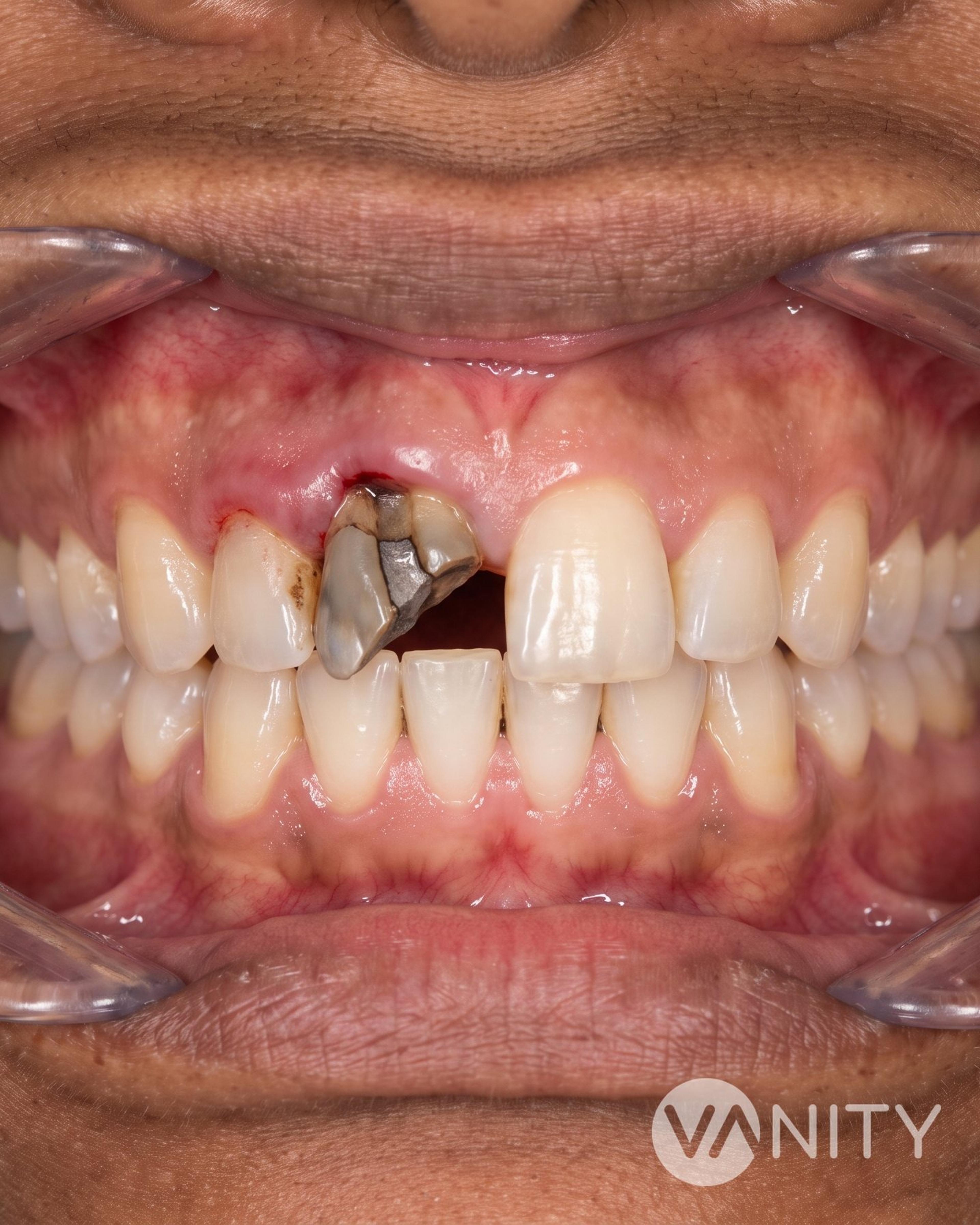
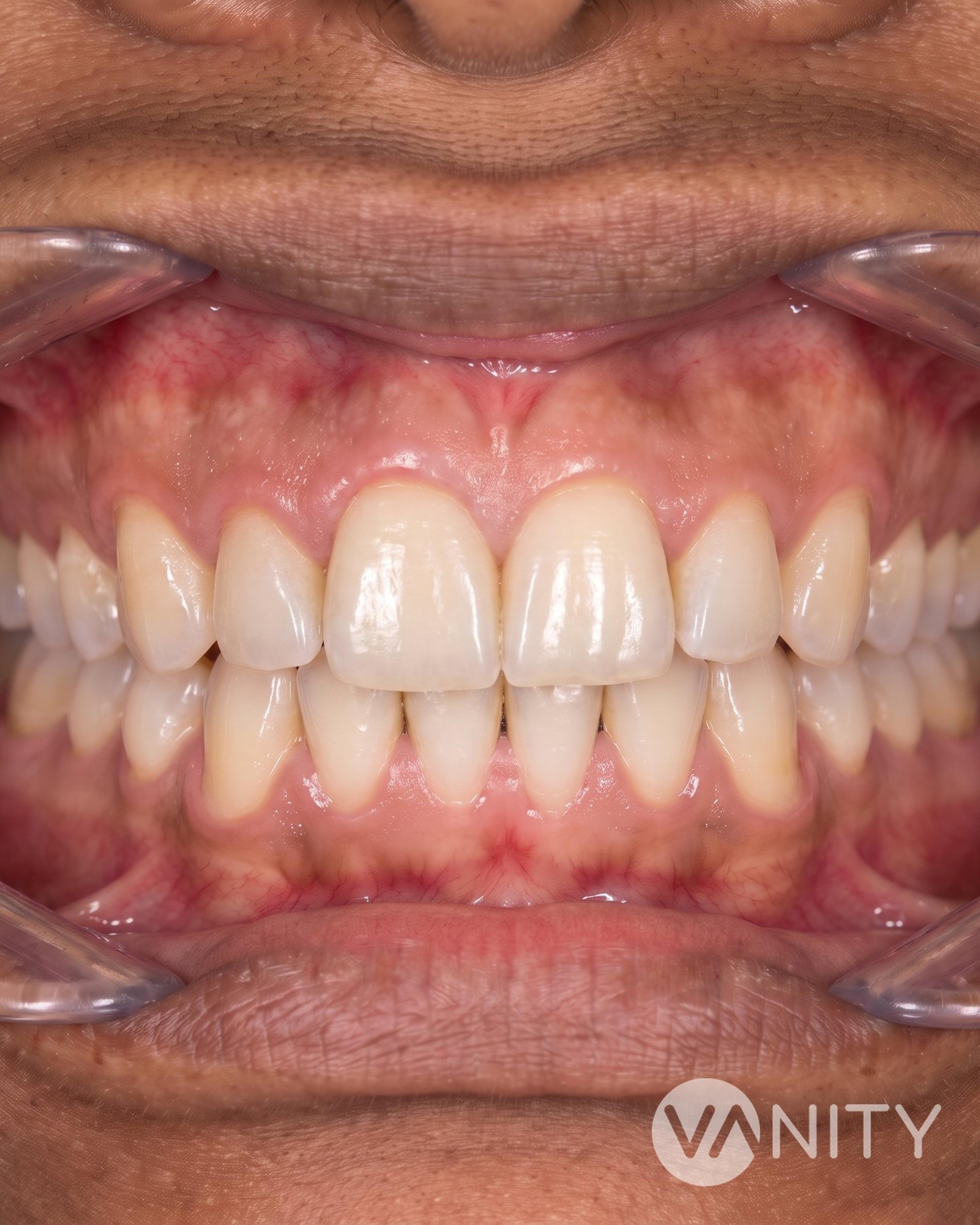

Dental crowns: what it is
A crown caps the tooth rather than filling a hole inside it. Under local anaesthetic we reduce the tooth by roughly 1 to 2 mm on every surface, then fit a shell — metal-ceramic, zirconia, or lithium disilicate glass-ceramic — that rebuilds the original contour and bite, cemented or adhesively bonded onto what remains above the gum. The tooth underneath stays alive and still feels cold, unless it has already had root canal treatment.
It is the right restoration when too little sound tooth is left for a filling to be predictable: extensive decay, a fractured or cracked cusp, severe wear or erosion, or a tooth hollowed out by root canal treatment. It also covers an implant abutment and anchors each end of a fixed bridge. Preparation removes enamel permanently, so a crown cannot be undone — if a filling, inlay or onlay would still hold, that is the better treatment, and we will tell you so.
Dental crowns: techniques we use
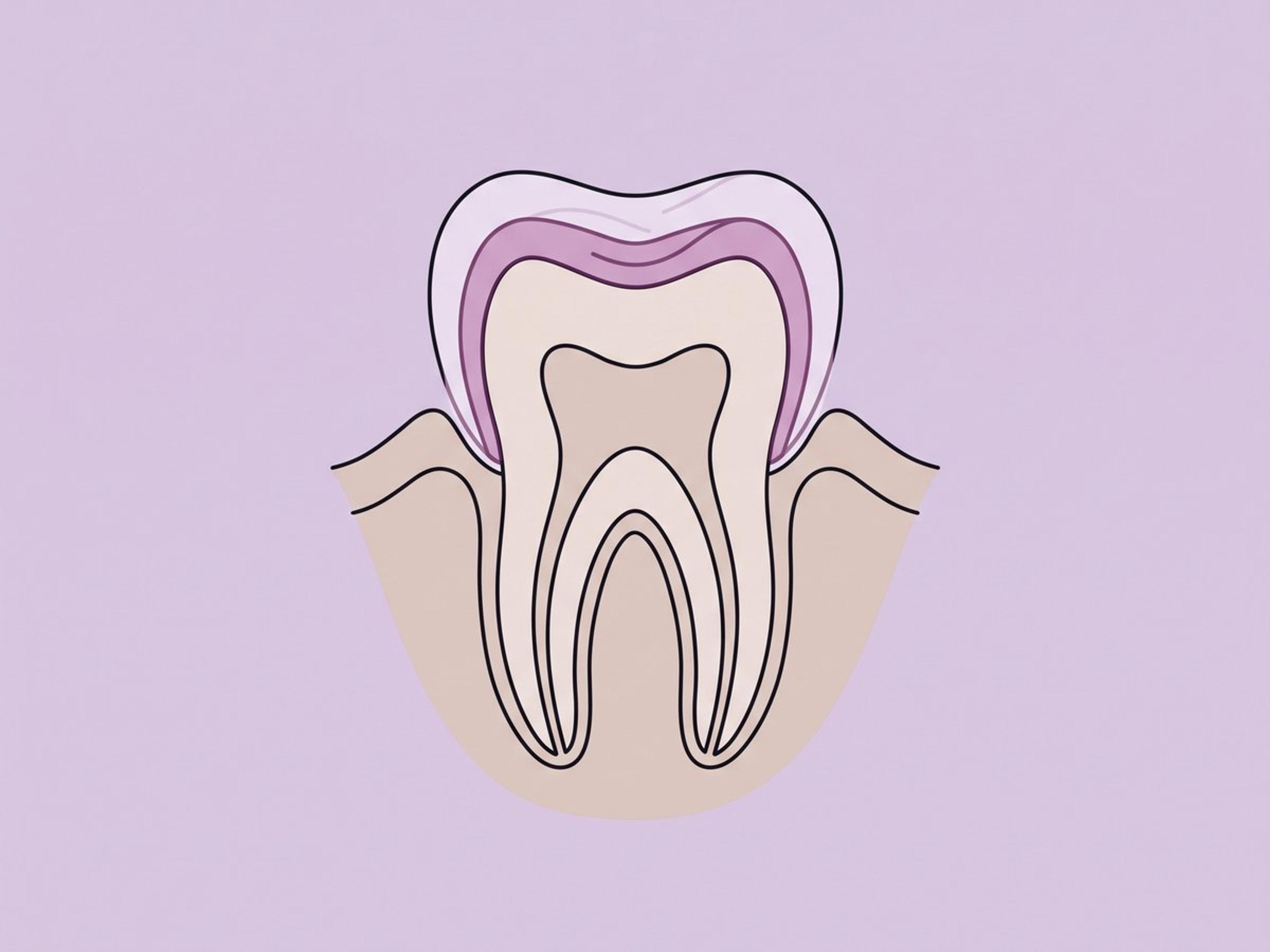
A cast metal coping veneered with feldspathic porcelain, and the longest-standing reference standard in fixed prosthodontics. Meta-analysis puts five-year survival at 97.1%, and a prospective private-practice cohort found 94.3% of metal-ceramic single crowns still in service at 8 years. The trade-offs are real ones — the opaque metal core can show as a dark line if the gum recedes, and the veneering porcelain can chip.
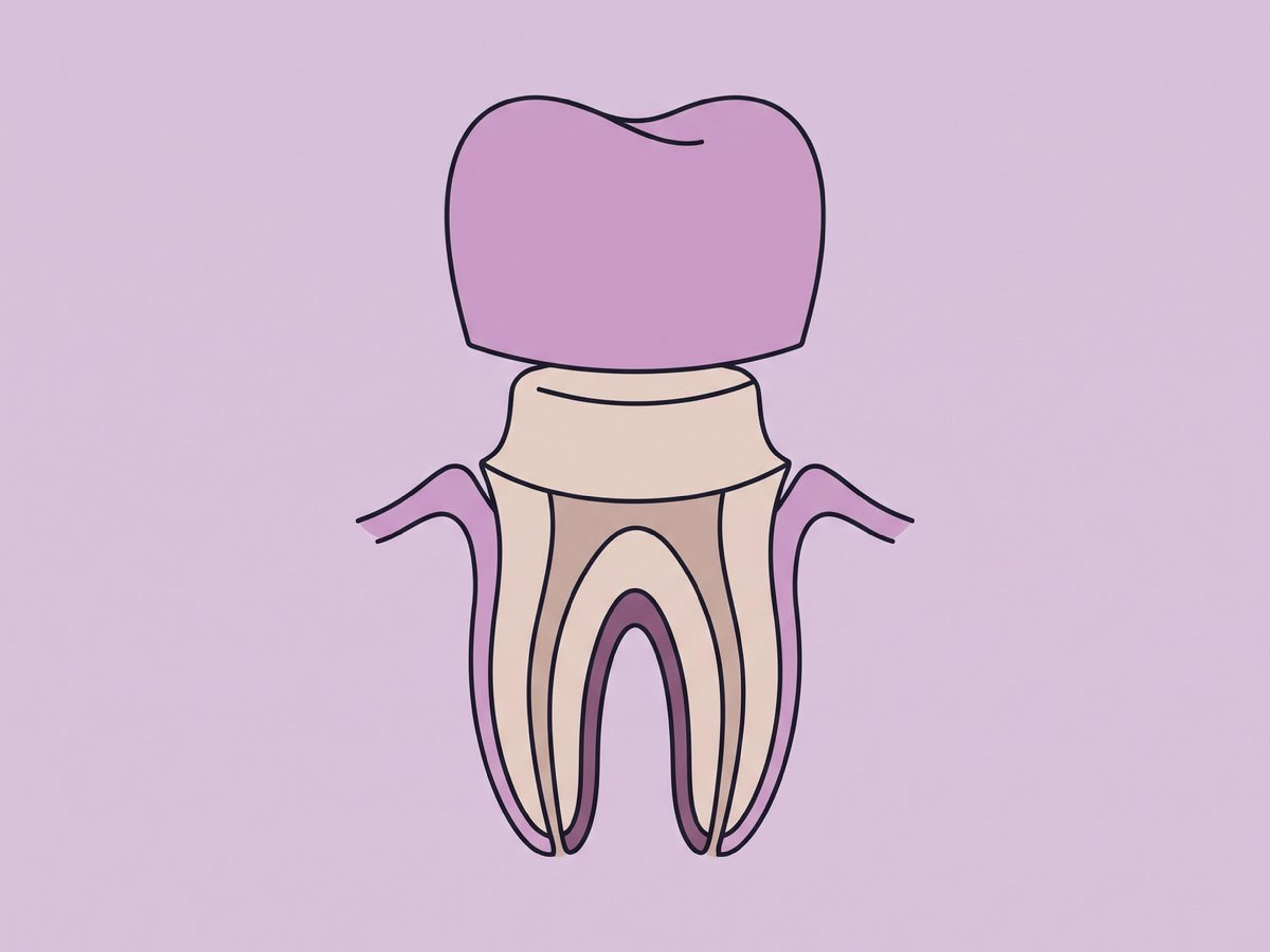
Milled from a single block of densely sintered zirconium dioxide with no veneering layer, so there is no porcelain to fracture off. Estimated five-year survival is 96.8%, and monolithic designs show significantly fewer ceramic fractures than veneered ones. Its flexural strength makes it our usual choice for molars, and for anyone who clenches or grinds.
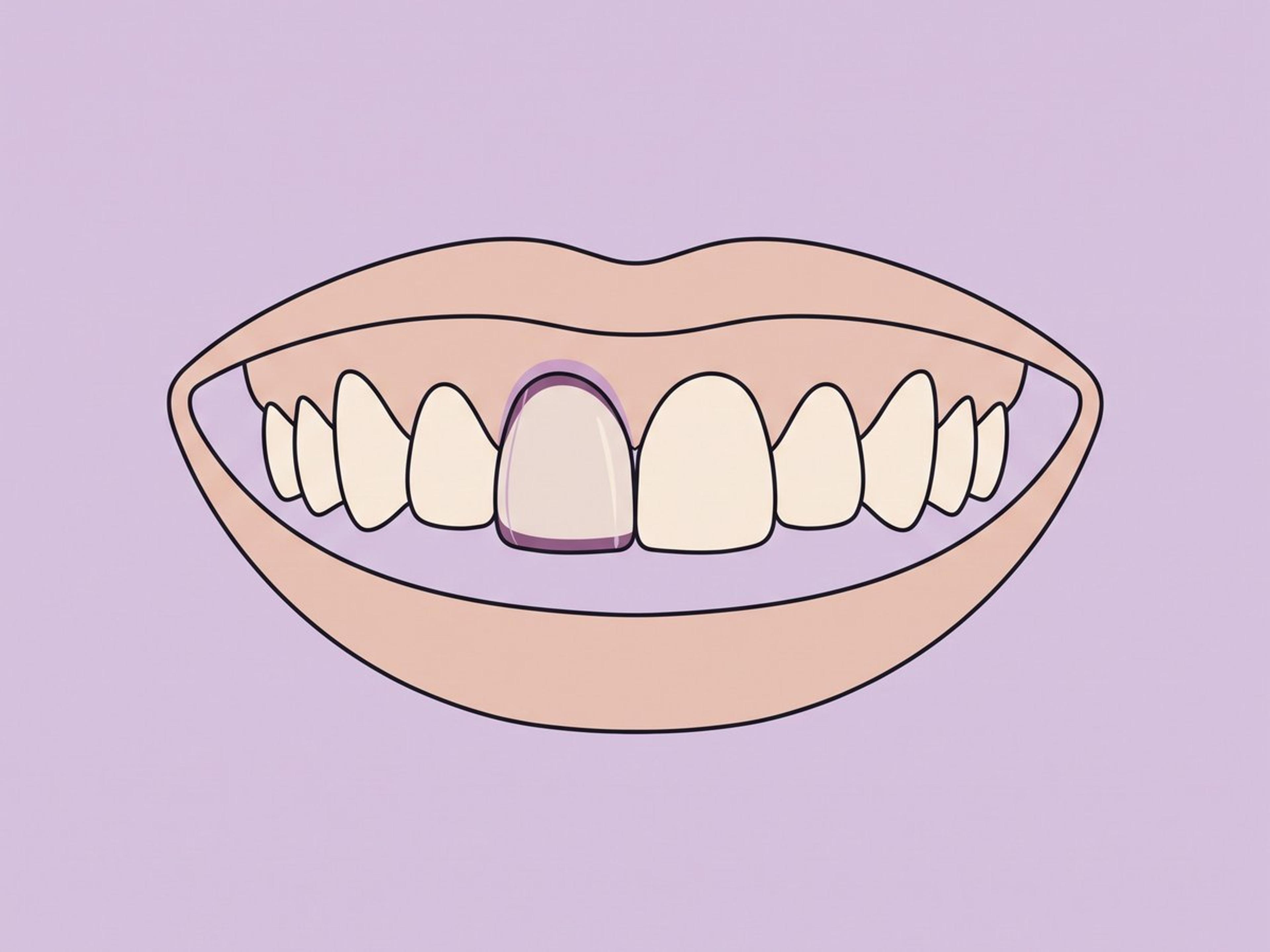
Pressed or milled from lithium disilicate glass-ceramic and adhesively bonded to the tooth. It recorded the highest five-year survival of any crown type in the most recent meta-analysis, at 98.5%, and its translucency reproduces natural enamel more convincingly than zirconia or metal-ceramic. We reserve it for front and premolar teeth rather than the heaviest-loaded molars.
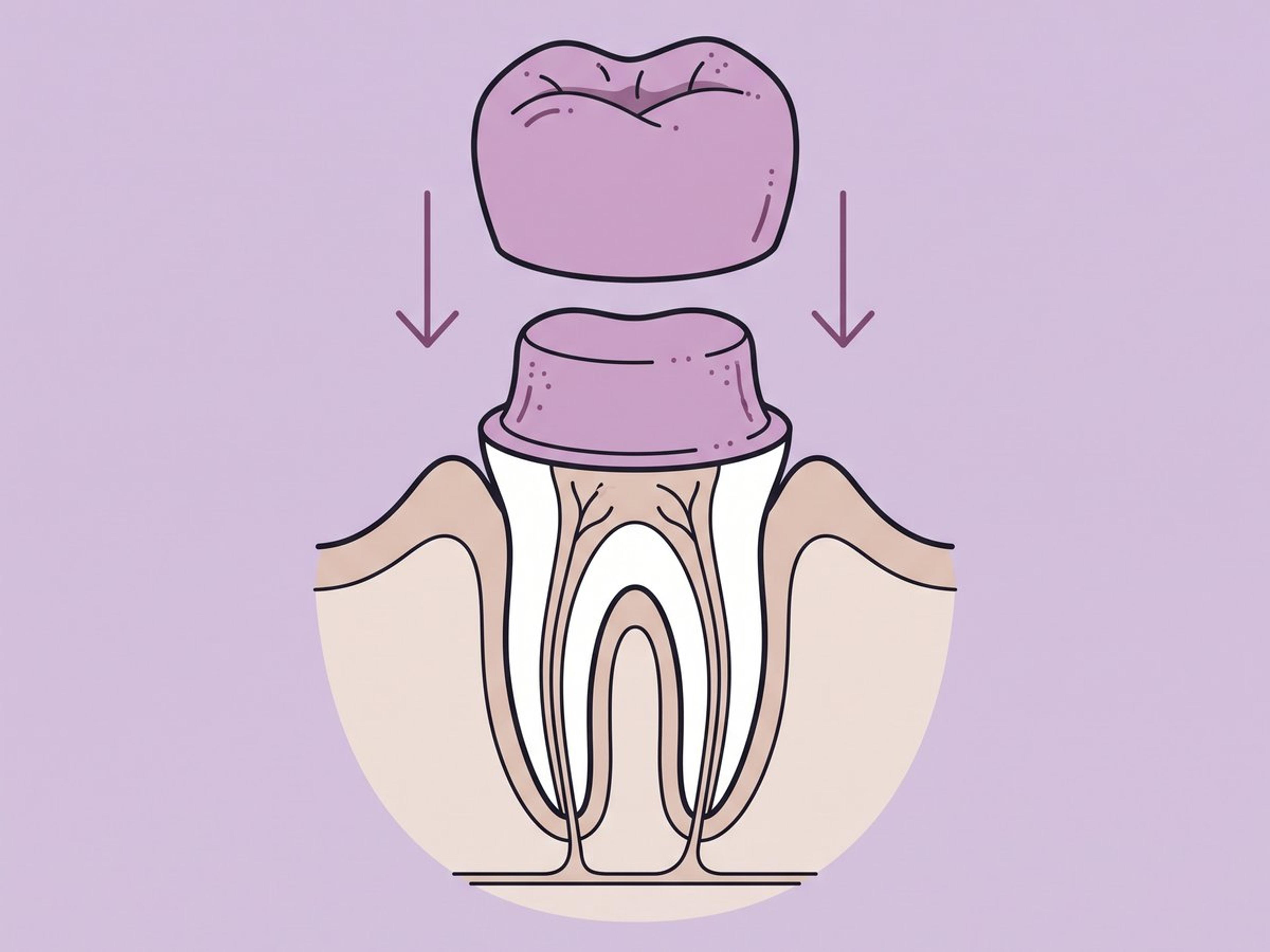
The prepared tooth is scanned in the mouth, the crown designed on screen and milled from a ceramic block in the surgery, so preparation and cementation happen in one appointment — no temporary crown, no second injection. The materials are the same lithium disilicate and zirconia used in laboratory workflows, and a four-year cohort of chairside lithium-disilicate crowns reported 95.0% survival and 92.3% success. Complex cases, margins below the gum and full-arch aesthetic work still go to a laboratory, where a try-in stage is possible.
From preparation to cementation
Anaesthetic, then the shade — in that order
The tooth is numbed and the shade recorded before any preparation begins. Teeth dehydrate under isolation and lighten visibly within minutes, so a shade matched at the end of the appointment comes back from the laboratory too pale once the tooth rehydrates.
Reduction, set by the material
Roughly 1 to 2 mm is taken from every surface, and how much exactly is decided by the crown material rather than by habit — monolithic zirconia survives at thicknesses that would leave layered porcelain liable to chip. Under-reduce and the ceramic is too thin to last; over-reduce and the preparation moves closer to the pulp. Margins are kept at or above the gum wherever the tooth allows, because a margin you can see is a margin you can clean.
Gum retraction and the impression or scan
The gum is displaced with cord or paste so the whole margin is exposed, then the preparation, the opposing teeth and the bite are recorded — digitally or in silicone. A margin the laboratory cannot see is a margin it has to guess, and a guessed margin leaves either an overhang or a gap where decay starts.
The temporary crown
A temporary is made and held with deliberately weak cement so it lifts off cleanly at the next visit. It is not cosmetic: it stops the prepared tooth and its neighbours drifting into the space, seals exposed dentine against sensitivity, and holds the gum in the shape the final margin was designed to sit in.
Try-in before anything is cemented
The crown is seated unset and checked for margin fit, contact tightness against the neighbouring teeth, shade in daylight and how the bite closes. This is the last point at which shade or contour can still be changed — after definitive cementation the only remedy is a remake, which is why we do not let this visit be dropped to save a day.
Cementation and final bite check
Zirconia and metal-ceramic are conventionally cemented; lithium disilicate is adhesively bonded to etched enamel, because that bond is part of what gives glass-ceramic its strength. Every trace of excess cement is cleared from the margin — cement left under the gum is a common and avoidable cause of chronic inflammation there — and the bite is rechecked with you chewing, not just closing.
Dental crowns: recovery week by week
- Day 1
Numbness lasts 2 to 3 hours; do not chew until it wears off, because you cannot feel a cheek or tongue you are biting. Definitive cements reach full strength over the first 24 hours, so keep hard and sticky food off that side for the rest of the day.
- Week 1
Gum tenderness at the margin settles and normal eating on that side resumes within a few days. If the bite still feels high after the first day or two, have it adjusted rather than waiting — a crown left proud takes the whole chewing load and is a frequent cause of persistent biting pain.
- Weeks 2–6
Cold sensitivity in a still-living tooth fades over these weeks as the dentine seals itself. The gum, blanched and slightly swollen from retraction, recolours and tightens around the crown — this is the point at which the tooth stops looking newly done and starts looking like the others.
- 3 months
Sensitivity or biting pain that has not resolved by now needs investigating rather than more patience; the usual causes are a high contact, an undetected crack in the tooth, or a pulp on its way to necrosis. If you clench or grind, the night guard should be in use by this point — bruxism was a significant predictor of ceramic damage in long-term follow-up.
- 6–12 months
First routine review with a radiograph, and it matters more than it sounds. Pulp death after crown preparation is usually painless — around 9% of vital teeth in one prospective study, with pooled estimates near 5% — so vitality is retested rather than assumed, and the margin is checked for the recurrent decay that ends most crowns.
Dental crowns: how to prepare
- A baseline periapical radiograph and pulp vitality testing — cold and electric — before anything is prepared, so the starting pulp status is on record and existing periapical disease is excluded.
- Active decay, failing fillings and gum inflammation treated first. Margins prepared against inflamed, bleeding tissue produce inaccurate impressions and poorly fitting crowns.
- The material agreed against the specific tooth: how much load it carries, how much sound tooth remains, the shade of its neighbours, and how much of it shows when you smile.
- Tell us if you clench or grind. Bruxism was a significant predictor of ceramic defects in long-term follow-up, and it usually moves the plan toward a monolithic material plus a night guard.
- Plan for the temporary crown period unless a chairside same-day crown is being made — no sticky or hard food on that side, floss pulled out sideways rather than lifted up, and a number to call if the temporary comes off.
Dental crowns: risks
Every operation carries risk. We name them so you can ask the right questions.
- Pulp death after tooth preparation. A prospective study of 120 vital teeth found 9% developed asymptomatic pulp necrosis by the cementation stage — 13% in teeth already compromised by decay, fillings or a previous crown, against 5% in intact teeth. A 2023 meta-analysis of 37 studies and 11,615 teeth put pooled pulp necrosis after indirect restorations at 5.02% and periapical pathosis at 3.63%, rising to 6.74% and 4.05% beyond 10 years.
- Later need for root canal treatment or extraction. A retrospective analysis of 88,409 crown placements found 7.54% of crowned teeth subsequently required endodontic treatment or extraction, with 90.41% tooth survival at 9 years.
- Fracture or chipping of the veneering ceramic — around 2.9% at five years for metal-ceramic and 2.8% for zirconia — which occurs significantly more often in layered designs than in monolithic lithium disilicate or monolithic zirconia. Fracture of the material itself runs at 2.1% for zirconia against 0.2% for metal-ceramic.
- Loss of retention — the crown debonds and comes off. It is among the most frequent technical complications, and more likely on short, heavily tapered or minimally retentive preparations.
- Recurrent decay at the crown margin, where the crown-to-tooth junction accumulates plaque and is harder to clean than intact enamel. It is a leading reason crowns are replaced, and it is often invisible until it is extensive.
- Irreversible loss of enamel and dentine. Preparation removes sound tooth structure permanently, and the tooth will require full-coverage restoration for the rest of its life.

Dental crowns in Turkey: what to expect
Crown work is quoted per tooth and paced by the laboratory, not by healing. That makes the schedule the thing to get right — and the thing most often got wrong, by collapsing a case into fewer visits than it needs.
Before you fly
Ask for the named dentist who will prepare your teeth — not a coordinator — and for their prosthodontic training and registration number in writing. The checks that actually apply here are registration with the Turkish Dental Association through the local dental chamber, which is mandatory for anyone lawfully practising, and the facility's International Health Tourism Authorisation Certificate issued by the Ministry of Health under the regulation of 26 April 2025, which is verifiable against the Ministry's published lists. Ask one more question before you book flights: does the laboratory work weekends. A Friday preparation in a clinic whose lab closes Saturday and Sunday adds 2 dead days to your trip.
At the clinic
A workable case runs like this: day 1 examination, radiographs and a written treatment plan; day 2 preparation, digital or conventional impressions and temporary crowns; days 3 to 5 laboratory fabrication; day 5 or 6 a bisque try-in for shade, contour and occlusion; day 7 final cementation. The try-in is the visit worth defending. Skipping it is the single most common cause of a shade or a bite that cannot be corrected afterwards. Istanbul laboratories compress a 2 to 3 week domestic turnaround to 3 to 5 working days using in-house milling and dedicated shifts, which is legitimate, but it means the timetable has no slack — plan for the possibility that a prepared tooth needs root canal treatment mid-trip.
Recovery in Istanbul
There is nothing to recover from in the surgical sense — no wound, no drain, no dressing. What you are waiting on is the laboratory. Allow 7 days in Istanbul and 6 hotel nights, with 2 follow-up appointments after the preparation visit. You will be eating on a temporary crown for most of that time, which is deliberately held with weak cement so it lifts off cleanly at the try-in. Cold sensitivity in the prepared tooth during that week is expected and settles.
Heading home
Fly no earlier than the day after final cementation, and 2 days is the better margin. Definitive cements reach full strength over the first 24 hours, and that same window is when a high bite, a contact that shreds floss, or persistent sensitivity becomes obvious — all trivially adjustable while you are still here, all expensive and awkward to fix from another country. If extractions, implants or sinus grafting were done on the same trip, that surgery sets your flight timing, not the crown. Before you start, get it in writing who pays for a remake and how a failure 2 years from now is handled from abroad.
- United Kingdom
- £500 – £1,200 per tooth
- United States
- $1,000 – $2,500 per tooth
- Western Europe
- €600 – €1,200 per tooth
Published typical ranges for orientation — confirm with a local quote.
Dental crowns: frequently asked questions
How long does a dental crown last?
The defensible figures come from survival studies rather than from clinics. Systematic review estimates of five-year survival run from about 90% for feldspathic ceramic to 98.5% for monolithic lithium disilicate, with metal-ceramic at 97.1% and monolithic zirconia at 96.8%; a prospective private-practice cohort found 94.3% of metal-ceramic single crowns still in place at 8 years and 88.8% free of ceramic defects at 11. In practice a well-made crown commonly serves 10 to 15 years or longer, but what decides that is grinding, plaque control and decay at the margin — not elapsed time.
Does getting a crown hurt?
Preparation is done under local anaesthetic, so the appointment itself should not be painful. Gum tenderness at the margin for a few days and cold sensitivity in the prepared tooth for a few weeks are both expected. Sharp, lingering or spontaneous pain after cementation is not normal — it usually means a high bite or an inflamed pulp, and both need reviewing rather than waiting out.
Do I need a root canal before a crown?
Not routinely. Crowns are placed on living teeth whenever the pulp is healthy, and root canal treatment comes first only when the pulp is already irreversibly inflamed or necrotic. We test vitality beforehand and monitor it afterwards, because a prospective study found 9% of vital teeth developed painless pulp necrosis following crown preparation, concentrated in teeth already weakened by decay or previous restorations.
Zirconia or porcelain-fused-to-metal — which is better?
Neither is clearly more durable: the most recent meta-analysis puts five-year survival at 96.8% for monolithic zirconia and 97.1% for metal-ceramic. The practical differences are that zirconia has no metal core to show as a grey line if the gum recedes and no veneering porcelain to chip, while metal-ceramic carries the longest clinical track record. For front teeth, monolithic lithium disilicate recorded the highest survival of all at 98.5% and matches natural translucency better than either.
How much does a dental crown cost in Istanbul?
€180 to €350 per tooth, all-in, for a monolithic zirconia or lithium-disilicate crown, as of 2026. Dentistry is quoted per unit, so an arch is simply that price multiplied — roughly €1,500 to €3,000 for a typical 8 to 10 unit upper arch, and €3,600 to €7,000 for a 20-unit full-mouth case. We give this as editorial knowledge rather than a cited statistic: no dental association fee survey or official source publishes Turkish private crown fees.
Can a tooth under a crown still get a cavity?
Yes. The crown material cannot decay, but the natural tooth at and below the margin can, and recurrent caries at that junction is one of the most common reasons crowns are replaced. Flossing right down to the margin and keeping routine radiographic checks matter more on a crowned tooth, not less, because decay under a crown is often invisible until it is extensive.
How many appointments does it take?
The conventional route is two visits: preparation, impressions and a temporary crown at the first, then try-in and cementation of the laboratory crown 2 to 3 weeks later in domestic practice, compressed to 3 to 5 working days in Istanbul. Chairside CAD/CAM systems scan, mill and cement in a single appointment. Extra visits are needed if a core build-up, gum treatment or root canal treatment has to be completed first.
Can crowns be done in one trip to Istanbul?
For conventional crowns on sound, already-restorable teeth, yes — budget 6 to 8 days. The moment implants enter the plan it becomes two trips, because osseointegration needs roughly 3 to 6 months between placement and the definitive crown. Active periodontal disease or an untreated periapical lesion also has to be resolved before a crown is cemented over it, and a clinic willing to proceed regardless is the warning sign.
Is anyone not suitable for a crown?
A tooth has to be worth crowning. If decay or fracture extends well below the gum line, or too little sound tooth remains above it, a crown has nothing to hold — the options then are crown-lengthening surgery, a post and core after root canal treatment, or extraction and an implant. Active periodontal disease is treated first, because a crown cemented against inflamed, bleeding gums fails early at the margin. And in teenagers the pulp chamber is still large, so preparation risks exposing the nerve — elective crowns on young teeth wait.
Which symptoms after a crown are not normal?
Cold sensitivity for a few weeks and gum tenderness for a few days are expected. What needs review rather than patience: pain that starts on its own or wakes you at night, biting pain that persists after the first days, a bite that still feels high, a pimple-like swelling on the gum beside the tooth, or facial swelling with fever — the last two point to an abscess forming at the root, which needs prompt treatment, not painkillers. A temporary crown that comes off is not an emergency, but call the same day so it can be recemented before the prepared tooth drifts.
Can I get crowns on healthy teeth just for a whiter smile?
You can, but it is usually the wrong tool and we will say so. Preparation grinds away 1 to 2 mm of enamel that never grows back, commits every treated tooth to full-coverage restoration for life, and carries roughly a 5% risk of the nerve quietly dying afterwards even in intact teeth. If the teeth are sound and the complaint is colour or minor shape, whitening, bonding or veneers get you there while keeping the tooth. Crowns earn their place on teeth that are broken down, root-treated or heavily filled — not as a shortcut to a white smile.
How much does dental crowns cost in Turkey?
€180 to €350 with us, confirmed after a consultation rather than quoted blind. For comparison it is typically £500 – £1,200 per tooth in the United Kingdom, $1,000 – $2,500 per tooth in the United States and €600 – €1,200 per tooth in Western Europe. Per tooth, and the material decides it — zirconia, e-max and metal-ceramic sit at different points — along with whether root canal work is needed first.
Sources
- [1]A Systematic Review and Meta-analysis Evaluating the Survival, Failure, and Complication Rates of Metal-Ceramic, Veneered, and Monolithic All-Ceramic Tooth-Supported Single Crowns — Part 1 · International Journal of Prosthodontics (PubMed) · 2026
- [2]Crowns · MouthHealthy — American Dental Association · 2025
- [3]All-ceramic or metal-ceramic tooth-supported fixed dental prostheses (FDPs)? A systematic review of the survival and complication rates. Part I: Single crowns (SCs) · Dental Materials (PubMed) · 2015
- [4]A systematic review of the survival and complication rates of zirconia-ceramic and metal-ceramic single crowns · Clinical Oral Implants Research (Pjetursson BE, Valente NA, Strasding M, Zwahlen M, Liu S, Sailer I) via PubMed · 2018