

Root canal treatment: what it is
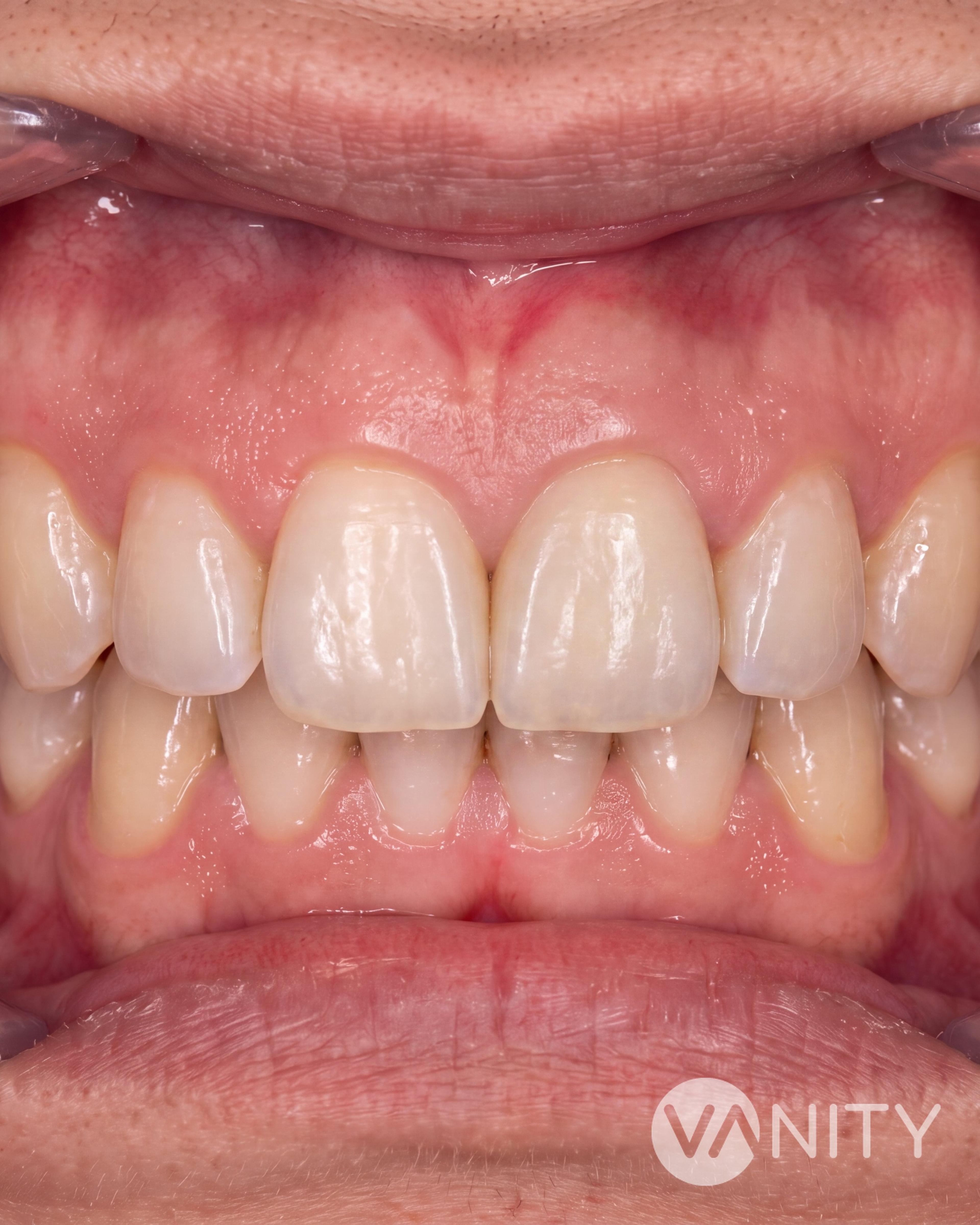
Inside every tooth is a chamber of soft tissue — nerve, blood vessels, connective tissue — running down through the roots. When deep decay, a crack, repeated dental work or an injury lets bacteria reach it, that tissue inflames past the point of recovery or dies, and the infection travels out of the root tip into the surrounding bone. Root canal treatment removes it. We isolate the tooth under a rubber dam, open the crown, clean and shape the canal system with fine files and sodium hypochlorite, then fill the space with gutta-percha and sealer. What remains is a sealed tooth that no longer hurts — and no longer has a living pulp to defend itself, which is why what goes on top matters as much as what goes inside.
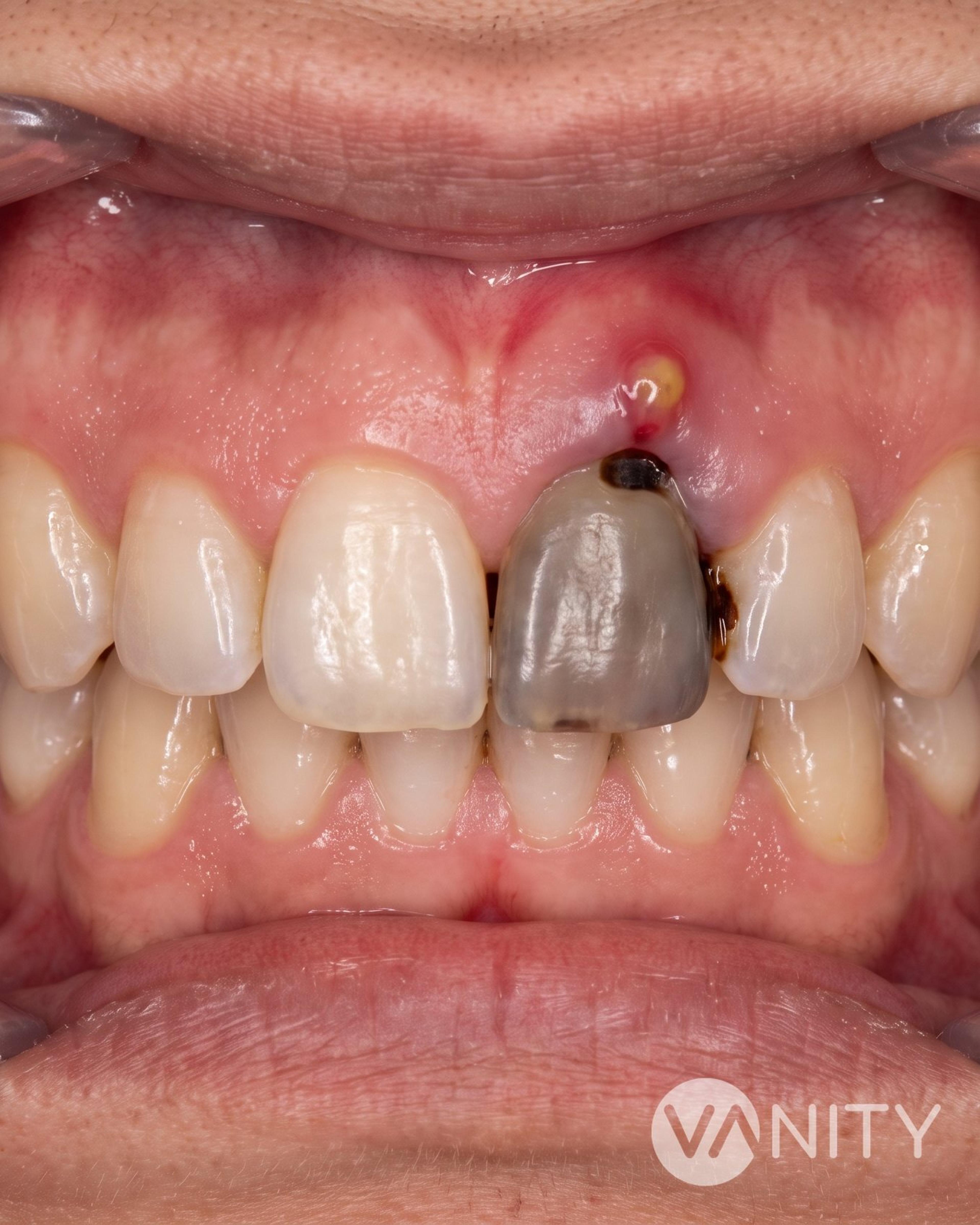
It treats irreversible pulpitis, a dead pulp, and infection at the root tip: prolonged pain to hot or cold, pain on biting, a gum boil discharging pus, facial swelling, a darkening tooth, a shadow at the apex on X-ray. It is not right for every tooth. A tooth with a vertical root fracture, advanced periodontal attachment loss, or too little sound structure left to restore is not a candidate, and we will tell you so rather than start work that cannot hold. The honest alternative is extraction, followed by an implant, a bridge, a denture — or by leaving the space.
Root canal treatment: techniques we use
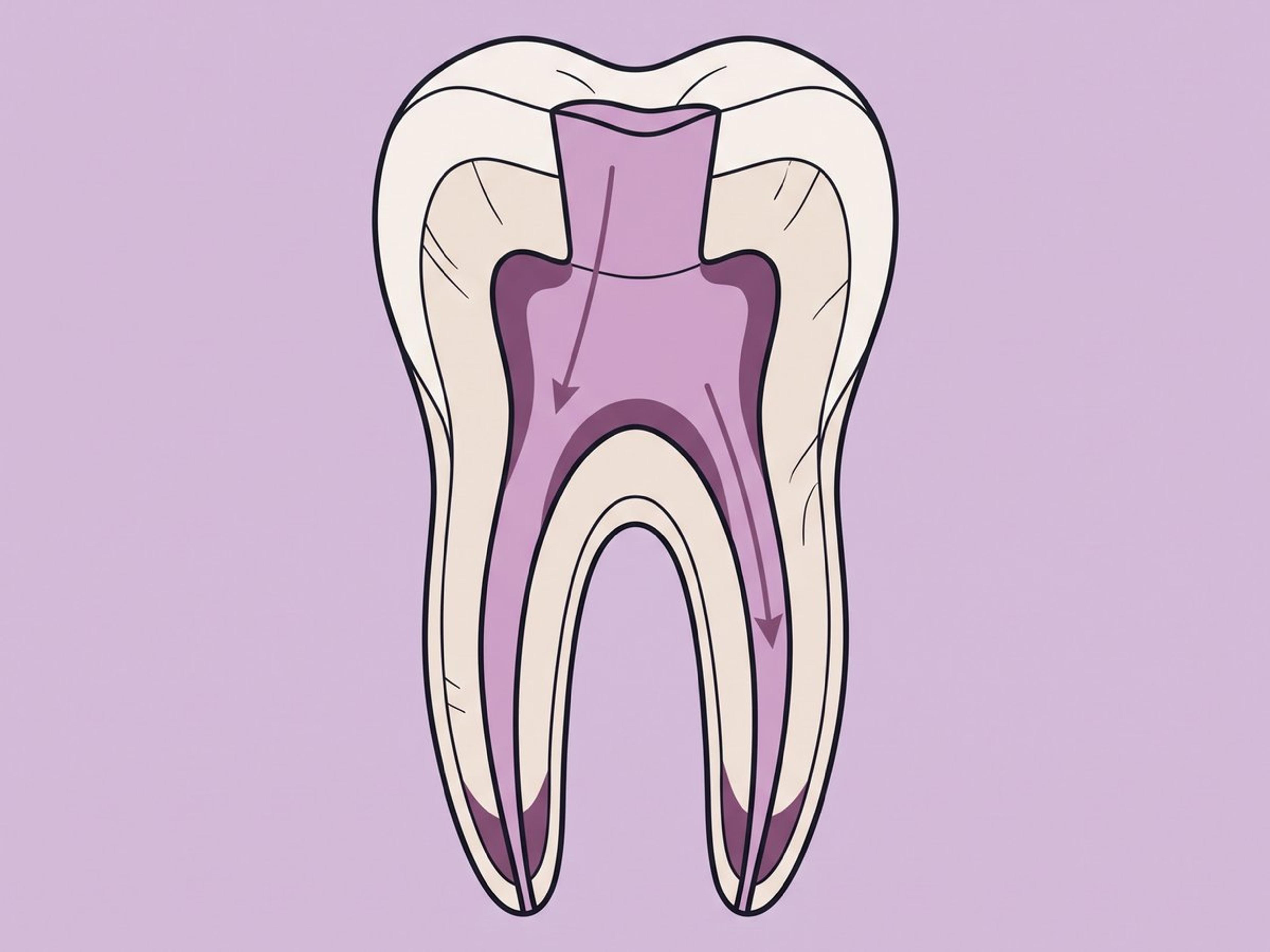
The standard first approach, carried out through an access cavity in the crown under rubber dam isolation. We locate the canals, measure working length with an apex locator and a radiograph, shape them with hand or rotary nickel-titanium files, irrigate with sodium hypochlorite and often EDTA, then fill with gutta-percha and sealer. Cochrane evidence found no difference in radiographic failure between completing this in a single visit or over several, though single-visit treatment was associated with more pain reported in the first week.
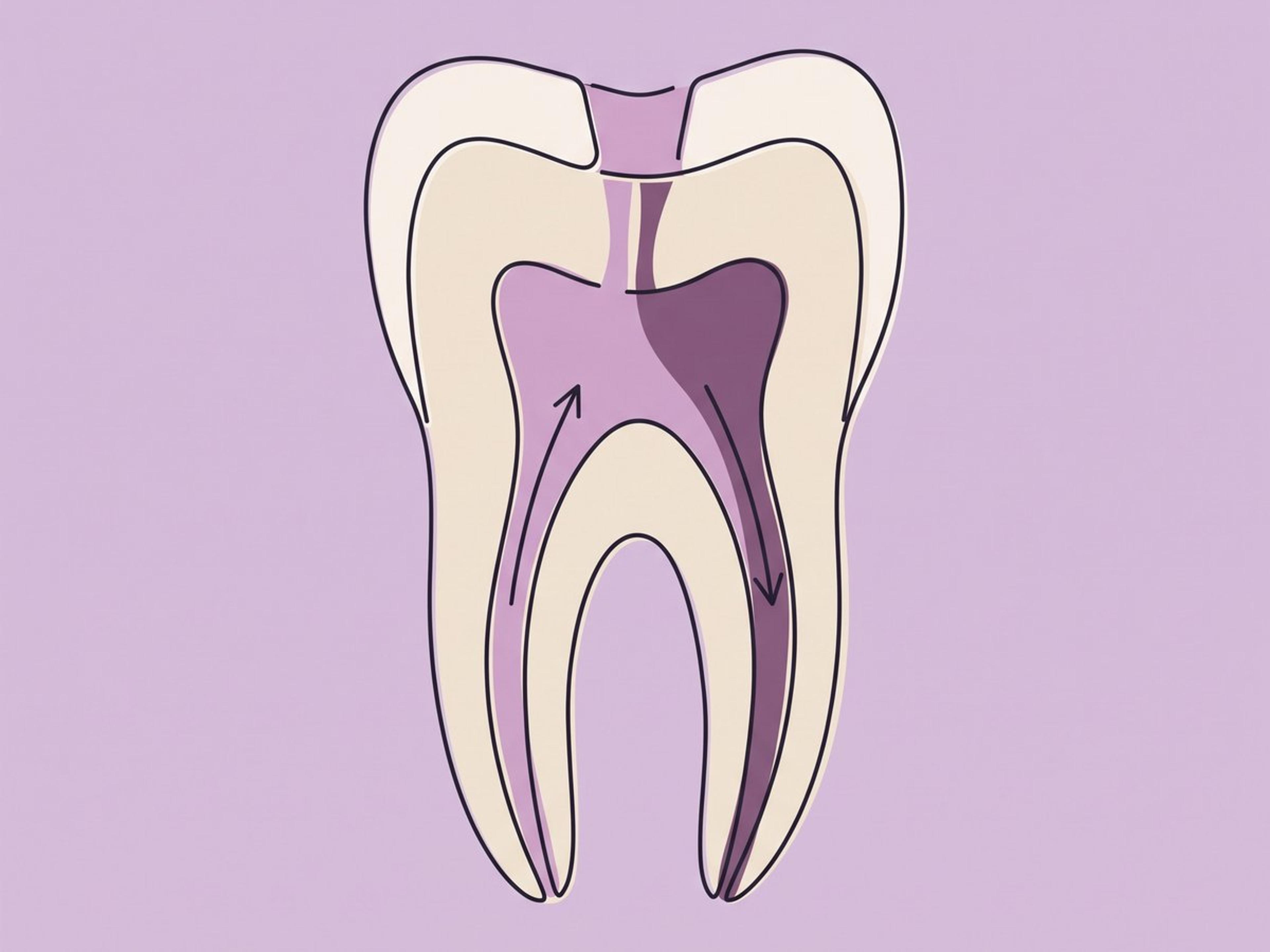
For a tooth that was root-filled before and still has, or has since developed, infection at the root tip. The existing root filling and any post are removed, missed or under-cleaned canals are located and disinfected, and the canal system is filled again. A systematic review of retreatment and surgical outcomes reported a weighted mean success of about 78% for non-surgical retreatment, rising with longer follow-up.
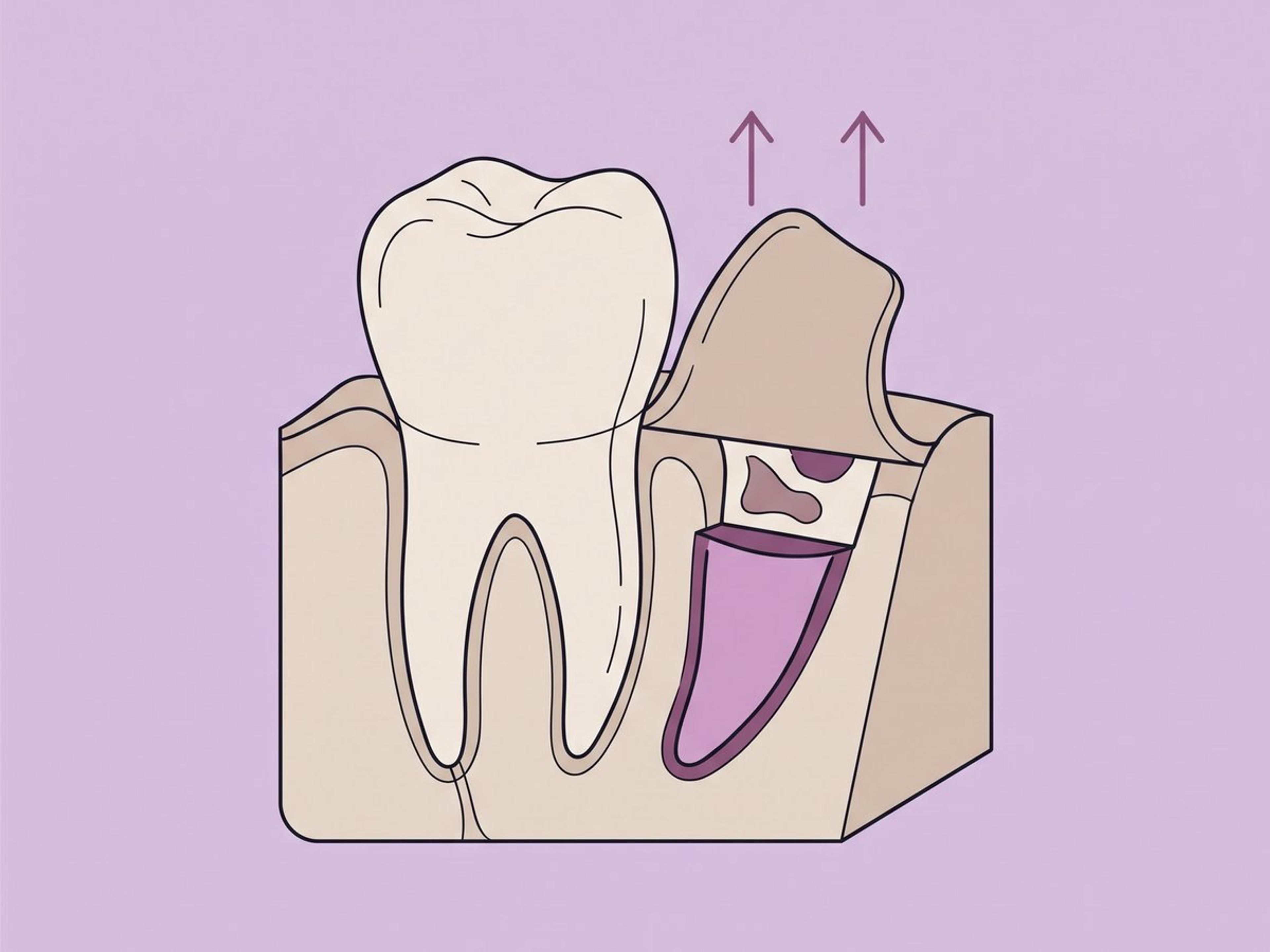
A flap is raised, the bone over the root tip is removed, several millimetres of the apex are cut away, and a root-end cavity is prepared and sealed with a retrograde filling. We reserve it for cases where the canal cannot be reached from above — a post, a separated instrument, an obliterated canal — or where non-surgical retreatment has already failed. The same review reported a weighted mean success of about 75%, higher early on (77.8% at 2–4 years) and falling over longer follow-up (62.9% beyond 6 years).
The treatment, step by step
Diagnosis and anaesthetic
A periapical radiograph, pulp sensibility testing and, where the anatomy is unclear, a cone-beam CT establish which tooth is the source and whether it is restorable at all — a vertical root fracture or too little sound structure means extraction, not endodontics, and that call belongs before the drill. Local anaesthetic is given and tested before any access is cut.
Rubber dam isolation
A sheet of rubber clamped around the tooth keeps saliva out of the canal system for the whole appointment. This is not a comfort measure: saliva reintroduces the bacteria the treatment exists to remove, and the dam is also what stops files and sodium hypochlorite reaching your throat.
Access and working length
The crown is opened, every canal is located — molars often carry a fourth that goes unfound without magnification — and each is measured to the root tip with an apex locator, confirmed on a radiograph. Working short leaves infected tissue behind; working past the apex inflames the bone around it.
Shaping and disinfection
Nickel-titanium files widen the canals enough to irrigate them properly, and sodium hypochlorite, usually with EDTA, dissolves pulp remnants and kills bacteria in the fins and side branches no instrument can enter. The files reach only part of the canal wall — the irrigant does most of the actual disinfection, which is why time under the dam matters more than speed.
Filling the canals
The dried canal system is filled to working length with gutta-percha and sealer. The object is a seal, not a filling: a cleaned canal left under a leaking temporary is recolonised from the mouth within weeks, and the cleaning then counts for nothing.
The definitive restoration
A root-filled back tooth has lost its roof and much of its internal structure, and it splits under ordinary chewing loads. Crowned root-filled teeth showed 94% survival at 5 years against 63% for direct restorations, which is why the crown is prepared in the same course of treatment rather than left for you to arrange at home.
Root canal treatment: recovery week by week
- Day 1
Numbness lasts 2 to 4 hours — do not chew or drink anything hot until it has gone, because you cannot feel yourself biting your cheek. The pulpitis or abscess pain that brought you in should already be absent; tenderness on biting takes its place and answers to paracetamol or ibuprofen.
- Days 2–3
Post-treatment tenderness peaks and then eases; across 16 studies its reported prevalence ran from 3 to 58%, and it is more common when the endodontics is compressed into a single visit. Nothing was incised and nothing is immobilised, so walking, work and exercise are unrestricted from the outset — the one rule is to chew on the other side while a temporary is in place, as an unprotected back tooth fractures easily.
- Week 1
The crown is fitted around day 7, after the 3 to 5 working days the laboratory needs — that gap is turnaround, not healing. Flying is reasonable from 72 hours after the root filling, the minimum set in the British Dental Journal, and 5 days is more comfortable: trapped gas and residual inflammation are what produce tooth pain on ascent and descent.
- Weeks 2–4
Biting tenderness should have gone and the crowned tooth should chew normally. Pain that runs past a fortnight, or returns after settling, deserves a radiograph rather than patience — a missed canal, a crown sitting high on the bite, a crack and a periodontal problem all feel much the same from the outside and have entirely different answers.
- 12 months
Endodontic success is judged on a film at a year: the lesion at the root tip should be shrinking or gone as bone refills, which happens far more slowly than symptom relief and is invisible without the radiograph. Book that review before you fly home — a tooth that feels fine can still be failing quietly.
Root canal treatment: how to prepare
- Have a periapical radiograph taken so we can read the canal anatomy, the existing restorations and any lesion at the root tip; for complex anatomy, suspected extra canals or planned surgery, we take a cone-beam CT.
- Give us your full medical history — anticoagulants, bisphosphonates and other antiresorptive drugs, immunosuppression, prosthetic heart valves, previous infective endocarditis, and any reaction you have had to local anaesthetic.
- Agree the definitive restoration and its price before treatment starts — the crown or onlay decides the long-term result as much as the root filling does.
- Eat before the appointment and expect 2 to 4 hours of numbness afterwards; do not chew or drink anything hot while your lip and cheek are still numb.
- If there is spreading swelling or systemic infection, take the prescribed antibiotics as directed, and take an analgesic beforehand if we have advised it.
- Treat any untreated gum disease first. Periodontal attachment loss, not the root filling, is the largest single cause of late extraction, and a crown on a tooth with 6 mm pockets is money spent in the wrong order.
Root canal treatment: risks
Every operation carries risk. We name them so you can ask the right questions.
- Persistent or recurrent infection at the root tip — the treatment does not resolve it, or it returns, and the tooth needs non-surgical retreatment, apical surgery or extraction
- Pain and flare-up in the first week, reported more often after single-visit treatment (RR 1.55, 95% CI 1.14–2.09, moderate-certainty Cochrane evidence)
- Vertical root fracture of the weakened, root-filled tooth — in a 5- to 37-year cohort this accounted for 33.3% of the teeth eventually extracted, and it is generally untreatable
- Continued periodontal attachment loss around the treated tooth — the largest single cause of late extraction in the same cohort, at 40.2%
- Instrument separation, where a fine nickel-titanium or stainless steel file fractures inside the canal and cannot be retrieved, potentially preventing full disinfection of that canal
- Perforation of the root wall or the pulp chamber floor during access, and the rare extrusion of sodium hypochlorite irrigant beyond the root apex, which causes immediate severe pain, swelling and bruising
- Barodontalgia — pressure-driven tooth pain on ascent and descent — if you fly before residual inflammation has settled
- Fracture of a back tooth left under a temporary filling, which is why we do not send you home without the definitive restoration if it can be avoided

Root canal treatment in Turkey: what to expect
Root canal treatment is chairside work under local anaesthetic — no admission, no general anaesthetic, no drain, nothing to recover from in the usual sense. What sets the length of your stay is not the endodontics. It is the laboratory.
Before you fly
Two things are checkable, and both matter more than anything on a brochure. The facility must hold an International Health Tourism Authorisation Certificate from the Türkiye Ministry of Health — required under the regulation of 26 April 2025 of any facility legally treating patients from abroad. The individual dentist must be registered with their provincial dental chamber under the Turkish Dental Association, the FDI World Dental Federation member association for Türkiye and the body that holds the register. Beyond that, ask whether the operator holds a postgraduate endodontic qualification or is a general dentist, and whether the work is done under a dental operating microscope with rubber dam. Ask for the name of the person who will actually do it before you pay a deposit.
At the clinic
Day 1 is consultation, radiographs and access. Obturation follows on day 2 or 3, crown preparation and the scan on day 3. Each appointment runs 60 to 120 minutes. The Cochrane evidence says finishing the endodontics quickly does not raise the risk of radiographic failure at one year, but the same review found patients treated over several visits are probably less likely to have pain in the first week, and Sathorn and colleagues put the prevalence of postoperative pain across 16 studies at 3 to 58%. Compressing the work into one trip is a trade — a shorter stay for a rougher few days — and you should make it knowingly. Expect to need analgesia.
Recovery in Istanbul
7 days, 7 hotel nights, 3 follow-up appointments after the first. The gap in the middle is laboratory turnaround — 3 to 5 working days between the crown preparation and the fit — not healing. You can eat, work and walk around the city throughout; chew on the other side while a temporary is in place, because an unprotected root-filled back tooth fractures easily. If your dates cannot absorb the laboratory time, the honest option is 2 trips — root filling now, crown on a return visit — rather than flying home on a temporary crown that nobody 3,000 km from the laboratory that made it can rebond.
Heading home
5 days is the interval we prefer between treatment and a flight, against the 72-hour minimum in the British Dental Journal paper; staying for the crown puts you well past both. Take your records with you: the obturation radiograph, the cone-beam CT if one was taken, the working length and the materials used, in a form you can hand to a dentist at home. Book the 12-month radiographic review before you go — endodontic success is judged on a film at a year, not on how the tooth feels at the airport. And ask for the warranty in writing: what it covers, for how long, and who pays for the return flights. Retreatment and apical surgery are recognised outcomes, not accidents, and it is fair to budget for the possibility of a second course.
- United Kingdom
- £1,000 – £2,500 with crown
- United States
- $2,000 – $3,500 with crown
- Western Europe
- €1,000 – €2,500 with crown
Published typical ranges for orientation — confirm with a local quote.
Root canal treatment: frequently asked questions
Does a root canal hurt?
The treatment is done under local anaesthetic and is generally no worse than having a filling. Most of the pain people associate with root canals is the pulpitis or abscess pain that comes before it, which the treatment relieves. Tenderness for a few days afterwards is normal and usually settles with paracetamol or ibuprofen.
How long does a root-canal-treated tooth last?
A cohort of 598 endodontically treated teeth followed for 5 to 37 years reported cumulative tooth survival of 97% at 10 years, 81% at 20, 76% at 30 and 68% at 37. Survival means the tooth is still in the mouth, not that it was never symptomatic or never redone. How long yours lasts depends more on how much sound tooth structure remains, the quality of the final restoration and your periodontal health than on the root filling itself.
Do I need a crown after a root canal?
Back teeth almost always do. CADTH's review found cumulative survival of 94% at 5 years for crowned root-filled teeth against 63% for direct restorations, and Ng and colleagues reported odds of survival 3.9 times higher (95% CI 3.5–4.3) with a crown. No guideline mandates a crown in every case — a molar that has lost 2 or more walls is a far clearer indication than an intact front tooth — so ask which category your tooth is in and make us justify the answer.
How many appointments does it take?
The root filling itself takes one or two appointments of 60 to 120 minutes. If you are having the crown as well, plan on 4 appointments across 7 days, because the laboratory needs 3 to 5 working days. A Cochrane review of single- versus multiple-visit treatment found no difference in radiographic failure at one year, so compressing the endodontics into one trip does not compromise the result.
How soon can I fly after a root canal?
Not the same day. Felkai and colleagues (British Dental Journal, 2023) set 72 hours as the minimum interval between non-surgical endodontic treatment and flying, because cabin pressure acting on trapped gas and residual inflammation can produce barodontalgia on ascent and descent. 5 days is more comfortable, and if you stay for the crown you are flying 7 days out anyway. This is not a clotting question — there is no admission, no general anaesthetic and no immobility involved.
Is it better to have a root canal or an extraction and implant?
Where the tooth is restorable, keeping it preserves the natural periodontal attachment and avoids surgery and bone grafting, and long-term survival for the two options is broadly comparable. Extraction is the better answer when the tooth is unrestorable, has a vertical root fracture, or has advanced periodontal attachment loss. It is a decision about one specific tooth, made on that tooth — not on averages.
How much does a root canal cost in Turkey?
€300 to €750 per tooth with us, all-in: consultation, radiographs and cone-beam CT where indicated, anaesthetic, rubber dam, cleaning and filling of every canal, a fibre post and core where the tooth needs one, and a definitive ceramic or zirconia crown with the laboratory work. The low end is a single-canal front tooth; the top end is a molar with 3 or 4 canals, a post and core and a zirconia crown, or a retreatment. Endodontics is quoted per tooth, never per arch — any 'full arch' figure you are shown is a bundle of unrelated procedures.
Why does my tooth still hurt weeks after a root canal?
Mild tenderness on biting can persist for a couple of weeks while inflammation at the root tip resolves, particularly where the pre-treatment lesion was large. Pain that runs past that, or that returns after settling, can indicate a missed canal, incomplete disinfection, a high restoration, a cracked root or a periodontal problem, and needs reassessing with radiographs. Retreatment and apical surgery are recognised next steps, not accidents.
Is there any medical reason I couldn't have a root canal?
Very few. The work is chairside under local anaesthetic — no incision, no general anaesthetic — and anticoagulants are not stopped for non-surgical endodontics. If you take bisphosphonates or other antiresorptive drugs, keeping the tooth this way is the preferred option, because it avoids the extraction that carries the jaw-osteonecrosis risk those drugs are known for. A prosthetic heart valve or previous infective endocarditis does not rule you out either; it means a single dose of prophylactic antibiotics before we start, per current guidance. Pregnancy is not a reason to leave an infected tooth untreated — treatment for pain or infection is considered safe with lidocaine local anaesthetic, the second trimester is simply the more comfortable window for elective timing, and the flight is the bigger question than the dentistry. The real exclusions are tooth-level, not patient-level: a vertical root fracture, too little sound structure to restore, or advanced periodontal attachment loss — in which case we will say so and talk about extraction instead.
Which symptoms after a root canal mean I should contact the clinic straight away?
Tenderness on biting for a few days — sometimes a couple of weeks — is normal and settles with paracetamol or ibuprofen. What is not normal: swelling that spreads towards the eye or down under the jaw into the neck, difficulty swallowing or breathing — that one is emergency care immediately, not a message and a wait — fever or feeling generally unwell, or severe pain with rapid swelling and bruising within hours of the appointment, which can signal irrigant forced past the root tip and needs same-day review. Two mechanical problems are worth a message rather than a wait: a bite that hits the treated tooth first, which takes minutes to adjust and days of pain to ignore, and a temporary filling that has cracked or come out between visits, because the canal system is only clean for as long as it stays sealed.
Is it true that root-canal-treated teeth cause disease elsewhere in the body?
No. The claim descends from the 'focal infection theory' of the early 1900s and the work of Weston Price, whose experiments lacked the controls modern research requires and whose conclusions mainstream dentistry abandoned decades ago. There is no valid scientific evidence linking root-canal-treated teeth to cancer, heart disease or any other systemic illness — the American Association of Endodontists maintains a standing rebuttal precisely because the claim keeps resurfacing online. The logic is also backwards: the treatment removes infected tissue and seals the canal system against reinfection. The thing that genuinely does seed bacteria into the bloodstream and the surrounding bone is what the treatment takes away — an untreated abscess.
Sources
- [1]Long-term tooth survival and success following primary root canal treatment: a 5- to 37-year retrospective observation · Clinical Oral Investigations (PMC/NLM) · 2023
- [2]Dental Fees: Results from the 2013 Survey of Dental Fees (D3330 endodontic therapy, molar; D2740 porcelain/ceramic crown) · American Dental Association, Health Policy Institute · 2013
- [3]Root canal treatment · NHS · 2025
- [4]Single versus multiple visits for endodontic treatment of permanent teeth · Cochrane Database of Systematic Reviews (Mergoni et al., CD005296.pub4) · 2022
- [5]The tooth survival of non-surgical root-filled posterior teeth and the associated prognostic tooth-related factors: A systematic review and meta-analysis · International Endodontic Journal (PubMed/NLM) · 2024