
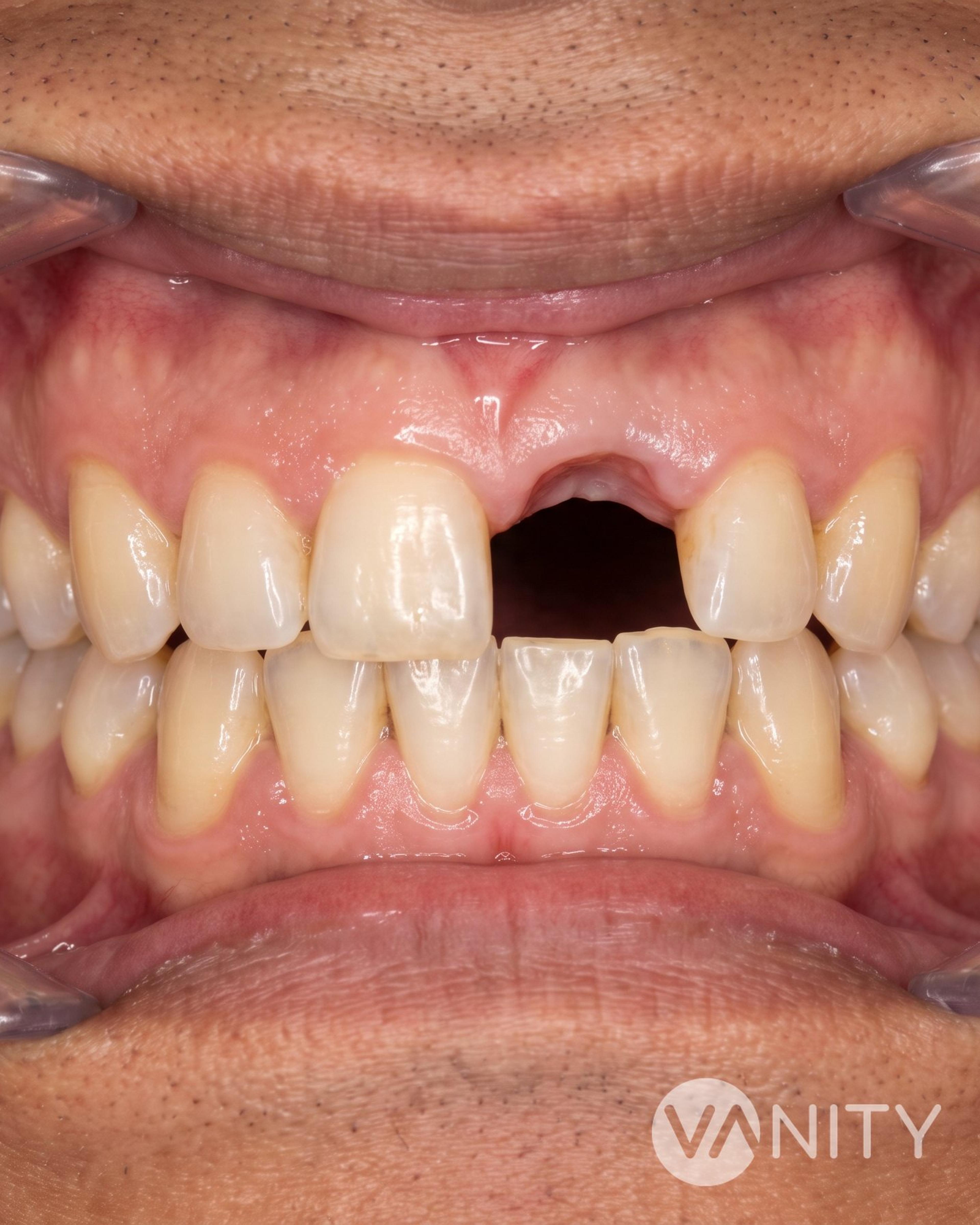
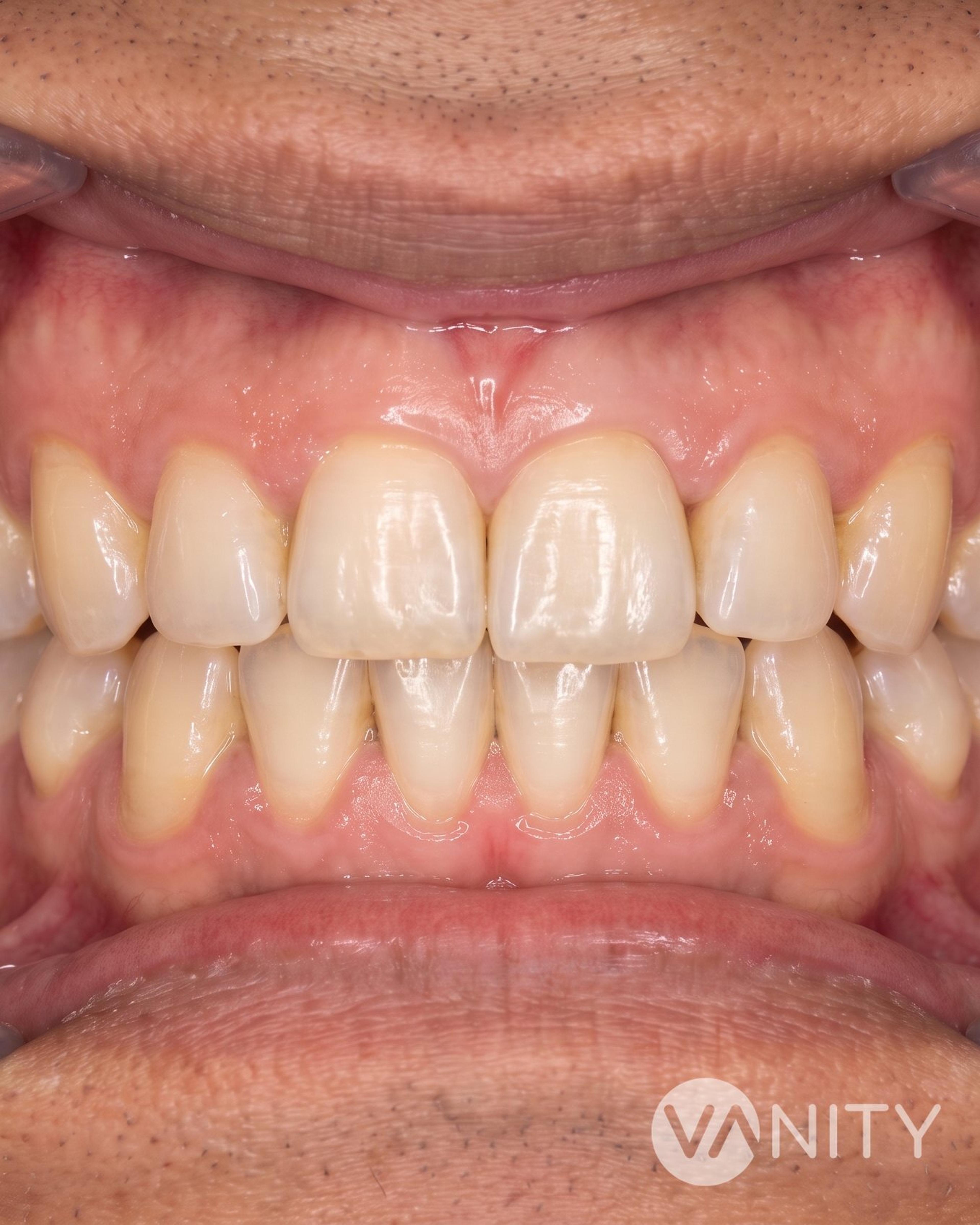

Dental implants: what it is
An implant replaces a missing tooth in three parts. A threaded titanium post is placed into the jawbone through a small gum incision under local anaesthetic, the bone prepared to a matched diameter and depth. An abutment passes through the gum, and a crown, bridge or denture is fitted on top. Between placement and restoration the bone has to grow onto the post — osseointegration — which the Cleveland Clinic gives as 3 to 9 months depending on bone quality and site. That interval is biology, and no protocol shortens it.
Implants suit a single gap, several gaps, or a jaw with no remaining teeth, and are the alternative to a conventional bridge or a removable denture. What decides suitability is bone volume, controlled gum health and general medical status rather than age — the Cleveland Clinic sets a lower bound of 18 and no upper limit. Active periodontal disease, uncontrolled diabetes, heavy smoking, radiotherapy to the jaws and poor oral hygiene all reduce predictability, and we address them before placing anything. Smoking alone roughly doubles the odds of failure.
Dental implants: techniques we use
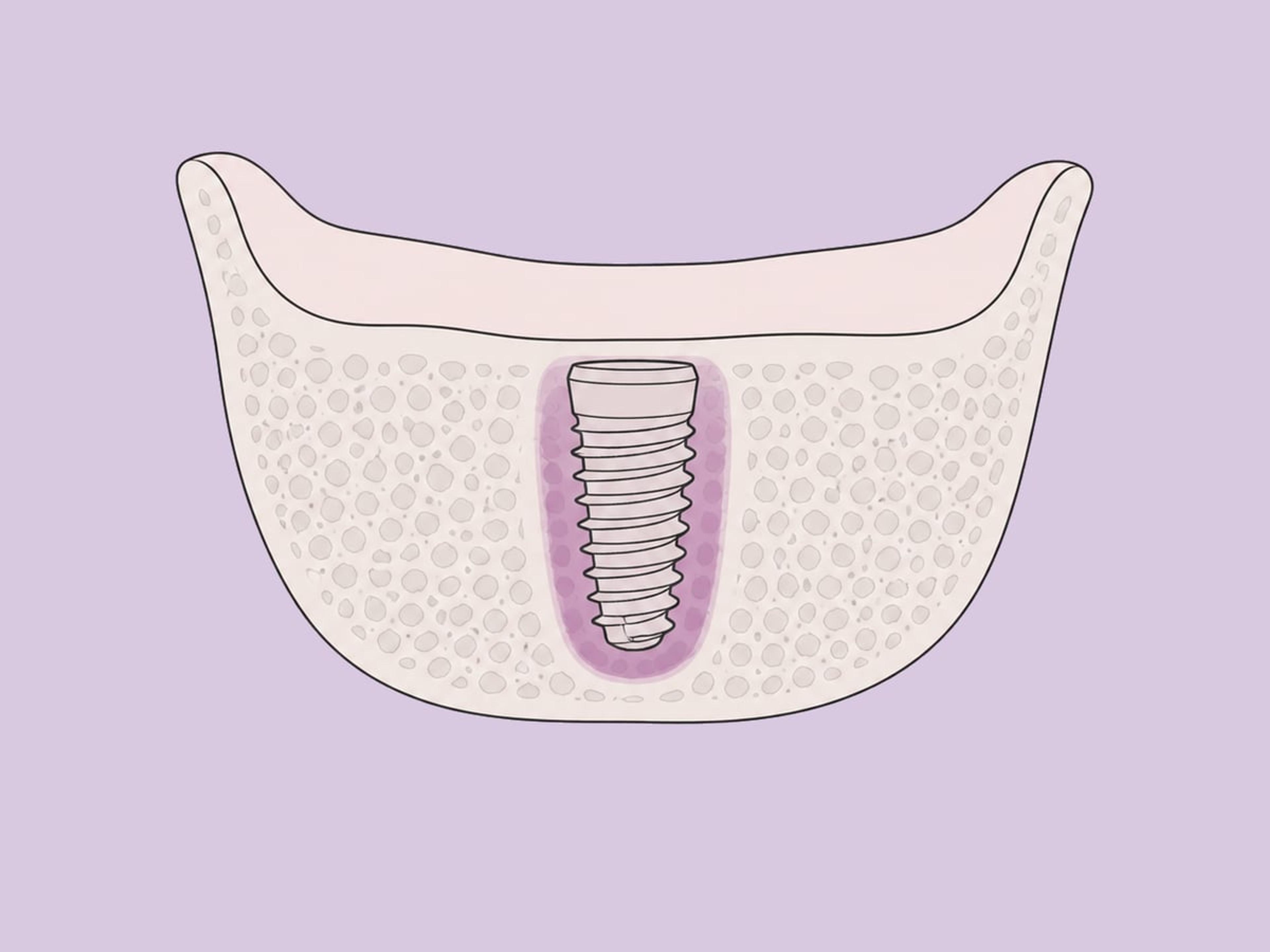
The implant is placed and covered over by the gum, then left undisturbed while it integrates. A second, minor procedure exposes it and connects the abutment, and the restoration is loaded after 2 months or more. This is the reference protocol every faster approach is measured against, and it remains our default where bone quality is poor or primary stability is low.
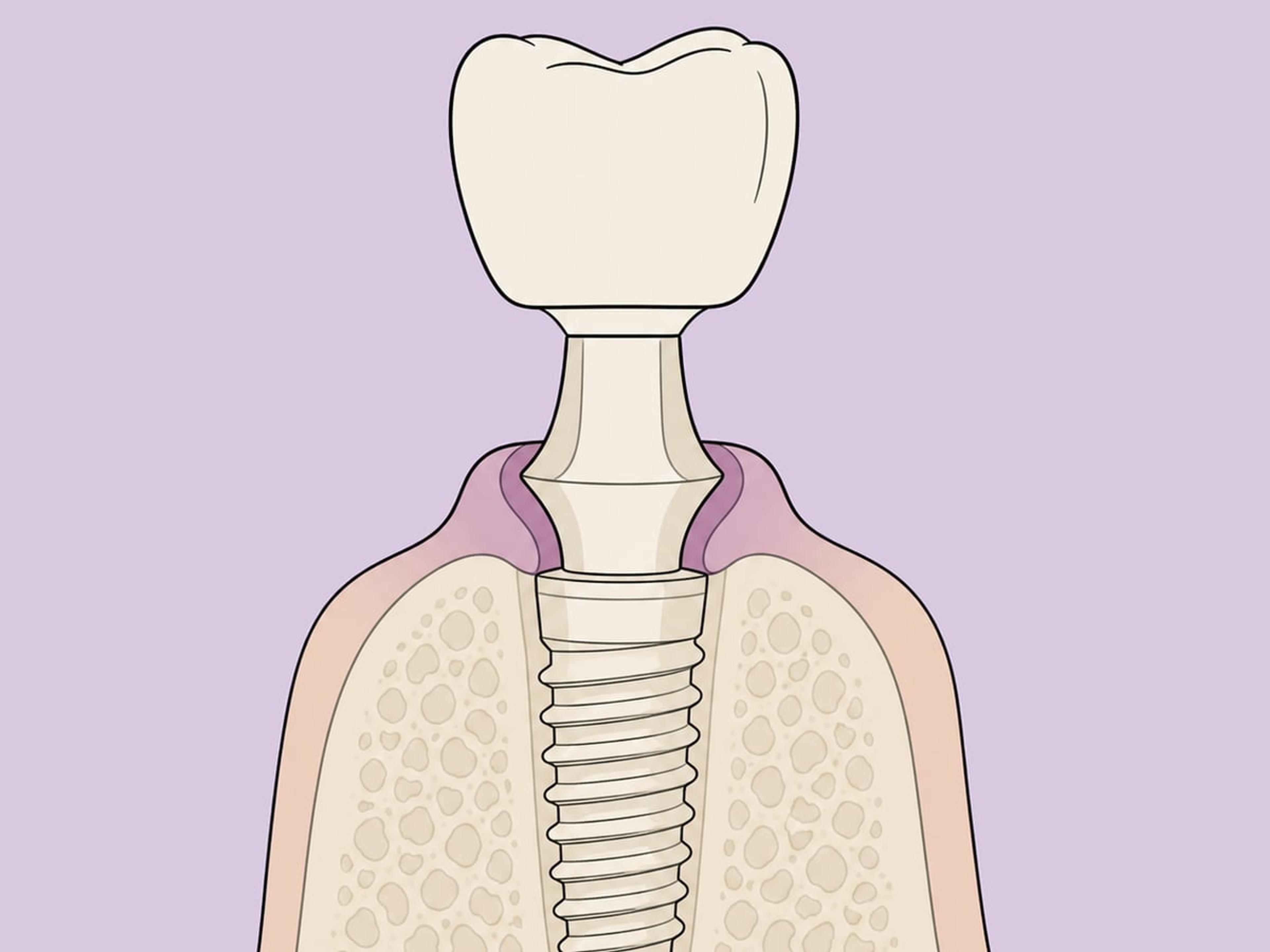
A healing abutment is left through the gum and the restoration follows within a week — immediate — or between one week and 2 months — early. A Cochrane review found no convincing evidence of a clinically important difference in implant failure, prosthesis failure or bone loss between immediate, early and conventional loading, but rated that evidence very low certainty. High primary stability, an insertion torque of at least 35 Ncm, is the prerequisite, so this is a case-selection decision rather than a service we offer to everyone.
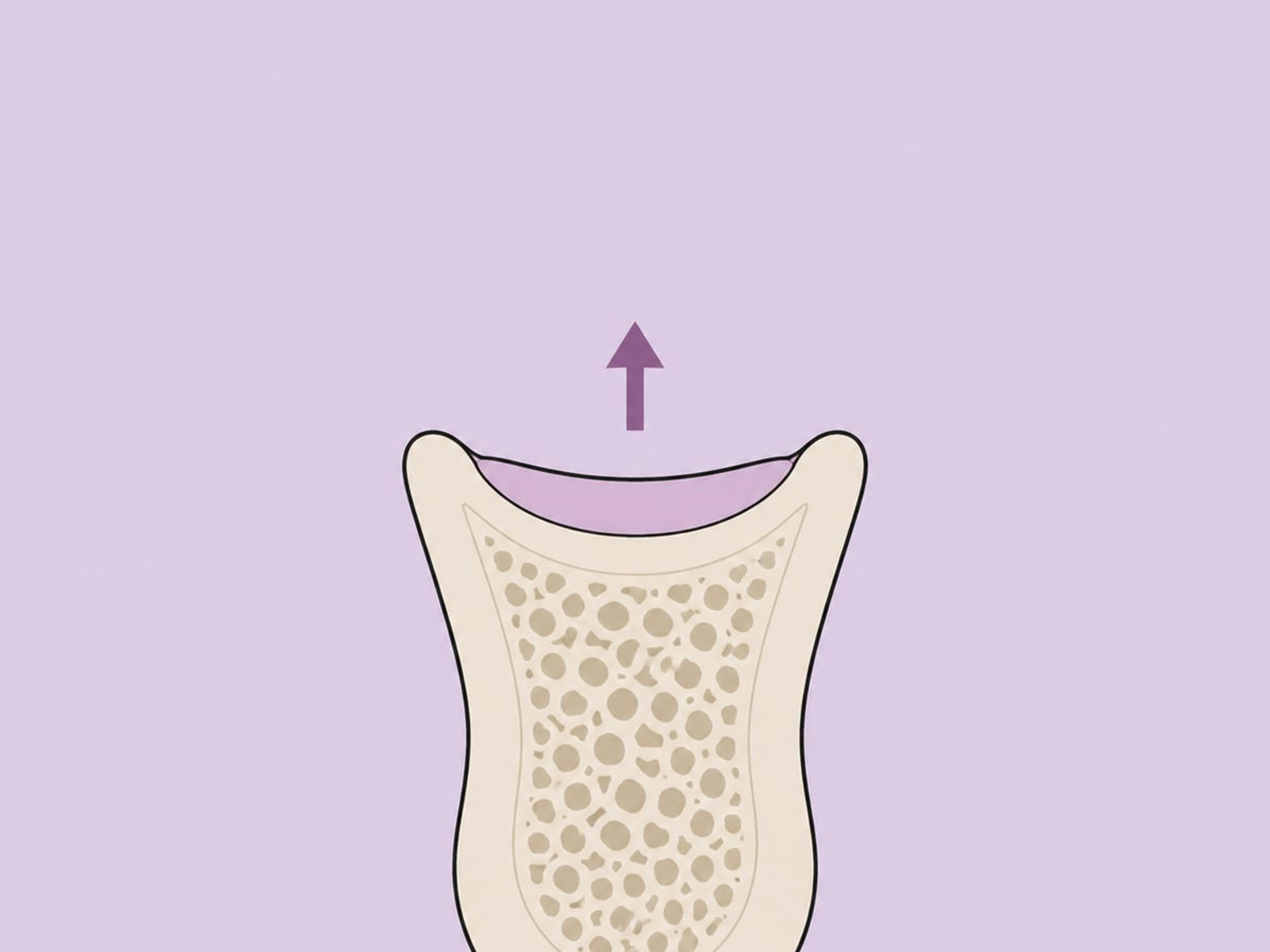
Where the ridge is too narrow or too short, or the maxillary sinus has pneumatised into the back of the upper jaw, grafting material builds a bed for the implant — as socket preservation at the time of extraction, ridge augmentation, or a sinus lift. The Cleveland Clinic gives at least 3 months of graft healing, and 9 to 12 months for larger grafts, before an implant can go in. Placement is best done within 6 to 12 months of that, before the new bone resorbs.
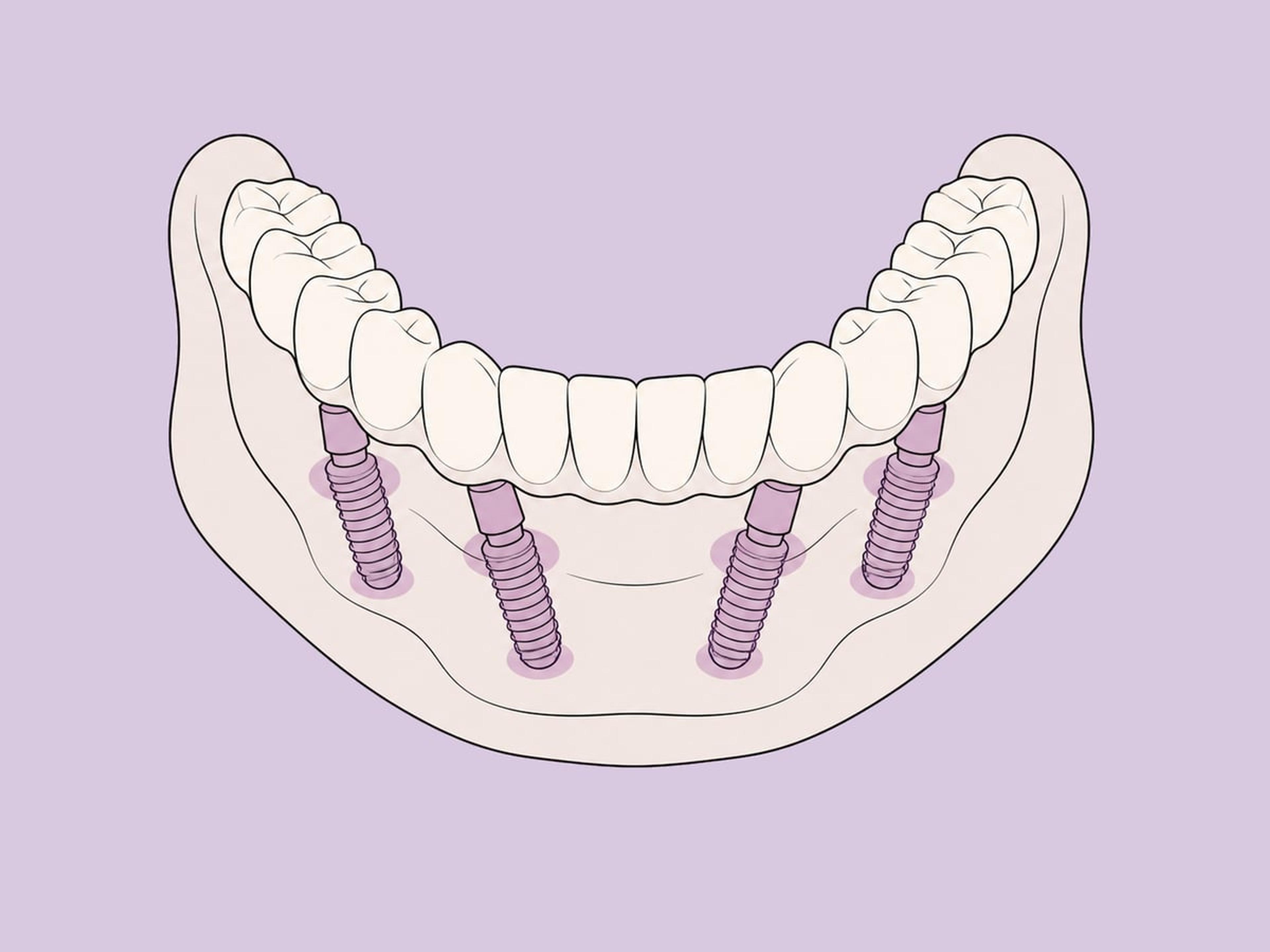
A jaw with no teeth left is restored with one fixed bridge carried by four to six implants, the back ones often tilted to engage the bone that is there and avoid grafting. A provisional bridge is commonly fitted the same day under an immediate-loading protocol. Longitudinal series report implant survival of roughly 94–98% over 6 to 11 years in these cases, with prosthetic maintenance — not implant loss — as the usual long-term issue.
Implant treatment, step by step
Imaging and planning
A cone-beam CT measures bone height and width and maps the inferior alveolar canal and the maxillary sinus, so implant length, diameter and angle are decided before anything is opened. The same scan is what reveals whether grafting is needed, which is why any quote issued without one is provisional.
Anaesthesia and access
Placement is a day case under local anaesthetic, with sedation if you want it — chair time is usually 1 to 2 hours, longer for a full arch. A small incision lifts the gum clear of the ridge so the bone is prepared under direct vision rather than blind.
Preparing the site
The bone is opened with a sequence of drills of increasing diameter, at low speed under constant saline irrigation. Heat is the real enemy at this stage: bone cells do not survive much above 47°C, and an overheated site will not integrate however well the implant is seated.
Seating the fixture
The threaded titanium post is driven into the prepared site to the planned depth while the insertion torque is recorded. That figure decides what happens next — at 35 Ncm or above immediate loading can be considered, and below it the honest call is to leave the implant undisturbed.
Closing over and integrating
Either a cover screw goes on and the gum is sutured over it, or a healing abutment is left through the gum, depending on the stability just measured. The site is then left alone for 3 to 9 months while bone grows onto the implant surface — that interval is biology, and no protocol shortens it.
Abutment and final restoration
On the second trip the implant is uncovered if it was buried, an abutment is connected and the bite is scanned or impressed. The laboratory builds the crown, bridge or denture to that record, which is why the second visit runs 7 to 10 days — lab turnaround, not more healing.
Dental implants: recovery week by week
- Day 1
Bite on the gauze for the first hour and use cold compresses in short cycles; both exist to protect the clot in the socket, which is what the first day of healing rests on. Eat cold and soft, and do not rinse, spit or drink through a straw until tomorrow. Ibuprofen covers most of the discomfort.
- Days 2–3
Swelling and bruising peak here and then turn, so a face that looks worse on day three than on day one is following the curve rather than going wrong. Gentle warm salt-water rinses can start now, and brushing continues everywhere except directly over the site.
- Week 1
Most people are back at desk work within two or three days and feel themselves by the end of the week. Keep exercise to walking for these seven days — raised blood pressure is what restarts bleeding at a fresh site. Non-resorbable sutures come out at 7 to 14 days, usually with your own dentist once you are home.
- Weeks 2–4
The gum has closed and normal exercise, gym and running included, is back on from about week two if healing has been uneventful. Keep chewing to the other side and off anything hard over the site while the bone underneath is still young. After a sinus lift the restrictions run longer and we set them case by case rather than by rule.
- 3–9 months
This is osseointegration, and none of it shows from the outside — the implant fuses to bone while you get on with your life. At the end we confirm integration radiographically and fit the final crown or bridge, and that fitting, not the surgery, is when you see the result. From then on the implant needs the same hygiene and recall schedule as a natural tooth, for life.
Dental implants: how to prepare
- Cone-beam CT imaging with clinical examination, to measure bone height and width and map the inferior alveolar canal and the maxillary sinus. This is what tells us whether grafting is needed, and any quote issued before it is provisional
- Treat active gum disease and decay first and get oral hygiene stable — untreated periodontitis is a recognised risk factor for peri-implantitis later
- Stop smoking and vaping before surgery and through healing. Meta-analysis puts implant failure odds in smokers at about 2.4 times those of non-smokers, with roughly 0.58 mm more marginal bone loss
- Go through your medical history and medication with the surgeon — diabetes control, antiresorptive drugs such as bisphosphonates and denosumab, anticoagulants, and any radiotherapy to the jaws
- Sort the practicalities: someone to drive you if sedation is planned, soft and cold food for the first days, and any antiseptic rinse or antibiotic regimen we prescribe
- Tell your dentist at home what is planned before you travel, so the suture check and long-term maintenance are arranged rather than improvised
Dental implants: risks
Every operation carries risk. We name them so you can ask the right questions.
- Early failure of osseointegration — the implant does not integrate, is lost within the first months, and has to be removed and the site regrafted before any second attempt
- Peri-implantitis, inflammatory bone loss around an implant that had integrated. A meta-analysis of 47 studies found weighted prevalence of 19.83% of patients and 9.25% of implants, with the milder peri-implant mucositis far more common at 46.83% of patients
- Injury to the inferior alveolar or lingual nerve during placement in the lower jaw, causing numbness or altered sensation of the lip, chin or tongue — usually temporary, occasionally permanent
- Perforation of the maxillary sinus floor or nasal cavity when placing in the back of the upper jaw, with sinusitis or graft failure afterwards
- Infection, wound breakdown, bleeding and bruising, delayed healing, and damage to the roots of adjacent teeth
- Mechanical and prosthetic complications over the years — abutment screw loosening or fracture, ceramic chipping, wear or fracture of the restoration. These are the most common reasons for reintervention in implants that are otherwise surviving

Dental implants in Turkey: what to expect
Implant treatment abroad is a two-trip commitment separated by months of bone healing, and we would rather set that expectation before you book a flight than after. What follows is the shape of the journey — what we do, what you should ask us to put in writing, and what the evidence says about timing.
Before you fly
Talk to the surgeon first, on video, and ask directly who will carry out the treatment, how many times they have done it and what their complication rate is — the General Dental Council advises exactly those questions. Check that the provider holds a Turkish Ministry of Health International Health Tourism Authorisation Certificate against the Ministry's published list, and that the treating dentist is registered with the Turkish Dental Association. Then settle aftercare in writing: who treats a complication that appears once you are home, who pays, and whether any guarantee survives your leaving the country. A British Dental Association survey found 86% of UK dentists had treated patients with complications after treatment abroad, with implants and crowns the treatments most at risk, and remediation cost more than £1,000 in over half of cases.
At the clinic
Placement is a day case under local anaesthetic, with sedation available if you want it. Chair time is usually 1 to 2 hours, longer for a full arch. You will have imaging reviewed with the surgeon on the day, and if the scan changes the plan — a narrower ridge than expected, a sinus that has pneumatised further — we will say so before we start, not afterwards. A real advisor stays with you through the appointment and replies the same day once you are back at the hotel.
Recovery in Istanbul
Plan 5 days in the city and 4 hotel nights, with 2 follow-up visits in that window. The first 24 hours are gauze pressure, cold compresses, cold and soft food, and no rinsing or spitting. Swelling and bruising peak around day two to three and then settle. Sutures, where they are not resorbable, come out at 7 to 14 days, which usually falls after you have flown home — we arrange that with your dentist rather than leaving it to you.
Heading home
We prefer you fly on day 5 rather than the earliest permitted day 3, so that swelling can be reviewed in person before departure. The governing risk here is not clotting but cabin pressure — barodontalgia, pressure-triggered toothache, is associated with recent restorative work in close to a third of cases. If you have had a sinus lift, the rule changes entirely: a minimum of 2 weeks, or no flying at all until we clear it. Then the second trip, 3 to 9 months later, for the final crown or bridge — and after that, lifelong professional maintenance. A treatment plan that ends at the crown fitting is incomplete, so ours does not.
- United Kingdom
- £2,000 – £2,500 per tooth
- United States
- $3,000 – $4,500 per tooth
- Western Europe
- €1,500 – €3,000 per tooth
Published typical ranges for orientation — confirm with a local quote.
Dental implants: frequently asked questions
How long do dental implants actually last?
A systematic review of 23 studies covering 7,711 implants at a mean 13.4 years of follow-up reported 94.6% cumulative survival and 1.3 mm mean marginal bone loss. A 2024 meta-analysis of 20-year data reported 92% survival in prospective studies — 78% once dropouts were imputed — and 88% in retrospective studies. Most implants are still in place after a decade, but "lasts a lifetime" is not what the long-term literature shows, and the crown is generally replaced before the implant is.
Does getting a dental implant hurt?
Placement is done under local anaesthetic and is not usually painful while it is happening. Afterwards expect discomfort, swelling and some bleeding for several days, normally managed with over-the-counter anti-inflammatories such as ibuprofen. Most people feel like themselves again within a week or so.
How long does the whole process take from start to finish?
Placement is a single appointment, but osseointegration takes 3 to 9 months depending on bone quality and site before the final restoration can be attached. If a bone graft is needed first, add at least 3 months for a small graft and 9 to 12 months for a large one. A single-tooth case in good bone commonly runs 3 to 6 months end to end.
Can I have the implant and the tooth on the same day?
Sometimes. Immediate loading — fitting a restoration within a week of placement — depends on the implant achieving high primary stability, with an insertion torque of at least 35 Ncm treated as the prerequisite. A Cochrane review found no convincing evidence of a clinically important difference in failure rates between immediate, early and conventional loading, but graded that evidence very low certainty. A clinic offering same-day teeth to every patient regardless of bone quality is not following the evidence.
How many trips to Istanbul will I need?
Two is the realistic default. The first is roughly 5 days for consultation, imaging, placement and post-op review. The second comes after osseointegration, 3 to 9 months later, and runs 7 to 10 days — that length is dental lab turnaround on the final crown or bridge, not healing. If grafting proves necessary, it becomes three trips, and we tell you that once we have seen the scan rather than after you have booked.
Can an implant get gum disease or fail years later?
Yes. Peri-implantitis is inflammation with progressive bone loss around an integrated implant, and a meta-analysis of 47 studies found it in 19.83% of patients and 9.25% of implants, with prevalence rising over time. It is driven by plaque, and the risk is higher if you have a history of periodontitis or you smoke. Implants need the same hygiene and recall schedule as natural teeth, with bone levels checked radiographically.
Will smoking stop me from getting implants?
It does not rule them out, but it measurably worsens the odds. Meta-analysis puts implant failure risk in smokers at about 2.4 times that of non-smokers, with roughly 0.58 mm more marginal bone loss. We will ask for cessation before surgery and through the healing period, and we would rather say so than place an implant into a known disadvantage.
What if there isn't enough bone in my jaw?
Insufficient bone volume is common where a tooth has been missing for years, and grafting addresses it — socket preservation at the time of extraction, ridge augmentation for a narrow ridge, or a sinus lift at the back of the upper jaw. A graft needs at least 3 months to heal, and larger grafts 9 to 12 months. The implant is best placed within 6 to 12 months of that, before the grafted bone resorbs.
How soon can I fly home after implant surgery?
The British Dental Journal advises waiting at least 72 hours after uncomplicated implant placement before flying, provided there is no pain, swelling or bleeding at the site. We prefer 5 days, which gives margin to review swelling in person before you leave. After a sinus lift the advice is different and much stricter — a minimum of 2 weeks, or avoiding air travel altogether, because gas trapped in the sinus is drawn in during pressure change.
Who shouldn't get dental implants?
There is no upper age limit, but the jaw must have finished growing, so we do not place implants before 18. The firm cautions are medical rather than dental: uncontrolled diabetes, antiresorptive drugs such as bisphosphonates and denosumab — which carry a risk of medication-related osteonecrosis of the jaw after oral surgery — and previous radiotherapy to the jaws all reduce predictability and call for a considered decision with your physician, not a routine booking. Active gum disease and smoking are obstacles rather than absolute bars: we treat the first and ask you to stop the second before we place anything.
Which symptoms after surgery are not normal?
Swelling, bruising and some oozing are expected for the first two to three days. What is not expected: pain that worsens after day three instead of easing, swelling that suddenly increases after it had begun to settle, bleeding that gauze pressure will not stop, fever, a persistent bad taste or visible discharge from the site, or numbness of the lip, chin or tongue that outlasts the anaesthetic. Any of these earns a same-day message with a photo — in Istanbul we see you in person, and once you are home we tell you whether it can wait for your own dentist or cannot. Later on, an implant or crown that feels loose is never something to watch and wait on.
Will an implant feel like my own tooth?
Close, but not identical — and it is worth knowing why. A natural tooth sits in a periodontal ligament that gives fine feedback about bite pressure; an implant is fused directly to bone, so that feedback is blunted and biting can feel unusually solid at first. Most people stop noticing within weeks. The crown itself cannot decay, but the gum and bone around it can still develop disease, and an implant will not move if you later have orthodontic treatment. It restores function and appearance; it does not regrow a tooth.
How much does dental implants cost in Turkey?
€650 to €1,400 with us, confirmed after a consultation rather than quoted blind. For comparison it is typically £2,000 – £2,500 per tooth in the United Kingdom, $3,000 – $4,500 per tooth in the United States and €1,500 – €3,000 per tooth in Western Europe. Per implant, and the figure moves with the implant system and with whether bone grafting or a sinus lift is needed first. That assessment needs a CT scan, not a photograph.
Sources
- [1]How far can we go? A 20-year meta-analysis of dental implant survival rates · Clinical Oral Investigations (Kupka et al., via PubMed) · 2024
- [2]Dental treatments — dental implants · NHS · 2026
- [3]Evaluation of survival and success rates of dental implants reported in longitudinal studies with a follow-up period of at least 10 years: a systematic review · International Journal of Oral and Maxillofacial Surgery (Moraschini et al., via PubMed) · 2015
- [4]Interventions for replacing missing teeth: different times for loading dental implants · Cochrane Oral Health (Esposito et al.) · 2013
- [5]Smoking and Dental Implants: A Systematic Review and Meta-Analysis · Medicina (Mustapha, Salame & Chrcanovic, via PubMed) · 2021