
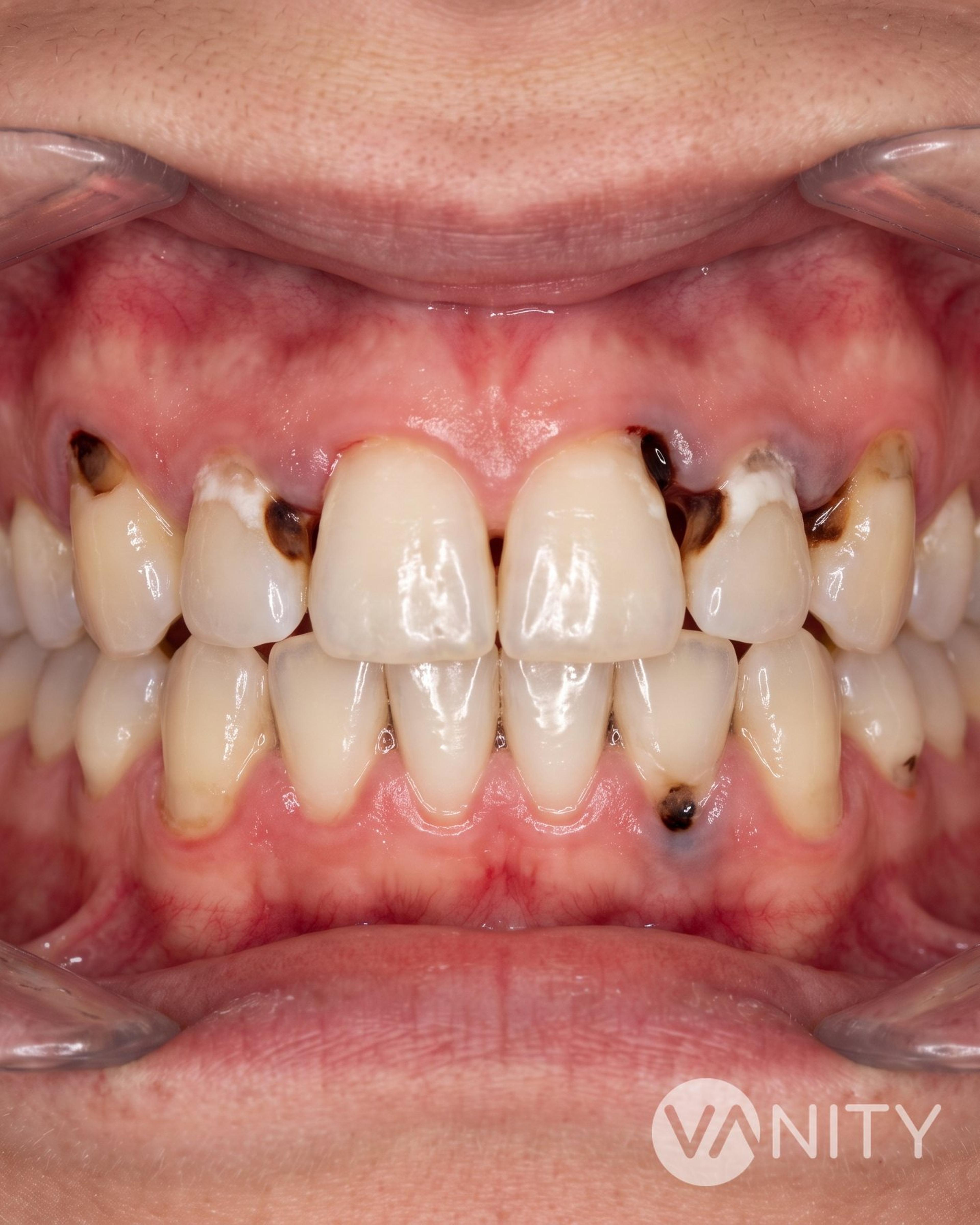
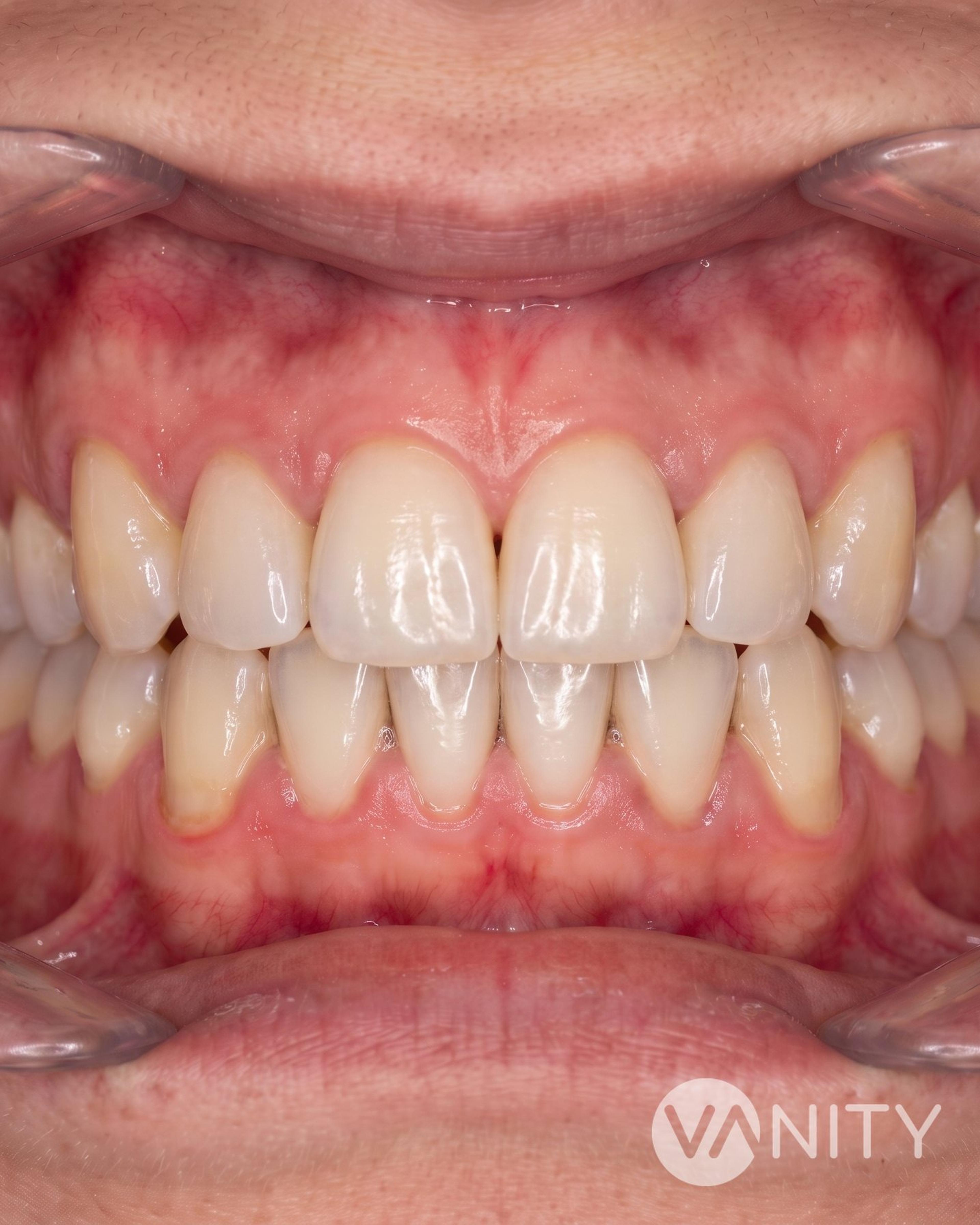

Dental fillings: what it is
A filling rebuilds a tooth that decay or a fracture has broken into. We numb the tooth, remove the softened tissue, clean and shape what is left, then pack the cavity with a restorative material — usually resin composite, sometimes amalgam or glass ionomer. Composite is hardened in layers under a curing light, then shaped, polished and checked against the opposing bite. Where a cavity is too wide for a direct filling to hold, the restoration is made outside the mouth as an inlay, onlay or crown and cemented at a second appointment.
A filling is for a cavity that has passed the point where it can remineralise, and for chipped, cracked or worn teeth with enough sound structure left to carry a restoration. Early decay does not always need drilling — the NHS notes that fluoride varnish or mouthwash can reverse a lesion before a hole has formed. Where decay has reached the pulp, the honest answer is root canal treatment or extraction, not a filling. Material is a shared decision: size, position, appearance, expected lifespan and cost all weigh in, and the ADA is clear that the choice is yours to make after the conversation.
Dental fillings: techniques we use
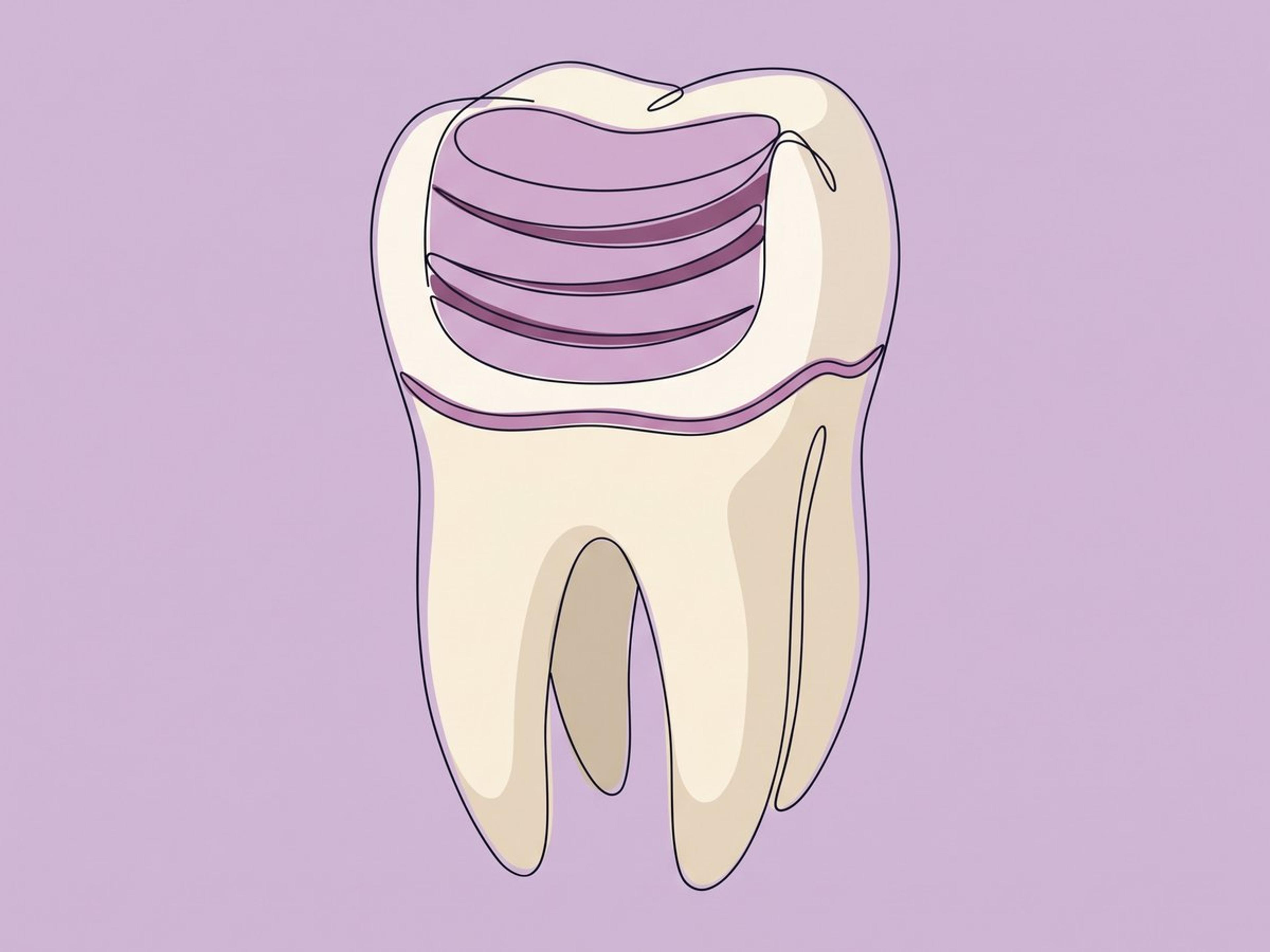
A mix of resin with glass or quartz filler, bonded adhesively to the tooth and hardened in increments under a curing light. It is the most-used direct material and works on front and back teeth alike. Cochrane's 2021 review of posterior restorations found composite failed at roughly twice the rate of amalgam (RR 1.89), with more secondary caries (RR 2.14) — though the certainty of that evidence was low and the trials used older formulations than are placed today.
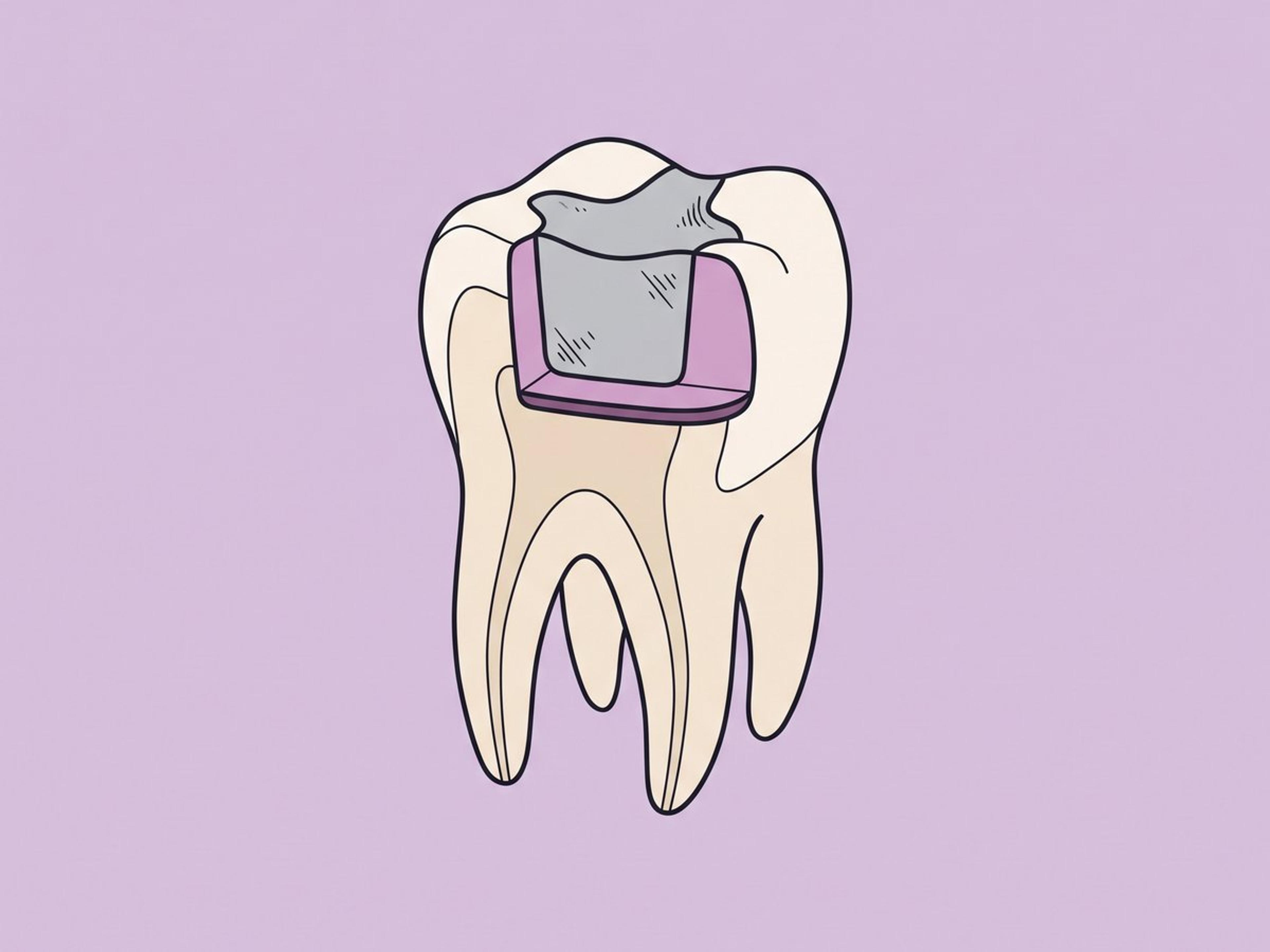
An alloy of mercury with silver, tin and copper, condensed into the prepared cavity. After more than a century of use it remains the most durable and least expensive direct material for load-bearing back teeth. The ADA holds it to be safe and effective; its drawbacks are how it looks and the environmental mercury burden driving the Minamata Convention phase-down.
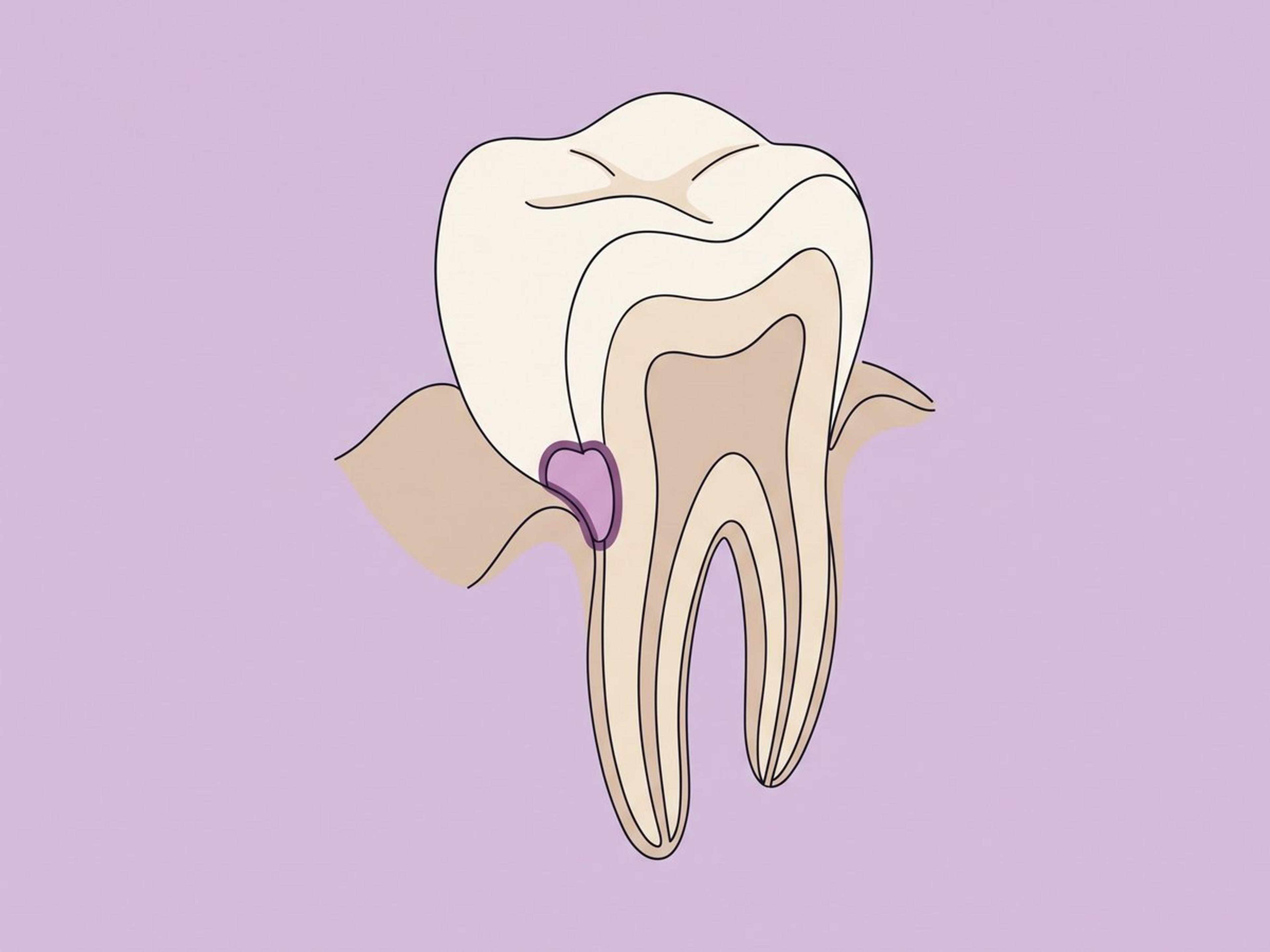
Tooth-coloured cements that bond chemically to dentine and release fluoride over time. We use them for cavities that carry no chewing load, for root-surface and cervical lesions, as cavity liners, and in primary teeth. The ADA notes their low fracture resistance rules them out of high-stress chewing surfaces, and they do not last as long as composite or amalgam.
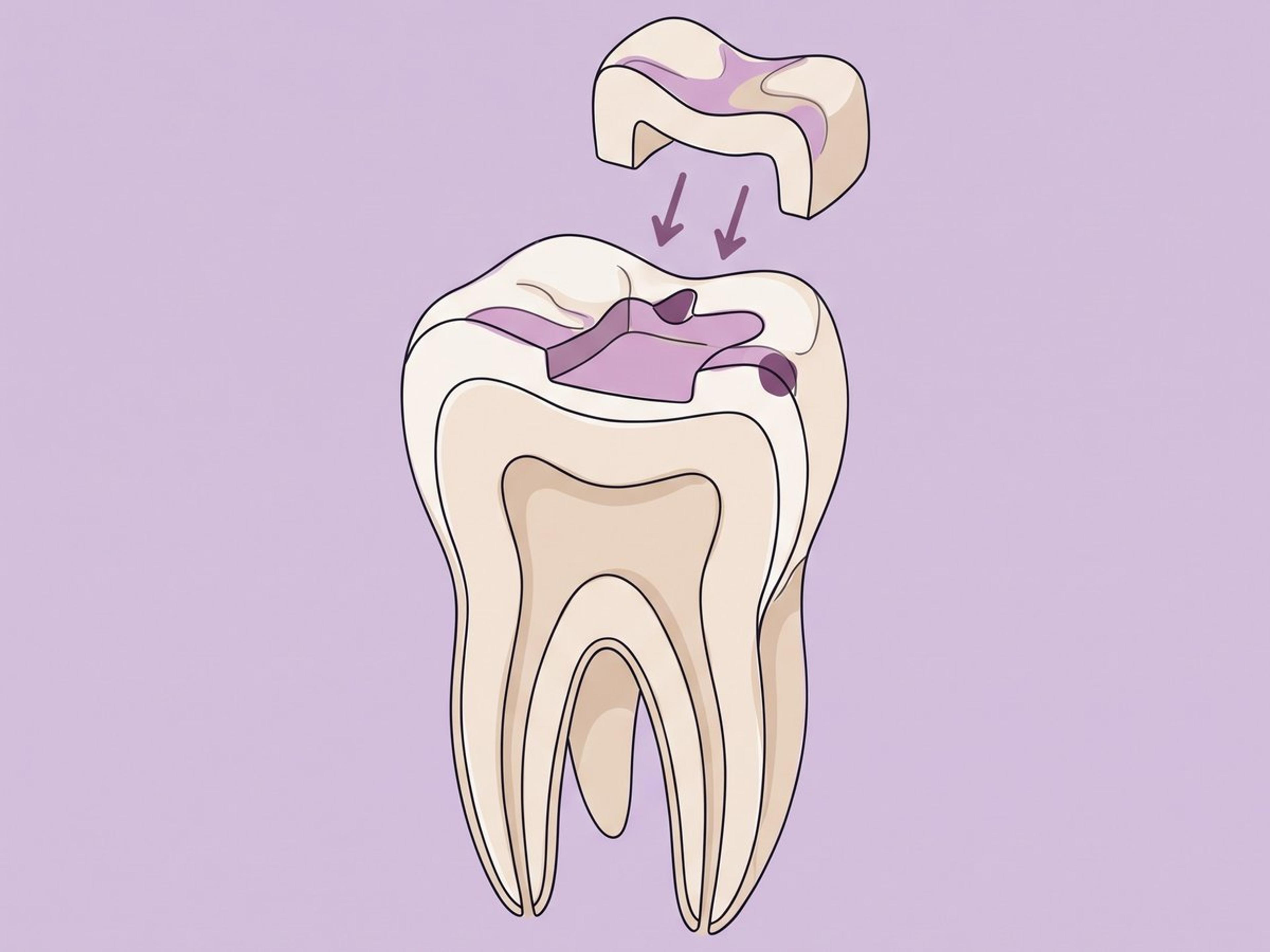
For a cavity too wide for a direct filling but not wide enough to need a full crown, the restoration is cast in gold alloy or milled or pressed in ceramic, then cemented at a later visit. Ceramic inlays and onlays pool at around 91% survival at 10 years (Morimoto et al., 2016). Gold is the most durable and the least discreet; ceramic matches the tooth and is more brittle.
A filling appointment, step by step
Examination and a priced plan
Bitewing and periapical radiographs are taken before anything is drilled, because the depth of the lesion — not how it looks on the surface — decides between a filling, an inlay or onlay, and root canal treatment. You see the plan in FDI tooth notation with a price per tooth and per surface, and nothing is prepared that you have not agreed to.
Local anaesthetic and isolation
The tooth is numbed, then isolated with a rubber dam or cotton rolls and suction. Isolation is not fussiness: adhesive bonding fails if saliva reaches the prepared surface, and a contaminated bond is the start of a leaking margin.
Decay removed, cavity shaped
Softened, infected dentine is removed and sound tooth structure is kept — every millimetre left standing is structure the restoration does not have to replace. The shape differs by material: amalgam needs an undercut to hold mechanically, while composite bonds to the tooth and allows a more conservative preparation.
Material placed and hardened
Composite goes in as thin increments, each cured under the light before the next, which keeps shrinkage stress from pulling the material away from the cavity wall and opening a gap. Amalgam is condensed in one mass; glass ionomer sets chemically against the dentine and releases fluoride as it does.
Shaped, polished and checked against the bite
The contour and the contact with the neighbouring tooth are rebuilt so floss passes cleanly, and the surface is polished — a rough margin holds plaque, and margins are where secondary caries starts. Articulating paper marks any point sitting high, which is adjusted before you leave.
Day-two review
The bite is checked again once the anaesthetic has fully worn off and you have eaten on the tooth properly, because a filling can feel level while you are numb and high the next morning. Correcting it here takes two minutes; at home it costs a fresh appointment.
Dental fillings: recovery week by week
- Same day
Numbness fades over 2 to 4 hours — wait for it before eating so you do not bite your lip, cheek or tongue without feeling it. Composite is fully set the moment you leave the chair, so the result is final and visible straight away; amalgam reaches full strength over about 24 hours, so heavy chewing on that side waits a day. There is no wound and nothing to restrict: work, the gym and swimming are all fine the same day.
- Day 2
Your review appointment, and the reason to fly on day 2 rather than day 1. The published minimum before flying after a restoration is 24 hours, since cabin pressure change can provoke pain in a freshly restored tooth; the extra day buys the bite check that catches a high filling before you are in another country.
- Week 1
Sensitivity to cold or sweetness, and a gum left tender by the injection or the matrix band, are expected and settle on their own. What is not expected is throbbing pain, pain that wakes you at night, or pain that lingers more than a few seconds after something hot or cold — that points to an inflamed pulp rather than a settling filling, and it should be looked at.
- Weeks 2–6
Sensitivity should be clearly fading and gone by around week four; if it is not, the usual causes are a contact still sitting high or a pulp that has not recovered, and both are fixable. Book the review with your own dentist for 4 to 6 weeks after you are home, so anyone adjusting the work has your baseline records in front of them.
- Year 1 and beyond
Median survival for posterior composite restorations in the largest practice-based cohort was 13.3 years, but 20% of failures happen inside the first year — which is why the first annual check matters more than the ones after it. Keep to six-monthly examinations: decay at the margin of a filling is silent until it is deep, and radiographs are what find it.
Dental fillings: how to prepare
- Have a clinical examination with bitewing radiographs before anything is drilled — the depth of the lesion is what decides between a filling, an onlay and root canal treatment.
- Tell us about pain you already have, particularly pain that lingers after something hot or cold or that wakes you at night. That moves the diagnosis from simple caries to probable pulpitis, and it changes the plan.
- Disclose pregnancy or breastfeeding, known allergies to metals or resins, and any medical conditions or medications. Regulators suggest some patients may prefer a mercury-free material where it is clinically suitable, and that is a reasonable thing to settle in advance.
- Decide the material tooth by tooth with us, weighing appearance against expected lifespan and cost. We will tell you which way the evidence leans; the decision stays yours.
- Ask for the plan in writing in FDI tooth notation — tooth number, number of surfaces, material and price for each. Nothing should be drilled that you have not read and agreed to.
- Plan not to chew on the treated side while you are numb, and expect 20-60 minutes in the chair per session depending on how many cavities are being restored.
Dental fillings: risks
Every operation carries risk. We name them so you can ask the right questions.
- Sensitivity to cold, sweet food or biting pressure afterwards — common in the first few days, occasionally persistent.
- Secondary caries at the margin of the restoration — the leading cause of composite failure, at roughly twice the risk seen with amalgam in Cochrane's 2021 analysis.
- Fracture or chipping of the restoration or of the tooth structure around it — the usual reason an amalgam is replaced, and more likely if you grind your teeth.
- Pulp inflammation or death after a deep cavity preparation, needing root canal treatment or extraction rather than a further filling.
- A restoration left high against the opposing tooth — painful on chewing and, if left uncorrected, capable of cracking either tooth.
- Allergic or hypersensitivity reaction to restorative components, including mercury and resin monomers — rare, but the reason we ask about known material allergies.
- Barodontalgia — pain provoked by cabin pressure change in a recently restored tooth, which is why we set a floor on how soon you fly.

Dental fillings in Turkey: what to expect
A course of fillings is one of the few dental treatments that genuinely fits a short trip, because a direct filling is shaped and set in your mouth in one appointment with no laboratory stage. There is very little to recover from. That means almost everything worth your attention here is about the plan being conservative and the records coming home with you.
Before you fly
Send us any recent radiographs and we will come back with a written plan, tooth by tooth, before you book. Two documents are worth asking any Istanbul provider for: the facility licence from the Ministry of Health and the International Health Tourism Authorization Certificate required under the 2025 regulation — the Ministry keeps a register of certified providers, and treating international patients without the certificate is an offence. Ask for your treating dentist by name, with their registration at the regional dişhekimleri odası under the Turkish Dental Association.
At the clinic
Day one is the examination, a panoramic radiograph and periapical films, then the priced plan in front of you before any drilling starts. The restorations go in across one or two sessions the same day. This is a dental chair, not an operating theatre — local anaesthetic, no admission, no general anaesthetic, and you walk out and have dinner. If your plan involves an inlay or onlay, ask us directly whether it is milled in-house or sent to a laboratory; sent out means 2-5 working days of turnaround and a longer trip, and it is a fair question to ask before you commit.
Recovery in Istanbul
2 days and 2 hotel nights is the realistic shape of it. There is no wound, no swelling and nothing to restrict — the numbness fades over 2 to 4 hours and normal eating resumes once it has. Day two is your one review appointment: we check the bite after you have chewed on the tooth properly, adjust anything sitting high, and polish. A filling left high is the single most common early problem and takes 2 minutes to correct here, against a fresh appointment at home. Mild sensitivity and gum soreness for a week or two is expected. Throbbing pain, pain on biting or pain that lingers after something hot or cold is not, and can mean pulp involvement — which is the real argument against flying out the same week.
Heading home
Fly on day 2. The published minimum after a restoration is 24 hours, but the extra day is not caution for its own sake — it buys the bite check. Leave with a written record listing every tooth by FDI number, the surfaces restored, the material and shade used, and your pre- and post-operative radiographs as files you hold yourself, plus a named clinical contact and an email address. Tell your own dentist before you travel and book a review with them for 4 to 6 weeks after you are back, so any adjustment or early failure is caught by someone who has your baseline. Continuity of care is the structural weakness of treating abroad, and we would rather plan around it than talk past it.
- United Kingdom
- £100 – £300
- United States
- $150 – $450
- Western Europe
- €100 – €300
Published typical ranges for orientation — confirm with a local quote.
Dental fillings: frequently asked questions
How long does a dental filling last?
It depends on the material, the size of the cavity, your oral hygiene and whether you grind. The largest practice-based cohort — 700,885 posterior composite restorations in the National Dental PBRN — found a median survival of 13.3 years, 14.5 years for single-surface fillings and 11.4 years where 3 or more surfaces were rebuilt. 20% of failures happened in the first year, and no filling is permanent.
Are amalgam fillings safe?
The ADA holds dental amalgam to be safe and effective, and Cochrane's 2021 review found no clinically important safety difference between amalgam and composite, while rating that evidence very low certainty. The worldwide move away from amalgam under the Minamata Convention is driven by environmental mercury, not by evidence of harm to patients. FDI supports a phase-down rather than an abrupt ban, because affordable alternatives are not available everywhere.
Does getting a filling hurt?
The work is done under local anaesthetic, so it should not hurt — the injection is usually the only uncomfortable part. Mild sensitivity to cold or to biting is common for a few days afterwards and responds to over-the-counter paracetamol or ibuprofen. Pain that is severe, throbbing, or still there weeks later is not normal and should be looked at again.
Is a tooth-coloured filling as strong as a silver one?
For small to mid-size cavities under moderate chewing load composite performs well, and the ADA lists it for front and back teeth. In head-to-head trials on posterior teeth it failed more often than amalgam (RR 1.89), driven by decay at the margin rather than by fracture — fracture risk was not higher for composite. Modern composites have improved since those trials ran, but tooth-coloured is an aesthetic choice with a known durability cost, and we would rather say so than sell it as simply better.
When can I eat after a filling?
Composite and glass ionomer are fully set the moment the appointment ends, so the material is not what you are waiting for. The limit is the anaesthetic — wait until the numbness has gone, usually 2 to 4 hours, so you do not bite your lip, cheek or tongue without feeling it. Amalgam reaches full strength over about 24 hours, so heavy chewing on that side is usually left for a day.
How soon can I fly after a filling?
The published minimum for a restoration is 24 hours: cabin pressure change can provoke pain in a recently restored tooth, and Felkai et al. (British Dental Journal, 2023) attribute nearly a third of in-flight dental pain episodes in aircrew to recent restorative treatment. We would rather you flew on day 2, so the bite can be checked once the anaesthetic has worn off and you have eaten on the tooth normally. If the same trip includes an extraction, a root canal or an implant, the longest of those intervals governs your flight, not the filling.
Can a cavity be treated without a filling?
Only at an early stage. Before a hole has formed, fluoride varnish or mouthwash can reverse decay, as the NHS sets out. Once decay has broken through the enamel the tissue cannot grow back and a filling is needed; if it has reached the pulp, the answer is root canal treatment or extraction instead.
Why would a clinic recommend crowns when I was told I needed fillings?
Conversion is the commonest way a filling quote inflates abroad — teeth a conservative plan would fill are crowned or veneered instead, which is irreversible, removes far more sound tooth structure and multiplies the cost. If a plan comes back recommending crowns on teeth you were told needed fillings, ask for the radiographs and get a second opinion before you consent to anything. We price tooth by tooth and surface by surface so that the difference is visible on the page.
Do I need to replace old fillings that are not causing problems?
No — routine replacement of intact, symptom-free fillings is not indicated, and every replacement removes more sound tooth, enlarging the cavity for the restoration after it. Fillings are replaced for recurrent decay at the margin, for fracture, or when the restoration is lost. Where the rest of a composite is sound, repairing the fractured part is increasingly preferred to replacing the whole thing.
Is there anyone who should avoid a filling, or a particular filling material?
Almost nobody who needs a filling should go without one — untreated decay only progresses. The real questions are material and timing. The FDA advises that pregnant or nursing women, children under six, and people with kidney disease, certain neurological conditions or a known mercury allergy should avoid new amalgam where a suitable alternative exists — composite and glass ionomer are that alternative, and we place them routinely. A true allergy to resin components is rare but rules composite out in favour of glass ionomer or ceramic. And a filling is only the right treatment while the pulp is healthy: lingering pain after something hot or cold, pain that wakes you at night, or decay reaching the pulp on the radiograph means root canal treatment or extraction instead. Routine fillings are safe in pregnancy, but where nothing hurts, an elective course can also simply wait until after delivery.
What symptoms after a filling mean I should contact the clinic?
Mild sensitivity to cold and a tender gum for a week or two is expected and settles on its own. Get in touch — with us, or with a dentist at home — if pain is throbbing, wakes you at night, or lingers for more than a few seconds after something hot or cold, because that points to an inflamed pulp rather than a settling filling. The same goes for pain when you release a bite (a possible crack), a bite that still feels high after the first couple of days, a filling that chips or falls out, or a sharp edge your tongue keeps finding. Swelling of the gum or face, fever, a bad taste, or a pimple-like bump on the gum near the tooth are signs of infection and should be seen promptly, not watched. None of these needs a flight back to Istanbul — most are handled in one visit by any local dentist working from your written treatment record, which is exactly why you leave with one.
Will my fillings whiten along with my teeth?
No — and this is the misconception that most often spoils an otherwise good result. Composite is colour-stable: whitening gels lighten enamel but leave restorations at the shade they were made, so fillings matched to your teeth today will read dark against teeth you whiten later. If whitening is part of your plan, whiten first, then wait about two weeks for the shade to stabilise before front-of-mouth fillings are matched. The reverse also holds — over the years composite picks up stain from coffee, tea, red wine and smoking, especially at the margins, and repolishing is often all that is needed to correct it, not replacement.
How much does dental fillings cost in Turkey?
€50 to €250 with us, confirmed after a consultation rather than quoted blind. For comparison it is typically £100 – £300 in the United Kingdom, $150 – $450 in the United States and €100 – €300 in Western Europe. Per filling, set by the size of the cavity and the material. A quote that does not say how many surfaces are involved is not comparable to anything.
Sources
- [1]Survival analysis of posterior composite restorations in National Dental PBRN general dentistry practices · Journal of Dentistry (Thyvalikakath et al., 141:104831) · 2024
- [2]Pricing in commercial dental insurance and provider markets · Health Services Research (Nasseh, Bowblis & Vujicic, 56(1):25-35) · 2021
- [3]Dental Filling Options · MouthHealthy — American Dental Association · 2025
- [4]Tooth-coloured resin fillings compared with amalgam fillings for permanent teeth at the back of the mouth (Cochrane systematic review, CD005620) · Cochrane Oral Health · 2021
- [5]Survival Rate of Resin and Ceramic Inlays, Onlays, and Overlays: A Systematic Review and Meta-analysis · Journal of Dental Research (Morimoto et al., 95(9):985-94) · 2016