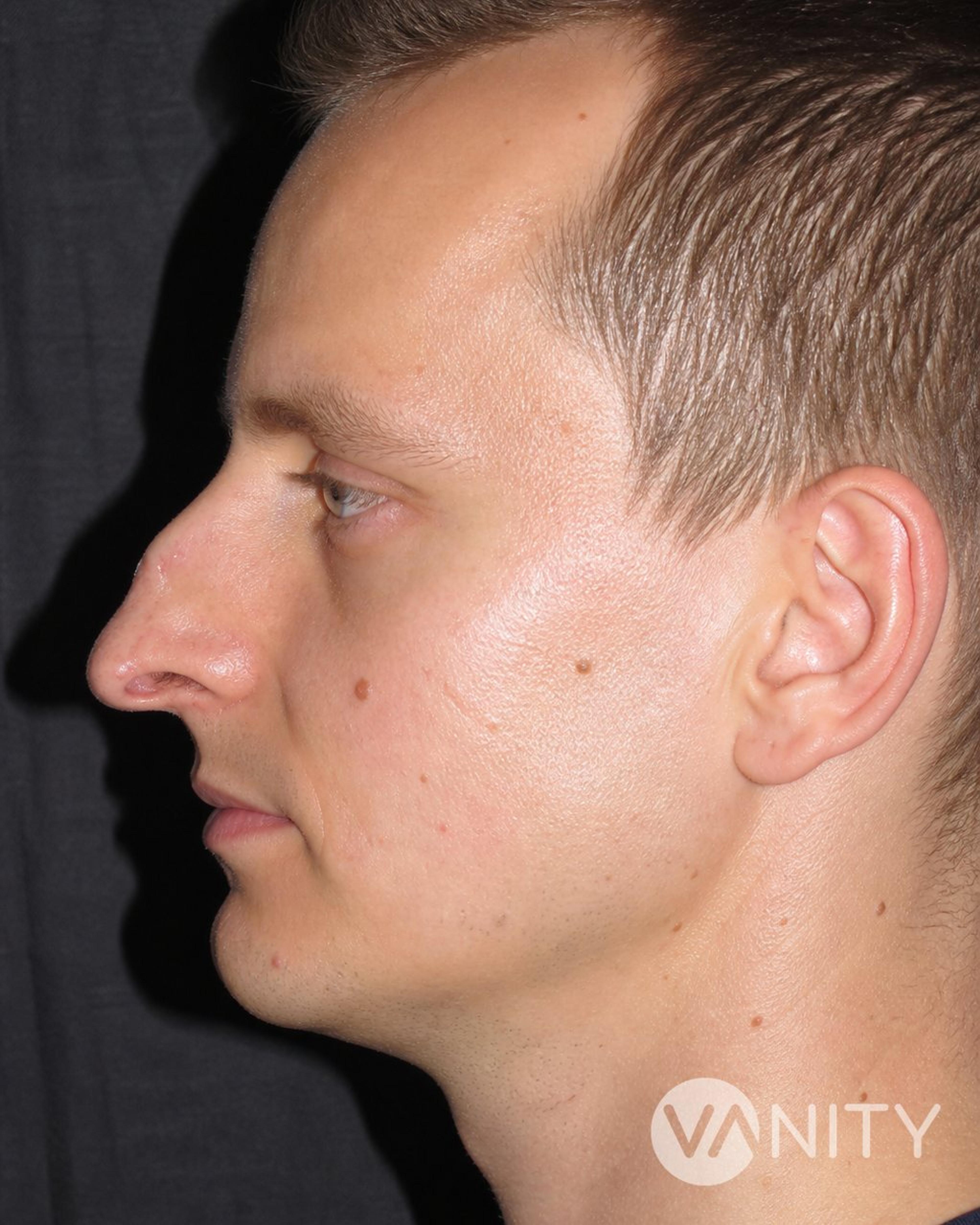
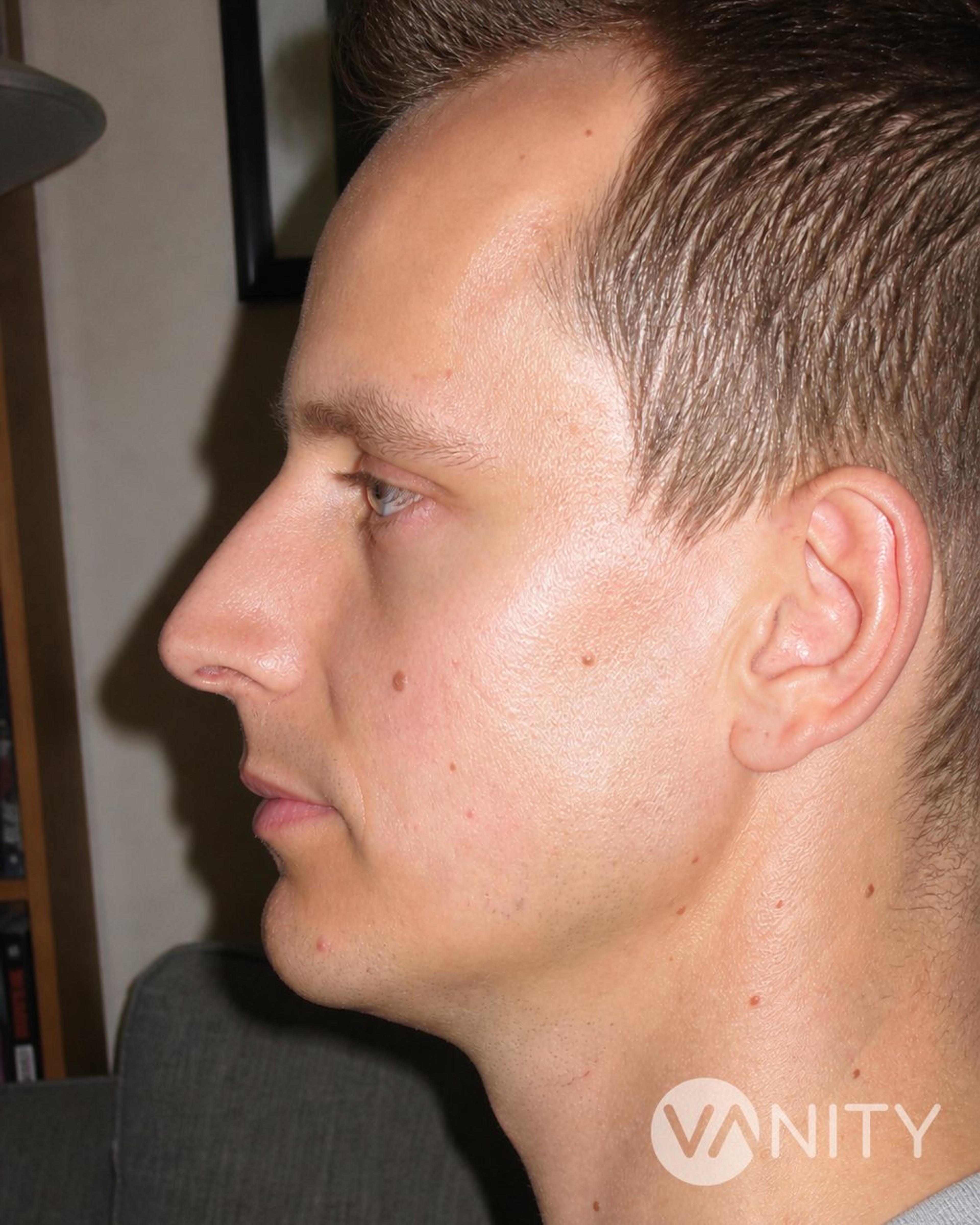



Secondary rhinoplasty: what it is
Revision rhinoplasty is a second — or later — operation on a nose that has already been operated on. We usually open the nose through a small incision across the columella, which gives direct sight of the framework underneath, release the scar tissue holding it in the wrong position, and rebuild the cartilage and bone an earlier operation removed, displaced or weakened. Because the septum has often already been used, graft material commonly comes from the ear or the rib. Two things are being corrected at once: how the nose looks, and how air moves through it.
It is for people who are still unhappy with the shape after a previous rhinoplasty, or who came out of it breathing worse than before. in good general health, and clear that scarring and depleted cartilage set real limits on what a revision can reach. We cannot guarantee an outcome, and a further operation is sometimes needed.
Secondary rhinoplasty: techniques we use
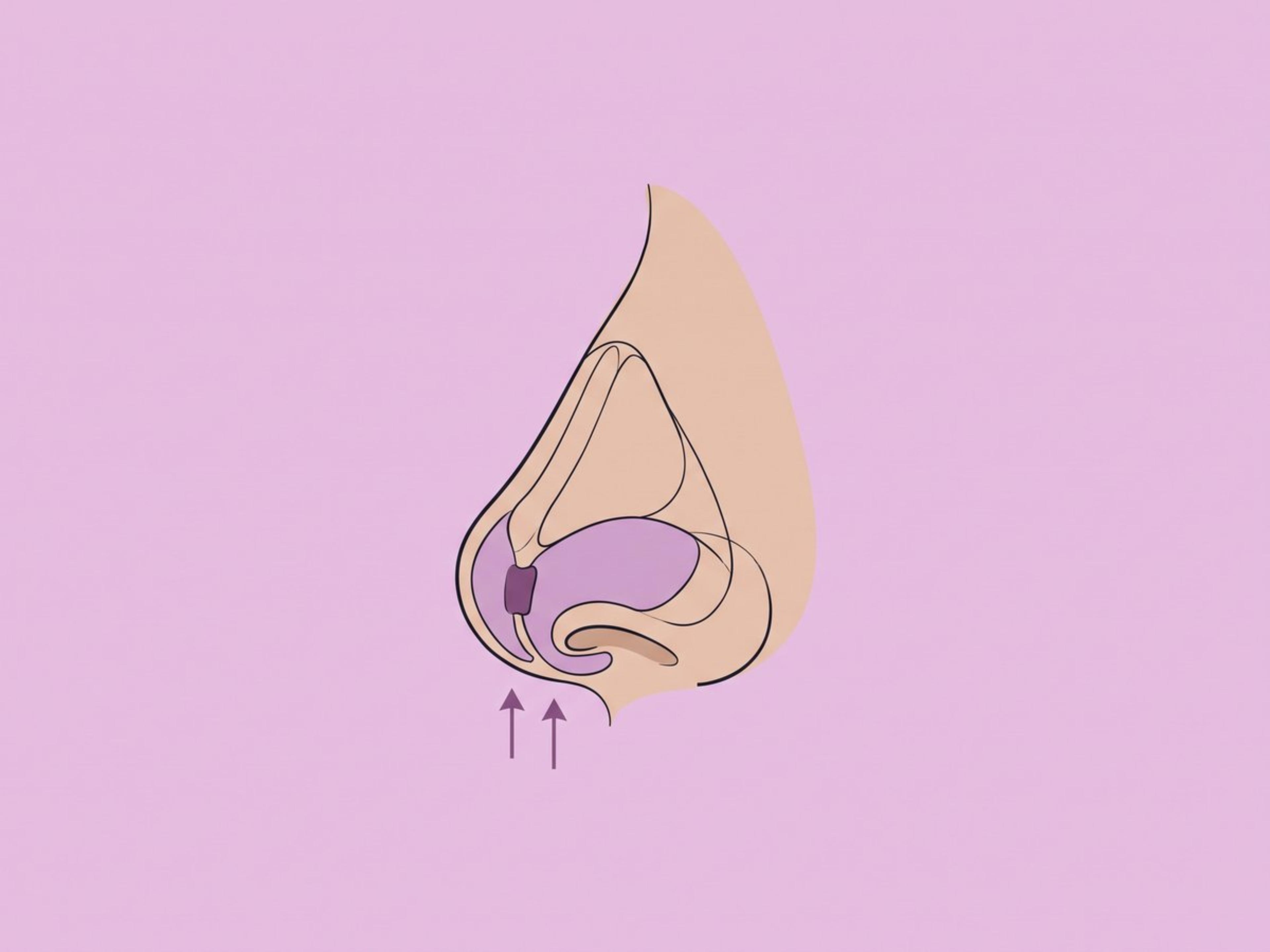
A transcolumellar incision opens the whole framework to view, so scar can be released under direct sight and grafts placed exactly where support is missing. Septal cartilage is used first when enough of it remains; ear cartilage is the usual second source for tip and contour grafts. A systematic review of 11,035 rhinoplasty cases found no statistically significant difference in reoperation rates between open and closed approaches — we choose the open route for exposure, not because it lowers revision risk.
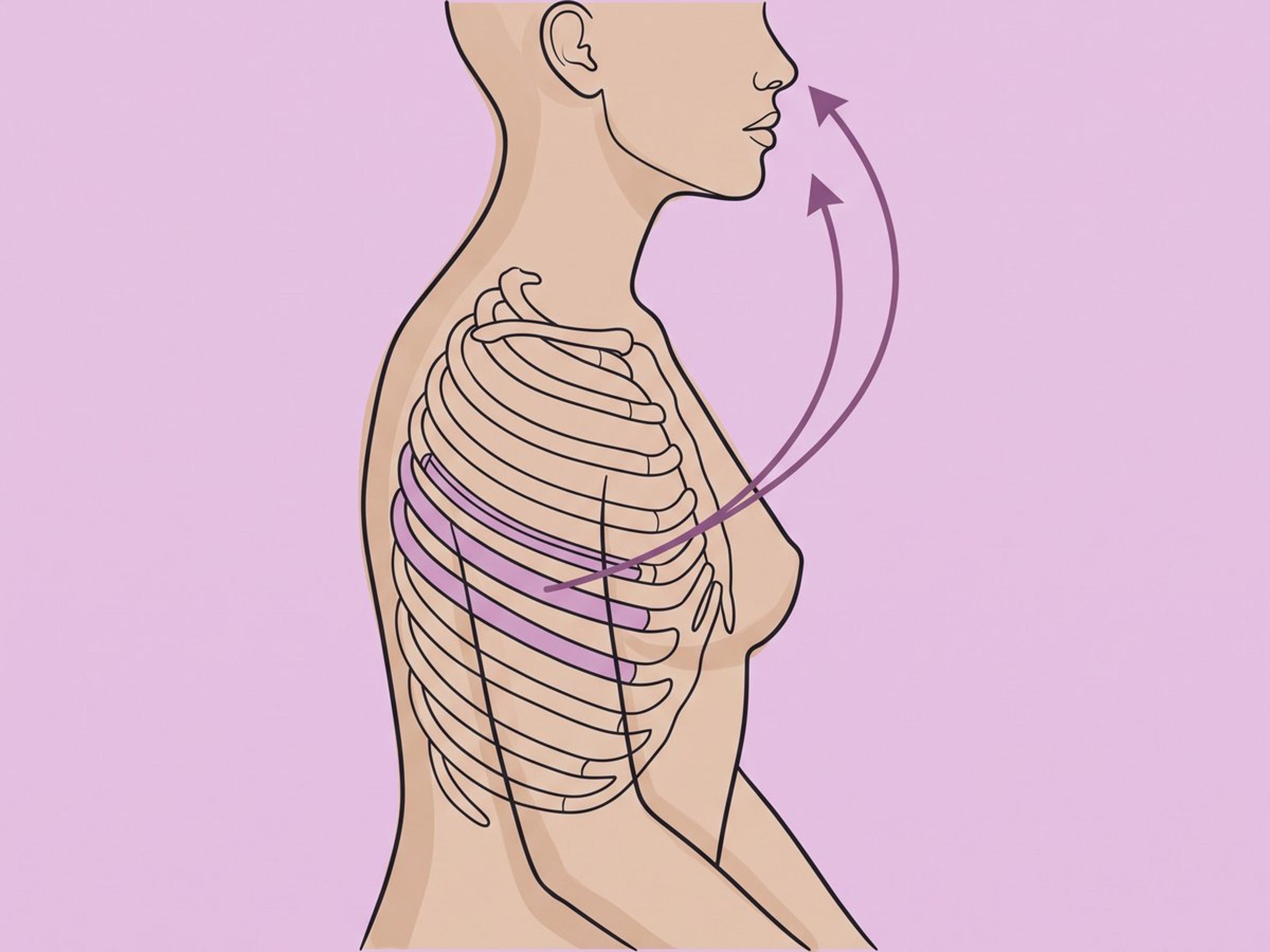
When septal cartilage is spent — common after previous surgery — rib becomes the graft material of choice for its volume, length and versatility. We take the seventh rib because it is straight, plentiful and sits away from the pleura, carve it concentrically and let the carved graft rest 15 to 60 minutes before placing it, which reduces late warping. It adds a chest incision, chest-wall pain, and a risk of seroma, scarring, infection and, rarely, pneumothorax.
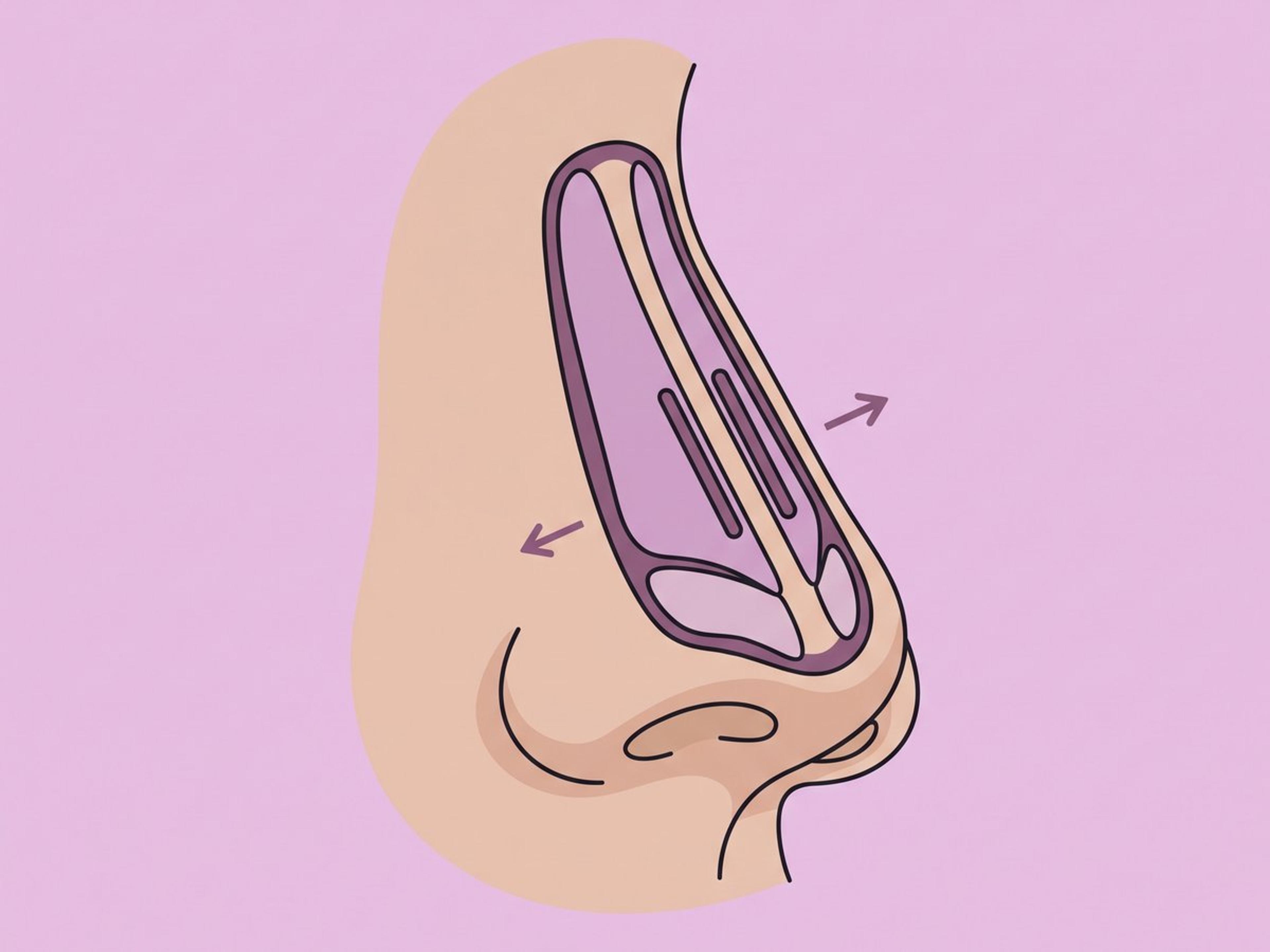
An over-reduced bridge collapses the internal nasal valve and leaves an inverted-V deformity with obstructed breathing. Spreader grafts — strips of cartilage set between the septum and the upper lateral cartilages — reopen the valve angle and straighten deviation in the middle third. Where the external valve collapses on breathing in, lateral crural strut or alar batten grafts are added.
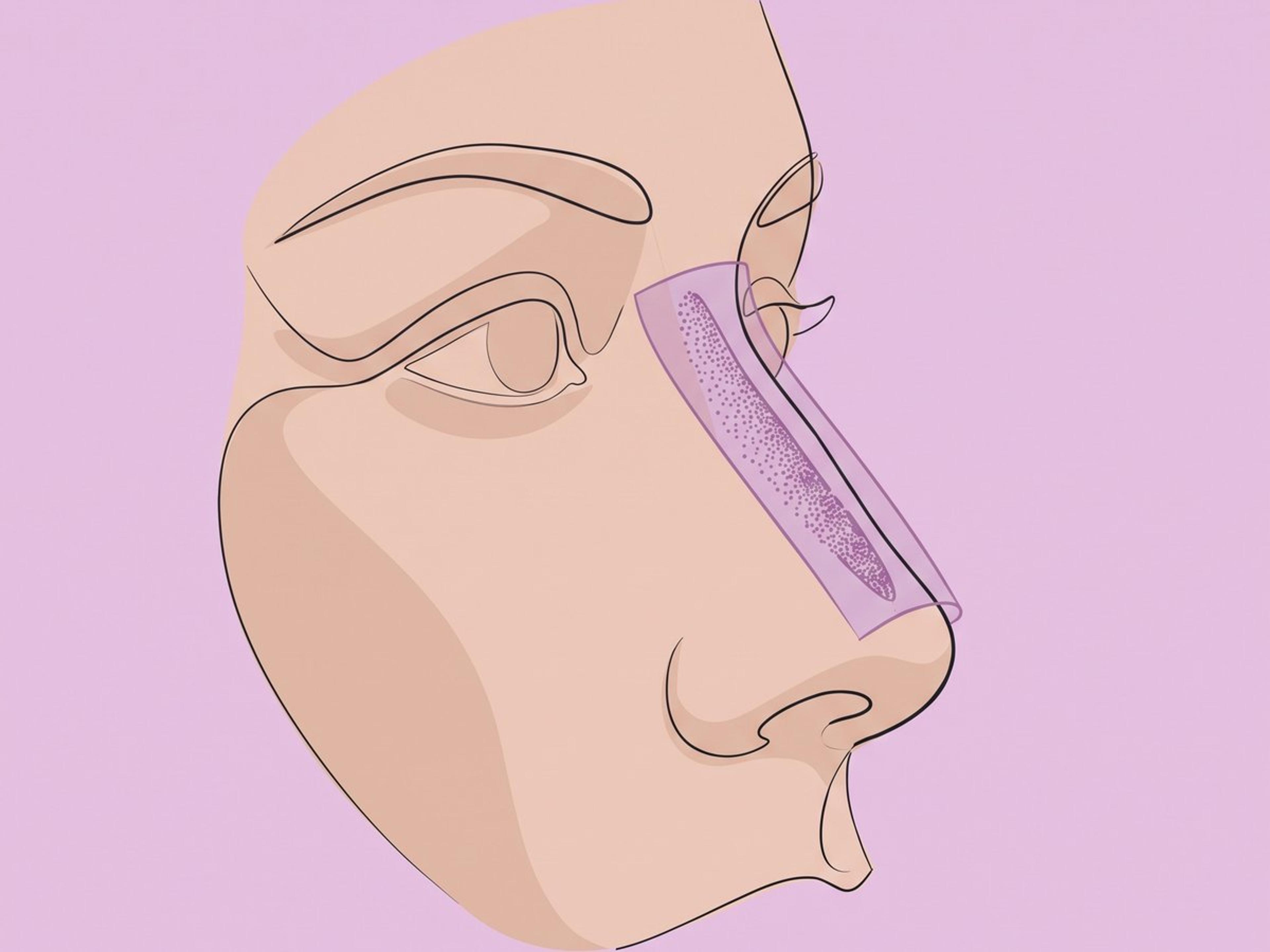
Cartilage is diced into small fragments, wrapped in temporalis fascia or perichondrium and laid along the bridge to smooth contour irregularities, visible graft edges and small saddle deformities. The construct conforms to the dorsum and resists the warping seen with solid one-piece onlay grafts. This is camouflage and contouring work — it does not replace structural support.
The operation, step by step
Anaesthesia and open exposure
You are asleep for the whole operation, which runs three to five hours. A revision is opened through a transcolumellar incision far more often than a primary is, because after previous surgery the framework no longer sits where the anatomy predicts — it has to be seen rather than inferred.
Releasing the scar
Scar tissue is dissected off the cartilage and bone until the framework can return to its true position. This comes before any grafting for a reason: scar left in place will pull a graft out of alignment however accurately it is fixed.
Harvesting graft material
Whatever remains of the septum is used first, ear cartilage next for curved contour grafts, and rib where real structural length is needed. Carved rib is left to rest 15 to 60 minutes before it goes in — cartilage that is going to warp usually declares itself in that window.
Rebuilding support
Most revision work is additive: spreader grafts to reopen the internal valve, strut or batten grafts to stop the lateral wall collapsing on breathing in, and a rebuilt tip base to hold projection. This is the part that decides both the airway and whether the shape holds over the following decade.
Camouflage over thin skin
Only once support is set are surface irregularities addressed, usually with diced cartilage wrapped in fascia laid along the bridge. Skin thinned by a previous operation shows every edge beneath it, so contour work a primary nose would never need is routine here.
Closing, splinting, one night in
The incisions are closed, an external splint goes on and internal supports hold the septum steady while everything knits. You stay one night at the clinic, and the splint stays on until the first review at around day 7.
Secondary rhinoplasty: recovery week by week
- Day 1
The operation is done under general anaesthesia and you stay one night. An external splint and internal support are in place, the nose is blocked, and bruising and swelling around the eyes begin. Where rib cartilage was harvested, the chest is usually the sorer of the two sites in the first days.
- Week 1
The splint and any non-dissolvable sutures come off at around day 7. Breathing through the nose is still poor from internal swelling. Most people need up to 2 weeks off work, and heavy lifting, straining and glasses resting on the nasal bridge are out.
- Week 3–6
Bruising, redness and the most obvious swelling fade by about week 3, and strenuous exercise generally restarts between weeks 4 and 6. The nose looks presentable but the shape is not yet reliable — the tip and any grafted areas stay swollen and firm.
- Month 3
Swelling declines substantially between months 1 and 3, and the airway is usually clearly better if valve support was rebuilt. Skin sensation and numbness at the tip are still normalising, and residual firmness over graft sites is expected.
- Month 6
Numbness at the tip has usually resolved and grafted areas are softening, so the airway result is by now reliable — if breathing has not improved, it is unlikely to improve further on its own. The shape is still not final, which makes this the earliest sensible point to discuss whether anything more is needed, not to act on it.
- Month 12–18
Final contour arrives late. Cleveland Clinic notes that minimal swelling can persist up to a year after a primary rhinoplasty; after a revision, with denser scar tissue and a compromised soft-tissue envelope, 12 to 18 months is the honest window before judging the result or planning anything further.
Secondary rhinoplasty: how to prepare
- Wait at least 12 months from your previous nasal operation, so swelling has resolved and scar tissue has matured. Median time to revision in large cohort data is 1.2 years.
- Obtain the prior operative report or reports, pre-operative photographs and any imaging, and bring them. Knowing what was resected or grafted materially changes the surgical plan.
- Have donor sites assessed before a date is set — what remains of the septum, the ear cartilage, and a CT to check costal cartilage for calcification where rib harvest is anticipated.
- Stop smoking and all nicotine well in advance, and pause blood thinners, NSAIDs and supplements that increase bleeding on the surgeon's instruction.
- Book a detailed consultation with a surgeon who does revision work specifically, and use it to agree what is achievable — including the possibility that further surgery may still be needed.
Secondary rhinoplasty: risks
Every operation carries risk. We name them so you can ask the right questions.
- Need for further revision
- Graft complications — warping, resorption, displacement, visibility or palpability through thin post-surgical skin, and graft infection
- Rib donor-site morbidity — chest-wall pain, scarring, seroma, infection and, uncommonly, pneumothorax
- Persistent or new nasal obstruction from internal or external valve collapse, or from scar tissue within the airway
- Nasal septal perforation, infection, nosebleeds, and altered or reduced sense of smell
- Poor wound healing, skin discoloration, prolonged numbness at the tip, and an aesthetic result that still does not meet your expectations — the outcome cannot be guaranteed
Secondary rhinoplasty in Turkey: what to expect
A revision is planned before you land, not on the morning of surgery. What follows is the shape of a normal trip to us in Turkey — 7 days in Istanbul, 7 hotel nights — and the parts of it worth settling while you are still at home.
Before you fly
Book the return flight as changeable. The single most common reason an international plan slips is that the day-7 review finds persistent swelling, a bleed or a splint that needs to stay on longer, and a fixed ticket turns a clinical decision into a financial one. Agree the aftercare pathway in writing before you travel — who reviews you at 3, 6 and 12 months, whether that is remote or in person, who pays if a further operation is needed, and whether it means flying back. Check your insurance, because standard travel policies exclude elective cosmetic procedures and their complications and specialist cover is a separate product. And ask us directly for our own complication and revision rates for this operation, and for the surgeon's revision-specific case volume: published reoperation rates for primary rhinoplasty sit around 1.6 to 2.7%, with revision rates reported up to 15%, and a centre that cannot state its own numbers is telling you something.
At the clinic
Surgery is under general anaesthesia and you stay one night. Bring a companion — you are advised not to be alone the first night, and the first week with internal splints is genuinely uncomfortable: mouth-breathing, disturbed sleep, reduced smell. Feel free to ask us about accreditation, licensing or anything else about the facility — we are glad to go through it with you.
Recovery in Istanbul
Plan 7 days in the city. The first days are quiet: swelling and bruising peak early, the nose is blocked, and you sleep propped up. Splint and external sutures come off at the first review, at around day 6 to 8. Do not judge the result on this trip, and do not book a further revision on it — roughly 90% of swelling has settled at 6 months, the last of it resolves over 12 to 18 months, and a decision made now is a decision made on an unfinished nose.
Heading home
7 days after surgery is our default for flying. Compression stockings, hydration and hourly movement in the cabin are standard.
Checking a clinic in Turkey
Turkey rewrote its medical-tourism rules on 26 April 2025, replacing the 2017 regulation. Any facility treating international patients must now hold an international health tourism authorisation certificate, register on the Ministry of Health's HealthTürkiye portal, and carry complication insurance for the procedures it performs; hospitals and medical centres also had to complete TÜSKA accreditation by the end of that year. Facilities are required to publish that certification — so you can check ours, and you should check anyone else's before you pay a deposit.
On the face the surgeon matters more than the building, because the margin for error is millimetres and the result is the first thing anyone sees. Ask how many of this specific operation they perform a year, ask to see their own patients at one year rather than at two weeks, and ask what they would decline to do in your case — a surgeon who never says no is telling you something. Ask for their Turkish Medical Association registration. If an agency rather than the clinic is arranging the trip, get it in writing who holds clinical responsibility once you have flown home.
Most nationalities enter Turkey visa-free or on an e-Visa for a stay of this length, with a passport valid at least six months. Confirm the rule for your own passport, and build the return flight around the last clinic visit rather than fixing it in advance.
- United Kingdom
- £8,000 – £15,000
- United States
- $12,000 – $20,000
- Western Europe
- €8,000 – €15,000
Published typical ranges for orientation — confirm with a local quote.
Secondary rhinoplasty: frequently asked questions
How long do I have to wait after my first rhinoplasty before a revision?
A minimum of 12 months. Swelling and scar tissue keep changing the shape of the nose for up to a year, so operating earlier risks correcting something that would have settled on its own — or operating through inflamed, unstable tissue. In large cohort data the median interval to revision was 1.2 years.
Is revision rhinoplasty harder than the original surgery?
Yes. ASPS describes revision rhinoplasty as among the most difficult cases aesthetic surgeons face. Scar tissue distorts the anatomy and the blood supply, native cartilage has often been removed or weakened, and the skin envelope may be thin or contracted — all of which narrow what is achievable compared with a primary operation.
Where does the cartilage for the grafts come from?
The septum first, if enough of it remains. When it does not, the ear gives good curved contour grafts and the rib is the material of choice where substantial structural support is needed. Rib harvest adds a chest incision and chest-wall soreness to the recovery.
Can revision rhinoplasty fix breathing problems caused by my first surgery?
Often, yes — it is one of the most common reasons people come back. Obstructive symptoms were the leading complaint in 66.6% of patients in one 275-case revision series. An over-resected dorsum and collapsed valves are usually addressed with spreader grafts and lateral wall support, though breathing is improved rather than guaranteed.
How many times can a nose be revised?
There is no fixed limit, but every operation removes usable cartilage, adds scar and thins the soft-tissue envelope, so returns diminish and risk rises with each attempt. Secondary cases carry roughly three times the revision rate of primary cases in registry data. We would rather do one well-planned, fully structural revision than a series of small corrections.
How soon can I fly home after revision rhinoplasty?
10 days is our default. The splint stays on for 1 to 2 weeks and the first review is at day 6 to 8, when splint and external sutures come off, so flying earlier means leaving with the nose still cast and unreviewed. CDC advises delaying air travel for 10 to 14 days after major surgery; day 7 is defensible for a short-haul European flight, but where rib cartilage was harvested we hold to the longer end.
What does revision rhinoplasty cost in the United States?
ASPS reports an average surgeon fee of $7,637 for rhinoplasty, and that figure excludes anaesthesia, facility fees and related expenses. Revision cases run longer, are more complex and frequently need rib or ear cartilage harvest, so all-in US pricing commonly sits well above the primary figure. Roughly $12,000 to $20,000 is a realistic editorial range, not a published survey number.
When will I see the final result?
Visible bruising and gross swelling settle within about 3 weeks, and most social recovery is complete by weeks 4 to 6. The definitive shape takes far longer — swelling after a primary rhinoplasty can persist for a year, and after a revision, with denser scar tissue, 12 to 18 months is the realistic point at which the result should be judged.
Who should not have revision rhinoplasty?
Anyone less than 12 months from their last nasal operation, anyone still smoking or using nicotine, and anyone with an active nasal or sinus infection — each makes healing worse in tissue whose blood supply is already compromised. It is also the wrong operation where distress is out of proportion to what is visible: body dysmorphic disorder is far more common among people seeking rhinoplasty than in the general population, and surgery does not treat it. Untreated inflammatory nasal disease, ongoing cocaine use and uncontrolled bleeding disorders all need resolving first.
What symptoms mean I should contact the clinic straight away?
Bleeding that does not stop after 20 minutes of steady pressure; fever, spreading redness, worsening one-sided pain or discharge, which point to infection; sudden change in vision, or severe headache with neck stiffness; and clear watery fluid running from one nostril, which is rare but has to be excluded. If rib cartilage was harvested, new breathlessness or sharp chest pain needs assessing immediately. After the flight home, calf swelling, chest pain or breathlessness are treated as clot symptoms until proven otherwise — go to an emergency department first, then tell us.
Will a revision make my nose smaller?
Usually the opposite. An over-reduced nose is what brings most people back, and correcting it means putting cartilage in — spreader grafts, tip support, sometimes a rebuilt bridge. The realistic expectation is a nose that is straighter, better supported and breathes better, and that is very slightly fuller in places, rather than one that has been reduced again.
How much does secondary rhinoplasty cost in Turkey?
€3,450 to €6,100 with us, confirmed after a consultation rather than quoted blind. For comparison it is typically £8,000 – £15,000 in the United Kingdom, $12,000 – $20,000 in the United States and €8,000 – €15,000 in Western Europe. Revision pricing is set by what has to be rebuilt — whether cartilage must come from the ear or the rib, and how much of the previous surgery has to be undone first. That is why it costs more than a first nose.
Sources
- [1]Cosmetic procedures – Nose reshaping (rhinoplasty) · NHS (nhs.uk) · 2023
- [2]Rhinoplasty Complications and Reoperations: Systematic Review · International Archives of Otorhinolaryngology (PubMed Central) · 2016
- [3]Understanding revision rhinoplasty and why patients seek out this procedure · American Society of Plastic Surgeons (plasticsurgery.org) · 2019
- [4]Causes, Prevention, and Correction of Complications of Primary and Revision Septorhinoplasty · Cureus (via PubMed Central) · 2021