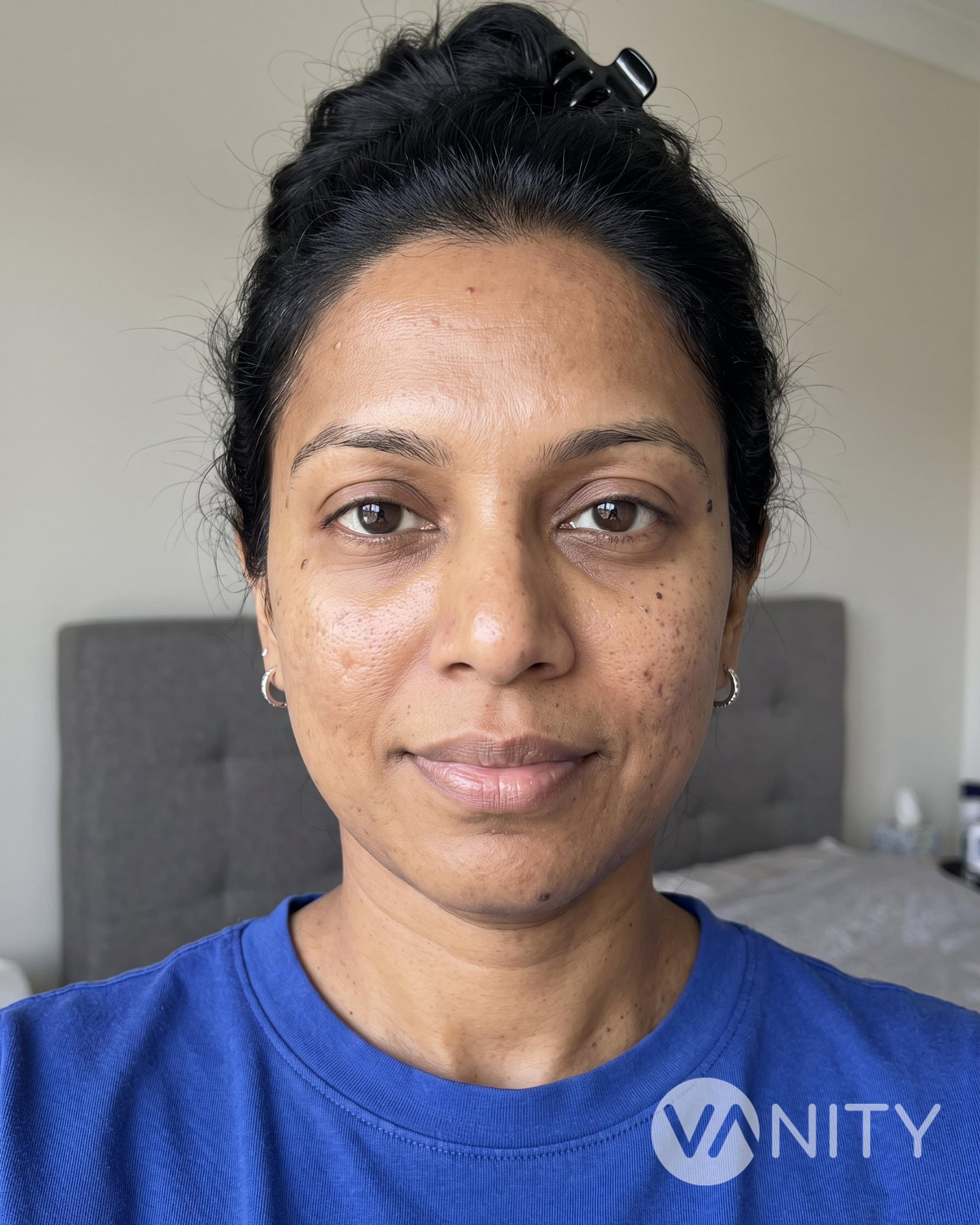




Exosome therapy: what it is
Exosomes are tiny vesicles — 30 to 200 nanometres — that cells release to send instructions to other cells. They carry proteins, lipids and RNA. Preparations sold for aesthetic use are drawn from fat- or umbilical-cord-derived stromal cells, skin fibroblasts, hair-follicle cells, platelets, or from plant and bovine-milk sources. In practice the preparation is laid onto skin whose barrier has just been opened by microneedling or a fractional laser, or injected into the dermis of the face or scalp. Laboratory work suggests they reverse fibroblast senescence, shift the collagen-to-matrix-metalloproteinase balance, and switch on Wnt signalling in hair follicles. Laboratory work is not the same as proof in people.
This is offered to adults with photoageing, uneven texture, acne scarring, or androgenetic alopecia who want something outside the standard drug list — or an addition to it. We will not present it as settled medicine. The FDA has approved no exosome product for any indication and issued a public safety notification after serious adverse events; products sold with therapeutic claims are unapproved biological drugs. Human evidence is small split-face trials and cohorts that systematic reviewers rate very low-certainty and hypothesis-generating. If you are choosing between exosomes and a treatment with approval behind it, choose the approved one first.
See how it works
From the clinic's channel — the procedure explained in plain terms.
Exosome therapy: techniques we use
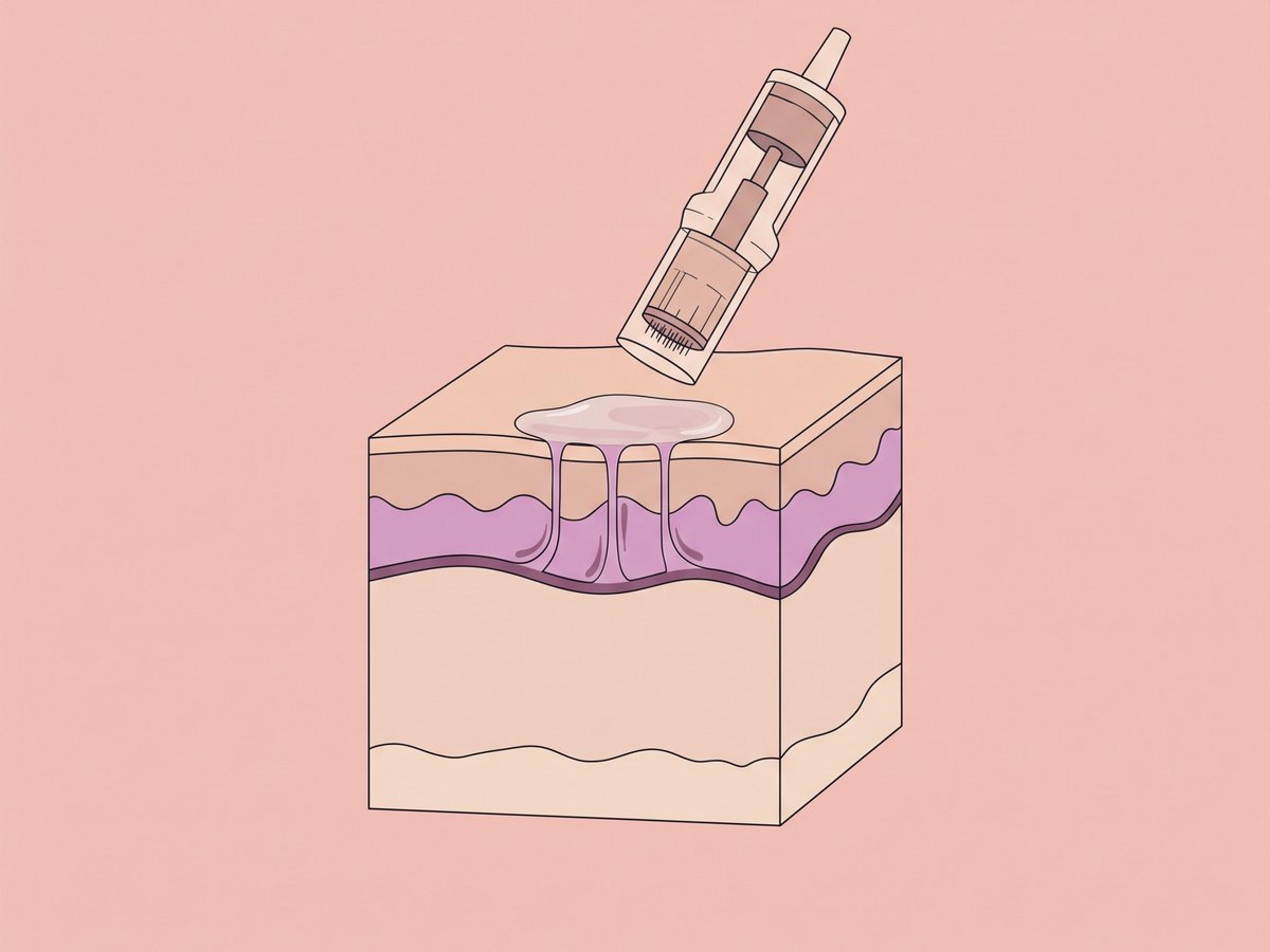
Automated microneedling at roughly 1.0 to 2.0 mm depth, with the exosome preparation applied to the treated field while the channels are still open. This is the most common route in aesthetic practice and the one regulators tolerate — in the United Kingdom it is the only permitted route, because injected exosomes are a medicinal product without marketing authorisation. A 12-week split-face study of adipose stem cell exosomes with microneedling reported better hydration, elasticity and pigmentation than microneedling alone, on small numbers.
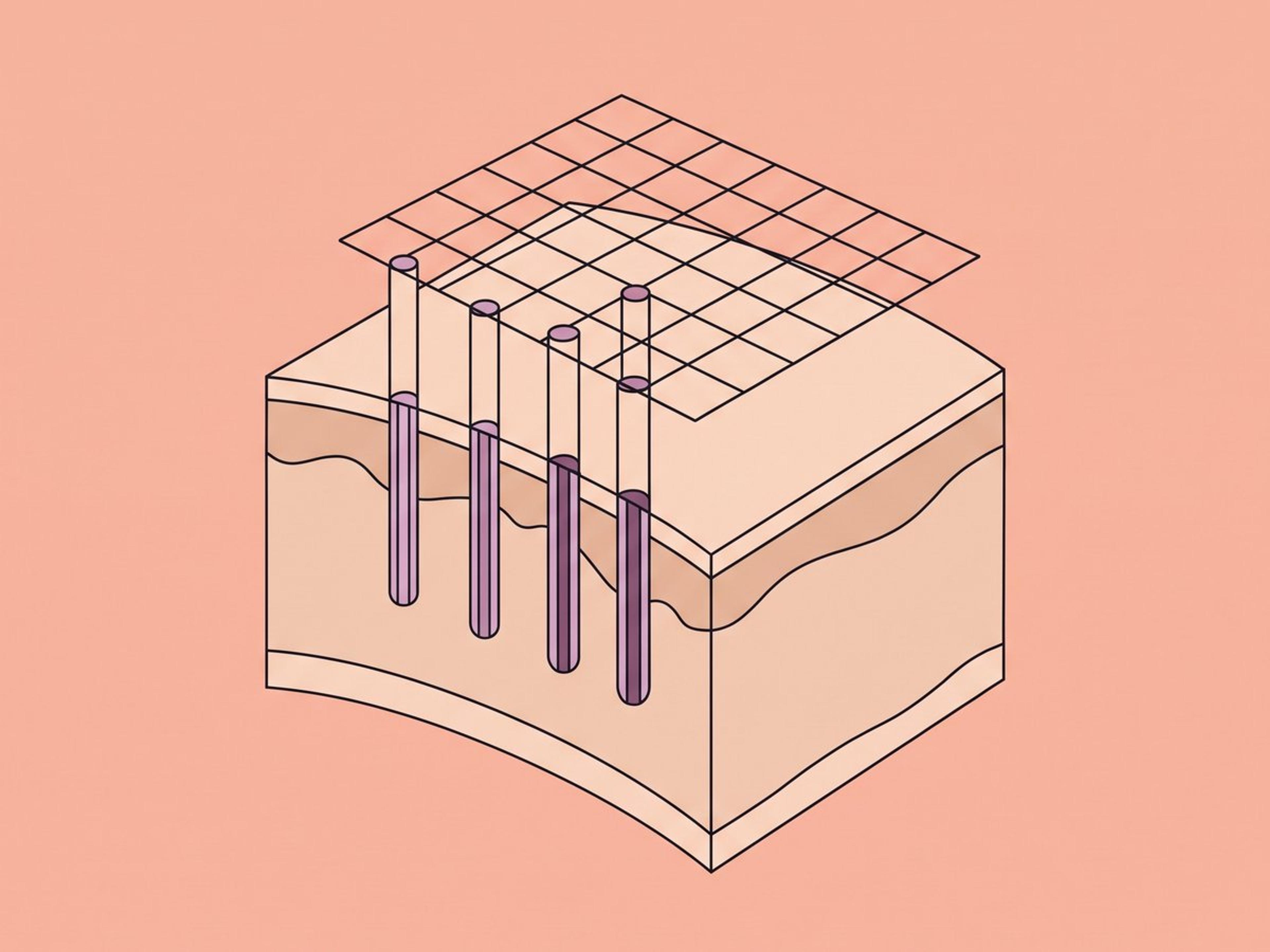
Fractional CO2 laser or radiofrequency microneedling first, then exosomes applied topically — immediately, or across the following days — with the aim of shortening recovery and improving the result. A double-blind split-face randomised trial in acne scarring reported 32.5% improvement with the combination against 19.9% for laser alone. The laser carries its own recovery course and its own risks, entirely separate from the exosome preparation.
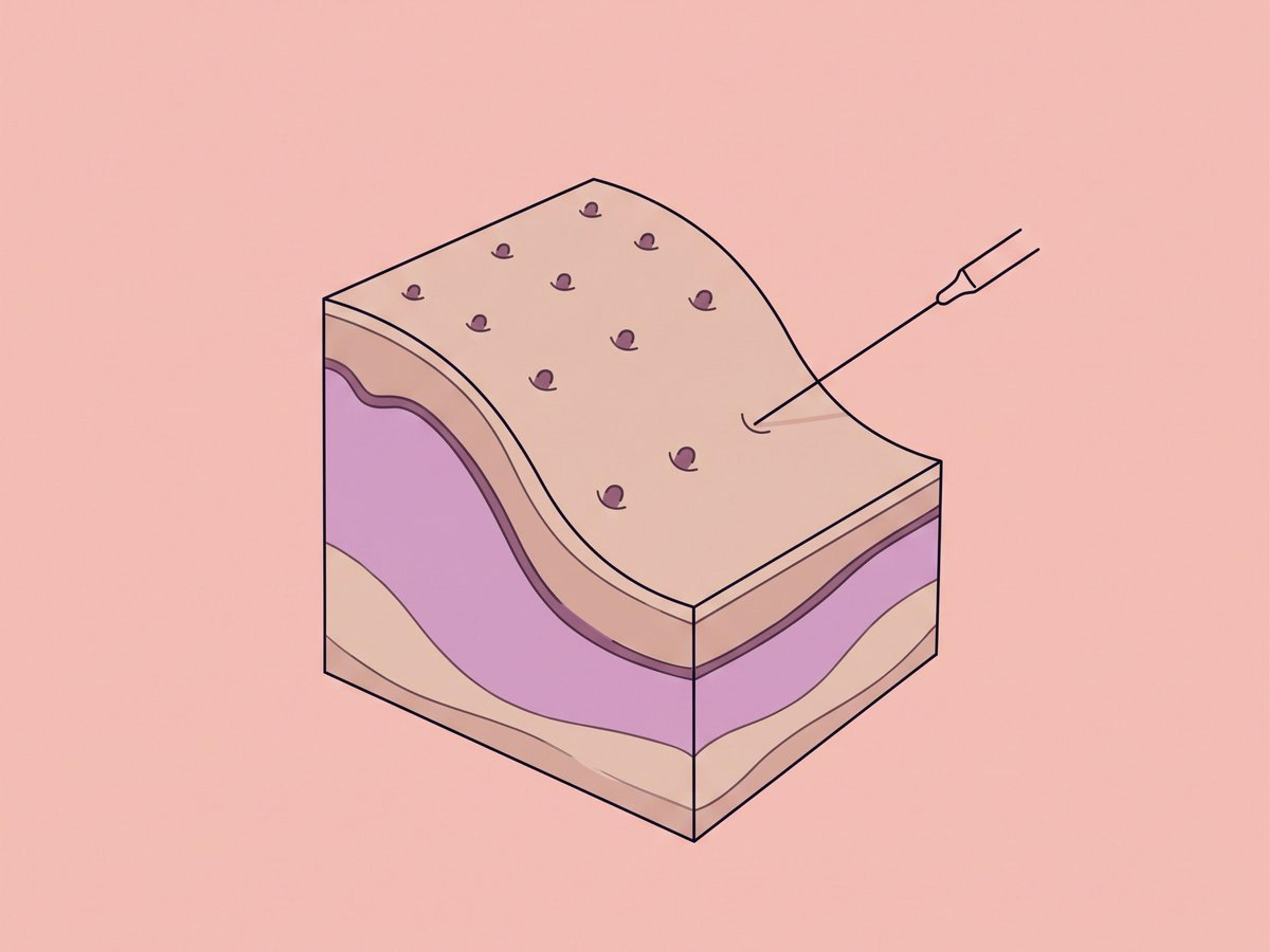
The preparation is delivered in a grid or nappage pattern, roughly 0.01 to 0.1 mL per point at about 1 cm spacing, into the dermis of face or scalp. Cohort data in androgenetic alopecia describe less shedding and increased density and shaft diameter at 4 and 12 weeks, with reported gains of 9 to 31 hairs per cm2 in a small literature. This is the route regulators object to most directly, and the route behind the published complications — a necrosis case and a series of granulomatous nodules both followed intradermal injection.
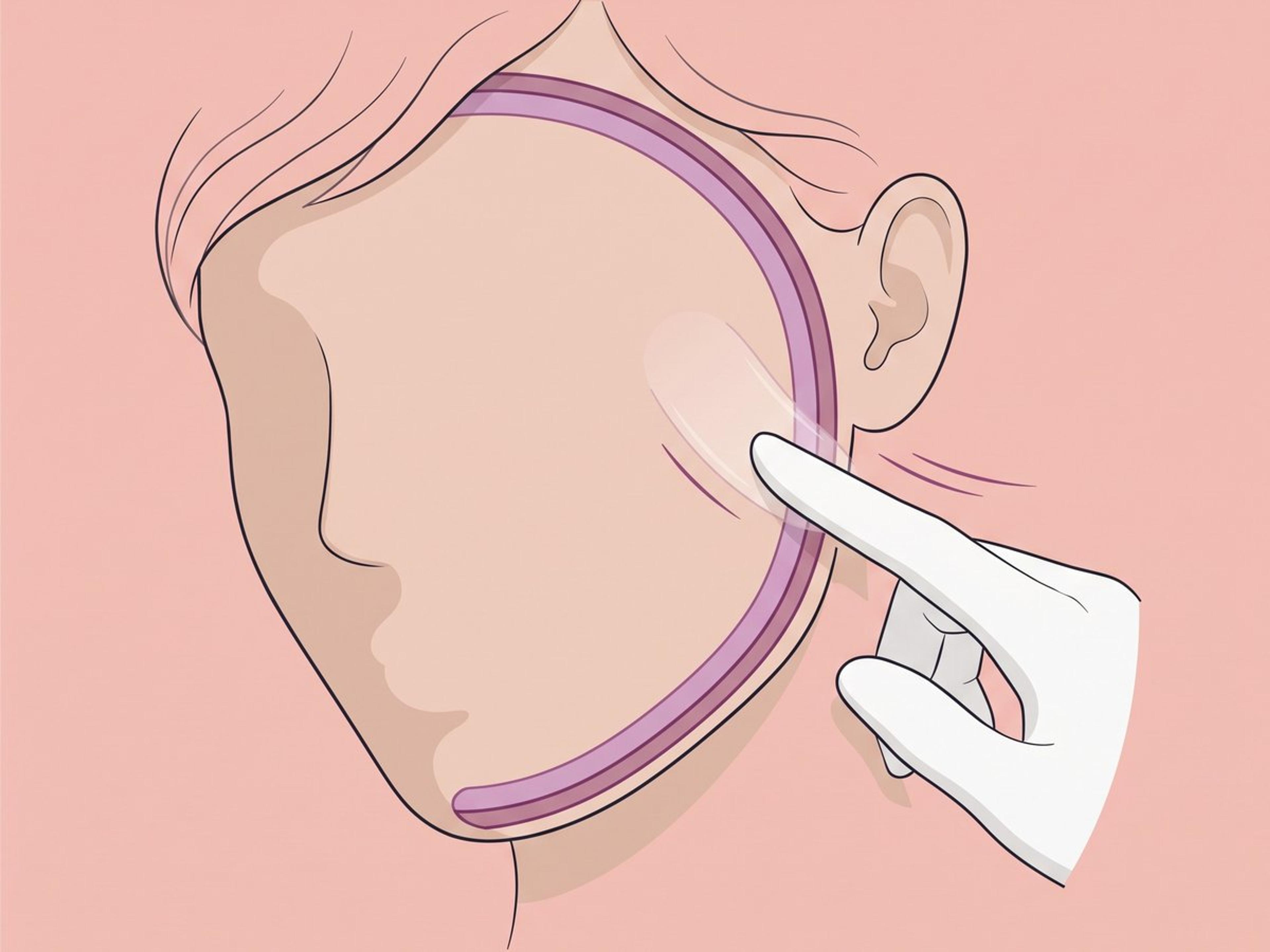
Plant-derived and 'exosome-inspired' formulations sold as cosmetics, applied without breaking the barrier, sometimes in a hydrogel carrier. Only appearance claims are permitted for this category; any therapeutic claim reclassifies the product as a drug. Vesicles of this size do not readily cross an intact stratum corneum, and the evidence here is weaker than for barrier-disrupted delivery.
A session, step by step
Product and route confirmed in writing
Before anything is opened, the source, manufacturer and lot of the preparation go into your notes, and the route agreed at consultation is the route used. With no approved product and no agreed potency standard, that record is the only thing separating a known preparation from an unknown one.
Standardised baseline taken
Photographs under fixed lighting and angle — plus a trichoscopic hair count for scalp work — are captured before the first session. Any change here is gradual and the evidence is weak, so without a baseline you would be judging the result from memory.
Cleansing and topical anaesthetic
The field is cleansed and numbing cream sits for 20 to 30 minutes. This is most of the appointment: the exosome step itself takes minutes, and the clock is set by the delivery method it is bundled with.
The delivery step
Automated microneedling at roughly 1.0 to 2.0 mm, a fractional laser pass, or an injection grid — whichever was agreed. This is the part that carries measurable effects of its own in the published trials, and the part that produces the redness, so recovery follows the delivery method rather than the exosomes.
Exosome preparation applied
The preparation is laid onto the treated field while the channels are still open, or delivered at roughly 0.01 to 0.1 mL per point at about 1 cm spacing if the injected route was chosen. Vesicles of 30 to 200 nanometres do not cross intact stratum corneum in any useful quantity, so timing is what makes topical delivery worth doing at all.
Review, aftercare and escalation instructions
You are checked before you leave and go out with bland cleanser, mineral sunscreen and no actives until the skin surface is intact. You also leave with written escalation instructions and a named contact, because the reported ischaemic case declared itself on day 3 and the nodular reactions surfaced weeks to months later — after any patient has flown home.
Exosome therapy: recovery week by week
- Day 1
Redness, warmth, tightness and pinpoint bleeding where the barrier was opened — mild and transient after topical or mesotherapy delivery, more pronounced after microneedling or fractional laser. Bland cleanser and mineral sunscreen only, no makeup: the channels are still open and everything you put on the skin goes further than usual.
- Days 2–3
Redness and swelling should be settling and makeup is usually acceptable from day 2. Keep away from the gym, sauna, steam room and pool until the surface is intact — sweat and chlorine on freshly opened skin are an infection route, and infection is the complication the FDA notification was built on. Swelling that increases after day 2, or skin that turns dusky or mottled, is the day-3 window to call us rather than wait.
- Week 1
Fine flaking and dryness as the treated layer turns over. Retinoids, exfoliating acids and full exercise generally go back on the table around day 5 to 7, once the surface has closed. Nothing is visible yet, and nothing should be — no published protocol reports change this early.
- Week 4
The earliest point at which anything may show: hair cohorts describe reduced shedding at about 4 weeks, and skin studies report texture and hydration changes before wrinkle depth moves. This is also when the second or third session usually falls, since published schedules space sessions weeks apart across a 6 to 16 week course.
- 3 months
Repeat the baseline photographs and hair count and compare properly. Month 3 is where nearly every published trial stops — roughly 20% reduction in wrinkle depth and about 24% improvement in hair density across small studies — so beyond this point you are in unstudied territory rather than in decline. Firm lumps or nodules appearing in this window have followed intradermal injection in the published series and should be assessed early rather than watched.
Exosome therapy: how to prepare
- Ask what is actually being administered, and get it in writing — cell or plant source, manufacturer, lot number, whether it is human-derived, and its regulatory status in Türkiye. No approved exosome product exists, so this is the only way to know what is going into your skin.
- Settle the route before you book. Topical application after microneedling is what regulators tolerate; intradermal injection is an unapproved biologic in the United States and carries no United Kingdom marketing authorisation. Ask directly which is planned, and note that at least one published complication involved a product whose own instructions said topical, not injected.
- Follow standard pre-microneedling instructions — stop retinoids and exfoliating acids for 3 to 5 days, avoid sun and self-tanners, and tell us about anticoagulants, recent isotretinoin, cold sores (antiviral cover may be needed), keloid tendency, and any active skin infection or inflammatory acne.
- Have standardised baseline photography taken, and for scalp treatment a trichoscopic hair count. The evidence is weak and any change is gradual — an objective baseline is the only honest way to tell later whether anything happened.
- Talk to a dermatologist about the approved alternatives first — minoxidil, finasteride, spironolactone and low-level light therapy for hair; retinoids, peels, microneedling and energy devices for skin — and decide whether exosomes are an addition to those or a replacement for them.
- Arrange your aftercare at home before you fly. Confirm who manages a complication where you live, whether we may correspond with that clinician, and what our revision terms are.
Exosome therapy: risks
Every operation carries risk. We name them so you can ask the right questions.
- Unverified product identity, purity and potency. No exosome product has FDA approval, many preparations are made outside GMP conditions, and reported complications usually trace back to non-sterile or mischaracterised products rather than to properly manufactured exosomes.
- Infection, including bacterial infection. The FDA issued a public safety notification after serious adverse events in patients given unapproved exosome products, and has pursued enforcement against manufacturers and clinics.
- Local reactions from the delivery method — redness, swelling, dryness, pinpoint bleeding, post-inflammatory hyperpigmentation, and prolonged crusting after fractional laser.
- Delayed reactions after intradermal injection. Published cases describe granulomatous nodules, atrophic scarring and hyperpigmentation appearing weeks to months later, resolving only incompletely despite steroids, laser and surgery. One reported case of ischaemic necrosis declared itself on day 3.
- Hypersensitivity and immunogenicity from manufacturing residuals or donor-derived biological material. Donor screening for HIV, hepatitis B and C, syphilis and prion disorders is not something a patient can verify.
- Unknown long-term safety. Published cohorts total a few dozen patients — far too few to detect events occurring at 2% or less — and theoretical concerns about proliferative signalling remain unresolved.
- Efficacy uncertainty and opportunity cost. Systematic reviewers rate the clinical evidence very low-certainty, so paying for repeated sessions may delay treatments with approval and stronger data behind them.

Exosome therapy in Turkey: what to expect
Exosome therapy is a day case with no wound, no dressing and no general anaesthetic — so the logistics are simple. What is not simple is the treatment itself. A course cannot be compressed into one trip, and the complications that matter in the published literature appear after you have flown home. We plan around both facts rather than around the convenience of a single visit.
Before you fly
You speak to the physician who will treat you, and we agree the delivery route and the product in advance. In Türkiye this is a medical act: under the Ministry of Health regulation on private outpatient facilities, injectable and device-delivered aesthetic procedures may be performed only by a physician acting within their scope, in a licensed facility. A beauty-salon certificate confers no authority to inject — and the published case series of granulomatous nodules and atrophic scarring arose from treatments given in salons and non-dermatology settings. Verify the physician's specialty registration, not the brand on the door.
At the clinic
One session runs 45 to 60 minutes including numbing time. The exosome preparation itself is quick; most of the appointment is the delivery step it is bundled with. Most exosome therapy in Istanbul is delivered in standalone clinics holding no accreditation at all. Confirm where your treatment will actually take place.
Recovery in Istanbul
Plan 2 days and 1 hotel night, with a single review before you leave. Downtime belongs to the delivery method, not to the exosomes — topical or mesotherapy delivery leaves redness for a few hours, while microneedling or fractional laser leaves redness, pinpoint bleeding and mild swelling for roughly 24 to 48 hours, with makeup usually acceptable from day 2. Bland cleanser and mineral sunscreen only until the skin surface is intact.
Heading home
There is no procedure-related flight restriction — no wound, no drain, no immobility — so your flight risk is your ordinary flight risk. We still prefer you fly a day later, and the reason is observation rather than thrombosis: the reported necrosis case declared itself on day 3, and the nodular reactions surfaced weeks to months afterwards. You leave with written escalation instructions and a named contact, because the events that matter will happen after you are home.
- United Kingdom
- £350 – £800
- United States
- $600 – $1,500
- Western Europe
- €400 – €1,000
Published typical ranges for orientation — confirm with a local quote.
Exosome therapy: frequently asked questions
Is exosome therapy FDA-approved?
No. The FDA has approved no exosome product for any indication, and issued a public safety notification about unapproved exosome products after reports of serious adverse events. Exosomes intended to treat disease or affect the structure or function of the body are regulated as drugs and biologics, requiring an IND and a Biologics License Application, and warning letters have gone to manufacturers marketing them without one.
Does exosome therapy regrow hair?
The human evidence is thin. A 2025 Dermatologic Surgery review of the hair literature found only 9 clinical trials covering 125 treated patients, and a 2026 meta-analysis of 39 human trials reported roughly 24% improvement in hair density — from small, mostly non-randomised studies with 6 to 12 weeks of follow-up. Reported density gains of 9 to 31 hairs per cm2 come from that same limited literature. Randomised controlled trials are lacking.
Does it do anything for skin ageing?
A 2026 systematic review and meta-analysis in the Aesthetic Surgery Journal found roughly 20% reduction in wrinkle depth across 39 human trials, with a low reported adverse-event rate. The same authors flag small samples, non-randomised designs, heterogeneous products and follow-up of only 6 to 12 weeks. Several of the better results come from exosomes combined with microneedling or fractional laser, both of which do something on their own.
Should exosomes be injected or applied on top of the skin?
Topical application immediately after microneedling or fractional laser is the standard and lower-risk route, and in the United Kingdom it is the only permitted one, since the MHRA treats injected exosomes as a medicinal product and none holds an authorisation. Intradermal injection is used in some practices, particularly for scalp work, but it is an unapproved biological drug in the United States and it is the route behind the published complication reports.
What are exosomes made from?
Sources vary widely and the cargo differs meaningfully by origin. Human-derived preparations use fat- or umbilical-cord-derived stromal cells, dermal fibroblasts, dermal papilla cells or platelets; non-human ones use bovine colostrum and milk, or plant vesicles from rose, ginger, ginseng and grapefruit. With no approved product and no agreed potency standard, two products both labelled 'exosomes' may contain very different things.
Is it safe?
Published studies report mild, transient local reactions that settle without treatment, and the 2026 meta-analysis records a low adverse-event rate. That reassurance has limits — the total clinical population studied is small, at least 10 serious adverse events have been reported across dermatologic use, and the events that prompted the FDA notification were linked to unapproved products handled outside GMP conditions. Long-term safety data do not exist.
How many sessions are needed, and can I do them all in one trip?
No. Published protocols run 6 to 16 weeks with sessions spaced weeks apart, and hair studies are typically 12-week schedules. An international patient realistically has one session per visit, so the honest options are repeat trips, an extended stay, or a first session here with the rest delivered at home. A clinic offering a full course inside a 5-day package is not following any protocol in the literature.
How long do the results last?
Nobody knows. Follow-up in nearly every published study stops at 3 months, and durability beyond that is essentially unstudied. Any clinic quoting you a result that lasts a year is quoting something the evidence does not contain.
Who should not have exosome therapy?
Pregnancy and breastfeeding are an outright exclusion — no exosome preparation has been studied in either, and the published trials excluded them. We also decline while there is an active skin infection, inflamed acne or a cold sore in the treatment field (herpes needs antiviral cover before the barrier is opened), within 6 months of isotretinoin, and where there is a keloid or hypertrophic scarring tendency in the area to be needled or lasered. Uncontrolled diabetes and immunosuppression raise the infection risk of opening the skin barrier beyond what this treatment's evidence justifies, and a clotting disorder or anticoagulant therapy rules out the injected route in particular. Active or recent cancer is an exclusion here as well: the laboratory case for exosomes rests on proliferative signalling, that signalling has never been studied in people with a malignancy, and this is not the treatment on which to find out. Tell us about allergies to the source material too — some preparations are bovine-milk or plant-derived.
What should make me contact the clinic afterwards?
Redness and pinpoint bleeding from microneedling or laser should be fading by 48 hours. Contact us the same day — not at your next appointment — if redness or warmth spreads beyond the treated field, if swelling increases after day 2 instead of settling, if there is pus or weeping or crusting that keeps rebuilding, if you run a fever, or if the pain is out of proportion to what was done. Skin that turns dusky, white or mottled, especially with sharp pain in the first days after an injected session, needs to be seen within hours rather than days: the reported ischaemic necrosis case declared itself on day 3. Later on, watch for firm lumps or nodules appearing weeks to months afterwards — these have followed intradermal injection in the published series, and they are easier to manage the earlier they are assessed. You go home with a named contact and written escalation instructions for exactly these situations, because most of them will happen after you have flown.
Is this stem cell therapy?
No, and the distinction cuts both ways. Exosomes are cell-free vesicles — 30 to 200 nanometres of protein, lipid and RNA released by cells — so nothing living is transplanted, nothing engrafts, and the rejection and tumour-formation concerns specific to transplanted cells do not apply. But cell-free does not mean approved, standardised or proven. Most aesthetic preparations are derived from stem cells while containing none, and the FDA still regulates them as biological drugs when they are sold with therapeutic claims. A clinic marketing exosomes to you as 'stem cell treatment' is being loose either with the words or with the regulations — either way, ask them the source and manufacturer questions instead.
How much does exosome therapy cost in Turkey?
€200 to €700 with us, confirmed after a consultation rather than quoted blind. For comparison it is typically £350 – £800 in the United Kingdom, $600 – $1,500 in the United States and €400 – €1,000 in Western Europe. Per session, and a course is normally several. The evidence is still early, so we price it as an adjunct rather than as a treatment that stands on its own.
Sources
- [1]Public Safety Notification on Exosome Products · U.S. Food and Drug Administration · 2019
- [2]Systematic review of exosome treatment in hair restoration: Preliminary evidence, safety, and future directions · Journal of Cosmetic Dermatology (PubMed) · 2023
- [3]Exosome-Based Therapies for Alopecia Areata: A Systematic Review of Clinical and Experimental Evidence · International Journal of Molecular Sciences (PMC) · 2025
- [4]Exosomes in Skin Rejuvenation: Systematic Review of Anti-Aging Effects and Clinical Applications · Dermatology Practical & Conceptual (PMC) · 2026
- [5]Clinical Advances in Exosome-Based Therapies for Aesthetic Medicine: A Systematic Review and Meta-analysis of Human Clinical Trials · Aesthetic Surgery Journal · 2026