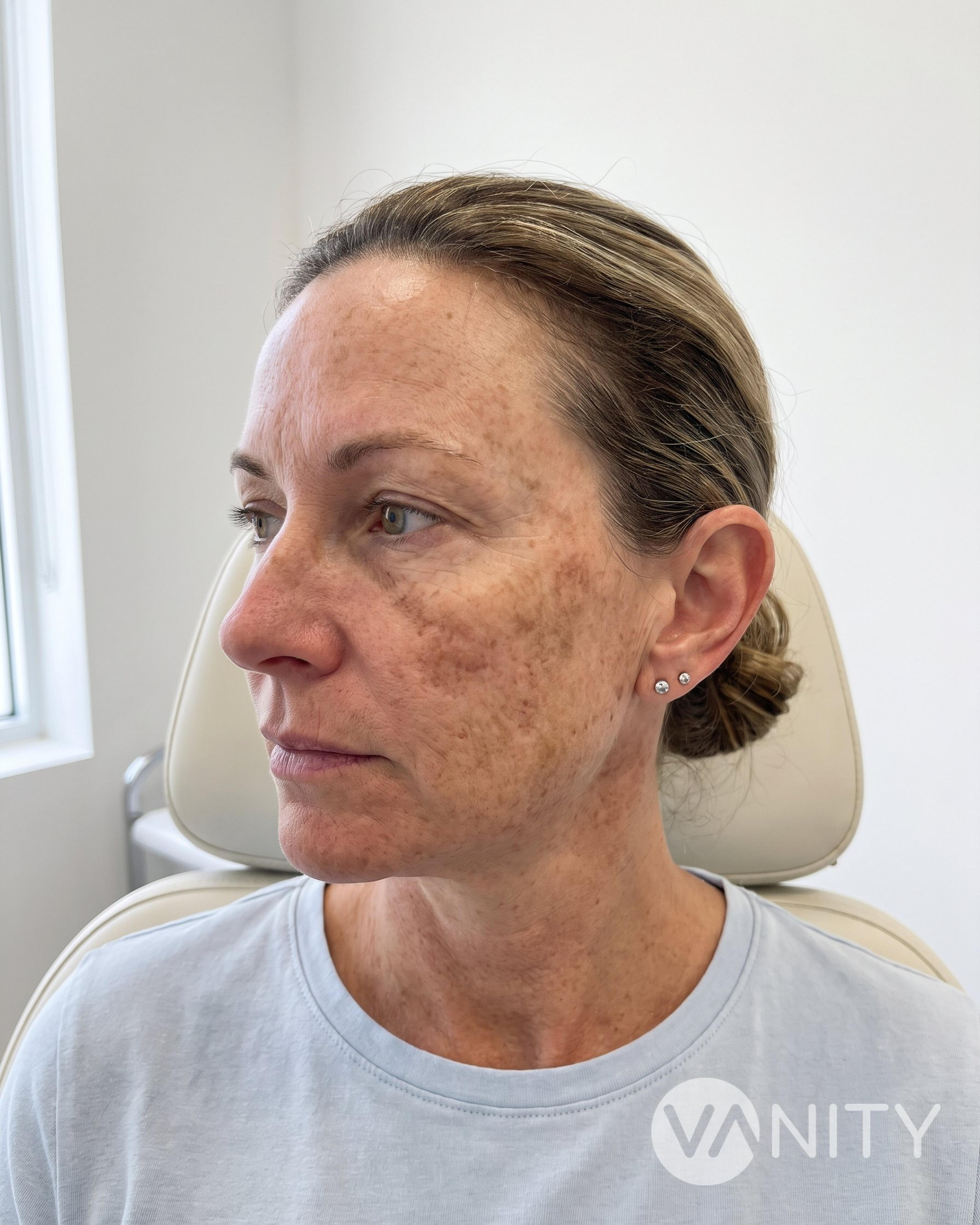
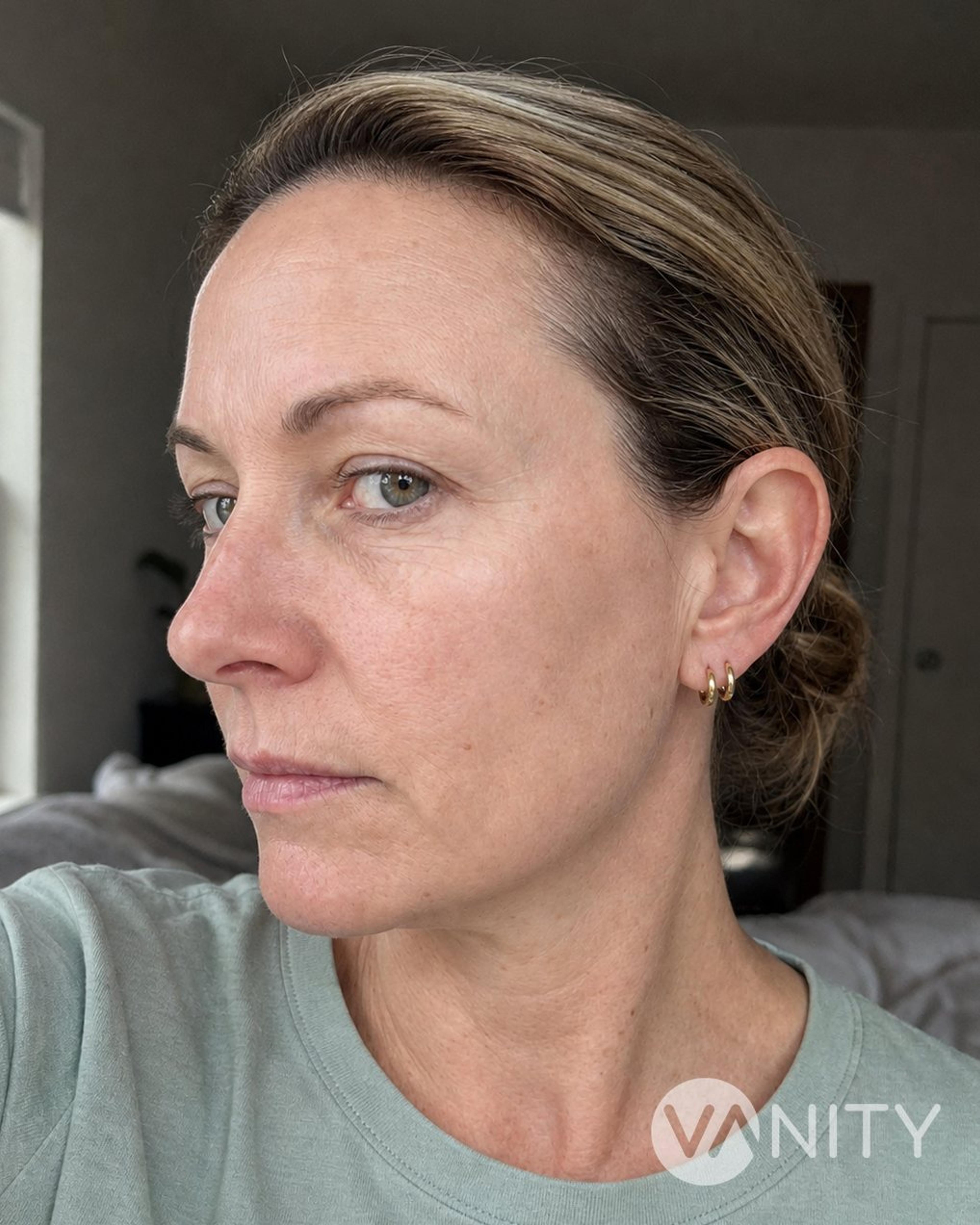



Fractional laser: what it is
Fractional resurfacing treats only a fraction of the skin surface at a time. The laser is scanned across the area as thousands of microscopic beams, each one making a narrow vertical column of controlled thermal injury — a microthermal treatment zone — of set width, depth and density. Non-ablative devices coagulate that column and leave the surface barrier intact; ablative fractional devices vaporise it outright. Either way, the untreated skin between the columns supplies the cells that resurface the top layer, which is why downtime runs in days rather than the 2 weeks that fully ablative resurfacing demands. Collagen remodelling inside the treated columns carries on for months after the visible healing is finished, so texture and scar depth keep improving after the redness has gone.
It suits photoaging, mottled pigmentation, actinic damage, fine to moderate lines, melasma, and atrophic acne, surgical and traumatic scars. Deep static wrinkles and genuine skin laxity respond poorly — those are surgical problems, and we will say so rather than sell you a course of laser. Active acne, an active skin infection, or a recent isotretinoin course all mean waiting. Darker Fitzpatrick phototypes can be treated — there is level 1 and level 2 evidence for fractional lasers in rejuvenation, acne scars and melasma in skin of colour — but we use non-ablative settings, lower densities and longer intervals there, because the risk of post-inflammatory hyperpigmentation rises sharply with phototype.
Fractional laser: techniques we use
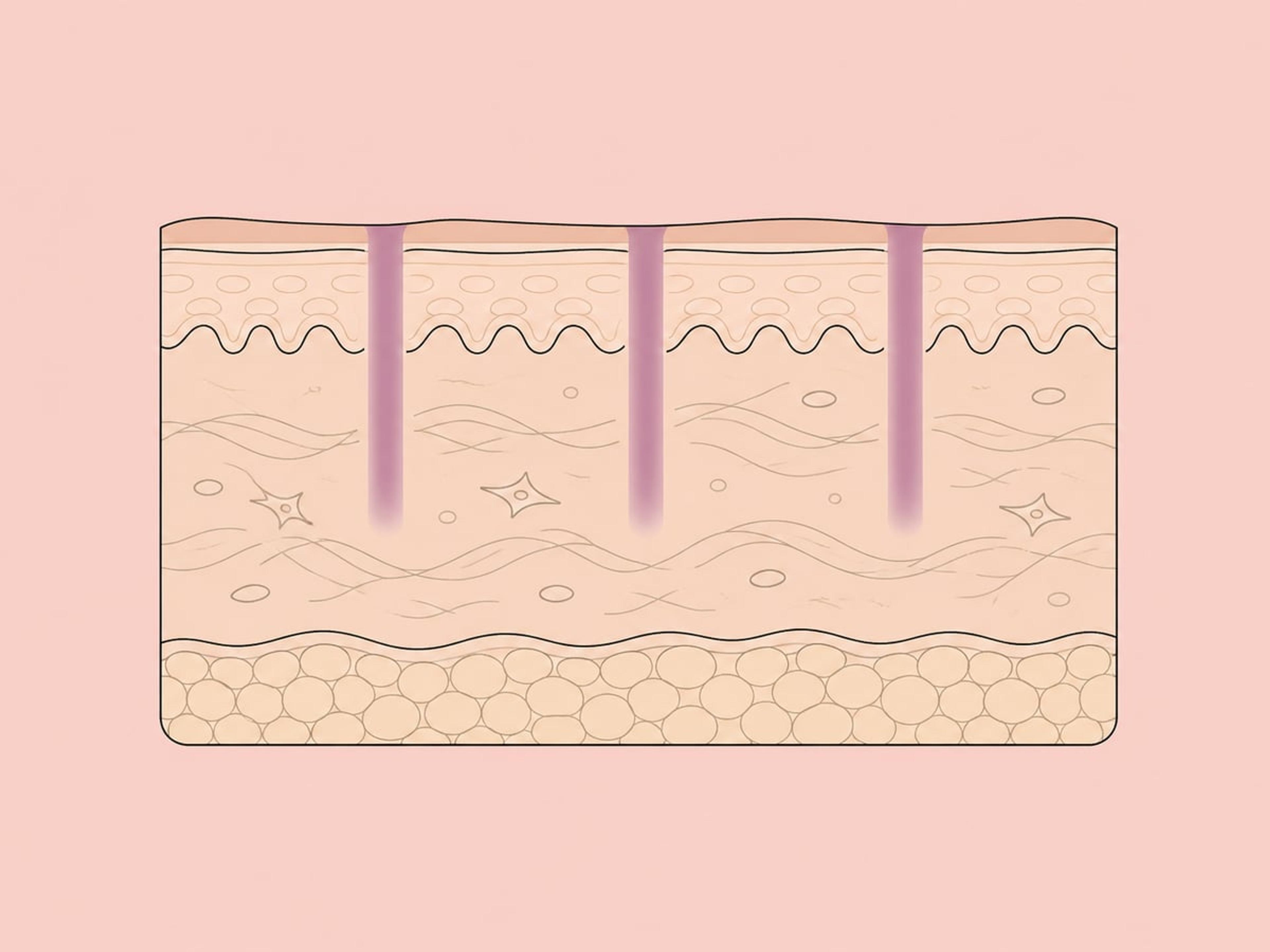
Mid-infrared erbium-glass and diode devices at 1,440, 1,540 and 1,550 nm are absorbed by water in the dermis and coagulate microscopic columns without removing the epidermis. Downtime is 1 to 3 days of redness and mild swelling, and a course of 3 to 6 sessions is usual. In fractional acne-scar studies this class produced scar improvement in the 26-50% range.
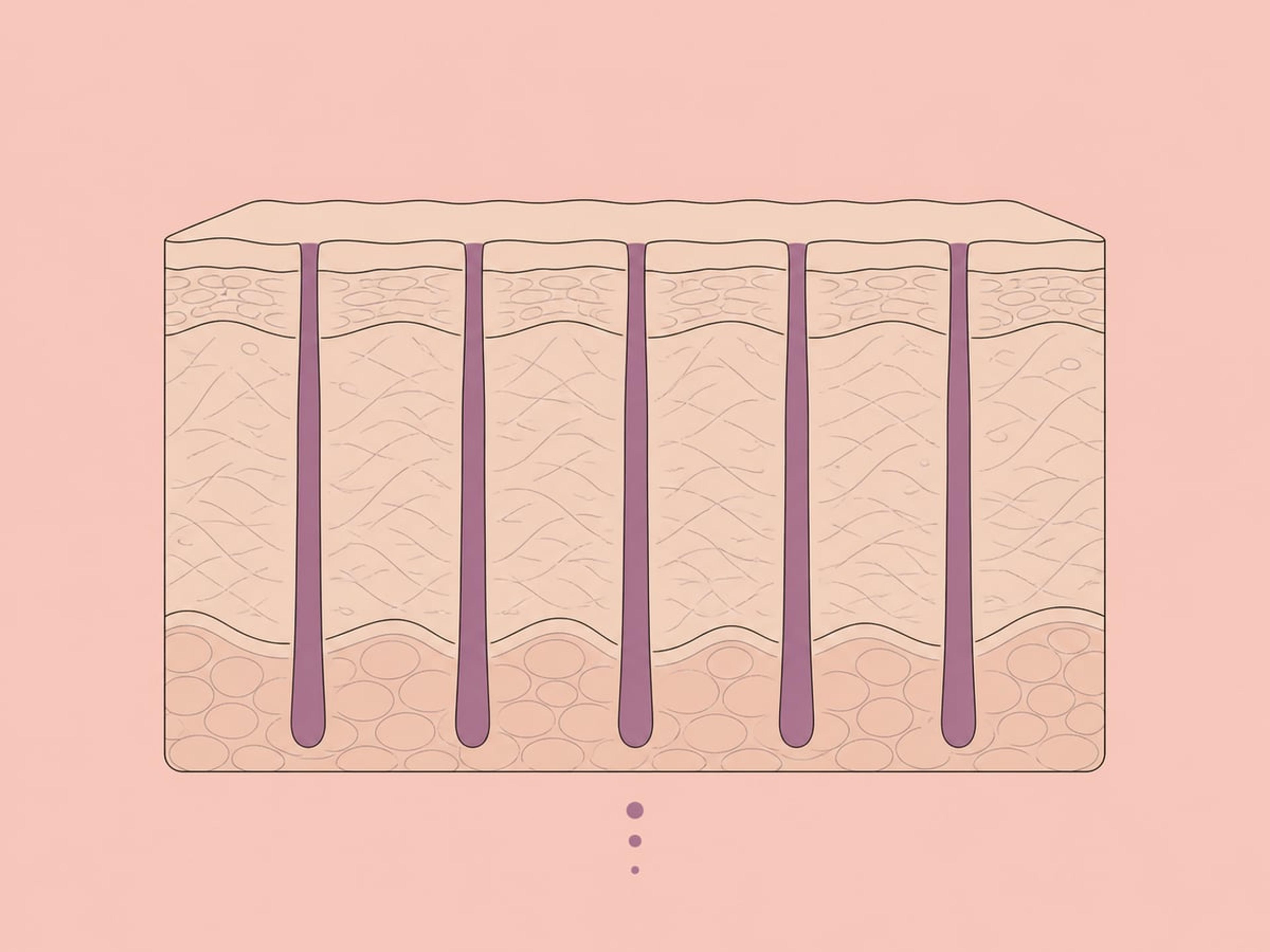
The carbon dioxide laser vaporises microcolumns through the epidermis into the dermis, leaving a rim of residual thermal damage that drives collagen contraction and remodelling. It is the most powerful fractional option for atrophic scarring and photoaging, with reported acne-scar improvement of 26-83%. It also carries the highest rates of prolonged redness and post-inflammatory hyperpigmentation, and it costs you 7 to 10 days of crusting rather than 3 days of redness.
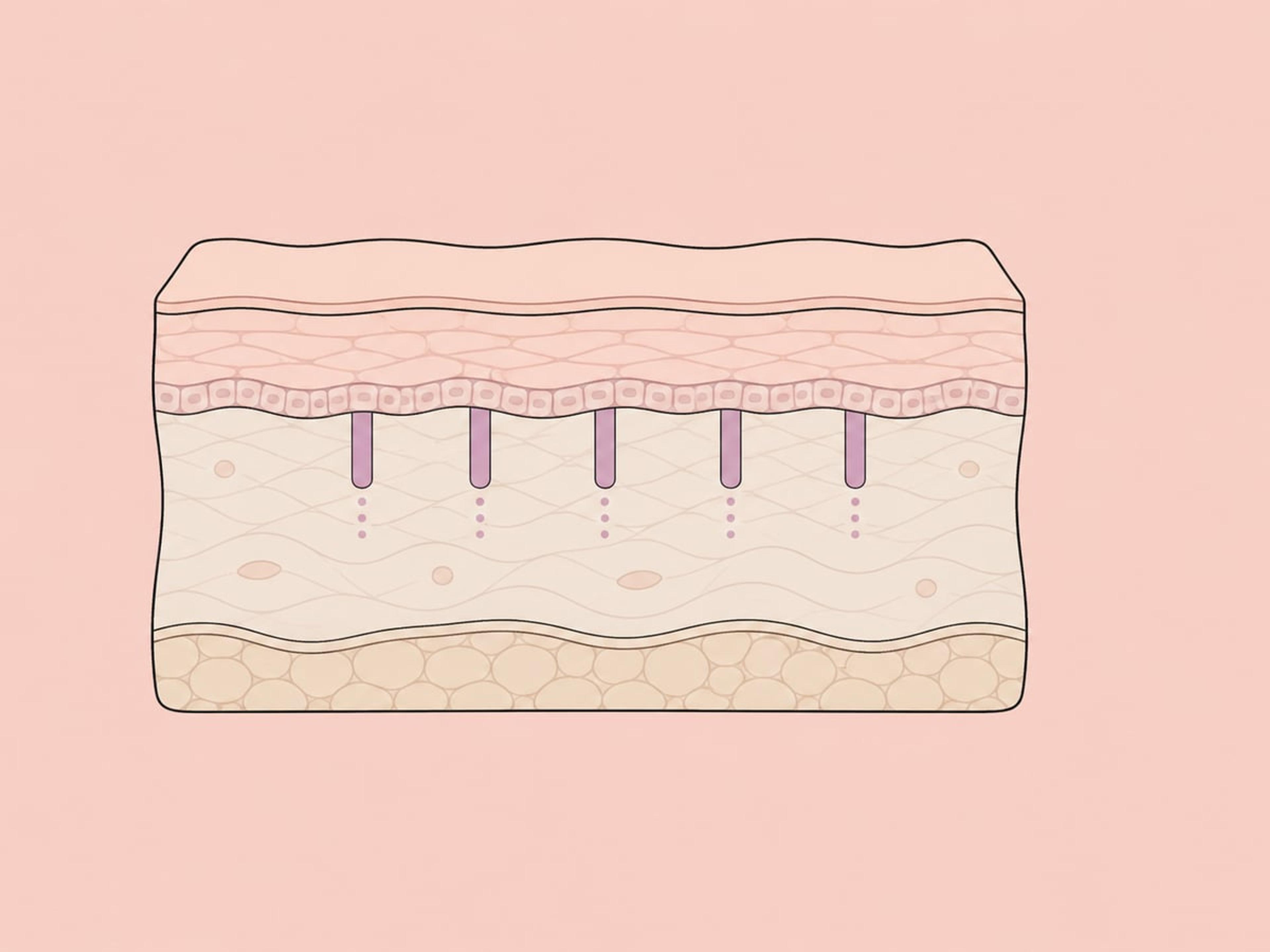
Erbium:YAG sits at the water absorption peak, so it ablates tissue with less thermal spread than CO2. Healing is generally faster and side effects fewer at comparable depths, at the cost of less collagen tightening. We reach for it in more superficial resurfacing and where the pigmentary risk is higher.
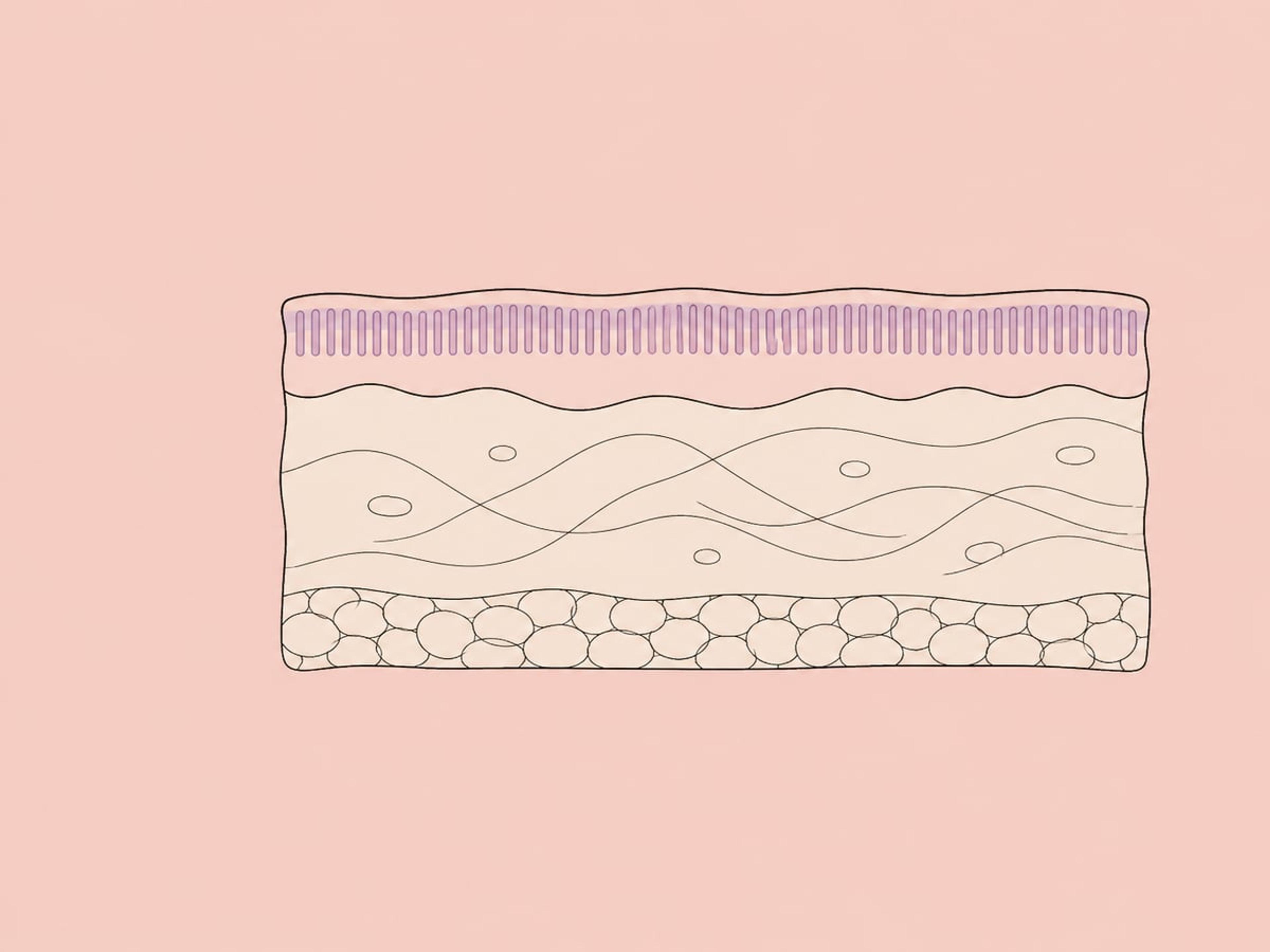
The 1,927 nm thulium wavelength has high water absorption and produces wider, shallower treatment zones confined largely to the epidermis and papillary dermis. That makes it a pigment tool rather than a wrinkle tool — lentigines, actinic damage, melasma and general dyschromia — with minimal downtime.
The session, step by step
Skin assessment and settings
Before any energy is delivered, a dermatologist grades your Fitzpatrick type and the pattern of photodamage or scarring, then sets wavelength, depth and density from that. Those parameters, more than skin type alone, drive the risk of pigment change — which is why darker phototypes are test patched first and treated at conservative fluence.
Prophylaxis and priming
Antiviral cover starts about 2 days ahead for anyone with a history of cold sores, because fractional wounding of facial skin can trigger a widespread outbreak. Any priming regimen prescribed at consultation — a topical retinoid or a pigment-suppressing agent — is already running by the time you arrive.
Anaesthesia
Topical numbing cream is applied and left to work for roughly 45 to 60 minutes; full-face ablative CO2 work may instead call for local infiltration or IV sedation. Comfort is a clinical matter here, not a courtesy — a patient who cannot hold still gets uneven density.
The pass
The handpiece is scanned across the area in measured passes, placing thousands of microscopic columns and sparing the skin between them, with contact cooling or cold air running alongside. It takes 30 to 90 minutes depending on the area, and feels like building heat with an intermittent snap.
Dressing and aftercare
You leave the same day with an occlusive dressing, ointment, cool compresses and antibacterial cover already under way. The barrier stays open until the treated columns re-epithelialise, so for the first few days the ointment matters more than any active ingredient in it.
Wound check, then the interval
We see you once before you fly, to confirm the skin is closing cleanly rather than judging it from a photograph. Non-ablative courses then resume at roughly 4-week intervals; ablative fractional treatment is often finished in 1 to 3 sessions.
Fractional laser: recovery week by week
- Day 1
The skin is hot, tight, red and swollen, much like a strong sunburn, and ablative treatment may weep. Sleep with your head raised and use cool compresses and the prescribed ointment — heat and gravity are what make the swelling worse overnight.
- Days 2–4
Swelling settles and the surface takes on a fine bronzed, sandpaper texture as the treated columns work their way out. Itching and stinging are normal; picking is not, because a column pulled out before it is ready is the one that scars.
- Week 1
Non-ablative redness has usually gone by day 3, while ablative crusting sheds over days 7 to 10. Once the surface is intact you can wear mineral makeup and return to light exercise — until then, sweat and gym heat on an open barrier invite infection. Daily broad-spectrum SPF 50 starts now and does not stop.
- Weeks 2–6
Residual pinkness fades, and full exercise, swimming and saunas are back once the skin has completely healed. This is also the window in which post-inflammatory hyperpigmentation shows up if it is going to — tell us early, because it is treatable and settles far more easily at 3 weeks than at 3 months. The next session of a non-ablative course usually falls around week 4.
- 3–6 months
Collagen remodelling inside the treated columns runs for 3 to 6 months, so texture, pigment and scar depth keep improving long after the redness has gone — this, not week 3, is the point at which to judge a session. Background redness after CO2 fades over 2 to 3 months, occasionally 6.
Fractional laser: how to prepare
- Avoid tanning, sunbeds and heavy sun exposure for at least 4 weeks before treatment — an active tan raises the pigmentary complication rate substantially.
- Tell us about any history of herpes simplex or shingles in the treatment area. Antiviral prophylaxis is started before the session — conventionally 2 days ahead — and continued through re-epithelialisation, usually 5 days after.
- Stop photosensitising medications such as doxycycline and minocycline about 72 hours beforehand, and disclose every topical, supplement and anticoagulant you take.
- Disclose recent isotretinoin use. Resurfacing is deferred after a completed course — UK dermatology guidance advises a delay of at least 1 year.
- No deep chemical peels, dermabrasion or other resurfacing for 4 weeks before, and follow any priming regimen we prescribe, such as a topical retinoid or a pigment-suppressing agent.
Fractional laser: risks
Every operation carries risk. We name them so you can ask the right questions.
- Post-inflammatory hyperpigmentation — the most common complication, and strongly phototype-dependent. Reported in up to 92.3% of ablative fractional acne-scar patients, against about 13% with non-ablative fractional treatment.
- Prolonged redness and swelling — days after non-ablative treatment, but potentially weeks to 3 months after ablative fractional resurfacing.
- Herpes simplex reactivation — fractional wounding of facial or perioral skin can trigger a widespread outbreak, reported in roughly 0.3-2% of cases. This is why antiviral cover is standard for anyone with a history of cold sores.
- Bacterial or candidal infection of the healing wound, reported in about 0.1% of cases, showing as delayed healing, pustules, crusting or increasing pain.
- Scarring, including hypertrophic scarring — uncommon on the face, but a recognised risk at higher densities and on the neck, chest and hands, where the structures skin heals from are sparse.
- Delayed hypopigmentation, and milia or acne-like eruptions during the healing phase.

Fractional laser in Turkey: what to expect
Most of what matters about this trip is decided before you land. The appointment itself is under an hour and you sleep at your hotel the same night — the questions worth settling first are which modality you are having, how many sessions the plan actually needs, and who will be operating the laser.
Before you fly
Fractional laser is priced per session, per area, and one session is rarely the whole treatment. A non-ablative course for atrophic acne scarring runs to 4 or 5 sessions about a month apart, sometimes 6 or more; ablative fractional CO2 is more often 1 or 2. So decide with us in advance whether you are travelling for the full course or having the first session here and the rest at home, and ask which wavelength and what density we intend to use — you are entitled to a specific answer. We would also rather schedule you in autumn or winter than in July or August. And before you book, arrange a named contact and a route to be seen or cultured once you are home, because healing that stalls needs a real clinician, not a photograph.
At the clinic
This is a day case. We begin with the dermatology consultation and a Fitzpatrick and photodamage assessment, test patch where the phototype or indication warrants it, then numb the area with topical anaesthetic — local infiltration or IV sedation only for full-face ablative work. The session runs 30 to 90 minutes depending on the area treated. You leave the same day with an occlusive dressing, your aftercare products, and antiviral and antibacterial cover already under way.
Recovery in Istanbul
Plan on 5 days in Istanbul and 4 hotel nights, with 1 wound-check visit with us before you go. Only the first 48 to 72 hours genuinely need to happen here. Day 1 is hot, red and swollen, much like a strong sunburn, and ablative treatment may weep — you sleep with your head raised and use cool compresses and ointment. Over days 2 to 4 the swelling settles and the skin takes on a fine bronzed, sandpaper texture as the treated columns shed; itching and stinging are normal. The rest of the healing is portable, which is why the stay is shorter than the downtime: non-ablative redness settles in 2 to 3 days, ablative crusting takes 7 to 10, and background redness after CO2 fades over 2 to 3 months, occasionally 6.
Heading home
Day 3 is the day we would put you on a plane — not because flying is unsafe earlier, but because it keeps the first wound check in the room rather than in a photograph. There is no clotting restriction here: no incision, no sutures, no drains, no bed rest, so the conditions that create a fly-home window after surgery simply are not present. The 24-hour figure exists only to cover IV sedation, if it was used. The genuine in-flight problem is the cabin — very low humidity on skin that is still re-epithelialising. Carry the prescribed occlusive emollient in hand luggage, reapply it hourly, and keep the window shade down.
Checking a clinic in Turkey
Turkey rewrote its medical-tourism rules on 26 April 2025, replacing the 2017 regulation. Any facility treating international patients must now hold an international health tourism authorisation certificate, register on the Ministry of Health's HealthTürkiye portal, and carry complication insurance for the procedures it performs; hospitals and medical centres also had to complete TÜSKA accreditation by the end of that year. Facilities are required to publish that certification — so you can check ours, and you should check anyone else's before you pay a deposit.
For injectable and device treatments the single question that matters is who holds the needle. Turkish law restricts these to physicians working inside their specialty competence, in a licensed facility — so ask for the treating doctor by name and for their Turkish Medical Association registration, not for the clinic's brochure. Ask what product is being used and to see the box. A price well below the market usually means a diluted product, an unlicensed one, or someone who is not a doctor.
Most nationalities enter Turkey visa-free or on an e-Visa for a stay of this length, with a passport valid at least six months. Confirm the rule for your own passport, and build the return flight around the last clinic visit rather than fixing it in advance.
- United Kingdom (per session)
- £500 – £2,500
- United States (per session)
- $1,000 – $3,000
- Western Europe (per session)
- €600 – €2,500
Published typical ranges for orientation — confirm with a local quote.
Fractional laser: frequently asked questions
How many fractional laser sessions will I need?
Because each pass treats only a fraction of the surface, non-ablative fractional resurfacing is normally a course of 3 to 6 sessions spaced several weeks apart — for atrophic acne scarring the literature describes 4 or 5 about a month apart, sometimes more, with the clearest change appearing in the last few. Ablative fractional treatment is more aggressive per session and often reaches its result in 1 to 3. The number depends on the indication, the device, the settings and your phototype, and we will give you the honest count at consultation rather than after the first session.
How is fractional laser different from full ablative resurfacing?
Fully ablative CO2 or erbium resurfacing removes the whole epidermis across the treated area. It produces strong results, but it needs roughly 2 weeks of wound care and carries a meaningful risk of scarring and permanent hypopigmentation. Fractional devices treat microscopic columns and spare the skin between them, so healing runs in days — the trade-off is that one session delivers less change, and a course is usually needed.
Does fractional laser work on acne scars?
Yes — it is one of the better-evidenced treatments for atrophic acne scarring. A systematic review of 26 studies found ablative fractional photothermolysis produced 26-83% scar improvement and non-ablative fractional photothermolysis 26-50%. Ablative devices gave the better scar result, but with more pain, longer redness and far higher rates of post-inflammatory hyperpigmentation.
Is fractional laser safe on darker skin tones?
It can be, but device choice and settings matter a great deal. An evidence-based review found level 1 evidence supporting fractional lasers for acne, striae and rejuvenation, and level 2 evidence for acne scars, melasma and surgical scars in Fitzpatrick types IV-VI. A 2023 review of hyperpigmentation after CO2 laser found the rate tracks the energy and density used rather than skin type alone, so we work at conservative density and fluence, use topical anti-inflammatories before and after, and insist on absolute photoprotection. High-quality data in types V and VI remain limited, and we would rather say that than imply otherwise.
How much does fractional laser resurfacing cost in Istanbul?
One session is €300 to €800 with us, depending on the area treated and the device — all-in, covering the consultation, anaesthesia, the session, dressings, prophylaxis and one wound check. That is per session, so a non-ablative course of 4 to 6 multiplies the total. For comparison, the American Society of Plastic Surgeons put the 2023 US average for skin resurfacing at $1,829, but that is the physician fee alone and excludes facility charges, anaesthesia and medication, so it is not a like-for-like number.
How long do the results last?
Collagen remodelling continues for 3 to 6 months, and the gains in texture, pigment and scar depth are durable. The laser does not stop intrinsic ageing or new photodamage, though, and lines driven by repeated muscle movement soften but tend to return over months to years, because the movement does not stop. Daily broad-spectrum sun protection is the single biggest determinant of how long the result holds.
Who will perform the treatment?
In Turkey, medical laser resurfacing is a physician act — performed by a dermatologist or plastic surgeon registered with the Ministry of Health, in a clinic holding a Ministry licence. Dermatology societies specifically advise against laser procedures in non-medical settings such as spas and mall clinics, where training and equipment may be inadequate. Ask any clinic, including us, for the treating physician's specialty registration, and confirm that a physician and not a technician is holding the handpiece; that matters most on darker skin, where the margin between an effective setting and a damaging one is narrow.
Who should not have fractional laser?
Treatment is deferred for an active skin infection or a cold-sore outbreak in the area, for an active tan or recent heavy sun exposure, and in pregnancy, where there are no safety data to work from. After a completed isotretinoin course, UK dermatology guidance advises waiting at least a year. A history of keloid or hypertrophic scarring, a photosensitising or connective-tissue disorder, and ongoing photosensitising medication all need assessing before a plan is agreed. And genuine skin laxity or deep static wrinkles are not a laser problem at all — we will say so rather than sell you a course.
Which symptoms after treatment need urgent attention?
Contact us straight away for pain that increases after day 2 instead of settling, spreading redness or warmth beyond the treated area, yellow crusting, pustules or a foul smell, grouped blisters or punched-out erosions, or fever. Those describe bacterial or candidal infection of the healing wound — about 0.1% of cases — and herpes simplex reactivation, roughly 0.3 to 2%. Both are straightforward to treat if caught within days and can scar if left, which is why we ask you to arrange a named local clinician before you fly home.
Will my skin look better as soon as it has healed?
No, and expecting it to is the commonest source of disappointment. For the first week the skin looks worse than it did before treatment: red and swollen, then bronzed and rough as the treated columns shed. The actual result is collagen remodelling, which runs for 3 to 6 months, so the honest moment to judge a session is at 3 months rather than at 3 weeks — and it is why before-and-after photographs taken a fortnight after a single session tell you very little.
How much does fractional laser cost in Turkey?
€300 to €800 with us, confirmed after a consultation rather than quoted blind. For comparison it is typically £500 – £2,500 in the United Kingdom (per session), $1,000 – $3,000 in the United States (per session) and €600 – €2,500 in Western Europe (per session). Per session, set by the area treated and the depth of the settings. A full-face course is usually three sessions, which is the number worth comparing on rather than the single-session price.
Sources
- [1]Fractional Laser Resurfacing for Aging Skin · American Society for Dermatologic Surgery · 2026
- [2]Fractionated laser skin resurfacing treatment complications: a review · Dermatologic Surgery (PubMed) · 2010
- [3]Skin conditions that lasers can treat · American Academy of Dermatology (AAD) · 2025
- [4]Skin Rejuvenation and Resurfacing Cost · American Society of Plastic Surgeons (ASPS) · 2025