

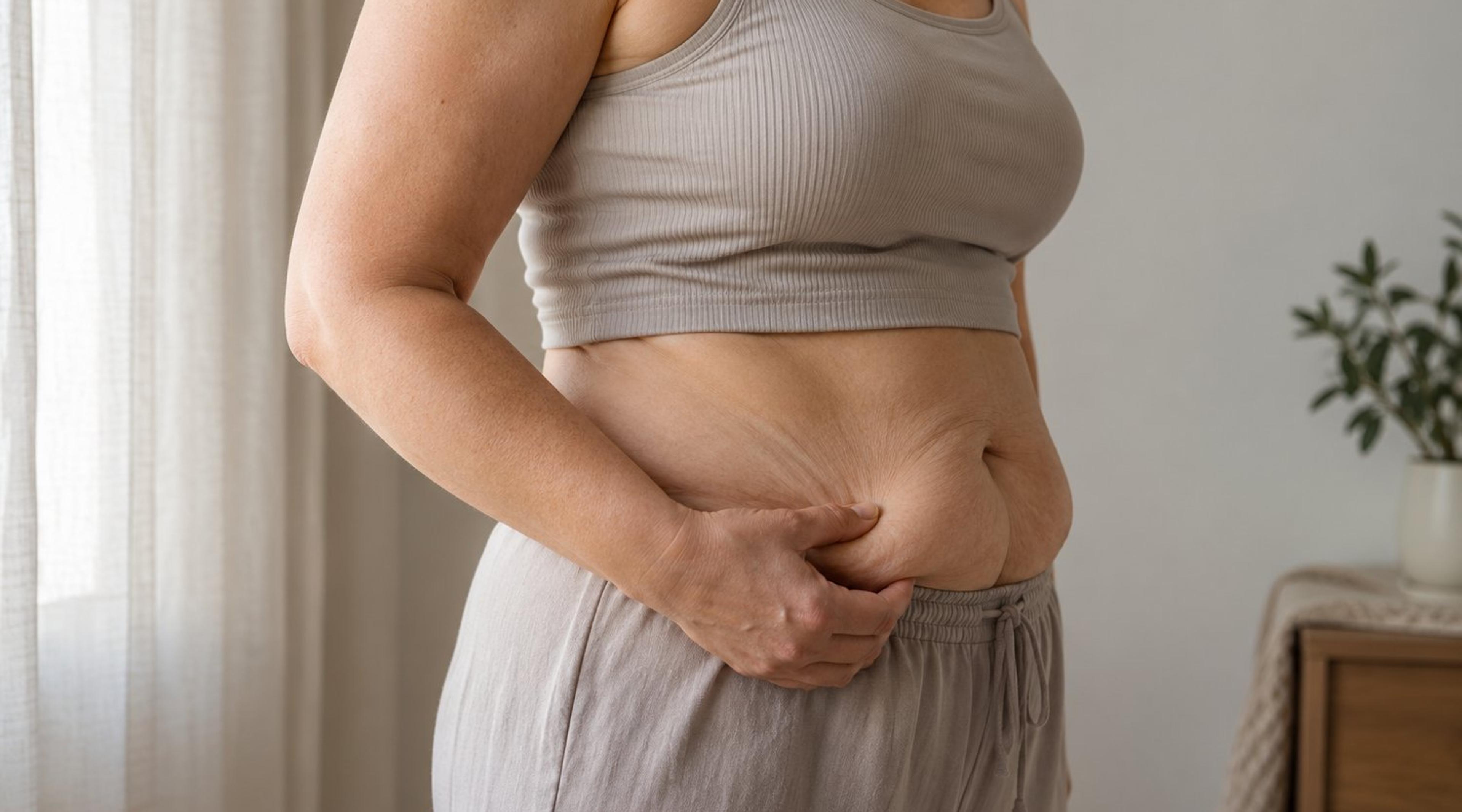
Body-contouring surgery removes excess skin in the area being treated: a tummy tuck treats abdominal skin excess, an arm lift treats hanging upper-arm skin, a thigh lift treats thigh skin excess, and a lower body lift addresses the abdomen, buttocks, groin and outer thighs. The right operation depends on the location and direction of looseness, tissue quality, scars and your health — not whether weight loss came from Ozempic, Mounjaro, diet or bariatric surgery. Surgery is usually considered once weight is stable and nutrition, medication and anaesthetic planning have been assessed. It can improve contour, but leaves scars and cannot restore skin to its pre-weight-loss behaviour.
Why does loose skin happen after Ozempic or Mounjaro weight loss?
Loose skin after weight loss is usually related to how much weight you have lost, how quickly it came off and how much elasticity your skin and underlying tissues retain. The American Society of Plastic Surgeons notes that, after substantial weight loss, these tissues may not have enough elasticity to conform to a smaller body size.
Does loose skin tighten on its own?
Some skin may settle as your weight and body composition stabilise, but substantial skin excess does not always retract fully. Age, genetics, sun exposure, pregnancy history and the area involved can affect elasticity. A surgical assessment looks at the skin itself, the tissue beneath it and whether the concern is loose skin, remaining fat, muscle separation or a combination.
Does the type of weight-loss treatment change the operation?
Ozempic and Mounjaro can support weight loss, but medication use alone does not determine whether skin-removal surgery is appropriate or which operation may help. Planning is based on your weight-loss course, your current health, the areas affected and whether your weight has reached a sustainable plateau.
- Greater total weight loss and a faster rate of loss were associated with higher rates of seroma and combined complications in a 2026 study of abdominal body-contouring patients.
- A 2025 review of semaglutide-associated weight loss found that the best timing for body contouring is still evolving, partly because weight plateau and possible weight regain after stopping medication can affect planning.
- Your surgeon should review your medication, nutritional status, medical history and the stability of your weight before recommending surgery.
Which surgery treats loose skin on my stomach, arms or thighs?
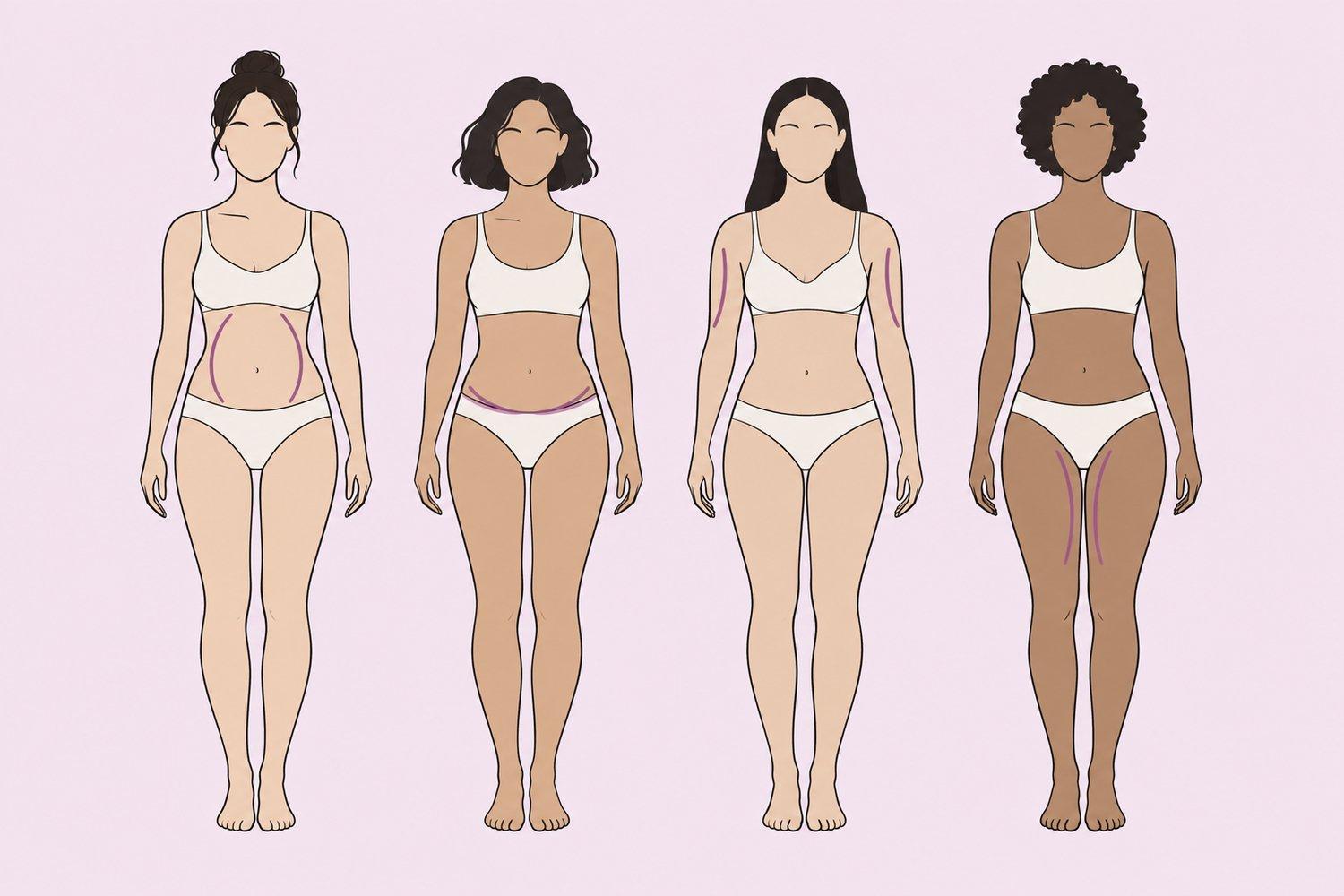
Loose skin after Ozempic or Mounjaro does not have one surgical answer. The right operation depends on where the skin sits, how far it extends and whether there is looseness around neighbouring areas. A surgeon assesses your weight stability, skin quality, scars and general health before advising what surgery can realistically improve.
Tummy tuck versus lower body lift
A tummy tuck, also called an abdominoplasty, treats excess skin on the abdomen and can tighten separated or loose abdominal muscles. It is often considered when there is an apron of skin over the lower abdomen. A panniculectomy removes the skin overhang above the pubis, but does not treat loose skin above the belly button or tighten the abdominal muscles.
- A tummy tuck focuses on the front of the abdomen.
- A panniculectomy or a pubis lift focuses on the lower skin overhang.
- A lower body lift addresses sagging across the abdomen, buttocks, groin and outer thighs.
When an arm lift or thigh lift is the better match
An arm lift, or brachioplasty, removes sagging skin from the upper arms. A medial thigh lift is designed for excess skin on the upper leg, including the inner, outer or mid-thigh depending on the pattern of looseness. Its incision may extend from the groin along the inner thigh towards the knee when more skin needs to be removed. These operations improve contour, but they leave scars and cannot make skin behave as it did before weight loss.
When is my weight stable enough for skin-removal surgery?
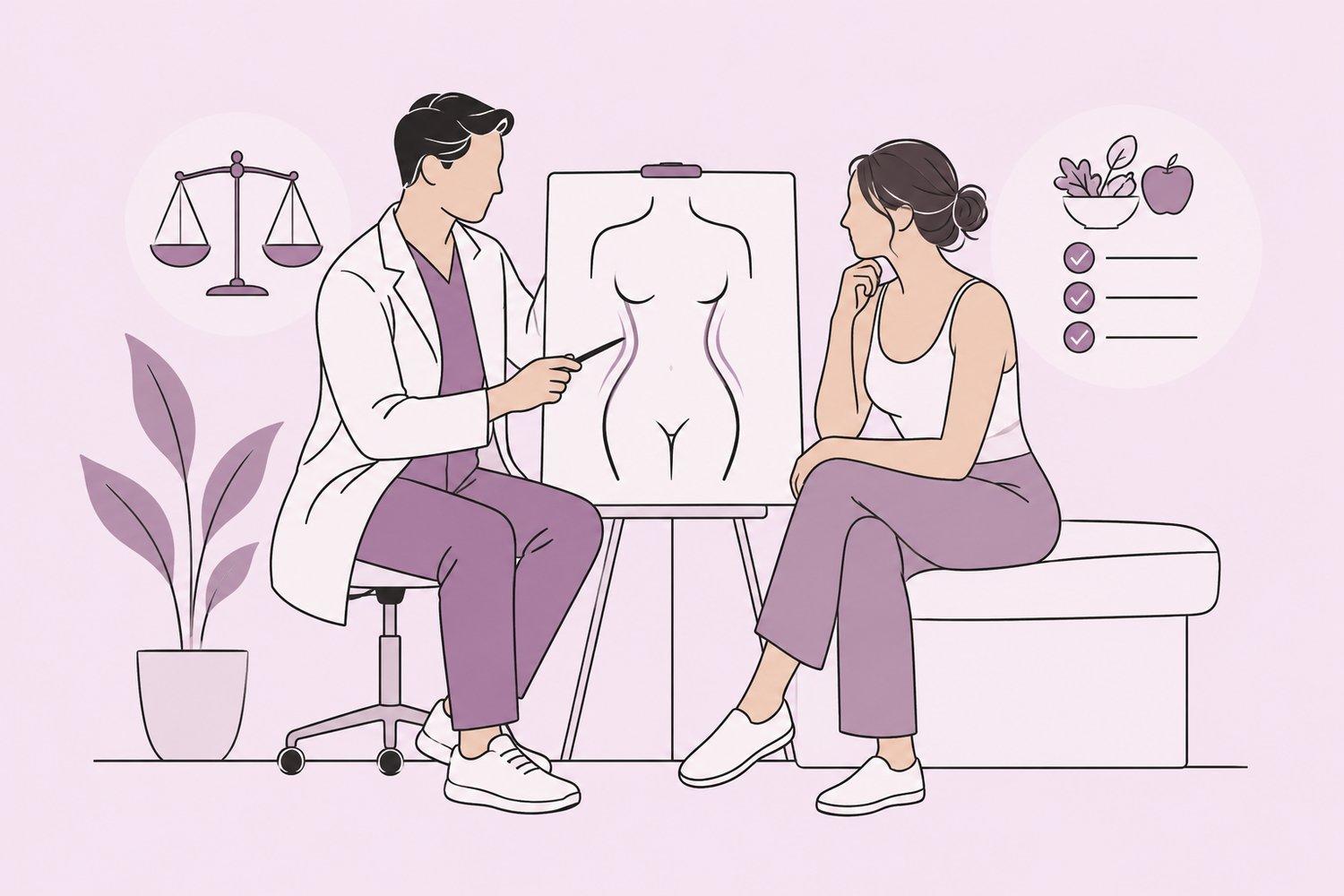
Weight stability is the central timing decision after major weight loss. The American Society of Plastic Surgeons says adults whose weight loss has stabilised are generally good candidates for body-contouring surgery. This is not a fixed date on a calendar. Your surgeon considers whether your weight is still changing, where you are in treatment and whether your body has the nutritional reserves needed for recovery.
What stability means when I am still taking a GLP-1 medicine
If you are still losing weight with Ozempic, Mounjaro or another GLP-1 medicine, it may be sensible to wait before removing loose skin. Further weight loss can change the area treated and alter the result. A review of semaglutide studies found an average weight-loss plateau at about 53 weeks, but this is emerging evidence, not a universal countdown for surgery.
- Your weight has stopped changing meaningfully over time.
- Your GLP-1 treatment plan is clear with the doctor who prescribes it.
- You and your surgeon have discussed whether stopping treatment could change your weight again.
- The area of loose skin can be assessed against your current, stable shape.
Why nutrition belongs in the timing decision
GLP-1 medicines can reduce appetite and delay gastric emptying. A 2026 Plastic and Reconstructive Surgery review notes that this may reduce protein and micronutrient intake, and recommends individual nutritional optimisation around surgery. Before setting a date, we assess your eating pattern, weight trend and relevant blood tests, then coordinate any medicine and nutrition plan with your prescribing doctor and anaesthesia assessment.
What does an ISAPS-accredited plastic surgeon assess before choosing an operation?
A consultation for skin removal after significant weight loss is surgical planning, not a choice from a menu. A thorough plastic-surgery consultation is the best way to establish whether an operation is appropriate and which areas can be treated safely. The surgeon considers your health, the amount and location of loose skin, and what you want daily life and clothing to feel like afterwards.
Your priorities and the pattern of skin excess
Loose skin does not follow one pattern. An abdomen may need different planning from arms or thighs, and treating several areas together may not be suitable for every person. The surgeon examines where skin hangs or rubs, the quality of the remaining skin, scars from previous operations and the areas that concern you most. Realistic goals matter: surgery can remove excess skin, but it leaves scars and cannot make skin unchanged.
Healing, medication and clot-risk checks
ASPS includes overall health, smoking status, realistic goals and a commitment to nutrition and fitness among the considerations for excess-skin-removal candidates. The surgeon should also review conditions that could impair healing or increase surgical risk, your current medication and relevant personal clot-risk factors. This helps determine whether to proceed, whether further preparation is needed, and how an operation should be staged.
The discussion should include what can go wrong as well as the intended result. Risks can include bleeding, infection, fluid accumulation, poor wound healing, skin loss, changes in sensation, scarring, deep-vein thrombosis and possible revision surgery. An ISAPS-accredited plastic surgeon uses this assessment to explain the risks that are most relevant to you and the follow-up needed after surgery.
- Your weight and nutritional readiness
- Smoking status, medication and medical history
- Previous scars and the areas of skin excess
- Personal healing and deep-vein-thrombosis risk factors
- Whether one procedure or staged operations better fits your circumstances
How much recovery time in Istanbul and before flying home should I plan?
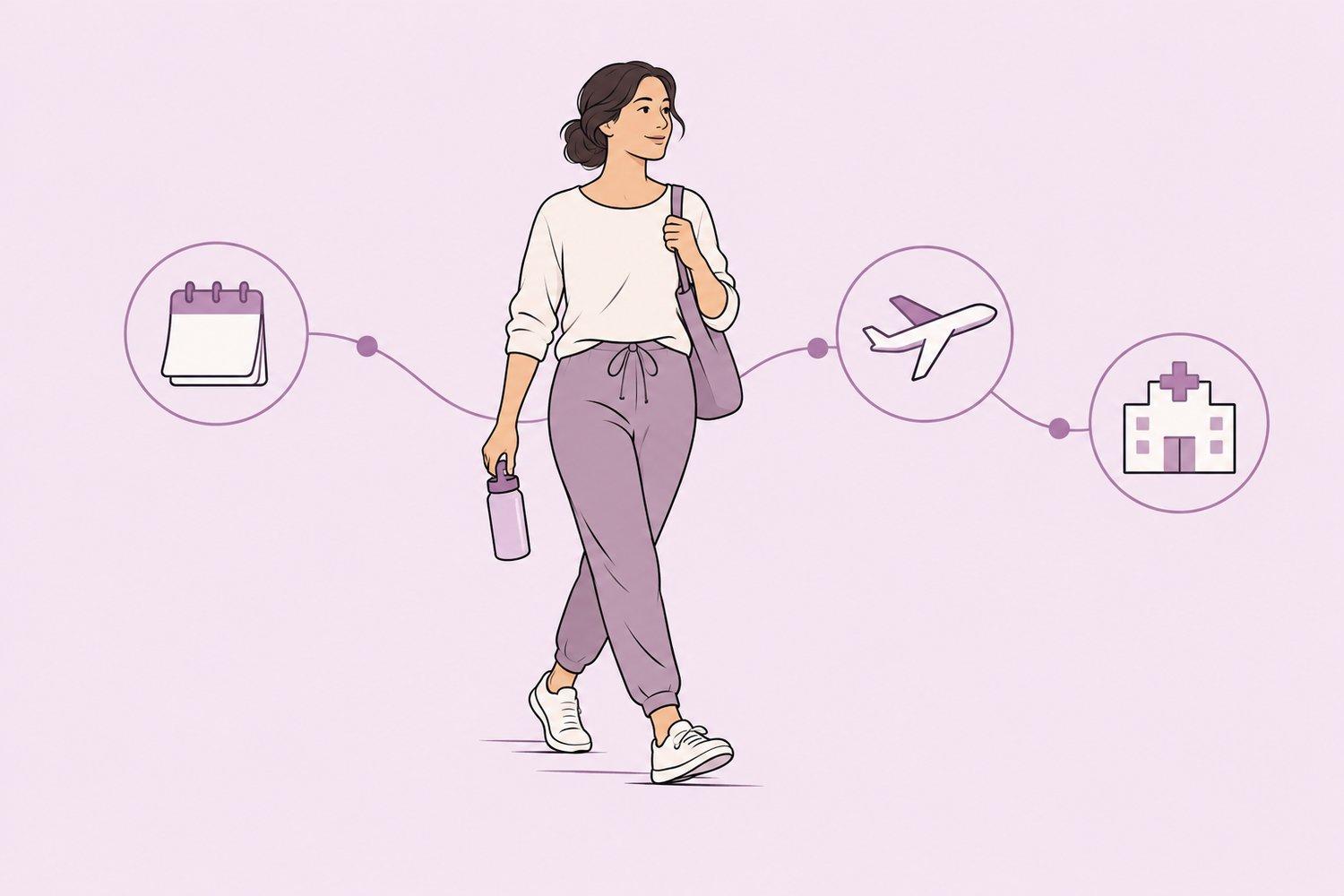
Recovery after skin-removal surgery needs room in your plans. Soreness, swelling and bruising commonly last 2 to 3 weeks after post-weight-loss body contouring. Many people return to work in 2 to 4 weeks, but recovery varies with the procedure, the areas treated and the physical demands of daily life.
Returning to desk work, lifting and exercise
Desk-based work may be possible within the usual 2-to-4-week return-to-work period. Work involving lifting, long periods on your feet or other physical effort can require at least 3 weeks away. Walking is encouraged after surgery, but lifting and exercise stay restricted until healing allows and your surgeon advises otherwise.
- Plan for practical help with bags, lifting and routine tasks after surgery.
- Discuss the physical requirements of your work at your assessment.
- Ask when you may restart the specific exercise you normally do rather than using a general timetable.
Why flight timing needs your surgeon’s clearance
Recent surgery and long travel both increase the risk of deep-vein thrombosis. An NHS hospital advises avoiding flights longer than 4 hours for at least 4 weeks before or after surgery. Your own timing depends on the procedure, your healing and your individual risk factors, so travel plans should be reviewed by your surgeon before they are confirmed.
If you are unsure which area needs treatment, or whether your weight and treatment plan are settled enough, arrange an online consultation with Vanity’s surgeons. We can review your history, the areas that concern you and the practical steps needed before travel.
Frequently asked questions
Will loose skin after Ozempic or Mounjaro go away without surgery?
After substantial weight loss, skin and supporting tissues may not have enough elasticity to conform to a smaller body size. Body-contouring surgery removes excess sagging skin rather than relying on skin retraction alone.
Do I need a tummy tuck or a lower body lift after weight loss?
A tummy tuck targets excess abdominal skin. A lower body lift is used when loose skin affects the abdomen, buttocks, groin and outer thighs, and an examination shows whether the excess extends beyond the abdomen.
What is the difference between a tummy tuck and a panniculectomy?
A panniculectomy removes an overhang of skin over the pubis. A tummy tuck, or abdominoplasty, also treats excess abdominal skin and can tighten underlying abdominal muscles.
Can I have an arm lift and thigh lift after losing weight on Mounjaro?
An arm lift, or brachioplasty, treats sagging upper-arm skin, while a thigh lift treats sagging thigh skin. The operation is chosen according to the affected area and surgical assessment, not the brand of weight-loss medicine.
Should I stop Ozempic or Mounjaro before loose-skin surgery?
GLP-1 medicines need individual perioperative planning because they can affect appetite, nutrition and gastric emptying. Instructions about medication should come from your prescribing clinician, anaesthesia team and operating surgeon.
How long should I wait after weight loss before skin-removal surgery?
Body contouring is generally considered once weight loss has stabilised. For GLP-1-associated weight loss, timing evidence is still developing, and the possibility of weight regain after stopping medication should be considered individually.
How long will I need off work after a tummy tuck or body lift?
Many people return to work 2 to 4 weeks after post-weight-loss body contouring. Physically demanding work may require at least 3 weeks away, and the procedure and job demands change the plan.
How long should I stay in Istanbul before flying home after skin-removal surgery?
Your stay should allow for required postoperative checks and a fitness-to-fly assessment by your surgeon. Recent surgery and flights longer than 4 hours both increase deep-vein-thrombosis risk, and long-haul flying may need to be avoided for at least 4 weeks after surgery.