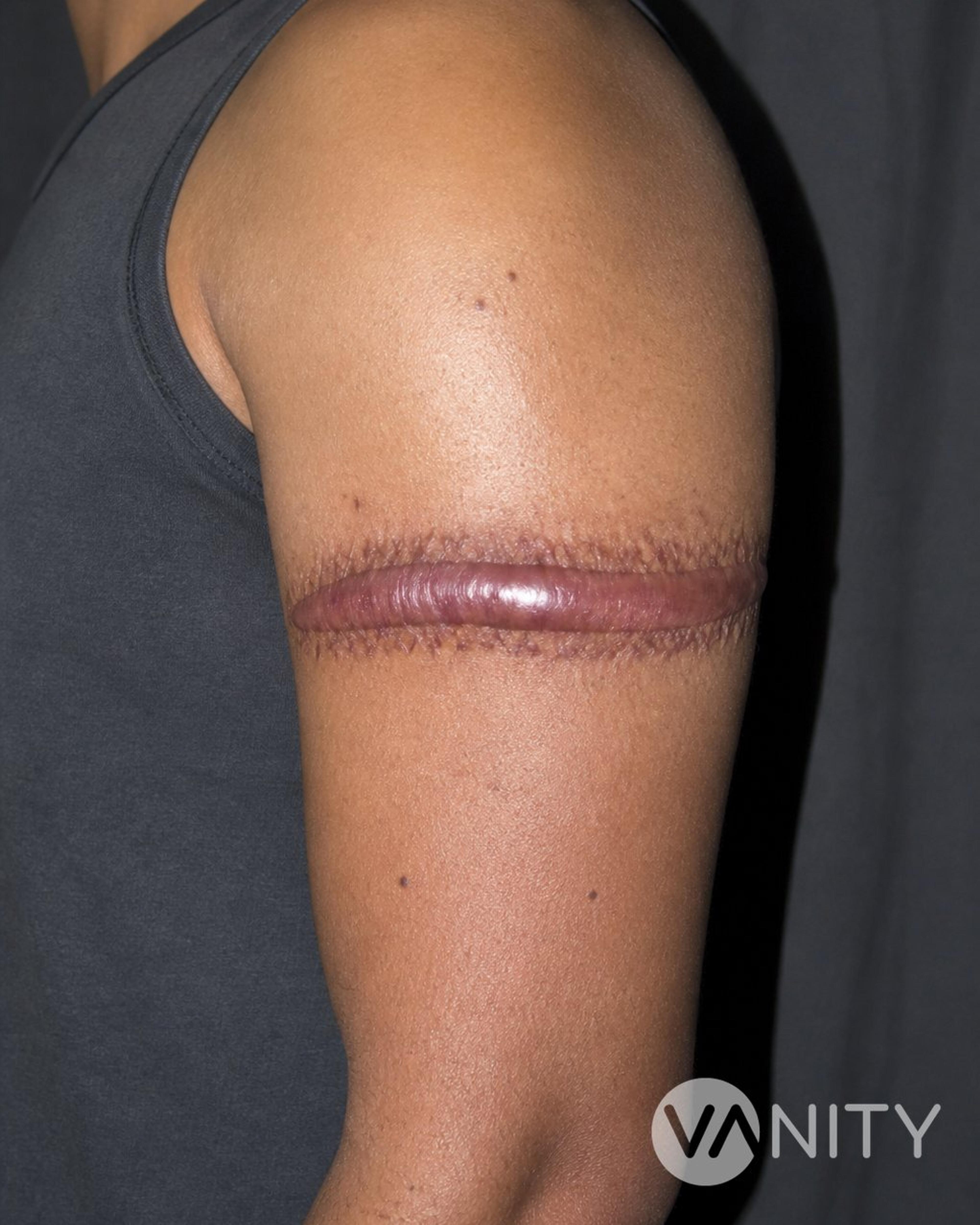
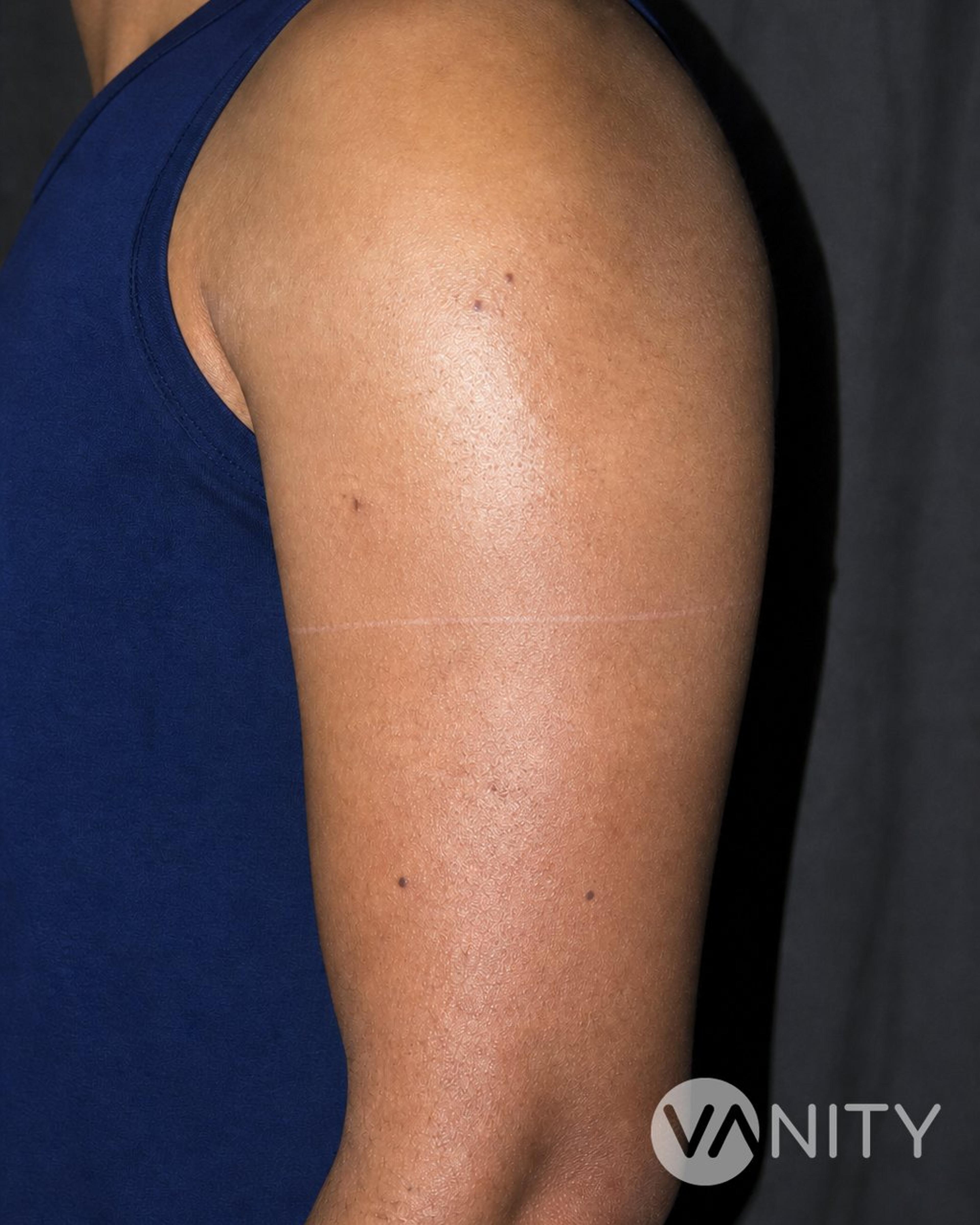



What it is
Scar revision is reconstructive surgery on a scar left by injury, burns, acne or an earlier operation. We cut out the old scar and close the wound in layers, with buried sutures taking the tension off the skin edge — tension is what makes a scar widen. Where the scar runs against the natural lines of the skin, we reorient it with geometric techniques so the eye reads it as a crease rather than a mark. Where tissue is missing, or where the scar tethers movement, we use local flaps, grafts or tissue expansion. No technique removes a scar. The honest goal is a smaller, better-placed one.
It suits a mature scar that has stayed wide, raised, depressed, discoloured or misaligned with the skin's tension lines, and contracture scars — often after burns, or across a joint — that limit how you move. Most scars keep remodelling and fading on their own, so we usually wait until the scar has matured, 12 to 18 months after the original wound. Operating earlier risks revising a scar that would have settled anyway. If you have a history of keloids we are cautious: excision on its own recurs in 45 to 100% of cases, and the operation only makes sense as part of a longer plan. Non-smokers with a stable, non-inflamed scar and realistic expectations do best.
Techniques we use
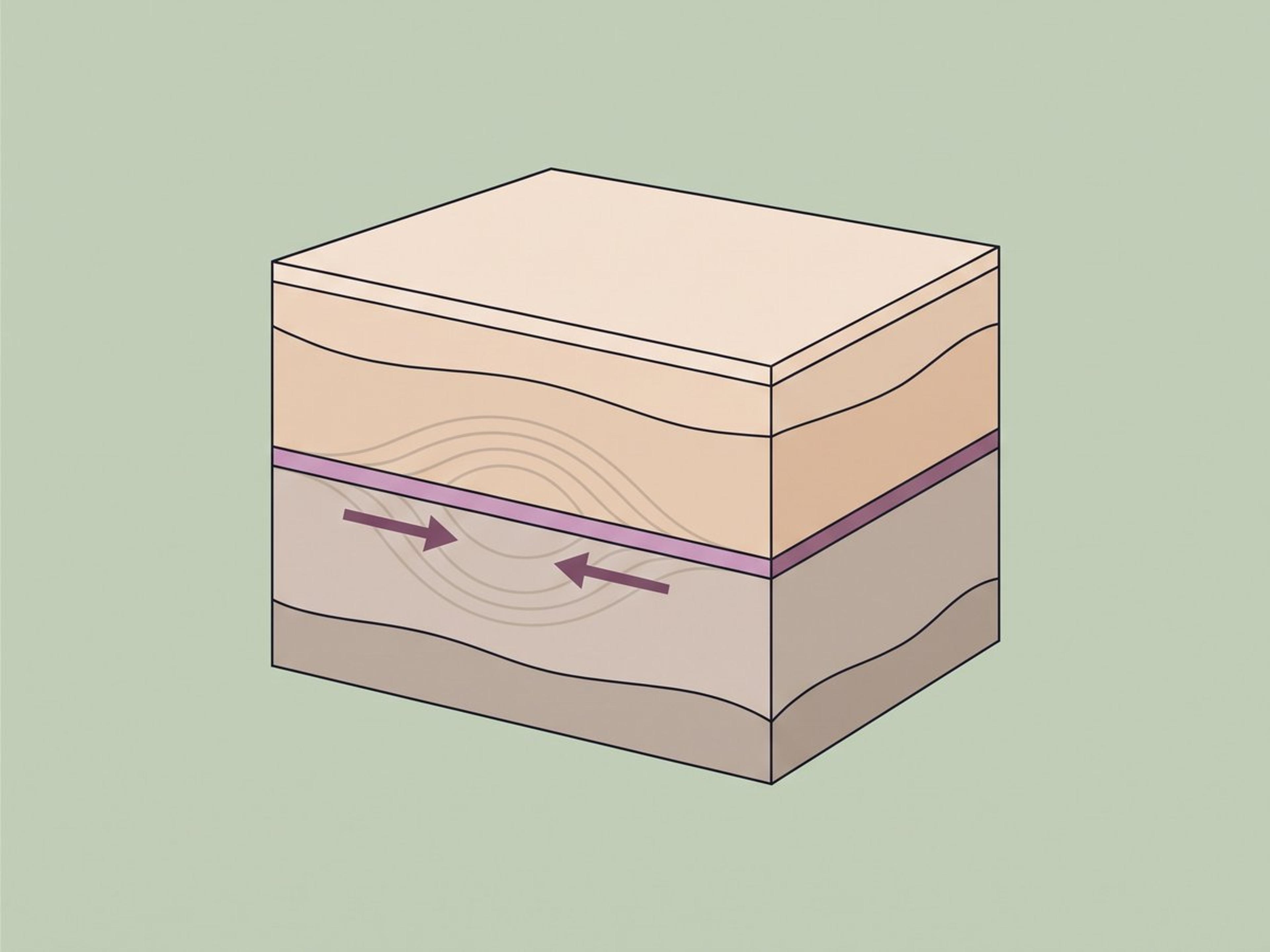
We cut out the scar and rebuild the wound in layers, with buried sub-dermal sutures carrying the tension beneath the surface closure. That layering is what keeps the new scar narrow, particularly in areas that move. It is the baseline for a narrow, well-oriented scar that simply healed badly.
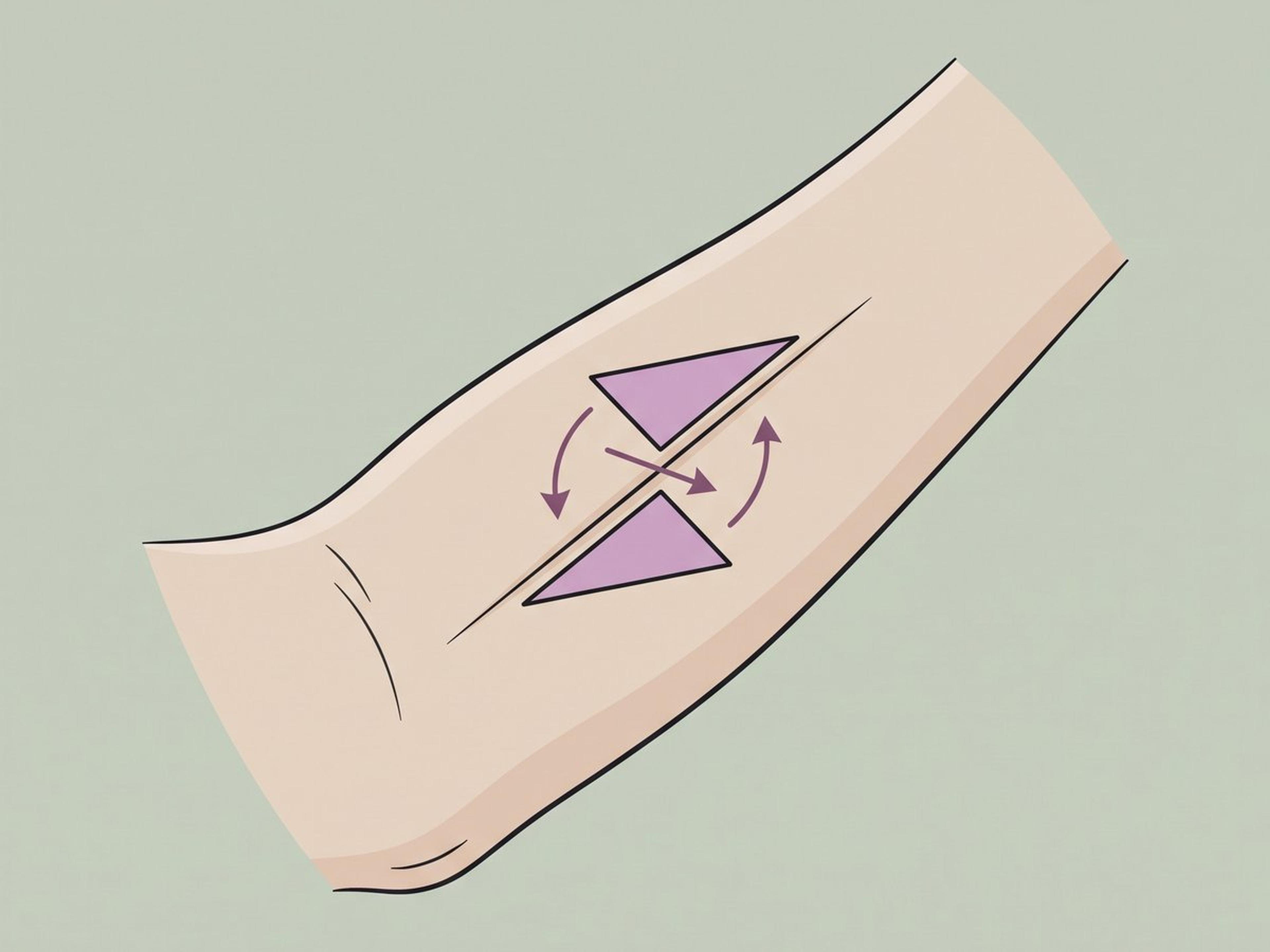
Two triangular flaps are raised and swapped, which turns the direction of the scar and lengthens the tissue along its original axis. Angles of around 60 degrees are standard, and several small Z-plasties along one scar spread the tension and break up the line. This is the technique for contracture bands and for scars running against the relaxed tension lines of the skin.
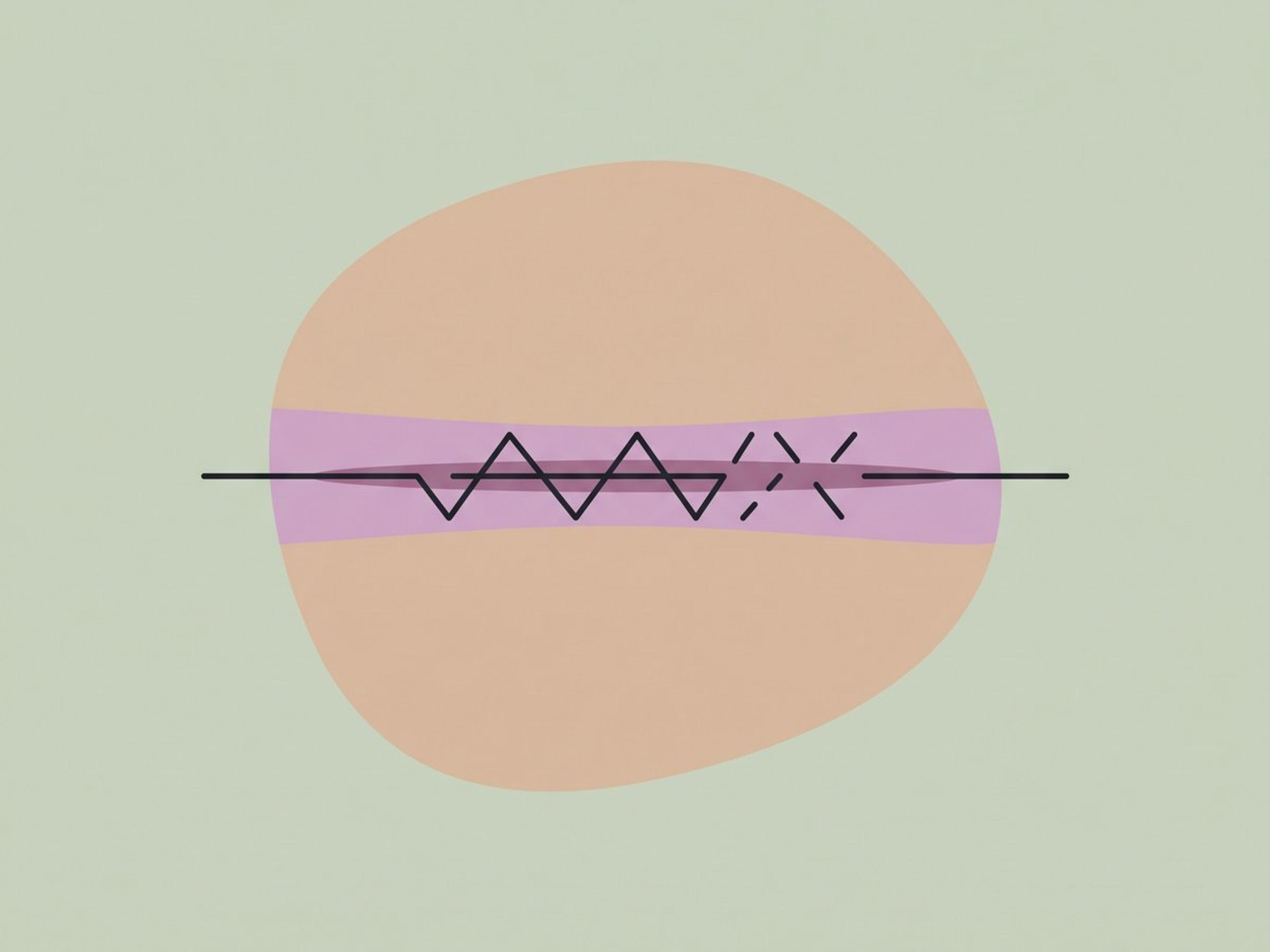
Both turn a continuous straight scar into an irregular one the eye cannot follow along. W-plasty interdigitates small triangles for a regularly irregular result; geometric broken line closure randomises the shapes for an irregularly irregular one. Neither lengthens tissue, so we use them to camouflage a scar rather than to release a contracture.
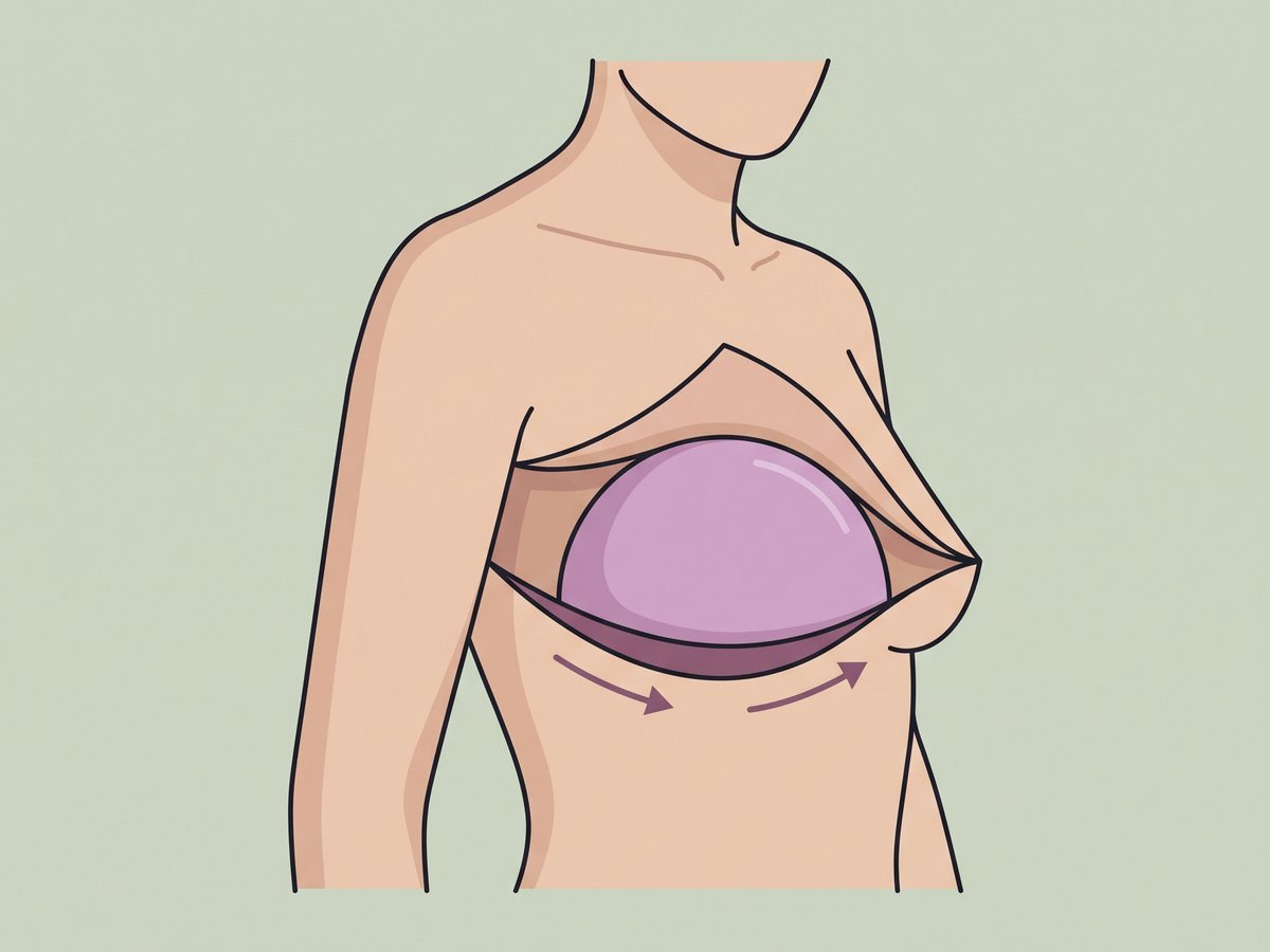
When there is not enough healthy skin next to the scar — usually after extensive burns — an expander is placed under nearby tissue and filled with sterile saline over several weeks to grow more skin. That expanded skin is then advanced to replace the excised scar. Where expansion is not possible we use split- or full-thickness grafts or a dermal substitute instead. These cases sit outside a standard travel plan and we quote them individually.
The operation, step by step
Planning and marking
We photograph the scar in daylight and mark it against the relaxed tension lines of that part of the body. A scar running with those lines usually only needs excising and re-closing; one running across them will widen again unless its direction is changed, and that judgement decides which technique is used and how long the operation takes.
Excising the old scar
The full width of scar tissue is cut out down to healthy dermis, and the edges are freed from the tissue beneath so they meet without being pulled. Scar tissue left inside the closure heals into the same stiff, pale band you started with.
Redirecting the line — or replacing missing tissue
Where the scar fights the skin's natural lines, Z-plasty turns it and lengthens the tissue along its original axis, while W-plasty or geometric broken line closure break the line into irregular segments the eye cannot follow. Where tissue is missing or the scar tethers movement, a local flap, graft or a previously placed expander supplies the skin instead.
Tension-free layered closure
The wound is rebuilt in layers, with buried sub-dermal sutures taking the tension beneath the surface so the skin edges sit together unstressed. Tension is what makes a scar spread, so this layer — not the visible stitching — is what keeps the new scar narrow.
Dressing, discharge and the adjuvant plan
You go back to your hotel the same day with the site dressed, written wound-care instructions and a suture-removal date. Before you leave we set the follow-on schedule in writing — silicone, taping, sun protection, and for a keloid or a high-risk scar the corticosteroid or pressure course and who delivers it at home, since excision on its own recurs.
Recovery, week by week
- Day 1
The site is dressed. Expect localised swelling, discolouration and discomfort, controlled with simple analgesia. Most revisions are day cases under local anaesthesia, sedation or general anaesthesia, depending on the size and site of the scar.
- Week 1
The first healing phase runs roughly 1 to 2 weeks, with swelling and bruising settling. Sutures come out on a schedule that depends on the site — facial sutures earlier than trunk or limb. Wound care matters here: infection or wound separation is what undoes a good closure.
- Weeks 2–4
Body and limb sutures come out around days 10 to 14, later than facial ones. Walking and desk work are fine straight away, but hold off heavy lifting, hard exercise and anything that stretches the skin over the scar until about week 4 — a young scar widens under tension. Once the wound is fully closed, usually 2 to 3 weeks in, silicone gel or sheeting can begin, worn most of the day for several months.
- Week 6
The new scar is usually firm, pink and at its most raised as collagen remodels. This is the window for silicone gel or sheeting, taping, massage and strict sun protection. Dermabrasion, where it is planned as an adjunct, is generally done 6 to 12 weeks after the wound.
- Month 3
Redness starts to fade and the scar softens and flattens. Any planned adjuvant treatment — intralesional corticosteroid, laser, or pressure therapy for a high-risk scar — is usually under way by now.
- Month 12
The final appearance emerges. The result lasts, but a new scar takes several months to a year to mature, pale and settle, and NHS guidance notes that scars can keep fading for 2 years or more.
How to prepare
- Wait for the scar to mature — we generally defer revision until roughly 12 to 18 months after the original wound, and at least a year for surgical revision, so that improvement which would have happened anyway is not mistaken for a permanent defect
- Stop smoking and all nicotine well ahead of surgery — smoking impairs wound healing and worsens scarring
- Tell us about blood thinners, aspirin, anti-inflammatories and herbal supplements, pause them as directed, and complete any medical evaluation or bloods we request
- Declare any personal or family history of keloids or hypertrophic scarring, so the adjuvant plan — pre-operative corticosteroid injections, post-operative pressure, silicone, cryotherapy or laser — is arranged before the excision rather than after it
- Keep the scar out of the sun and stop tanning before and after surgery — UV exposure drives lasting hyperpigmentation in a healing scar
- Send us photographs of the scar in daylight and tell us how old it is, how it happened, and whether it has been treated before
Risks
Every operation carries risk. We name them so you can ask the right questions.
- Recurrence or worsening of the scar — a keloid excised without adjuvant therapy returns in nearly 100% of cases
- Infection of the surgical site
- Bleeding, haematoma or seroma
- Poor wound healing, wound separation or skin loss at the wound edge
- Numbness, altered sensation or persistent pain at the site
- Skin discolouration, prolonged swelling, asymmetry or a result that needs further surgery — a single procedure may not achieve the optimal outcome
What to expect in Turkey
Scar revision covers everything from a small excision under local anaesthetic to flap closure under general anaesthesia, and those are different operations with different stays and different prices. Talk to the surgeon before you book anything.
Before you fly
See your own doctor or a travel medicine clinician 4 to 6 weeks before travelling. Confirm with us which anaesthesia and which technique is actually planned — simple excision, Z-plasty or W-plasty, flap closure, or tissue expansion — because that choice changes the stay, the anaesthesia and the price. If the lesion is a keloid rather than a mature scar, excision alone is not a treatment: the operation must be paired with an adjuvant course, and we agree in advance who delivers it at home and who watches the scar over the 18 to 24 months the literature recommends.
At the clinic
Scar revision is a day case. Anaesthesia is local, sedation or general depending on the size and site of the scar and whether flaps, grafts or expansion are involved.
Recovery in Istanbul
Plan 7 days in total, with 6 hotel nights and 2 follow-up visits — a wound check and, where the site allows it, suture removal. Book a hotel a short transfer from the clinic. Keep the closure dry and protected: no hammam, no pool or sea, no sun on the incision, no gym or heavy lifting. Incisions must not be subjected to excessive force, abrasion or motion while they heal.
Heading home
We prefer you fly on day 7, after the wound check and — for facial scars — after sutures are out, so we see the closure before you go. Day 3 is the earliest we would agree to. Take a complete set of records with you: operative note, anaesthesia record, any histopathology on excised tissue, and written wound-care and suture-removal instructions, translated into your own language. Identify a clinician at home willing to provide follow-up or emergency care before you depart. Avoid tension on the wound from luggage, and expect localised swelling, discolouration and discomfort for 1 to 2 weeks.
- United Kingdom
- £1,000 – £5,000
- United States
- $1,500 – $5,000
- Western Europe
- €1,000 – €5,000
Published typical ranges for orientation — confirm with a local quote.
Frequently asked
Can scar revision remove a scar completely?
No. Both the ASPS and the AAD state plainly that a scar cannot be erased. Revision replaces the existing scar with a new one that is thinner, flatter and better camouflaged, so it sits closer to the surrounding skin in tone and texture.
How long should I wait before having a scar revised?
Most scars need 12 to 18 months to mature, and surgical revision is generally advised only after that, ideally at least a year. Scars often improve substantially on their own in that period, and operating too early risks revising something that would have settled by itself.
Will my keloid come back after surgery?
Very likely, if surgery is used alone — the AAD reports that nearly 100% of keloids return after excision by itself, and the published range is 45 to 100%. Keloid excision has to be paired with adjuvant treatment: corticosteroid injections, pressure garments, cryosurgery, silicone sheeting, or radiotherapy in selected refractory cases. Agree before you travel who delivers that course at home.
Does insurance cover scar revision?
Usually not. The ASPS states that most health insurance plans will not cover scar revision, its complications, or further surgery to revise the appearance of a scar. Cover is more plausible when a contracture restricts function than when the concern is appearance alone — check your policy in writing beforehand.
Is scar revision done under general anaesthesia?
Not necessarily. Local anaesthesia, intravenous sedation and general anaesthesia are all used, and the choice follows the size, depth and location of the scar and whether flaps, grafts or tissue expansion are involved. Small, superficial revisions are commonly done awake under local anaesthetic as a day case.
Surgery or laser — which is better for my scar?
They treat different problems. Laser and light therapy, dermabrasion and chemical peels address colour, texture and surface irregularity, and dermatologists now use lasers first-line for many scar types; excisional surgery addresses width, contour, tethering and direction. Combined regimens are common, and corticosteroid injection alone can reduce the size of a raised scar by 50% or more.
How long do I need to stay in Istanbul?
Plan 7 days, with 6 hotel nights and 2 follow-up visits. That covers the operation, a wound check, and — for facial scars — suture removal before you fly. A body scar may mean suture removal happens at home, which we arrange in writing before you leave.
Who should not have scar revision?
Anyone whose scar is still maturing — before 12 to 18 months, revision risks trading a scar that would have improved on its own for one that starts over. We also defer or decline when the scar or the skin around it is actively infected or inflamed, when diabetes is poorly controlled, and when a clotting disorder or blood thinners cannot be safely managed around surgery — all of these undermine the wound healing a good result depends on. Smokers must stop nicotine completely beforehand. A history of keloids does not rule surgery out, but we will not excise a keloid without an agreed adjuvant course, because excision alone almost guarantees recurrence.
What warning signs mean I should contact the clinic?
Contact us straight away — or, once home, the clinician you identified before departure — if you notice spreading redness or warmth around the incision, discharge, a wound edge that is opening, fever, pain that worsens after the first couple of days instead of easing, or sudden swelling or bleeding at the site. Infection, haematoma and wound separation are the complications that undo a careful closure, and every one of them is easier to treat early. Send photographs in daylight — a healing incision is straightforward to assess remotely.
Do scar creams and vitamin E actually work?
Silicone is the one topical with real support behind it — gel or sheeting, started once the wound has closed and worn consistently for months, is the standard first-line measure for flattening and softening a raised scar. Vitamin E is not: a controlled trial found it made no scar look better, worsened the appearance in a third of patients, and caused contact dermatitis in about a third. Onion-extract gels have weak and inconsistent evidence. The other thing that genuinely changes the outcome costs nothing: keeping the healing scar out of the sun, because UV drives pigmentation that becomes permanent.
Does my skin tone change what I should expect?
Yes, in two ways. Keloids and hypertrophic scars are markedly more common in people with darker skin — Black, Hispanic, Asian and Mediterranean ancestry — so we plan the adjuvant course alongside the excision rather than waiting to see what happens. Richly pigmented skin is also more prone to post-inflammatory hyperpigmentation, where the new scar darkens rather than fades, which makes strict sun protection and unhurried timing more important, not less. None of this rules revision out; it changes how it is staged.
Sources
- [1]Scar Revision Risks and Safety · American Society of Plastic Surgeons (plasticsurgery.org) · 2025
- [2]Scars: Diagnosis and Treatment · American Academy of Dermatology (aad.org) · 2025
- [3]Scar revision (Sharma M, Wakure A). Indian Journal of Plastic Surgery 46(2):408-418 · PubMed Central / Indian Journal of Plastic Surgery · 2013
- [4]Scar revision techniques: z-plasty, w-plasty, and geometric broken line closure (Shockley WW). Facial Plastic Surgery Clinics of North America 19(3):455-463 · PubMed / NLM · 2011