
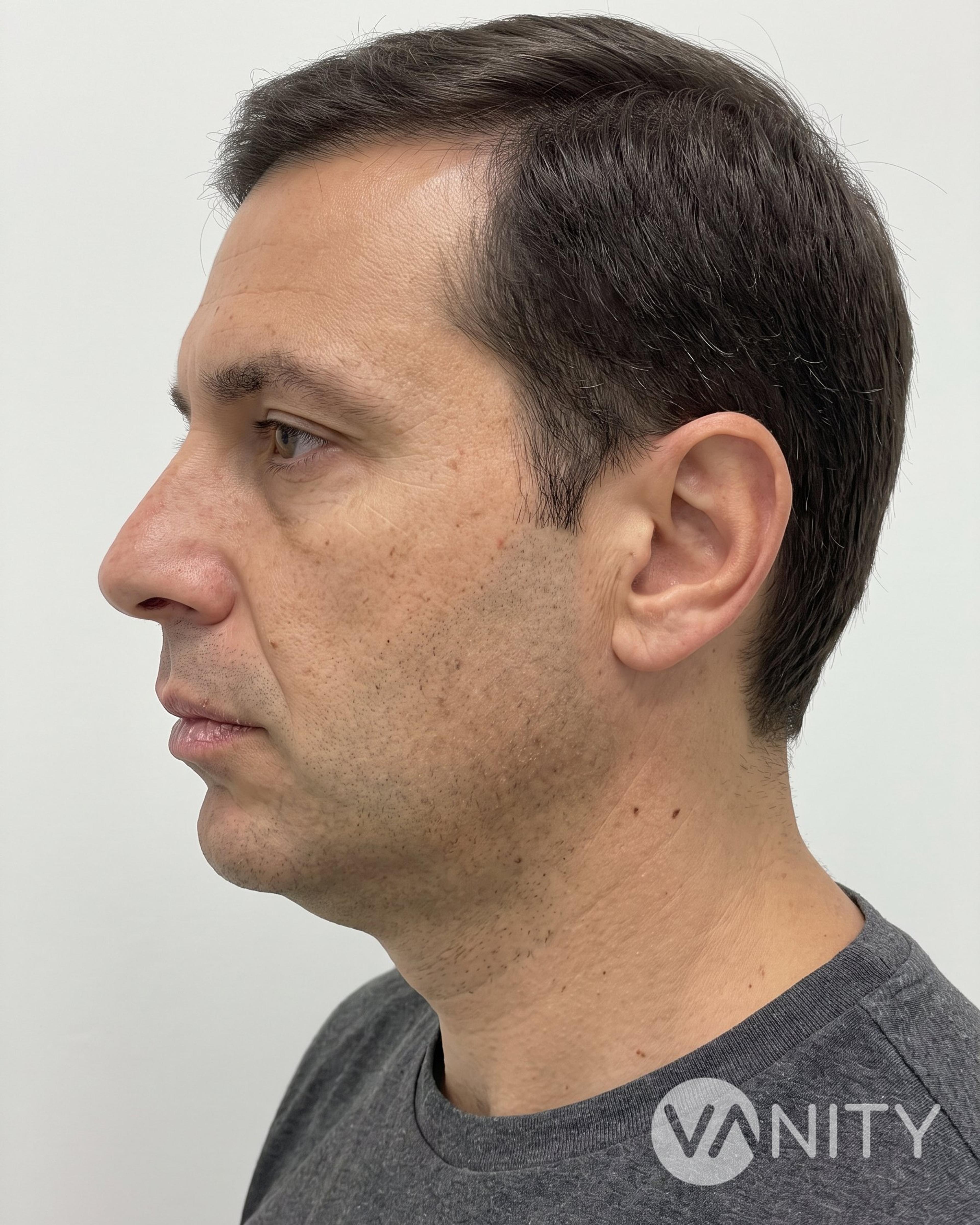
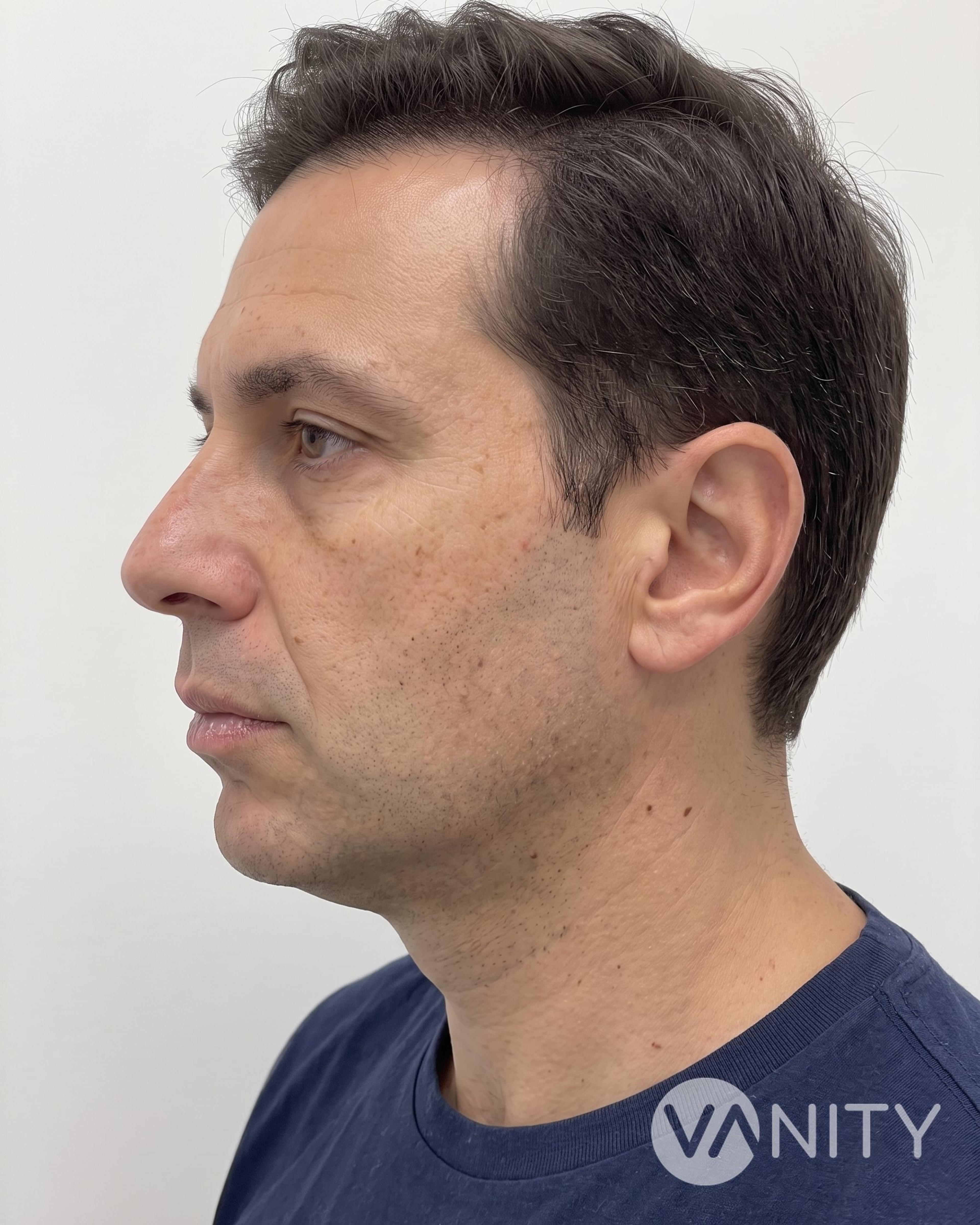




What it is
Dermal fillers are a gel injected just beneath the skin to replace lost volume, soften folds, and define a contour such as the jawline or cheeks. Most are hyaluronic acid — a sugar your body already makes — and the change is visible the same day.
They suit adults who notice flatter cheeks, deeper lines around the mouth, thinner lips, or under-eye hollows, and who want a modest reset rather than surgery.
Along the jawline the loss of definition has a specific cause: the mandibular bone thins with age while the lower cheek fat pads slide downward, so a once-clean border blurs into jowls. Others never had the projection to begin with — a genetically recessed chin, or a weak chin as most people put it, softens the whole lower-face profile. Filler rebuilds the border where volume has gone; where the bone itself sits too far back, the answer is structural rather than injectable.
Techniques we use
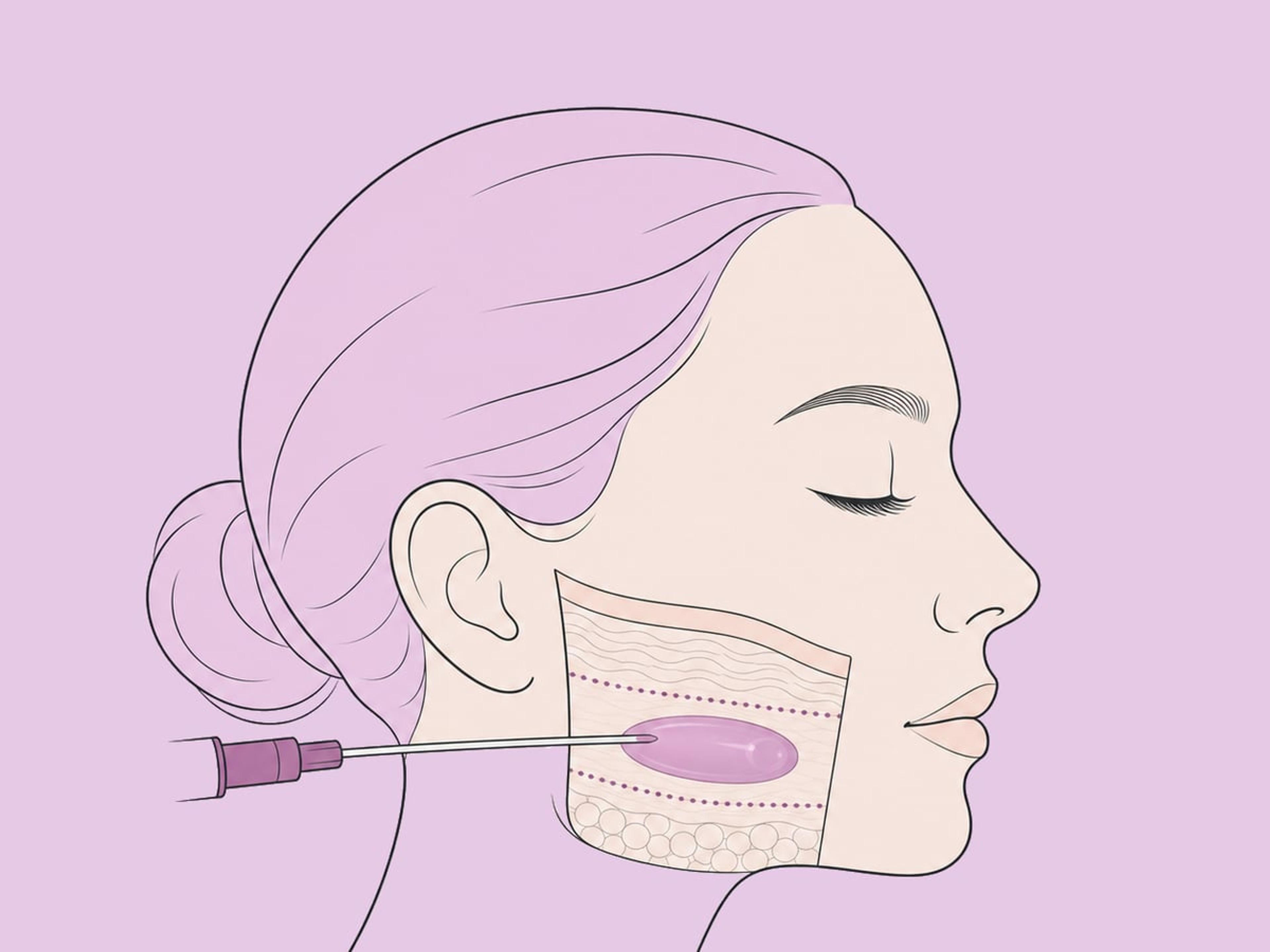
The most common option — a smooth gel that holds water and settles into the surrounding tissue. Results last 6 to 18 months. If you dislike the result, it can be dissolved within minutes with an enzyme injection.
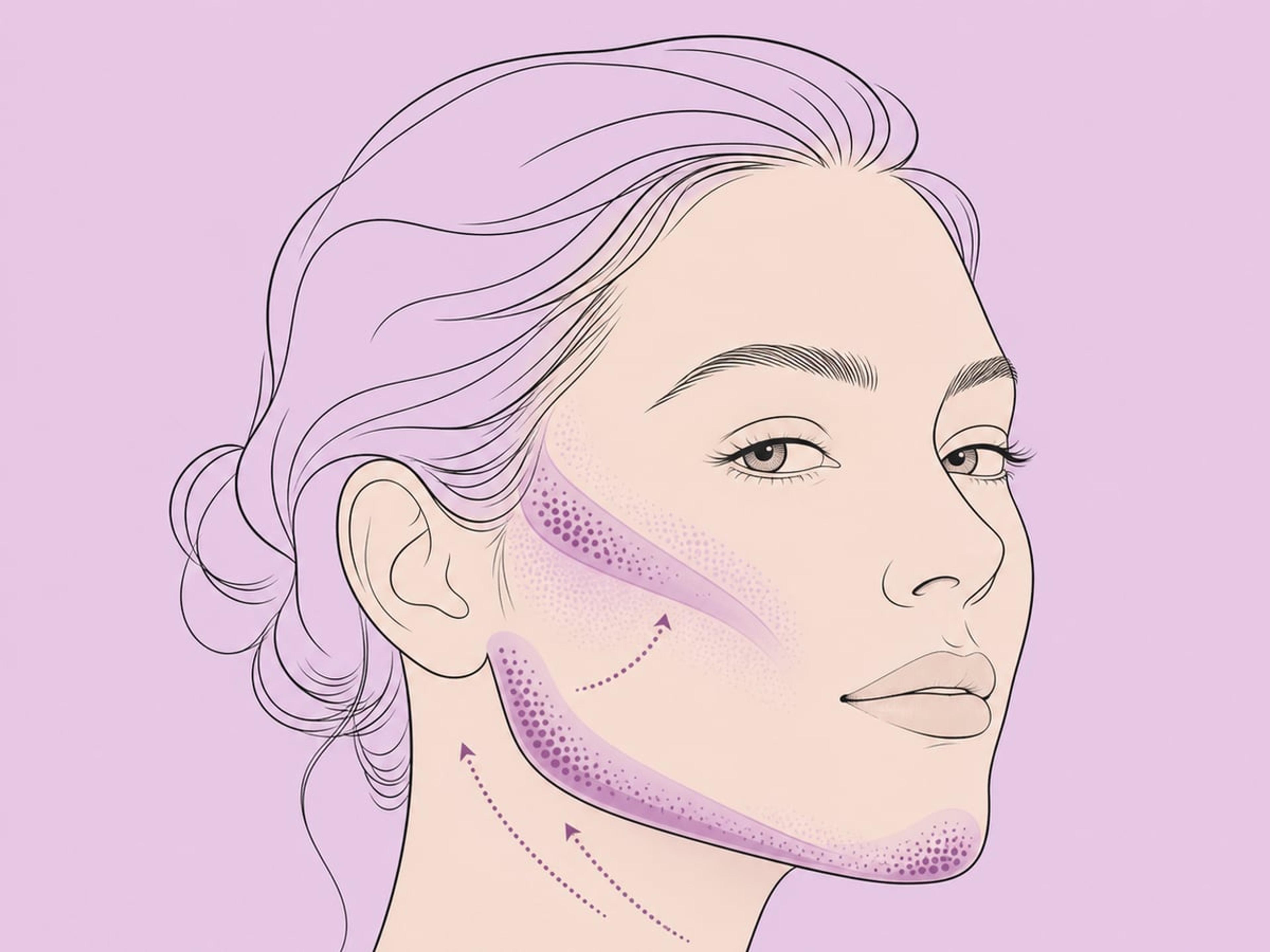
A thicker filler used for deeper structural support, often along the jawline or cheeks. It also prompts some collagen of your own and typically lasts 18 to 24 months. It cannot be reversed, so it is placed conservatively.

A biostimulator that leads your skin to build new collagen gradually. The change appears slowly across a short series of sessions and can last around 2 years. It is a slower, quieter route than an immediate-volume filler.
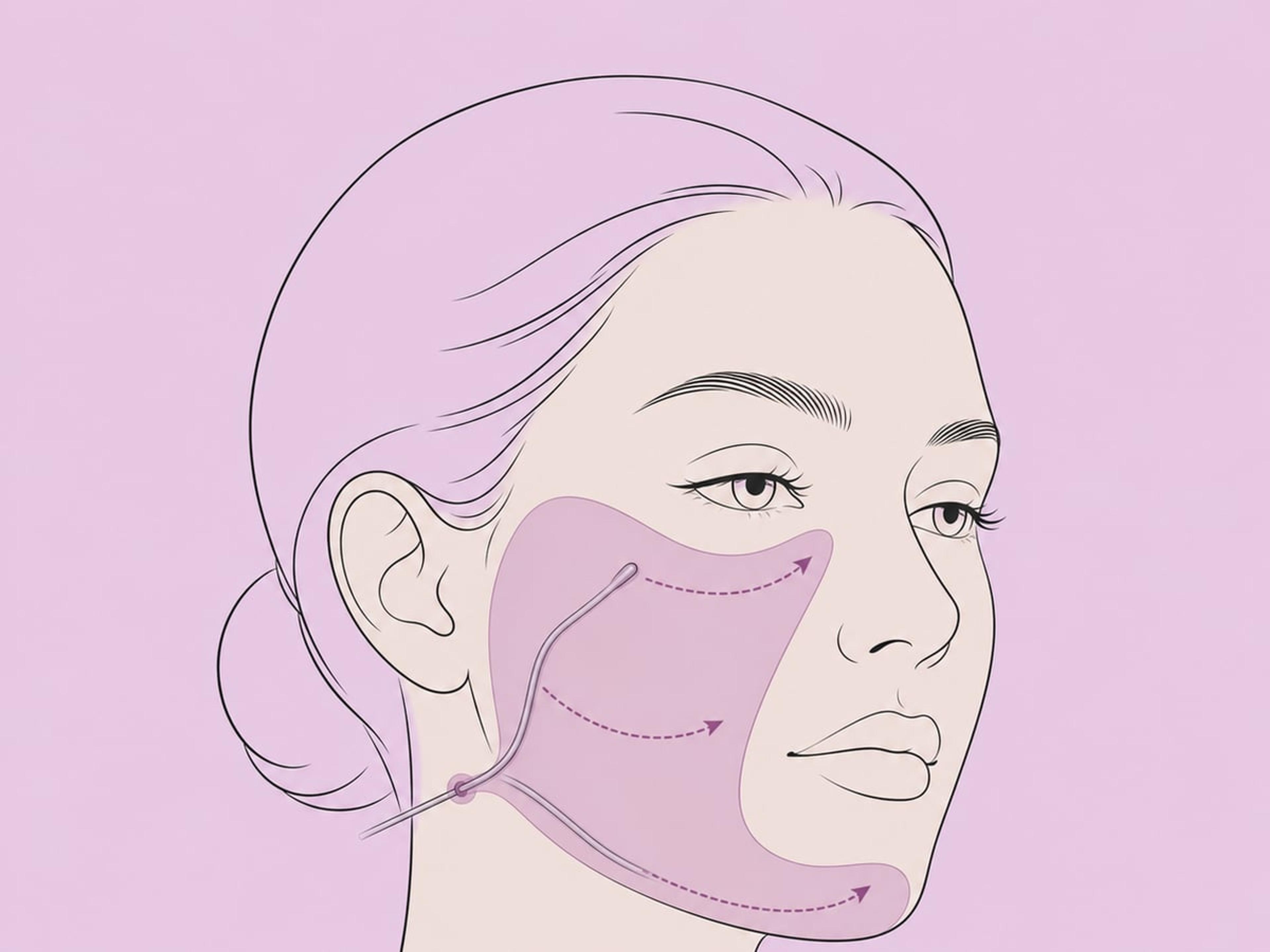
A blunt-tipped tube used in place of a sharp needle in certain areas, which lowers bruising and the risk of injuring a vessel. We often choose it for under-eyes, cheeks, and jawline work.
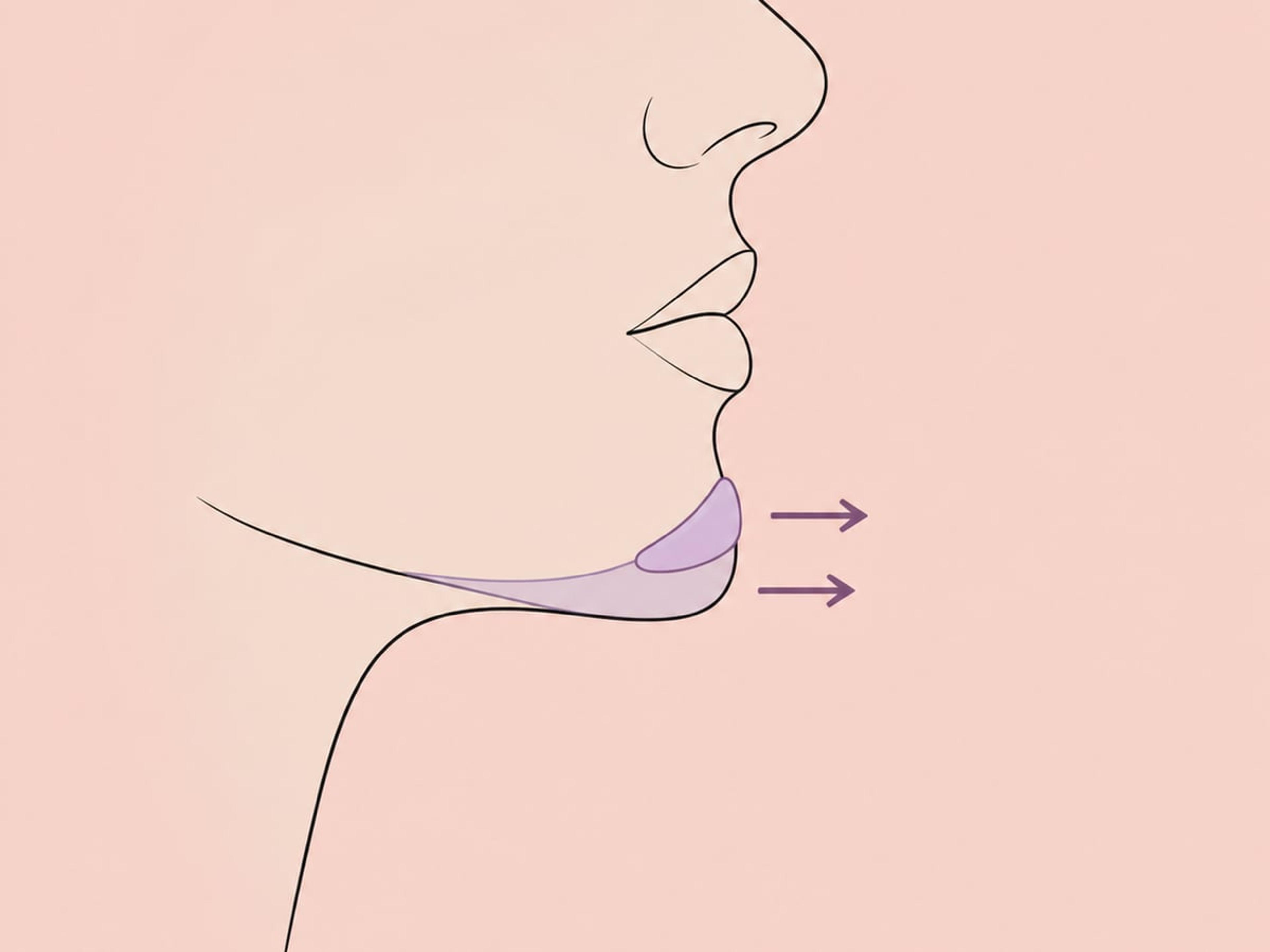
A shaped implant in medical-grade silicone or porous polyethylene, seated directly on the chin bone through a small incision inside the lower lip and anchored with fine screws, so nothing shows on the outside. It is the answer for a genuinely recessed chin, where filler would need so much volume that the area turns soft and puffy instead of sharp. The projection it adds is permanent, which is why we often suggest testing the look with filler first if you are undecided.
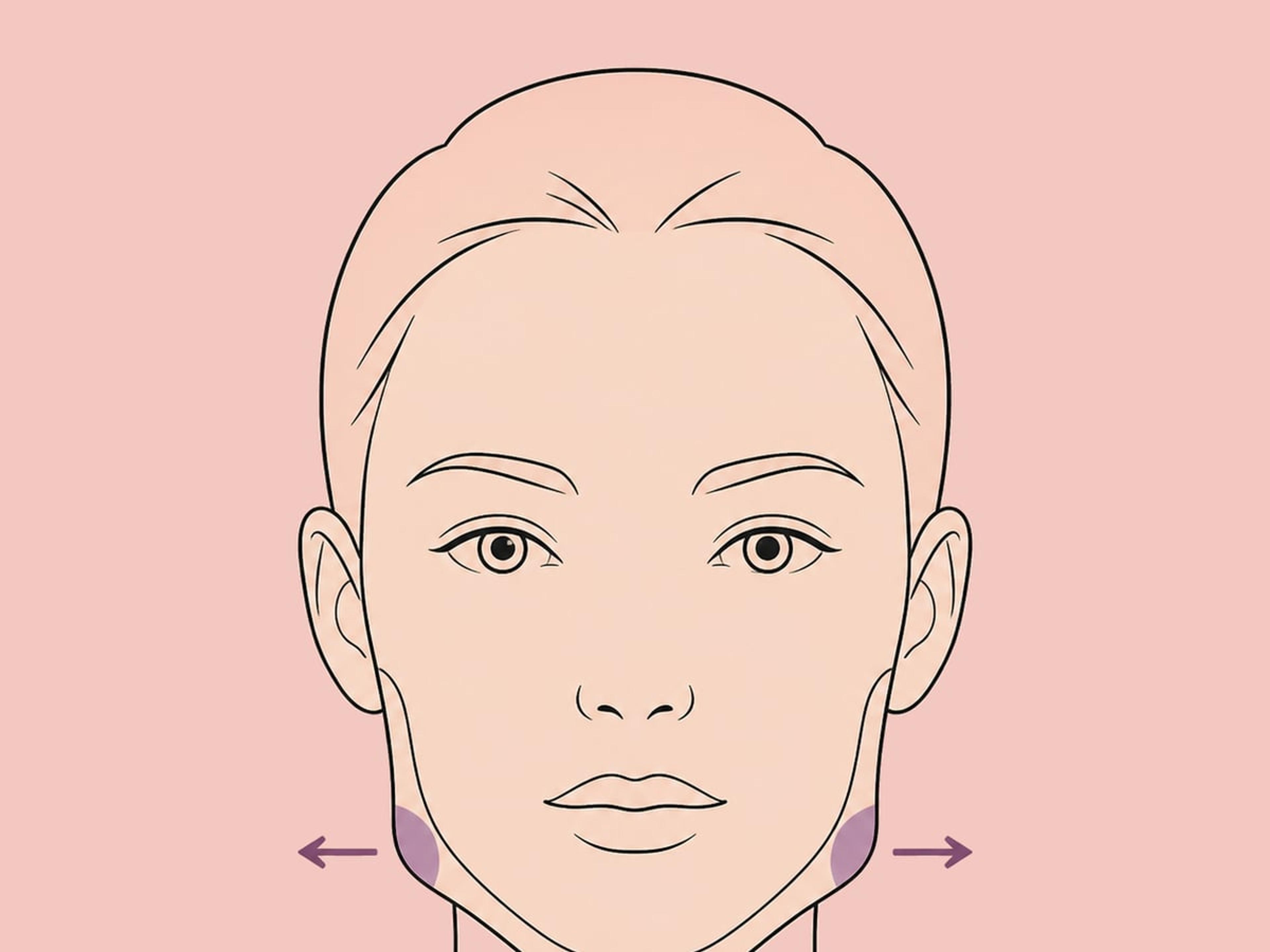
Paired implants that wrap the gonial angles at the back of the mandible, widening a narrow jaw and squaring the lower face. They go in by the same route inside the mouth and suit people whose jaw lacks width rather than whose chin lacks projection — the two are placed together when both are true. As with a chin implant, the change is skeletal and permanent.
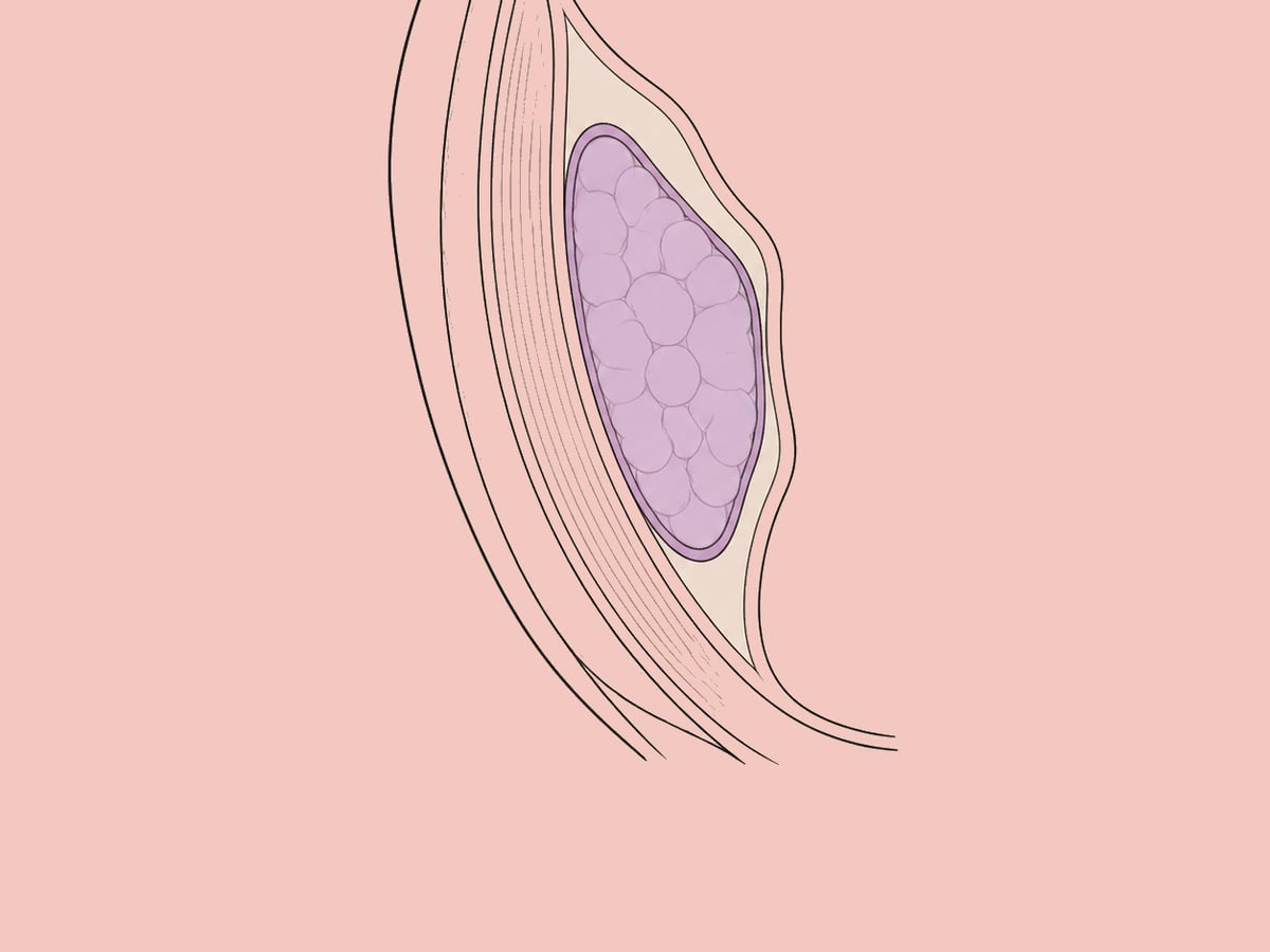
Conservative removal of the deep buccal fat pads through an incision inside the cheek, slimming heavy lower cheeks. It is paired with jawline filler or implants when roundness above the jaw is as much of the problem as softness along it — reducing fullness and sharpening the border at once reads more natural than doing either alone. The removal is permanent, so it is planned conservatively: the fat does not come back if the face thins later.
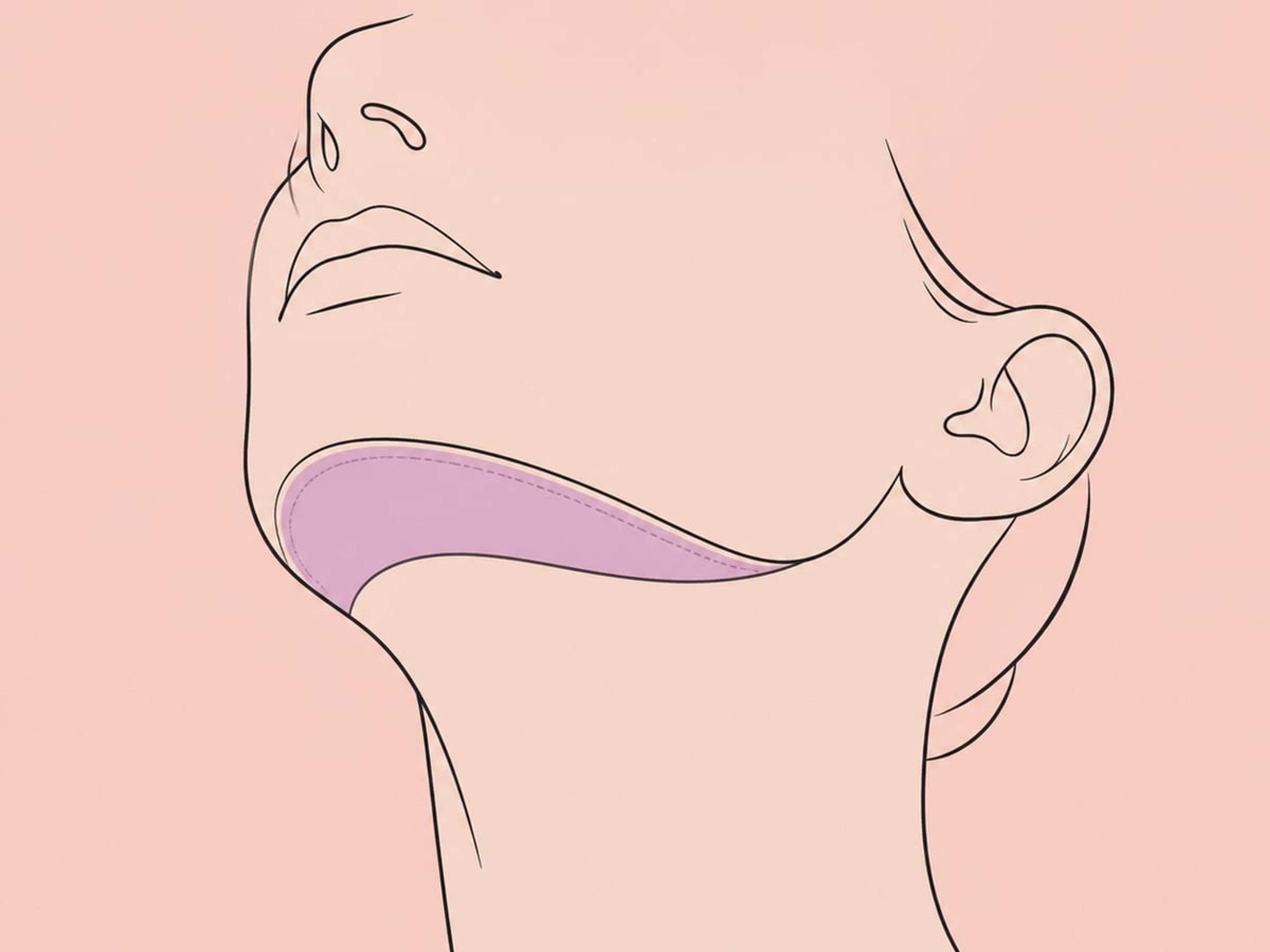
Fine cannula suction removes the fat pad under the chin, uncovering the jaw border rather than building it up. It is the right choice when a double chin is what blurs the jawline, since adding filler over a full submental area only makes the lower face read heavier. It is often done in the same session as jawline contouring.
How a filler session works
Examination and planning
The specialist examines your face and talks through the outcome you want. Together you confirm the filler type — a reversible hyaluronic acid, or a longer-lasting structural option — because that choice decides how adjustable the result will be later.
Marking and photographs
The injection points and depths are marked on your skin, and baseline photos are taken. The markings keep placement precise once the area is numbed, and the photos are what we judge the result against at the two-week review.
Numbing
A topical anaesthetic cream goes on first, and most modern fillers carry lidocaine inside the gel itself. Between the two, what you feel is pressure and a brief sting rather than pain.
Injection
The filler is placed in small amounts with a fine needle or a blunt cannula, checking symmetry between each pass. Building the shape gradually is what keeps the result even and avoids overfilling.
Same-day check and aftercare
You see the initial result immediately, though slightly fuller than where it will settle. Cold compresses on and off for the first 24 to 48 hours limit swelling, and the final shape is reviewed at two weeks.
Recovery, week by week
- Same-day
Mild swelling, redness, and small pinpoint marks at the injection sites. You see an initial result straight away, though the area may look slightly fuller than where it will settle.
- Days 1–2
Swelling and tenderness along the jaw peak at about 48 hours, then fall away quickly. Leave heavy exercise, saunas, and steam rooms for the first few days, and do not massage or press on the jaw for 5 days — the filler has to be left alone to settle evenly along the border.
- Day 3
Any bruising is usually at its peak and covers easily with concealer. Most people are back to normal activity, including work and light exercise.
- Week 1
Swelling has largely gone down and the filler begins to soften and integrate. Small lumps you can feel often smooth out on their own.
- Week 2
The result is considered final. This is when we review the outcome and decide whether a small touch-up is worth doing.
How to prepare
- Stop blood thinners, fish oil, vitamin E, and high-dose ibuprofen for 7 days before, where your own doctor agrees it is safe.
- Skip alcohol for 24 to 48 hours beforehand to limit bruising.
- Reschedule if you have an active cold sore, infection, or recent dental work.
- Come with a clean face and a clear reference photo if you have specific goals.
- Leave at least 2 weeks before any major event, so the result has time to settle.
Risks
Every operation carries risk. We name them so you can ask the right questions.
- Bruising, swelling, and tenderness at the injection sites
- Small lumps, asymmetry, or filler migration away from where it was placed — may need adjustment
- Redness or temporary discoloration of the skin
- Infection or cold-sore reactivation — uncommon
- Vascular occlusion — rare but serious; untreated it can cause tissue necrosis, so it is treated urgently with hyaluronidase
- Delayed nodules or allergic reactions — uncommon
- Chin or jawline implants: temporary numbness of the lower lip while the mental nerve recovers
- Chin or jawline implants: implant shifting or a localised hematoma — uncommon

What to expect in Turkey
A filler appointment in Istanbul is an outpatient one — no admission, no drains, no general anaesthetic. What matters is the care around it: a proper consultation before you commit, one in-clinic review before you fly, and a way to reach us quickly if anything needs attention.
Before you fly
We plan the areas, the number of syringes, and what the result can and cannot do over a video consultation with the surgeon, so nothing is decided in a rush on the day. The preparation steps above apply unchanged. Most EU, UK and US nationals enter Türkiye visa-free for up to 90 days, which comfortably covers a short filler recovery.
At the clinic
Filler is done here as a day case under topical numbing. Airport pickup and English- or Arabic-speaking coordinators are routine for international patients. One point worth checking wherever you go — fillers are often delivered in unlicensed settings, so confirm the specific facility and the injector's medical qualifications.
Recovery in Istanbul
Plan for about 3 days in Istanbul with 2 hotel nights. Swelling and any bruising peak in the first 24 to 72 hours, which is exactly when we want you nearby for a single follow-up review. Rare vascular problems show within minutes to hours, and staying local means we can treat them promptly with hyaluronidase.
Heading home
Short flights are usually fine a day or two after, but we prefer you wait about 7 days where you can. Filler draws water, so cabin pressure can briefly worsen swelling, and keeping you reachable through that first week is simpler than managing it from home.
- United States
- $800 – $1,500 per syringe
- United Kingdom
- £550 – £950 per syringe
- US, UK & Europe — chin or jaw implant surgery
- $4,500 – $11,000
Published typical ranges for orientation — confirm with a local quote.
Frequently asked
How long do dermal fillers actually last?
Most hyaluronic acid fillers last 6 to 18 months, depending on the product and the area. Lips and the mouth break down faster than cheeks or jawline. Biostimulators such as poly-L-lactic acid can last around 2 years.
Will it look obvious that I've had something done?
Conservative dosing in the right hands reads as a well-rested version of you, not a different face. Overfilling is the main reason results look obvious, which is why we often stage appointments rather than do a lot at once.
Does it hurt?
Most fillers contain a built-in numbing agent, and we apply a topical anaesthetic beforehand. You feel pressure and a brief sting. Most people describe it as tolerable rather than painful.
Can fillers be reversed if I don't like them?
Hyaluronic acid fillers can be dissolved within minutes using an enzyme called hyaluronidase. Calcium hydroxylapatite and biostimulator fillers cannot be reversed and must wear off naturally, so we choose them carefully.
Is it worth traveling to Istanbul just for fillers?
Filler is a day case, so the trip is short — about 3 days, with 1 in-clinic review before you fly. The reason to stay local is safety, not luxury: rare vascular problems appear within minutes to hours, and being nearby means we can treat them promptly. Talk to the surgeon before you travel.
How soon can I fly home?
Light activity is fine the same day. Short flights are usually fine after a day or two, but we prefer you wait about 7 days where you can, since cabin pressure can briefly worsen swelling.
How do I know how much filler I need?
A good consultation looks at facial balance rather than treating one line in isolation. Many people start with one to two syringes and reassess at 2 weeks before deciding whether to add more.
Who is not a good candidate for fillers?
Filler is postponed or avoided if you have an allergy to any filler ingredient, an active cold sore or skin infection near the area, a connective tissue disease, or undiagnosed or uncontrolled diabetes. Realistic expectations about what an injectable can change matter just as much — the consultation is where we confirm both.
How should I care for the area afterwards?
Apply ice packs or a cold compress on and off through the first 24 to 48 hours to ease swelling and discomfort. Beyond that no special regimen is needed — consistent skin care and a balanced diet help the result last as long as it can.
Can filler be combined with a facelift?
Yes. Filler restores volume but does not lift loose tissue, so patients with more skin laxity sometimes pair jawline filler with a facelift for a more defined, longer-lasting result. The consultation covers whether one, the other, or both fit your anatomy.
What about PMMA (permanent) fillers?
PMMA (polymethylmethacrylate) is a permanent filler made of non-absorbable microspheres. Because it cannot be dissolved or adjusted if a problem develops, we work with resorbable options instead — hyaluronic acid, calcium hydroxylapatite, and poly-L-lactic acid.
What can jawline filler actually change?
It adds volume along the jaw, defines the transition between jawline and neck, and gives the angle of the jaw a sharper, cleaner line. It can also even out mild asymmetry and soften the look of early laxity and fine lines around the jaw — but it does not lift genuinely loose skin.
Can jawline filler fix a double chin or sagging jowls?
It can smooth mild jowling and sharpen the border around a small fat pad, which is often enough. But where there is a genuine double chin or real skin laxity, filler only adds weight to a lower face that is already heavy — submental liposuction removes the fat, and a neck lift or facelift repositions the muscle layer and takes up loose skin. The consultation is where we say which of the three you actually need.
Should I have jawline filler or a chin implant?
Filler suits mild asymmetry, early jowling, and modest chin height, and it is reversible — many people use it as a test drive before committing to anything permanent. An implant is the honest answer for a chin set well back, because correcting real bone recession with injectable volume takes so much product that the result turns soft and puffy rather than sharp. Practically, filler is a short outpatient visit, while an implant means a 5 to 7 day trip covering consultation, surgery, and post-op checks before you fly.
Will a chin or jawline implant move out of place?
The implant sits in a pocket cut to its exact shape directly on the bone, beneath the muscle, and is anchored with fine medical screws. That fixation is what stops it sliding, and it is why the pocket is made no larger than it needs to be. Shifting is uncommon, and where it happens it is corrected by the same route inside the mouth.
What is recovery like after a chin or jawline implant?
Expect noticeable swelling and a tight sensation across the lower face for the first 3 to 5 days. Because the incisions are inside the mouth, you stay on liquids and soft food for 5 to 7 days and rinse with a prescribed antiseptic mouthwash after every meal to protect the stitches. Most people are back at desk work at 7 to 10 days, and the final contour appears as the last swelling fades over 3 to 6 months.
Is jawline filler different for men and women?
The technique is the same; the shape being aimed at is not. A male jawline is usually asked to read wider and more angular through the mandible, with a strong chin carrying the lower face. A female jawline is more often asked for a smooth, uninterrupted line from the earlobe down to a finer, contoured chin that balances the mid-face. It comes down to where the volume is placed and how much of it — which is what the consultation settles before anything is injected.
What anaesthetic is used for a chin or jawline implant?
Implant surgery is done under general anaesthesia or deep twilight sedation — filler itself needs only topical numbing. The micro-incisions sit inside the lower lip and are closed with self-dissolving oral sutures, so there is no external scar and no stitches to come out later.
Sources
- [1]Dermal Fillers (Soft Tissue Fillers) · U.S. Food and Drug Administration
- [2]Dermal Fillers · American Society for Dermatologic Surgery
- [3]Fillers: Overview · American Academy of Dermatology
- [4]Global Aesthetics Consensus: Avoidance and Management of Complications from Hyaluronic Acid Fillers—Evidence- and Opinion-Based Review and Consensus Recommendations · PubMed Central