




What it is
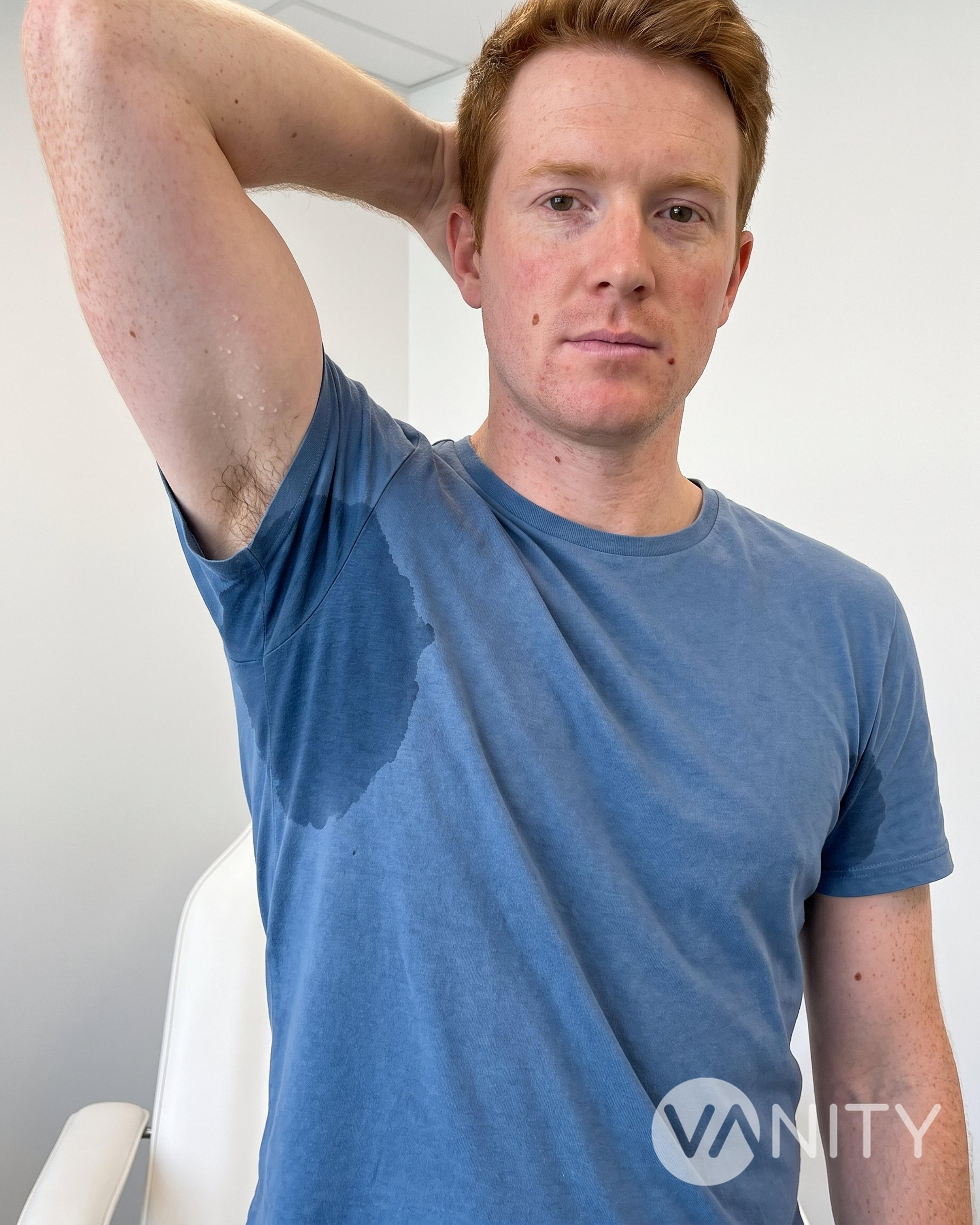
Hyperhidrosis is sweating beyond what the body needs to cool itself. The primary focal form is chronic, often runs in families, usually starts before 25 and settles on specific sites — palms, underarms, soles, face and scalp. Cleveland Clinic puts prevalence at roughly 3% of US adults aged 20 to 60. Treatment escalates in steps rather than starting at the top: prescription-strength aluminium chloride antiperspirant at night on dry skin, then iontophoresis, topical or oral anticholinergics, intradermal botulinum toxin, microwave thermolysis, and surgery only when everything else has failed.
This suits someone whose focal sweating is not controlled by antiperspirants and is interfering with work, grip, clothing or social life — a Hyperhidrosis Disease Severity Scale score of 3 or 4. The botulinum toxin licence is specific about that sequence: it covers severe primary axillary hyperhidrosis inadequately managed by topical agents, and safety and effectiveness in other body areas have not been established. Before any procedural treatment we exclude secondary causes — thyroid disease, diabetes, infection, medication effects, and the wider list a clinician screens for: obesity, menopause, anxiety, Parkinson's disease, heart disease or heart failure, nervous system disorders and some cancers. Sweating that is generalised, or that wakes you at night, points elsewhere and needs a different work-up.
Techniques we use
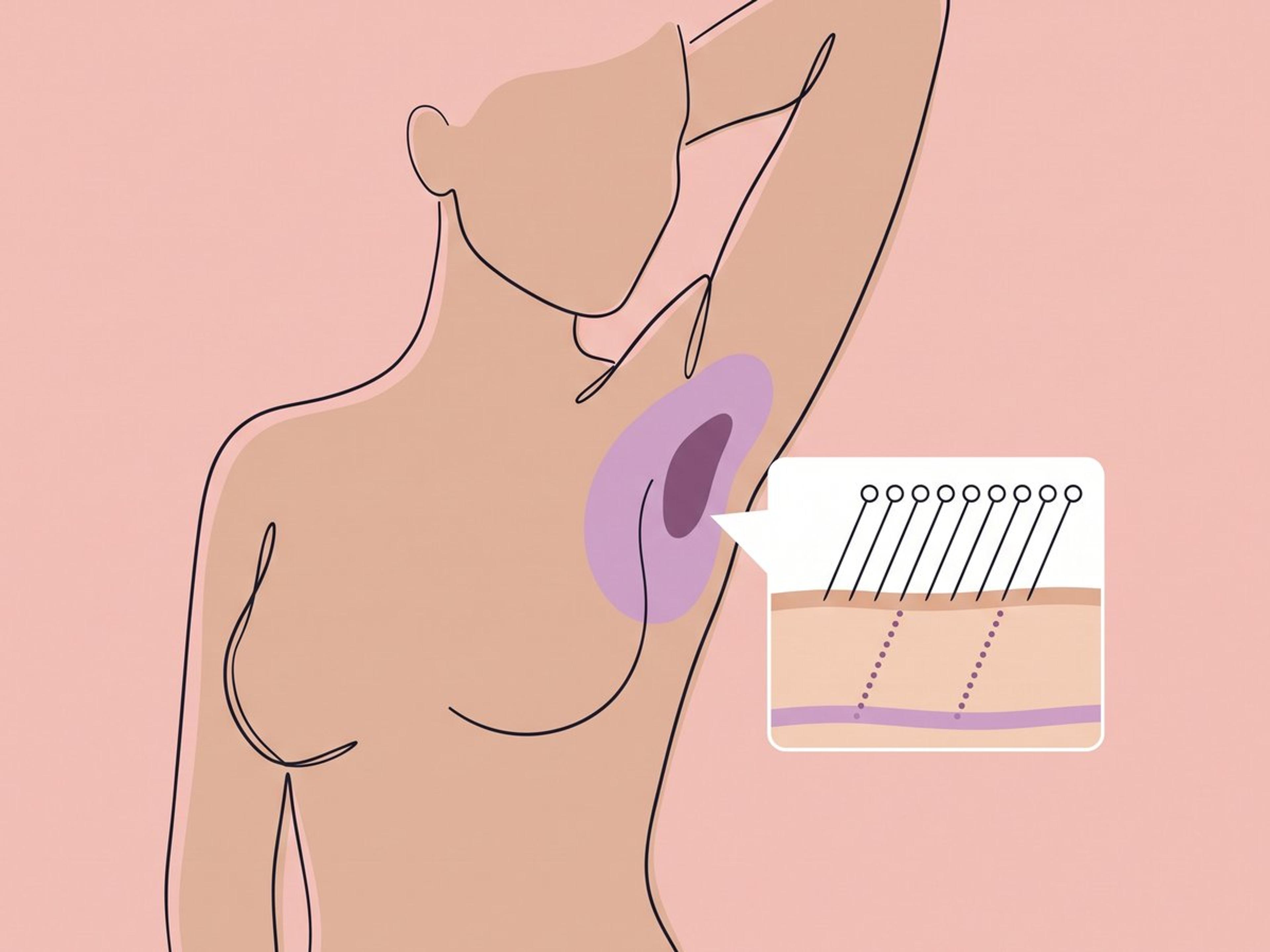
OnabotulinumtoxinA is injected into the dermis to block acetylcholine release at the eccrine sweat gland. The approved axillary regimen is 50 units per axilla, given in 0.1-0.2 mL aliquots across 10-15 sites spaced 1-2 cm apart, at 45° to a depth of about 2 mm. Most people notice reduced sweating within 7 to 10 days, and the AAD reports results lasting 3 to 10 months for underarms and hands, 3 to 6 months for feet.
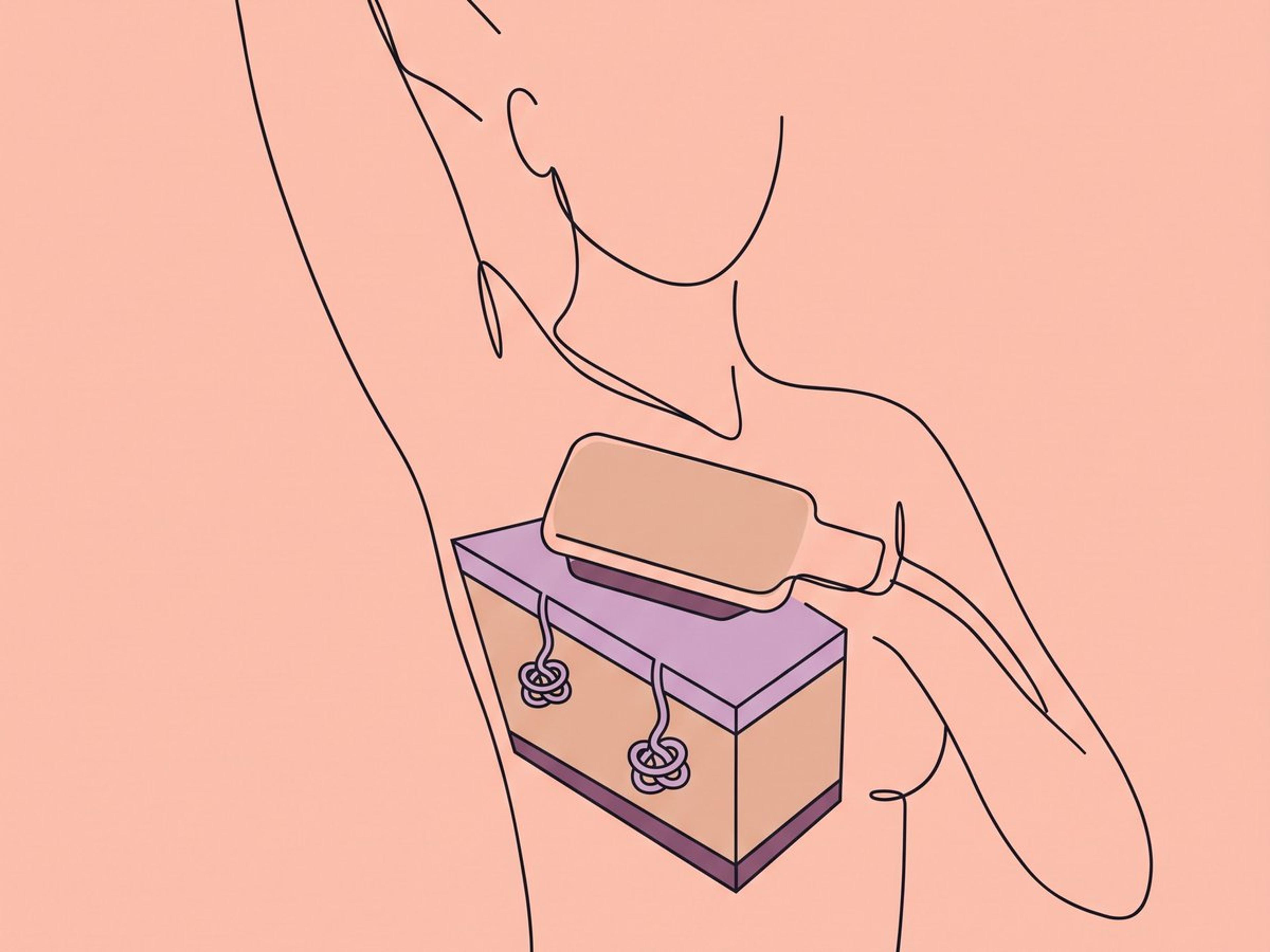
A microwave device delivers energy to the dermal-hypodermal interface to thermally ablate sweat glands, with the skin cooled at the same time, usually over one or two sessions. In the randomised, sham-controlled DRUPS trial the 30-day responder rate was 89% against 54% for sham, and efficacy held from 74% at 3 months to 69% at 12 months. A 2024 randomised trial found sweat reduction equivalent to botulinum toxin at one year, with the added effect of reducing underarm odour and hair.
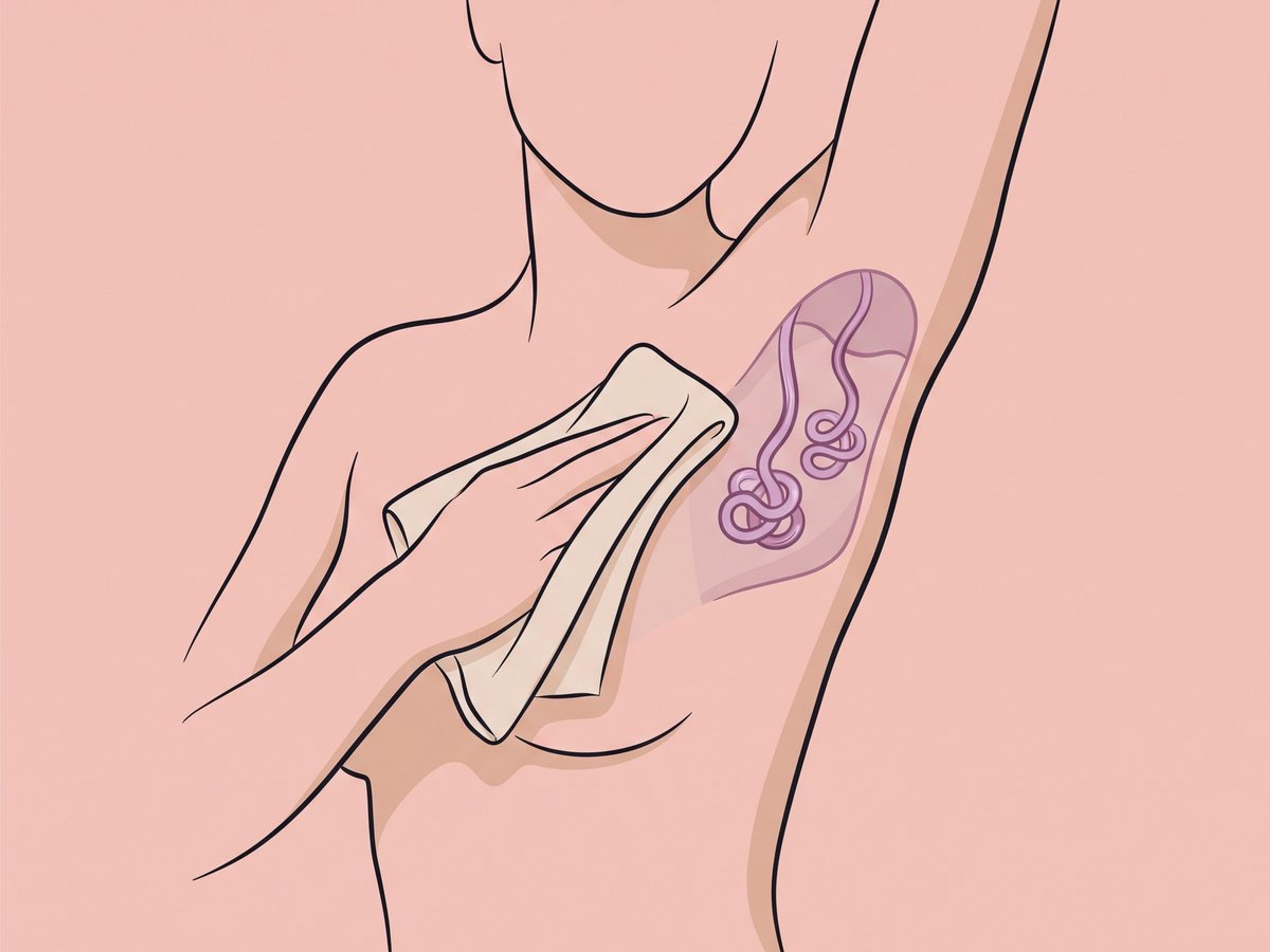
Glycopyrronium tosylate cloth 2.4% is applied once daily to the underarms and blocks muscarinic receptors on peripheral sweat glands; it is approved for primary axillary hyperhidrosis from age 9. Sofpironium gel is a later approval in the same class. The common side effects are anticholinergic and follow transfer of the drug — dry mouth, dilated pupils and blurred vision if the hands are not washed after application.
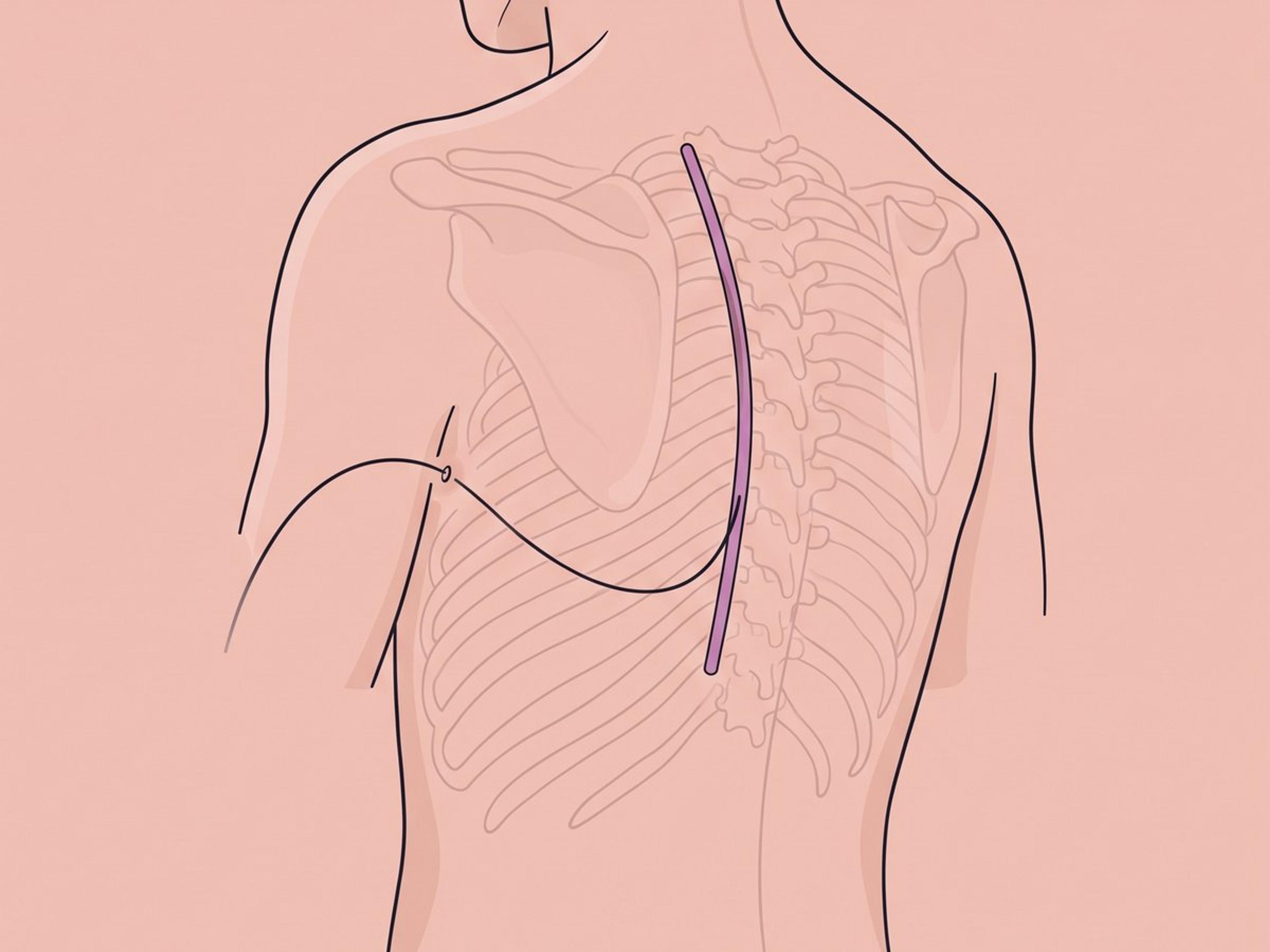
The sympathetic chain supplying the palms or axillae is interrupted endoscopically, permanently stopping the sweating signal to those sites. We reserve it for severe, refractory cases because the effect cannot be undone and compensatory sweating elsewhere is common — a 2025 meta-analysis of 3,117 patients found pooled compensatory hyperhidrosis in 62%, severe in 23%. It is not an entry point to treatment and we will not offer it as one.
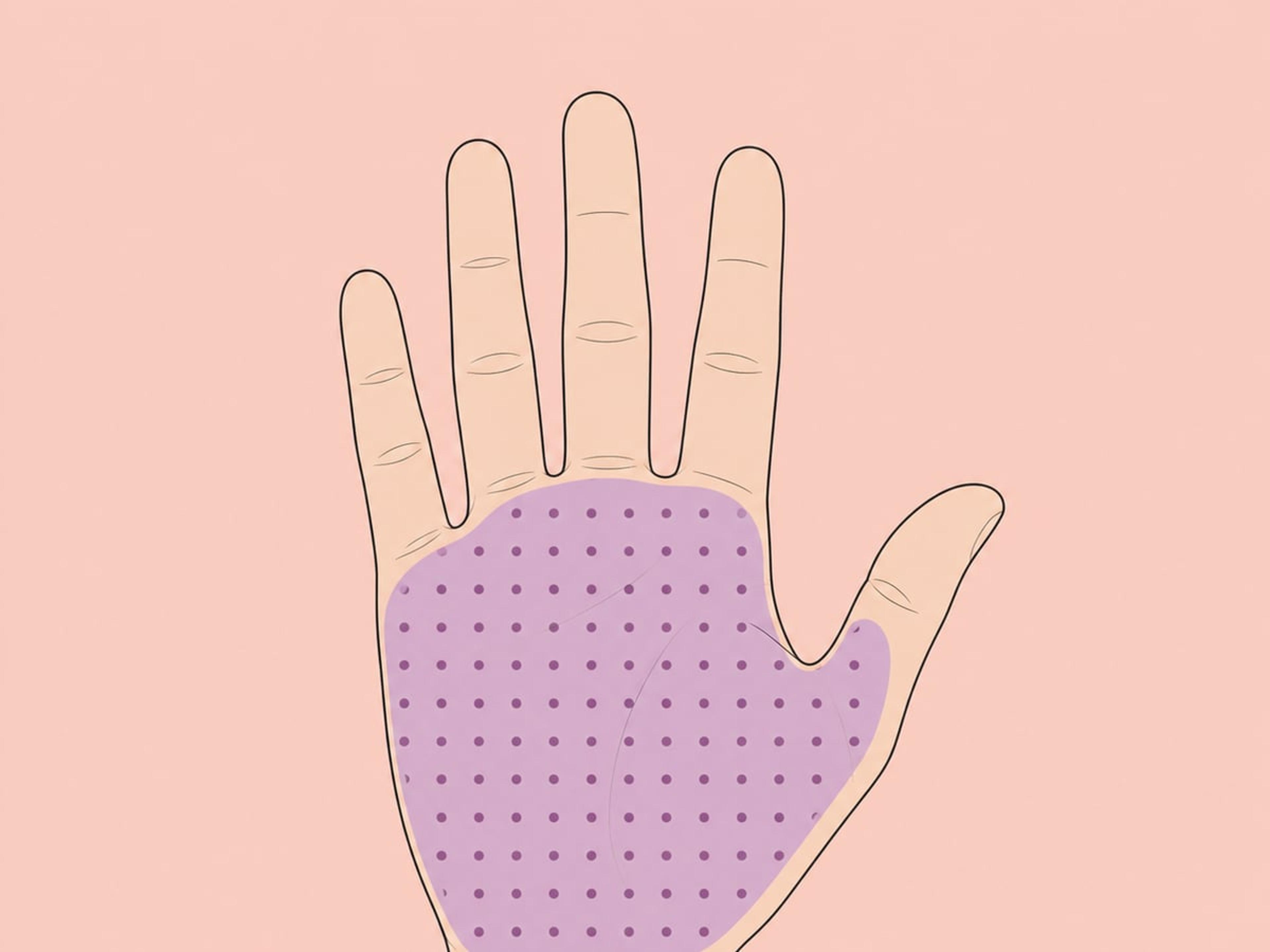
A grid is drawn across the palm and the toxin is placed in shallow micro-injections across it — the same intradermal depth used in the axilla, spread over a far denser field of nerve endings. It suits people whose hands are wet enough to interfere with writing, touchscreens, driving or a handshake and who have not been controlled by iontophoresis. Because the palm is so richly innervated it is done under strong topical anaesthetic, an ice protocol or a nerve block, and it sits outside the licensed indication, so we consent it as off-label and warn that fine grip can be briefly weaker afterwards.
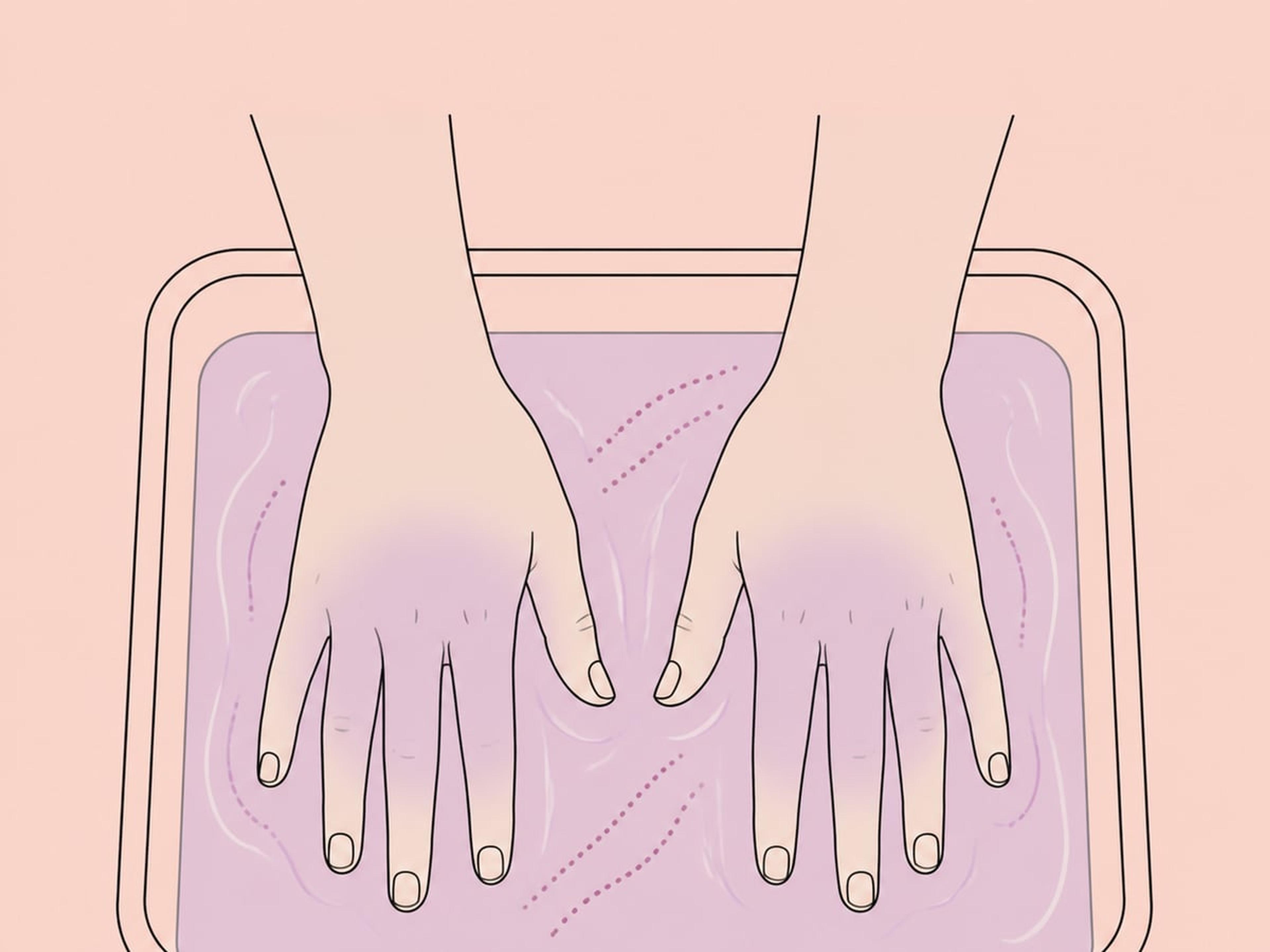
The hands or feet rest in trays of tap water while a device passes a weak electrical current through the water, temporarily shutting down the sweat glands — no drug, no needle. It is the established first-line procedural option for palmar and plantar sweating, where botulinum toxin is off-label and painful to inject. Sessions are short and repeated over several weeks, and home devices make ongoing maintenance practical without travelling anywhere.
Recovery, week by week
- Day 0
The area is cleansed, mapped and pre-numbed, the sequence of micro-injections takes 15 to 30 minutes, and you are discharged straight afterwards. There is no dressing, no admission and nothing to stop you driving or flying the same day.
- Days 1–2
Mild redness, small raised bumps at the injection points and slight tenderness are expected and settle fast. Keep away from the gym, saunas and hot showers and do not rub the treated skin for 48 hours, so the toxin stays where it was placed. After palmar injection a mild weakness of fine grip can show up here and fades over a few days.
- Days 3–7
Sweating falls away progressively as the blocked nerve endings stop signalling. It arrives as a steady reduction rather than a switch, which is why judging the result in the first days is misleading.
- Day 14
The treated area is usually fully dry by now. This is the point the remote efficacy review is set for, because it is the first moment there is a finished result to measure against the map and score taken beforehand.
- Months 4–6
The body metabolises the toxin and the glands gradually resume normal signalling, so sweating returns rather than rebounds. Most people settle into two sessions a year, but the interval is set by when the effect actually fades — the AAD range is 3 to 10 months for underarms and hands.
How to prepare
- Complete the work-up that excludes secondary causes — thyroid function, glucose, infection screening and a medication review. The botulinum toxin label directs evaluation for underlying conditions such as hyperthyroidism.
- Bring evidence of a genuine trial of prescription-strength aluminium chloride antiperspirant applied at night to dry skin, since the licensed indication is for hyperhidrosis inadequately managed with topical agents. A home insurer asked to reimburse will want the same evidence.
- Expect severity to be graded and the sweating area mapped before anything is injected — Hyperhidrosis Disease Severity Scale score and a starch-iodine (Minor's) test, with gravimetric measurement where it is used.
- Do not shave the underarms for about 24 hours before treatment, and arrive with the area clean and free of deodorant or antiperspirant.
- Review blood thinners, aspirin and supplements with us to reduce injection-site bruising, and tell us about any neuromuscular disorder before botulinum toxin.
Risks
Every operation carries risk. We name them so you can ask the right questions.
- Injection-site pain and bleeding — the most commonly reported adverse reactions on the axillary botulinum toxin label, along with pharyngitis and flu syndrome.
- Increased sweating at untreated sites. This is listed on the botulinum toxin label and is usually minor, but it is the dominant complication of sympathectomy, with a pooled incidence of 62% and severe compensatory sweating in 23%.
- Transient muscle weakness when botulinum toxin is injected outside the axilla — notably weakness of grip after palmar injection.
- Anticholinergic effects from topical or oral glycopyrronium or oxybutynin: dry mouth, dilated pupils, blurred vision, constipation and drowsiness. Reduced sweating also impairs cooling, so heat exposure has to be limited.
- After microwave thermolysis: swelling, tenderness and altered underarm sensation are expected. Burns and neuropathic pain are recognised, uncommon, serious risks.
- Distant spread of toxin effect — the boxed warning on onabotulinumtoxinA, covering swallowing and breathing difficulty that can be life-threatening.
- Skin irritation, redness and discoloration from prescription aluminium chloride antiperspirants, worse on damp or freshly shaved skin.

What to expect in Turkey
There is no operation here, so the travel picture is unusually simple — and the honest complication is the timing. Sweat reduction takes 7 to 10 days to appear, which means you will be home before you can see whether it worked. We plan the review around that rather than around hotel nights.
Before you fly
Talk to the doctor who will inject you, before you travel. Ask their specialty and their Turkish Medical Association registration — in Turkey this is a medical act, and a 2015 Ministry of Health circular sent to all 81 provincial health directorates states that the training sits inside plastic surgery and dermatology specialty training, that non-physicians cannot practise on a course certificate, and that it must be done inside a Ministry-licensed health facility. Beauty salons are not health facilities. Decide before you come whether you want injection or microwave thermolysis, because thermolysis normally means two trips, the second around three months later.
At the clinic
The area is mapped, a baseline severity score is recorded, and the injection takes 15 to 30 minutes. You are welcome to ask to see the vial and its batch number before it is reconstituted — we would rather you did. This is a day case; there is no admission, no anaesthetic and no dressing.
Recovery in Istanbul
Two days in total, with 1 hotel night and 1 follow-up visit. The night is not a medical requirement — it exists so injection-site soreness or bruising can be looked at before you leave. Most people are back to normal activity within an hour of the injection.
Heading home
There is no flight restriction, because there is no operation and none of the clotting risks that justify delaying a flight after surgery. Same-day flying is reasonable; we prefer 1 day. Your efficacy review happens remotely at around two weeks, when the result has actually appeared, and care continues for twelve months.
Frequently asked
How long does Botox for underarm sweating last?
The AAD reports results lasting 3 to 10 months in the underarms or hands, 3 to 6 months for the feet and around four and a half months for the face. Most people notice the effect within 7 to 10 days. It is repeated when the clinical effect diminishes, not on a fixed calendar.
Will treating one area make me sweat somewhere else?
Increased sweating at untreated sites is listed as an adverse reaction on the axillary botulinum toxin label, but it is usually minor. It is a far larger problem after endoscopic thoracic sympathectomy, where a 2025 meta-analysis of 3,117 patients found compensatory hyperhidrosis in 62% and severe compensatory hyperhidrosis in 23%. That is the main reason surgery is kept for refractory cases.
Is miraDry permanent?
Microwave thermolysis destroys sweat glands rather than blocking them, so the reduction is long-lasting. In the randomised sham-controlled trial, responder rates held from 74% at three months to 69% at twelve months, where follow-up ended. Most protocols use one or two sessions, and a 2024 randomised trial found it matched botulinum toxin for sweat reduction at one year while also reducing underarm odour and hair.
Can hands and feet be treated, not just underarms?
Yes, but the evidence and the licence differ. Botulinum toxin approval covers severe primary axillary hyperhidrosis only, and safety and effectiveness in other body areas have not been established, so palmar and plantar injection is off-label and we consent it as such. For hands and feet, iontophoresis — a weak electric current passed through water — is a well-established first-line option, usually 20-30 minute sessions repeated over 5 to 10 treatments with weekly or fortnightly maintenance.
Does it hurt?
Underarm injections are brief stinging across 10-15 shallow points, and injection-site pain with small bleeding points is the most commonly reported reaction. Palmar and plantar injections are more uncomfortable and are done with topical anaesthetic, ice or a nerve block. Microwave thermolysis is performed under local anaesthetic infiltrated into the underarm. The sting lasts only as long as each injection; what follows is mild tenderness at the injection points over the first 24 to 48 hours, and it settles on its own — there is no dressing and no recovery to manage.
Who cannot have botulinum toxin for sweating?
It is excluded in neuromuscular disorders such as myasthenia gravis or ALS, where the effect at the neuromuscular junction is unpredictable and can be amplified. It is deferred through pregnancy and breastfeeding, in line with international guidance on cosmetic injectables. And it is not injected through active skin infection, open wounds or an eczema flare in the treatment area — that waits until the skin has healed.
How do I know if it is hyperhidrosis rather than just sweating a lot?
Hyperhidrosis is sweating in excess of what the body needs to cool down, and it can happen at rest or in cold conditions. The NHS suggests seeing a doctor when excessive sweating has lasted at least six months, occurs at least weekly, interferes with daily life, or when there is night sweating or a family history. A clinician can confirm the pattern and rule out an underlying cause.
How much sweating is normal?
Volume alone does not settle it — in heat or hard exercise, losses of roughly half a litre to two litres an hour are ordinary. Hyperhidrosis is defined by the mismatch rather than the amount: sweating at rest, in cool conditions, or far beyond what cooling requires, in a fixed focal pattern. That is why severity is graded on the Hyperhidrosis Disease Severity Scale and the sweat weighed gravimetrically where that is used, instead of asking you to estimate.
What should I try before considering a procedure?
Prescription-strength aluminium chloride antiperspirant applied at night to dry skin is the standard first step. Topical anticholinergics — glycopyrronium cloth 2.4%, approved for primary axillary hyperhidrosis from age 9, and sofpironium gel — are applied once daily. Oral glycopyrronium or oxybutynin reduce sweating body-wide, and propranolol is used for situational, anxiety-driven sweating. Simple measures help alongside any of these: breathable natural fabrics such as cotton, silk or wool, frequent showering, changing socks once or twice a day to keep the feet dry, and staying hydrated so body temperature is easier to regulate.
Does drinking water help stop sweating?
Not in the way the question hopes. Staying hydrated helps the body regulate its temperature, so it is less likely to climb to the point where thermal sweating is triggered — which is why it sits on the list of simple measures alongside breathable fabrics and changing socks. But primary focal hyperhidrosis is sweating that happens at rest and in cool conditions, independent of what cooling actually requires, so no amount of water switches it off. Hydration supports the treatment; it does not replace it.
Is it worth flying to Istanbul for an injection?
Honestly, that depends on what it costs you at home. This is sold per session, not as a cure — in a 15-year cohort of 117 patients, median duration was 6 months after the first injection and 8 months after later ones, so it means roughly one to two trips a year unless you arrange maintenance with a physician near you. Combining it with another reason to travel usually makes more sense than flying for the injection alone.
When is sweating a warning sign that needs urgent care?
Sweating that arrives together with chest pain, nausea or lightheadedness is not a hyperhidrosis question — that combination can signal an acute cardiac or other medical problem and needs immediate attention, not a clinic appointment. Hyperhidrosis itself is diagnosed around a chronic pattern; anything sudden and systemic should be assessed urgently first.
What happens if hyperhidrosis is left untreated?
Constantly damp skin softens and breaks down — cracked or wrinkled (macerated) skin — and becomes more prone to bacterial and fungal infection, itching and persistent odour. None of these are dangerous in themselves, but together with the effect on work, grip and social life they are the practical reasons the condition is treated rather than tolerated.
Does treating underarm sweating also help with body odour?
Usually, indirectly. Underarm odour comes from skin bacteria breaking down secretion on damp skin, so taking away the moisture they work in reduces it, and people tend to notice the smell easing alongside the wetness. It is not a deodorising treatment, though — if odour rather than sweat is the main complaint, say so at consultation, because it changes which option makes sense.
Can the sweat glands be removed directly?
Yes. Local sweat gland removal — surgical excision, suction curettage through a small incision, or laser ablation — physically destroys underarm glands, so the effect on the treated glands is permanent. These techniques sit alongside microwave thermolysis as gland-destroying options, but they involve incisions, possible scarring and a longer recovery, so they are discussed case by case rather than offered as a first-line step.
Sources
- [1]Excessive sweating (hyperhidrosis) · NHS · 2026
- [2]Efficacy and Safety of Botulinum Toxin Type A in Primary Axillary Hyperhidrosis: A Meta-analysis and Systematic Review · Aesthetic Plastic Surgery (PubMed Central) · 2025
- [3]Which patients are more likely to experience compensatory hyperhidrosis after endoscopic thoracic sympathectomy: a meta-analysis and systematic review · PeerJ (PubMed) · 2025
- [4]Hyperhidrosis: Diagnosis and treatment · American Academy of Dermatology · 2024