


Postpartum abdominal changes can leave you looking pregnant because the uterus, skin and abdominal wall need time to recover. A rounded abdomen may reflect normal uterine recovery, stretched skin, body-fat changes or diastasis recti — separation of the abdominal muscles — rather than a failure to “bounce back.” Diastasis recti often improves by about 8 weeks, but postpartum changes can continue for up to a year. Pelvic-floor and deep-stomach exercises may reduce muscle separation, although they cannot guarantee complete correction. Consider a surgical consultation only after recovery, stable weight and, where relevant, breast changes after weaning have settled. A tummy tuck can remove excess skin and fat and repair weakened muscles, but it is major surgery with risks including bleeding, infection, blood clots, poor healing, pain and scarring.
Why do I still look pregnant after giving birth?
You have had the baby, but your abdomen may still look rounded when you catch sight of yourself in the mirror. That disconnect can feel unsettling, especially when other parts of life are already asking you to move on. A postpartum belly is not a sign that your body has failed to recover. Pregnancy changes the uterus, skin and abdominal wall, and those changes do not resolve all at once.
What is happening to the uterus, skin and abdominal wall?
After birth, the uterus gradually returns towards its pre-pregnancy size. Skin and the tissues beneath it have been stretched, while the abdominal muscles may have moved apart to make room for the growing uterus. This separation is called diastasis recti. It is common, and the NHS says it will usually return to normal by the time a baby is 8 weeks old.
Recovery does not follow a neat visual timetable. A rounded abdomen can reflect the uterus, stretched skin, posture, abdominal muscle separation or ordinary postpartum changes in weight and fluid balance. If a lasting separation, loose skin or changed body shape continues to concern you after recovery, a doctor can assess what is contributing before any treatment is considered. A tummy tuck, liposuction, breast lift, vaginoplasty or labiaplasty address different concerns; none is a substitute for a medical assessment.
When does a postpartum belly need medical assessment?
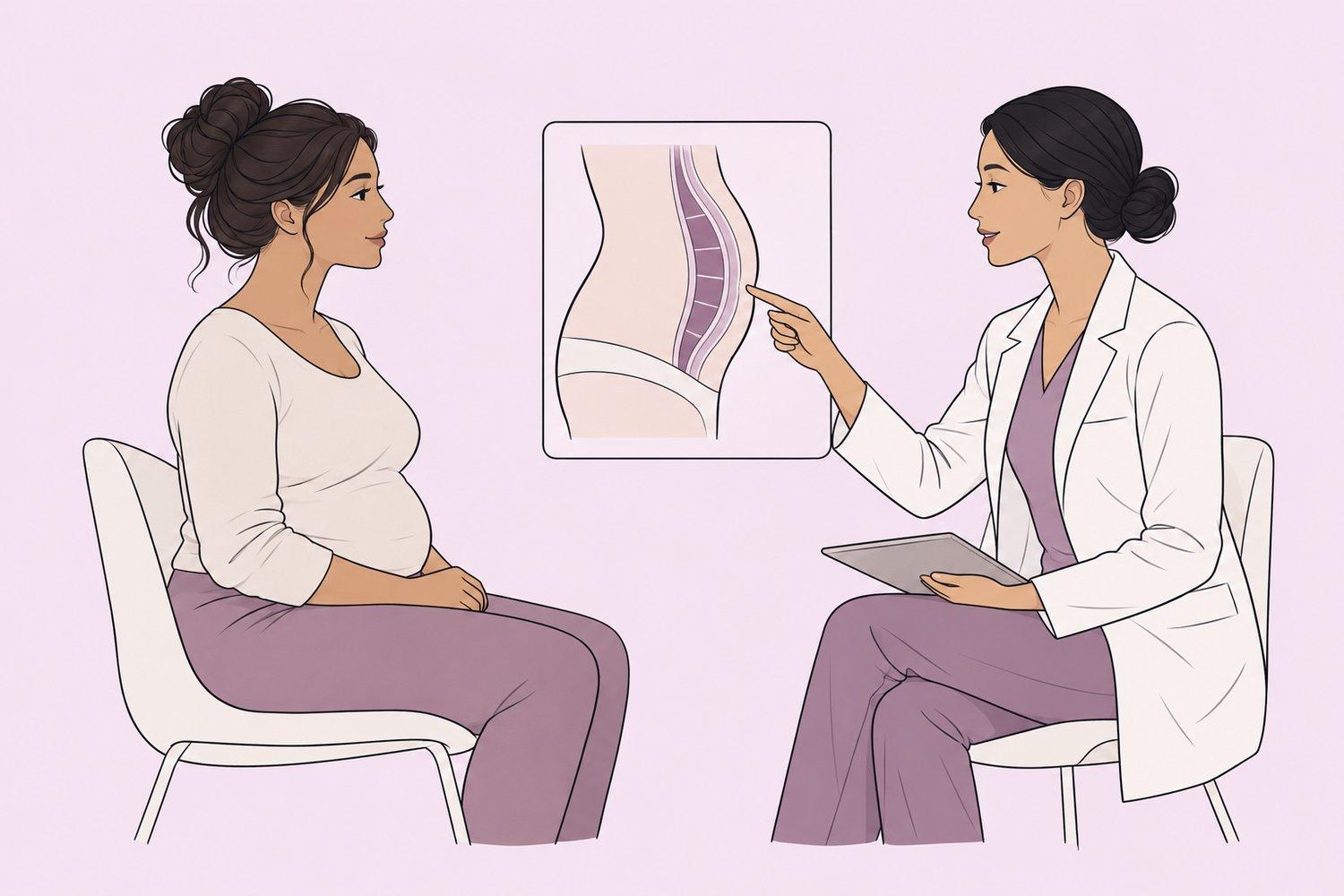
Some symptoms after birth need urgent medical care and should not be treated as cosmetic concerns. Seek urgent help for sudden heavy bleeding, faintness, chest pain, difficulty breathing, or pain, swelling or redness in one calf. For a persistent abdominal bulge, pain or concern about muscle separation, speak with your maternity clinician, GP or a suitably qualified doctor.
Could it be diastasis recti rather than belly fat?
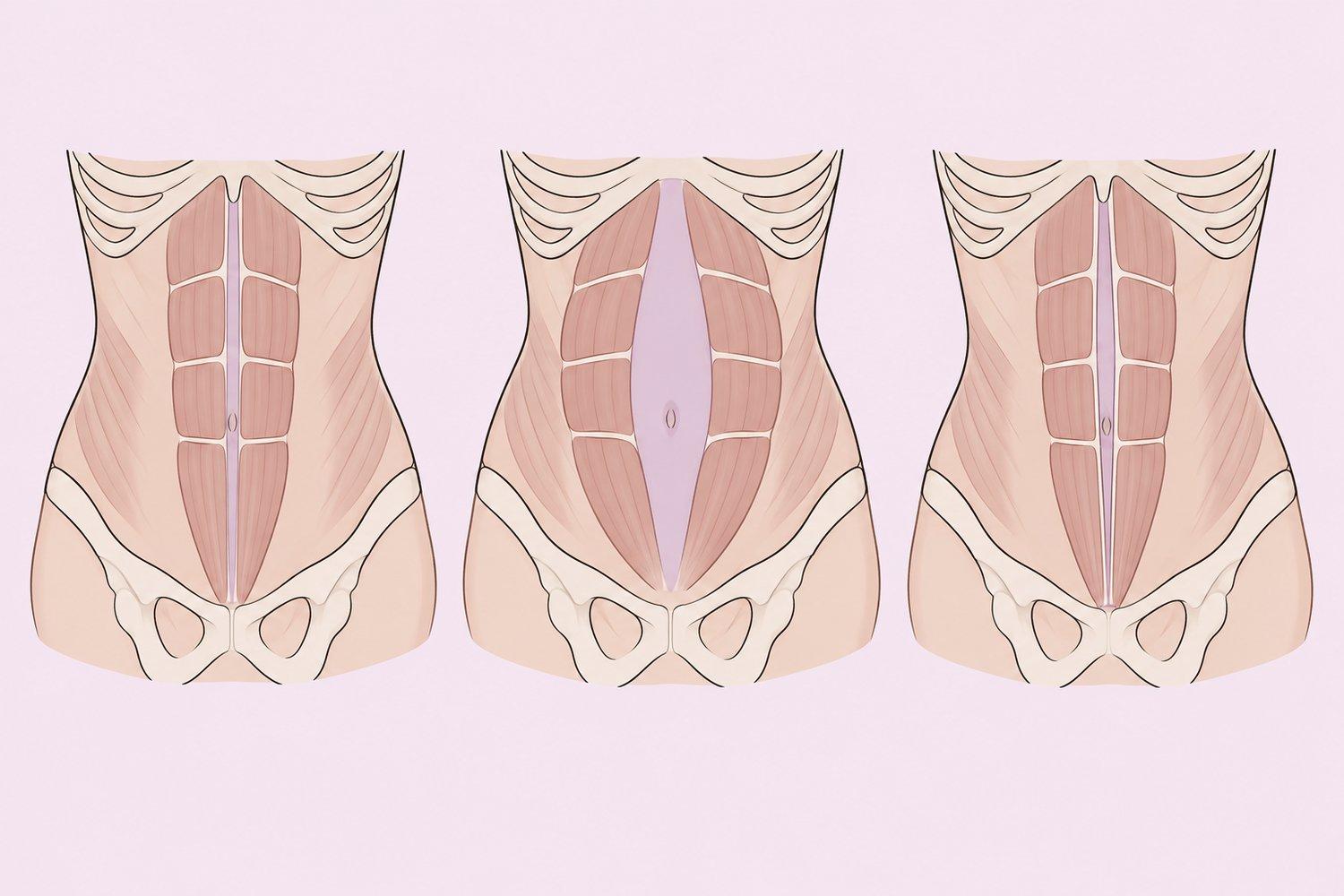
After pregnancy, a rounded abdomen can be caused by more than stored fat. Diastasis recti is an acquired separation between the paired rectus muscles — the vertical muscles at the front of the abdomen — without a fascial defect. It can leave the middle of the abdomen feeling soft or unsupported, and may become more noticeable when you sit up, cough or strain.
What separated abdominal muscles are
Diastasis recti is not the same as a hernia, although the two can look similar. An in-person assessment matters because a surgeon or appropriately trained clinician can examine the abdominal wall, consider your symptoms and rule out another cause of a persistent bulge. The aim is to understand what is actually present before discussing treatment.
What exercise can — and cannot — promise
Regular pelvic-floor and deep-stomach exercises can help reduce the separation. A 2025 systematic review and meta-analysis found moderate-certainty evidence that postpartum abdominal exercise reduces inter-rectus distance, while evidence for many other outcomes remains limited. Exercise may improve control and support, but it cannot promise a particular abdominal shape or resolve every concern.
- A tummy tuck may include repair of separated abdominal muscles when this is appropriate.
- Liposuction removes fat but does not bring separated rectus muscles back together.
- A breast lift, vaginoplasty and labiaplasty address different areas of the body; they do not treat diastasis recti.
- A mommy makeover is a combination of procedures, not a diagnosis or a substitute for examination.
When is a tummy tuck more appropriate than liposuction after pregnancy?
After pregnancy, the abdomen can hold more than one concern at once: skin that no longer settles as it once did, a changed scar pattern, remaining fat, or a feeling of weakness through the abdominal wall. Liposuction and a tummy tuck treat different things. Choosing between them begins with what has changed, not with a photograph or a procedure name.
What abdominoplasty can address
Abdominoplasty, often called a tummy tuck, removes excess skin and fat and can restore weakened abdominal muscles for a firmer abdominal profile. It may be part of a wider post-pregnancy surgical plan sometimes called a mommy makeover, alongside procedures such as a breast lift. Each area still needs its own assessment.
- Excess abdominal skin
- Fat that remains alongside loose skin
- Weakness or separation in the abdominal wall
- The position and pattern of previous abdominal scars
Why liposuction is not a substitute for muscle repair
Liposuction removes fat; it does not remove loose skin or repair weakened abdominal muscles. When skin excess or abdominal-wall weakness is the main concern, liposuction alone may not address the reason the abdomen still appears rounded. Procedures such as vaginoplasty or labiaplasty address separate intimate concerns and are not treatments for the abdominal wall.
Future pregnancy can change tummy-tuck results, so the American Society of Plastic Surgeons advises waiting until childbearing is complete when possible. A surgeon should assess your skin, abdominal wall, scars, health and future plans before recommending treatment. Surgery can improve specific physical concerns, but it cannot make the body untouched by pregnancy again.
What can a mommy makeover include — and what should stay separate?
“Mommy makeover” is a marketing umbrella, not one defined operation. It can describe abdominal surgery, liposuction and breast surgery done in a planned combination. Whether combining procedures is appropriate depends on the individual operations, your health and the recovery each one requires.
Breast lift and body contouring
A breast lift, or mastopexy, removes excess skin and tightens the surrounding breast tissue. It may be considered alongside abdominal surgery or liposuction, but it is still a separate operation with its own consent, scars and recovery. The plan should be based on what each area needs, rather than on the name of a package.
The American Society of Plastic Surgeons lists possible mastopexy complications including changes in nipple or breast sensation, poor incision healing, infection, blood clots and the possibility of revision surgery. Adding abdominal surgery or liposuction changes the overall recovery and risk profile, so the surgeon should explain the combined plan in clear, practical terms.
Labiaplasty and vaginoplasty need their own informed-consent conversation
ACOG describes “vaginal rejuvenation” as a marketing term, not a medical term. For cosmetic genital procedures such as labiaplasty and vaginoplasty undertaken without a medical indication, ACOG says high-quality evidence has not established safety or effectiveness. They should not be treated as a routine part of a postpartum surgery plan.
ACOG advises counselling about pain, bleeding, infection, scarring, altered sensation, pain with sex and the possibility of further surgery. A careful decision leaves room to ask whether treatment is medically indicated, whether another approach may help, and whether you want to proceed at all.
How long should I wait after birth before surgery?
There is no cosmetic deadline after birth. A tummy tuck, liposuction, breast lift, vaginoplasty or labiaplasty is best considered after your body has had time to recover and your priorities are clearer. The American Society of Plastic Surgeons advises waiting until you are fully recovered, hormonally stable and ideally at or near a weight you can maintain.
Weight, hormones and breastfeeding
Postpartum changes can continue for up to a year. Pregnancy-related stretching of the abdominal wall may improve gradually, while weight and hormone changes can affect how the abdomen and breasts look. A tummy tuck may address excess skin or separated abdominal muscles, but it does not replace recovery, nutrition or time.
Breast tissue can continue changing for months after breastfeeding ends. For that reason, a breast lift or other breast surgery is usually planned once breast size has settled. Liposuction and body contouring are also better assessed when weight is stable, so the surgeon can discuss what surgery can realistically change.
Choosing a qualified surgeon and facility
Future pregnancy is part of the decision, especially for a tummy tuck or breast surgery. Pregnancy after these procedures can alter the result, so it is worth discussing your plans openly. Vaginoplasty and labiaplasty also require an individual assessment, including symptoms, healing and the specific changes you are seeking.
How long should I stay in Istanbul, and when can I fly or work again?
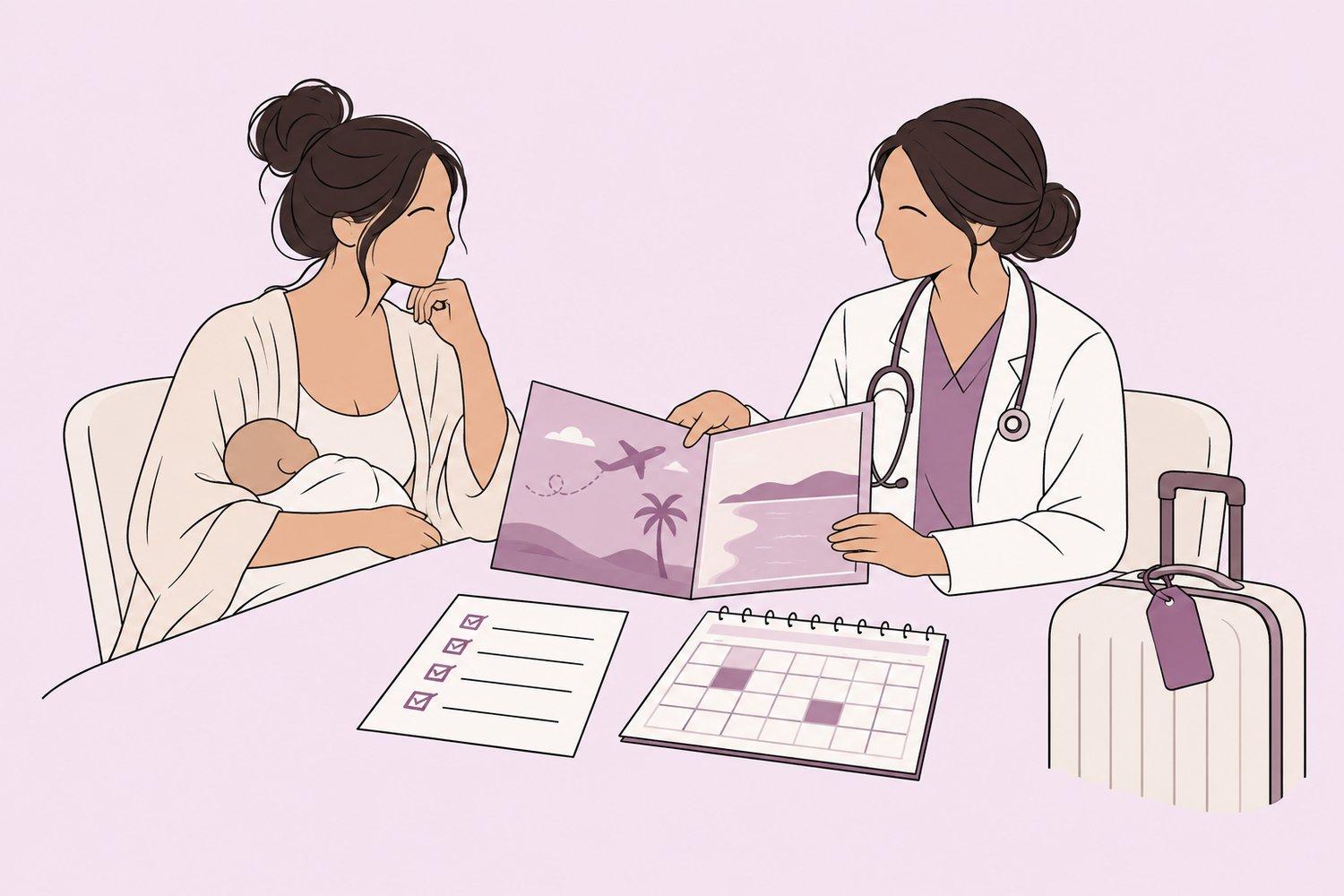
After a tummy tuck, a mommy makeover or abdominal liposuction, the practical question is often when life can resume. Your operating surgeon should clear your travel, work and activity plan, because recovery depends on the procedure, your health and how you are healing.
Flying home after abdominal surgery
CDC guidance for medical travellers advises waiting 10 days before flying after abdominal surgery. Recent surgery and long-distance travel can both increase the risk of venous thromboembolism, including blood clots in the legs or lungs. Discuss your individual risk and prevention plan with your surgeon before booking your return flight.
Do not treat a flight date as a fixed recovery target. Your surgeon will consider your mobility, wound healing, any complications and the journey itself. Follow the instructions you are given about movement, compression, medication and when to seek medical advice after you return home.
Planning childcare, work and follow-up
Early after a tummy tuck, bending, lifting and standing for long periods can be difficult. Arrange practical help with children, shopping and household tasks before surgery. The American Society of Plastic Surgeons notes that some patients return to light work around week 2, but physical work, lifting and strenuous activity need individual surgeon clearance.
If you are unsure what is causing a persistent abdominal change, an online consultation with Vanity’s surgeons can begin with your medical history, recovery stage and concerns. You can discuss whether assessment, time, exercise support or surgery is appropriate for your own case before you travel.
Frequently asked questions
How long can I look pregnant after giving birth?
Abdominal shape can change while the uterus recovers and the skin and abdominal muscles heal. The NHS says diastasis recti commonly returns to normal by about 8 weeks, but not every postpartum change resolves on that timetable. Postpartum body changes may continue for up to a year, so elective body-contouring surgery is usually delayed until recovery and weight are stable.
Can diastasis recti close with exercise?
Postpartum abdominal exercise can reduce the distance between the abdominal muscles compared with no exercise, but research does not identify one guaranteed programme or guarantee full closure. The NHS recommends regular pelvic-floor and deep-stomach exercises to help reduce the separation.
Will liposuction fix my postpartum belly?
Liposuction and abdominoplasty address different concerns. Liposuction removes fat, while a tummy tuck can remove excess skin and fat and restore weakened abdominal muscles. An examination is needed to determine whether the main issue is fat distribution, loose skin, abdominal-wall laxity, diastasis recti or a combination.
When can I have a tummy tuck after pregnancy or breastfeeding?
Abdominoplasty is usually deferred until you have fully recovered, hormonal changes have settled and your weight is near a level you can maintain. Breast surgery should wait until breast changes after weaning have settled. If you plan more pregnancies, waiting is worth discussing because a future pregnancy can alter tummy-tuck results.
Is vaginoplasty or labiaplasty part of a mommy makeover?
Vaginoplasty and labiaplasty may be marketed alongside postpartum cosmetic surgery, but they are not a required or standard part of a mommy makeover. ACOG says high-quality evidence has not established the safety or effectiveness of genital cosmetic surgery for nonmedical indications, and risks and alternatives need explicit discussion.
How many days should I stay in Istanbul after a tummy tuck?
There is no one-size-fits-all itinerary: remain in Istanbul until your operating surgeon has assessed you and cleared travel. CDC guidance advises medical travellers not to fly for 10 days after abdominal surgery. This minimum does not replace individual surgical clearance or follow-up planning.
When can I return to work after a tummy tuck?
Some patients can return to light work around week 2, but recovery varies with the procedure, healing and whether work involves lifting or prolonged standing. Plan childcare and help at home because early recovery can limit lifting, bending and standing.