


Facelift surgery may be worth discussing when your main concern is skin laxity, jowls, soft-tissue descent or neck looseness rather than a local loss of volume. Filler can restore selected contours and soften creases, but it does not reposition descended tissue or remove excess skin, and it usually requires repeat treatment as it dissipates. There is no right age or syringe count for surgery: anatomy, skin quality, health and your goals matter more. A surgeon can assess whether less filler, no further treatment, volume restoration, a facelift or a combination best fits your concerns. A facelift also involves recovery and risks, including bruising, swelling, bleeding, infection, wound-healing problems.
What is filler fatigue — and could a facelift address my concern better?
“Filler fatigue” is a patient-described concern, not a diagnosis. It may describe feeling that repeat filler is no longer giving the facial shape you want, or that added volume is not addressing looseness or descent. A consultation should begin with what has changed in your face and what you would like to look more like yourself again.
What fillers can and cannot correct
Dermal fillers can restore or refine volume and contour in selected facial areas. They may plump thin lips, enhance shallow contours and soften facial creases. They dissipate over time, however, so maintaining the effect may require repeat injections. Filler does not reposition tissue that has descended or remove excess skin.
- Filler may suit a local loss of volume or a shallow contour.
- Repeat filler may be less satisfying when the main concern is lax skin or changed facial position.
- A surgical assessment can distinguish a volume concern from tissue descent, or a combination of both.
Why facial ageing is not only volume loss
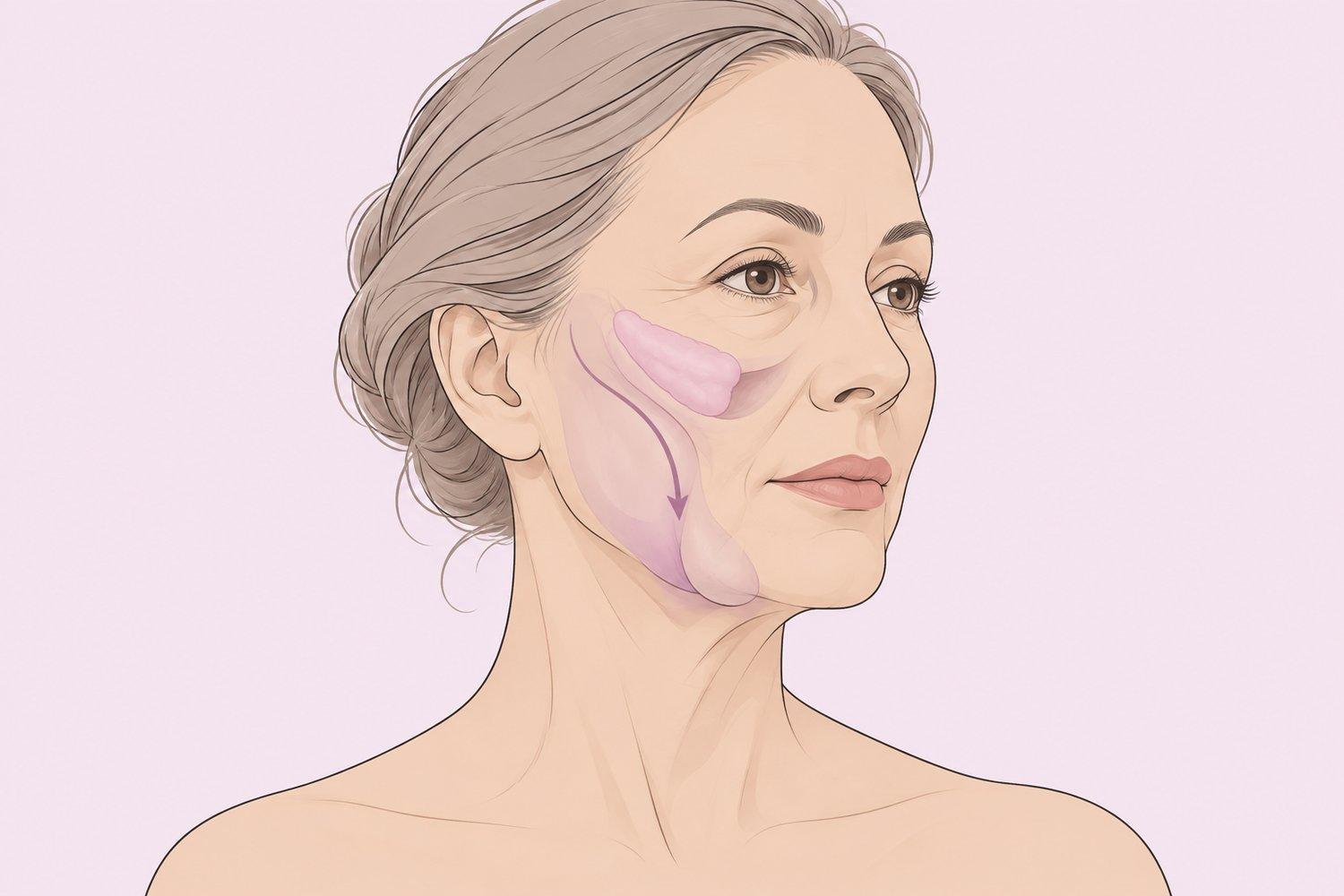
Facial ageing involves changes in volume, skin elasticity and the relative position of facial tissues. Together, these changes affect contour and shape. Facelift surgery is designed to address skin laxity and soft-tissue descent, while the surgeon considers volume loss separately. It is not a substitute for every concern, and filler may still have a role where carefully selected volume restoration is appropriate.
What signs suggest I should discuss a facelift rather than add more filler?
The useful question is not how many syringes you have had, or your age. It is whether the concern is mainly lost volume, or whether facial and neck tissues have begun to descend or loosen. Filler can address a local volume deficit. It does not directly reposition lax facial or neck tissue.
Signs that point to laxity or descent
A surgeon assessing facial ageing looks at how the soft tissues sit over the face and neck, not one feature in isolation. Jowls, soft-tissue ptosis, excess neck skin and platysma laxity or banding can suggest that tissue position and skin laxity deserve discussion alongside any volume loss in the midface.
Why age and syringe count are not decision rules
There is no fixed age at which a facelift becomes appropriate, and a syringe count does not make surgery necessary. Genetics, skin quality, lifestyle, anatomy and your own goals all matter. Some people may decide that less filler, a different filler plan, or no further treatment is right for them. Others may wish to discuss whether a facelift better matches the change they see.
Do I need to dissolve filler before a facelift?
Not always. Dissolving filler before a facelift is not a universal rule, and it should not be decided from photographs or a treatment trend. The surgeon needs to understand what has been injected, where, when and how your face has changed since. ASPS notes that there is currently no real evidence that filler itself adversely affects facelift outcomes, but each consultation is individual.
Bring a complete injectable history
Bring details of all previous injectable treatments, including filler type if known, the areas treated, approximate dates and any reactions. Your wider medical history matters too. This allows the surgeon to assess your health, relevant risk factors and possible complications before discussing whether surgery, dissolution or no further treatment is appropriate.

How previous filler changes the consultation
Previous filler can affect how the face is assessed: volume may be adding support in one area while masking laxity in another. The question is not simply whether filler is present, but whether the tissues can be evaluated clearly and what result surgery can realistically achieve. A surgeon may recommend leaving filler in place, allowing time for assessment, or discussing dissolution where there is a clinical reason.
If you have new pain, marked colour change, increasing swelling, skin changes or other concerning symptoms after an injection, seek medical assessment promptly. Filler complications can include infection, nodules, granulomatous reactions, vascular occlusion and migration. Those concerns need medical care before elective surgical planning.
What are the alternatives to facial filler if I am not ready for a facelift?
The right alternative depends on what you are trying to address: lines made by muscle movement, changes in skin quality, early volume loss or loose facial and neck tissue. These treatments work on different problems. They should not be presented as a substitute for a procedure designed to reposition significant laxity.
When a smaller procedure or skin-focused plan may fit
Botulinum toxin may be considered for lines caused by facial movement. Skin-care measures and selected skin treatments may help with specific skin concerns. A surgeon assesses these options in the context of your anatomy, skin quality, degree of ageing and the changes you would like to see.
- Botulinum toxin for concerns related to muscle movement
- Skin-care measures for ongoing skin support
- Selected skin treatments for specific skin concerns
- No radiofrequency treatments in our facial-rejuvenation pathway
These approaches can be useful when the concern is focused and the skin and underlying tissues have not descended significantly. They do not lift lax cheeks, jowls or neck tissue. If repeated filler is being used to compensate for looseness, it is worth discussing whether volume is still the main issue.
When surgery and volume restoration may be combined
There is no single facelift technique that suits every face. Surgical planning considers your anatomy, skin quality, degree of ageing and goals. Depending on that plan, a facelift may involve redistributing facial fat and tissue, or adding fat to areas where volume restoration would support the result.
How long should I stay in Istanbul after a facelift, and when can I fly or work again?

Plan your stay around recovery, not a fixed itinerary. The NHS advises avoiding flying for 7 to 10 days after facial cosmetic procedures. Your operating surgeon should make the final decision after reviewing your healing and postoperative plan in person.
Plan for an in-person review before departure
A follow-up appointment before you travel gives the surgeon a chance to assess swelling, wounds and any concerns that need attention. Flying and surgery can each increase the risk of blood clots, and prolonged sitting while recovering may add to that risk, as the CDC Yellow Book notes.
Flying home and returning to work are separate decisions
Being fit to fly does not necessarily mean you will feel ready to return to work. NHS guidance says facelift recovery takes about 2 to 4 weeks, with visible bruising for at least 2 weeks. The American Society of Plastic Surgeons notes that many people feel ready for work and light activity near the end of the second postoperative week, but recovery varies.
Final results take longer than the practical recovery period. The NHS advises that these may continue to settle over 6 to 9 months. Give yourself room for a gradual return, and let your surgeon’s assessment guide both travel and work plans.
How can I assess facelift safety and choose a surgeon when travelling internationally?
A facelift is a surgical decision, not a travel package. Safety starts with informed consent: a clear explanation of what the operation may address, what it cannot change, and the risks that apply to you. ISAPS advises international patients to choose an appropriately qualified plastic surgeon and confirm that both treatment and recovery arrangements meet the country’s regulatory safety standards.
Questions to ask before booking
Ask who will perform your consultation and operation, what relevant qualifications and board certification they hold, and where surgery and recovery will take place. You should understand the anaesthesia plan, whether an overnight bed is available if needed, and who will review you afterwards. A careful surgeon should also explain that facelift risks include bleeding, infection, poor wound healing, fluid accumulation, scarring and prolonged swelling.
Plan for complications and follow-up at home
Before travelling, ask exactly how a concern will be assessed from home, who you contact out of hours, and when an in-person review or return travel may be necessary. The NHS notes that travel insurance may not cover complications from cosmetic surgery abroad. Confirm the financial and practical arrangements before booking, including continuity of care with the surgeon who knows your operation.
If you are unsure whether your concern is volume loss, skin quality or tissue descent, arrange an online consultation with Vanity’s surgeons before you travel. You can discuss your treatment history, concerns, recovery plans and what surgery can realistically address.
Frequently asked questions
How do I know if I have filler fatigue or just need less filler?
“Filler fatigue” is not a formal diagnosis. The useful question is whether the concern is local volume loss or laxity and soft-tissue descent; a facial assessment considers jowls, midface volume, neck skin, platysma laxity, skin quality and your goals.
Can a facelift replace cheek, jawline and nasolabial-fold filler?
A facelift addresses visible signs of ageing in the face and neck, while filler restores selected contours and volume. Their purposes overlap but are not identical, and some facelift plans may redistribute facial fat or add fat when individual assessment suggests volume restoration is needed.
Will years of filler make my facelift harder or less successful?
Give the surgeon a complete history of fillers and other injectables so they can plan and assess risk appropriately. The American Society of Plastic Surgeons states that there is currently no real evidence that prior fillers worsen facelift outcomes, although each case requires individual assessment.
Do I have to dissolve filler before a facelift?
No universal rule requires filler to be dissolved before a facelift. The decision depends on your injectable history, anatomy and surgical plan, so bring product names, treatment areas, dates and details of any previous filler complications to your consultation.
How long do I need off work after a facelift?
NHS guidance estimates 2 to 4 weeks for facelift recovery, with visible bruising lasting at least 2 weeks. The American Society of Plastic Surgeons notes that many people feel ready for work and light activity near the end of week 2, but recovery varies.
How long should I stay in Istanbul before flying home after a facelift?
NHS guidance recommends avoiding flying for 7 to 10 days after facial cosmetic procedures. Your operating surgeon should confirm that you are fit to fly after a postoperative review, because surgery and air travel can both raise blood-clot risk.
When will I look presentable after a facelift?
Bruising and swelling are common after a facelift, and visible bruising may last at least 2 weeks. Residual swelling and tightness can continue during weeks 3 and 4, while the full effect may take 6 to 9 months to settle.