

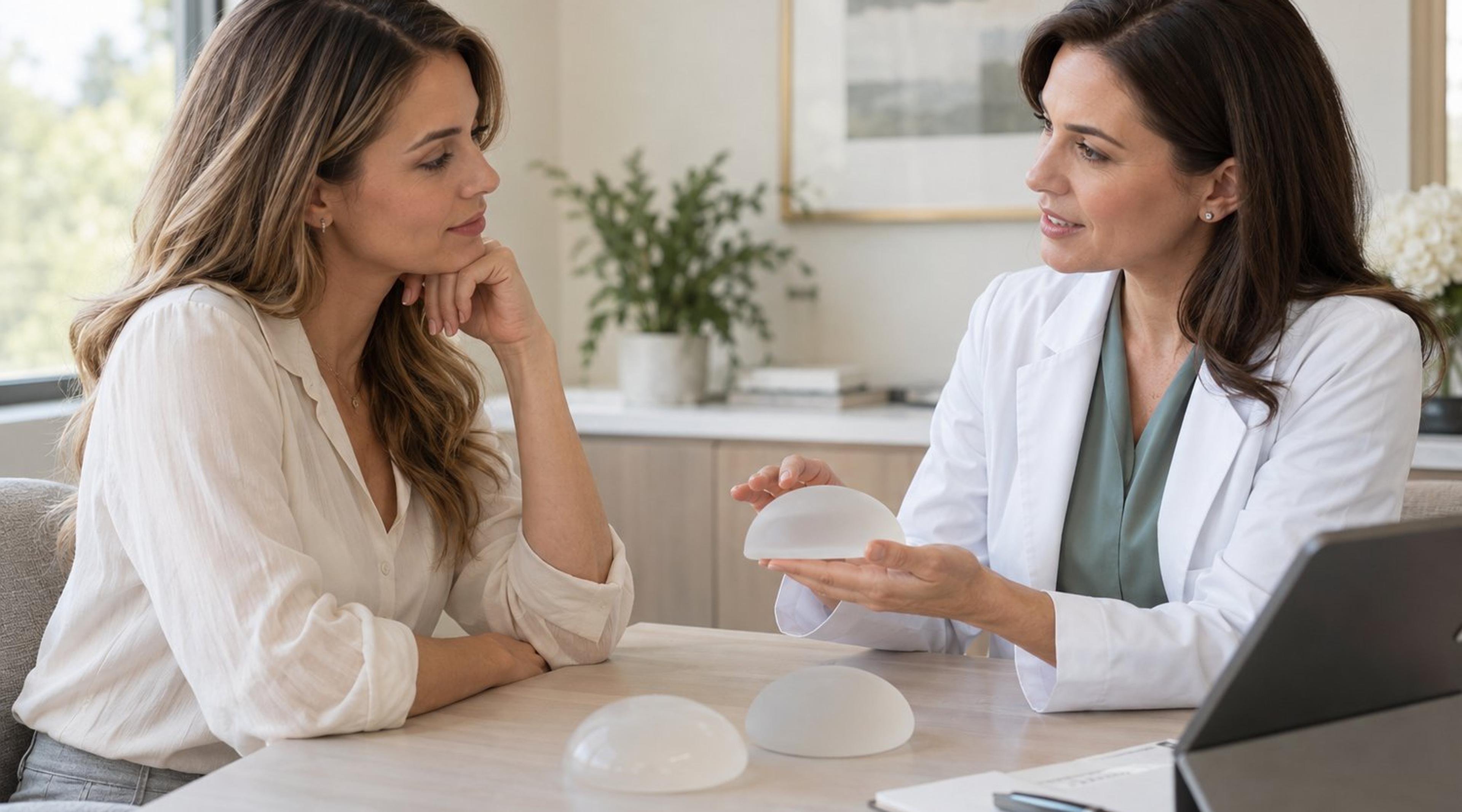
B-Lite® implants can offer a larger breast augmentation with less implant weight than conventional silicone-gel implants of a comparable volume. They are designed to reduce weight by up to 30% while maintaining similar volume and shape. That does not mean any larger size is appropriate: breast width, skin stretch and soft-tissue coverage still determine what your body can support carefully. Lighter implants also do not remove the usual risks of breast implants or prove that sagging, complications or future surgery can be avoided.
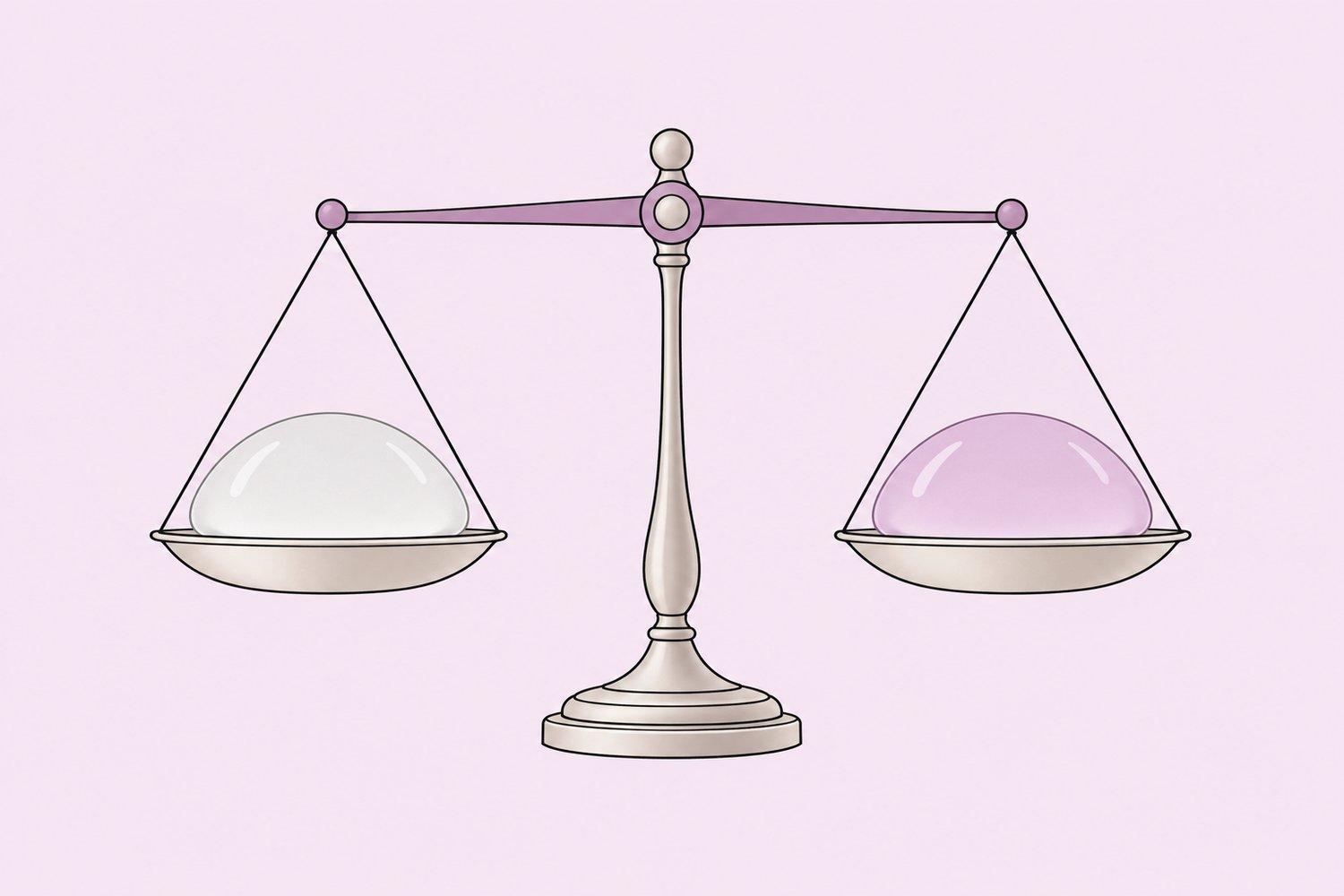
Can I go bigger without a heavier implant?
Sometimes. With conventional breast implants, increasing volume usually also increases implant weight. B-Lite® implants are designed to change that relationship: they use silicone gel containing air-filled microspheres, reducing implant weight by up to 30% while maintaining volume and mechanical properties.
Why conventional implant volume and weight usually rise together
A conventional implant with more volume generally contains more material, so its mass rises with its size. This matters when discussing a larger augmentation because the implant is supported by your own breast tissue and skin. Volume is only one part of the decision; your chest measurements and tissue envelope still determine what can be considered carefully.
How B-Lite® changes the weight-to-volume relationship
At a comparable volume, a B-Lite® implant can have less mass than a conventional implant. That may make it relevant if you are considering more volume while seeking a lighter implant, but it does not make every requested size suitable. Your surgeon should assess the available tissue and explain where a larger implant may place more strain on it over time.
Does a lighter implant make a real difference to how my breasts feel and age?
Weight is one part of the decision, not a prediction of how your breasts will change. Implant mass interacts with skin, breast tissue and the supporting tissues as you move. It is reasonable to consider whether reducing that load may matter over time, especially when choosing a larger volume, but breast ageing also reflects skin quality, anatomy, pregnancy, weight change and implant position.
The plausible reason weight matters
A lighter implant may place less downward force on the tissues during everyday movement. A small 2019 pilot study in Aesthetic Surgery Journal explored breast motion after reduced-mass implantation, which supports this as a plausible mechanical question. Its sample was too small, however, to show that lighter implants prevent sagging or produce a better long-term result.
What the B-Lite studies can and cannot show yet
A 2026 prospective multicentre study followed 101 people having primary B-Lite augmentation. It adds useful follow-up information, but it was single-arm and manufacturer-sponsored, so it cannot establish whether B-Lite performs better over the long term than conventional implants. Comparative evidence is still limited.
What decides whether a bigger implant is right for my body?
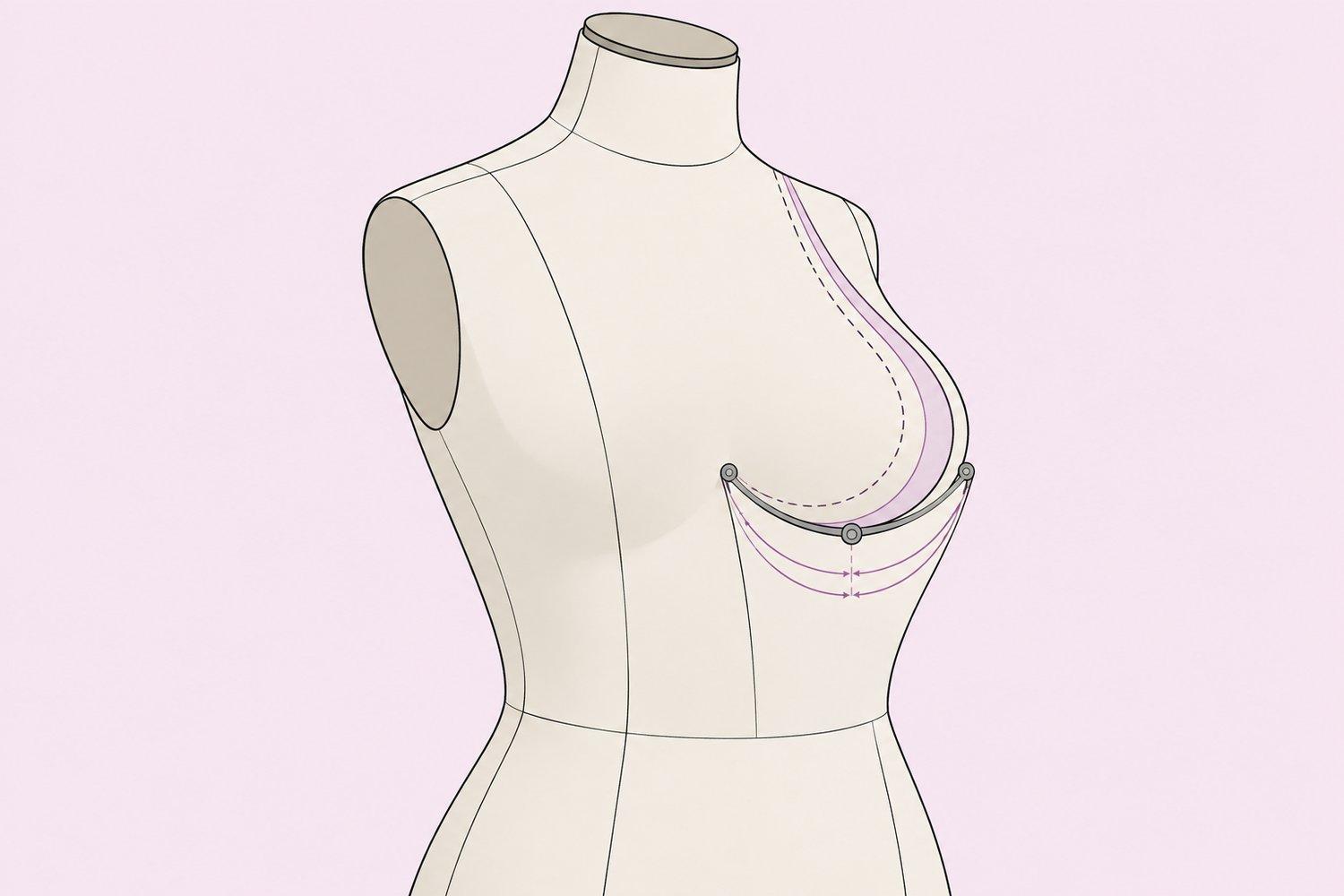
A bigger implant is not chosen by cup size alone. The safer starting point is the breast you have now: its width, the quality and amount of tissue covering an implant, and the shape you would like to keep or create. These measurements help the surgeon match implant dimensions and volume to your anatomy.
Measurements that matter more than cup size
Published tissue-based planning considers breast base width, skin stretch, nipple-to-fold distance and soft-tissue thickness. Together, these show how much volume the breast may support and whether an implant’s width and projection suit its natural frame. Cup sizes vary between bra brands, so they are a poor substitute for an anatomical plan.
- Breast base width, which guides implant width
- Skin stretch and nipple-to-fold distance, which affect how the lower breast can accommodate volume
- Soft-tissue thickness, which affects how well implant edges may be covered
- The desired breast shape and projection, considered alongside these measurements
Why placement and soft-tissue coverage change the plan
The same implant can look and feel different depending on where it is placed and how much soft tissue covers it. When implant size is not reconciled with individual tissue characteristics, reported problems include skin stretching or thinning, visible or palpable edges, rippling, bottoming out and displacement. Placement is therefore part of the size decision, not an afterthought.
Are lighter implants safer than traditional implants?
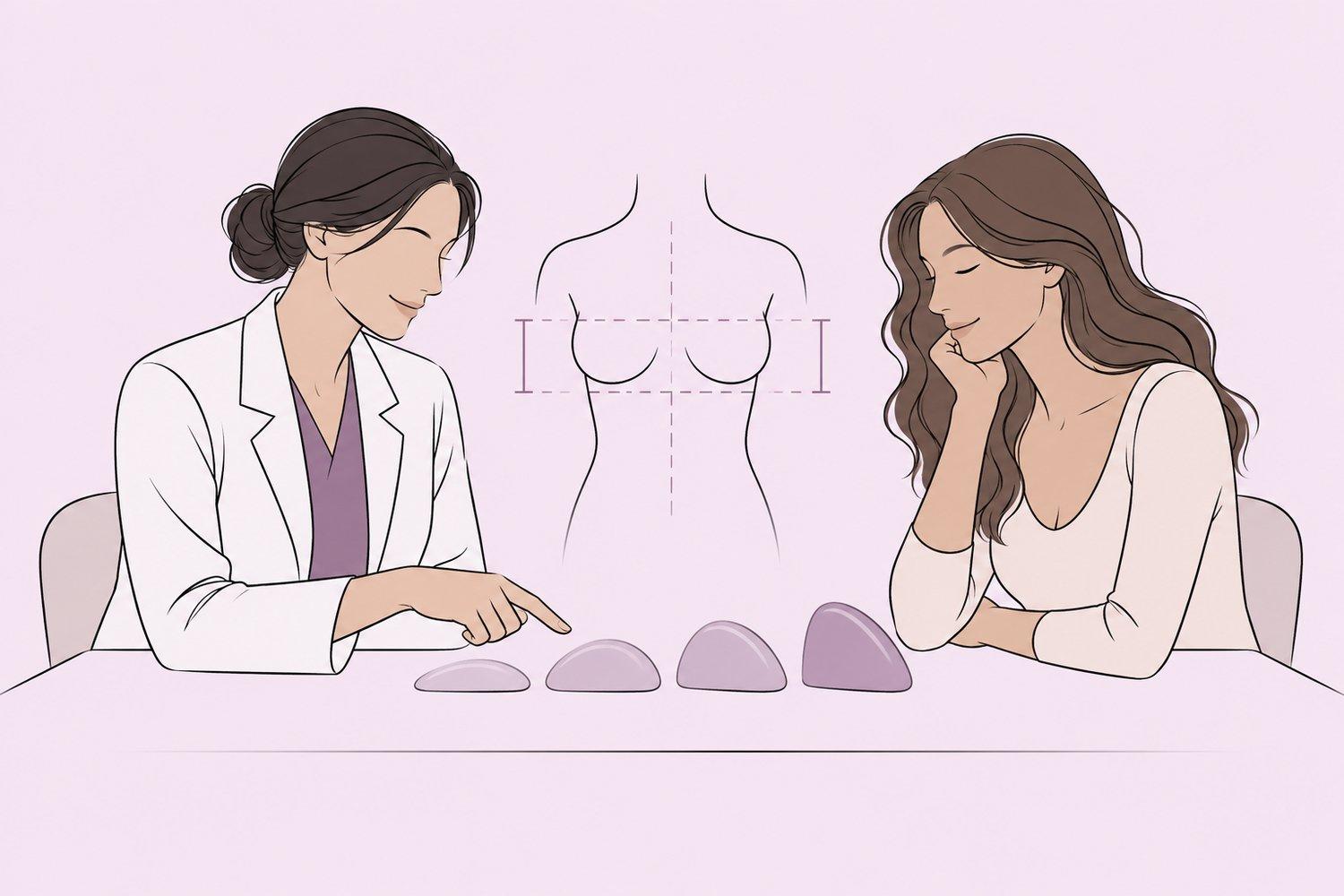
A lighter implant is a design feature, not a promise of fewer complications. Safety depends on the exact device, its surface and filling, your anatomy, the surgical plan and the follow-up arranged with your surgeon. A larger implant still needs to be a considered choice for your tissues and long-term care.
Risks that implant weight does not remove
The FDA lists breast pain, changes in breast or nipple sensation, capsular contracture, rupture or deflation, reoperation and implant removal among the possible complications and adverse outcomes of breast implants. These are important to discuss whether an implant is lighter or traditional.
- Breast pain or changes in breast or nipple sensation
- Capsular contracture
- Rupture or deflation
- Further surgery, including implant removal
Questions to ask about the exact device and follow-up
The FDA states that breast implants are not lifetime devices. The longer they are in place, the greater the chance of complications, and some complications can require further surgery. Ask your surgeon which device is proposed, why it suits your frame and tissue, and how we will follow you after surgery.
BIA-ALCL is associated more often with textured implants, according to the FDA. That does not make implant weight the deciding safety question. Device surface belongs in an informed consultation, alongside the benefits, limitations and risks of the exact implant you are considering.
How long should I stay in Istanbul before flying home after breast augmentation?
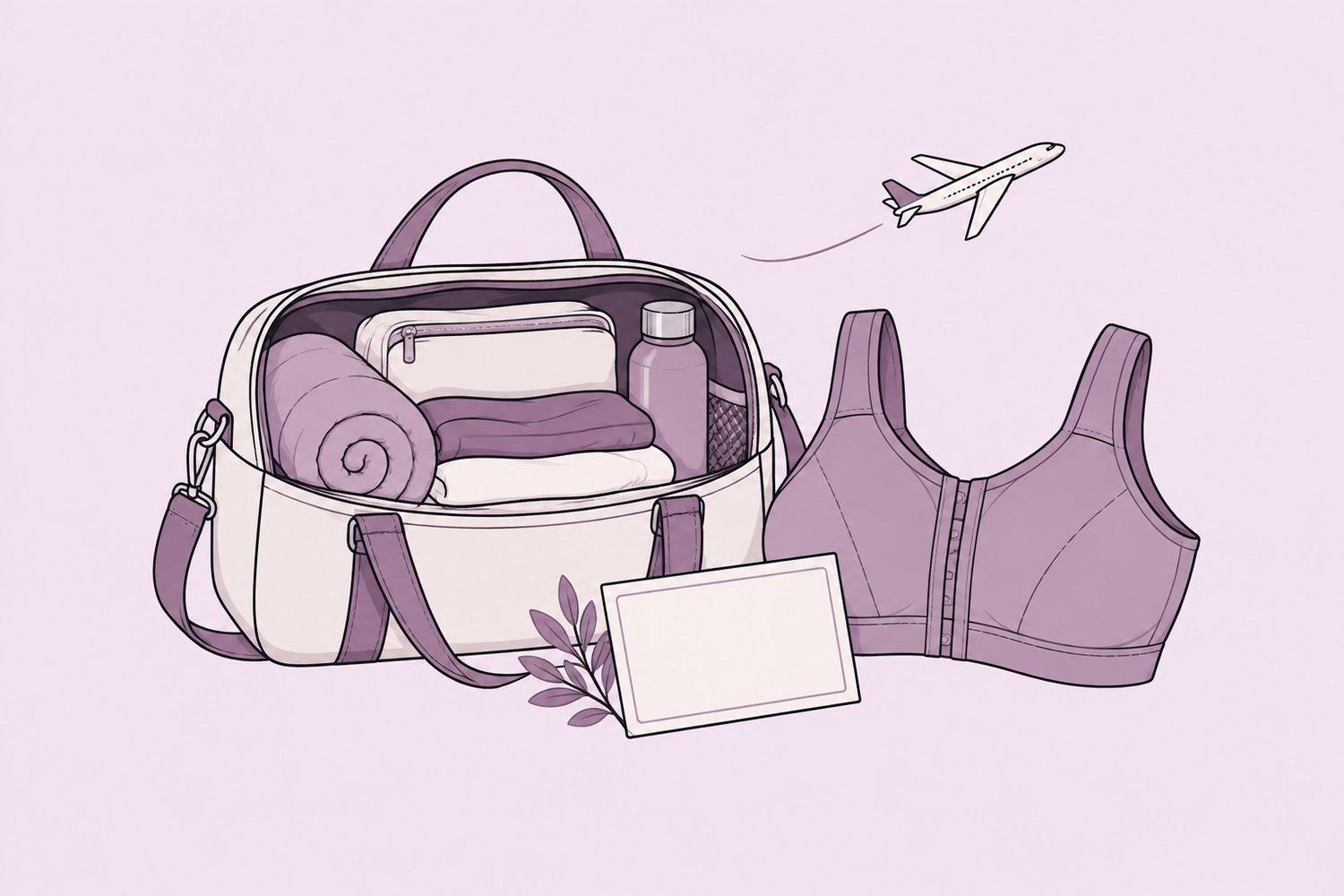
There is no single departure date that suits every breast augmentation. Flying with breast implants is safe, according to the NHS, but that does not decide when it is appropriate to fly soon after surgery. Your stay should allow for early recovery, a postoperative review and explicit fitness-to-fly clearance from your surgeon.
Plan for early recovery and a surgeon review
Breast enlargement surgery commonly takes 60 to 90 minutes. Acute pain often settles within 1 to 5 days, although soreness and swelling can continue for weeks. Before travelling, arrange a review with an ISAPS Active member or nationally board-certified plastic surgeon, alongside written aftercare instructions and a clear plan for contacting them after you return home.
When can I work, exercise and travel again?
Recovery takes several weeks, and activity should progress according to your operating surgeon’s instructions. The NHS advises allowing 1 to 2 weeks away from work and avoiding heavy lifting or strenuous exercise for at least a month. Your own work, the details of your operation and how you are healing can change that advice, so travel and activity plans need individual clearance.
If you are unsure what your own measurements and tissue support may allow, arrange an online consultation with Vanity’s surgeons before you travel. We can discuss implant options, realistic volume and the follow-up your case may need.
Frequently asked questions
Are B-Lite® implants really 30% lighter?
B-Lite® implants are designed to reduce implant weight by up to 30% while maintaining volume and shape. The exact difference depends on the conventional implant and B-Lite® specification being compared.
Can a lightweight implant stop my breasts from sagging?
Reduced implant weight may plausibly reduce load on breast tissues. Current clinical evidence does not prove that lightweight implants prevent ptosis or remove the need for revision surgery compared with conventional implants.
What is the biggest implant size that will look natural on me?
A proportionate implant choice depends on breast dimensions, skin stretch and the soft-tissue coverage available, rather than cup size alone. Your surgeon should match implant width, volume and projection to your anatomy.
Are B-Lite® implants safer than regular silicone implants?
Lower weight does not remove risks such as capsular contracture, rupture, sensory changes and possible further surgery. The prospective B-Lite® augmentation study was single-arm and manufacturer-sponsored, so it cannot establish superior safety compared with conventional implants.
When can I fly home after breast augmentation in Istanbul?
There is no universal evidence-based date for flying home after breast augmentation. Arrange a postoperative review and follow your operating surgeon’s individual fitness-to-fly clearance, as recent surgery and recovery need separate advice from flying with implants.
How long do I need off work after breast augmentation?
The NHS advises allowing 1 to 2 weeks away from work after breast augmentation. Recovery varies with the procedure and the physical demands of your job, and soreness and swelling may continue for weeks.