
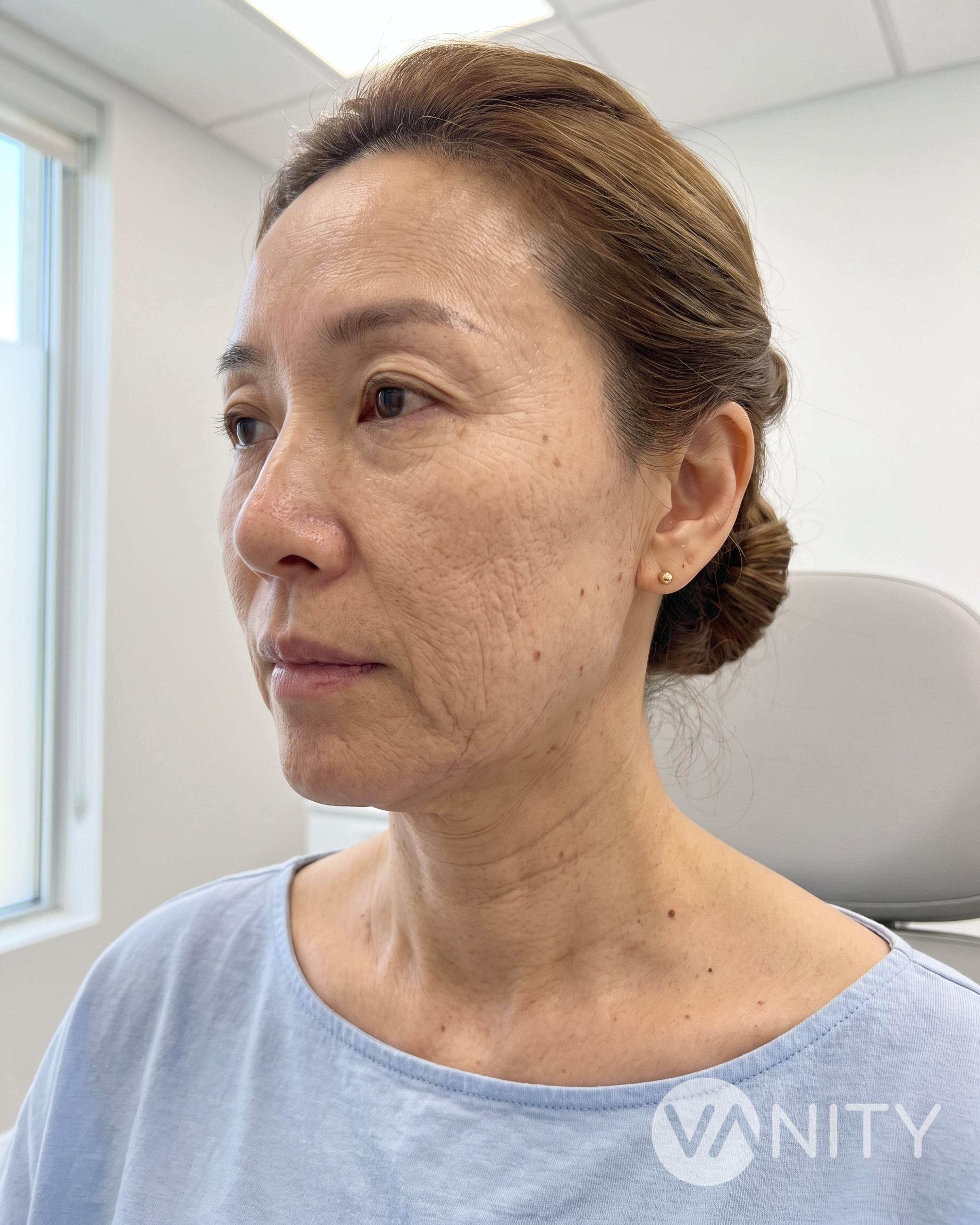
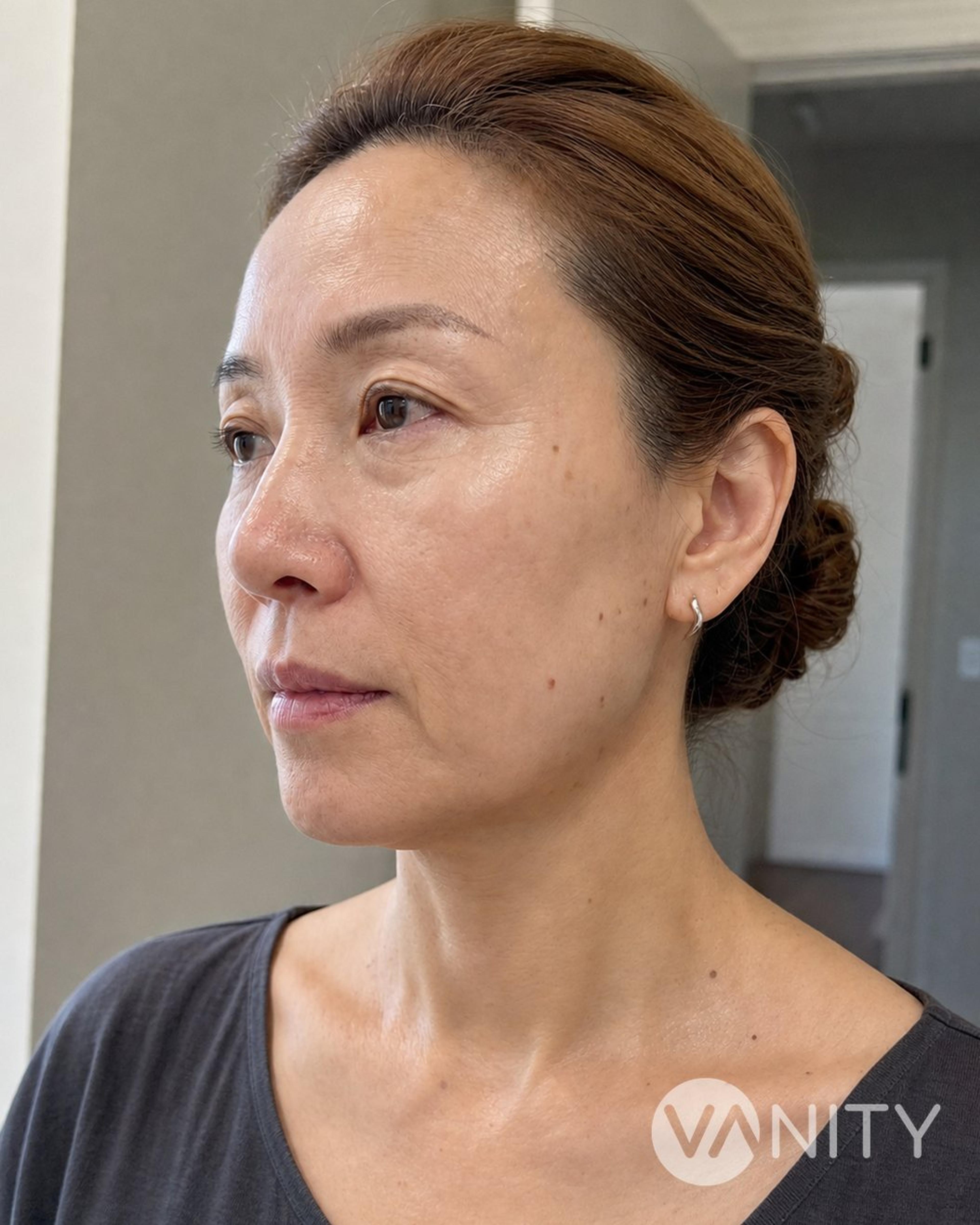




Skin boosters: what it is
A skin booster is a hyaluronic acid gel — or, in some markets, a polynucleotide — injected into the dermis at many points across an area, rather than placed deep in one or two depots the way a contouring filler is. Spread that thinly and that superficially, the material acts on the skin itself: it binds water in the dermis, and in laboratory and histological work it stimulates fibroblast activity and the production of collagen and elastin. What has actually been measured in patients is hydration, surface roughness and smoothness — a 2025 systematic review and meta-analysis in the Journal of Cosmetic Dermatology found statistically significant improvement in hydration and radiance, while elasticity did not improve consistently across the pooled studies.
It suits adults whose skin is dull, rough, dehydrated or crepey, with fine surface lines or pores that read as larger than they used to — most often on the cheeks, neck, décolleté and backs of the hands — and who do not want added volume. It will not lift tissue, replace lost volume, treat pigmentation or soften deep static wrinkles. If that is what is bothering you, a booster is the wrong treatment and we will say so. In the United States, SKINVIVE by JUVÉDERM (VYC-12L) is FDA-approved for intradermal injection to improve facial skin smoothness of the cheeks in people 21 and over; Restylane Skinboosters, Profhilo and polynucleotide injectables are approved regionally in Europe, the UK and Asia, and are not FDA-approved for this use.
Skin boosters: techniques we use
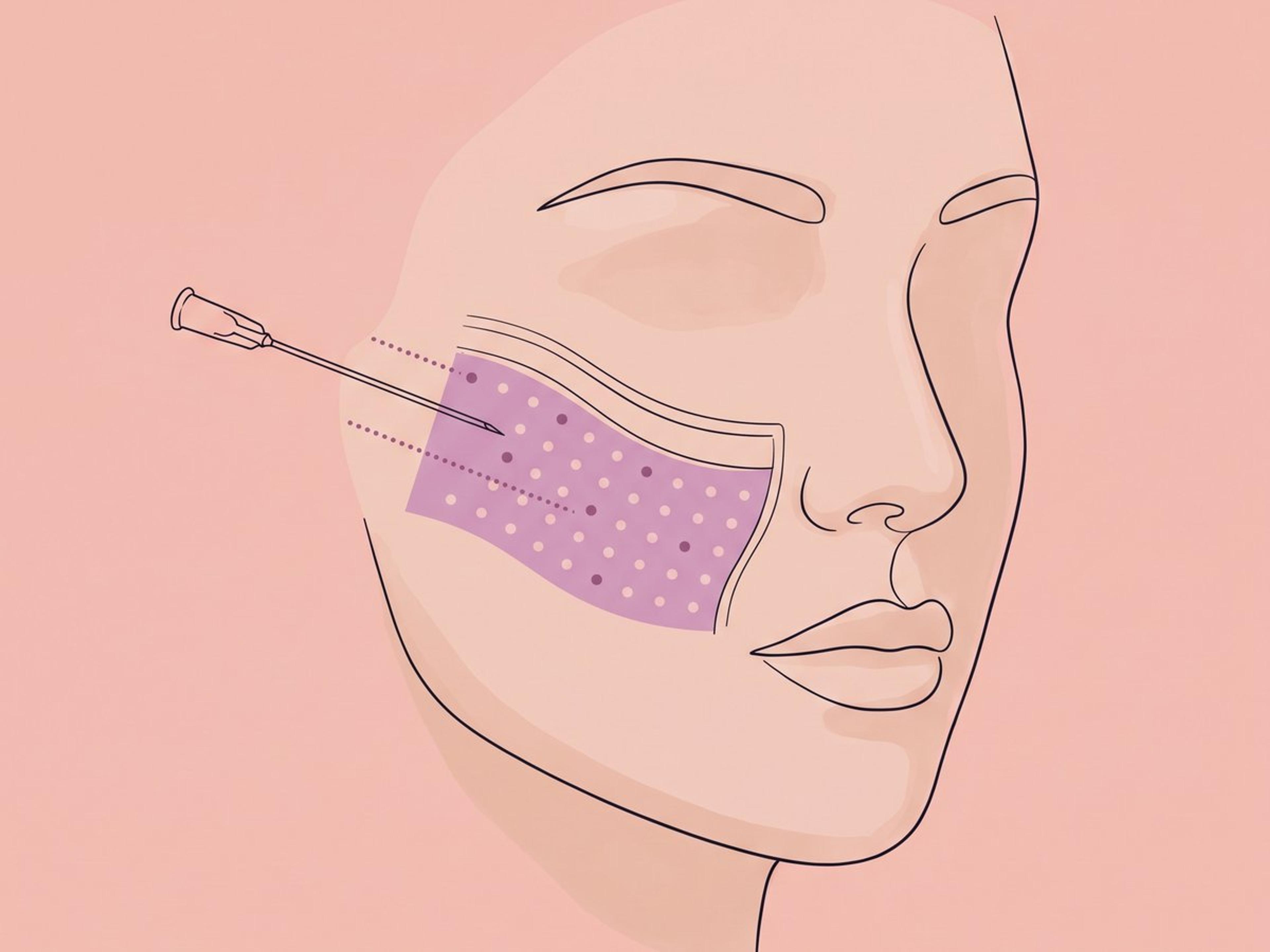
A soft, low-modulus crosslinked hyaluronic acid gel containing lidocaine is placed as many small intradermal microdepots across the area through a fine 32G needle. In the FDA pivotal study of 209 participants, a median of 4.0 mL was used across both cheeks in a single session, with an optional touch-up at one month. Improvement in cheek skin smoothness was maintained through 6 months.
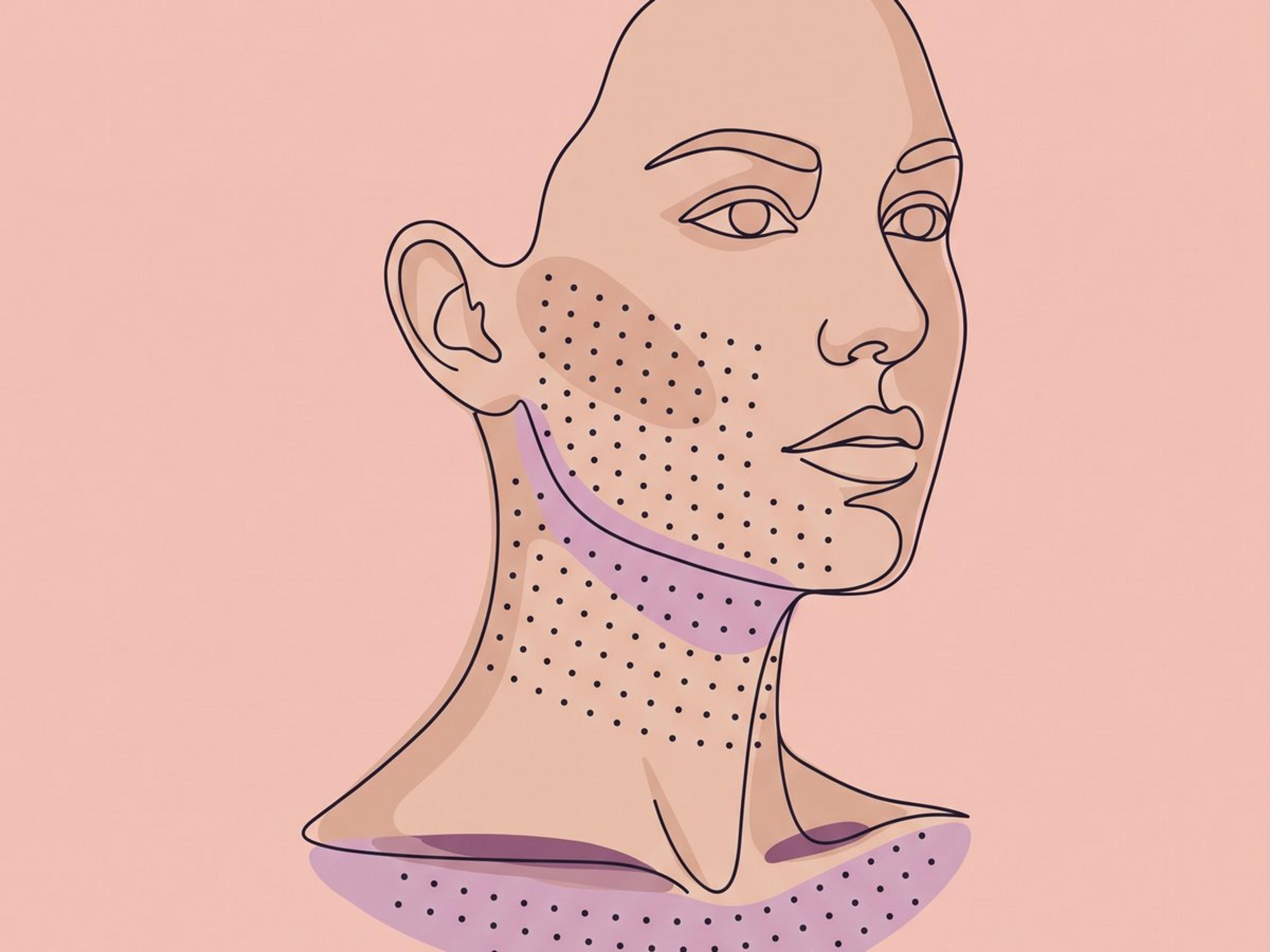
Stabilised non-animal hyaluronic acid is injected as a grid of small dermal deposits over the face, neck, décolleté or hands. An expert panel consensus in the Journal of Drugs in Dermatology recommends an initial course of up to 3 sessions, then maintenance every 4 to 6 months. Randomised data show significant increases in skin hydration against baseline, with less consistent change in elasticity.
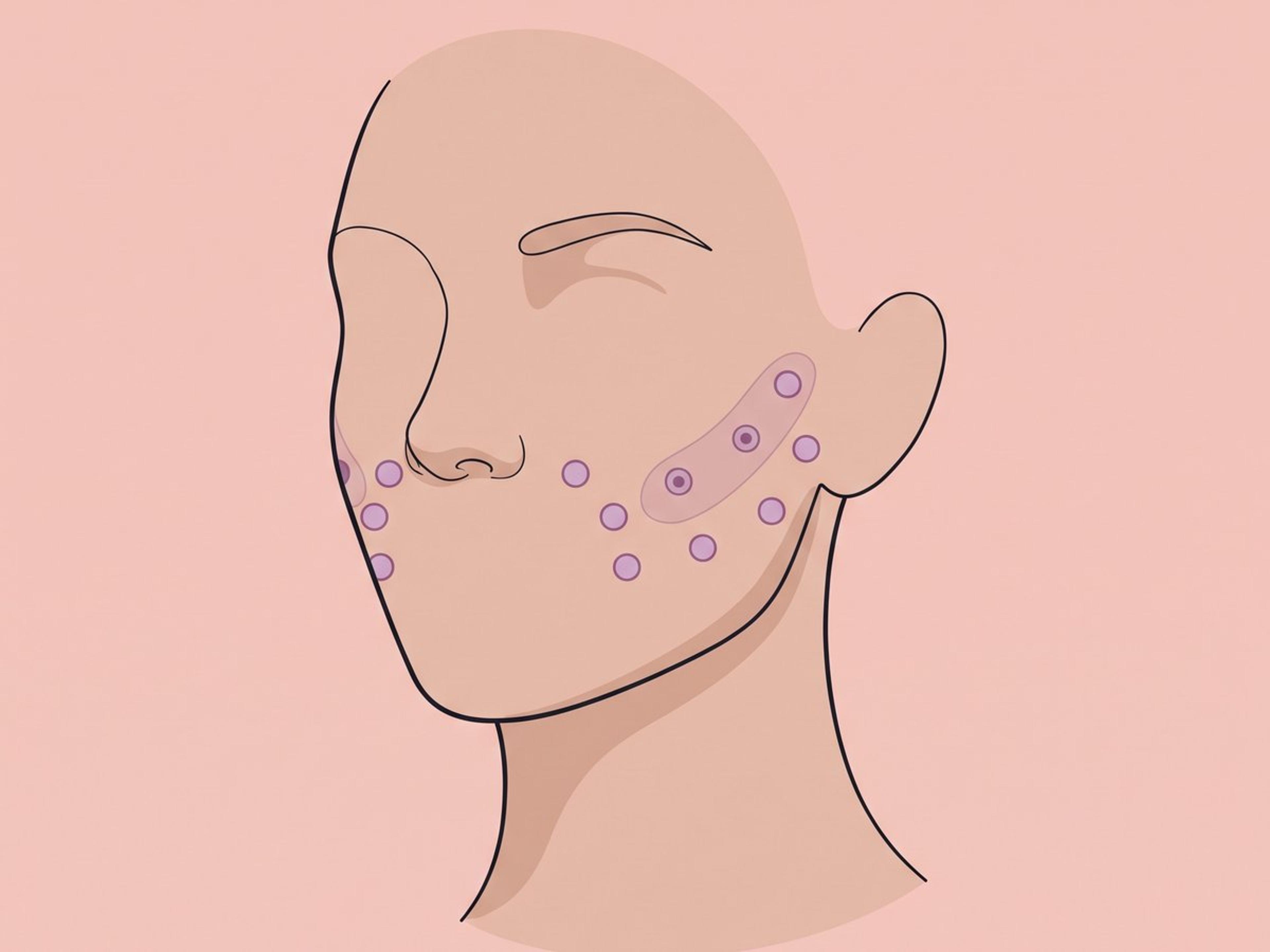
A stabilised complex of high- and low-molecular-weight hyaluronic acid is injected as a small number of larger fixed-point deposits per side rather than a dense grid, usually as 2 sessions 4 weeks apart. A 2026 systematic review of 9 studies and 278 participants reported improvement, or a trend toward it, in skin laxity, hydration, density and wrinkle severity. Reported adverse events were mild and usually resolved within 72 hours.
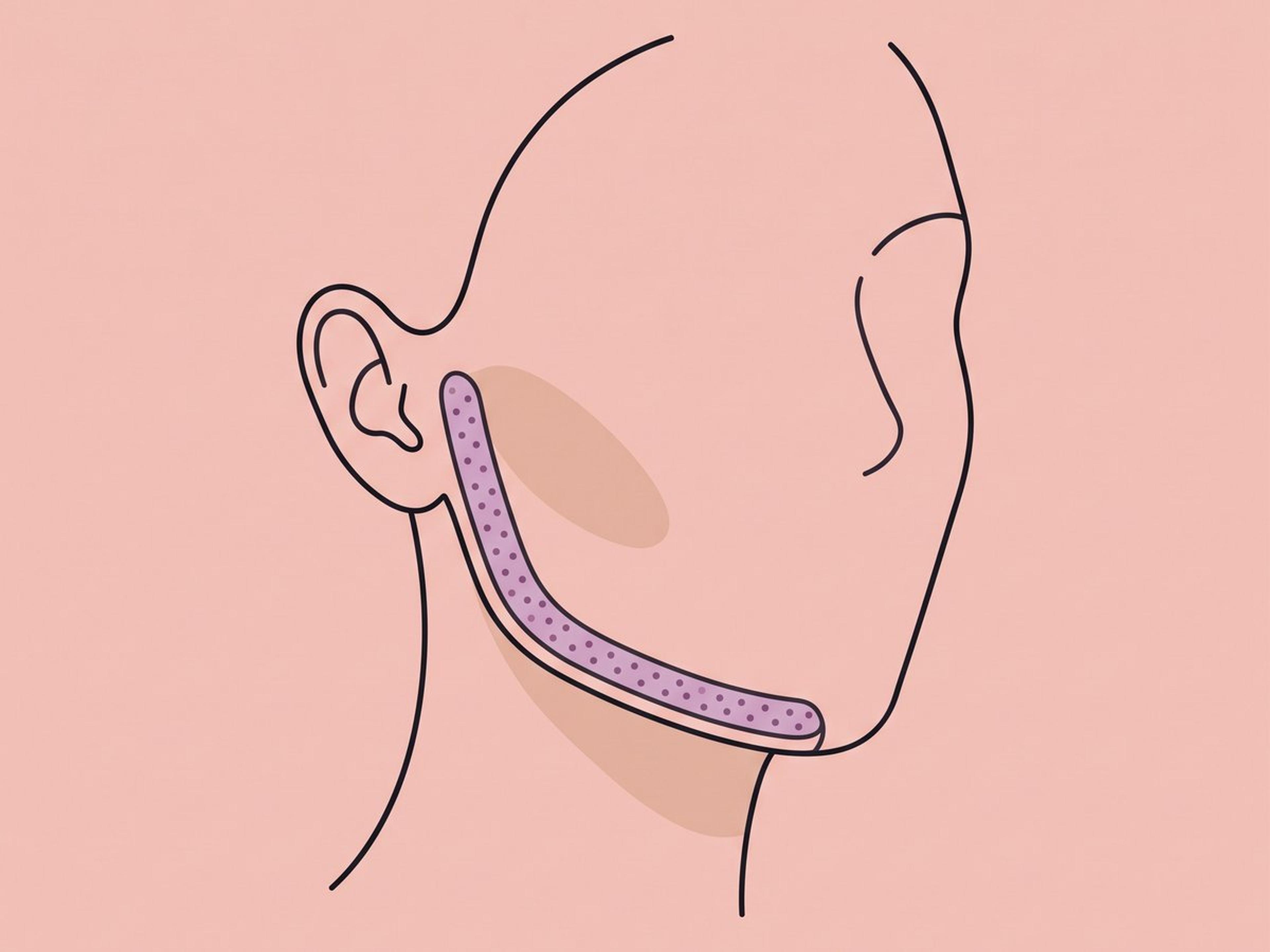
Purified polynucleotides derived from fish DNA are injected intradermally over a course, typically 3 to 4 sessions at 2- to 4-week intervals. Published studies report improved hydration, skin thickness and texture, with mild and transient local reactions. These products are used in Europe and Asia and are not FDA-approved as aesthetic skin injectables in the United States.
A booster session, step by step
Deciding a booster is the right treatment
The first judgement is whether the skin in front of us is dull, dry and crepey — which a booster answers — or descended and deflated, which it does not. Which product, how many sessions and how many areas all follow from that, and if the honest answer is volume or a lift, this is where we say so.
Product, volume and batch written into your record
Brand, batch number, volume and the exact sites go into your notes before a box is opened. Inflammatory nodules and delayed hypersensitivity are classified as delayed-onset — more than 4 weeks after injection — so the doctor who sees one will usually be in another country, working from this record. It is also the only form of the plan that can be compared with another clinic's quote.
Numbing and marking
Topical anaesthetic sits for roughly 20 to 30 minutes; some gels carry lidocaine of their own. The injection points are marked with you sitting upright, because a grid drawn on a reclined face does not land where the light actually falls.
The injections
A fine 32G needle places small deposits into the dermis — a dense grid for stabilised hyaluronic acid and polynucleotides, or a few fixed points per side for hybrid bio-remodelling products — over 20 to 30 minutes per area. Small aliquots delivered slowly and at low pressure are the main defence against putting gel into a vessel. Raised blebs at each point are expected, not a sign of a problem.
Held briefly, then reviewed before you leave
You stay on site for a short observation rather than walking straight out. Vascular occlusion is immediate-onset and the window for reversing it with hyaluronidase is roughly 60 to 90 minutes, so those are the minutes worth spending near the injector and the drug. You leave with written aftercare, the product and batch details, and a named clinical contact.
Skin boosters: recovery week by week
- Day 1
Small raised bumps at every injection point, with redness and possible bruising — that is the gel sitting where it was placed, not swelling. Leave the area unrubbed and unpressed, skip makeup, and keep away from strenuous exercise, saunas and hot showers today: heat and pressure disperse a freshly placed superficial gel unevenly and make bruising worse. Stay reachable, because the one time-critical complication declares itself within the first hour or two.
- Days 2–3
The injection papules flatten as the gel disperses and binds water. Normal skincare, makeup and full exercise are usually back from about 24 to 48 hours; peels, facials and lasers wait 2 weeks, since there is no reason to inflame skin that is still settling.
- Week 1
Most injection-site reactions resolved within 3 to 7 days in the registration studies. Bruising is the outlier — it can take up to about 2 weeks. Nothing looks treated yet, and should not: a booster hydrates the dermis rather than filling it, so this week is the skin settling, not the result arriving.
- Weeks 2–4
This is when the change reads — hydration, surface smoothness and the way light sits on the skin, rather than any difference in shape. If you are on a course, the next session falls in this window: 3 to 4 weeks after the first for stabilised hyaluronic acid protocols, 4 weeks for hybrid bio-remodelling, and the FDA-approved single-session product offers an optional touch-up at one month.
- Months 4–6
Improvement was maintained through 6 months in the FDA pivotal study, and expert consensus for stabilised hyaluronic acid boosters puts maintenance at every 4 to 6 months. Book the top-up while some effect is still there — topping up is one session, restarting from baseline is a full course again.
Skin boosters: how to prepare
- Have a consultation with a licensed physician experienced in injectables, and disclose autoimmune or connective tissue disease, any filler already placed in the area, anticoagulant use, lidocaine allergy, and pregnancy or breastfeeding.
- Where your own doctor permits it, stop non-essential blood-thinning agents — NSAIDs, fish oil, vitamin E, high-dose vitamin C — and avoid alcohol for several days beforehand. Bruising is the most common reason a treated face looks treated.
- Postpone if there is active acne, an active cold sore, or any skin infection in the treatment area. If you get cold sores around the mouth, ask about antiviral cover before anything is injected there.
- Ask to see the product box before it is opened. It should be a licensed device from legitimate medical supply — the FDA advises against fillers bought online and against needle-free injection devices.
- Do not schedule within 2 weeks of an event. Injection papules and bruising are expected in the first days, and a multi-session protocol runs over weeks.
Skin boosters: risks
Every operation carries risk. We name them so you can ask the right questions.
- Injection-site reactions — redness, swelling, tenderness, bruising and temporary visible papules at each deposit point. These are the norm rather than the exception and usually resolve within days.
- Persistent or delayed-onset inflammatory nodules, which may require hyaluronidase, intralesional steroid or antibiotics.
- Infection at the injection points, including bacterial biofilm formation, and reactivation of herpes simplex when injecting around the mouth.
- Vascular occlusion — rare with superficial intradermal placement, but documented for hyaluronic acid injectables generally, and capable of causing skin necrosis or, when periocular vessels are involved, visual loss.
- Hypersensitivity or allergic reaction to hyaluronic acid, to the BDDE crosslinking agent, or to the lidocaine present in some formulations.
- Tyndall effect — a bluish-grey discolouration where product has been deposited too superficially.

Skin boosters in Turkey: what to expect
One trip to Turkey realistically delivers one session. Published protocols use up to 3 initial sessions spaced 3 to 4 weeks apart, and that interval cannot be compressed to fit a travel itinerary. Plan either a return trip or continuity of care with a qualified injector at home — and know that before you book, not after.
Before you fly
Ask who is holding the needle and where they will be standing. Under the regulation published in the Resmî Gazete on 26 April 2025, aesthetic and cosmetic health services in Turkey may be provided only by physicians working within competencies from their specialty training or a Ministry of Health-approved certificate, and only in licensed facilities. Non-physician injectors and salon settings fall outside it. Ask for the injecting physician's specialty or certificate and the facility licence — both are documents, not claims. Ask, too, whether hyaluronidase is stocked on site: it is the reversal agent for hyaluronic acid vascular occlusion, and its usefulness is measured in minutes.
At the clinic
This is a day case. Numbing cream goes on first, the injection itself takes 20 to 30 minutes per area, and you walk out afterwards. Boosters are delivered in a treatment room rather than an operating theatre.
Recovery in Istanbul
Allow 2 days in the city, with 1 hotel night and 1 follow-up visit. The night is not for healing — there is no wound to heal. It is because vascular occlusion, the one time-critical complication of any hyaluronic acid injectable, is immediate-onset and the window for reperfusion is roughly 60 to 90 minutes. Staying the night keeps you within reach of the injector and the hyaluronidase during the hours in which it would declare itself. Meanwhile the injection points sit as small raised bumps that flatten as the gel disperses.
Heading home
There is no flight restriction after boosters, and we would still rather you flew the day after — 1 night — for the reason above. The usual grounds for holding a patient do not apply here: no general anaesthesia, no surgical wound, no drains, no immobility. The CDC Yellow Book attributes travel-associated venous thromboembolism mainly to prolonged limited mobility, with recent surgery as a separate risk factor, and this treatment creates neither. What does matter is what you carry home. Inflammatory nodules, biofilm and delayed hypersensitivity are classified as delayed-onset, more than 4 weeks after injection, by which point you are back in your own country. Leave with the product brand and batch number, the volumes and sites injected, written aftercare, and a named clinical contact — a doctor treating a nodule 3 months later needs to know exactly what went in.
- United Kingdom
- £250 – £500 per session
- United States
- $500 – $900 per session
- Western Europe
- €250 – €500 per session
Published typical ranges for orientation — confirm with a local quote.
Skin boosters: frequently asked questions
What is the difference between a skin booster and a dermal filler?
Both are usually hyaluronic acid, but they are formulated and placed differently. A contouring filler is a firmer gel placed deeper to add volume or structure; a booster is a softer, more spreadable gel placed into the dermis at many points to change hydration and texture without altering the shape of the face.
How many sessions do I need, and how long do results last?
Most boosters are a course, not a single treatment. Expert consensus for stabilised hyaluronic acid boosters recommends up to 3 initial sessions, then maintenance every 4 to 6 months. The FDA-approved SKINVIVE protocol is the exception — a single session with an optional touch-up at one month, with improvement maintained through 6 months.
Will skin boosters make my face look fuller or change its shape?
They are not intended to. The volume is distributed across an area in the dermis rather than concentrated as a depot, and the approved indication for the US product is improvement of skin smoothness, not volume correction. Facial volume loss and contour deficits need a different category of filler.
Which skin boosters are approved in the United States?
SKINVIVE by JUVÉDERM (VYC-12L) received FDA premarket approval in May 2023 for intradermal injection to improve facial skin smoothness of the cheeks in adults 21 and older. Restylane Skinboosters, Profhilo and polynucleotide injectables are used in other markets under their own regional approvals and are not FDA-approved for this indication.
How much downtime is there?
Expect small visible bumps at each injection point, redness and possible bruising on the day. In registration studies most injection-site responses resolved within 3 to 7 days, though bruising can persist up to about 2 weeks. Strenuous exercise, heat and pressure on the treated area are usually avoided for the first day or two.
Can a skin booster be reversed if I do not like it?
Hyaluronic acid boosters can be broken down with hyaluronidase, which is also the emergency treatment for vascular occlusion and for persistent nodules. Polynucleotide boosters are not hyaluronic acid and cannot be dissolved this way — they resorb on their own.
Who should not have skin boosters?
Treatment is not appropriate during active skin infection, inflammation or acne in the area, or in anyone with known hypersensitivity to hyaluronic acid, the crosslinker, or lidocaine in lidocaine-containing products. Caution applies with a history of severe allergy, autoimmune disease, or previous granulomatous reaction to injectables, and treatment is generally deferred in pregnancy and breastfeeding.
What warning signs mean I should contact the clinic?
Two things are urgent. Skin that turns white, dusky or mottled after injection, or pain out of all proportion to what was done, suggests a blocked vessel — the window for dissolving the gel with hyaluronidase is roughly 60 to 90 minutes, so call immediately rather than waiting to see. Any change in vision after a facial injection is an emergency. Separately, spreading redness or warmth, discharge from the injection points, or fever in the days afterwards points to infection rather than normal settling, and a firm lump appearing weeks or months later should be assessed, not watched. Ordinary bumps, redness and bruising that fade over days are expected and need nothing.
Will skin boosters soften my wrinkles the way Botox does?
No — they act on different things. Botulinum toxin relaxes the muscles that crease the skin, which is why it softens expression lines. A booster changes the skin itself: hydration, surface texture and fine crepey lines. It does not touch muscle and will not soften deep static wrinkles or dynamic expression lines. The two are often used together, but one is not a substitute for the other.
I already have filler in the area — can I still have a booster?
Usually yes, because a booster sits in the dermis and contouring filler sits deeper, so they occupy different planes. What matters is that we know what is already in there: product name, volume, sites and roughly when. Expert consensus treats injecting into or through an area of established filler as a situation calling for caution, and prior filler is part of the history taken before a nodule or a delayed inflammatory reaction is ever attributed to the new product.
Are skin boosters safe in darker skin tones?
Hyaluronic acid injectables carry no pigment-related risk of their own — nothing is heated, ablated or peeled, so the mechanisms behind pigment change after lasers and peels do not apply. The relevant risk in Fitzpatrick IV to VI is post-inflammatory hyperpigmentation at the needle points themselves, which is why the number of passes is kept down, the points are not over-worked, and sun protection matters in the first weeks. Superficial placement also risks the Tyndall effect, a bluish-grey cast, which is a depth error rather than a skin-type one.
How much does skin boosters cost in Turkey?
€150 to €400 with us, confirmed after a consultation rather than quoted blind. For comparison it is typically £250 – £500 per session in the United Kingdom, $500 – $900 per session in the United States and €250 – €500 per session in Western Europe. Per session, with a course typically two or three at monthly intervals. The product decides most of the price, so ask which one and ask to see the packaging.
Sources
- [1]SKINVIVE by JUVÉDERM – P110033/S059 (Recently Approved Devices) · U.S. Food and Drug Administration · 2023
- [2]A Systematic Review of the Efficacy and Safety of Profhilo and Profhilo Body · Plastic and Aesthetic Nursing (PubMed) · 2026
- [3]Injectable Non-Animal Stabilized Hyaluronic Acid as a Skin Quality Booster: An Expert Panel Consensus · Journal of Drugs in Dermatology (PubMed) · 2018
- [4]Treatment of Soft Tissue Filler Complications: Expert Consensus Recommendations · Aesthetic Plastic Surgery (PMC/NLM) · 2018