



Qué es
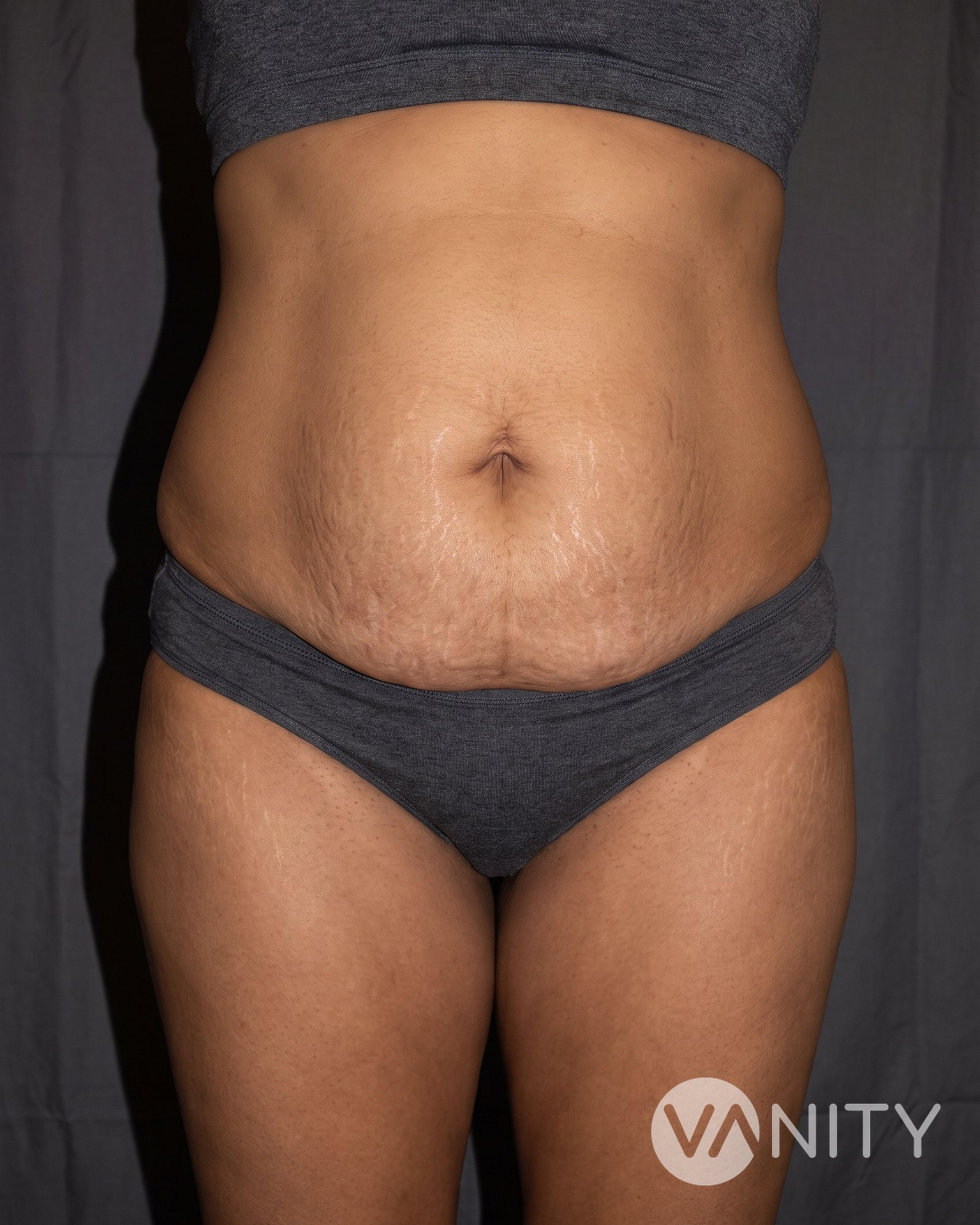
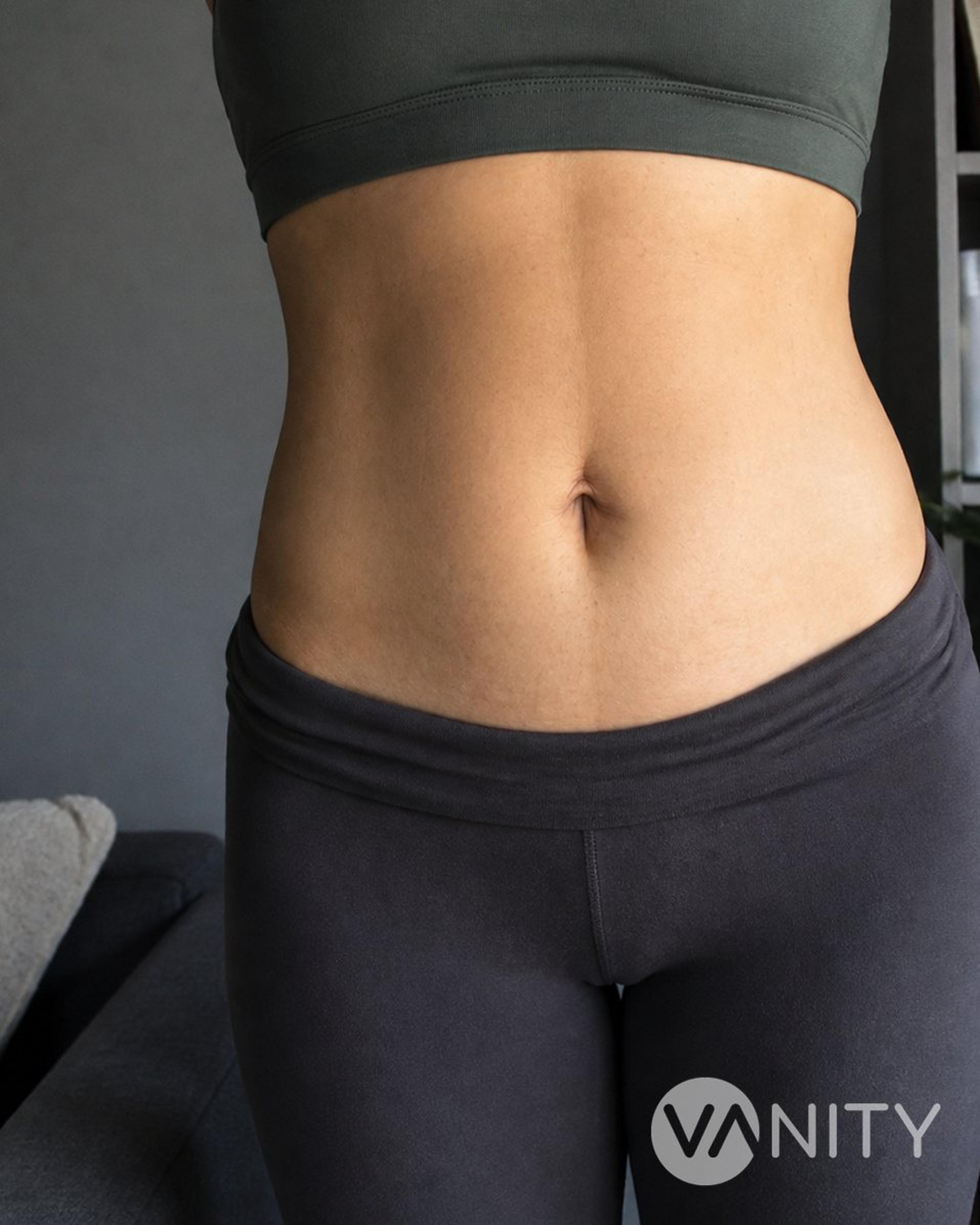
A tummy tuck removes loose skin and stubborn fat from the lower belly, then repairs the abdominal muscle wall — particularly the vertical muscles that often separate after pregnancy or major weight change. The result is a flatter, firmer midsection that diet and exercise alone cannot reliably produce. It is not a weight-loss operation. It treats loose skin, subcutaneous fat and abdominal-wall laxity; it does not remove visceral fat surrounding the internal organs.
It is usually considered after pregnancy or significant weight loss, when skin laxity and muscle separation — diastasis recti — no longer respond to the gym. The best candidates are at or near a stable weight they can hold.
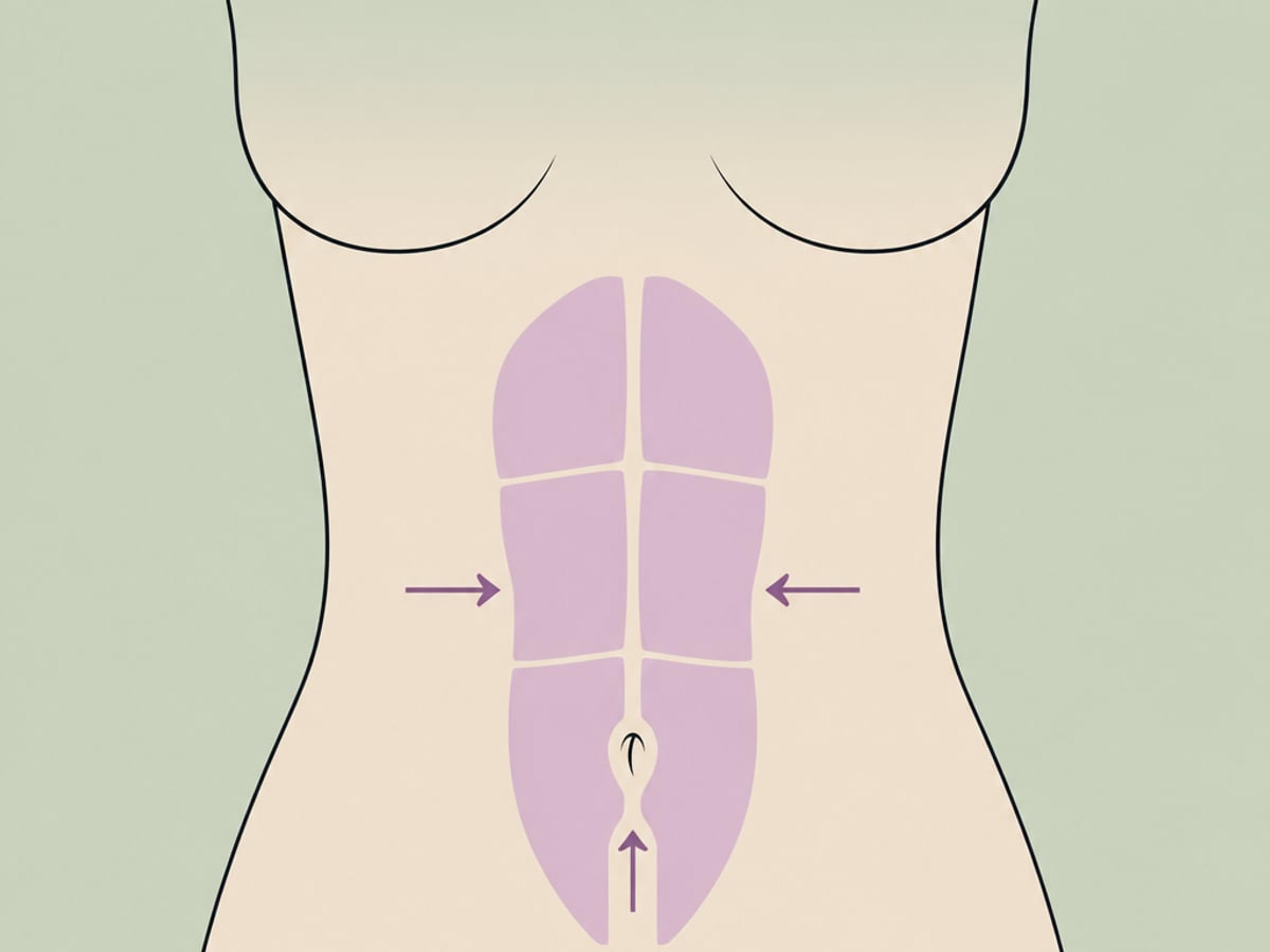
It is usually considered after pregnancy or significant weight loss, when skin laxity and muscle separation — diastasis recti — no longer respond to the gym. Diastasis recti involves stretching and thinning of the linea alba, which can allow the abdominal contents to push forward and create a persistent bulge that diet and core exercise cannot correct. The best candidates are adults of any sex who are at or near a stable weight they can hold and have structural laxity that has not responded to lifestyle measures. The legacy article describes a typical age range of 18–55.
After substantial weight loss, removing an overhanging skin apron may also reduce skin chafing and spinal pressure, improving function as well as contour.
Nuestras técnicas
The standard operation — a low incision from hip to hip, repair of the separated abdominal muscles, removal of excess skin, and repositioning of the navel. It suits significant looseness both above and below the belly button.
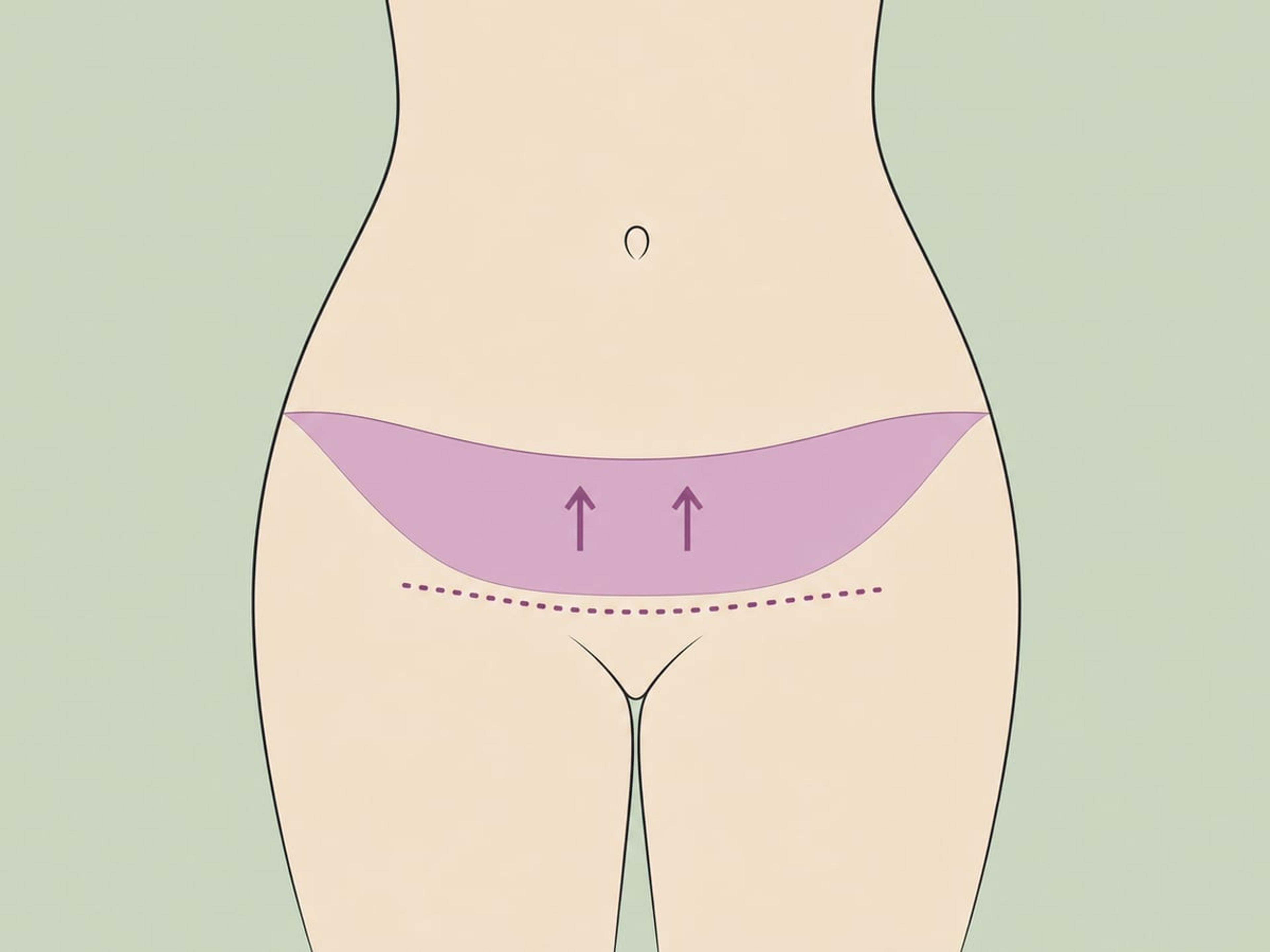
A shorter incision and limited skin removal below the belly button, with the navel left in place. It suits isolated lower-abdominal looseness and little or no muscle separation. It is best suited to mild lower-abdominal laxity when skin elasticity above the navel is good, and can address limited lower-muscle weakness without repositioning the navel.
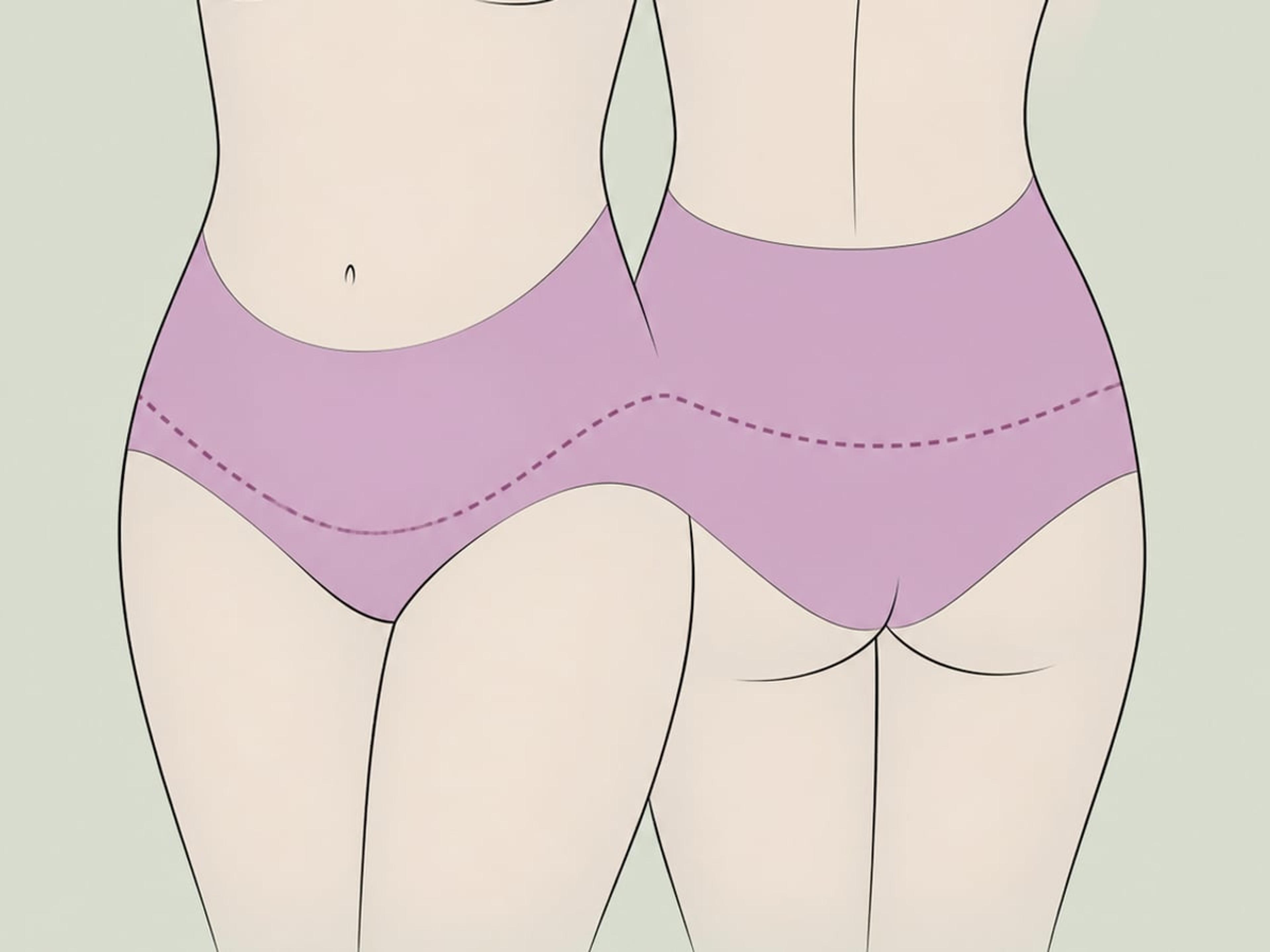
The incision extends around to the flanks to address loose skin at the hips, the love-handle area and the lower back. It is common after major weight loss, when the excess reaches well beyond the abdomen.
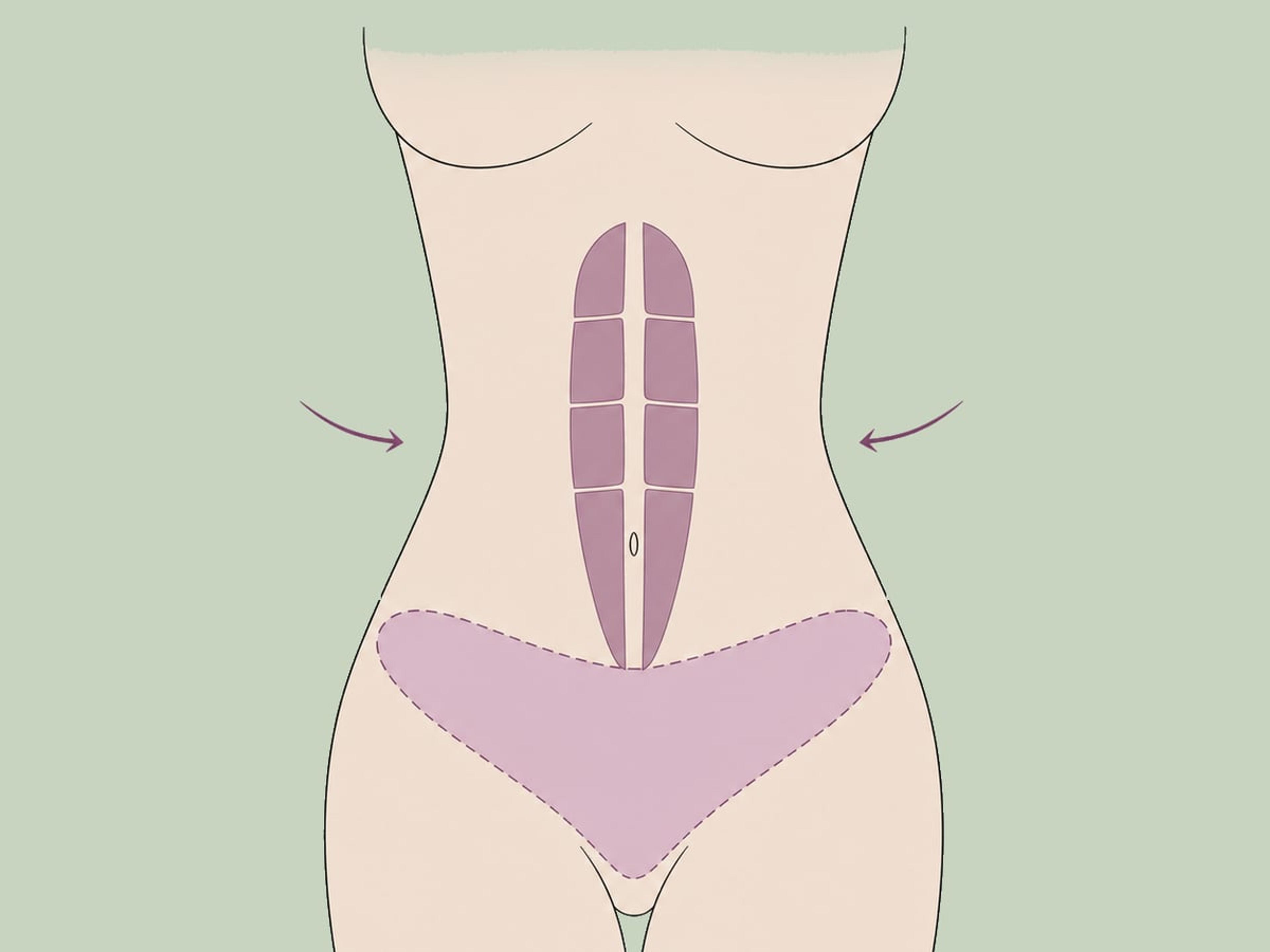
Muscle repair and skin removal combined with liposuction — often VASER ultrasound-assisted — of the abdomen, flanks and upper midsection. Removing the fat first lets the surgeon preserve more of the blood vessels, nerves and lymphatic pathways that traditional wide undermining disrupts, which means less tissue trauma, less fluid collection and a smoother contour. It has become the modern standard approach; it adds a little operating time but no separate recovery.
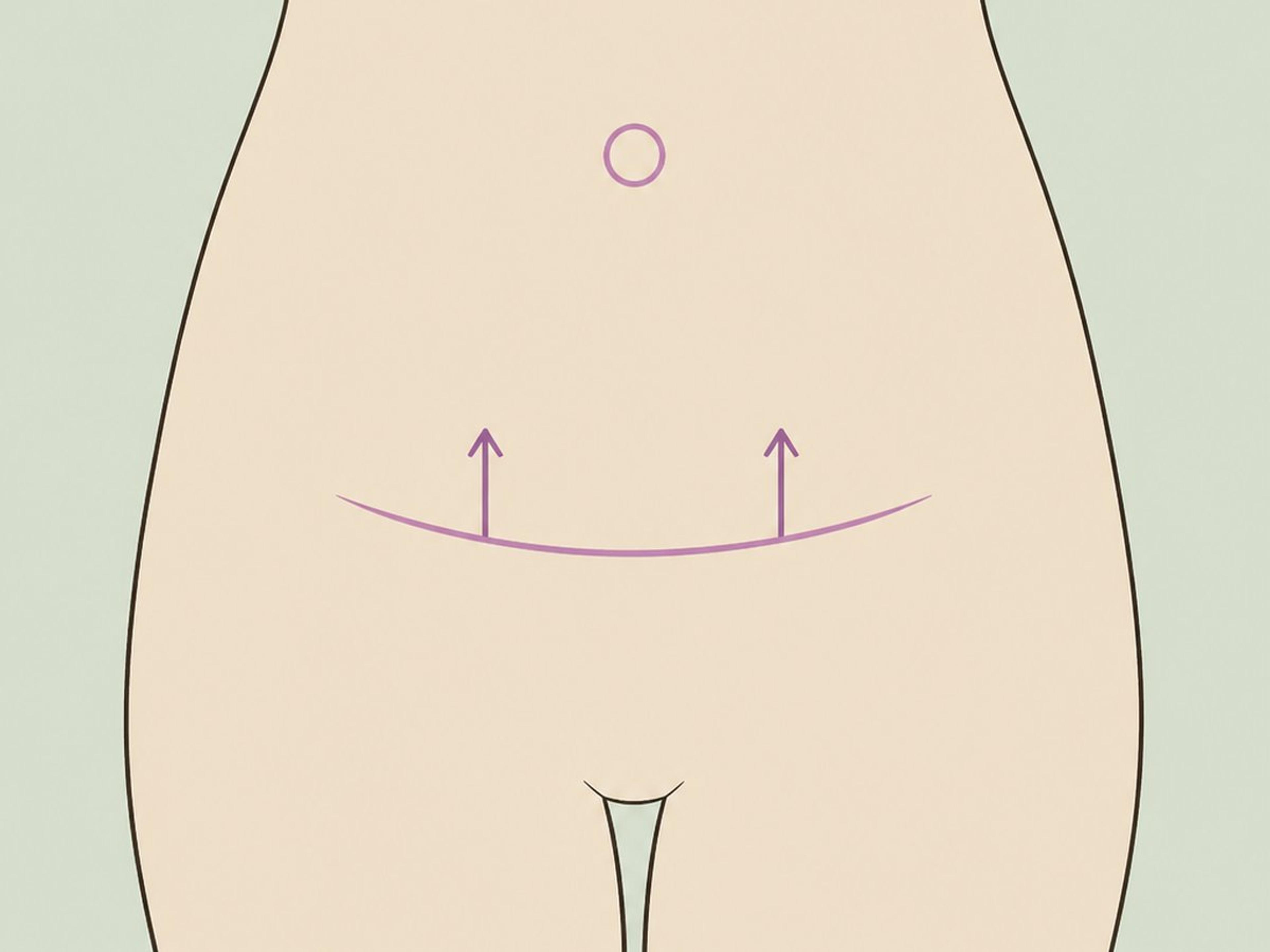
During a full or extended abdominoplasty, the abdominal skin is pulled downward, so the belly button is brought through a newly designed opening. Umbilicoplasty reshapes and repositions the navel, with careful attention to its depth, shape and anatomical height, so it sits naturally within the newly contoured abdomen. When skin laxity also affects the pubic mound — often after multiple pregnancies or significant weight loss — a pubis lift, or monsplasty, can remove excess fat and loose skin and lift the area. This helps the lower abdomen transition smoothly into the pubic area, without unwanted bulging or sagging in fitted clothing or swimwear.
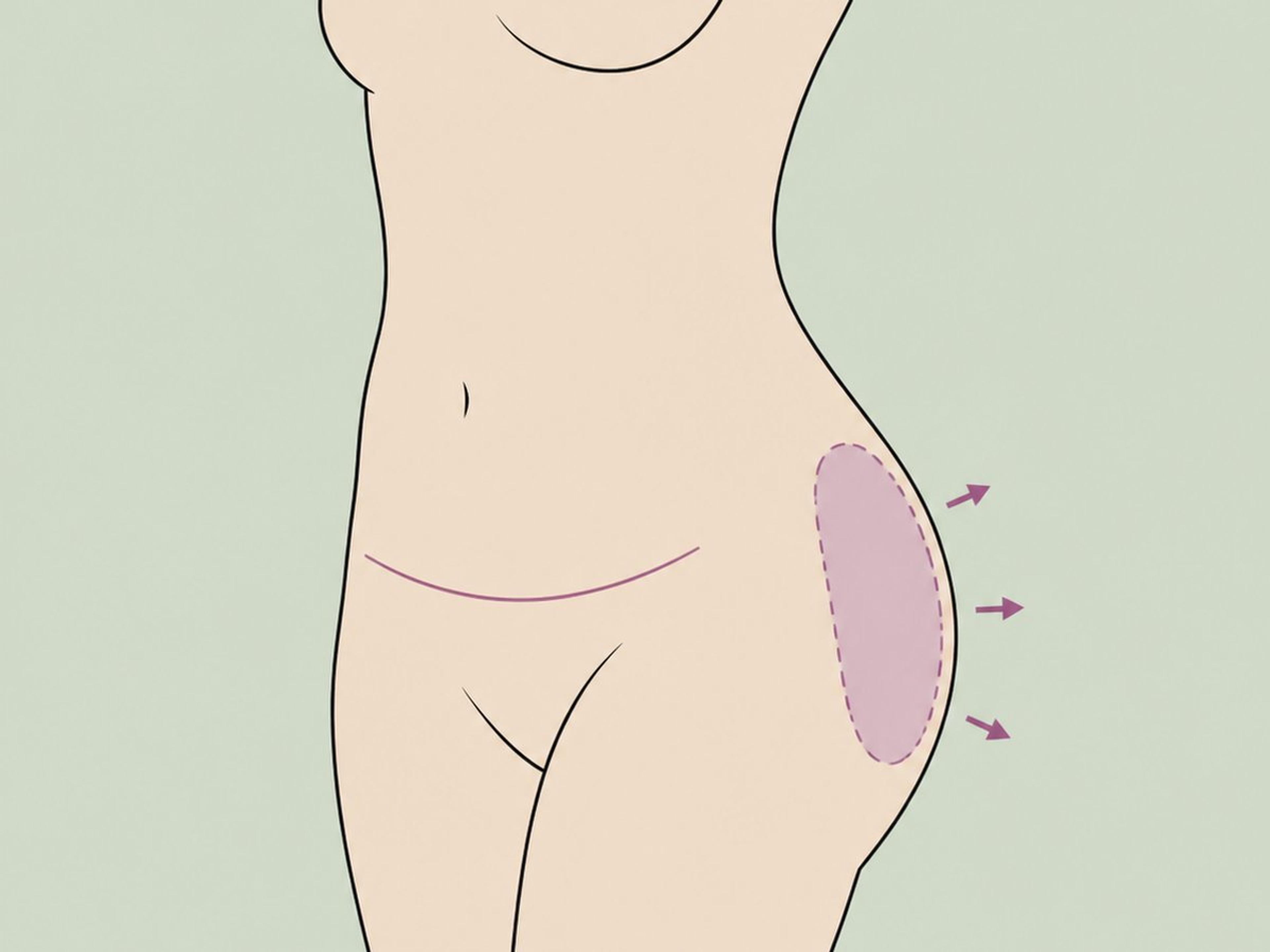
For carefully screened patients, a tummy tuck may be combined with a Brazilian Butt Lift. Liposuction harvests fat from areas such as the back, flanks and thighs; after processing, the fat is transferred to the buttocks following abdominal repair and skin excision.
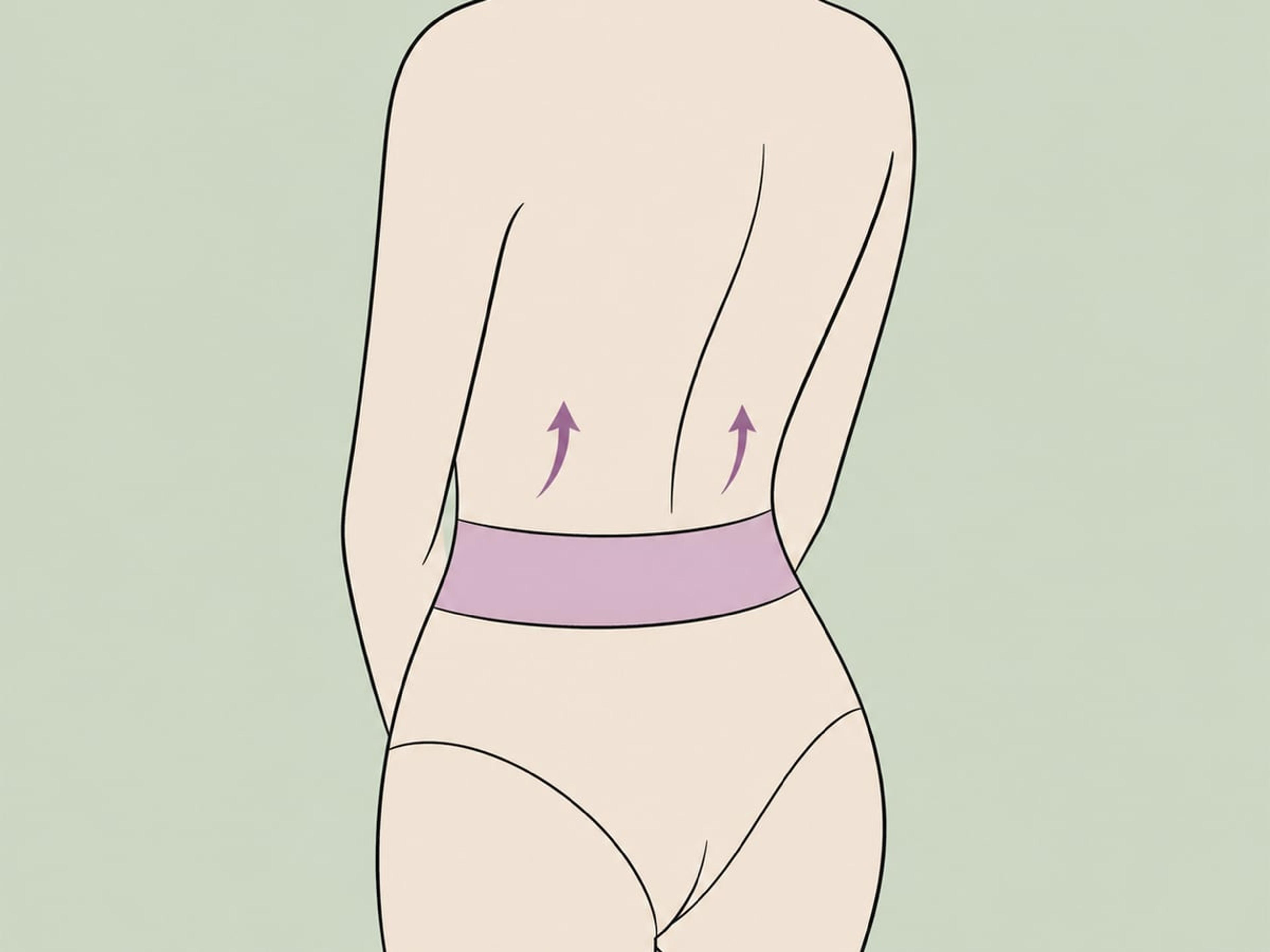
A full abdominoplasty joined to a lower body lift, with the incision carried right around the waist as a continuous belt. It suits people whose loose skin does not stop at the flanks — the outer thighs and the buttocks have dropped as well, usually after massive weight loss. Treating the whole circumference in one session keeps the front and back contours continuous, but it is a longer operation with a heavier recovery than a tummy tuck alone.
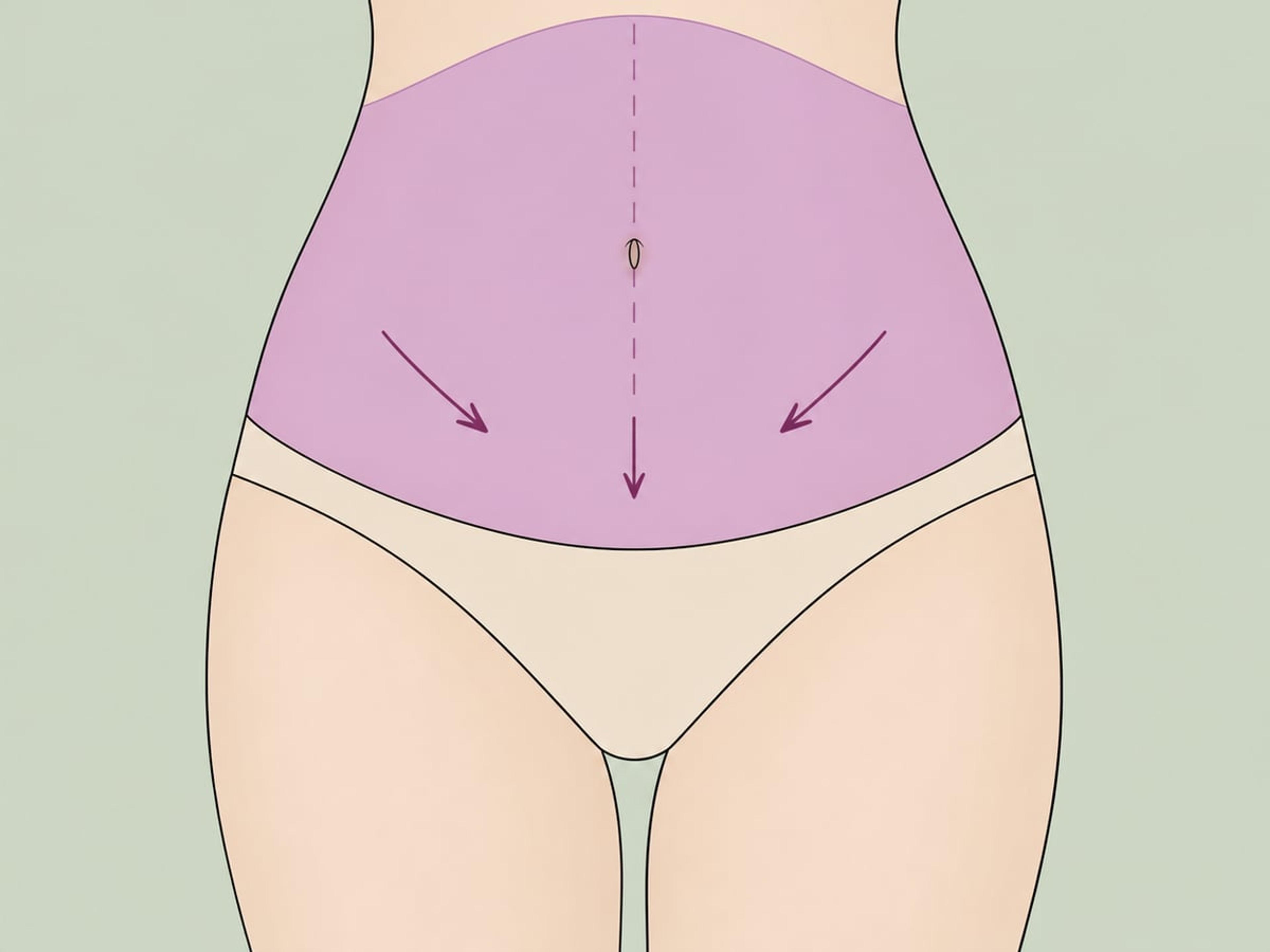
A low hip-to-hip incision combined with a vertical one up the midline, so skin can be tightened side to side as well as pulled downward. It is chosen after massive weight loss, when the abdomen is slack in both directions and a horizontal incision alone would leave a loose waist. The trade-off is a permanent vertical scar up the centre of the abdomen, which is why it is reserved for cases that genuinely need it.
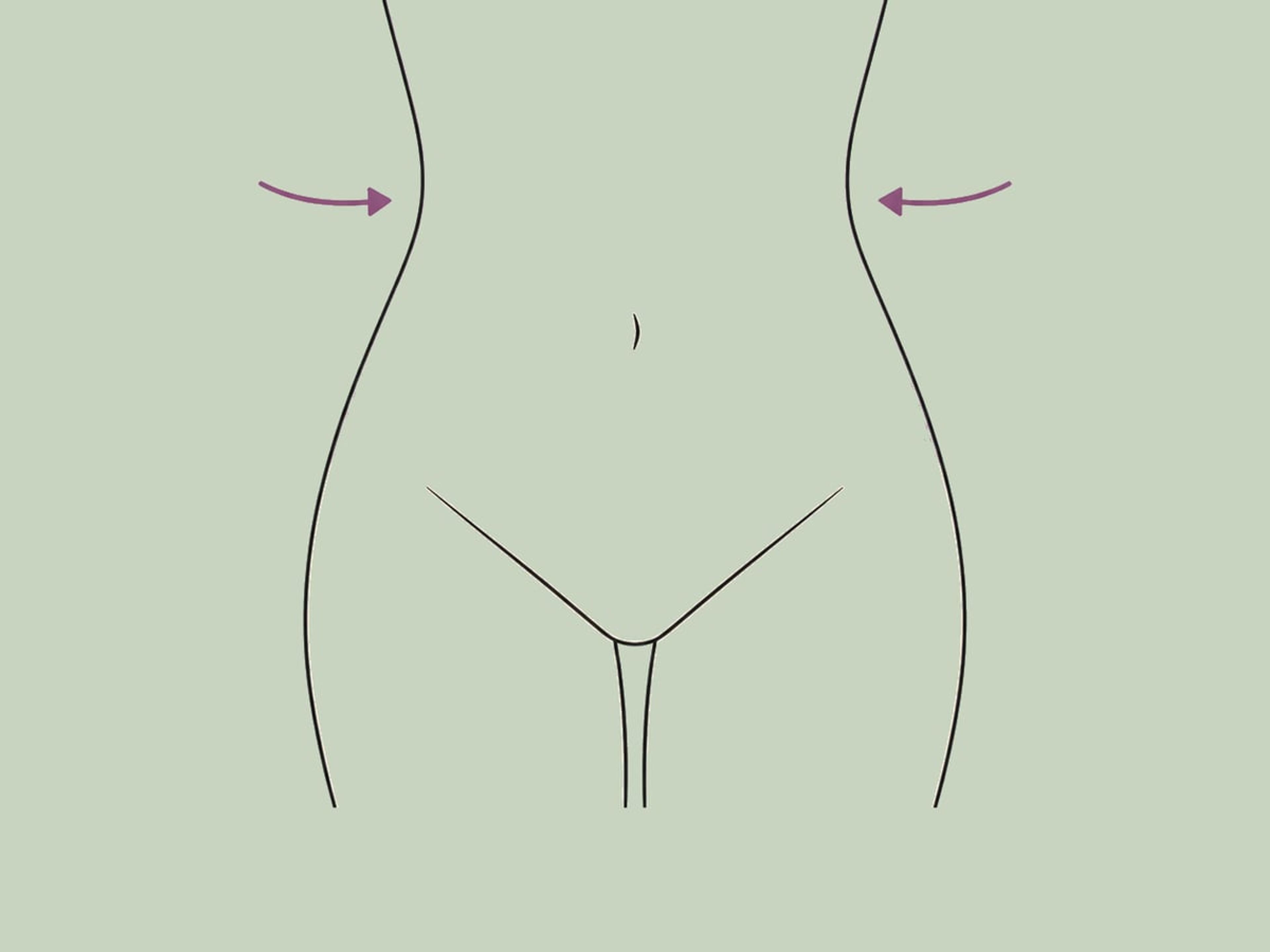
A tummy tuck combined with more aggressive liposuction of the waist and flanks — and often fat transfer to the hips — to narrow the waistline rather than just flatten the front. It suits patients who want a defined waist-to-hip curve, not only a flat abdomen. It reshapes more of the torso in one operation, so expect somewhat more swelling and a slightly longer recovery than a standard tummy tuck.
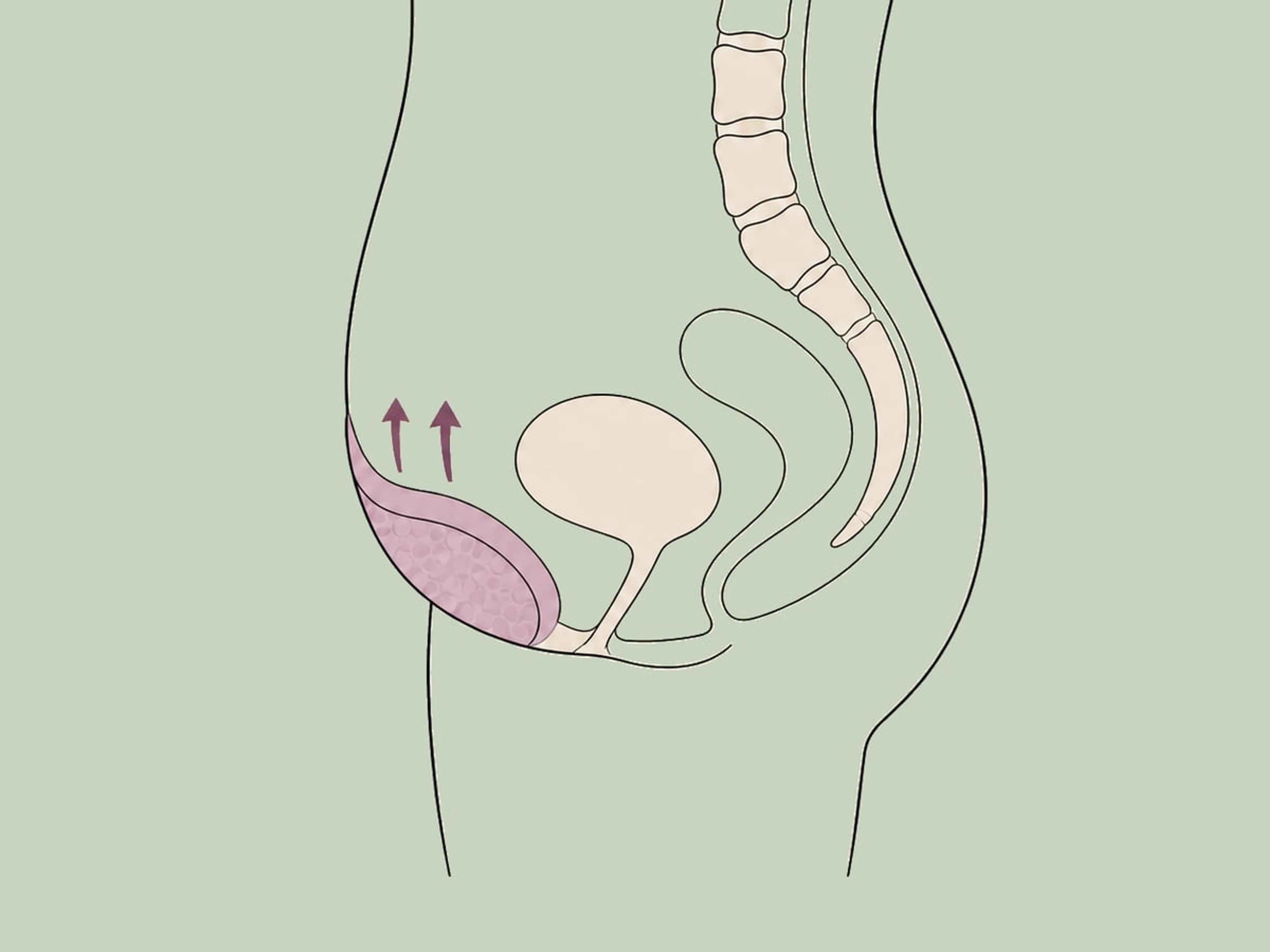
Removal of excess fat and loose skin from the pubic mound, done within the tummy tuck rather than as a separate operation. It suits patients whose mons has dropped or thickened after pregnancy or weight loss — flattening the abdomen above a heavy pubic area only sharpens the contrast. It adds little operating time and no separate recovery, and it is what keeps the transition into the lower body smooth in fitted clothing.
The day of surgery
Marking, standing up
The incision line and the amount of skin to remove are drawn while you stand, because loose abdominal skin hangs differently upright than on the table. The line is set low, so the finished scar sits under underwear or a bikini.
General anaesthesia
A tummy tuck is done asleep, in a fully equipped clinic setting, and usually takes 3–5 hours. An anaesthesiologist stays with you throughout, and you are admitted for 2 nights afterwards rather than discharged the same day.
Liposuction first, when planned
In a lipoabdominoplasty the fat is removed before the skin is lifted. Debulking first means the surgeon has to undermine less tissue, sparing blood vessels and lymphatic pathways — which is what keeps swelling and fluid collection down.
Muscle repair
The two vertical abdominal muscles, pushed apart by pregnancy or weight change, are stitched back to the midline. This is the step that flattens the abdomen and tightens the waist from the inside; removing skin alone would not do it.
Skin removal and the navel
The remaining skin is drawn down, trimmed, and the navel is brought out through a new opening so it stays in its natural position on the tightened abdomen. In a mini tummy tuck far less skin is removed and the navel is left untouched.
Drains, closure and garment
The incision is closed in layers so the tension sits on deep stitches rather than the skin edge — tension is what widens abdominal scars. Drains are placed to clear fluid and a compression garment is fitted before you wake.
La recuperación, semana a semana
- Day 1
You will be sore and standing slightly bent to protect the repair, in a compression garment with drains usually in place. You stay 2 nights with us before moving to the hotel.
- Week 1
Bruising and tightness peak. Drains usually come out between days 5 and 10, at one of your follow-up visits. You are moving slowly and sleeping propped up.
- Weeks 2–3
Most people are standing fully upright again by the end of the second week, and desk-based work is usually manageable at 10–14 days. Swelling is still significant and the scar is firm and pink. The compression garment stays on day and night, off only to shower, and nothing over 5 kg — no lifting, no driving — until your surgeon clears you.
- Week 6
Cleared for exercise and core work in stages. The contour is emerging, though lower-abdominal swelling still comes and goes.
- Months 3–6
Most of the remaining swelling has gone and the contour you will keep is clearly emerging — this, not week six, is where the result starts to be judged, though the last of the micro-swelling only resolves across the first year. The scar is usually at its firmest and reddest around month three before it starts to soften and fade.
- Month 12
The final shape settles. The scar keeps fading and flattening over the year and is placed to sit below the bikini line.
Cómo prepararse
- Reach a weight you can hold — significant change after surgery will undo the result.
- Stop smoking and all nicotine at least 4–6 weeks before and after surgery.
- Pause blood thinners, anti-inflammatories and supplements such as fish oil and vitamin E about 14 days before, with your surgeon's sign-off.
- Arrange an adult helper for at least the first 48–72 hours after you leave the clinic.
- Set up a recovery space — a recliner or wedge pillows, loose clothing, and easy meals within reach.
- Plan not to lift more than 5 kilograms or drive during the first few postoperative weeks.
- Expect to wear your compression garment continuously, except briefly for showering, through approximately weeks 2–6 after surgery.
Riesgos
Toda operación conlleva riesgos. Los nombramos para que pueda hacer las preguntas correctas.
- A permanent scar across the lower abdomen, placed low but visible.
- Seroma or hematoma — a collection of fluid or blood under the skin that may need draining.
- Numbness in the lower abdomen, usually temporary, rarely lasting.
- Wound-healing problems, more likely in smokers and people with diabetes.
- Delayed healing and small areas of wound separation, particularly where extended or Fleur-de-Lis incision lines meet.
- Asymmetry or contour irregularity that may need a minor revision, including variation in the position or appearance of the reconstructed navel.
- Blood clots in the legs or lungs — uncommon but serious.
Qué esperar en Turquía
Coming to Istanbul for a tummy tuck is mostly about planning and time — a single unhurried trip, with the surgery, your inpatient nights and every follow-up handled in one place before you fly home.
Before you fly
You talk to the surgeon who will operate before you book anything — photos, history and a candid view of whether a tummy tuck is right for you. The preparation steps above apply unchanged, and we confirm your dates only once you are medically ready.
At the clinic
Vanity has its own operating theatres and a bed for the patients who need one. You are admitted for 2 nights after surgery, with nursing care and your drains and compression garment managed on-site. Airport transfers and a medical translator are arranged as standard for international patients.
Recovery in Istanbul
Plan to stay in the city for about 7–9 days — your 2 nights with us, then the rest in a hotel nearby — with 2 in-clinic follow-ups to check the wound and remove the drains. We would rather see you healing in person than send you home too soon.
Heading home
You travel in your compression garment and compression stockings, keep hydrated and move your legs during the flight. Long-haul flying after abdominal surgery raises the risk of deep vein thrombosis (DVT), so get up and walk the aisle roughly every hour — we send you home with paperwork that lets you do it.
- United Kingdom
- £8,500 – £14,000
- Europe
- €14,500 – €25,000
- United States
- $12,000 – $22,000
Rangos publicados a título orientativo — confírmalo con un presupuesto local.
Preguntas frecuentes
Is a tummy tuck painful?
You feel nothing during the operation itself — it is done under general anaesthetic. Afterwards, what most people describe is not a sharp wound pain but a deep abdominal tightness, with soreness and a localised ache when you move or stand. It typically peaks within the first three to five days, which is part of why you spend 2 nights as an inpatient rather than going straight to a hotel, and it is managed with a prescribed pain relief plan rather than endured. The tightness eases as you straighten up out of the bent posture over the following week.
How long do I really need off work?
Plan on 10–14 days for desk work and 6 weeks before anything strenuous — running, swimming, core work or heavy lifting. People underestimate how much standing upright and lifting take out of them in the first fortnight.
Will a tummy tuck get rid of my stretch marks?
Marks on skin that is removed — typically below the belly button — go with it. Marks on skin that stays may be pulled lower or tightened, but not erased.
Should I have a tummy tuck before or after having more children?
After. A future pregnancy can stretch the muscle repair and skin again. It is not unsafe to become pregnant afterwards, but most people need to wait at least 1 year.
What is the difference between a tummy tuck and liposuction?
Liposuction removes fat but does nothing for loose skin or separated muscles. A tummy tuck addresses all three, which is why it is the right answer after pregnancy or major weight loss when the skin will not tighten on its own.
Will a tummy tuck flatten a firm, rounded belly?
Only if the fullness is loose skin and subcutaneous fat — the soft layer you can pinch. A firm belly that pushes outward is usually visceral fat packed around the organs, behind the abdominal wall, where no surgery of this kind can reach it; that responds to weight loss. Muscle repair tightens the wall, but it will not hold back visceral volume.
I have lost a lot of weight and have a hanging apron of skin — which technique applies?
That apron is called a panniculus, and it usually causes chafing, rashes and hygiene problems rather than a purely cosmetic complaint, so removing it is closer to reconstruction than to contouring. Which technique applies depends on where the excess goes: extended if it wraps to the flanks, 360 if it continues around the back and buttocks, Fleur-de-Lis if the skin is slack side to side as well as top to bottom. The surgeon decides at consultation, once your weight has been stable.
How visible is the scar?
The scar runs hip to hip and is permanent, but it is placed low so well-fitting underwear and most swimwear cover it. It softens, flattens and fades from pink toward your natural skin tone over roughly 6–12 months.
What happens to my belly button?
In a full, extended or 360 tummy tuck the navel stays attached to the abdominal wall while the skin around it is drawn down, then it is brought out through a new opening — the step known as umbilicoplasty. Its depth, shape and height are set deliberately, because a navel left under tension or placed too high reads as stretched and artificial. It leaves a fine scar around the rim; in a mini tummy tuck the navel is not moved at all.
Can a tummy tuck help with back pain?
Sometimes, when the pain comes from separated abdominal muscles. Stitching the two muscle bellies back to the midline with permanent sutures restores the front-of-body support your spine relies on, and patients with genuine diastasis often report better posture and less lower-back ache afterwards. It does nothing for pain coming from discs or joints, so it is not a reason on its own to have the operation.
Can I fly home safely after a tummy tuck in Istanbul?
Plan to stay for the whole early recovery — roughly 7–9 days, with 2 follow-up visits and a final drain and wound check before you fly.
Is the result permanent?
The skin and muscle repair are long-lasting if your weight stays stable and you do not have another pregnancy. Normal aging continues, but you will not regrow the skin that was removed.
Am I a candidate for a tummy tuck?
The usual candidate is a woman or a man aged 18 to 55, already at or close to a stable target weight they can hold, with loose abdominal skin or separated muscles that lifestyle changes will not resolve. It is most often considered after pregnancy or after major weight loss — including weight lost through bariatric surgery, where the leftover apron of skin is a functional problem as much as a cosmetic one. It is not a weight-loss operation and not a shortcut to your target weight; that comes first.
Is a tummy tuck only for women?
No. It suits anyone with loose abdominal skin or separated muscles, regardless of gender — in men it is most often considered after major weight loss.
When can I shower after a tummy tuck?
If no drains were placed, usually about 3 days after surgery. With drains in, wait until they are removed — typically between days 5 and 10 — and take careful sponge baths in the meantime.
How should I sit after a tummy tuck?
Slightly bent at the hips — the so-called jackknife position — with knees and head raised, using a recliner or wedge pillows. It keeps tension off the muscle repair for the first 7–10 days; as the tissue tension relaxes during the second week you straighten up naturally.
Can a tummy tuck be combined with other procedures?
Yes. Liposuction of the flanks is the most common pairing — see lipoabdominoplasty above. Some patients add fat transfer to the hips or buttocks for an hourglass profile, or breast surgery — a breast lift or a breast reduction alongside a tummy tuck is what is usually meant by a mommy makeover. Whether combining makes sense depends on your health, the total operating time and a heavier recovery.
How do you recover from a tummy tuck and a BBL at the same time?
The order in theatre is fixed: fat is harvested by liposuction of the back, flanks and thighs, the tummy tuck is performed, and the purified fat is injected last. Afterwards the two sets of instructions pull against each other — the tummy tuck asks you to stay bent at the waist and off the front incision, the BBL asks you to keep weight off the buttocks so the transferred fat survives. It is managed with side-sleeping layouts, support cushions or a recovery mattress with a cut-out, and it makes for a stricter recovery than either operation alone.
Why does the price range from €4,100 to €7,500?
The technique drives most of the difference: a mini tummy tuck sits at the lower end, an extended tummy tuck or one combined with liposuction at the upper. The amount of tissue removed, the operating time and your surgeon's assessment at consultation set the final quote.
What is lipoabdominoplasty, and why is it preferred over a traditional tummy tuck?
A traditional tummy tuck separates a large area of skin and fat from the abdominal wall before pulling it tight, which can disturb local blood supply and lymphatic drainage and prolong swelling. In lipoabdominoplasty, liposuction — frequently VASER ultrasound-assisted — is performed first across the abdomen and flanks to slim the fat layer, and only then is the loose skin excised. Because the fat is removed before any lifting, the vessels, nerves and lymphatic pathways running through the connective tissue are largely preserved, so there is typically less trauma, less fluid collection and a more sculpted result. Most patients are treated this way unless their anatomy calls for a different plan.
Fuentes
- [1]Tummy Tuck | American Society of Plastic Surgeons · American Society of Plastic Surgeons
- [2]Tummy Tuck (Abdominoplasty): Surgery, Recovery, Risks & Results · Cleveland Clinic
- [3]Managing Complications in Abdominoplasty: A Literature Review · PubMed
- [4]A Primer on Abdominoplasty Safety · PubMed Central · 2024