




Qué es
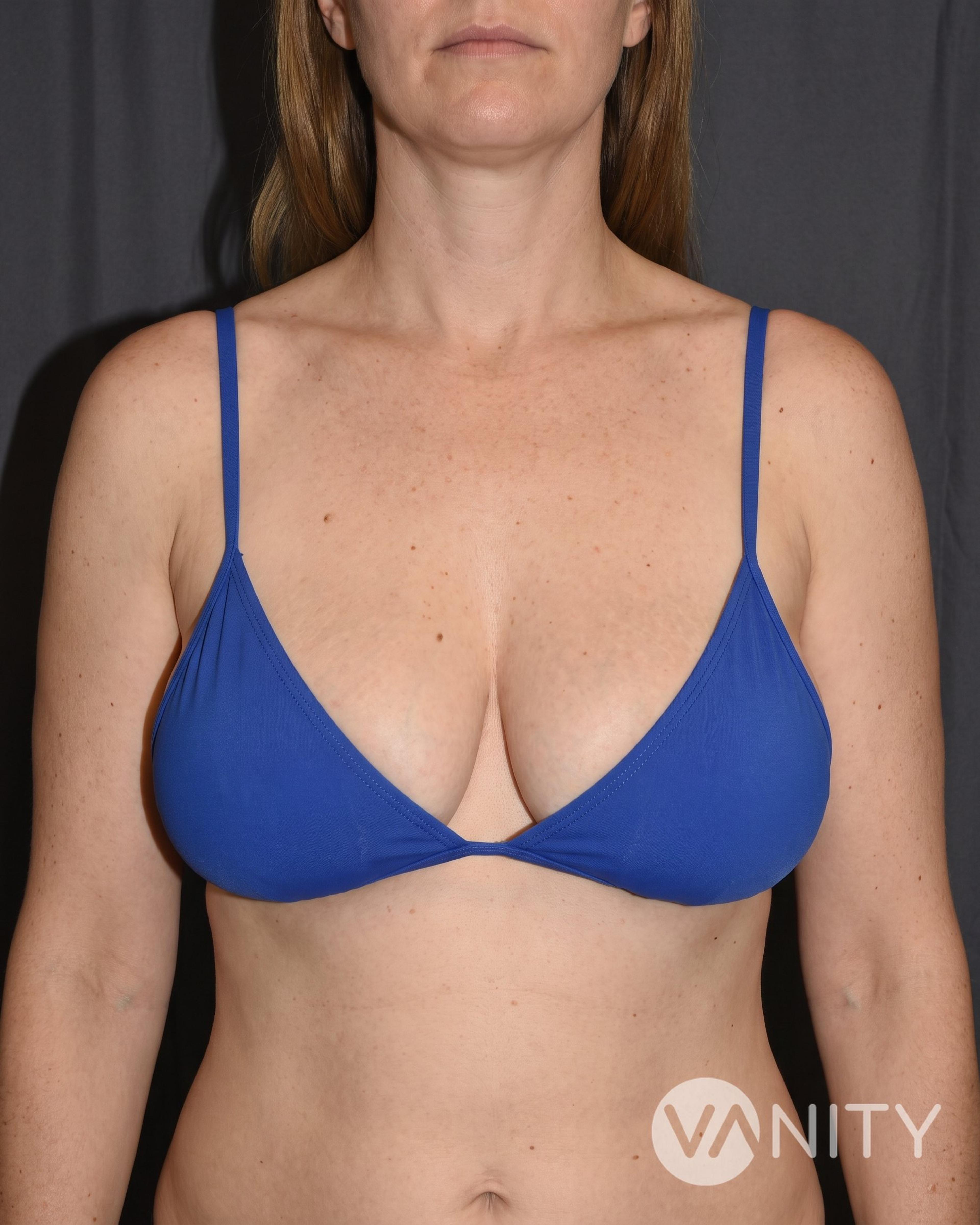
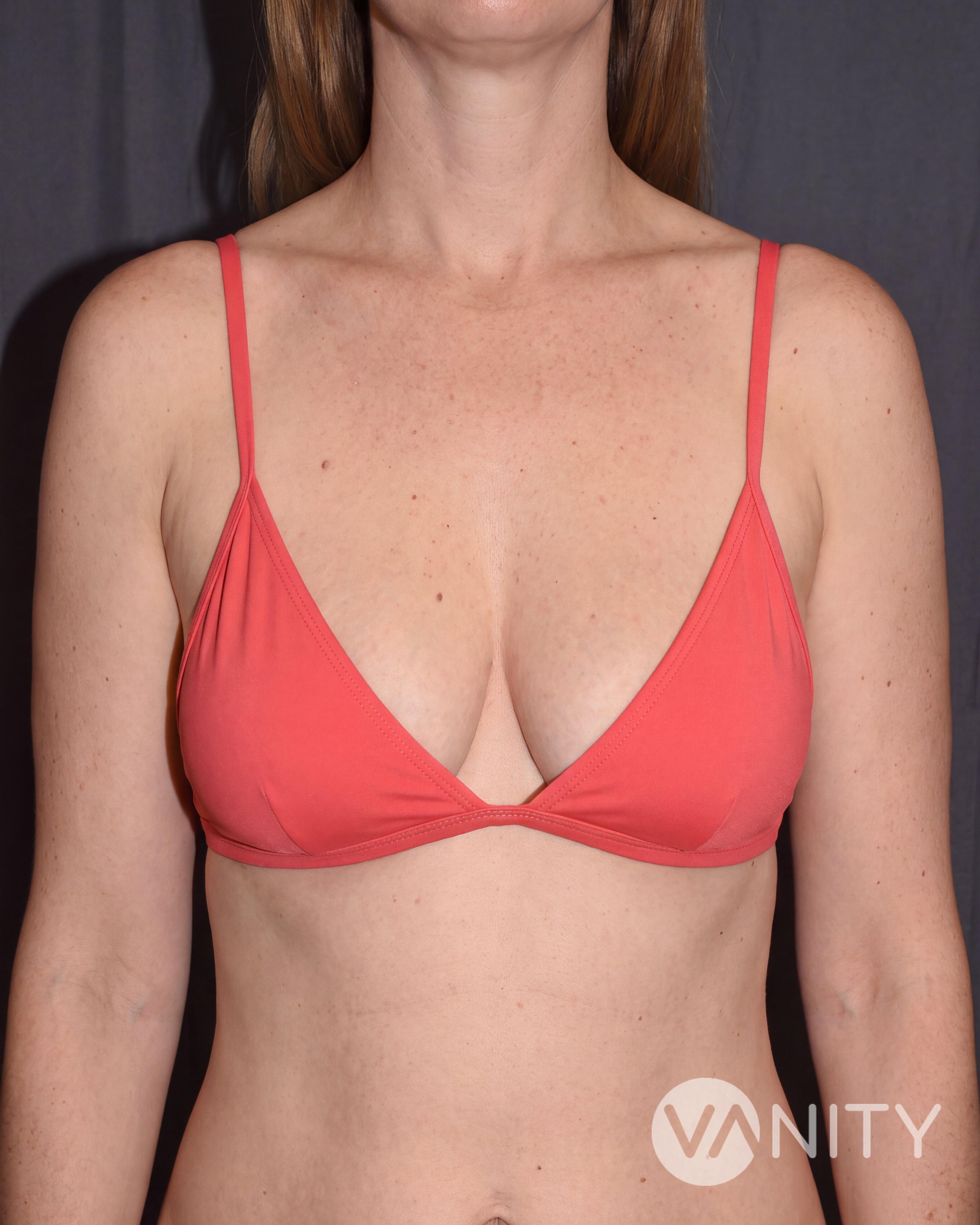
Breast reduction removes excess breast tissue, fat and skin, then reshapes what remains into a smaller, lighter contour in proportion with your frame. The nipple and areola are usually moved higher, and the areola is often resized to match the new breast.
It is chosen mostly by people whose breast size causes back, neck or shoulder pain, posture strain, skin irritation under the fold, or limits on exercise and how clothes fit.
Cómo funciona
Del canal de la clínica: el procedimiento explicado con claridad.
Nuestras técnicas
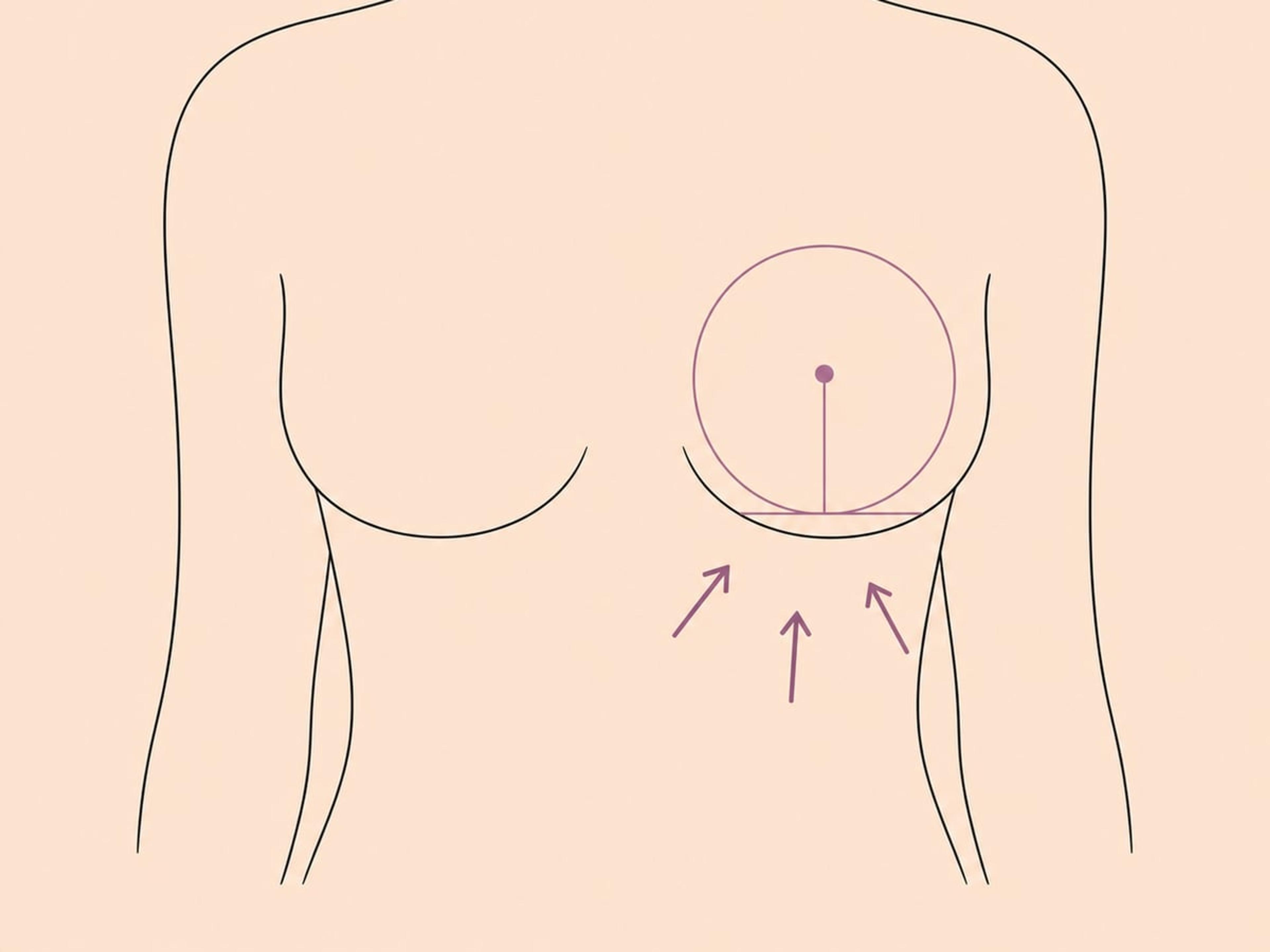
The most common approach for moderate to large reductions. Incisions run around the areola, straight down to the fold, and along the crease — which lets the surgeon remove a lot of tissue and tighten skin in two directions. The scars are longer, but they settle well over the first year.
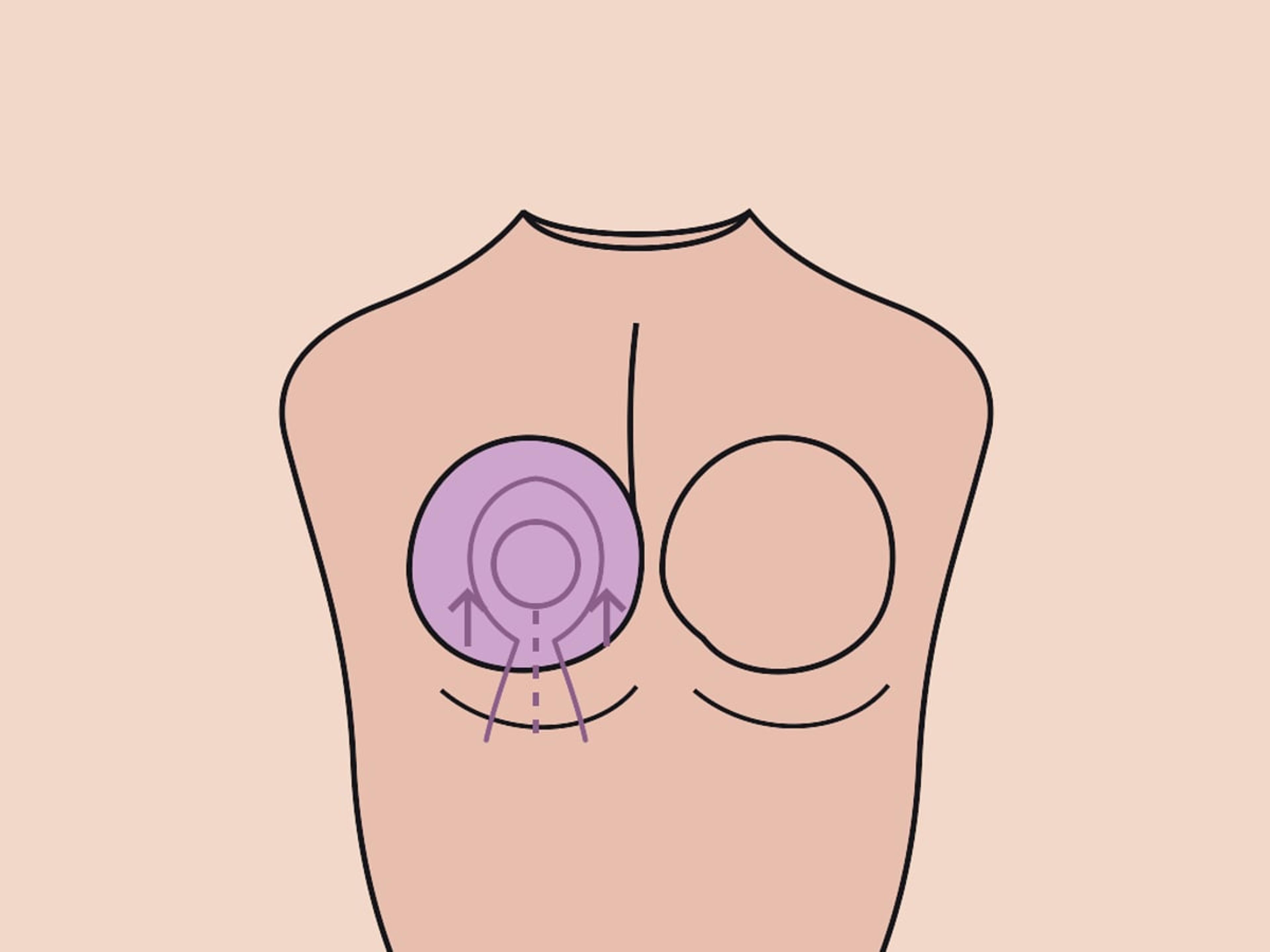
Incisions around the areola and a single vertical line down to the fold, with no horizontal scar. It suits small to moderate reductions where less skin needs to come out. Shape keeps refining for several months as the tissues settle.
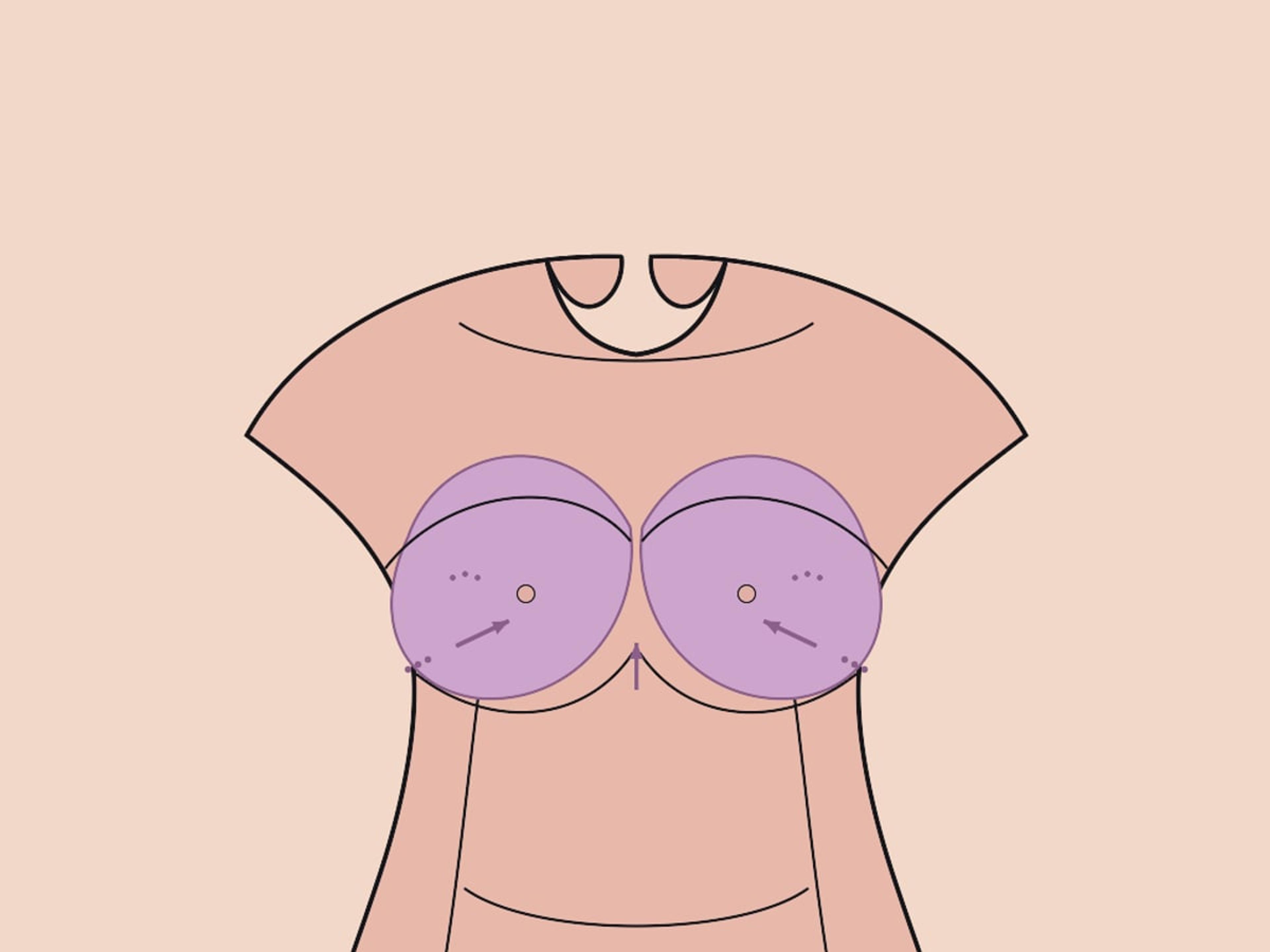
For breasts that are mostly fatty rather than glandular, with good skin elasticity. Volume comes down through small cannula incisions, but the lift is limited — skin and nipple position do not change much.
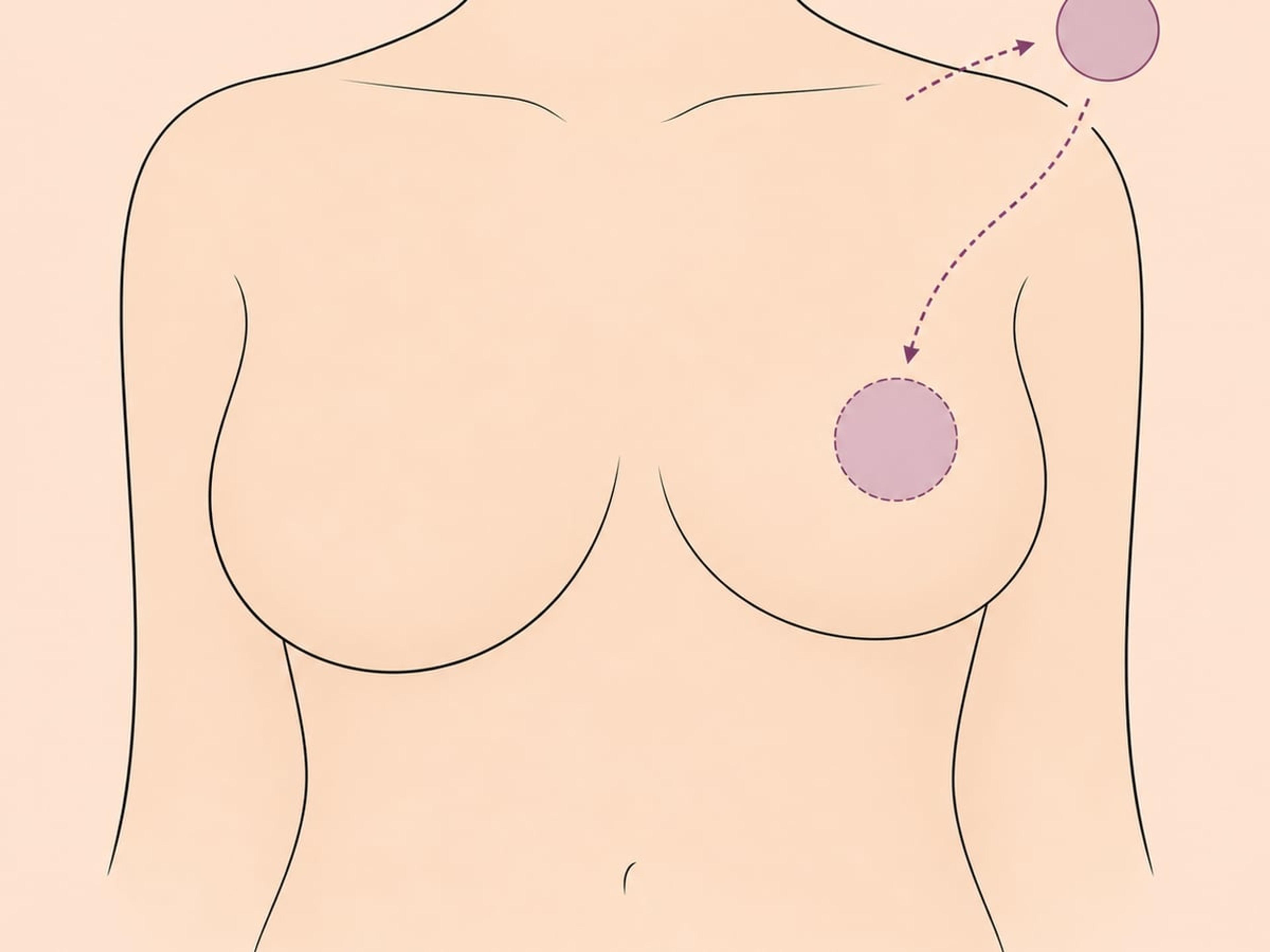
Used in very large reductions where keeping the blood supply through a pedicle is not safe. The nipple and areola are removed and grafted back onto the reshaped breast. The trade-off is a higher chance of changes to nipple sensation and to breastfeeding.
Inside the 2–4 hours
Anaesthesia and final markings
Most reductions are done under general anaesthetic. The incision plan is finalised on the skin — it dictates the scar pattern you will heal with.
The incision pattern is opened
Lollipop or inverted-T, chosen by how far the nipple must move and how much skin has to come out. Larger, heavier breasts need the longer pattern — that is why scar length tracks reduction size, not surgeon preference.
Excess tissue comes out
Glandular tissue, fat and skin are removed to the volume agreed at consultation. Where the excess is mostly fatty, liposuction is used alongside excision to refine the sides and fold without adding scars.
The nipple moves higher
The nipple and areola are lifted to the new breast's centre while staying attached to their blood and nerve supply — the pedicle. Preserving it is what protects sensation and the chance of breastfeeding, and it is why there is a safe limit to how much can be removed.
Reshape and close
The remaining tissue is shaped into a smaller, lifted contour, the areola resized to match, and the incisions closed in layers — usually with drains placed and a surgical bra fitted before you wake.
La recuperación, semana a semana
- Day 1
You go home the same day or after one night as an inpatient. Expect soreness, tightness and swelling, managed with prescribed pain relief and a surgical bra worn around the clock.
- Week 1
Most people are off strong painkillers within a few days. You can shower as your surgeon advises, but no lifting, reaching overhead or driving. Bruising peaks and begins to fade.
- Week 2
Many return to desk work. Swelling is still there, and the breasts sit high and firm — that is normal. Keep the support bra on day and night.
- Week 6
Most people are cleared for full exercise, including chest and upper-body work. Scars are red and raised now — this is their most prominent stage, and they fade over the year.
- 12 months
Final shape, scar maturity and nipple sensation have largely settled. Scars usually flatten and lighten a great deal compared with the early months.
Cómo prepararse
- Get baseline imaging — a mammogram or ultrasound — if your surgeon asks for it, particularly over the age of 40.
- Stop blood thinners, aspirin and certain supplements — fish oil, vitamin E — 14 days before surgery.
- Stop smoking and all nicotine at least 4 weeks before surgery — nicotine slows healing.
- Arrange help at home for the first 3–5 days, and someone to travel with you where possible.
- Buy front-closing surgical bras and loose button-up tops before you come in.
Riesgos
Toda operación conlleva riesgos. Los nombramos para que pueda hacer las preguntas correctas.
- Permanent scarring along the incision lines, most visible in the first year
- Changes to nipple or breast sensation — sometimes temporary, sometimes permanent
- Reduced or lost ability to breastfeed
- Some asymmetry between the two breasts
- Delayed wound healing, particularly where the incisions meet at the T-junction
- Standard surgical risks — bleeding, infection and reaction to anaesthesia

Qué esperar en Turquía
A breast reduction trip to Istanbul is planned, not rushed. You speak with the surgeon who will operate before you book anything, and the schedule is built around healing safely enough to fly home.
Before you fly
We plan your surgery with the surgeon over video first — sizing, technique and what removal volume is safe for your blood supply. The preparation steps above apply unchanged. Since April 2025 Turkish regulation requires providers to carry complication insurance covering revision, extra treatment or transfer if something goes wrong, and most nationalities enter visa-free or on an e-Visa for a stay this length.
At the clinic
Surgery is done under general anaesthetic, with 1 night as an inpatient — a day case is possible in smaller reductions. Translator and patient-coordinator support is arranged for non-Turkish speakers.
Recovery in Istanbul
Plan a stay of about 7 days — roughly 6 hotel nights — so 2 in-clinic follow-ups for wound checks and drain, suture and dressing management happen before you leave. Airport pickup and hotel transfers are arranged for you.
Heading home
Short-haul European flights are commonly permitted around day 7 with surgeon clearance- drains should be out, a compression garment worn, with in-flight hydration and calf movement, since immobility on flights over about 4 hours raises the risk of clots. Care continues for twelve months, wherever you are.
- United Kingdom
- £7,500 – £10,500
- United States
- $9,500 – $15,000
- Switzerland
- CHF 11,000 – CHF 16,500
Rangos publicados a título orientativo — confírmalo con un presupuesto local.
Preguntas frecuentes
How long do I really need off work?
Plan on 2 weeks for desk work, and 4–6 weeks if your job is physical or involves lifting. Most people underestimate how tired week 1 is — a buffer is worth it.
Will I be able to breastfeed afterwards?
Many people still can, but it is not guaranteed. Techniques that keep a tissue pedicle to the nipple have better odds than a free nipple graft. If breastfeeding matters to you, say so plainly at consultation.
How much smaller will I go?
Most people come down 2–4 cup sizes, but the goal is proportion, not a number. Your surgeon sets a safe removal volume based on the blood supply to the nipple and your skin envelope.
Will the scars be obvious?
They are real and permanent, and placed to sit within bra and swimsuit lines. They look red and raised for the first 3–6 months, then flatten and lighten over the first year with proper scar care.
How long should I stay in Istanbul for this?
Plan on about 7 days in Istanbul — roughly 6 hotel nights — so at least 2 in-clinic follow-ups happen before you fly. Short European flights are often cleared around day 7 with your surgeon's sign-off, but we usually prefer you wait until around day 14, with drains out and a compression garment on.
Will insurance cover it?
Sometimes, where it is documented as medically necessary — chronic back, neck or shoulder pain, rashes under the fold, or failed conservative treatment. Coverage varies by country and policy, and usually needs pre-authorisation and a minimum tissue-removal threshold.
Can the breasts get larger again later?
Yes — significant weight gain, pregnancy and hormonal shifts can all add residual breast tissue. A stable weight before surgery gives the most durable result.
Is breast reduction surgery painful?
You feel nothing during the operation itself — it is done under general anaesthesia. Afterwards expect deep chest tightness, pressure and a localised ache rather than sharp pain. It peaks in the first three to five days and is covered by the prescribed pain plan, and most people are off strong painkillers by the end of the first week.
Does it matter whether my breasts are mostly fatty or glandular?
It decides what the surgery can and cannot do. Dense glandular tissue has to be cut out, which commits you to an excision pattern and its scars. Fat-dominant breasts can sometimes come down with liposuction instead, but only where the skin is elastic enough to shrink around the smaller volume.
Will my breasts grow back after a reduction?
The tissue and fat cells removed are gone for good. But significant weight gain, pregnancy, hormonal shifts and ordinary ageing can all change breast volume and shape again over time — a stable weight before surgery gives the most durable result.
Is there a minimum age for breast reduction?
You need to have finished puberty, with breast development complete — that stability matters more than the number. Most patients are between 18 and 55, but there is no fixed age window beyond completed development; overall health and the reason for surgery weigh more.
Is there a weight limit for breast reduction?
No strict cut-off — being overweight does not rule you out. Results tend to be better and more predictable the closer you are to a stable weight you can maintain, so if significant weight loss is planned, it is worth doing first.
Does it have to be done under general anaesthetic?
Most breast reductions are done under general anaesthetic. Smaller reductions can sometimes be performed under local anaesthesia with sedation — your surgeon will advise which is safe for the volume being removed.
Do men have breast reduction?
Yes. Enlarged male breast tissue — gynecomastia — is treated with its own version of the procedure, usually a combination of gland removal and liposuction, covered on our gynecomastia page.
Can I combine it with a breast lift or other surgery?
Every reduction already includes a degree of lift — the nipple is moved higher and the skin tightened. It is also routinely combined with liposuction or a tummy tuck as part of a body-contouring plan, the combination often planned as a mommy makeover, though a longer single anaesthetic needs a fuller pre-operative assessment before it is agreed. Where the issue turns out to be shape rather than weight, a breast lift or breast augmentation may be the better route. Adding separate procedures changes the package price, so combined plans are quoted individually.
How quickly does the back and neck pain improve?
Often within days — the load on the spine and shoulders drops as soon as the weight is removed, and most patients who came in with back or neck pain feel the difference before the swelling has even settled. Strap grooves, posture strain and under-fold irritation ease more gradually over the following weeks.
Why does breast reduction cost less in Turkey?
It is not a difference in clinical quality or surgical expertise. The gap comes from lower local operating costs, exchange rates, and a high-volume care model where theatre, inpatient stay and follow-up are bundled into one pathway. Cost should never be the only deciding factor — surgeon qualifications and the aftercare behind the quote matter more.
Fuentes
- [1]Breast Reduction · American Society of Plastic Surgeons
- [2]Breast reduction (female) · NHS
- [3]Breast Reduction · Cleveland Clinic
- [4]ASPS clinical practice guideline summary on reduction mammaplasty · PubMed · 2012