
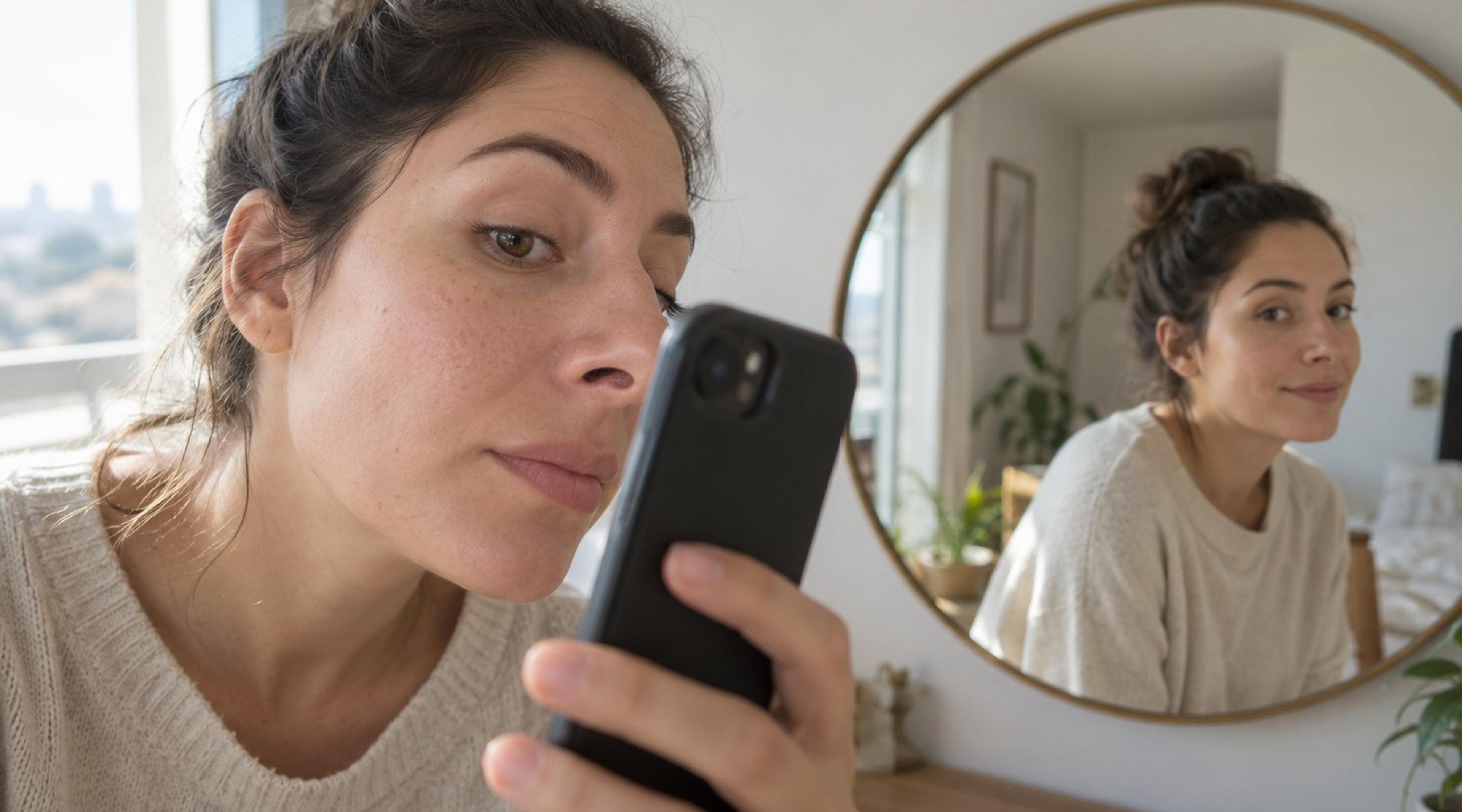
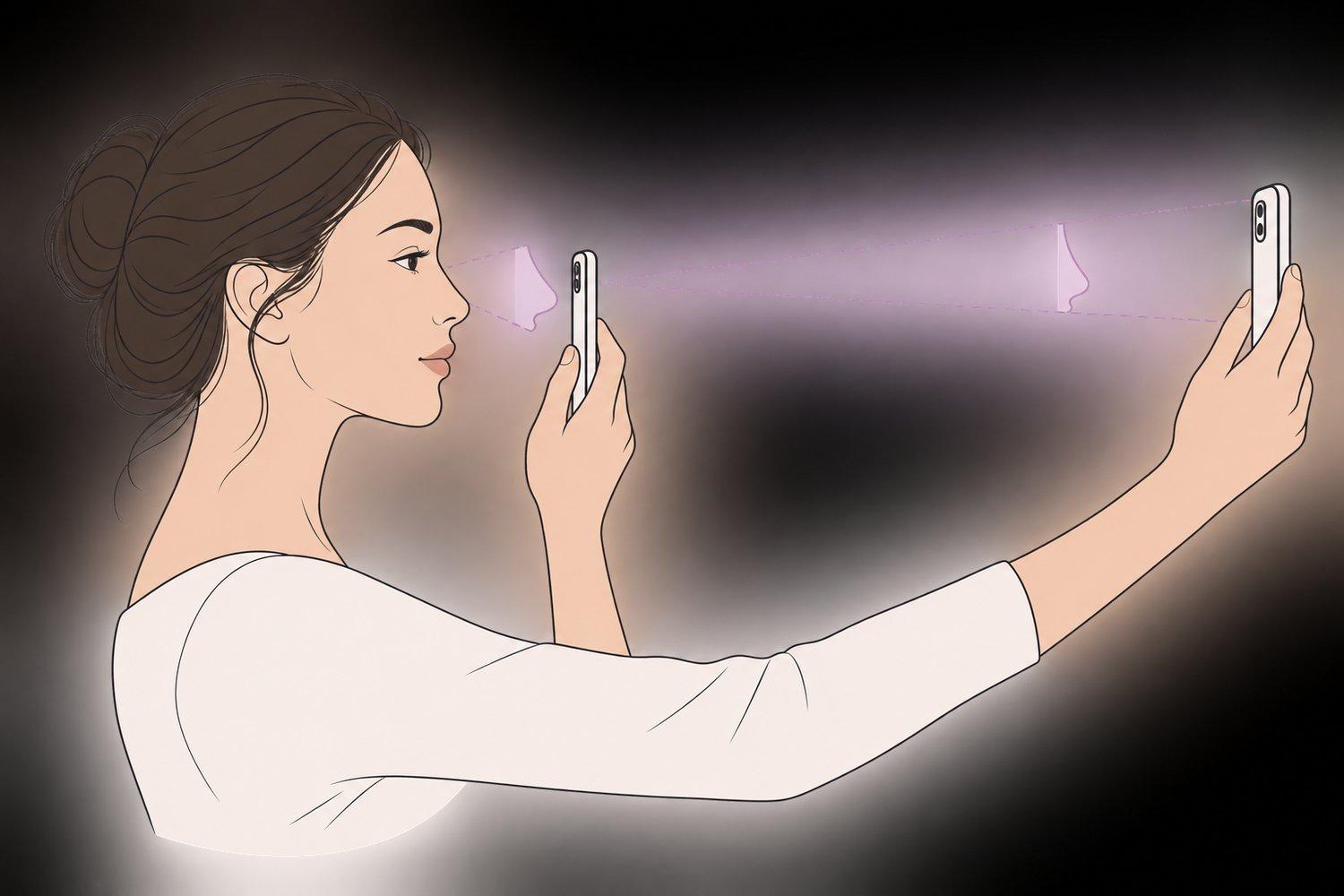
Close selfies can make your nose look bigger because the camera is much nearer to your nose than to the rest of your face. This changes perspective, so forward features occupy relatively more of the image than they do at normal conversational distance. In a 2022 study, nasal length averaged 6.4% greater in 12-inch selfies and 4.3% greater in 18-inch selfies than in standard clinical photographs. A mirror or a photograph taken from farther away is usually a fairer guide to everyday proportions. If a concern appears consistently across ordinary views, rhinoplasty may be worth discussing, but it cannot remove the perspective effect of a close camera and has recovery time and risks.
Why does my nose look bigger in selfies?
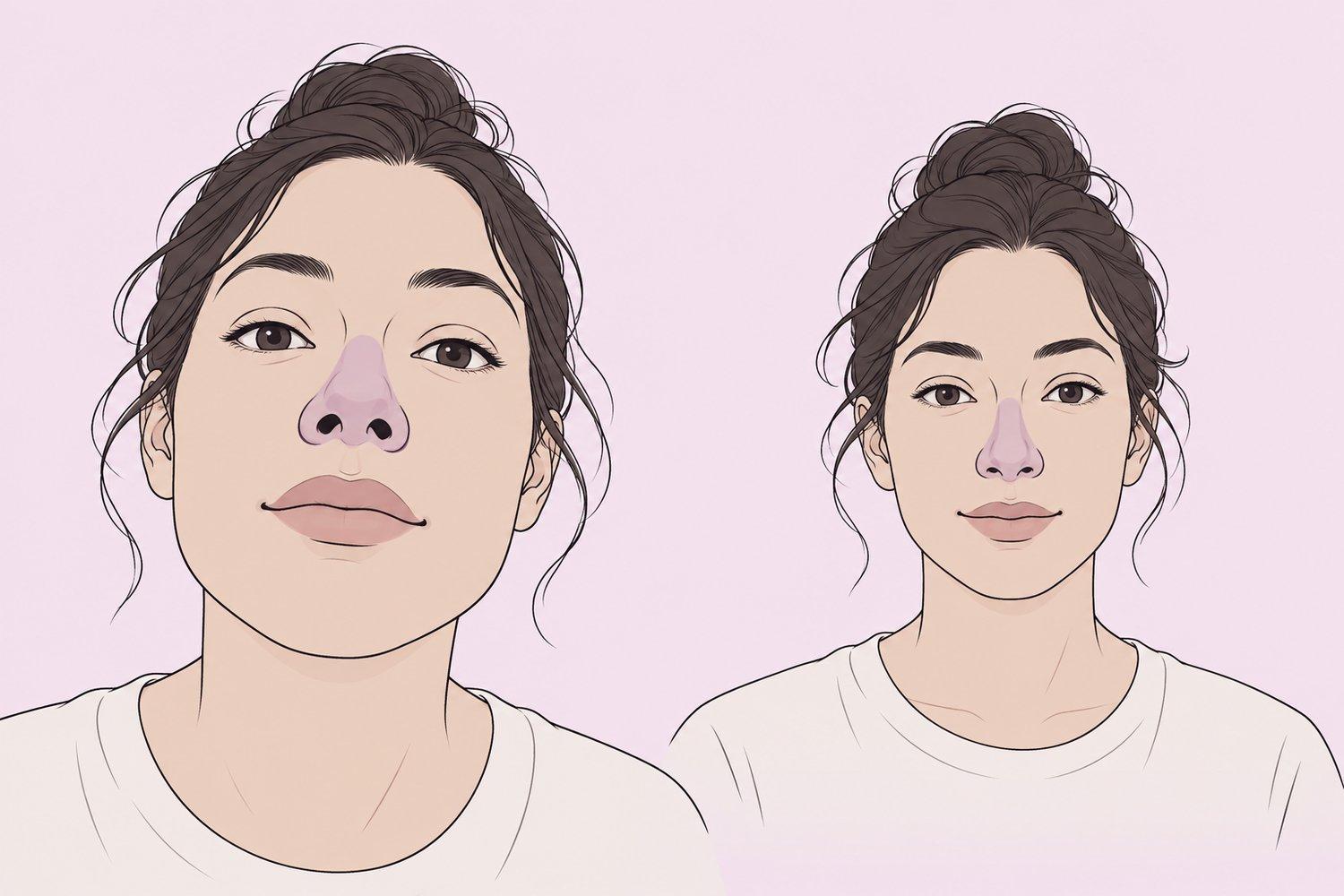
A close phone camera changes perspective. Because your nose sits near the centre and projects forward from the face, it is closer to the lens than your eyes, cheeks and ears. At short distances, nearer features occupy relatively more of the image, so a selfie can make the nose appear disproportionate without showing that it is unusually large in real life.
What the selfie studies actually measured
A study published in Plastic and Reconstructive Surgery compared front-camera selfies taken at 12 inches and 18 inches with clinical photographs taken from 5 feet away. On average, nasal length increased by 6.4% in the 12-inch selfies and 4.3% in the 18-inch selfies. These measurements describe an effect of distance and perspective, not a diagnosis of nasal size.
The same study found that the alar-base-to-facial-width ratio decreased in selfies. In other words, perspective can shift facial proportions in more than one direction; it does not simply make every part of the nose wider. A close image can therefore feel unfamiliar even when no single feature has changed in the same way.
Why the mirror and a close phone photo can disagree
A mirror view is usually taken from farther away and changes as you move, while a close phone photo fixes one perspective at one moment. The disagreement is often about the camera-to-subject distance, not about which version is true. If you are considering rhinoplasty, discuss photographs taken at consistent distances with your surgeon so the conversation begins with your real facial proportions, not one close selfie.
Is it the selfie lens or how close I hold the phone?
Usually, it is how close the camera is to your face. A close camera changes perspective, making features nearer the lens appear larger in relation to features farther away. This can make the nose look more prominent in a selfie than it does in the mirror or a photo taken from farther back.
Distance changes perspective
This is not limited to one kind of phone camera. A 2024 study in The Laryngoscope found short-distance distortion with both smartphones and full-frame cameras. Compared with the study standard, smartphone images taken at 8 inches showed 18% more vertical midface stretching, while images taken at 12 inches showed 12% more.
Why cropping a farther photo is a fairer comparison
For a more useful comparison, place the camera farther away, keep it level with your face, and avoid filters. Crop the image afterward rather than bringing the phone close. No single photograph shows a definitive version of your nose, but this approach reduces the perspective effect that can make a close selfie feel unfamiliar.
How can I tell if I dislike a selfie or my real nose proportions?
A close selfie can make the nose appear more prominent than it does in a mirror or photographs taken from farther away. Before deciding that it reflects your everyday proportions, look at your face in neutral lighting, without filters, across more than one ordinary view. The question is whether the concern repeats, not whether one image is unflattering.
Compare more than one view
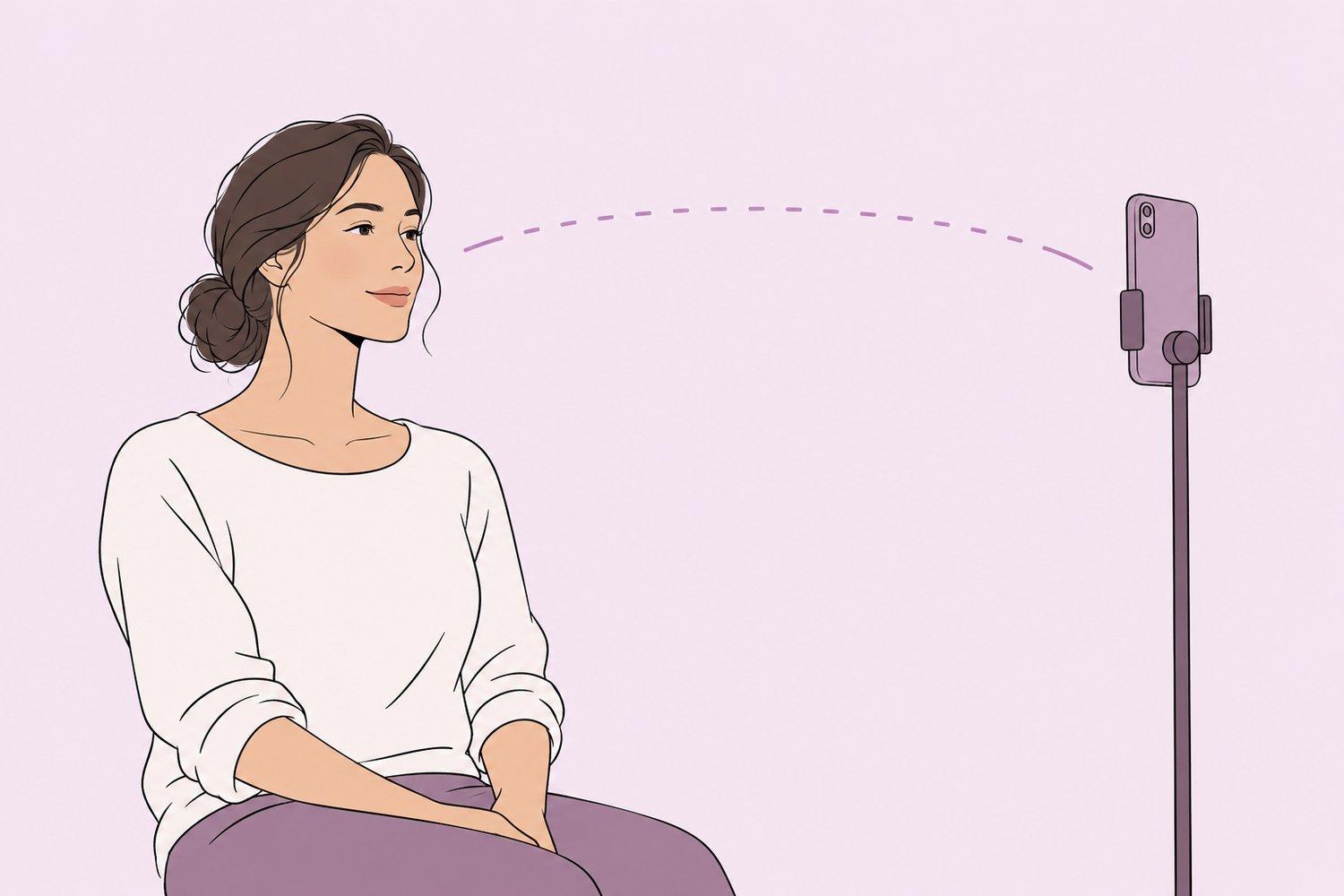
Use a mirror, then compare photographs taken at a greater distance in neutral light and without filters. Notice how your nose relates to your eyes, cheeks, chin and overall facial balance. If the feature concerns you consistently across these views, it may be worth discussing. If it appears mainly in close or wide-angle selfies, the camera may be contributing more than your anatomy.
Bring goals, not a single edited image, to a consultation
Rhinoplasty can change the shape or size of the nose, but it cannot guarantee a particular result. A surgeon should assess the whole face as well as nasal function, rather than work from one filtered reference image. NHS guidance recommends discussing the surgeon’s qualifications, experience, possible complications and follow-up before deciding on nose reshaping.
Could rhinoplasty help if the concern is real in everyday life?
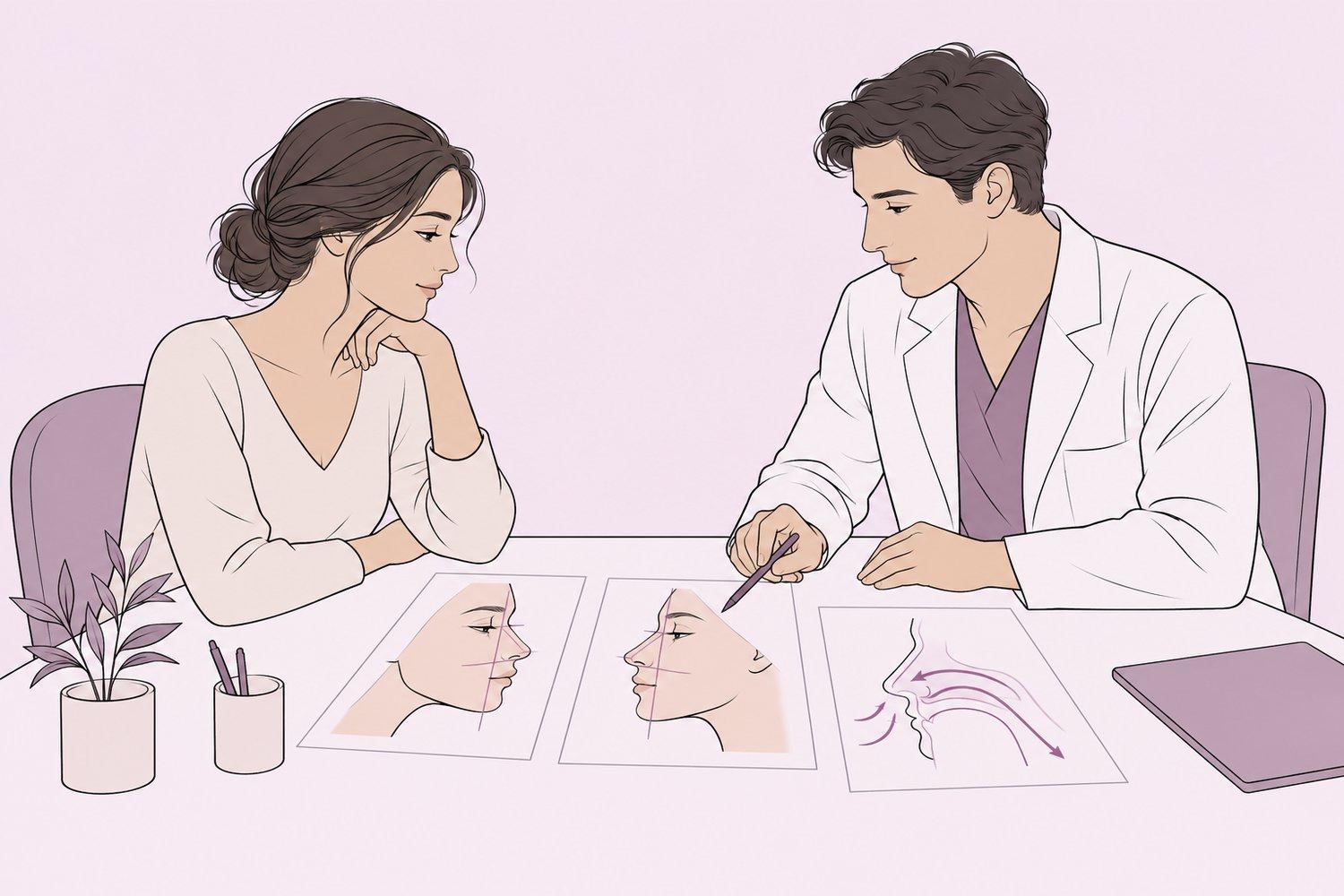
If your nose concerns you in the mirror, in ordinary photographs and over time — rather than only in close selfies — rhinoplasty may be worth discussing. It is not a correction for camera perspective. A considered consultation can help separate a stable concern about shape or proportion from the distortion created when a phone is held close to the face.
What rhinoplasty can change
The NHS describes rhinoplasty as surgery to change the shape or size of the nose. Depending on what is needed, a surgeon may alter bone, cartilage or nostrils, or use grafts to support the structure. The aim should be specific and proportionate: a nose that sits more comfortably with your features and still looks like your real self.
Why breathing and realistic goals belong in the same conversation
Rhinoplasty is a complex operation, and results cannot be guaranteed. The NHS notes possible complications including persistent breathing difficulty, bleeding, infection and changes to smell. Before travelling, talk to the surgeon about your reasons for surgery, how your breathing will be assessed, their relevant experience, how complications are managed and what follow-up care looks like afterwards.
How long should I stay in Istanbul for rhinoplasty?
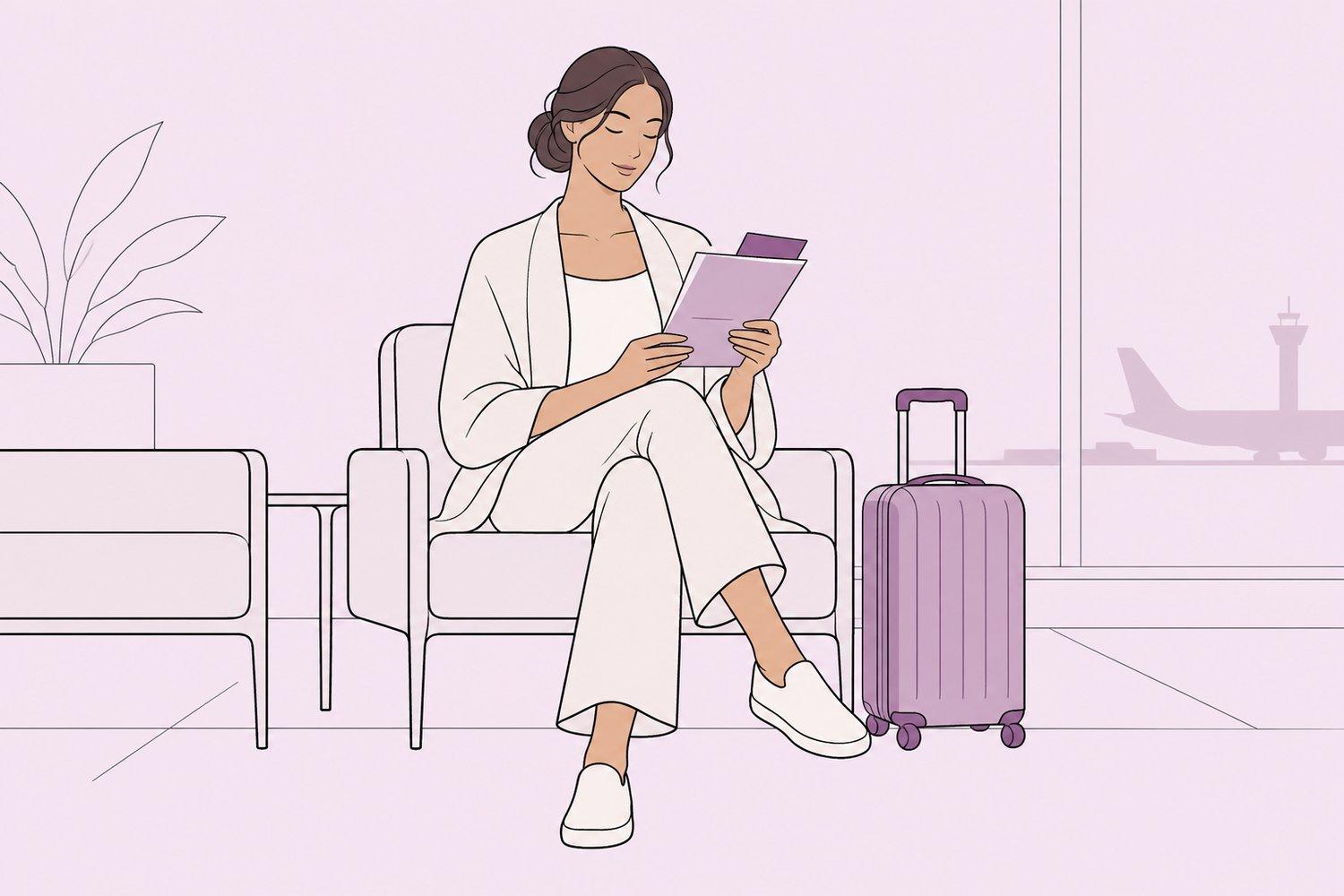
There is no single itinerary that suits every rhinoplasty patient. Plan your stay around the follow-up schedule set by your surgeon, rather than around a flight date. ISAPS advises people travelling abroad for surgery to arrange recovery and aftercare before the procedure, including where they would seek help if a concern develops after they return home.
Plan travel around the surgeon’s follow-up schedule
An early review matters because your surgeon needs to assess how you are healing before you travel. The NHS says a nasal splint may be removed after about 1 week, but this does not set a universal departure date. ISAPS notes that long periods of sitting during flights or car journeys can increase the risk of deep-vein thrombosis and pulmonary embolism, so ask your surgeon when travel home is appropriate for you.
What recovery may look like after you return home
The visible early recovery is only one part of healing. The NHS says patients may need up to 2 weeks away from work, while strenuous exercise is generally delayed for 4 to 6 weeks. Swelling can take up to 6 months to settle, and the full effect may take several months. Rhinoplasty education should make that timeline clear: a careful result changes gradually, not on the day the splint comes off.
If you are unsure whether your concern reflects everyday proportions or a close-camera effect, arrange an online consultation with Vanity’s surgeons. They can discuss your goals, nasal breathing, recovery and the limits of rhinoplasty before you travel.
Frequently asked questions
Do selfies really make your nose look bigger?
Close selfies can alter facial proportions because the camera is at a short distance from the face. A 2022 study found that nasal length averaged 6.4% greater in 12-inch selfies than in five-foot clinical photographs.
Why does my nose look normal in the mirror but big on my phone?
A mirror is usually viewed from farther away than a close selfie, while a nearby phone changes perspective across the face. A 2024 Laryngoscope study found measurable smartphone-image distortion at 8 and 12 inches.
How far away should I hold my phone for a more realistic face photo?
Move the camera farther away, then crop the image if needed, rather than using a close selfie as a test of facial proportions. Studies comparing 12-inch and 18-inch selfies with five-foot clinical photographs found proportion differences at the closer distances.
Can rhinoplasty fix the way my nose looks in selfies?
Rhinoplasty can change the real nose’s shape or size, but it cannot remove the perspective effect created by a close camera. It is complex surgery so a decision should rest on stable real-life concerns rather than one image.
How long should I stay in Istanbul after rhinoplasty before flying home?
There is no single stay that suits every rhinoplasty, so travel timing should be set by the operating surgeon and follow-up plan. ISAPS advises planning aftercare and potential complications before travelling, and asking the surgeon when it is safe to travel home.
When can I return to work after rhinoplasty?
The NHS says patients may need up to 2 weeks away from work after nose surgery. Bruising, swelling and redness may still be visible at around 3 weeks, while the final result can take months to settle.
When can I exercise after rhinoplasty?
The NHS advises that strenuous exercise or contact sports may need to wait 4 to 6 weeks after rhinoplasty. Your operating surgeon should give the recovery instructions because the procedure and healing course differ between patients.