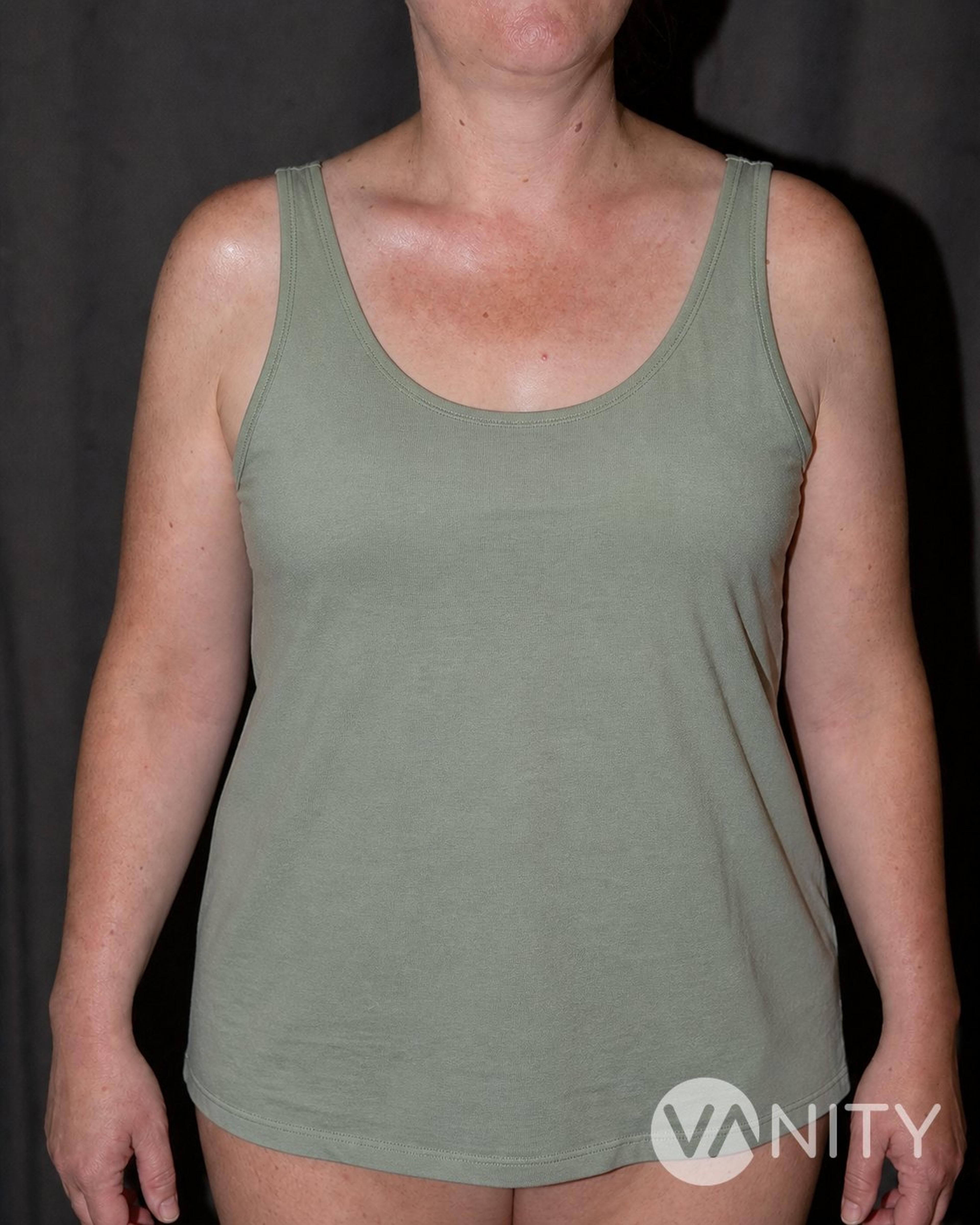



Di cosa si tratta
A breast lift removes stretched skin and reshapes the tissue underneath to raise the breast on the chest wall. The nipple and areola are moved higher, and the areola is often made smaller for proportion. Because excess skin and sometimes a small amount of breast tissue are removed, the breasts will usually be smaller unless an implant or fat transfer is added.
It suits women whose breasts have descended or lost shape after pregnancy, breastfeeding, weight change, or time. If you also want more fullness in the upper part of the breast, the surgeon may suggest pairing the lift with an implant.
Come funziona
Dal canale della clinica — l'intervento spiegato in parole semplici.
Le nostre tecniche
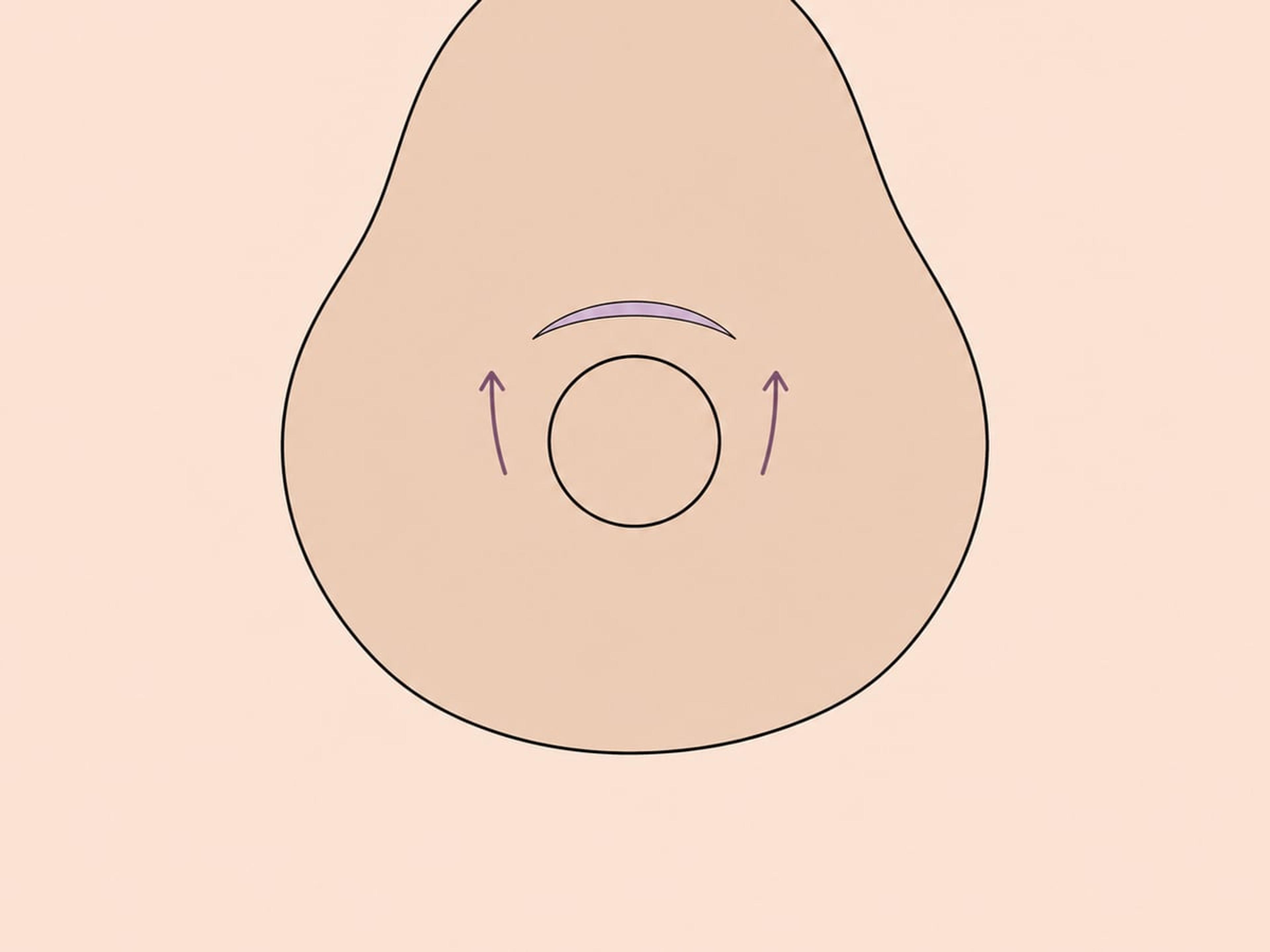
A thin crescent of skin is removed above the areola to lift the nipple by about a centimetre. It is reserved for very mild sagging, and the scar sits tucked along the upper edge of the areola.
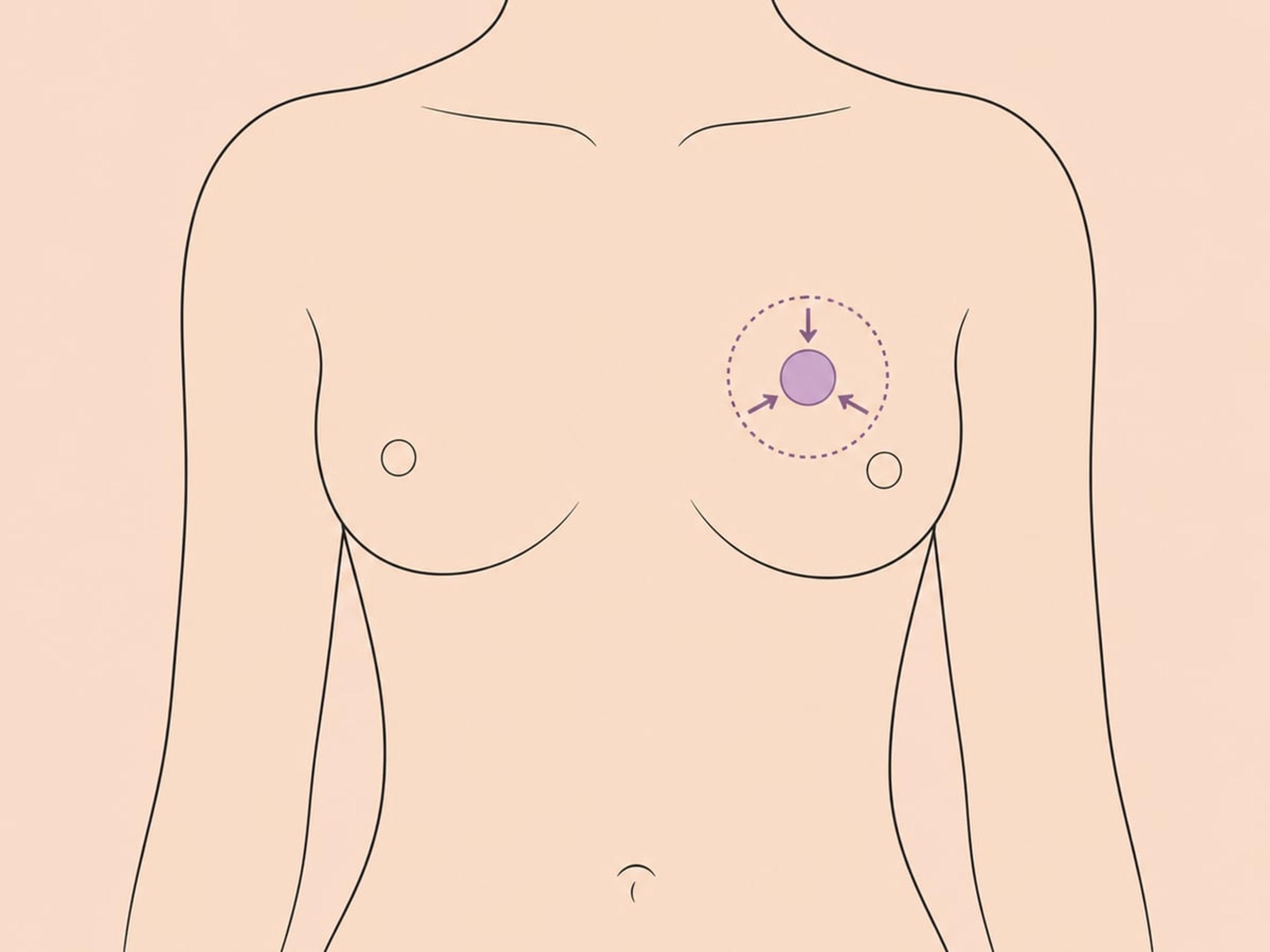
A circular incision around the areola allows a modest lift and resizing of the areola. It suits mild sagging and patients who want a single, well-hidden scar.
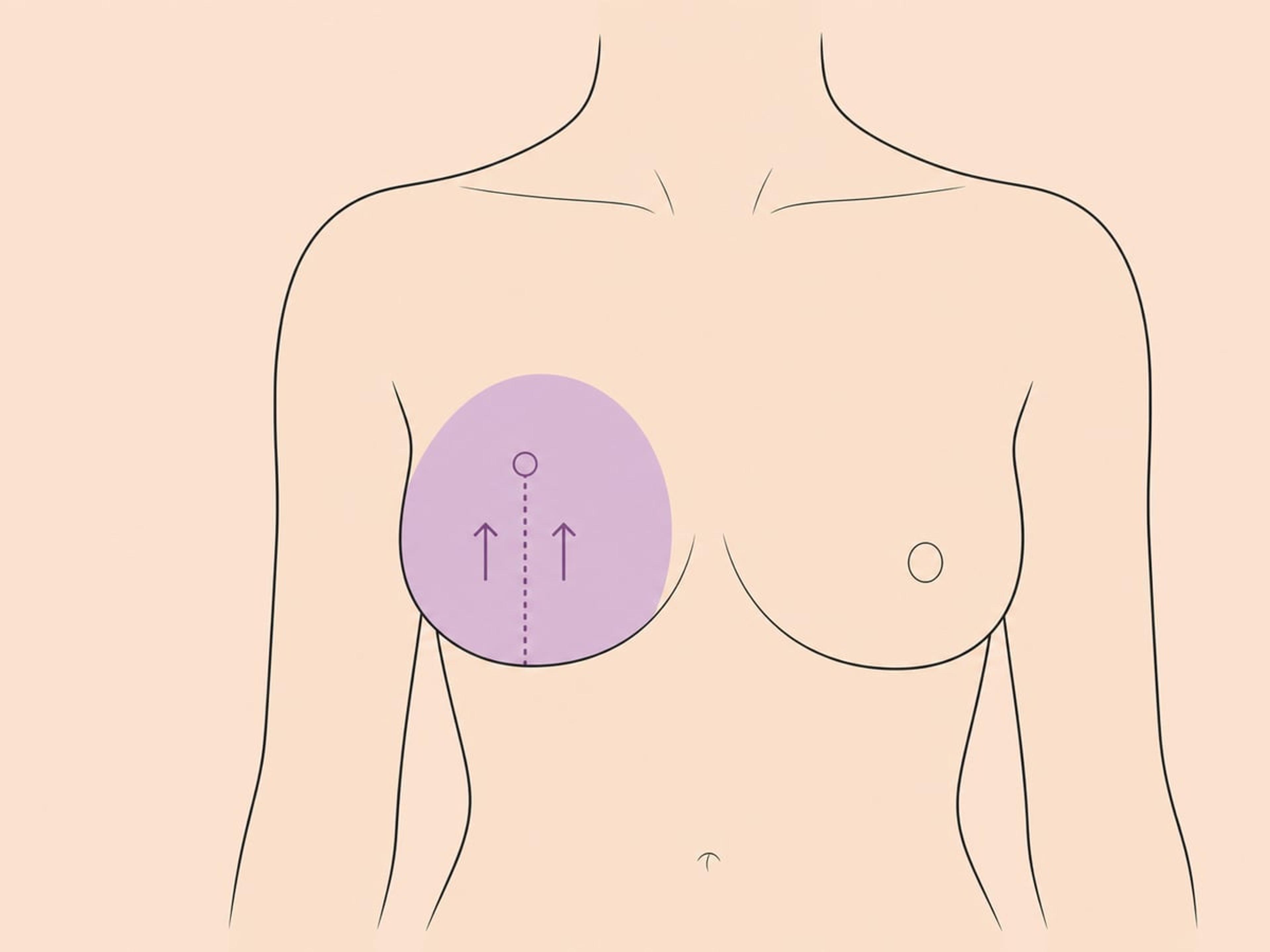
A vertical incision runs from the areola down to the breast crease, which gives the surgeon real reshaping leverage. It is the everyday technique for moderate sagging and produces a firmer, higher shape.
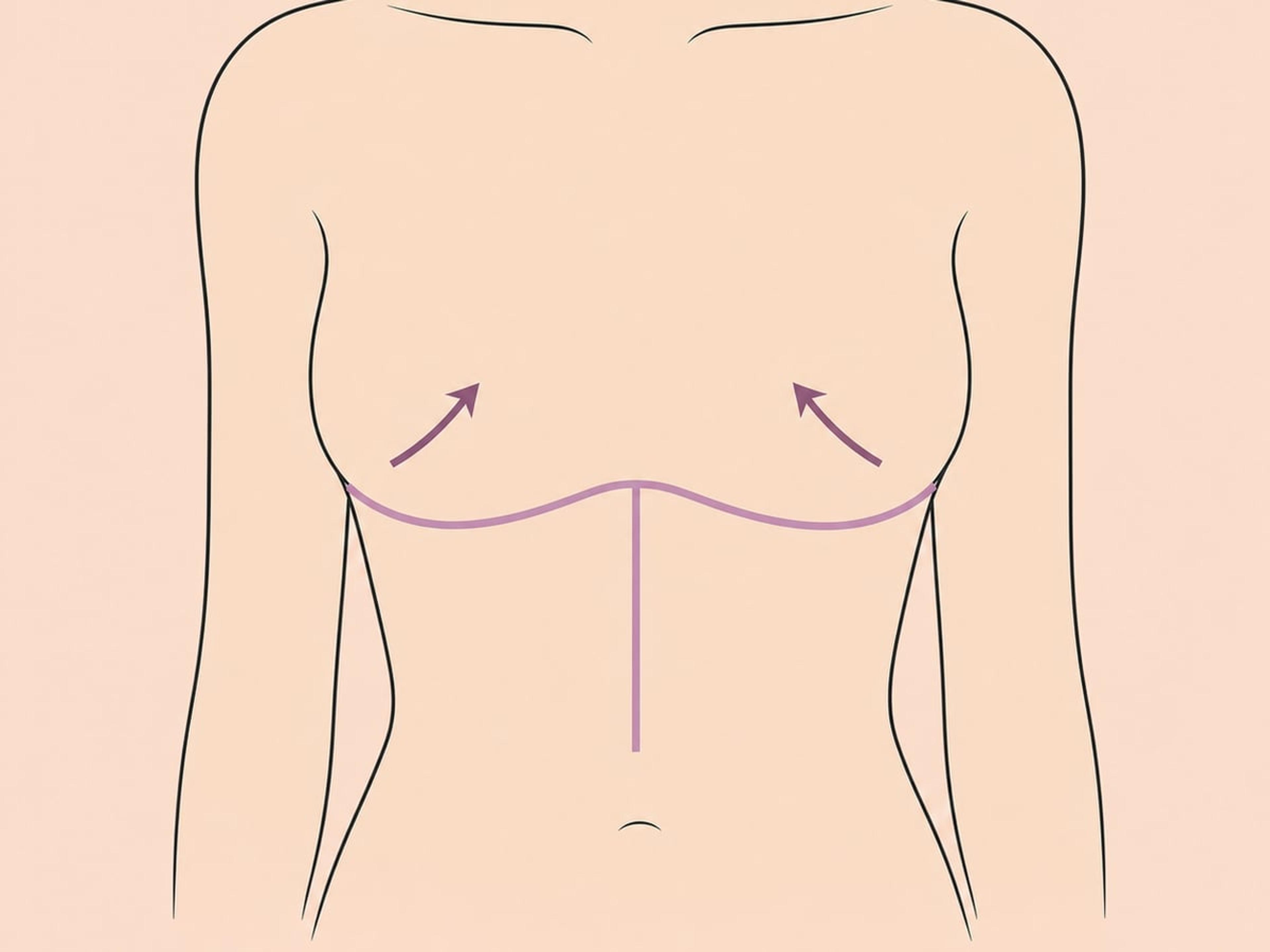
This adds a horizontal scar along the breast crease to the lollipop pattern. It is used for significant sagging or after major weight loss, where more skin has to come off to hold a stable result.
How the incision pattern is chosen
Grade the sag
The surgeon first checks where the nipple sits relative to the breast crease — the inframammary fold — using the Regnault ptosis classification. Level with the crease is grade I (mild); below the crease but still above the lowest point of the breast is grade II (moderate); well below it and pointing toward the floor is grade III (severe). This grade drives most of the decision.
Look for pseudoptosis
Sometimes the nipple still sits high and correctly placed while the lower pole has stretched and dropped beneath it. That is pseudoptosis, and it is corrected by tightening and reshaping the lower breast rather than by raising the nipple — which changes the pattern chosen.
Assess the skin and areola
Skin elasticity, the amount of excess skin, and the size and position of the areola come next. Stretched, inelastic skin needs more removed for the result to hold, and a widened areola can be resized through the same incision.
Match the pattern to the findings
Mild sagging can be corrected through a crescent or donut incision, moderate sagging usually needs the vertical lollipop, and significant sagging or loose post-weight-loss skin calls for the anchor. Each step up in pattern adds scar, but also reshaping leverage.
Check the pattern is not undersized
The smallest scar is not automatically the best choice. A pattern that removes too little skin lets the breast settle again quickly, which is why the crescent is rarely used for anything beyond very mild sagging.
Il recupero, settimana per settimana
- Day 1
You rest in a surgical bra, usually going home the same day or after one night. Expect soreness, tightness across the chest, and some bruising — oral pain medication is normally enough.
- Week 1
Most people are off prescription painkillers within a few days. Sleep on your back, avoid lifting more than a couple of kilos, and take short walks.
- Week 2
Many return to desk work. Swelling is still meaningful, and the breasts will sit higher and firmer than they eventually will.
- Week 6
Most exercise restrictions lift, including chest and upper-body work. Scars are still pink and slightly raised at this stage.
- 12 months
The shape has settled and scars have faded toward thin pale lines. This is the final result, and most scar maturation is complete.
Come prepararsi
- Bring recent breast imaging, or arrange a baseline mammogram, if the surgeon asks for one.
- Stop smoking and all nicotine products at least 4 weeks before surgery — this matters directly for wound healing.
- Stop blood thinners, aspirin, ibuprofen, and high-dose vitamin E or fish oil 14 days before surgery.
- Arrange a driver for the day of surgery and an adult to help you through the first 24–48 hours.
- Set up a recovery spot with back support, loose front-opening tops, and everything within arm's reach.
Rischi
Ogni operazione comporta dei rischi. Li nominiamo perché possiate fare le domande giuste.
- Visible scarring that fades but does not disappear
- Changes in nipple or breast skin sensation, sometimes permanent
- Asymmetry between the two breasts
- Difficulty or inability to breastfeed afterwards
- Delayed wound healing, particularly at the T-junction
- Loss of nipple-areola tissue in rare cases, more likely in smokers
Cosa aspettarsi in Turchia
Coming to Istanbul for a breast lift is a short, planned trip rather than a leap. You talk to the surgeon before you book, the operation and inpatient stay are arranged in advance, and the days afterward are spent recovering nearby so we can check the wound before you fly.
Before you fly
You speak with the surgeon and agree the technique before you travel — the preparation steps above apply unchanged. We arrange the airport transfer and an English-speaking coordinator, so consent and post-op instructions are understood clearly. Confirm that your nationality's permitted stay covers a week or more before booking.
At the clinic
Surgery is done under general anaesthesia, usually with one night as an inpatient and occasionally two.
Recovery in Istanbul
Plan on about 7 days in the city, with 6 nights in a hotel and 2 visits. Those visits cover a wound and drain check and a pre-flight clearance. You will be sore and swollen, resting on your back in a surgical bra, but functional enough to move around gently.
Heading home
We prefer you wait until around day 10 before a longer flight, and no earlier than 7 days. Clot risk is highest between roughly days 5 and 14, so we want drains out, the wound checked, and clearance given first. Before you leave, we agree how any complication would be managed once you are home — care continues for twelve months.
- United States
- $8,500 – $14,000
- United Kingdom
- £6,000 – £9,000
- Germany
- €5,500 – €8,000
- France
- €5,500 – €8,500
- Italy
- €5,000 – €8,000
- Switzerland
- CHF 10,000 – CHF 15,000
- Canada
- C$10,000 – C$15,000
- Australia
- A$12,000 – A$18,000
Fasce pubblicate a scopo orientativo — da confermare con un preventivo locale.
Domande frequenti
Will a breast lift make my breasts smaller?
A lift removes excess skin, not breast tissue, but it can make the breasts look and measure smaller. The same volume sits higher and tighter. If you want a more significant reduction, ask about combining a lift with a breast reduction.
Do I need an implant with my lift?
Only if you want more upper-pole fullness or a larger size. A lift on its own reshapes what you already have, which is enough for many patients. The surgeon will show you what each option looks like on your frame.
How visible are the scars?
Scars are permanent but usually fade to thin pale lines over 12 to 18 months. The pattern depends on the technique — around the areola, down the front, and sometimes along the breast crease. They sit where a bra or swimsuit covers. While they mature, protect them from the sun with SPF 30 or higher and follow your surgeon's scar-care advice.
How long do I really need off work?
Plan on 7 to 10 days for desk work and 3 to 4 weeks for anything physical. You will feel functional before you look it. Going back too early tends to prolong swelling rather than speed things up.
Can I travel to Istanbul for surgery in one trip?
Yes. Most patients do. Plan for about 7 days in Istanbul — 6 hotel nights and 2 visits, including a wound check and clearance to fly. We prefer you wait until around day 10 before a longer flight, as clot risk is highest in the first 2 weeks.
How long will the results last?
A breast lift does not stop ageing. Gravity, weight changes and pregnancy can continue to affect the breasts. Most patients enjoy their result for 10 to 15 years or longer. A supportive bra and stable weight can help it last.
Can I breastfeed after a breast lift?
Many women can breastfeed after a lift, but it is not guaranteed. Techniques that keep the nipple attached to the underlying tissue preserve more function than those that fully detach it. If future breastfeeding matters to you, raise it early in your consultation.
Can a breast lift be done without scars?
No — there is no scarless breast lift. Every technique that genuinely lifts the breast has to remove loose skin and move tissue, and that means incisions and permanent scars. What can be controlled is where they sit and how they are closed: the lines are placed around the areola and along the natural contours of the breast, and with meticulous closure they fade considerably over time.
Is a breast lift painful?
You feel nothing during the operation itself — it is done under general anaesthesia. Afterwards expect tightness, soreness, and a dull ache across the chest; it peaks around days three to five and then eases steadily, and the prescribed pain plan is written to cover that window.
Can I fly to Istanbul and have this done in one trip?
Yes, and most people do. Plan on 6 to 8 days in Istanbul — about 6 nights in a hotel and 1–2 follow-up visits, including a wound check and pre-flight clearance.
Am I a good candidate for a breast lift?
The strongest candidates are non-smokers in good general health, at a stable weight, with realistic expectations about what a lift changes. A simple self-check: if the nipple sits below the breast crease when unsupported by a bra, a lift is usually worth discussing. Unmanaged medical conditions that interfere with healing are a reason to postpone surgery.
How do I look after the incisions once I'm home?
Keep the surgical site clean, and once you are cleared to shower, pat it fully dry with a clean towel. Contact your care team promptly if you notice signs of infection — increasing tenderness, warmth, swelling, or discharge from the wound.
Does diet make a difference during recovery?
Yes. Stay well hydrated and eat enough protein, along with foods rich in omega-3s and vitamins C and E — all of it supports wound healing. Avoid alcohol while you heal, as it raises the bleeding risk, and stay off nicotine, which slows healing.
Can men have a breast lift?
Enlarged or sagging breast tissue in men is usually gynecomastia, which is treated with its own procedure rather than a standard mastopexy. The consultation determines which approach fits your anatomy.
Fonti
- [1]Breast Lift · American Society of Plastic Surgeons
- [2]Mastopexy (Breast Lift) · International Society of Aesthetic Plastic Surgery
- [3]Mastopexy (Breast Lift) - StatPearls · National Center for Biotechnology Information
- [4]Breast Lift (Mastopexy): Surgery & Recovery · Cleveland Clinic