


ما هي العملية
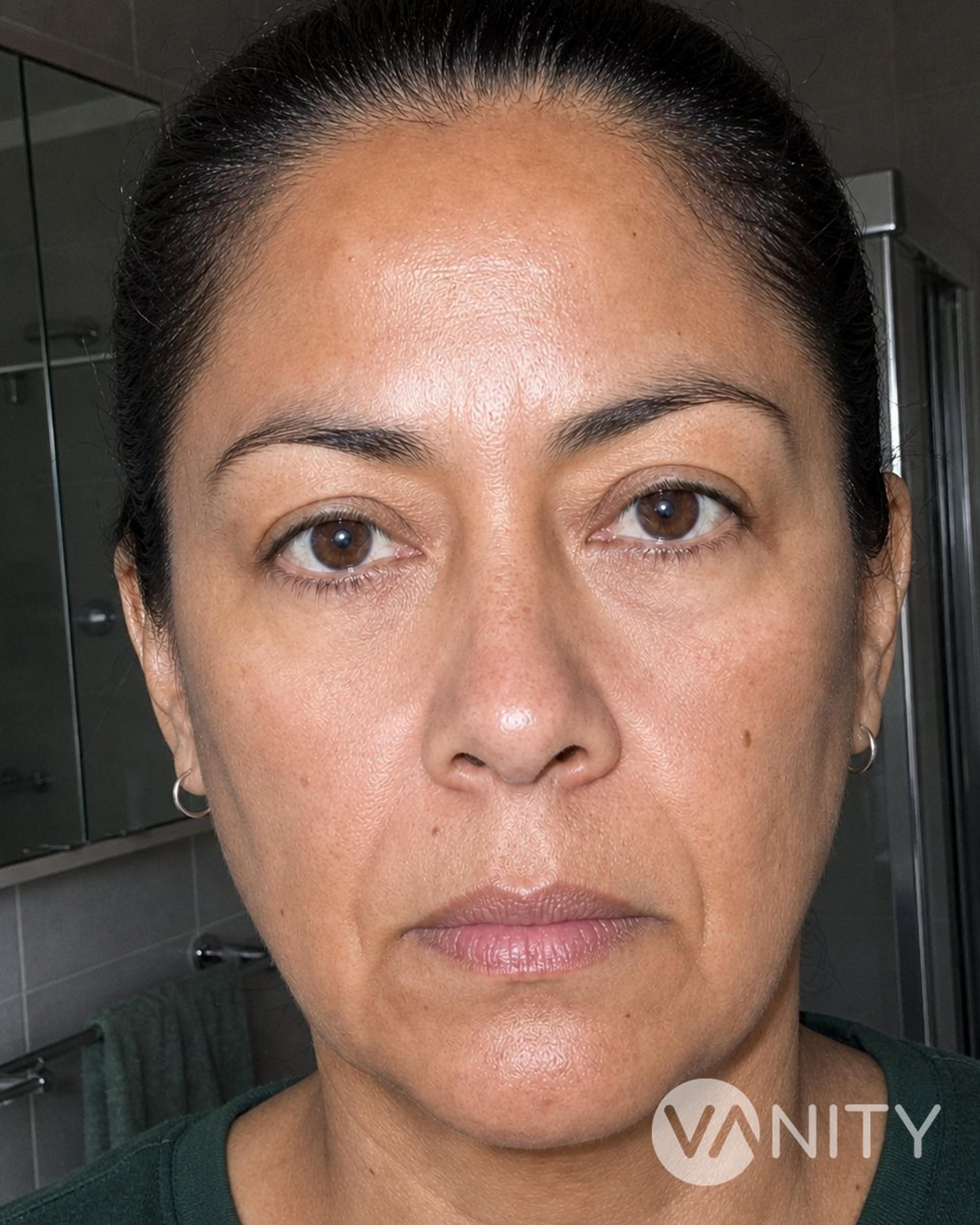
The mid-face is the block of tissue bounded by the lower eyelid above, the nasolabial fold below and the cheekbone to the side. With age the malar fat pad slides downward and thins, the fat beneath the eyelid muscle separates from the orbital rim to leave a tear-trough hollow, and the volume that has descended stacks above the nasolabial fold and deepens it. A mid-face lift releases the retaining ligaments that tether this tissue, elevates it in a subperiosteal, preperiosteal or sub-SMAS plane, and fixes it higher with sutures, drill-hole fixation or an absorbable suspension implant. Access is through a temporal incision behind the hairline, a fine incision under the lower lash line, an incision inside the upper gum, or a standard facelift incision in front of the ear — often more than one in combination.
It suits people from their late 30s through their 60s whose complaint sits in the middle third of the face — a flattened cheekbone, hollowing or bagginess under the eye, a nasolabial fold that has deepened — rather than jowls or a slack neck, which this operation does not correct. It is often done alongside lower blepharoplasty, a brow lift or a lower facelift, and it has a reconstructive use in supporting the lower eyelid in chronic facial nerve palsy. You need to be in good general health, with diabetes and any bleeding disorder controlled, off nicotine around the surgery, and clear about what will and will not change. If you have significant horizontal laxity of the lower lid or deep-set eyes, that has to be addressed in the same operation — left alone, it is the main reason a lid sits wrongly afterwards.
التقنيات التي نستخدمها
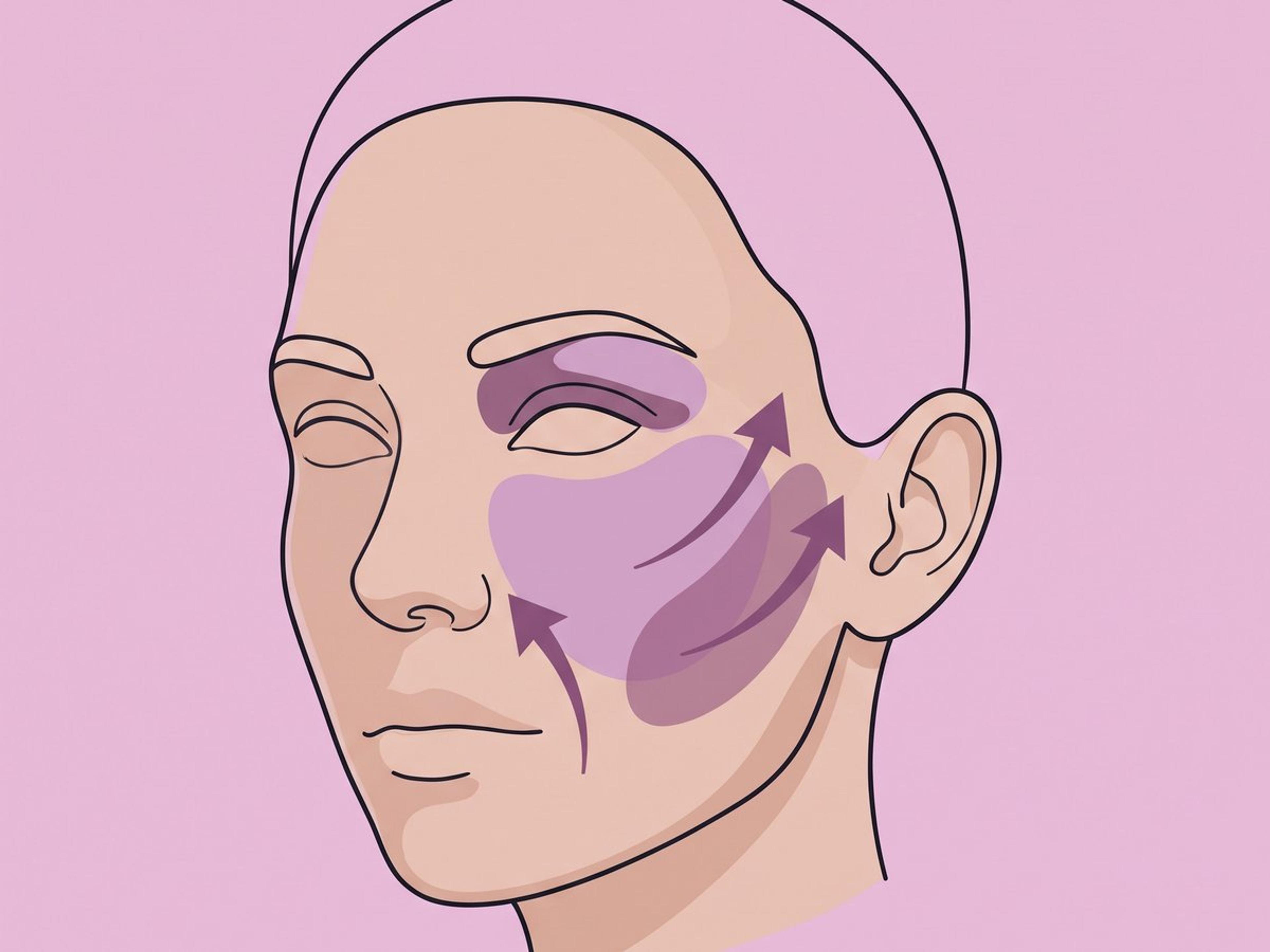
Small incisions are placed behind the temporal hairline and the mid-face is dissected under endoscopic view in a subperiosteal or preperiosteal plane, releasing the zygomatic and orbicularis retaining ligaments. The freed cheek tissue is then suspended upward and outward to the deep temporal fascia with sutures. Long-term retrospective series report sustained, measurable gains in mid-facial height and in the lid-cheek contour.
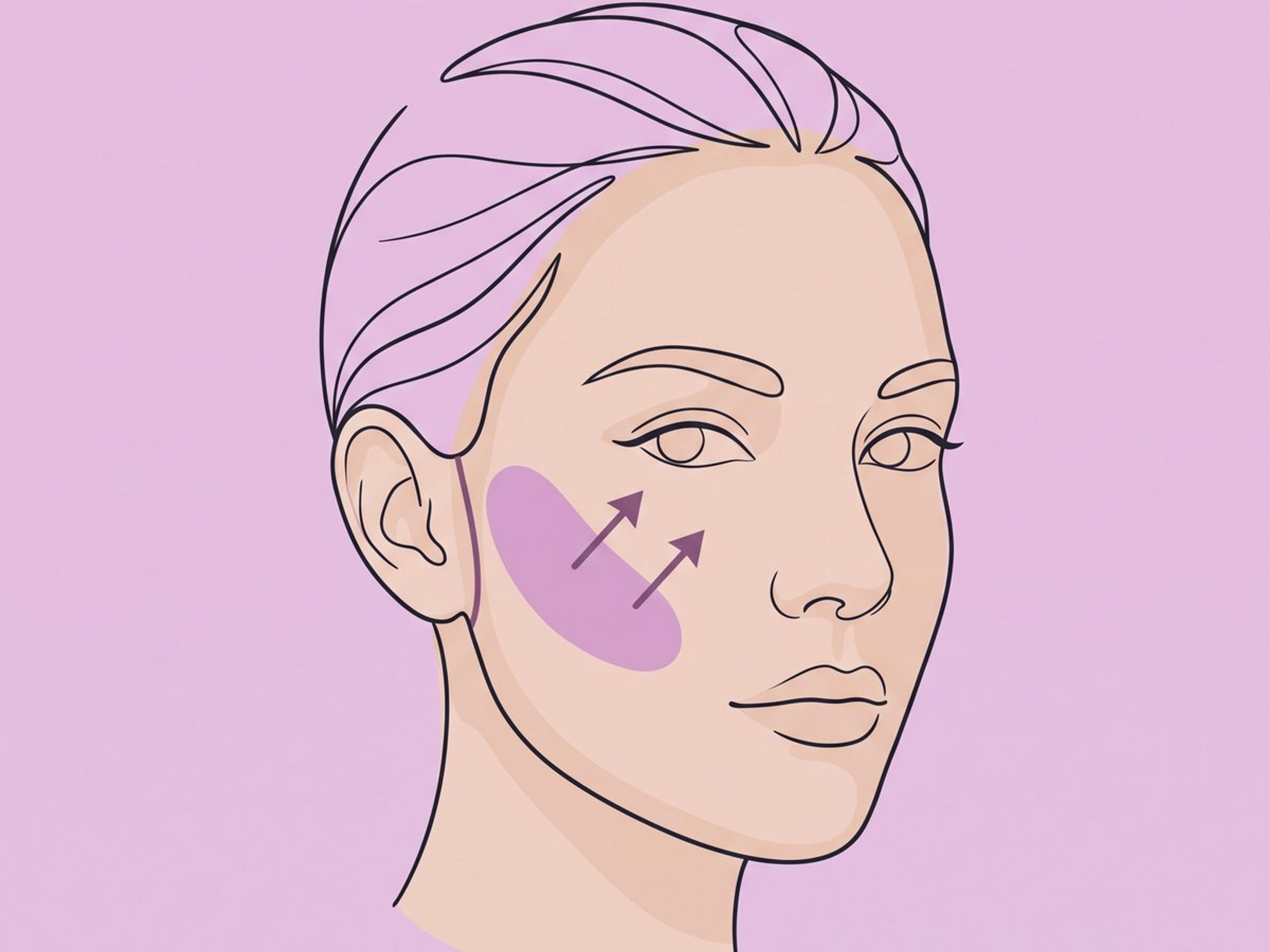
Through a standard Blair-type incision at the temporal hair tuft and around the ear, a skin or deep-plane flap is raised and the malar fat pad is suspended upward and outward with absorbable sutures — the minimal access cranial suspension variant does this with a purse-string suture anchored to the deep temporal fascia. This route treats the mid-face as part of a wider correction of the lower face and jawline rather than on its own.
The operation, step by step
Anaesthesia and marking
General anaesthesia is standard, though a limited endoscopic or subciliary approach can be done under sedation with local anaesthetic. The markings go on with you sitting upright, because the direction the cheek actually needs to travel only reads correctly with gravity acting on it.
The approach follows the problem
Temporal, subciliary, transoral or preauricular — the incision is chosen for what has to be released and what the lift will be anchored to. A hollow lid-cheek junction with lower-lid work also planned points to the subciliary route; isolated malar descent is usually served better from the temple, where the scar hides in the hairline.
Releasing the retaining ligaments
The zygomatic and orbicularis retaining ligaments tether the descended cheek down to the bone. Until they are divided, pulling on the tissue only stretches skin — which is why a lift that skips the release relapses. Dissection runs in a subperiosteal, preperiosteal or sub-SMAS plane, kept deliberately deep to stay away from the facial nerve branches.
Elevation and fixation
The freed malar fat pad is moved up and only slightly outward — pulling it sideways is what produces a swept, operated look — and fixed with sutures to the deep temporal fascia, through drill holes in bone, or on an absorbable suspension device. The fixation is what holds the result; skin tension never should.
Supporting the lower lid
Where the subciliary route is used, or where lid laxity showed up on snap-back testing, canthal support is added in the same sitting. Lower-lid retraction and scleral show are the complications most likely to need a second operation, and supporting the lid at the outset is what prevents them.
Closure and the first night
The incisions are closed in layers so that tension sits on the deep fixation rather than the skin edge, and a light compressive dressing goes on. You stay one night: the dressing and any drain come off at about 24 hours and facial nerve function is checked before discharge, because a hematoma, if one forms, almost always declares itself inside that window.
التعافي أسبوعاً بأسبوع
- Day 1
The compressive head dressing comes off at about 24 hours and any drain is removed. We check facial nerve function before you leave the ward. Ice goes on in 20-minute cycles, on and off, and we keep blood pressure controlled — a hematoma, if it happens, usually declares itself inside this first day. Swelling and bruising across the cheeks and lower lids begin now and will increase for another 2 to 3 days.
- Week 1
Swelling and bruising peak around day 3, then start to settle. Sutures come out and the wounds are checked at about day 7 — this is your second follow-up and the natural gate for the flight home. Pain is mild to moderate and easing by days 7 to 10. No bending, no heavy lifting, no fast head-turning.
- Week 2
Most people are socially presentable and back at desk work at about 2 weeks, though residual bruising may still want covering. Numbness under the eyes and a tight, firm feeling across the cheeks are normal at this stage and are not a sign that something has gone wrong.
- Weeks 3–4
Enough swelling has gone that the shape starts to resemble the result, and the numbness under the eyes is receding. Light cardio is usually cleared at about 4 weeks; heavy lifting, bending and impact training wait longer. Keep sun off the incisions — fresh scars pigment easily, and the temporal line is the one that shows if it does.
- Week 6
Full strenuous exercise, heavy lifting and contact activity are usually back at about 6 weeks, once the fixation has had time to hold on its own. Lingering swelling, cheek firmness and tenderness on chewing generally settle by this point as well. Stay off nicotine across the whole window if cessation was advised — flap blood supply is still what decides how the scars finish.
- Month 6
Deep swelling has resolved and the final mid-facial contour is what you see; scars keep fading for several months more. Long-term series report the gain in mid-facial height is largely maintained, and patients commonly describe the result lasting around a decade. Ageing carries on regardless — this is a reset, not a stop.
كيف تستعد
- Meet the surgeon who will operate — by video before you fly, and again in Istanbul the day before. We take standard photographs and mark the tear troughs, nasolabial folds and any jowling with you looking at the same mirror.
- Stop smoking, vaping and every other nicotine product for about 6 weeks before and 6 weeks after. This is about blood supply to the flap — skin flap necrosis and wound breakdown track with nicotine.
- Send us your full medication and supplement list. We will tell you when to stop aspirin, NSAIDs, anticoagulants and bleeding-prone herbal products, and we want blood pressure and diabetes settled before the date rather than on the day.
- Arrange a companion for the first 24 hours after discharge. You will not be driving, and vision through swollen lids is limited for the first several days.
- Buy the practical things in advance — ice packs, pillows for sleeping with your head raised, and your prescribed medication collected before surgery rather than after.
المخاطر
كل عملية جراحية تنطوي على مخاطر. نُسمّيها بوضوح لتتمكن من طرح الأسئلة الصحيحة.
- Hematoma or seroma — a hematoma typically declares itself within the first 24 hours and is more common in male patients; a seroma is managed with needle drainage
- Facial nerve injury — temporary weakness of the frontal or zygomatic branch occurs in up to roughly 2.6% of cases, and permanent injury is rare at under 1%, but it is not zero
- Lower-eyelid malposition, scleral show or ectropion — highest after the subciliary approach, and higher again with pre-existing horizontal lid laxity or enophthalmic orbits
- Prolonged mid-facial swelling and numbness under the eyes, which can persist for weeks to months
- Wound infection, hypertrophic or visible scarring, alopecia along the temporal incision, and skin flap necrosis — the last raised by smoking, diabetes and prior facial radiation
- Facial asymmetry, undercorrection or relapse of the lift, and dissatisfaction with the result — dissatisfaction is the most commonly reported complication of all

ماذا تتوقع في تركيا
Plan for seven days in Istanbul — one night as an inpatient and six nearby hotel nights. This is time to recover, not a holiday.
Before you travel
Before booking, identify a named clinician at home who can see you if you have concerns after surgery. Ask us what happens to your plan, hotel stay and quoted price if surgery changes on the day. A mid-face lift may be combined with lower-lid or volume work, which can extend recovery and your stay.
At the clinic
You are admitted on the day of surgery and stay one night. We manage your head dressing and any drain before discharge. Ask about instrument reprocessing, water and ice handling, and who covers a readmission. Infection is a recognised risk in travel-related cosmetic surgery, and contaminated water and ice have been implicated.
Recovery in Istanbul
Your seven-day stay includes one night with us and six hotel nights. You will see us after discharge for a wound check and suture removal. Stay close to the clinic, rest with your head raised and bring someone if you can. Swelling can affect vision in the early days, so do not drive. Avoid alcohol, sun, swimming and sightseeing while you recover.
Heading home
Travel home when your seven-day stay is complete, if your surgeon is happy for you to fly. The NHS and BAPRAS advise allowing time after facial surgery because flying and recent surgery can increase the risk of blood clots. Fever, unresolved swelling or uneven facial weakness need review before travel. Take your operative note, anaesthetic record, discharge summary and medication list, and agree follow-up, revision costs and arrangements in writing.
- United Kingdom
- £4,000 – £8,000
- United States
- $6,000 – $12,000
- Western Europe
- €4,500 – €9,000
نطاقات منشورة للاسترشاد فقط — يُرجى التأكد من عرض سعر محلي.
الأسئلة الشائعة
Is a mid-face lift the same as a facelift?
No. A mid-face lift elevates the malar fat pad and cheek soft tissue in the middle third of the face, which improves the under-eye area, cheekbone fullness and the nasolabial fold. A traditional facelift works on the lower face, jawline and neck, takes longer in theatre and longer to recover from, and does not by itself correct mid-facial descent — which is why the two are frequently combined.
How long does a mid-face lift last?
Patient-facing guidance from large hospital systems commonly quotes around 10 years, with real variation between individuals. A long-term retrospective review of endoscopic mid-face lifts found objective improvement in mid-facial height, sustained on validated mid-face and global aesthetic scales over extended follow-up. Ageing continues either way, so the result is a reset rather than a permanent stop.
How much does a mid-face lift cost in Istanbul?
An all-in package for an isolated mid-face lift runs €3,100 to €6950 as of 2026, covering surgeon and anaesthetist fees, theatre, 1 night as an inpatient, pre-operative bloods and anaesthetic assessment, medication and dressings, your Istanbul follow-ups and suture removal, transfers and interpreting — not flights, not hotel nights beyond the bundled 7, not a revision. For a US reference point, the American Society of Plastic Surgeons put the average surgeon fee for a facelift at $11,395 in its 2023 statistics, a figure that excludes anaesthesia, operating room facilities and other related costs. ASPS publishes no separate line item for mid-face lift, so the two numbers are an anchor, not a like-for-like comparison.
Will a mid-face lift fix hollows and dark circles under my eyes?
It can improve the tear-trough hollow that comes from soft tissue descending away from the orbital rim, because the operation releases that tissue and re-drapes it over the rim, smoothing the lid-cheek junction. It does much less for dark circles caused by pigmentation or thin skin. When the under-eye is the main complaint, we usually pair it with lower blepharoplasty or fat repositioning.
When can I go back to work and exercise?
Sutures come out around day 7, pain usually eases by days 7 to 10, and most people return to non-physical work at about 2 weeks, though bruising may still need covering. Light cardio is generally cleared at around 4 weeks; strenuous training, heavy lifting and bending wait until about 6 weeks, so the fixation is not loaded while it is still settling. Residual swelling and tenderness on chewing can take up to 6 weeks to resolve.
Can dermal fillers achieve the same result?
Fillers add volume over the cheekbone, but they do not release the retaining ligaments or reposition descended tissue, so they are answering a different question. They are non-surgical with essentially no downtime and last roughly 3 to 18 months, against years for a surgical lift. If you have mild volume loss and little descent, injectables are usually the better answer; if the tissue has genuinely dropped, they will not do it.
Where are the scars and will they show?
It depends on the approach: the endoscopic transtemporal route hides the incisions behind the temporal hairline, the transoral route places them inside the upper gum with no external scar, and the subciliary route uses a fine incision just under the lower lash line. Preauricular facelift-type incisions sit in the creases around the ear. Alopecia along a temporal incision and hypertrophic scarring are recognised complications, uncommon but real.
Who should not have a mid-face lift?
Anyone still using nicotine in any form around the surgery — it is the strongest modifiable predictor of skin flap necrosis and wound breakdown, and we postpone rather than operate through it. Uncontrolled hypertension or diabetes, a bleeding disorder or anticoagulation that cannot safely be paused, active infection at the site and previous radiotherapy to the face are all reasons to defer or decline. Two more are specific to this operation: if jowls and a slack neck are the real complaint, a mid-face lift does not answer it, and if the concern is a flaw others do not see, surgery reliably makes body dysmorphic disorder worse rather than better. Significant lower-lid laxity is not a bar, but it has to be corrected in the same sitting rather than left.
Which symptoms after surgery need urgent attention?
Call us straight away, rather than waiting for the next appointment, for rapidly increasing swelling, tightness or pain on one side — that is how a hematoma presents, usually within the first 24 to 48 hours. The same applies to spreading redness, warmth or discharge at an incision, fever, any change in vision or severe eye pain, a lower lid that has begun to pull away from the eye or an eye you cannot fully close, and new weakness raising a brow or moving one side of the face. Once you are home, calf pain or swelling and sudden breathlessness need emergency care where you are, not a call to Istanbul — recent surgery and a flight each raise clot risk on their own.
Why does my face look overdone in the first few weeks?
Because it is swollen, not because it was overcorrected. The mid-face holds fluid stubbornly, and for the first 2 to 3 weeks the cheeks sit fuller and higher than the finished result — judging the outcome at that point, and asking for it to be changed, is the commonest mistake patients make. Deep swelling takes months to clear; the contour is honest at about 6 months, and that is the fair moment to assess it. Firmness, numbness and one side settling faster than the other are normal along the way, not warning signs.
Is a thread lift a smaller version of this?
No — it is a different intervention with a different lifespan. Barbed suspension threads pull on soft tissue without releasing the retaining ligaments that hold it down, so the correction is modest and typically fades within about a year to 18 months as the threads absorb. That can be the right trade if you want minimal downtime and accept repeating it, but it is not a durable substitute for surgical release and fixation, and repeated thread work can leave fibrosis in the very planes a later lift has to dissect.
المصادر
- [1]Facelift (rhytidectomy) · NHS (UK) · 2023
- [2]Endoscopic Subperiosteal Midface Lift: Surgical Technique with Indications and Outcomes · Aesthetic Surgery Journal / Oxford Academic · 2002
- [3]Facelift Cost · American Society of Plastic Surgeons · 2023
- [4]Decreasing Complications in Lower Lid and Midface Rejuvenation: A Critical Review of 269 Consecutive Cases · Plastic and Reconstructive Surgery (PubMed 19319073) · 2009