





ما هي العملية
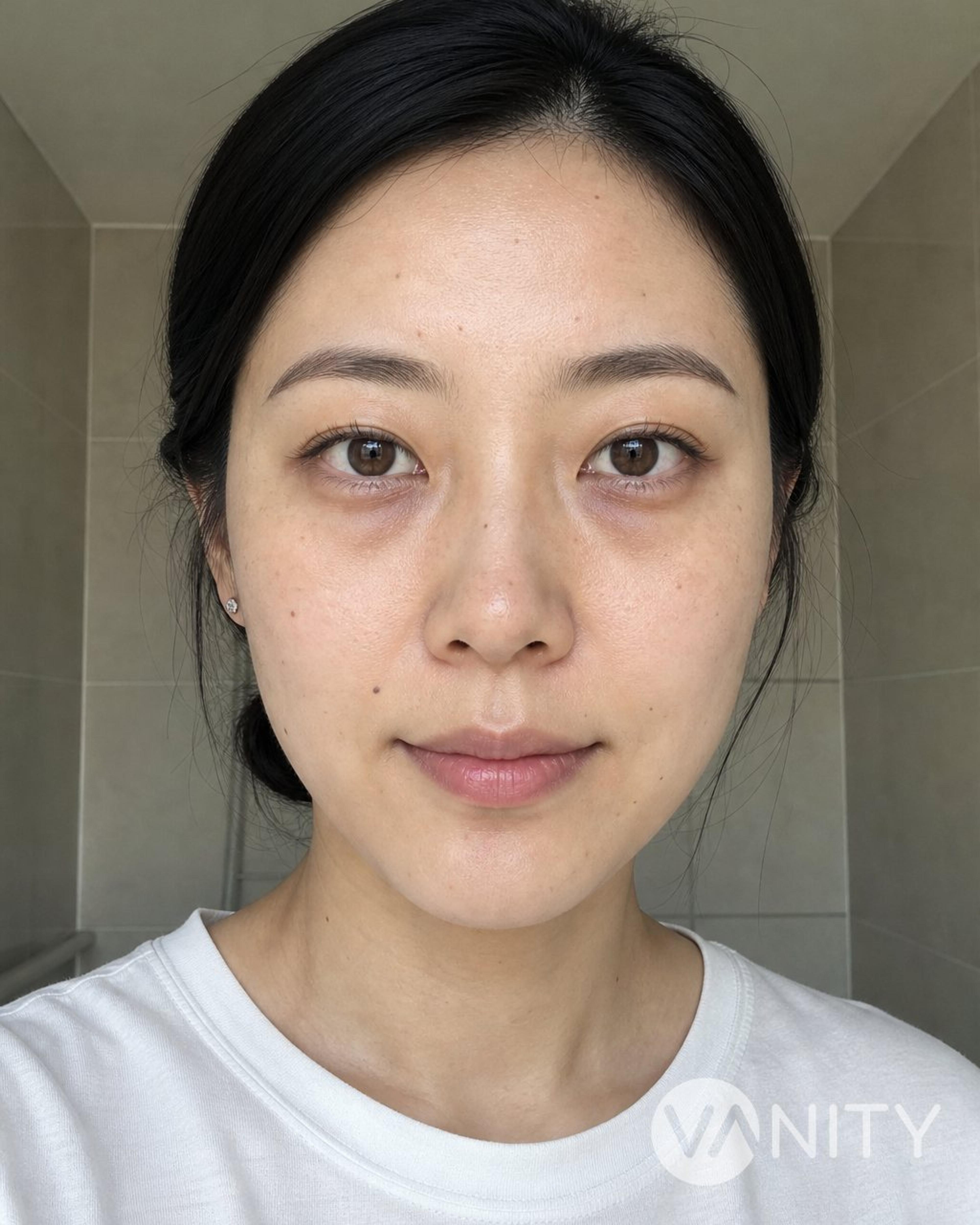
This is not one procedure. The published classification separates infraorbital discolouration into pigmented (brown), vascular (blue, pink or purple), structural (shadow from tear-trough hollowing, fat descent or lax skin) and mixed types — and each responds to a different intervention. So assessment comes before treatment: stretching the lower lid manually separates true pigment from shadow, and Wood's lamp examination separates epidermal from dermal melanin. From there the plan draws on topical depigmenting agents with photoprotection, superficial peels, pigment-selective or vascular lasers, and hyaluronic acid filler, fat grafting or lower blepharoplasty where the cause is contour rather than colour.
It suits adults whose under-eye discolouration persists through sleep, hydration and treated nasal allergy. That most often means constitutional or hereditary periorbital hyperpigmentation, Fitzpatrick skin types III to VI where dermal melanin deposition is more common, and older patients in whom fat descent and thinning skin cast a tear-trough shadow. Reversible contributors come first — allergic rhinitis and atopic dermatitis producing allergic shiners, chronic eye rubbing, prostaglandin-analogue glaucoma drops, anemia and sun exposure. Left untreated, they will undo whatever cosmetic treatment sits on top of them.
التقنيات التي نستخدمها
Hydroquinone at 2 to 6%, kojic acid, azelaic acid, retinoids and vitamin C derivatives inhibit melanogenesis in the thin infraorbital skin, and remain the mainstay for the pigmented type. Visible effect is measured in months rather than weeks, and broad-spectrum sunscreen runs alongside throughout because ultraviolet exposure is a recognised aggravating factor. Prolonged unsupervised hydroquinone use risks irritation and, rarely, exogenous ochronosis — which is why we supervise the course rather than hand it over.
Low-strength glycolic acid at around 20%, lactic acid at around 15% and comparable superficial agents are applied in a series to speed turnover of pigmented epidermis. They are used for epidermal and mixed pigmented circles, usually in combination with topical depigmenting agents rather than instead of them. Systematic review evidence supports both for pigment-driven discolouration while noting that trial quality is generally low.
Pigment-selective Q-switched devices target melanin — the 694 nm ruby laser is described as a first-line option for epidermal and dermal pigment, with the 1064 nm Nd:YAG also in use — while pulsed dye and comparable vascular devices target the visible venous component. Ablative and fractional resurfacing is held back for the crepey skin-laxity component. Reviews report mild to moderate improvement across vascular and pigmented subtypes, with post-inflammatory hyperpigmentation a real concern in darker phototypes.
Hyaluronic acid placed deep in the tear trough, or autologous fat grafting, addresses the shadow cast by infraorbital hollowing; a systematic review concluded these are the most effective options when volume loss is the cause. Juvéderm Volbella XC was approved by the FDA in February 2022 for improvement of infraorbital hollows in adults over 21, and other hyaluronic acid fillers are used here off-label. Where excess skin or herniated orbital fat dominates, transconjunctival or lower blepharoplasty is the correct answer — not more injection.
كيف تستعد
- Have the mechanism typed before anything is treated — lower-lid stretch test to separate true pigment from shadow, Wood's lamp examination to separate epidermal from dermal pigment, and assessment of tear-trough volume and skin laxity
- Treat the contributing causes first: allergic rhinitis or atopic dermatitis producing allergic shiners, chronic eye rubbing, anemia, prostaglandin-analogue glaucoma drops, sleep deprivation and sun exposure
- Start daily broad-spectrum sunscreen and stop rubbing the eye area several weeks before any pigment-directed treatment, because ultraviolet exposure and friction drive relapse
- Pause blood-thinning medicines, fish oil, high-dose vitamin E and alcohol before injection or laser sessions, on your surgeon's instruction, to reduce bruising
- Confirm that the filler proposed is appropriate for the infraorbital area and that hyaluronidase is on site for emergency reversal — ask this of any clinic, including us
المخاطر
كل عملية جراحية تنطوي على مخاطر. نُسمّيها بوضوح لتتمكن من طرح الأسئلة الصحيحة.
- Bruising and prolonged swelling after injection — pooled data for tear trough hyaluronic acid report roughly 18% ecchymosis and 19% edema
- Malar edema and festooning, reported in up to about 11% of tear trough filler cases, sometimes appearing months to years later as hydrophilic gel takes on water
- Tyndall effect — blue-grey discolouration where hyaluronic acid sits too superficially under very thin skin; reported at about 0.9% in pooled data and reversible with hyaluronidase
- Vascular occlusion from intravascular filler injection, causing skin necrosis or temporary or permanent vision loss; rare, recognised by the FDA, and the tear trough is among the higher-risk facial sites
- Post-inflammatory hyperpigmentation, irritation or contact dermatitis after peels, lasers and topical agents, with higher risk in Fitzpatrick skin types IV to VI; prolonged unsupervised hydroquinone use can cause exogenous ochronosis
- Under-correction, contour irregularity or nodules — about 5% in pooled tear trough data — and relapse when the dominant mechanism is misclassified or an underlying cause such as allergic rhinitis or eye rubbing is left untreated

ماذا تتوقع في تركيا
This is an outpatient visit, not an operation. What takes the time is the assessment — deciding which of the three mechanisms is driving your discolouration, and how much of it is treatable at all. We would rather send you home with a topical course and a sunscreen than inject a tear trough that does not need filling.
Before you fly
You speak to the surgeon before you book anything. Clear photographs in daylight, without makeup, let us give you a working view of whether you are looking at pigment, vasculature, shadow or a mix — and whether the honest answer is a treatment plan or a maintenance routine. If the assessment suggests topical therapy is the right first step, we will say so, and that is a plan you can start at home.
At the clinic
The examination comes first: the lower-lid stretch test, Wood's lamp where pigment depth matters, and an assessment of tear-trough volume and skin laxity. Treatment itself, if we proceed the same day, runs 15 to 45 minutes under topical numbing. For any injection into this area we keep hyaluronidase in the room — not in a cupboard elsewhere in the building.
Recovery in Istanbul
There is no overnight stay and no recovery period in the surgical sense. Redness after a peel or laser settles within about 24 hours; pinpoint bruising after injection is visible for a few days and covers with makeup once the skin has closed. If you have travelled for this, staying a night or two lets us see you the following day and check for early swelling or a superficial deposit while you are still with us.
Heading home
You can fly the day of treatment. The contour after filler is not final until 2 to 4 weeks, so the review that matters happens after you are home — by video, with photographs, and with a plan for a small top-up or hyaluronidase correction if the result needs it. Pigment-directed courses report their real endpoint at 3 to 7 months, and we stay with you across that window and for 12 months in total.
الأسئلة الشائعة
What actually causes dark circles under the eyes?
Three mechanisms, and most people have a combination: extra melanin in very thin infraorbital skin, superficial blood vessels showing through that skin, and shadow cast by tear-trough hollowing, fat descent or lax skin. Genetics and skin phototype are the major determinants, with dermatitis, chronic eye rubbing, nasal allergy, ultraviolet exposure and certain eye drops all contributing. Dark circles are usually not a sign of disease — but discolouration or swelling affecting one eye only, and worsening over time, should be assessed medically.
Can dark circles be cured permanently?
In most cases no, and we would rather say so at the consultation than after your deposit. Constitutional pigmentation and thin periorbital skin are genetic and will re-darken without ongoing photoprotection and maintenance topicals, and hyaluronic acid filler for tear-trough shadow typically needs retreatment at around a year. Structural correction by fat grafting or blepharoplasty lasts longest, but only when volume and lax skin — not colour — are the cause.
Do eye creams work on dark circles?
Prescription-strength agents — hydroquinone, retinoids, azelaic acid, kojic acid and vitamin C — have review-level support for the pigmented type, but they act on melanin alone and take months to show anything. They will not correct a tear-trough hollow or visible blue vasculature, which is exactly why the mechanism is identified before treatment is chosen. Cosmetic moisturising eye creams can improve texture and light reflection without changing the underlying pigment or contour.
Is under-eye filler FDA-approved?
For one product and one indication: the FDA approved Juvéderm Volbella XC in February 2022 for improvement of infraorbital hollows in adults over 21, with mandatory manufacturer training for injectors. Other hyaluronic acid fillers are used in the tear trough off-label. The FDA approves fillers by anatomic site precisely because each region carries its own vascular and anatomical risk.
Why did my under-eye filler leave me puffy or bluish?
Persistent puffiness usually means malar edema — hyaluronic acid is hydrophilic and can draw water months or even years after placement, and the tear trough is higher risk because of poor lymphatic drainage and gravity. A blue-grey tint is the Tyndall effect, light scattering through gel placed too superficially beneath very thin skin. Both are correctable by dissolving the filler with injected hyaluronidase.
How much does dark circle treatment cost?
The American Society of Plastic Surgeons reports an average physician fee of about $715 for hyaluronic acid dermal filler in the United States, excluding facility, anesthesia and product charges — and tear-trough correction often uses less than a full syringe. Courses of prescription topicals, serial peels and laser sessions are priced per session or per course and vary widely by market and device. Lower blepharoplasty, where structural excess is the cause, sits in a substantially higher surgical range. We quote in € after the assessment, once we know which mechanism we are treating.
Does lack of sleep cause dark circles, and will sleeping more fix them?
Fatigue, dehydration and poor sleep make dark circles more conspicuous, mostly by increasing pallor and periorbital fluid, and standard patient guidance covers adequate sleep, head elevation, sun protection and limiting alcohol and smoking. Sleep alone will not resolve constitutional pigmentation or a structural tear-trough hollow. If the circles persist after those measures, there is a pigmentary, vascular or anatomical basis that needs clinical assessment.
المصادر
- [1]JUVÉDERM VOLBELLA XC – P110033/S053 Premarket Approval for Infraorbital Hollows · U.S. Food and Drug Administration · 2022
- [2]The Efficacy and Safety of Hyaluronic Acid Injection in Tear Trough Deformity: A Systematic Review and Meta-analysis · Aesthetic Plastic Surgery (PubMed/NLM) · 2024
- [3]Treatments of Periorbital Hyperpigmentation: A Systematic Review · Dermatologic Surgery (PubMed/NLM) · 2021
- [4]Complications after Cosmetic Periocular Filler: Prevention and Management · Plastic and Aesthetic Research (PMC/NLM) · 2020