


Di cosa si tratta
Buttock augmentation with implants places a silicone implant inside the buttock to add volume and projection. Access is usually a single incision in the intergluteal crease, from which a pocket is made either between the fibres of the gluteus maximus, beneath the muscle, or under the gluteal fascia. Implants commonly run from about 240 cc to 590 cc per side, and larger sizes bring more complications rather than simply more shape. Liposuction of the flanks and lower back can also be done at the same time, sometimes with fat grafting, so the surrounding contour matches what the implant adds.
This is usually the right operation when there is not enough fat to harvest, when earlier fat grafting has resorbed, or when the projection you want is more than a graft will hold. You need to be medically fit for anaesthesia, off nicotine, at a stable weight, and willing to accept several weeks of restricted sitting. Prior gluteal surgery, active infection, marked skin laxity, and an expectation that the scar will be invisible are all reasons we would slow down or decline.
Le nostre tecniche
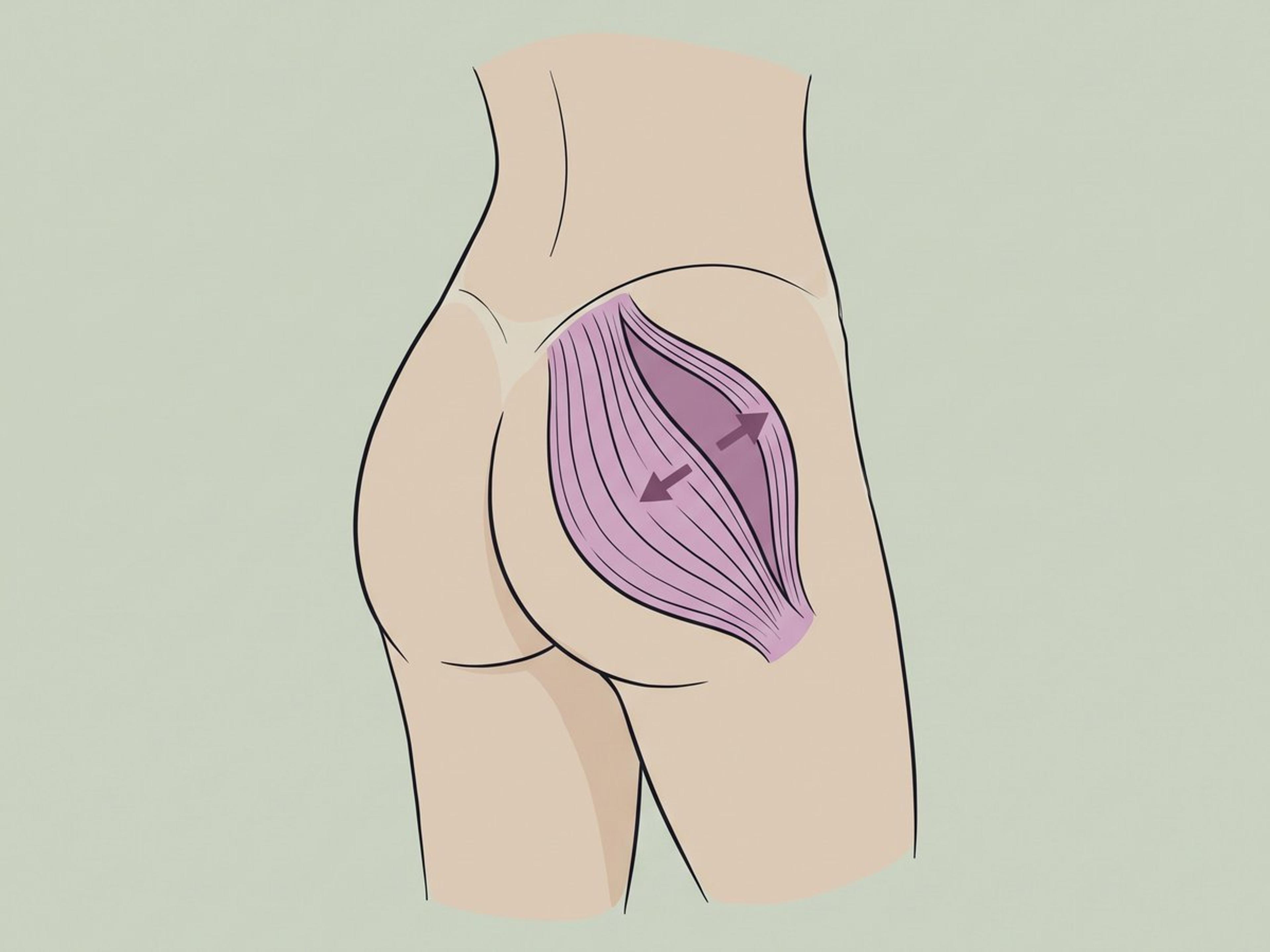
The implant is placed within the main buttock muscle. This gives it good cover, so its edges are less likely to be felt or seen and it is less likely to move. It has among the lowest reported complication rates, so this is usually the starting point we consider.
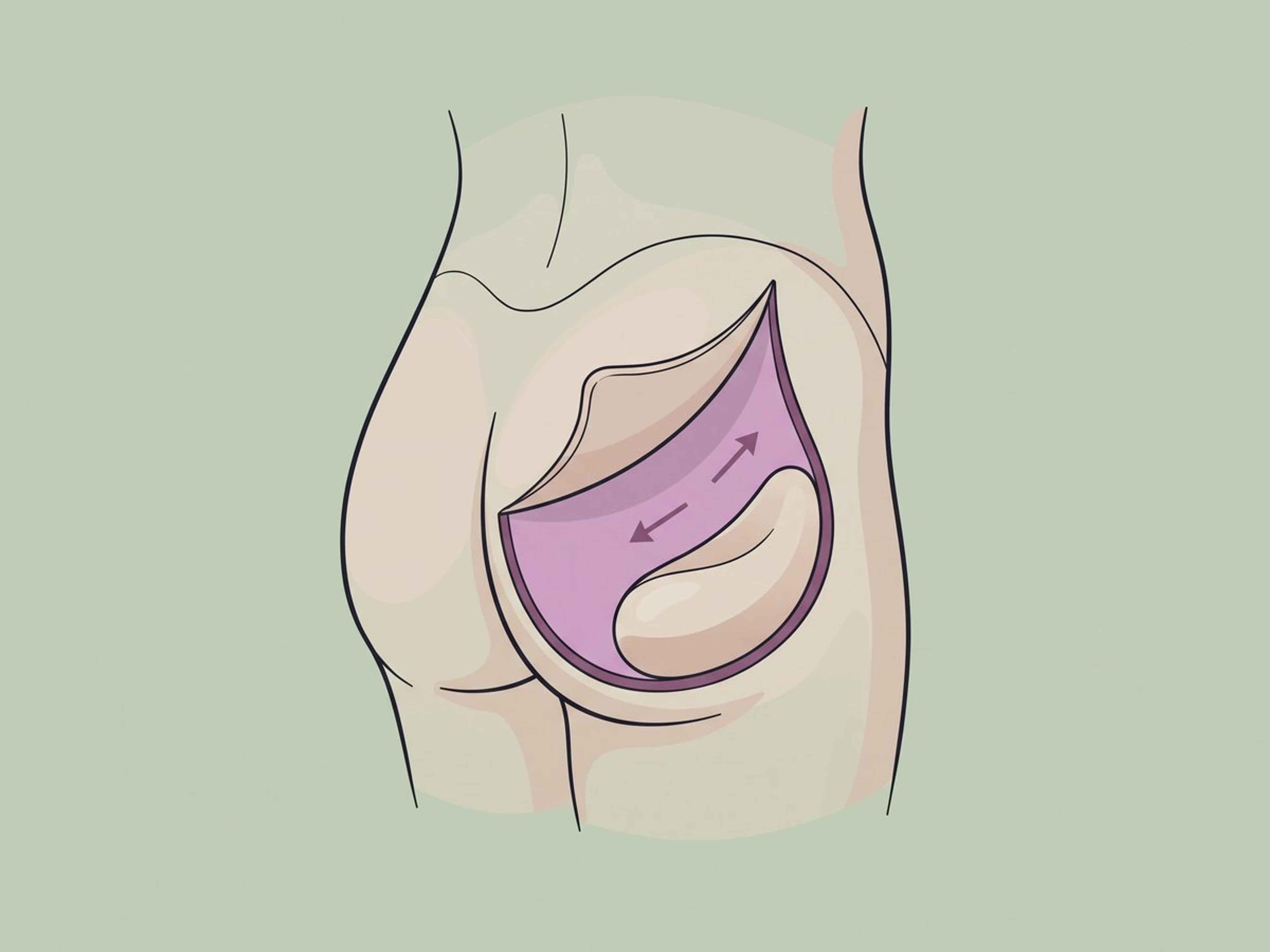
The implant is placed beneath the main buttock muscle, where there is a thick layer of tissue over it. This can reduce the chance of the implant showing through or fluid building up. Important nerves and blood vessels are nearby, so the surgeon must create the space with particular care.
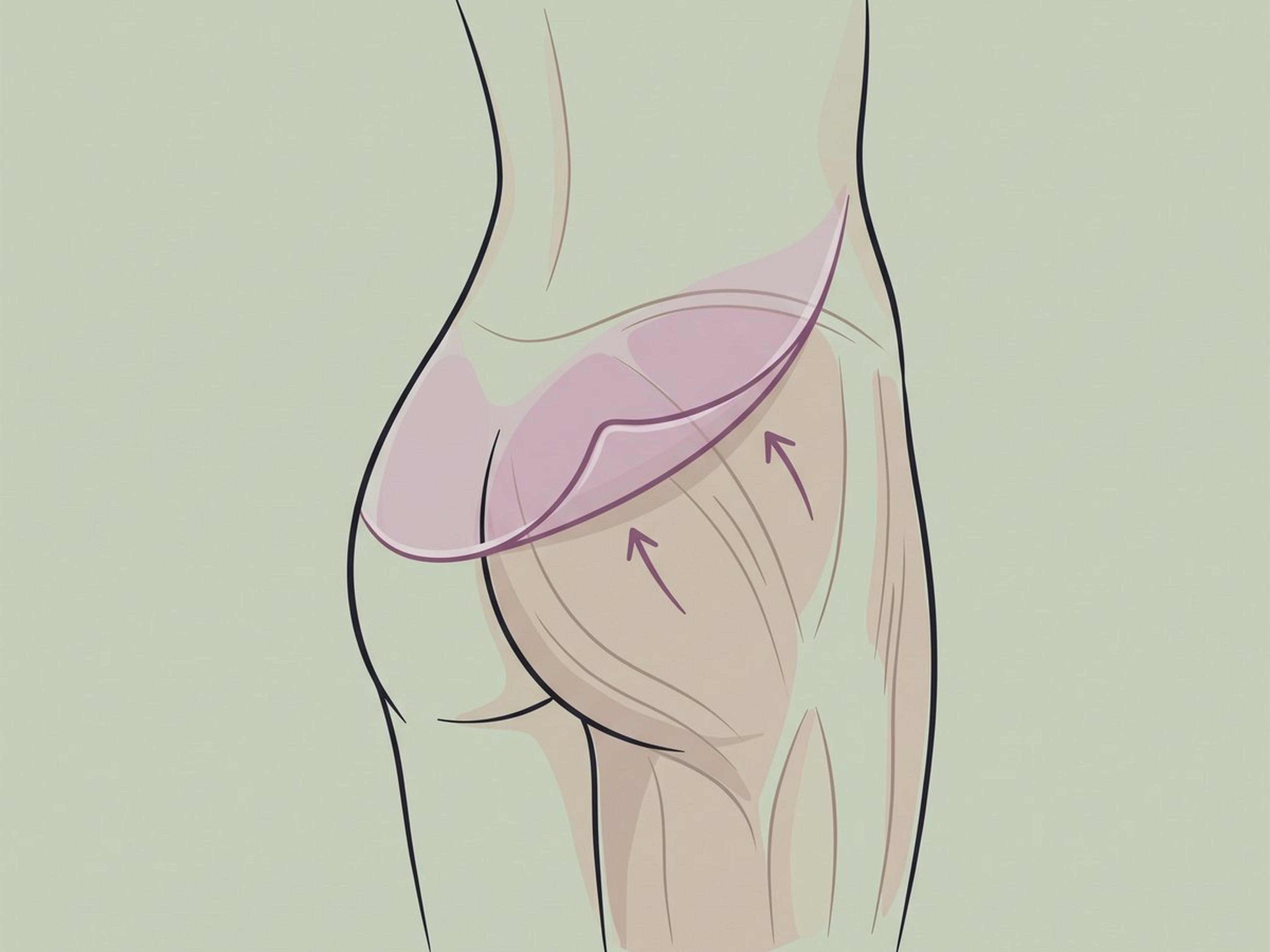
The implant is placed over the main buttock muscle, under its natural covering. This avoids cutting into the muscle and can be simpler to perform, but published studies report higher rates of fluid build-up, wound opening and implant removal. We use this approach selectively and explain clearly why if it is right for you.
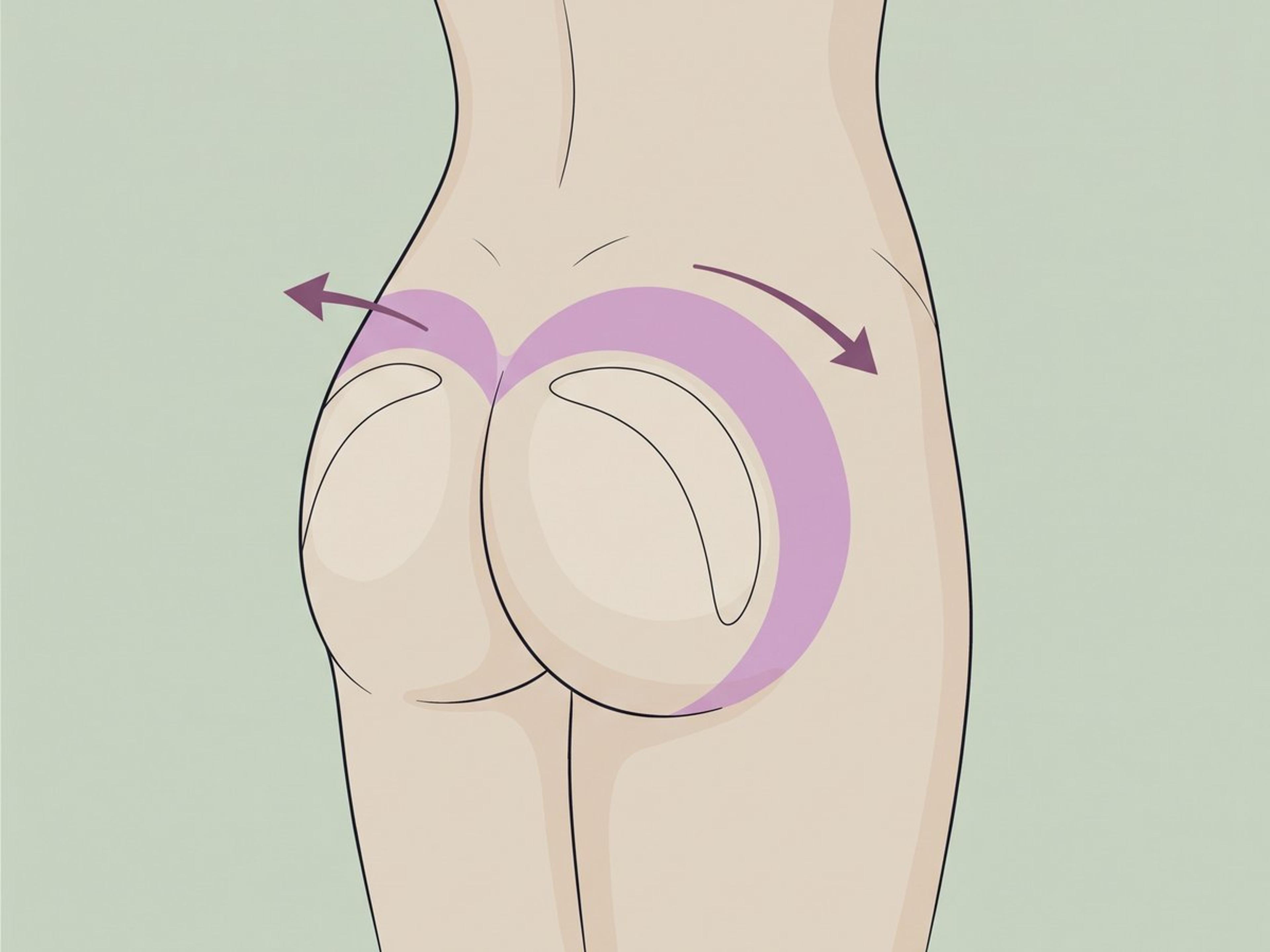
The implant adds projection in the centre of the buttock. Fat taken from the flanks or lower back can then be placed above the muscle to soften the edges and shape the upper and outer buttock. This can create a more balanced outline, because an implant alone adds volume in one area. We never place fat deep in the muscle, where it can carry a serious safety risk.
The operation, step by step
Planning and marking
Implant size, shape and pocket plane are chosen against your tissue thickness and pelvic landmarks rather than a requested cc number, because it is the closure and the soft-tissue envelope that fail when an implant is too large. Markings are made with you standing, since the buttock sits differently once you are prone on the table.
Anaesthesia and prone positioning
General anaesthesia is standard, with tumescent local and sedation used in selected cases. You are turned prone with pressure points padded, and calf compression is applied from the start — a long prone case followed by days of reduced mobility is a clot risk that has to be managed before it happens, not after.
One incision in the intergluteal crease
A single midline incision gives access to both sides and hides the scar between the buttocks. It is also the weak point of the operation: the site is under tension, moist and close to bowel flora, which is why wound dehiscence is the most frequently reported complication at roughly 10%.
Dissecting the pocket
The pocket is made within the gluteus maximus, beneath it, or under the gluteal fascia, following the plane agreed at consultation. Its borders are dissected precisely and kept clear of the sciatic nerve and the gluteal vessels, which run close to the lower and outer limits. Bleeding is controlled before anything is inserted, because a haematoma in a closed muscular pocket is what leads to infection and implant loss.
Implant insertion and layered closure
Sizers confirm the fit, the pocket is irrigated with antibiotic solution, and the implant is handled with a no-touch technique to limit contamination. The wound is then closed in layers so the crease incision lies without tension — that closure, more than the implant, decides whether the wound holds through week 2 to 4.
Contouring, garment and the first night
Liposuction of the flanks and lower back, and any fat grafting, is done in the same prone position so the surrounding contour matches the volume the implant adds; grafted fat goes above the muscle, never deep within it. A compression garment is fitted before you wake, drains are placed depending on the technique, and you stay 1 night, walking briefly from the first evening.
Il recupero, settimana per settimana
- Day 1
Surgery is under general anaesthesia and you stay 1 night. A compression garment goes on before you wake, and drains may or may not be used depending on the technique. Expect pain, pressure and muscle spasm. You lie prone or on your side, and you walk briefly and often from the first evening to reduce clot risk.
- Week 1
Sitting directly on the buttocks, and prolonged sitting of any kind, is restricted to protect the intergluteal incision and the pocket. Compression is worn continuously and a short course of antibiotics is usual. Swelling and bruising peak now. The intergluteal wound is the most common site of early trouble — dehiscence is reported in roughly 7 to 14% of cases, depending on implant texture.
- Weeks 2 to 4
Most people return to desk work at 2 to 3 weeks, with a cushion under the hamstrings to keep weight off the buttocks when seated. The compression garment is typically worn for about 4 weeks. Drains, if placed, come out once output falls. Seroma and haematoma usually declare themselves in this window.
- Weeks 6 to 8
Unrestricted sitting and a graded return to exercise, including lower-body training, are generally allowed at 6 to 8 weeks. Swelling has largely gone, so implant position and projection become readable for the first time. The scar in the intergluteal crease is still maturing.
- Month 6
We assess final contour, implant settling and scar appearance at about 6 months, which is also the point at which published series measure patient-reported satisfaction. Any revision for asymmetry, malposition or capsular contracture is normally deferred until now, so that the tissues are settled and the decision is made on the finished result rather than a swollen one.
Come prepararsi
- Stop smoking and all nicotine, including vapes and pouches, well before the date — nicotine impairs healing at an incision that already has the highest wound-breakdown rate in this operation
- Stop aspirin, NSAIDs, anticoagulants and bleeding-risk supplements on the schedule your surgeon gives you, and disclose every medication, including hormonal contraception
- Reach a stable weight and hold it — an implant sits inside a soft-tissue envelope that changes when your weight does
- Set the recovery up in advance: prone or side sleeping, a cushion that sits under the hamstrings rather than the buttocks, the compression garment, and help at home
- Agree the plane, the size range and the incision with your surgeon at consultation, including what happens if the pocket has to be changed during the operation
Rischi
Ogni operazione comporta dei rischi. Li nominiamo perché possiate fare le domande giuste.
- Seroma, or fluid collection, reported at roughly 2.5% overall
- Infection and implant exposure, which may require the implant to be removed — removal rates are near 1%
- Capsular contracture, implant malposition, displacement or visible asymmetry, any of which may require revision surgery
- Sciatic nerve irritation or injury, and altered sensation, numbness or muscle weakness, particularly with submuscular dissection

Cosa aspettarsi in Turchia
Istanbul is a short flight from most of Europe and the Middle East, and gluteal implants need a licensed operating theatre rather than an office suite. Here is what the trip actually looks like, including the parts that are inconvenient.
Before you fly
You speak to the surgeon who will operate, and you send photographs and a medical history, before any date is held. Check your travel insurance in writing — standard policies commonly exclude elective surgery abroad and any complication arising from it, which can leave revision, readmission and repatriation uncovered.
At the clinic
Surgery takes place in our own accredited theatres, under general anaesthesia, and you stay 1 night. Before you leave the building we give you the operative note and the implant details — manufacturer, model, size, lot numbers, and the implant identification card. That is not paperwork for its own sake. A doctor at home cannot manage a seroma or an infected implant without knowing exactly what was placed and in which plane.
Recovery in Istanbul
Plan on 7 days in Istanbul in total: 1 night as an inpatient, then 6-7 hotel nights, with 1 follow-up review with us. The first 2 weeks are about walking often and sitting as little as possible. Compression is worn continuously, drains come out once output falls, and we see the wound before you are cleared to travel.
Heading home
We prefer you fly at 7 days. Know the timing too: wound problems at the incision usually appear in weeks 2 to 4, after the travel window. Care continues with us for twelve months either way.
- United Kingdom
- £8,000 – £10,000
- United States
- $10,000 – $15,000
- Western Europe
- €8,000 – €10,000
Fasce pubblicate a scopo orientativo — da confermare con un preventivo locale.
Domande frequenti
How do buttock implants compare to a Brazilian butt lift (fat grafting)?
Implants deliver a fixed, predictable volume that does not depend on graft survival, which makes them useful if you are thin and have little fat to harvest. Fat grafting shapes a wider area more naturally and avoids a device, but some of the volume resorbs and results vary.
How long do buttock implants last?
Gluteal implants are not lifetime devices, and they are not on a fixed replacement schedule either.Revision or exchange may still be needed years later for capsular contracture, displacement, or a change in what you want.
When can I sit normally after buttock implant surgery?
Direct and prolonged sitting is restricted in the early weeks to protect the incision and the pocket, though most surgeons allow limited, cushioned sitting within the first 2 weeks. A pillow under the hamstrings lifts the buttocks clear and takes pressure off the incision. Unrestricted sitting is usually resumed at around 6 weeks, and the exact protocol depends on the plane your implant sits in.
Where is the incision and how visible is the scar?
One or two incisions are made within the intergluteal crease, which hides the scar between the buttocks. That location is also under tension, moist, and close to bacteria, which is why wound dehiscence and widened or irregular scarring are the most frequently reported complications of this operation. The scar continues to mature for 6 to 12 months, so it looks worse before it looks settled.
Does implant size affect the risk of complications?
Yes, and directly.Larger implants put more tension on the closure and on the soft-tissue envelope, so we size to your tissue thickness and pelvic dimensions rather than to a requested number.
How much does buttock augmentation with implants cost in the United States?
The American Society of Plastic Surgeons reports an average surgeon fee of $7,964 for buttock implants. That figure excludes anaesthesia, operating theatre and facility fees, the implants, garments and postoperative care, so a real US total is meaningfully higher. Fees also vary with the surgeon, the city, and whether liposuction or fat grafting is done at the same time.
Can implants be placed after a previous fat-grafting procedure?
Yes — implants are often used as a secondary procedure when fat grafting has resorbed or never gave enough projection. Earlier surgery changes the tissue planes and leaves scar, which can make the pocket harder to dissect and raises the risk of wound-healing problems. We assess soft-tissue thickness and existing scars before deciding which plane to use.
Who is a good candidate for buttock implants — and who is not?
Implants suit people who are medically fit for general anaesthesia, at a stable weight, off nicotine, and who either lack the fat reserves a graft needs or want more projection than a graft will reliably hold. We slow down or decline when there is active infection anywhere in the body, uncontrolled diabetes or another condition that impairs wound healing, significant clot risk, marked skin laxity that an implant would stretch rather than fill, or an expectation that the scar will be invisible. Continued smoking is a hard stop — nicotine impairs healing at an incision that already has the highest wound-breakdown rate in this operation.
Which symptoms after surgery mean I should contact a doctor immediately?
Spreading redness or warmth around the incision, discharge, fever, pain out of proportion to what you were told to expect, or a sudden one-sided increase in swelling, which can mean a haematoma or seroma. Because the incision sits in the intergluteal crease, any gap or opening in the wound needs review the day you notice it, not at the next scheduled visit. Calf pain or swelling, chest pain or breathlessness are treated as an emergency, since they can signal a clot. New shooting pain, numbness or weakness down the leg should also be reported promptly — the sciatic nerve runs close to the implant pocket.
Will implants give me wider hips or an hourglass figure?
No — this is the most common misunderstanding we correct at consultation. An implant adds projection in one anatomical zone, the central buttock where the gluteus maximus sits. It does not fill hip dips and it does not widen the outer contour. If the shape you want involves the hips, waist or outer thigh, that is achieved with liposuction and fat grafting around the implant — the composite approach — and we will say plainly which parts of your goal the implant covers and which it does not.
When can I train legs and glutes again, and does the implant move when the muscle contracts?
Walking starts the first evening, but lower-body training — squats, lunges, hip thrusts, running — waits until roughly 6 to 8 weeks, at the same point unrestricted sitting is allowed and the pocket has healed. An intramuscular or submuscular implant sits inside or beneath a muscle you are deliberately contracting, so brief distortion of the shape during a hard gluteal contraction is expected and is not a sign that something has failed; a change in position that persists at rest is different and should be reviewed. Training afterwards is encouraged rather than avoided, because muscle bulk adds to the result and thicker soft-tissue cover makes the implant edge harder to feel.
Fonti
- [1]Buttock Enhancement Risks and Safety · American Society of Plastic Surgeons (plasticsurgery.org) · 2025
- [2]Surgical Pocket Location for Gluteal Implants: A Systematic Review · Aesthetic Plastic Surgery / PubMed · 2013
- [3]Complications Following Primary Implant-Based Gluteal Augmentation: A Systematic Review and Meta-Analysis · Plastic and Reconstructive Surgery / PubMed · 2025
- [4]Determining the Safety and Efficacy of Gluteal Augmentation: A Systematic Review of Outcomes and Complications · Plastic and Reconstructive Surgery (PubMed) · 2016