
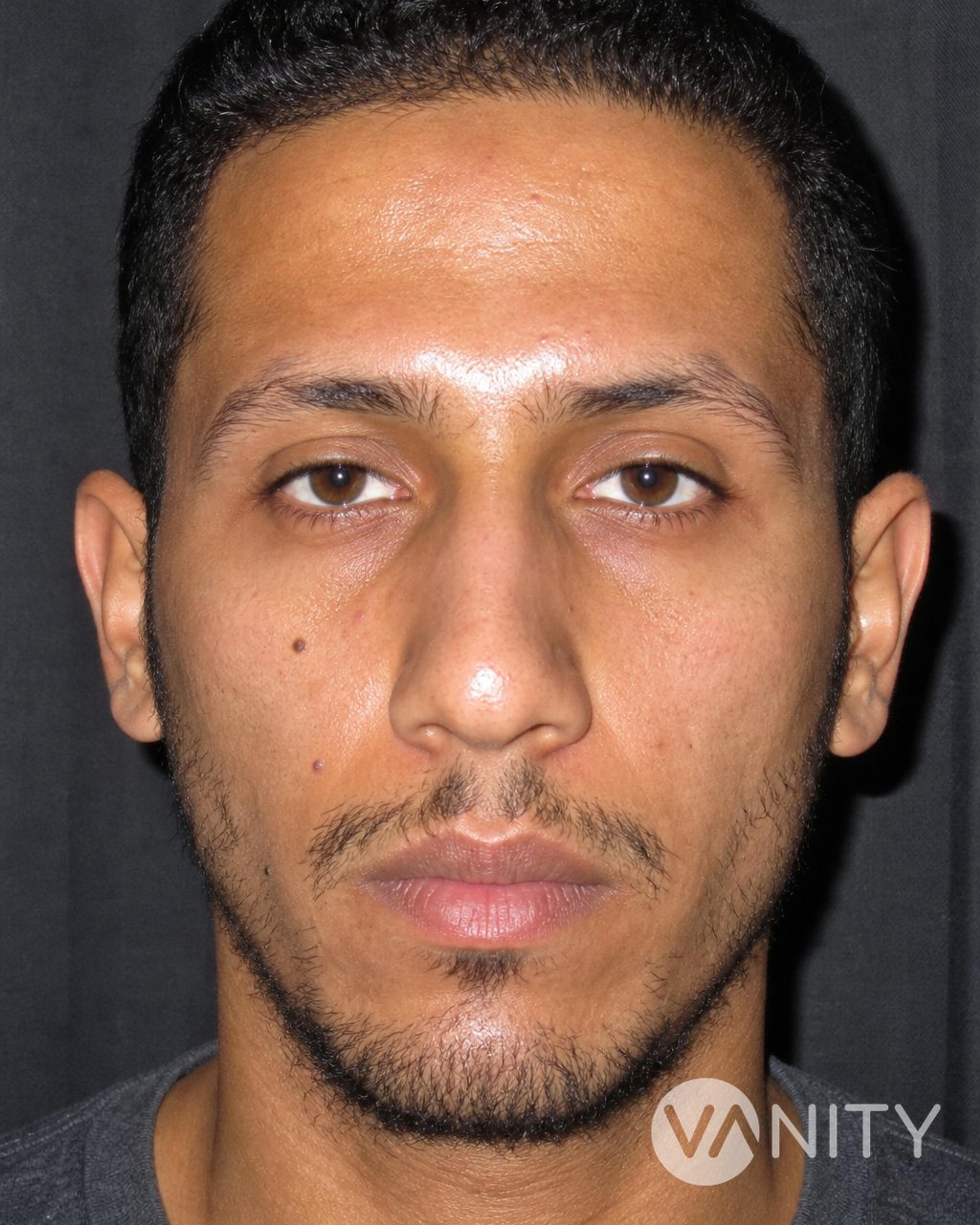
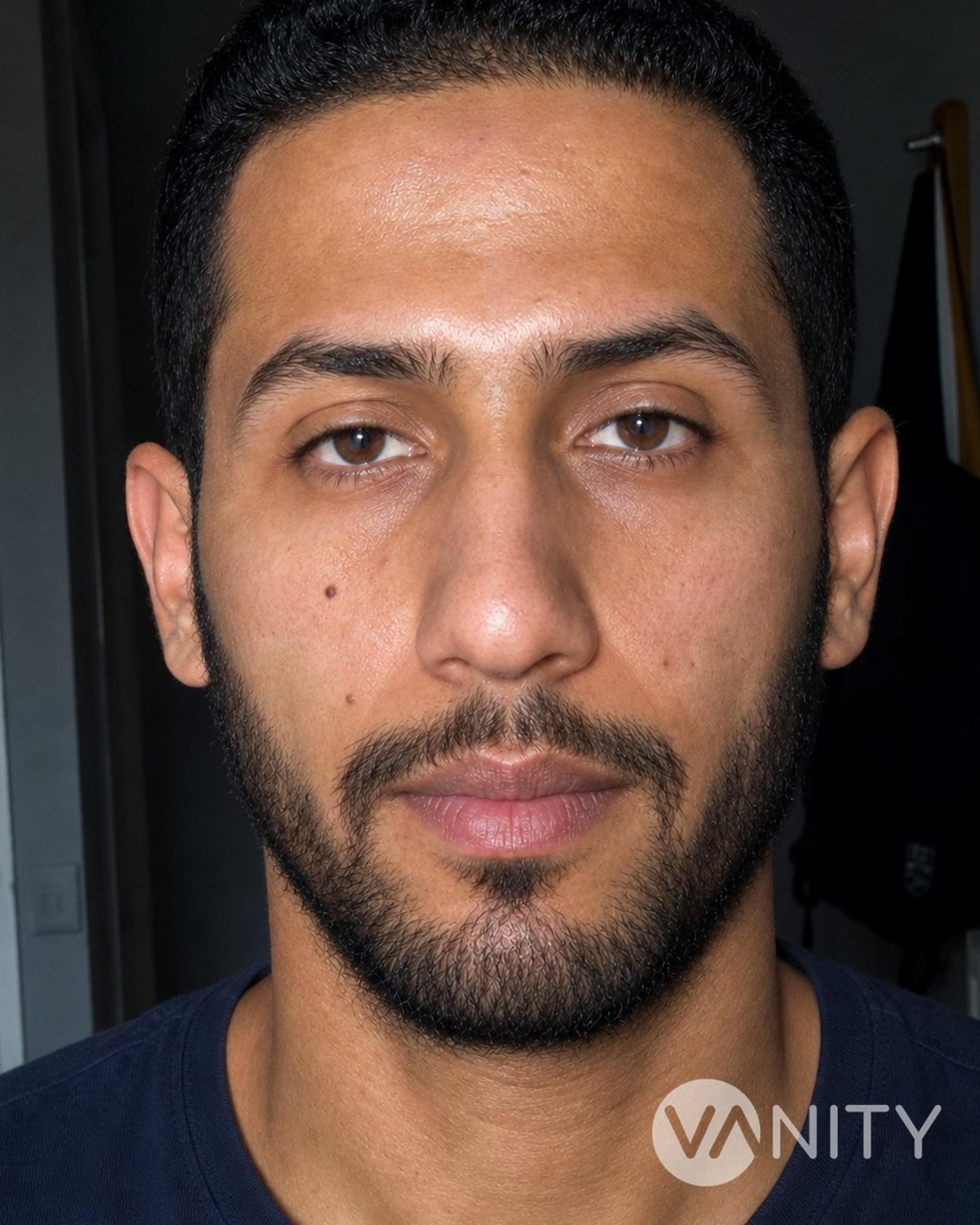
Beard, moustache and eyebrow transplant: what it is
A facial hair transplant moves living follicles from a donor area into the beard, moustache or brow. The donor hair usually comes from the occipital scalp — the back of the head, above the ears — and occasionally from existing beard hair. The work is done under local anaesthetic, awake, over a single session of 4 to 8 hours. Eyebrows are built almost entirely from single-hair grafts; beards are predominantly single-hair too, with a small proportion of two- and three-hair units used to give the moustache and goatee weight. Published series report follicular survival above 75 percent. Growth begins around month 4 and keeps maturing until roughly month 12.
Most of the men we see have patchy, sparse or absent beard growth. We also treat eyebrow loss after trichotillomania, alopecia areata, burns, trauma, surgical scars and years of over-plucking or tattooing — in a systematic review of eyebrow and eyelash transplantation, burns accounted for 57.6 percent of cases. Transgender men seeking facial hair as part of masculinising treatment are a routine part of this work. What every candidate needs is an adequate and stable donor supply, and a quiet scalp. If the cause of the loss is still active — inflammatory, or traction-driven — grafting into it will fail, and we will say so rather than book you.
Beard, moustache and eyebrow transplant: techniques we use
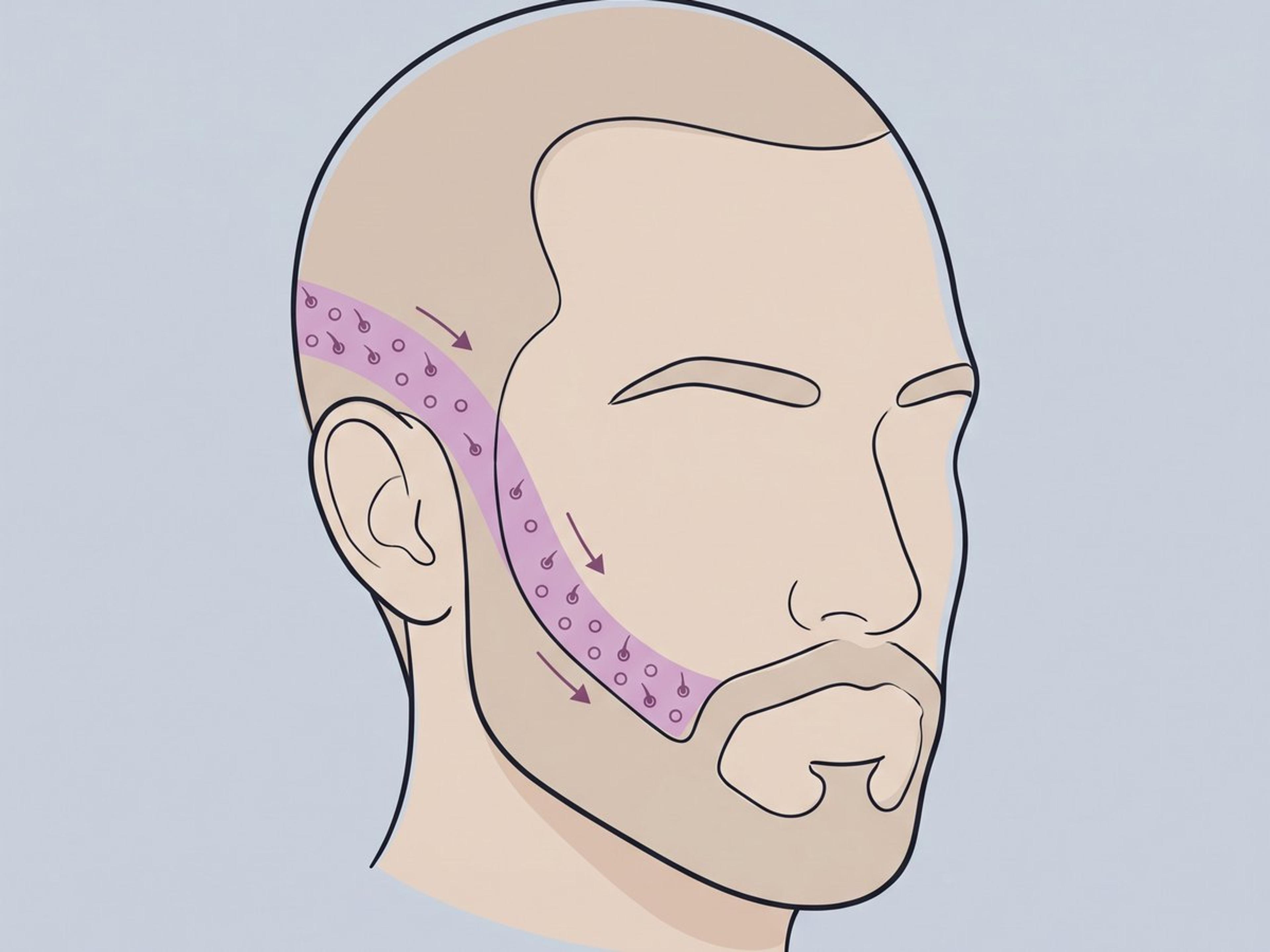
Follicular units are removed one at a time with a circular punch of roughly 0.8 to 1.0 mm, leaving pinpoint wounds that close on their own without sutures. It is the dominant method for facial hair work — one published series used FUE in 87.5 percent of eyebrow, beard and moustache cases — because it avoids a linear donor scar and lets the surgeon select the fine single-hair units a brow needs. It is more technically demanding than strip harvest and carries a higher risk of cutting through follicles during extraction.
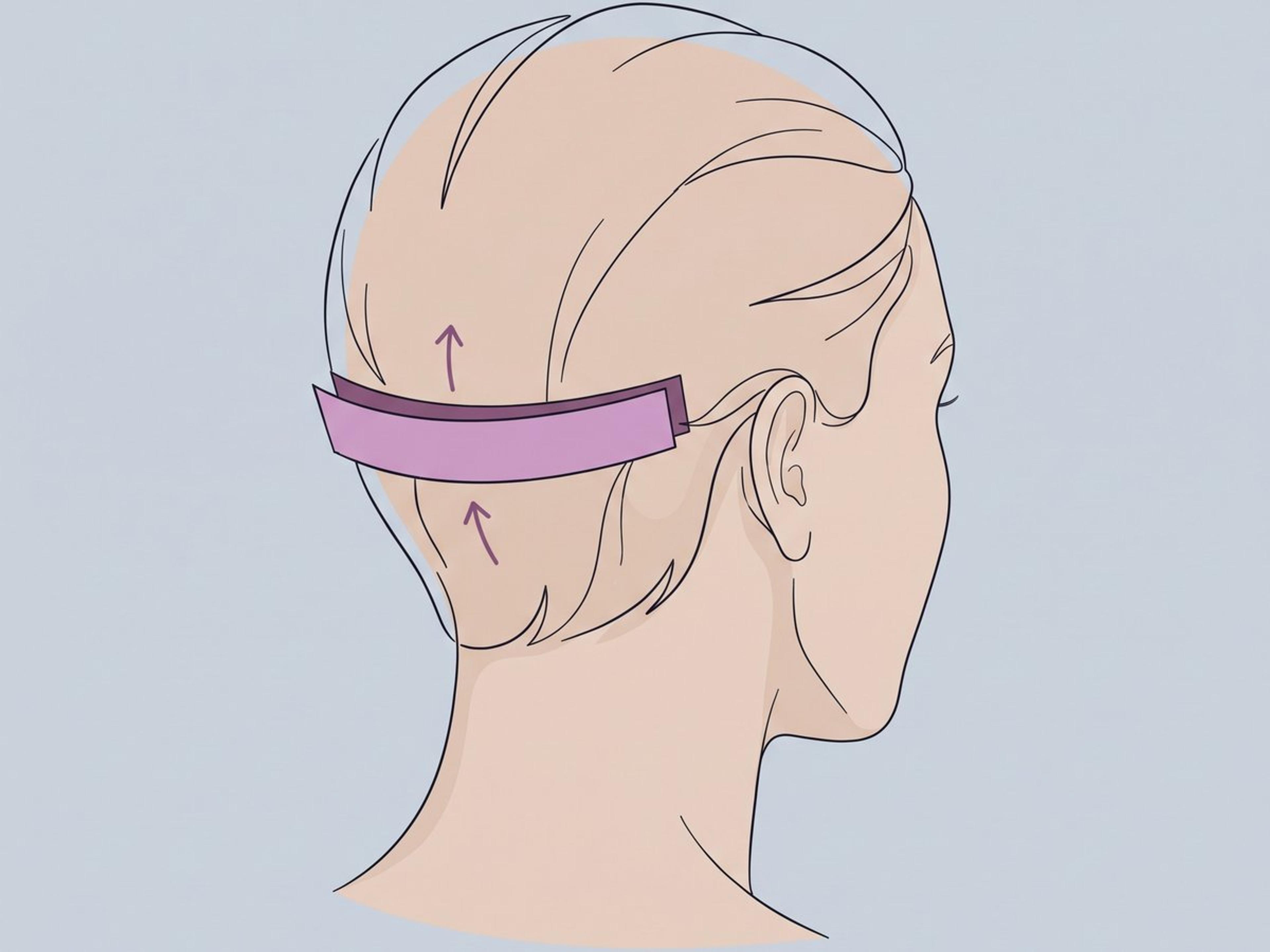
A thin strip of hair-bearing scalp is excised from the occiput, closed with sutures, and dissected under magnification into individual follicular units. It remains the right answer when a very large graft count is needed in one session, or when extensive recipient scarring means every graft has to count. The trade-off is a linear donor scar; de-epithelialised variants have been reported at around 85 percent graft survival against 70 percent for conventional units.
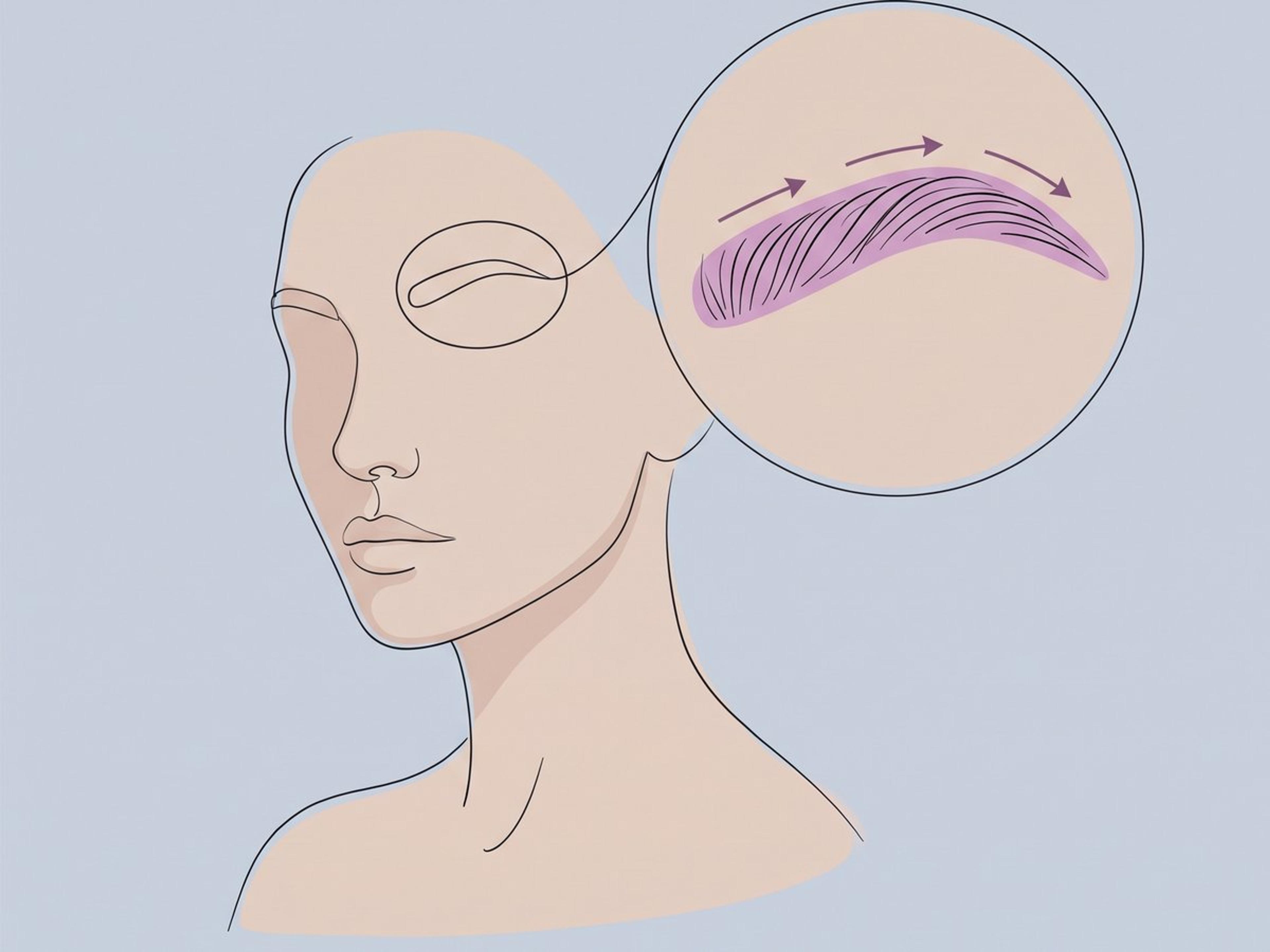
The donor area is not shaved to 1 mm — hairs are trimmed only to 1 to 2 cm, so the surgeon can see each hair's curl and direction while implanting it. Curl matters most in the eyebrow, where a mismatch leaves hairs standing away from the skin and is a common reason for revision surgery. In a 36-patient series, primary eyebrow cases used 186 to 321 follicular units placed from brow head to tail with the patient seated, with no adverse events reported.
Beard, moustache and eyebrow transplant: recovery week by week
- Day 1
Pinpoint crusts sit around every implanted graft, and the donor punch sites are open but sealed. Swelling and redness across the face are expected — oedema is one of the most common findings after FUE, reported in 40 to 50 percent of cases. The grafts are mechanically fragile today: no rubbing, no picking, no pressure. Your first wash is done with us.
- Week 1
Crusts loosen and separate over roughly 7 to 10 days with gentle washing, and itching is common around days 3 to 7. Most people return to non-physical work within a few days, though redness and visible crusting remain. Nothing strenuous, and nothing that makes you sweat heavily.
- Weeks 2–8
The transplanted hair shafts fall out. This is expected and temporary — it happens between 2 and 8 weeks after surgery — and the follicles themselves stay in place beneath the skin. The area can look sparser now than it did before surgery, which is the hardest part of the timeline to sit through.
- Month 4
New hairs begin to emerge, fine and lighter in colour than they will end up. Density builds unevenly across the field. It is too early to judge symmetry, and too early to decide whether a touch-up session is needed.
- Month 12
Growth is essentially complete, and calibre, colour and direction have matured. Because the follicles keep their donor-site characteristics, scalp-derived brow and beard hairs go on growing to scalp length and need regular trimming. A second session, if you want one, is normally spaced at least 8 months from the first.
Beard, moustache and eyebrow transplant: how to prepare
- Settle the cause of the loss first. Active alopecia areata, ongoing trichotillomania, frontal fibrosing alopecia or an untreated inflammatory scalp condition must be quiescent before grafting — placing grafts into an active process spends donor supply you cannot get back.
- Have the donor area assessed for calibre, curl, colour and total available follicular units. The hair has to match the zone it is going into, and there has to be enough of it to support the planned graft count.
- Agree the design sitting upright, before any anaesthetic, and photograph it. Brow head-to-tail shape and beard borders are drawn with the face in its natural position, not lying flat on a table.
- Stop smoking, and pause blood-thinning medication and supplements exactly as directed. Both affect bleeding during the case and healing around the grafts afterwards.
- Ask in writing who makes the recipient incisions and who does the extractions, and ask for the surgeon's registration, complication rate and revision rate. If the answer is vague, that is the answer.
Beard, moustache and eyebrow transplant: risks
Every operation carries risk. We name them so you can ask the right questions.
- Folliculitis or pseudofolliculitis at the recipient sites — reported in around 12 percent of follicular unit excision cases, typically 1 to 4 weeks after surgery.
- Donor-site damage: hypopigmented pinpoint punch scars, inclusion cysts, and — with overharvesting — visible 'moth-eaten' thinning that is difficult to correct.
- Poor graft survival or patchy growth, sometimes requiring a further session. Outright graft failure is uncommon, but more likely in severe burn scar beds.
- An unnatural result from incorrect hair direction, angle or mismatched curl. This is the particular danger in the eyebrow, where correction may require laser or electrocautery removal before any revision can be attempted.
- Persistent perifollicular redness, crusting, oedema, and transient pain or numbness at both donor and recipient sites. Pain is reported in around 6 percent of cases.
- Shock loss of existing hair around the treated area, reported across a wide range of 0.15 to 15 percent.
- Infection, reported in under 1 percent of cases, and rare hypertrophic or keloid scarring at the donor area.

Beard, moustache and eyebrow transplant in Turkey: what to expect
This is a day case. No admission, no general anaesthetic, no drains — and yet the schedule is tighter than it looks, because the result depends on two clinic visits after surgery and on not flying home too early.
Before you fly
Book a clear week rather than a long weekend. Speak to the surgeon directly, not a coordinator, and settle the graft count and what it costs before you commit — along with what a second session would cost. ISHRS members report a mean of 1.5 procedures to reach the result the patient wanted, so that conversation belongs before the first operation, not after it.
At the clinic
Keep the surgery day completely clear. The session runs 4 to 8 hours under local anaesthetic depending on graft count — roughly 300 to 800 grafts for eyebrows, 800 to 2,000 for moustache and beard — and you walk out the same day. Donor hair usually comes from the occipital scalp; the beard itself is the second most common donor site among ISHRS members at 6.1 percent of harvests, which is relevant when we are refining moustache or brow density.
Recovery in Istanbul
Plan on 4 days in Istanbul and 3 hotel nights. You will see us twice after surgery, not once — the first wash on day 1, which the literature supports within 24 to 72 hours, and a review before you leave. Book the return flight after that second review, not before it. Transfers and hotel nights sit inside the package price.
Heading home
Grafts are anchored by fibrin within roughly 72 hours, so a short-haul departure on day 3 is workable — but day 7 is the more defensible date, and the one we recommend where your schedule allows. The ASPS guidance quoted in the CDC Yellow Book is 7 to 10 days before flying after cosmetic surgery to the face. Crusts form on days 2 to 10 and should detach by days 10 to 14, so anyone leaving at day 3 or 4 travels with the recipient area still crusted: no hats, no pressure on the grafts, no sun, and dry cabin air to work against. Take your full operative record in English with you — graft count, donor map, recipient design, anaesthetic and medications — because that document is what determines what a second session can safely do.
Checking a clinic in Turkey
Turkey rewrote its medical-tourism rules on 26 April 2025, replacing the 2017 regulation. Any facility treating international patients must now hold an international health tourism authorisation certificate, register on the Ministry of Health's HealthTürkiye portal, and carry complication insurance for the procedures it performs; hospitals and medical centres also had to complete TÜSKA accreditation by the end of that year. Facilities are required to publish that certification — so you can check ours, and you should check anyone else's before you pay a deposit.
What the rules do not settle is who actually performs the procedure. Turkey has clinics where a doctor plans the design and technicians carry out the extraction and implantation with little supervision — so ask, by name, which doctor is responsible for your case and which parts they do themselves. Ask for their Turkish Medical Association registration. If an agency is arranging the trip rather than the clinic, get it in writing who carries clinical responsibility when something needs correcting.
Most nationalities enter Turkey visa-free or on an e-Visa for a stay of this length, with a passport valid at least six months. Confirm the rule for your own passport, and build the return flight around the last clinic visit rather than fixing it in advance.
Beard, moustache and eyebrow transplant: frequently asked questions
Is a beard or eyebrow transplant permanent?
Yes. The transplanted follicles are living grafts that survive in their new site and keep cycling indefinitely, with published series reporting follicular survival above 75 percent. What matters to understand is that they keep the properties of the donor area — the result is permanent, but it behaves like the hair it came from.
How many grafts does a beard, moustache or eyebrow need?
It varies widely with the size of the area and the density you want. In one published series of facial and brow restoration, eyebrows used 75 to 700 grafts per patient, moustaches 40 to 207, and beards anywhere from 20 to 2,050 — the low end being a small scar, the high end a full beard built from almost nothing. A separate eyebrow series used 186 to 321 follicular units for primary cases.
Where does the donor hair come from?
Most often the occipital scalp, the back of the head above the ears, where hair is genetically resistant to loss. Existing beard hair is used in a minority of cases — in one series, 16.3 percent of beard and moustache grafts came from beard donor sites. Leg and periauricular hair have been described as alternatives for eyebrow work, where the finer calibre helps the match.
Will transplanted eyebrow hairs keep growing long?
Yes, if the donor hair came from the scalp. Transplanted follicles retain their donor growth cycle, so scalp-derived brow hairs grow past normal eyebrow length and need trimming every few weeks, indefinitely. Some surgeons work with finer donor hair or long-hair harvesting specifically to improve the curl and calibre match.
When will I actually see results?
The transplanted shafts shed between 2 and 8 weeks after surgery — normal, temporary, and the part most people are not warned about. New growth generally starts around month 4 and thickens through month 12, which is when the result is judged. Any second session or touch-up is usually spaced at least 8 months from the first.
Will it leave scars?
Follicular unit excision leaves many pinpoint donor wounds that heal without sutures and usually settle as small pale dots, hard to see at normal hair length — though overharvesting can thin the donor area visibly and permanently. Strip harvest leaves a single linear scar at the back of the scalp. Hypertrophic or keloid scarring is rare.
Can it rebuild eyebrows lost to over-plucking, tattooing or burns?
Yes — these are standard indications rather than edge cases. In a systematic review of 354 patients, burns were the single most common cause requiring eyebrow or eyelash transplantation at 57.6 percent, alongside trauma, surgical excision and physiological loss. Scarred recipient beds take grafts less reliably, so more than one session is sometimes needed, and we would tell you that before you booked.
Who actually performs the operation in Istanbul?
Ask that question of every clinic you speak to, including us. A 2025 analysis in Aesthetic Plastic Surgery describes the hair transplant sector here as operating in a permissive regulatory environment lacking standardisation, oversight and consistent reporting, and the 2025 ISHRS census found 59.4 percent of member surgeons report black-market clinics in their own city, with repair of prior black-market transplants averaging 10 percent of their caseload. At Vanity a surgeon designs the shape, makes the recipient incisions and stays with the case throughout.
How much does beard, moustache and eyebrow transplant cost in Turkey?
€2,500 to €6,000 with us, confirmed after a consultation rather than quoted blind. The figure follows the graft count, which follows the area being filled. A patch along the jaw is a different job from building a full beard, and the moustache and sideburns are usually priced in.
Sources
- [1]Hair transplant — Cosmetic procedures · NHS · 2024
- [2]Eyebrow and Eyelash Hair Transplantation: A Systematic Review · The Journal of Clinical and Aesthetic Dermatology · 2018
- [3]Clinical outcomes and technical tips for eyebrow restoration using single-follicular-unit hair transplantation: A case series review · Journal of Cosmetic Dermatology (PubMed, PMID 31820550) · 2020
- [4]Follicular unit extraction as a valuable method for the restoration of beard: Retrospective case series study · Journal of Cosmetic Dermatology (PubMed) · 2020