


Was es ist
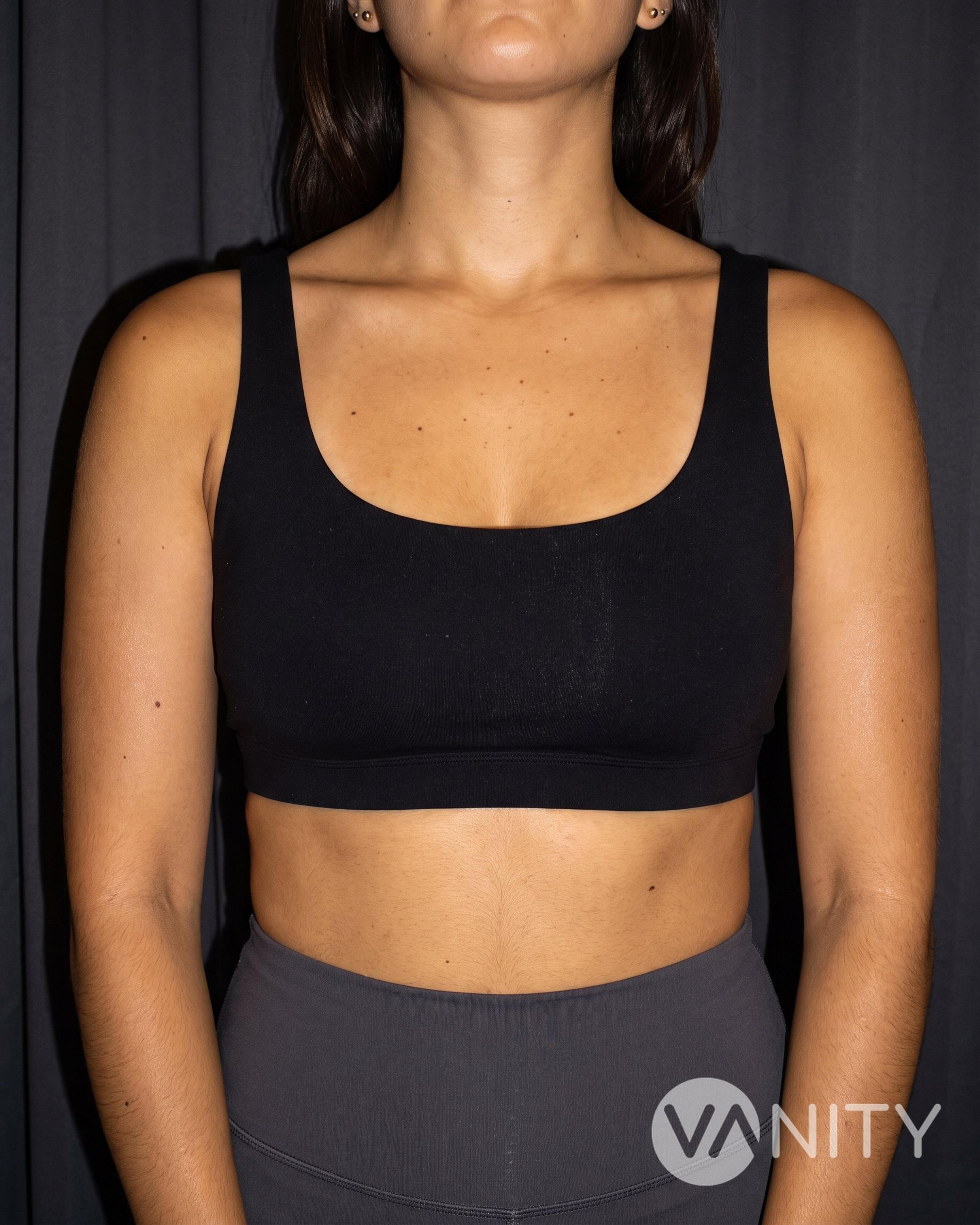
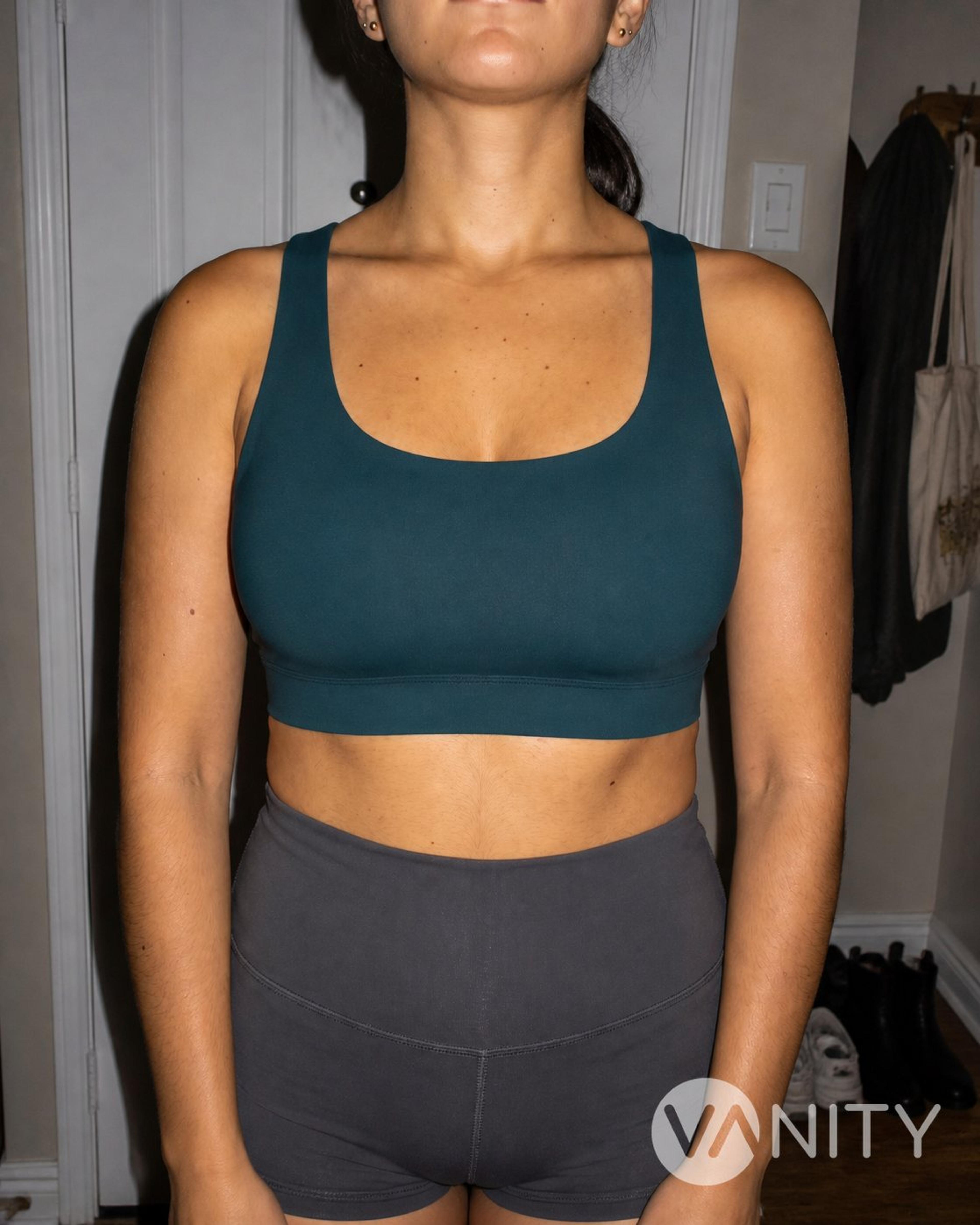
Breast augmentation adds volume and reshapes the breast using a silicone or saline implant, or fat moved from elsewhere on your body. The implant or fat sits either under the breast tissue or beneath the chest muscle, depending on your anatomy and the shape you want.
It suits healthy adults with fully grown breast tissue who want more volume, better symmetry, or to restore fullness lost after pregnancy or weight change — and who hold a clear, realistic picture of the size and shape they are after.
So läuft der Eingriff ab
Vom Kanal der Klinik — der Eingriff verständlich erklärt.
Unsere Techniken
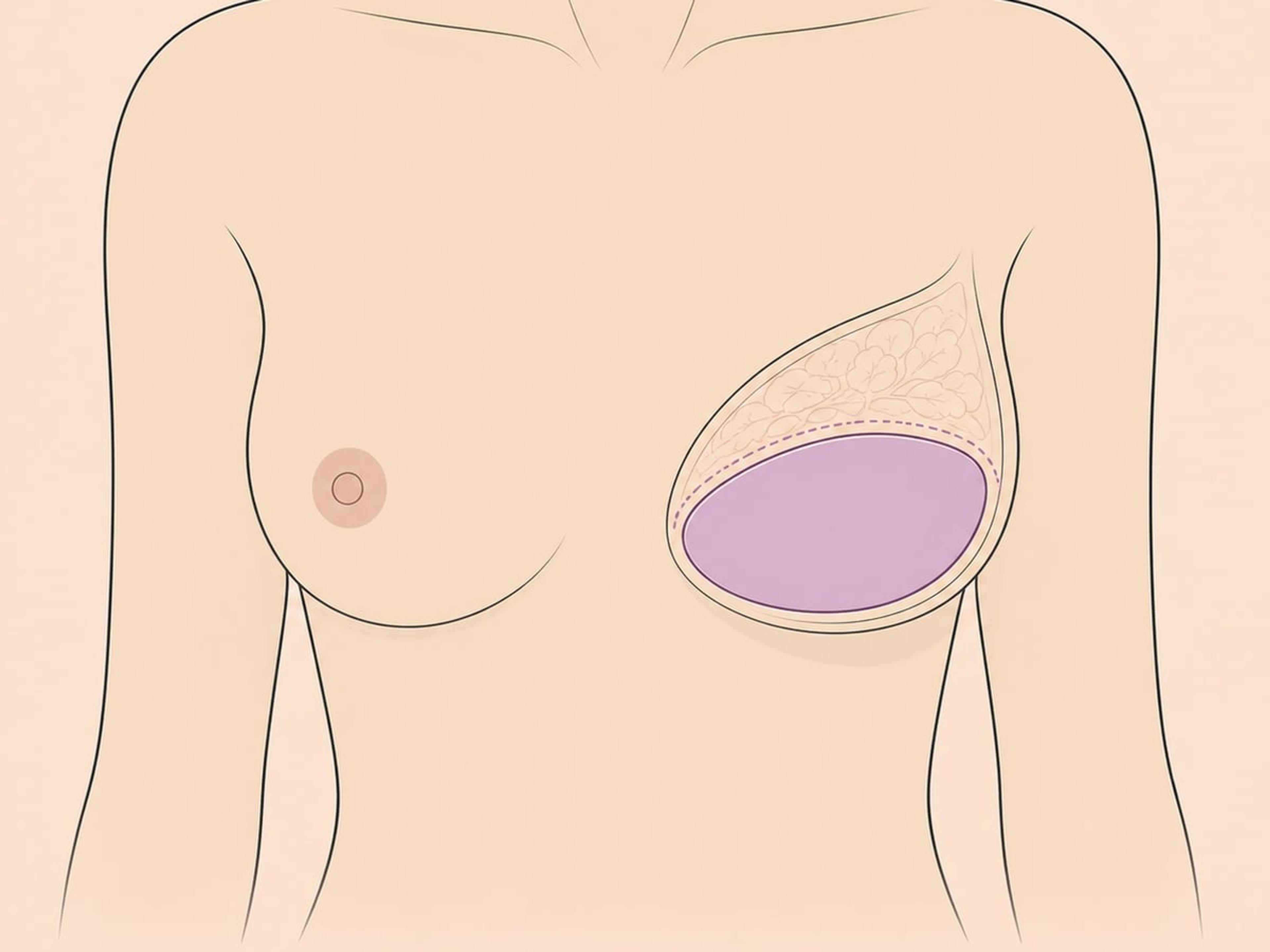
The implant sits partly or fully beneath the chest muscle. It can give slimmer patients more tissue cover and reduce visible rippling, though recovery may feel tighter and take a little longer.
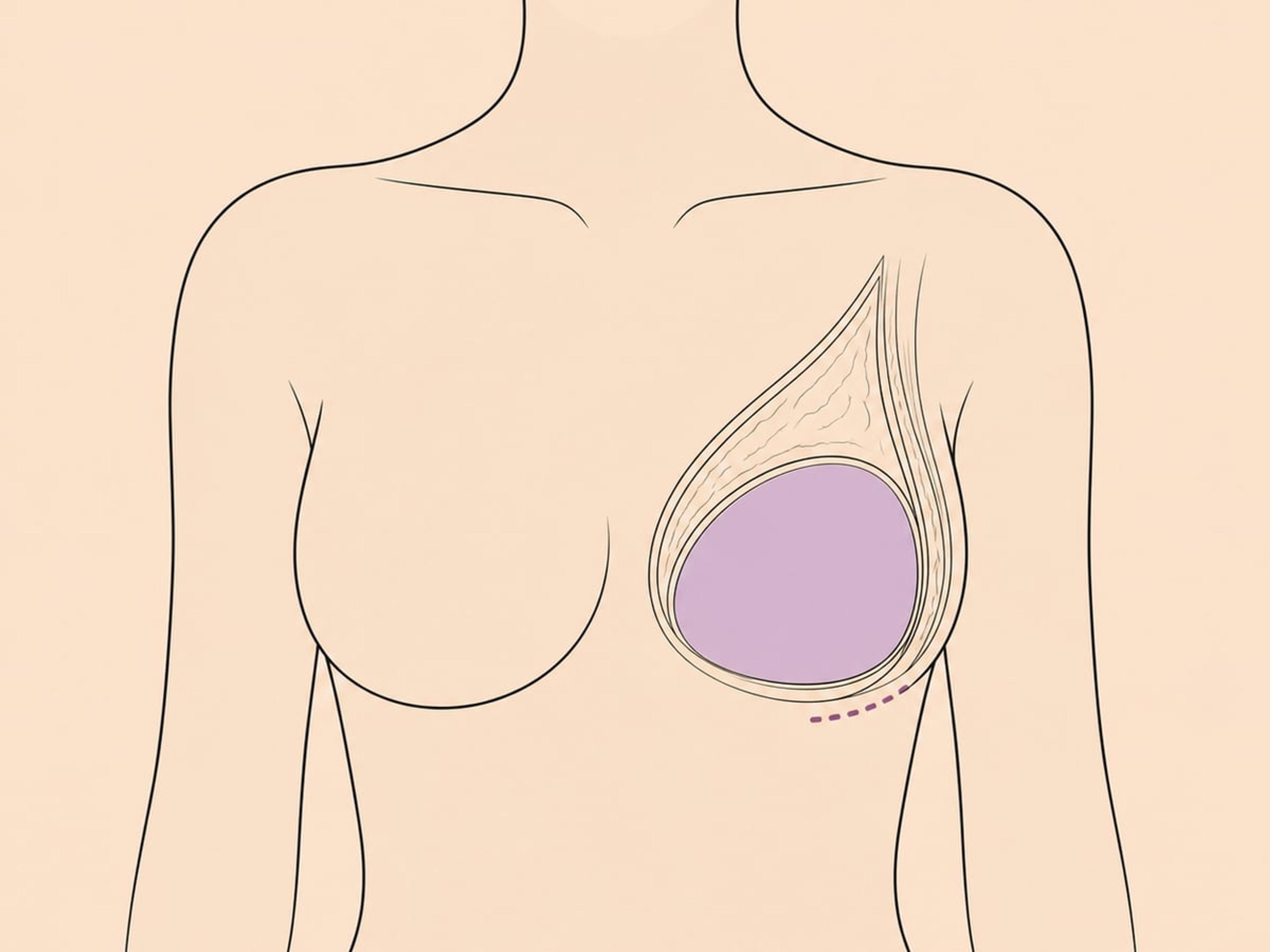
The implant sits behind the breast tissue and in front of the chest muscle. It may suit patients with enough natural tissue cover who want a shorter recovery and more upper-breast fullness.
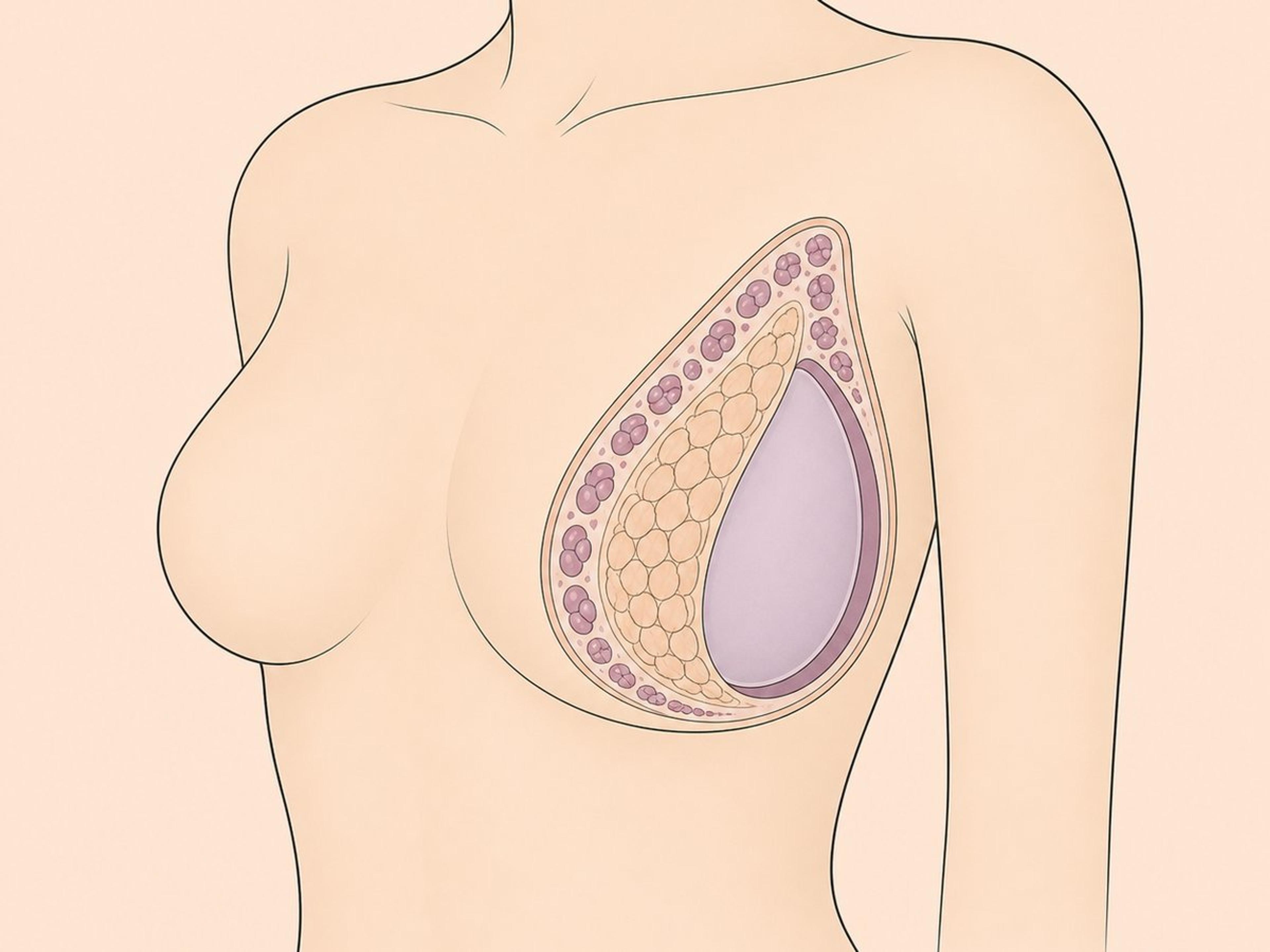
A dual-plane placement combines muscle cover at the upper breast with release of the lower breast tissue. It is often a useful balance between a natural slope, implant support and lower-pole shape.
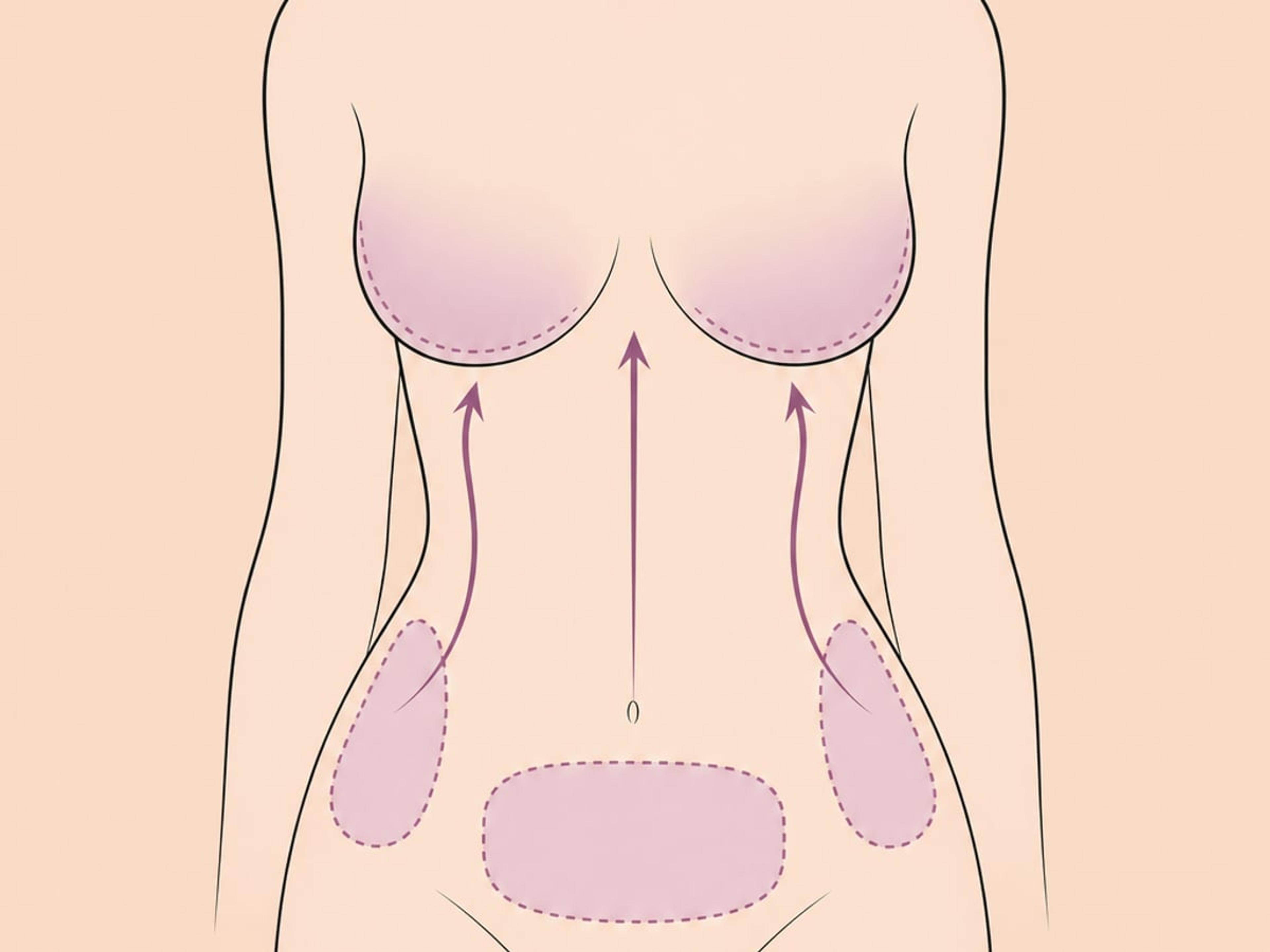
An implant provides the main volume, while carefully placed fat transfer softens the implant edges and refines cleavage. It can be helpful when tissue cover is thin, provided there is enough donor fat for transfer.
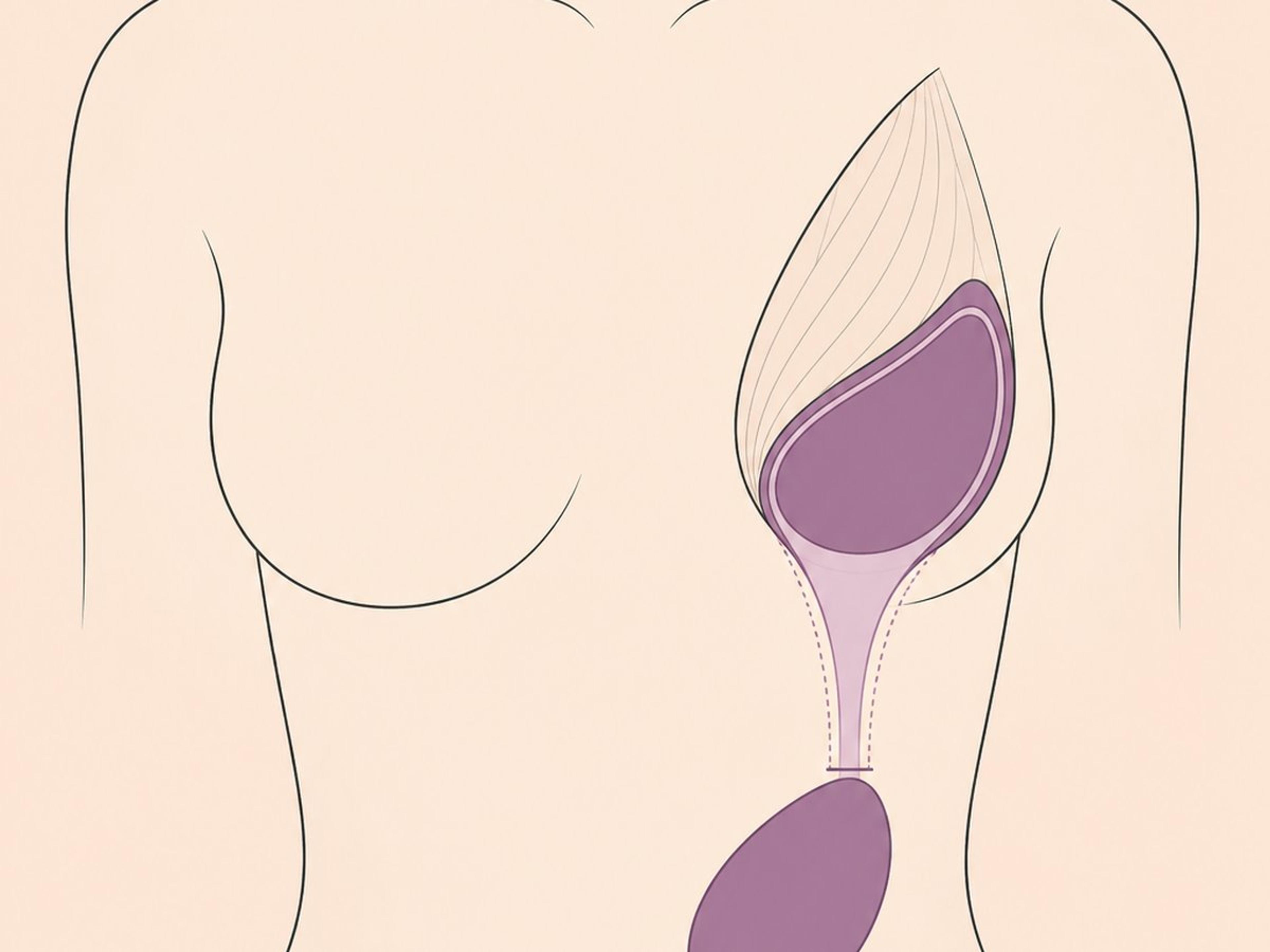
Motiva Preservé is a tissue-preserving approach designed to minimise disruption to the breast during implant placement. It is not right for every anatomy, so your surgeon will assess whether its planned implant position and incision are appropriate for you.
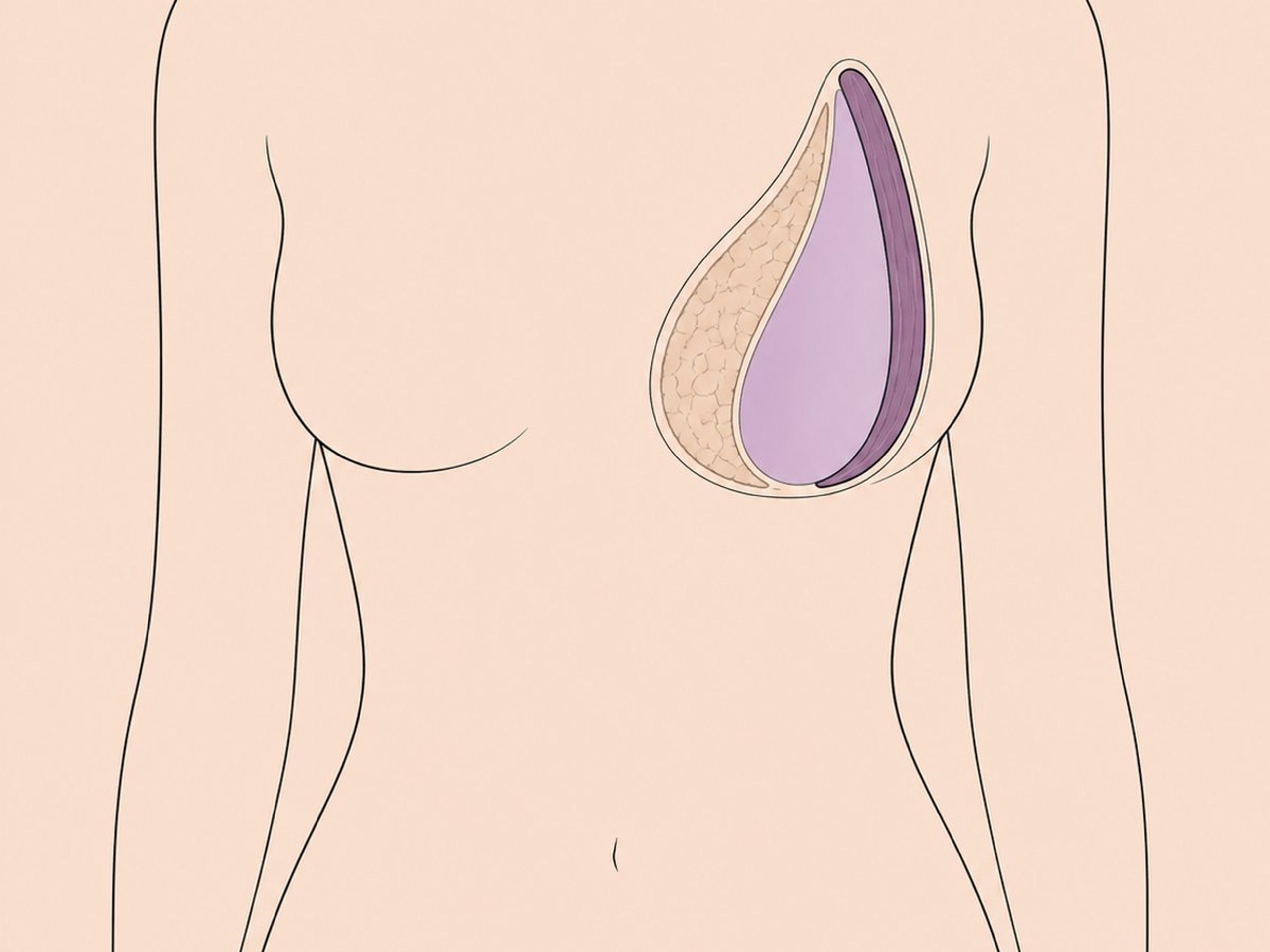
Motiva Ergonomix implants use a soft silicone gel designed to move with changes in position, appearing rounder when lying down and more natural in slope when upright. Implant choice still follows your measurements, tissue quality and the shape you want.
How the surgery works
General anaesthesia
You are asleep for the whole operation, which takes about one to two hours. You wake in recovery feeling tightness and pressure across the chest rather than sharp pain.
The incision
Most often placed in the crease under the breast — the inframammary approach — which gives the surgeon the best access and control while the scar hides in the natural fold. The alternatives are periareolar, along the lower edge of the areola where the colour change disguises the line, and transaxillary, hidden in the armpit so the breast itself carries no scar. The armpit route is used least often, because it gives the surgeon the least direct control of the pocket.
Creating the pocket
A precise space is opened for the implant — over the muscle (subglandular), under it (submuscular), or dual plane, where the upper part of the implant sits beneath the muscle and the lower part beneath breast tissue. The plane decides your upper contour, how the breast moves and how early recovery feels, which is why it is settled during planning rather than on the day.
Placing the implant
The implant is inserted with minimal handling and positioned in the pocket. Careful positioning at this stage is what secures symmetry and protects the long-term shape.
Closure and support
Incisions are closed and dressed, and you wake already in a surgical bra. It stabilises the implant position from the first hours — wearing it as instructed is part of shaping the result, not an optional extra.
Erholung, Woche für Woche
- Day 1
Tightness, pressure and soreness across the chest. You rest with your upper body slightly raised in a surgical bra, and pain is managed with prescribed medication.
- Week 1
Most people are back to desk work between days 5 and 7. Nothing heavier than a few pounds, and you are still sleeping on your back.
- Week 2
Bruising fades and the worst of the swelling settles. Light walking is good; cardio, lifting and chest work are still off the table.
- Week 6
Most restrictions lift and you can return to full workouts, including chest and upper-body training. The breasts still sit higher than their final position.
- Month 6
Implants have settled into their natural drop, scars are fading, and what you see is close to final — with subtle softening continuing for up to a year.
So bereiten Sie sich vor
- Stop blood thinners, aspirin, ibuprofen and supplements like vitamin E and fish oil 14 days before surgery.
- Stop smoking and all nicotine at least 4 weeks before surgery to support wound healing.
- If you are over 35 or have a family history of breast cancer, get a baseline mammogram first.
- Arrange a driver for surgery day and someone to help for the first 24–48 hours at home.
- Set up a recovery space with loose front-button tops, extra pillows and essentials within easy reach.
Risiken
Jede Operation birgt Risiken. Wir benennen sie, damit Sie die richtigen Fragen stellen können.
- Capsular contracture — scar tissue tightening around the implant
- Implant rupture or leak, which needs revision surgery
- Changed nipple or breast sensation
- Visible rippling — more likely with saline or in thin patients
- Infection, bleeding, or slow scar healing when patients use nicotine
- Future revision — implants are not lifetime devices

Was Sie in der Türkei erwartet
A breast augmentation trip to Istanbul is short but structured. You plan the surgery with your surgeon before you fly, spend about a week here around the operation, and stay under review until it is safe to travel home.
Before you fly
Your consultation, sizing and surgical plan are agreed by video before you book a flight — the preparation steps above apply unchanged. We confirm your implant type and placement and answer questions in your own language, so nothing about the plan is a surprise when you land.
At the clinic
Surgery is done under general anaesthetic with one inpatient night, using CE- or FDA-marked implants. A dedicated coordinator and an in-clinic interpreter stay with you, since much cosmetic care in Istanbul is not delivered in English by default. We operate in our own theatres under general anaesthesia, with an anaesthetist present throughout and a bed for the night that follows.
Recovery in Istanbul
Plan on 5 days in Istanbul, with 4 nights in a hotel between the clinic and your flight. We see you twice in that window — an early wound and dressing check, and a pre-flight clearance visit — so that drains are out if placed and swelling is stable before you leave.
Heading home
We prefer you fly home around day 5, once a clearance check confirms your drains are removed and swelling is settling. Prolonged immobility raises the chance of clots, and a documented case links air travel soon after surgery to delayed bleeding — so we build in buffer days and defer clearance if you are not ready. After that, aftercare continues by photo from home, for twelve months.
- United Kingdom
- £5,500 – £8,500
- United States
- $7,000 – $12,000
- Europe
- €6,000 – €8,000
Veröffentlichte Richtwerte zur Orientierung — bitte mit einem lokalen Angebot vergleichen.
Häufig gestellte Fragen
Is it safe to fly to Istanbul for this and back?
Yes, with planning. We ask you to stay about 5 days and clear you for the flight home around day 5, once drains are out and swelling is stable. Flying too soon raises the risk of clots and delayed bleeding, so we defer clearance rather than rush you onto a plane.
How long do I really need off work?
Plan on 5 to 7 days for a desk job, and 3 to 4 weeks for anything physical. You will feel functional before you look it, but pushing the timeline tends to prolong swelling rather than shorten recovery.
Do implants need replacing every 10 years?
No — that is a persistent myth. Implants have no fixed expiry, but they are not lifetime devices either. Most people need a revision at some point, often between 10 and 20 years, for rupture, contracture or a change of preference.
Will I be able to breastfeed afterward?
Most people can, especially when the incision sits in the breast crease or the armpit. An incision around the areola carries a slightly higher chance of affecting milk ducts or nipple sensation.
Under or over the muscle — does it matter?
Yes. Under the muscle gives a more natural slope and less rippling, but a longer recovery. Over the muscle heals faster and adds upper-pole fullness, and is generally kept for patients with enough natural tissue cover.
How do I choose the right size?
Sizing follows your chest measurements, tissue quality and lifestyle — not just a cup number. We use sizers during consultation, and going too large for your frame is the most common regret.
Will this affect future mammograms?
Implants can hide some breast tissue on a standard mammogram, so the radiographer adds extra displacement views. Tell your imaging centre in advance and keep to your normal screening schedule.
How painful is the recovery?
Less sharp pain than most people expect, and more pressure. You wake with tightness across the chest and soreness whenever you move your arms, and it is at its most intense through the first 72 hours, then eases noticeably through weeks two and three. Prescribed medication covers it. Under-muscle placement feels tighter early on, and the discomfort and activity restrictions last longer than they do over the muscle.
Will pregnancy or weight change affect my result?
Yes — the implant stays the same, but the breast around it does not. Pregnancy, breastfeeding, weight swings and normal ageing all change breast volume and skin support, and can leave the breast sitting lower or looking emptier at the top. Many people choose to complete their family first; if the shape does change later, a lift with or without an implant exchange restores it.
How do I choose the right size — 300cc or 400cc?
Most people arrive having compared “300cc vs 400cc” online, but a volume in cc only means something against your own body. Sizing follows your breast base width, the projection you want, your skin elasticity and how you use your body — not a cup number. We use sizers during consultation and a 3D simulation before surgery to preview sizes on your own frame. The right size is the one your tissue can still carry in five years, and going too large for your frame is the most common regret.
Can this correct tubular or asymmetric breasts?
Often, but not with a standard implant alone. Tubular and constricted-lower-pole breasts need the tight tissue at the base released and reshaped before an implant will sit properly, and marked asymmetry may need a different implant size on each side, sometimes with fat transfer to blend the difference. It is planned as a corrective operation rather than a straight volume increase, so the assessment matters more than the implant choice.
Round or teardrop implants — which shape should I choose?
Round implants add upper-pole fullness and stronger cleavage; teardrop (anatomical) implants are built for a natural slope and suit patients with very little tissue of their own. Ergonomic designs sit between the two — rounder lying down, naturally sloped when standing. The right shape follows your anatomy and the look you want, and is settled during planning.
Where will the scars be?
Most often in the crease under the breast — the inframammary approach — where the scar hides in the natural fold. The alternatives are periareolar, along the edge of the areola where the colour change disguises the line, and transaxillary, in the armpit, which leaves the breast itself unmarked. How well any scar fades also depends on genetics, aftercare and sun protection.
What is Motiva Preservé?
A technique used with Motiva implants that combines minimal implant handling with controlled, consistent pocket creation to reduce tissue trauma. It suits patients choosing a Motiva implant who want a natural result; it is not the right route if you need a breast lift or plan a very large size increase.
Do I need to massage my implants during recovery?
Usually not. Modern cohesive gel implants rarely need routine massage, and massaging at the wrong time can do more harm than good. Follow your surgeon's protocol rather than generic advice online.
Can I combine breast augmentation with other procedures?
Often, yes — liposuction and tummy tuck are the most common pairings. Whether a combination is sensible depends on your health, total operative time and how much recovery you can take on at once, so it is decided case by case.
Why do quotes for the same surgery vary?
The main drivers are implant type and size, placement (over, under or dual plane), and whether your anatomy needs extra work such as asymmetry correction or a hybrid fat-transfer approach. A final price follows your medical review and surgical plan.
When will my implants "drop and fluff"?
At first the breasts sit high and feel firm — swelling and muscle tension hold the implants up, especially with under-muscle placement. They settle into a more natural position over 6 to 12 weeks, with softening continuing up to six months. Larger implants and under-muscle placement tend to settle more slowly.
Quellen
- [1]Breast Augmentation · American Society of Plastic Surgeons
- [2]Breast Augmentation: What it is, Types, Surgery & Recovery · Cleveland Clinic
- [3]Advantages and Disadvantages of Breast Augmentation: Surgical Techniques, Outcomes and Future Directions · PubMed Central
- [4]Breast Implant Safety: an Overview of Current Regulations and Screening Guidelines · PubMed Central · 2021