

ما هي العملية
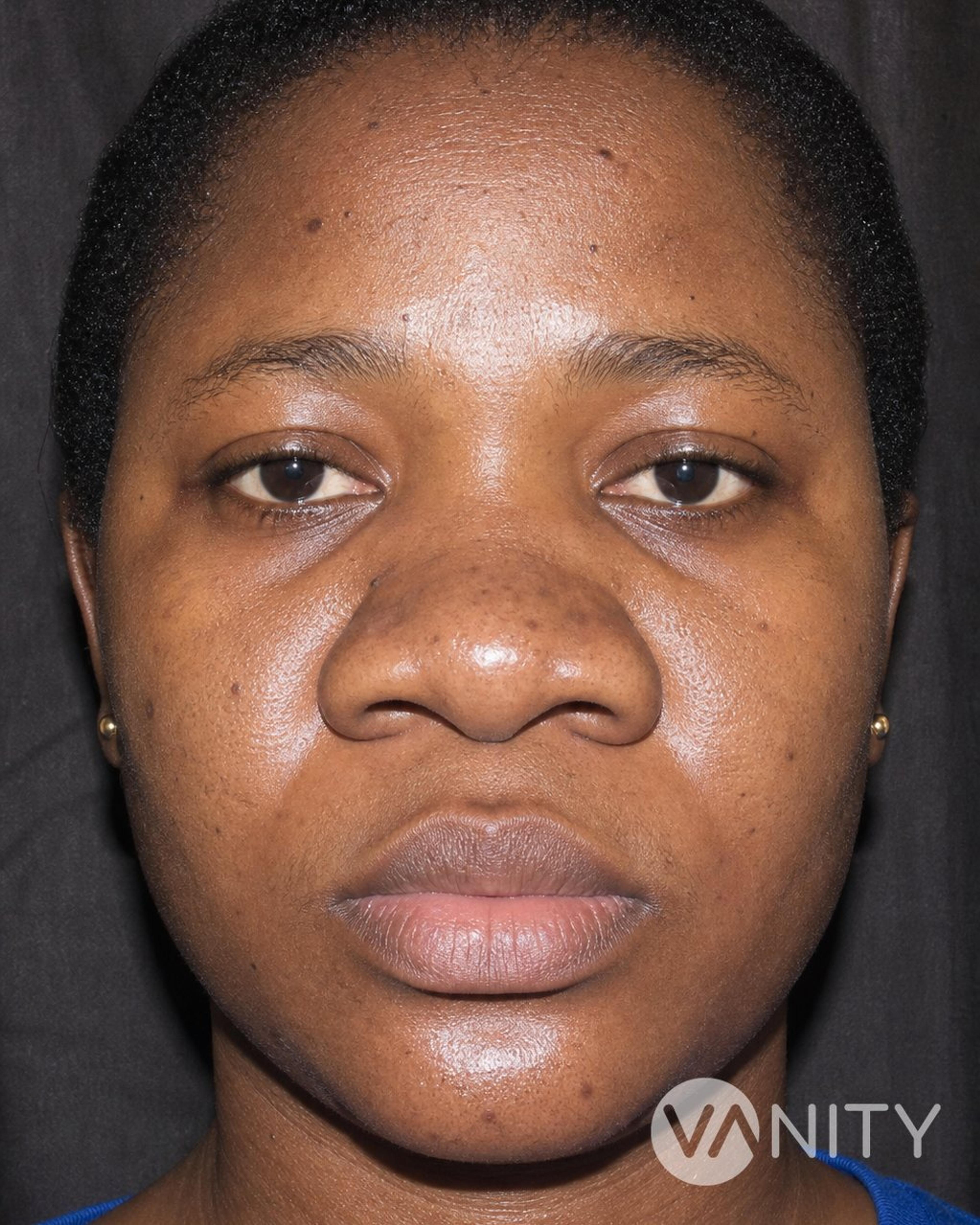
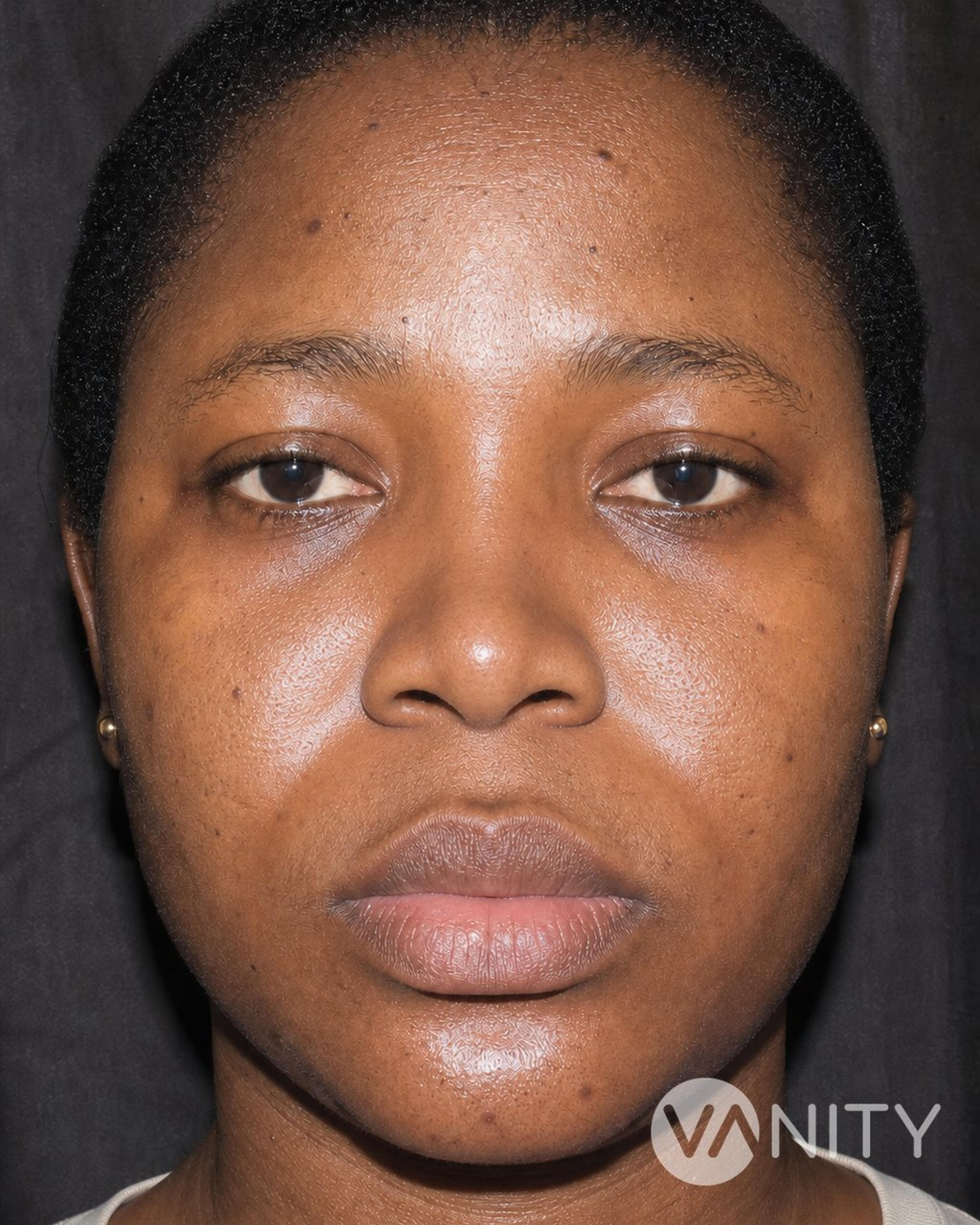
Ethnic rhinoplasty is not a separate operation. It is standard rhinoplasty planned in reverse: nasal anatomy varies measurably by ancestry, from the slim, highly projected leptorrhine nose with a robust framework to the flatter, wider platyrrhine nose with smaller nasal bones and less septal cartilage, and most Asian, Middle Eastern and Latin American noses sit between those poles. The skin envelope differs too, in thickness and sebaceous quality. Reduction techniques designed for thin skin over an over-projected nose will collapse or under-deliver on these frameworks, so the work is usually structural and additive — cartilage grafts to raise the dorsum and project the tip, controlled narrowing of a wide alar base — done through an open approach so every graft is sutured under direct vision.
It suits patients of African, East and Southeast Asian, South Asian, Middle Eastern, Hispanic or Latin American, or mixed ancestry who want the nose changed in proportion to the face without taking on a different facial identity. You should have finished facial growth, be in good general health, not smoke, and hold expectations that match what surgery can do. Many people arrive with a functional complaint as well — a deviated septum, nostril collapse — corrected in the same operation. If septal cartilage is limited, which is common in platyrrhine anatomy and in anyone who has had prior nasal surgery, ear or rib cartilage will be part of the conversation
شاهد كيف تتم العملية
من قناة العيادة — شرح مبسّط للعملية.
التقنيات التي نستخدمها
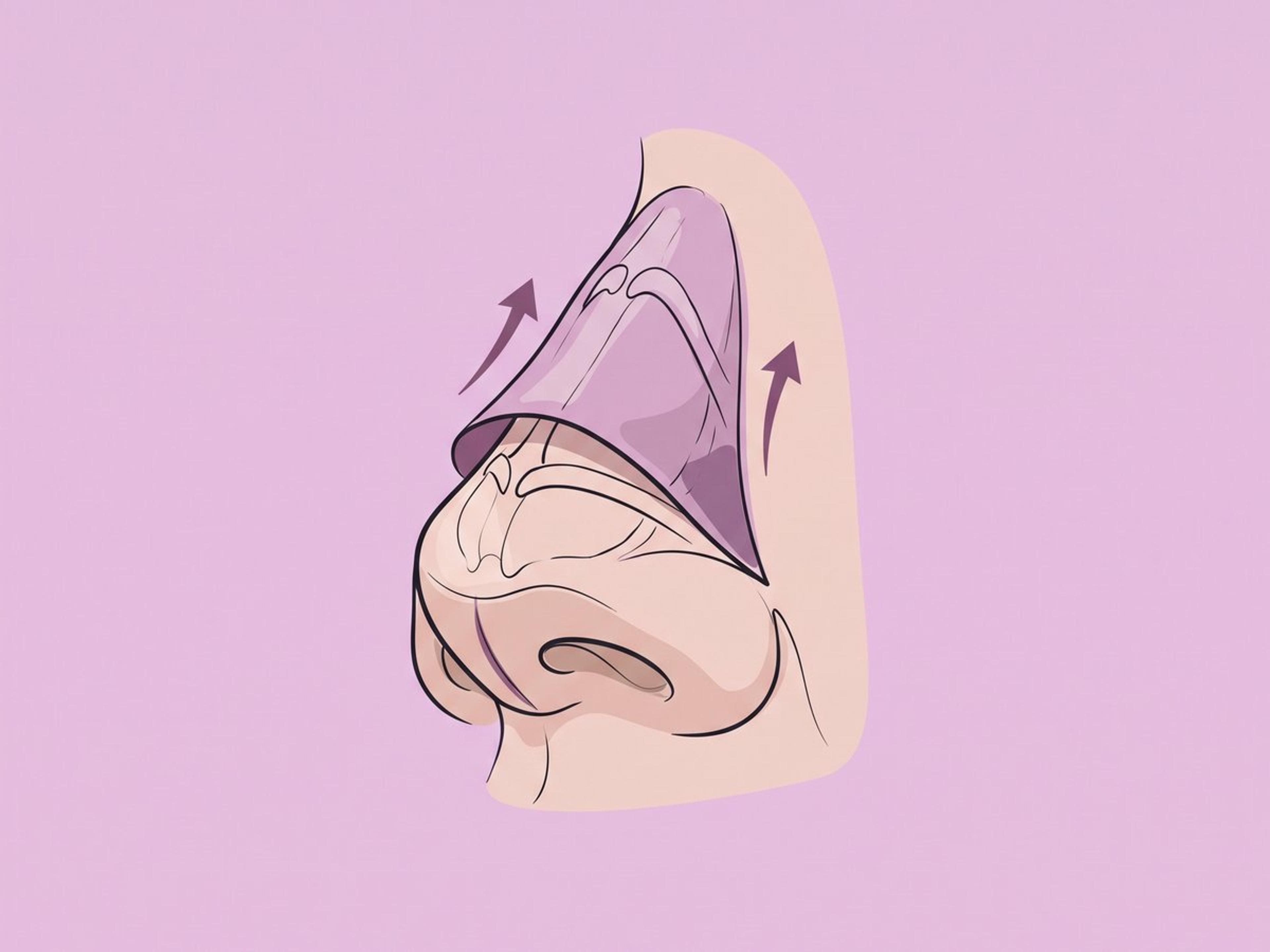
A small incision across the skin between the nostrils, joined to incisions inside the nose, lets the surgeon lift the skin and see the framework clearly. This makes it possible to place and secure several cartilage grafts, which is often needed in a thicker-skinned nose with less natural support. There is a small scar in this area, and tip swelling can take longer to settle.
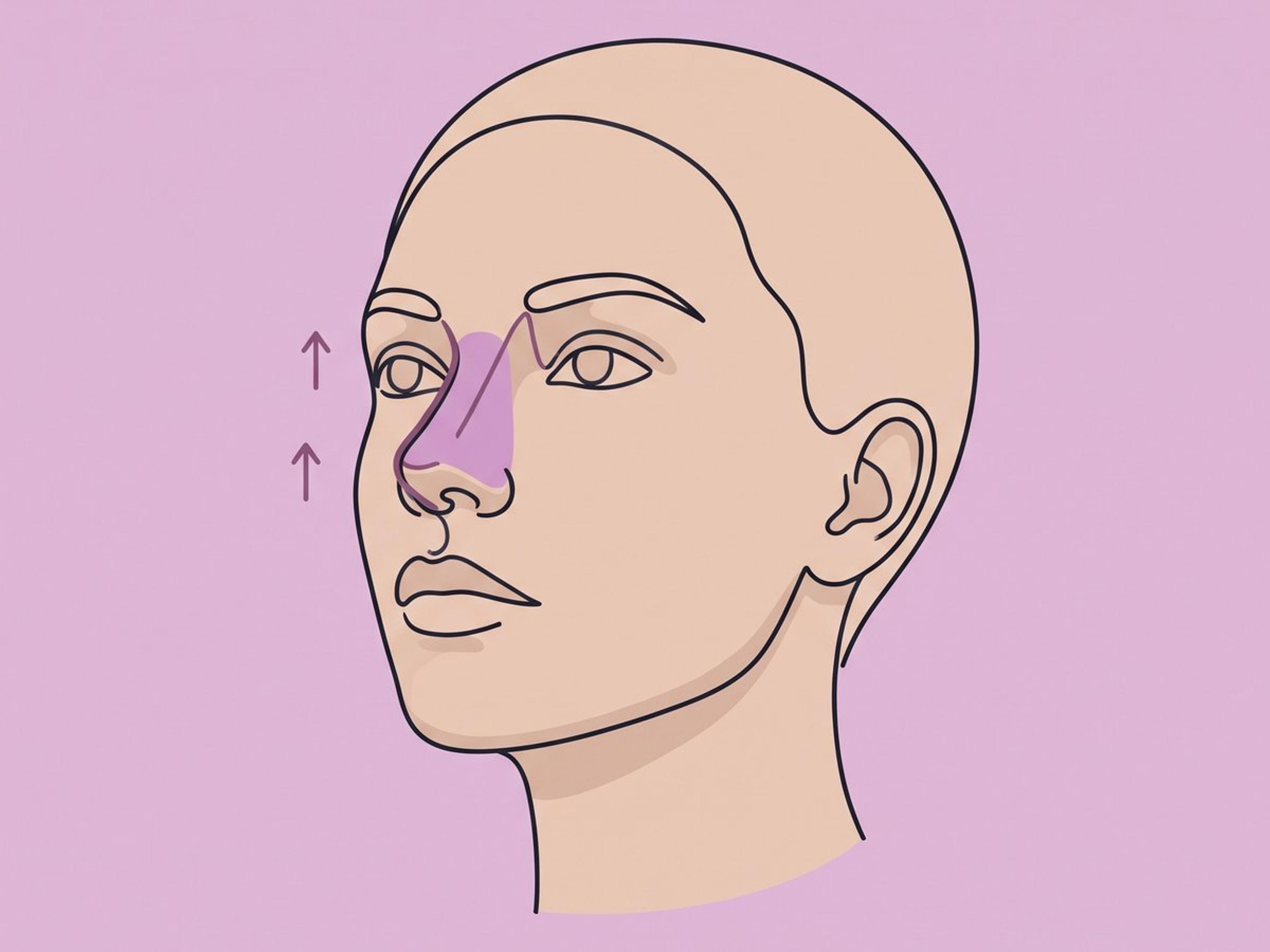
A low or shallow bridge can be built with your own cartilage — usually from the septum first, then the ear, or the rib when more is needed.. Finely diced or hybrid cartilage grafts can make the bridge less visible and reduce warping compared with solid grafts.
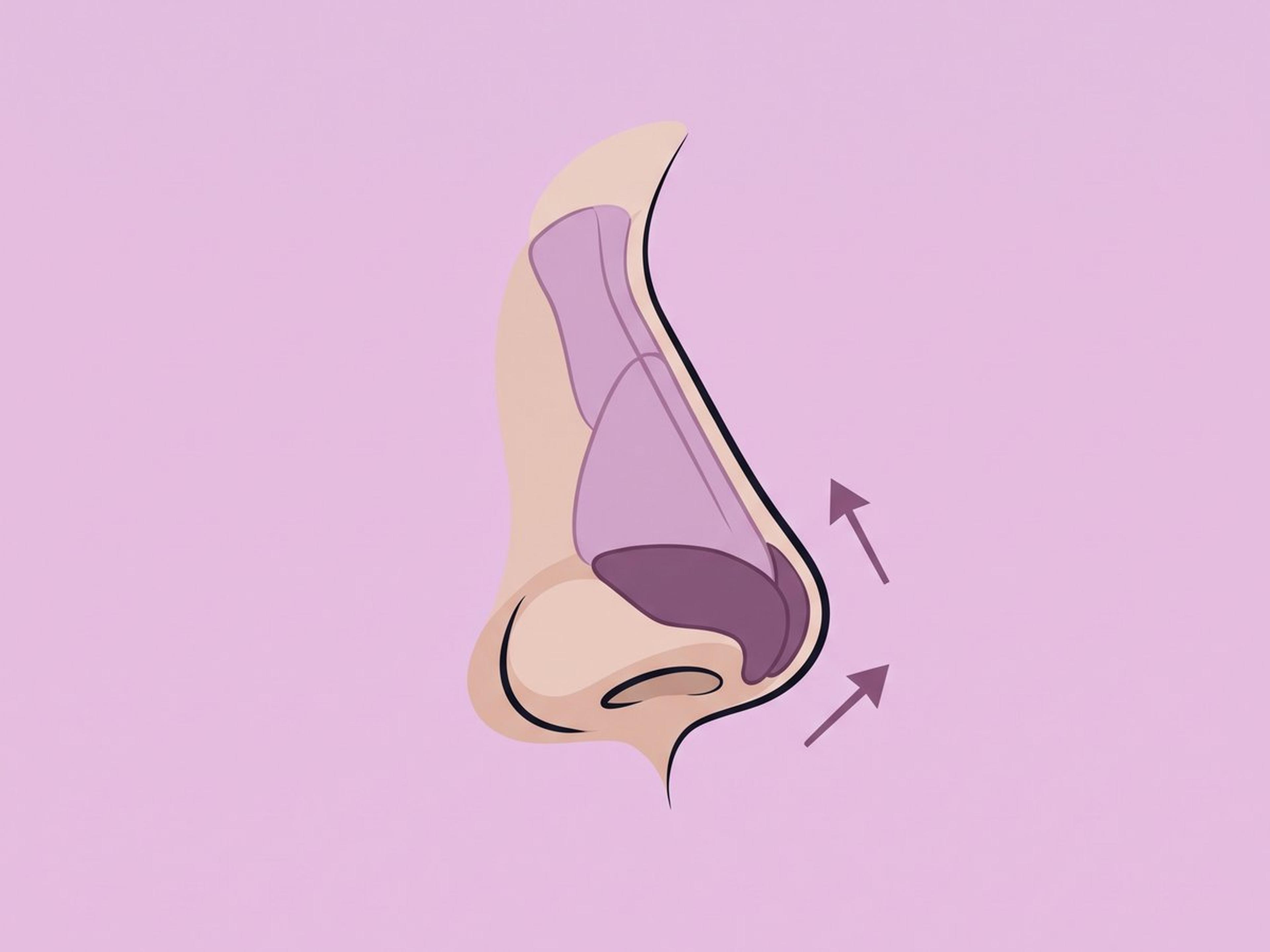
Small cartilage grafts can give a weak tip more height, shape and support, then help it hold that position under thicker skin. Sutures alone are often not enough, unlike in a nose reduction. How much support is needed depends on how the tip settles back, skin thickness and any previous surgery.
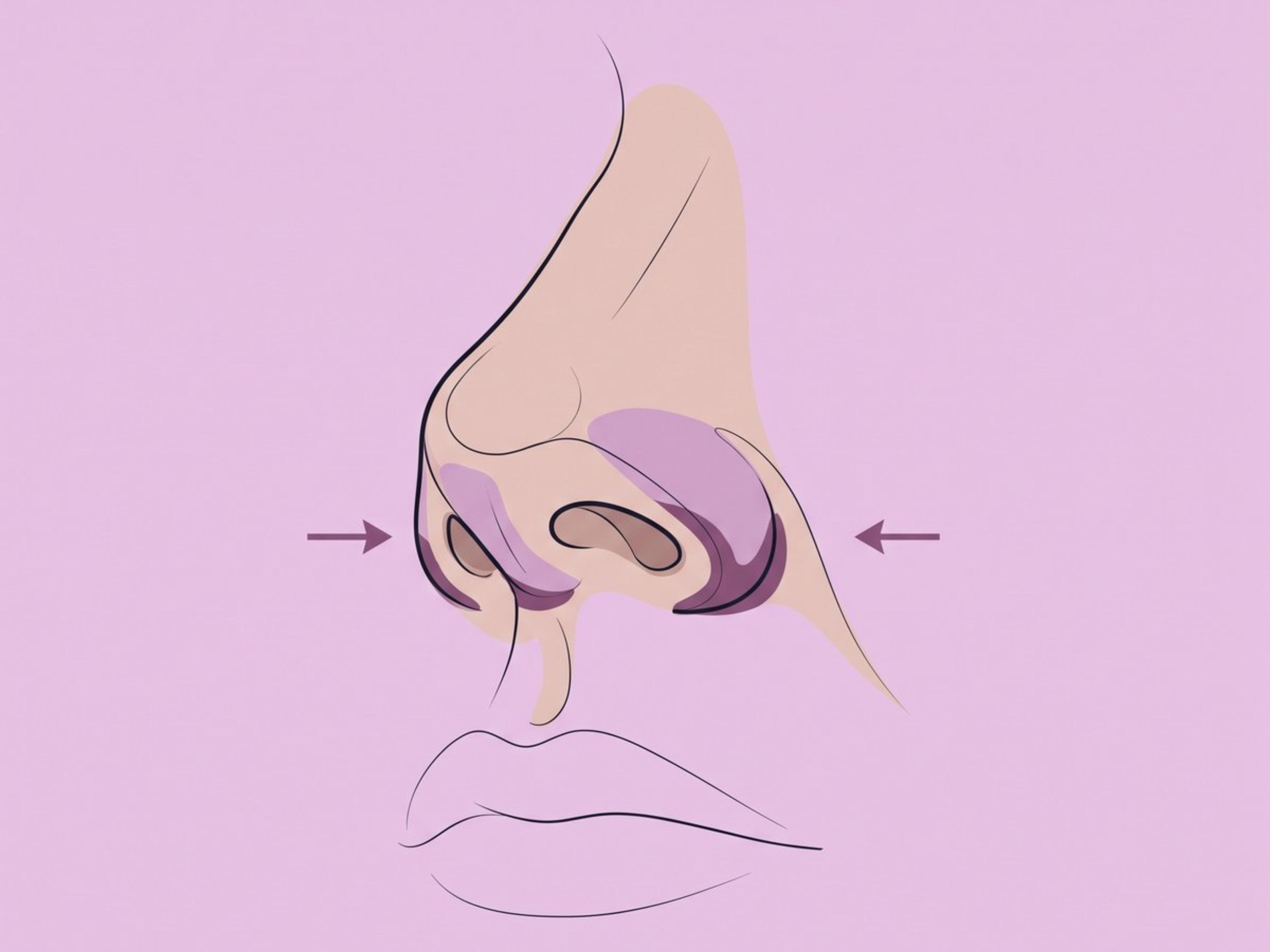
Wide nostrils or flared nostrils can be narrowed by removing a small wedge of tissue at the nostril base, the natural crease beside it, or both. This is usually done last, after bridge and tip changes have altered the nose’s apparent width. The incisions are on visible skin, so raised or darker scars are a particular consideration in darker or thicker skin.
The operation, step by step
Anaesthesia and final plan
General anaesthesia, or sedation in selected cases, after the markings and the graft plan are confirmed against your consultation photographs. This is the last point at which the features you want preserved, and whether a rib donor site is on the table, can be restated — none of it can be renegotiated once you are asleep.
Open exposure
A short incision across the columella is joined to incisions inside the nostrils and the skin envelope is lifted off the framework. That exposure exists so each graft can be positioned and sutured under direct vision rather than by feel, which is what makes it the default approach when several grafts have to work together.
Cartilage harvest
The septum is assessed first because it is already in the operative field and costs no second incision. Only if it is insufficient — common in platyrrhine anatomy and after prior nasal surgery — is ear cartilage taken for curved grafts, or rib cartilage through a chest incision averaging about 2.4 cm in one published series, when substantial dorsal volume is needed.
Septal work and dorsal augmentation
A deviated septum is straightened and, where the internal valve is narrow, spreader grafts are set alongside the dorsal septum — function is addressed before shape, because a nose that looks right and breathes badly is a failed operation. The bridge is then built up with your own cartilage, diced or layered rather than left as a single solid block where warping and visibility are a concern.
Tip projection and support
A septal extension graft or columellar strut sets the tip's projection and rotation, with shield or cap grafts adding definition. The structure has to be strong enough to hold that position for years against the downward, contractile pull of a thick skin envelope — sutures alone will relapse, which is the main technical departure from reduction rhinoplasty.
Alar base narrowing and closure
Nostril width is judged and reduced last, because raising the dorsum and projecting the tip already narrow the nose in appearance and taking tissue too early over-corrects. Any wedge excision is set inside the natural alar crease or nostril sill, then the incisions are closed, internal splints or light packing placed, and the external splint applied.
التعافي أسبوعاً بأسبوع
- Day 1
Surgery takes roughly 1–3 hours under general anaesthesia or sedation. An external splint is in place, sometimes with internal splints or light packing, and congestion, oozing and difficulty breathing through the nose are expected rather than a problem. If rib cartilage was harvested, the chest is usually the sorer of the two sites for the first several days.
- Week 1–2
The splint and any sutures come off at about a week. Pain and swelling peak in the first week, and bruising across the cheeks and lower eyelids fades over 1–2 weeks. Most people are back at desk work or school within 1–2 weeks. No glasses on the bridge.
- Week 3–6
Visible bruising and redness have largely gone by around 3 weeks. Strenuous exercise and contact activity are generally cleared at 4–6 weeks. The nose still looks swollen and the tip stiff and over-full — that is the swelling, not the result.
- Month 3
Roughly 90 percent of the swelling has resolved and the dorsal line reads accurately. Tip definition lags behind, particularly under a thick, sebaceous skin envelope, where residual oedema can persist well past this point. Chest donor-site scars are maturing but still pink.
- Month 12
Final shape is judged at 1 year, and thick-skinned noses may keep refining into a second year. Revision surgery is needed in roughly 15 percent of rhinoplasty patients for small corrections, and it is not normally considered before the twelve-month mark.
كيف تستعد
- Attend a consultation with standardised photography and a functional airway exam covering septal deviation, turbinates, tip recoil, alar base width and skin thickness. Bring reference photos, and be explicit about which features you want preserved.
- Agree the graft plan in advance — septal, conchal or costal cartilage. If rib is likely, you are consenting to a chest donor site and its scar; a chest exam or CT may be requested where cartilage is calcified with age.
- Stop smoking and all nicotine well before surgery. Nicotine impairs skin-flap and graft healing, and this operation depends on both.
- Stop aspirin, NSAIDs and blood-thinning supplements such as fish oil, vitamin E and ginkgo for 1–2 weeks beforehand, and disclose your full medication list, anticoagulants included.
- Arrange 1–2 weeks off work, a ride home, care for the first night, something to keep your head elevated while you sleep, and an alternative to glasses resting on the bridge.
المخاطر
كل عملية جراحية تنطوي على مخاطر. نُسمّيها بوضوح لتتمكن من طرح الأسئلة الصحيحة.
- Persistent or new nasal obstruction, including internal or external valve collapse after a wide base is narrowed
- Graft complications — warping, displacement, resorption, visibility or extrusion — highest with solid costal cartilage dorsal grafts
- Infection, more consequential in grafted and revision cases, and sometimes requiring intravenous antibiotics or removal of a graft
- Bleeding, epistaxis, septal haematoma and septal perforation
- Unfavourable scarring at the columellar and alar base incisions, including hypertrophic or keloid scarring and post-inflammatory hyperpigmentation in thicker or more pigmented skin
- Residual asymmetry, prolonged tip oedema, or an under-corrected result requiring revision surgery in roughly 15 percent of cases

ماذا تتوقع في تركيا
This is a 7 day trip built around one appointment. The splint and sutures come off about a week after surgery, and that review is the checkpoint that cannot be done remotely — so it sets the length of your stay, not the operating date.
Before you fly
Talk to the surgeon who will operate, before you travel, and do not commit to a date before you have met in person and seen the clinic. The NHS gives the same advice for cosmetic surgery abroad, including confirming that you and your surgeon share a language you can hold a full clinical discussion in. This procedure depends more than most on an explicit shared understanding of which features are changing and which are being preserved — that is a clinical conversation, not an administrative one. Ask separately about the facility — anywhere in Türkiye treating international patients must also hold the Ministry of Health's International Health Tourism Authorization Certificate under the 2017 regulation.
At the clinic
Day 0 is your in-person consultation and pre-operative workup. Surgery is day 1, taking 1–3 hours, with 1 night as an inpatient — rhinoplasty is a day case in most Western centres, but one supervised overnight is the norm when you are recovering without family nearby. Your wound review is on day 2. Settle the aftercare question in writing before you fly: who reviews you at 3, 6 and 12 months, what happens if a complication presents once you are home, who pays for a revision, and the name of the clinician you can reach.
Recovery in Istanbul
Plan for 7-8 days in total. Internal splints or light packing come out within the first 24–48 hours. The external splint and skin sutures come off around day 6–7, which is the appointment the whole schedule is built around. Expect congestion, bruising across the cheeks and lower eyelids, and a nose that feels blocked — all of it normal in this window. Keep your head elevated, keep glasses off the bridge, and do not book anything strenuous.
Heading home
We prefer you fly on day 7. And expect a slower result than the trip suggests. The tip keeps refining for about a year, more so in thick, sebaceous skin. The nose you fly home with is not the outcome, and a photograph taken at the airport is not a fair assessment of the surgery.
- United Kingdom
- £7,000 – £12,000
- United States
- $8,000 – $15,000
- Western Europe
- €7,000 – €12,000
نطاقات منشورة للاسترشاد فقط — يُرجى التأكد من عرض سعر محلي.
الأسئلة الشائعة
How is ethnic rhinoplasty different from a regular nose job?
The surgical steps are the same; the plan is inverted. Standard reduction rhinoplasty takes bone and cartilage away from an over-projected nose, whereas this work more often adds cartilage to raise a low dorsum and project a weak tip, then narrows the alar base — all under a thicker skin envelope that hides fine detail and stays swollen for longer.
Is the term "ethnic rhinoplasty" still considered accurate?
It is contested within the field. A 2025 paper in Facial Plastic Surgery & Aesthetic Medicine argues that grouping nasal anatomy by broad race or ethnicity is imprecise, and proposes classifying noses by measured features instead — projection, rotation, skin thickness, anthropometric width. A 2022 systematic review reached a similar conclusion, finding wide variation within African, Indian, Middle Eastern and Latin American groups. The term persists mainly because patients search for it.
Will surgery erase my ethnic features?
It should not, and avoiding that is the explicit aim of current practice. The stated objective in the contemporary literature is proportional change that preserves inherited characteristics, and a 2025 systematic review found ethnicity-conscious planning associated with greater patient satisfaction than a one-template approach. Telling us which specific features you want left alone is the most useful thing you can do at consultation.
Where does the cartilage for grafting come from?
The nasal septum first, because it is already in the operative field. Platyrrhine anatomy and prior surgery often leave too little of it, in which case ear cartilage is used for curved grafts and rib cartilage when substantial dorsal or tip volume is needed. Rib harvest adds a small chest incision — averaging about 2.4 cm in one published series — and its own scar.
Are silicone or Gore-Tex implants used instead of cartilage?
Alloplastic dorsal implants are used in some practices, particularly for Asian augmentation rhinoplasty, and they avoid a donor site. They also carry long-term risks of infection, displacement and extrusion that your own cartilage does not, and published data comparing implants with costal cartilage is mixed. Ask your surgeon which material they use and what their revision rate is with it.
How long before I see the real result with thick skin?
Longer than average. About 90 percent of the swelling resolves by 3 months and final shape is assessed at 12 months, but a thick, sebaceous envelope over the tip can stay indistinct into a second year. Judging the outcome — or booking a revision — before the one-year mark is premature.
Does it cost more than standard rhinoplasty?
Usually somewhat more, because grafting adds operative time and a second surgical site. ASPS reports an average surgeon fee of $7,637 for rhinoplasty in the United States, which excludes anaesthesia, facility fees, tests and prescriptions, so the true all-in figure there is materially higher. Cosmetic rhinoplasty is not covered by insurance, though a documented functional septal repair sometimes is.
Who should not have this surgery?
Anyone whose facial growth is not finished — the nose must be fully developed, which usually means the late teens. Beyond that, the standard surgical exclusions apply: uncontrolled diabetes or high blood pressure, a bleeding or clotting disorder, an active nasal or skin infection, and nicotine in any form, which impairs the skin-flap and graft healing this operation depends on more than most. Two considerations are specific here: a personal or family history of keloid scarring matters because the alar base incisions sit on visible external skin, and untreated body dysmorphic disorder is a reason to pause, not to book. Not all of these are permanent bars — well-controlled diabetes and completed smoking cessation are compatible with surgery.
Which symptoms after surgery mean I should contact the clinic?
Bleeding that does not slow with head elevation and gentle pressure, fever above 38°C, spreading redness or warmth around the incisions, foul-smelling discharge, pain that escalates rather than eases after the first week, or a sudden new blockage of one nostril with pressure pain — that last combination can signal a septal haematoma, which needs prompt drainage to protect the septum and any grafts. If rib cartilage was harvested, new chest pain or shortness of breath warrants urgent assessment, not a message. Congestion, oozing in the first day or two, and bruising across the cheeks are expected and are not on this list.
Can I bring a photo of the nose I want?
Bring it — reference photos are the fastest way to communicate direction, and we ask for them at consultation. Treat them as a compass, not a blueprint. Your skin envelope and cartilage supply set hard limits: a thick, sebaceous tip will never show the crisp definition of a thin-skinned nose in a photograph, however well the grafts underneath are built, and how much septal cartilage you have decides what is achievable without a rib donor site. The productive conversation is which features of the photo draw you, translated into what your anatomy can deliver.
Will this operation change how I breathe?
It can improve breathing, and it can harm it, which is why the airway is examined at consultation rather than treated as an afterthought. A deviated septum, enlarged turbinates or a collapsing nasal valve are corrected in the same operation, and functional rhinoplasty of this kind has good published outcomes. The specific hazard in this procedure is the opposite direction: narrowing a wide alar base or over-reducing a broad dorsum can tighten the airway, so support grafts — spreader grafts at the internal valve, alar batten grafts at the external — are placed as part of the plan, not as a rescue. Ask at consultation what is being done to protect the airway, not only what is being done to the shape.
Where are the scars, and will they show on my skin?
There is a short scar across the columella, the strip of skin between the nostrils, which typically settles to a fine line. The ones that need real discussion are the alar base incisions: unlike the columellar scar they sit on visible external skin, and in thicker or more pigmented skin they carry a higher risk of hypertrophic or keloid scarring and of post-inflammatory hyperpigmentation. Placement inside the natural alar crease or nostril sill, sun protection, and early treatment of a thickening scar all help; a personal or family history of keloids should be raised before you consent, not afterwards. Expect scars to stay pink for several months and to keep maturing for about a year. If rib cartilage is harvested, add a chest scar of a few centimetres to that list.
المصادر
- [1]Rhinoplasty Procedure Steps · American Society of Plastic Surgeons · 2025
- [2]Ethnic Variations and Surgical Outcomes in Rhinoplasty: A Systematic Review · Aesthetic Plastic Surgery (PubMed) · 2025
- [3]Defining regional variation in nasal anatomy to guide ethnic rhinoplasty: A systematic review · Journal of Plastic, Reconstructive & Aesthetic Surgery (PubMed) · 2022
- [4]Bringing Inclusivity to "Ethnic" Rhinoplasty: A Novel Anatomical Classification System · Facial Plastic Surgery & Aesthetic Medicine (PubMed) · 2025